I just thought about what happened to our fathers, mothers, grandmothers, and grandfathers during colonial times: to go to school African children were forced by European missionaries to adopt a christian name such as John, Peter (Jean, Pierre), etc… as opposed to their good old African name Nomzimo, Makeba, Ndoumbe, Keïta, etc. Thus many Africans who would have just worn the name ‘Ndoumbe Mpondo‘ or ‘Binlin Dadié‘ or ‘Um Nyobé‘ had to adopt a European name such as John + their own name, such that they became: John Ndoumbe Mpondo or Bernard Binlin Dadié or Ruben Um Nyobé. To this day, the tradition has remained… most Africans would have three or four names: their family name, and their given name, plus the European first name and in some cases a European middle name as well. The poem below entitled ‘My name‘ by the South African poet Magoleng wa Selepe captures this very well.
My Name
Nomgqibelo Ncamisile Mnqhibisa
Look what they have done to my name……..
the wonderful name of my great-great-grandmother
Nomgqibelo Ncamisile Mnqhibisa
The burly bureaucrat was surprised
What he heard was music to his ears
‘Wat is daai, se nou weer?’
‘I am from Chief Daluxo Velayigodle of emalu podweni
Last week, on January 8th 2012, the African National Congress (ANC) celebrated 100 years of existence. I think a trip down history lane is in order.
———————
After the defeat of Zulu, Xhosa, and other African kingdoms in the late 1800s-1900s in the hands of British colonizers, South Africans had to find a new way to fight off the oppressors. Thus, in 1911, Pixley ka Isaka Seme called on Africans to forget the differences of the past and unite together in one national organisation. He said: “We are one people. these divisions, these jealousies, are the cause of all our woes today.“ That national organization saw light on January 8th 1912, when chiefs, representatives of people’s and church organisations, and other prominent individuals gathered in Bloemfontein and formed the African National Congress. The ANC declared its aim to bring all Africans together as one people to defend their rights and freedoms. Its first elected president was John Dube.
South African miners
The 1920s-1930s were marked by actions such as the 1919 campaign against passes by the Transvaal ANC; the militant strike by African mineworkers in 1920; and the social organization of Black workers… The ANC went through several stages, first, as a church-based lobbying force, a non-violent nationalist movement, and then, as part of an alliance with Indians, Coloureds, and progressive Whites, including Afrikaners and Communists.
The Sharpeville massacre on 21 March 1960 where a group of 5000-7000 marched to protest against passes and were shot on by police forces showed the international community how ruthless the apartheid system was. Karen Allen of BBC news recalled the massacre with this chilling description: “Thousands of protesters had gathered in Sharpeville, just south of Johannesburg, to protest at the use of the infamous passbooks, or “dompas”, that every black South African was expected to carry and produce on demand. It governed a person’s movement, was a tool of harassment and was one of the most hated symbols of the apartheid state. Sixty-nine men, women and children were gunned down on that day, killed when police officers opened fire on the crowd. The police station – where they had gathered – is now a memorial to the dead.”
Nelson Mandela ca 1955
In 1961, the ANC took up arms against the South African White government. It morphed into a violent struggle of resistance and armed combat with Umkhonto we Sizwe (MK) or Spear of the Nation, when the doors to non-violent change were brutally shut by white nationalists who built on British colonial racism to impose apartheid, a practice of physically relocating communities, regulating labour with passes and violent repression. During those years, not only did MK tried to make the country ungovernable to no avail (as they were no match to the repressive white supremacist government of South Africa), but many of its leaders were arrested like Nelson Mandela,Govan Mbeki, and Walter Sisulu, while others like Oliver Tambo and Joe Slovo went into exile.
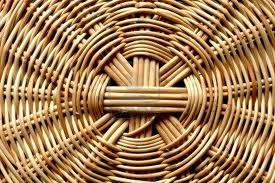
Quand j’étais en classe de 4ème, mes parents m’ont envoyé passé l’été dans un camp de vacances au coeur de la forêt équatoriale. La vannerie faisait partie du programme de classes instaurées par le camp, en plus de la sculpture du bois (ce sera un article pour un autre jour), la fanfare, la peinture, etc. Ce qui me fascinait dans l’art de vanner c’était la vitesse avec laquelle l’instructeur pouvait faire des paniers, des chaises robustes, des chapeaux, etc. C’est comme si le raffia glissait sur ses doigts. Les outils étaient très simples et rudimentaires: un couteau, et le raffia, le rotin, ou des feuilles de palmiers. Les premiers jours n’avaient pas été facile, car tout semblait difficile: l’art de manier le raffia ou le palmier sans se blesser, et le couteau de vannerie sans maladresse… et je semblais prendre une éternité pour faire un panier. La vannerie, c’est tout un art: c’est l’art de tresser les fibres végétales et de fabriquer des objetsessentiels qui seront utilisés à la cuisine (paniers), au salon (chaises), dans la garde-robe (chapeaux, sacs), et pour la décoration. Amusez-vous à regarder un vannier à l’oeuvre au Cameroun.
——————
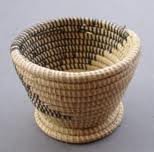
African basket
When I was in middle school, my parents sent me to a camp in the heart of the equatorial forest for the summer. Basketry was part of the curriculum, as well as wood sculpting (the subject of another post), orchestra, painting, etc. What used to fascinate me was the art, and speed with which the instructor used to weave a basket, make robust chair, and hats. It was as if the raffia was flowing through his hands. The tools used to weave were very simple and rudimentary: a hat, and raffia, rattan, or palm tree leaves. The first days were quite tough since everything seemed super-difficult: the art of weaving raffia or palm tree leaves without hurting myself, and the knife without clumsiness… and it seemed to take me an eternity to make a basket. Basketry is an art: it is the art of weaving fibers to make essential objects that will be used in the kitchen (baskets), the living room (chairs), the wardrobe (hats, bags), and for decoration. Enjoy this video of a basket-maker in action, in Cameroon.
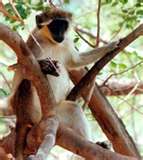
Il était une fois deux grands amis, Compère singe et Compère lièvre, le roi de la ruse. Un jour, ils étaient allés chasser ensemble. Mais, avant de partir, compère lièvre avait bourré ses joues de sel, prévoyant de jouer un vilain tour à son compagnon. Le vent, très violent, apporte tout à coup des débris de feuilles mortes mêlées de poussière dans les yeux de linge, l’aveuglant complètement : Frère, dit-il à son ami sur un ton suppliant, je n’y vois plus goutte. Je t’en prie ! Souffle-moi dans les yeux pour m’enlever ces poussières qui me font souffrir.
Compère lièvre sourit car c’est bien ce qu’il a prévu. Il s’approche de son compagnon et souffle dans les yeux de celui-ci tout le sel qu’il conservait dans ses joues.
Le pauvre singe pousse un hurlement de douleur tandis que les larmes ruissellement sur son visage. Il comprend alors que son ancien ami veut sa mort et s’enfuit en se heurtant contre tous les obstacles qu’il rencontre sans pouvoir les apercevoir.
Seigneur lion, entendant les cris de douleur de l’infortuné, accourt, arrête le malheureux singe aveugle et l’interroge. Singe lui raconte alors son aventure et lui explique de quelle manière compère lièvre a voulu le tuer pour le dévorer.
Compère Lièvre
Seigneur lion, pris de pitié, accepte de souffler sur les yeux de singe pour le débarrasser des débris de feuilles, des poussières et du sel qui le font si fort souffrir. Mais lorsqu’il commence à souffler, un peu de sel vole jusqu’au visage du roi des animaux qui, rendu furieux par la souffrance, d’un coup de dent, arrache un œil de singe et l’avale.
Singe, hurlant de douleur, prend aussitôt la fuite. Seigneur lion se lance à sa poursuite. Mais les frères de singe viennent au secours du pauvre borgne et le font grimper tout en haut d’un arbre. Là-haut, une fois en sécurité, singe remercie ses frères et leur raconte ses malheurs. Chacun des singes décide de l’aider. L’un après l’autre, ils rétrécissent leurs yeux et en prélèvent un petit morceau. Puis avec ce que tous ont sacrifié, ils fabriquent un œil tout neuf pour leur frère.
C’est pourquoi, vous le remarquerez facilement, maintenant, les singes ont de petits yeux bien enfoncés dans le crâne.
Conte tiré de “Contes des Lagunes et Savanes,” Collection ‘Fleuve et Flamme,’ édition Edicef, 1975
My fellow friends, may 2012 be the year of all achievements, and of all greatness! I would like to thank all those who visited my blog and future visitors. I wish you all wonders without borders… I wish you all peace and serenity for the year 2012! To all those who witnessed the events in Côte d’Ivoire and Libya, to all those who were speechless and bewildered, to all those who felt powerless in 2011, keep your heads up… and keep on fighting. Like Agostinho Neto used to say: a luta continua… a vitória é certa!
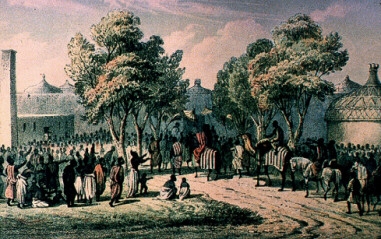
When the Zaghawa (people of Kanem) arrived in the area around Lake Chad, they found independent walled-cities states from the Sao civilization, a civilization which had flourished around the 6th century, with its center around the Chari river, south of Lake Chad. The Zaghawa adopted some of the Sao customs, but fight among the two lasted from the 7th century until the 16th. The conquest of Kanem by the Zaghawa was done under the Duguwa dynasty which was started by King Sef (also known as Saif… some people eager to change African history state that the Zaghawa were from Yemen… but we all know that they were local people) about 700 CE. The dynasty, Sayfawa or Sefuwa, is named for King Dugu, one of Sef’s sons, who was ruling about 785 CE. Abandoning their nomadic lifestyle, the Zaghawa established a capital at N’Jimi (meaning “south” — the location of this town is still unknown, but it is believed to be around Lake Fitri). Under the rule of Dugu, Kanem expanded to become an empire. The Zaghawa kings, called maï, were regarded as divine and belonged to a ruling establishment known as the Magumi. They were recognized for a great amount of horses. Kanem’s expansion peaked during the reign of MaïDunama Dabbalemi (ca. 1221-59) and extended northward into the Fezzan region (Libya), westward into Kano (Nigeria), eastward to Ouaddaï (or Wadai), and southward into the Adamawa grasslands (Cameroon). They converted to islam around the 11th century CE.
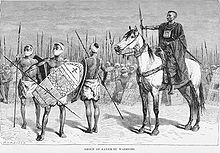
Group of Kanem-Bu warriors in the 1800s
By the end of the 14th century, internal struggles and external attacks had torn Kanem apart. Between 1376 and 1400, six Maïs reigned, but were killed by foreign invaders. Finally, around 1396 the Bulala invaders forced the once strong Sayfawa dynasty to abandon Njimi and move to Bornu on the western edge of Lake Chad. Around 1472, Maï Ali Dunamami fortified the Bornu state, and established the capital at Ngazargamu, which had more fertile lands. Over time the inter-marriage between the Kanembu and the Borno people created a new people, the Kanembu, and a language called Kanuri.
The Kanem-Bornu empire peaked during the reign of Maï Idris Alooma (ca. 1571 – 1603) who is remembered for his great military and diplomatic skills. His main adversaries were the Hausa to the west, the Tuareg and Toubou to the north, and the Bulala to the east. One epic poem tells of his victories in 330 wars, and over 1,000 battles. He was a true military genius, and some of his innovations included the use of fixed military camps (with walls), permanent sieges, and “scorched earth” tactics, armored horses and riders, the use of Berber camels, of skilled Kotoko boatmen, and of iron-helmeted musketeers trained by Turkish military advisers. He had very strong diplomatic ties with Tripoli, Egypt, and the Ottoman empire, which at some point sent a 200-member ambassadorial party across the desert to Alooma’s court in Ngazargamu. The state revenues came from tribute from vassal states, trans-saharan trade route, and slave trade. Many products such as cotton, natron (sodium carbonate), kola nuts, ivory, ostrich feathers, perfume, was, and hides were exported north via the Sahara desert.
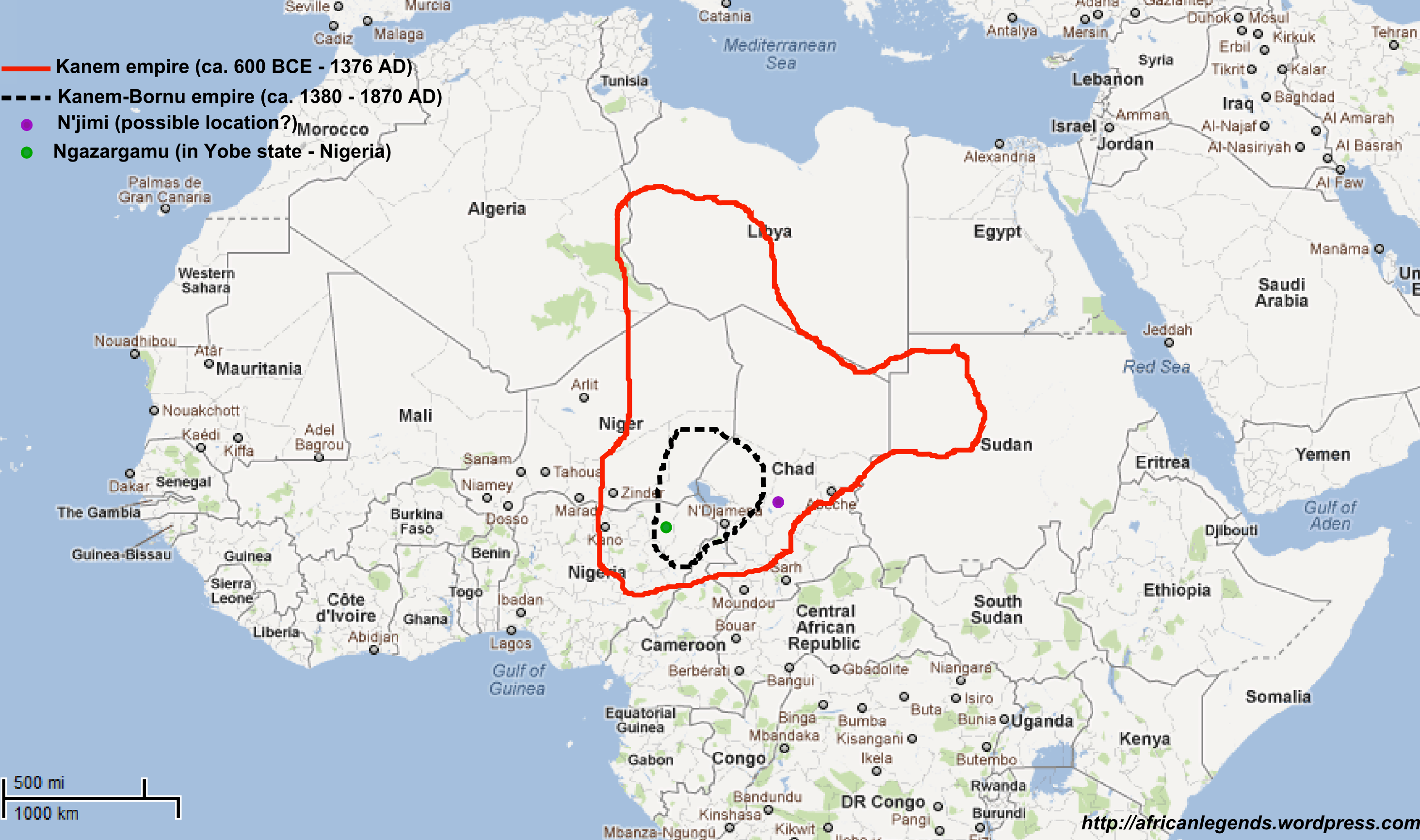
Map of the Kanem and Kanem-Bornu empires
By the end of the 17th century, the empire started declining, and by the 18th century, it only extended westward into the land of the Hausa. By the early 19th century, the declining empire could not sustain the advance from the fulani warriors of Usman Dan Fodio who proclaimed the jihad war against the non-muslims.
To learn more about the Kanem-Bornu empire, check out: Jamtan.com, Daily Kos- Ancient Africa, BlackPast.org, The empire by the lake. Don’t forget to check out the book “Kanem-Borno: One Thousand Years of Splendor (Kingdoms of Africa)” by Philip Koslow. Back in those days, Lake Chad covered an area of about 10,000 m2… today it has sadly shrunk down to 1,300 m2, and is still shrinking! I could not find a really good map of the Kanem or Kanem-Bornu empire, so I used Google maps and known maps from history books to make my own with some of the boundaries cited earlier. I have overlaid the Kanem and the Kanem-Bornu empires on the same map to give a better idea. Enjoy!
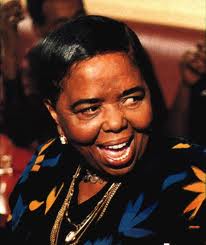
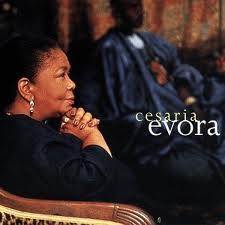
I was quite shocked to learn of the ‘passing’ of Cesaria Evora… It hurts… the barefoot diva, the lady who sang ‘sodade‘ and ‘Angola‘, is no longer. The lady who started singing in her later days, and gained stardomship at the age of 50+, the lady who always performed barefoot on stage is no longer. She exemplified endurance and perseverance. Someone else could have given up… someone else could have said ‘there is no point singing, if I can barely make a living’. She knew all of that, but she also knew that she had a gift for singing and bringing the morna (Cape Verde music) to the international scene. She sang, and went on worldwide tours in her late 60s… giving concerts, etc… at an age when most people would have retired. She was truly an example of strength, confidence, endurance and perseverance. Her life was really all about endurance!
The album titled 'Cesaria Evora'
She lost her dad at the age of 7, and was placed in an orphanage at the age of 10 by her mother who could not raise all her 6 children. She started singing at the age of 16 in a sailors’ tavern. She won international acclaim for her album ‘La Diva aux Pieds Nus‘ in 1988, and the album ‘Miss Perfumado‘ released in 1992 sealed her international aura. In 1997, she won the Kora All African Music Awards for best Artist of West Africa, Best Album, and Merit of Jury. In 2004, came the Grammy in the world category (such a silly category… mixing musicians from Europe, Africa, Asia, and Latin America in one pot… unthinkable) for her album ‘Voz D’Amor‘. Keep singing, and check out her website Cesaria Evora, a video biography on BBC, An article by the Guardian newspaper, USA Today, NY Times, LA Times, So long Cesaria, we will keep singing ‘sodade‘ and dancing the morna, praising ‘Angola‘ and ‘Cabo Verde.’
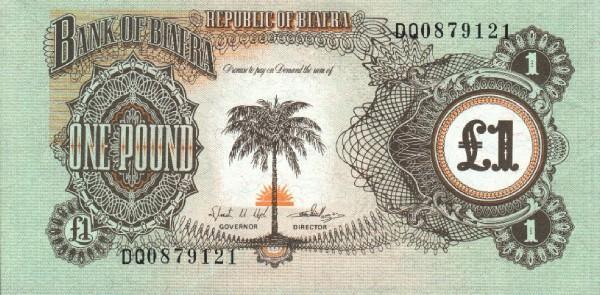
With the death of C. Odumegwu Ojukwu, the leader of the breakaway Biafra Republic, I decided to talk about another chapter of the ‘françafrique’ book, i.e. the Biafran war. At first everybody thought that it was just a Nigerian war, but it is more than that. It is also a war about France’s position in Nigeria, and their support of the Biafra military, as well as their manipulation of the media. How the word ‘genocide’ was used to influence public opinion… Jacques Foccart himself happily admitted choosing that word so as to get the attention of President de Gaulle and the French media. Sadly this war, which lasted from 1967 to 1970, cost many Nigerian lives, for the French and European oil greed. Interesting how history repeats itself as in Sudan vs. South Sudan today!
Biafra before & after (source: MySpace.com/rememberbiafra)
The other day, I was talking to a Nigerian friend of mine, who did not even know that the French had played a major role in that war… see how we (Africans) barely know our history? He was telling me about the Igbo, Haussa, and Yoruba, and forgot that the French were the ones supplying guns to the Biafrans for the war… He did not even know that most of the Biafran leaders who ran away sought refuge in Côte d’Ivoire… why? why not Ghana, Benin, or Cameroon? why a French-speaking country further away? Again the French influence. Somebody told me that Cameroon refused to help because then president Ahmadou Ahidjo in support of his Northern brothers refused to help supply guns… maybe, but why didn’t Ghana do it? or neighboring Benin? Why was the help coming from Gabon, who apparently had no interest in the story? well, because one of the biggest French military base in Africa was in Gabon (and Ivory Coast), and probably because a president in his right-mind would not accept that his territory be used to create war in someone else’s country, and also because someone like Kwame Nkrumahcould already see the French connection in the deal.
Biafran note for 1 pound
The Biafran war is similar to the Angolan or Mozambique wars or so many other wars in Africa, where many of the strings were pulled by external forces while the African puppets danced on the scene and got killed from the ignorance, and greed of their own leaders. Please watch this great documentary which sheds some light on the Biafran war, another chapter of the great françafrique. It is so interesting how Corsica has been wanting their independence from France for ages, but is still not independent to this day. Look at the United States of America, 50 states, as big as a continent,… but an entire country! Why not in Africa? in Africa, division rather than union is encouraged!
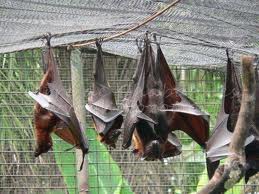
Vous est-il jamais arrivé de vous reveiller la tête en bas, toute retournée avec des idées confuses ou brouillées? … Rien de mieux que ce beau conte africain sur la raison pour laquelle les roussettes dorment la tête en bas! Amusez-vous bien!
==========
Les animaux ont chacun leur façon de se reposer : certains se couchent par terre, d’autres se réfugient dans des terriers, d’autres se perchent sur les branches. Seuls les membres de la famille des chauves-souris, et en particulier les grandes roussettes, s’accrochent aux branches la tête en bas, le derrière tourné vers le ciel. Et pourtant, autrefois, elles se perchaient normalement sur les branches, la tête en haut, comme les oiseaux.
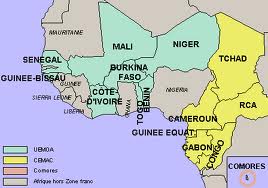
Suite à l’article sur la dévaluation imminente (ou pas) du Franc CFA, j’aimerais juste parler de l’histoire de cette monnaie de singe, car c’est vraiment incroyable que 15 pays africains aient soit-disant la même monnaie, le Franc CFA, et qu’ils ne puissent pas l’utiliser d’une zone à l’autre. Un Sénégalais ne peut pas aller à Yaoundé faire des achats avec ses CFA, car le CFA de l’Afrique de l’Ouest ne vaut rien en Afrique centrale, et vice versa. Résultat: seulement 7-10 % de rapports commerciaux (import-export) existent entre les zones BEAC (Banque des Etats de l’Afrique Centrale) et BCEAO (Banque Centrale des Etats de l’Afrique de l’Ouest). Tous les échanges des anciennes colonies sont tournés vers la France! Donc, aucun échange réel entre pays parlant la même langue, ayant la même monnaie, et separés par moins de 2 h de vol! C’est comme si l’Euro de France ne valait rien en Allemagne ou en Espagne, et la monnaie devait être convertie!
Carte des pays de la zone CFA
Le Franc CFA ou franc des colonies françaises d’Afrique (plutard, les Français ont essayé de changer l’appellation pour endormir les consciences) fut instaurer pour la première fois en 1945 à la fin de la deuxième guerre mondiale. C’est une monnaie de singe, car les anciennes colonies françaises versent au trésor de Paris 65 % de leurs revenus, et ensuite paient 20% pour assurer les fluctuations des marchés et couvrir les frais de la Banque de France. De nos jours, ces anciennes colonies versent 50 % plus les 20%! Imaginez-vous un seul instant: j’ai 100,000FCFA, et je dois remettre a quelqu’un 65,000 FCFA, et ajouter en plus 20,000 FCFA de frais…. Il ne me restera plus que 15,000 FCFA… si mes poches hurlent de douleur… imaginez un peu ce que 70 % ou 85% en plus ou en moins ferait au budget d’un pays tout entier? Soit la pauvreté extrême, ou un certain équilibre budgétaire.


















 African Heritage