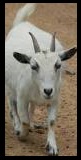
La chèvre broute l’herbe là où on l’attache (Proverbe Bamoun – Cameroun). Il faut être bien avec l’autorité.
The goat grazes where it is tied (Bamun Proverb – Cameroon). You need to be in good terms with the authority.

La chèvre broute l’herbe là où on l’attache (Proverbe Bamoun – Cameroun). Il faut être bien avec l’autorité.
The goat grazes where it is tied (Bamun Proverb – Cameroon). You need to be in good terms with the authority.
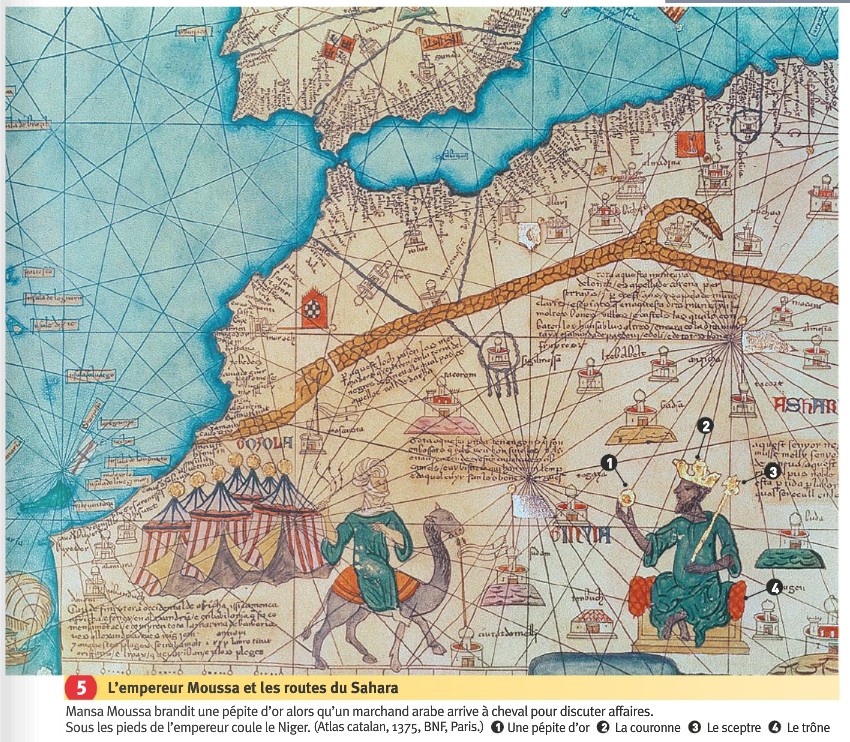
Today, I would like to talk about the richest man planet earth has ever seen… yes, you heard me right, the richest man whose fortune was estimated to be over 400 billion dollars, or 310 billion euros. Did you guess who that was ? If you thought Bill Gates, I am sorry to disappoint you. It is the great Emperor of Mali, Kankan Musa, also written Kankan Moussa, or Mansa Musa, or Mansa Moussa, or Kankou Moussa.
Kankan Musa was the tenth Mansa, King of Kings, or Emperor of the great Empire of Mali from 1312 to 1337. At the time of Musa’s accession to the throne, the Empire of Mali consisted of territories which had belonged to the Empire of Ghana and Melle, and surrounding areas.

His name, Kankan Musa or Kanga Musa meant « Musa, son of Kankou Hamidou », in reference to his mother (In those days, the Mandinka people were a matriarcal society). Kankan Musa is often referred to, in literature, as Mali-koy Kankan Musa, Gonga Musa, and Lion of Mali. He had lots of titles, including Emir of Melle, Lord of the Mines of Wangara, Conqueror of Ghanata, Fouta Djallon (also written Futa Jallon), and at least a dozen other areas.
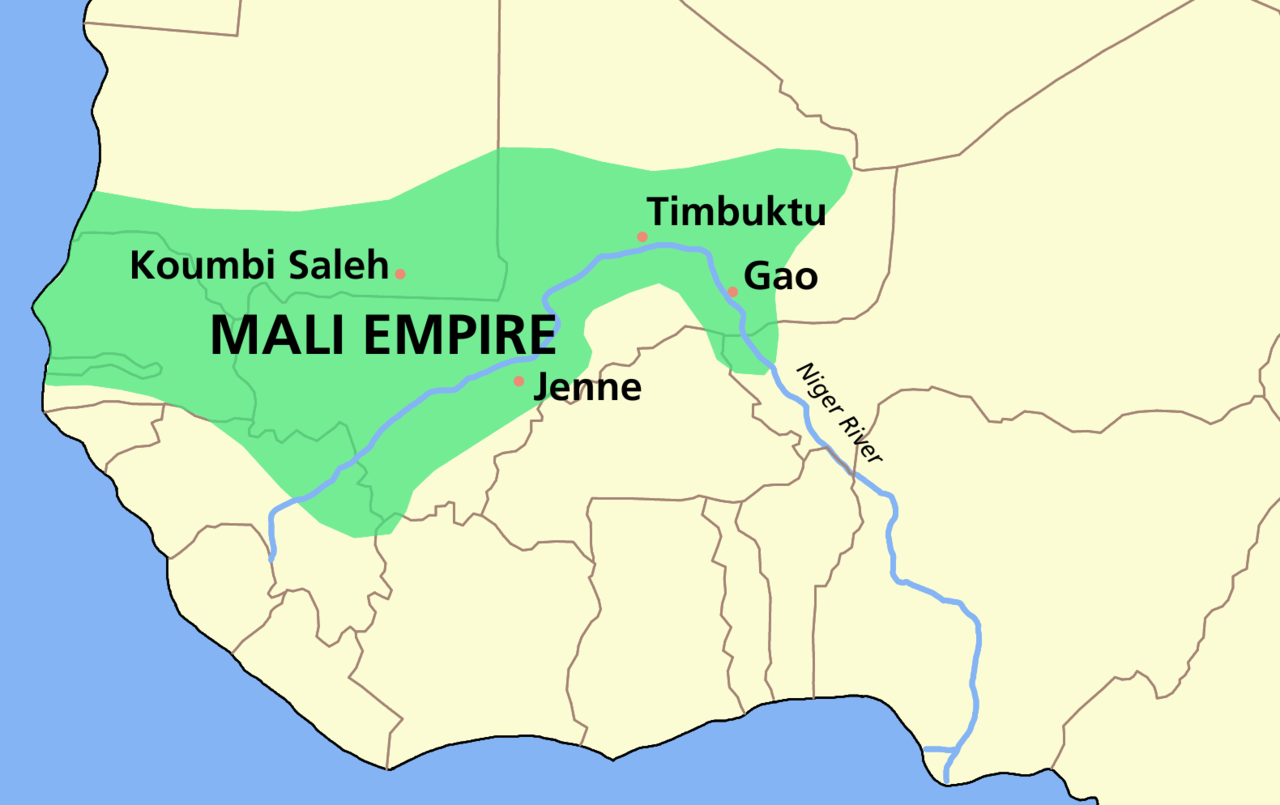
He took the Empire of Mali to its peak, from the Fouta Djallon to Agadez (in northern Niger), including the ancient Ghana, and Songhai Empires. He established diplomatic relationships with Portugal, Morocco, Tunisia, and Egypt. His reign corresponds to the golden era of the Malian Empire.

Kankan Musa’s pilgrimage to Mecca made him popular in North Africa, and in the Middle East. Musa made his pilgrimage to Mecca in 1324, with a procession of 60,000 men, 12,000 servants who each carried four pounds of gold bars, heralds dressed in silks who bore gold staffs, organized horses and handled bags. Also in the train, were 80 camels, which carried between 50 and 300 pounds of gold dust each (Gold was the currency in Mali). He gave away gold to the poor along his route. Musa not only gave gold to the cities he passed on his way to Mecca, including Cairo and Medina, but he also traded gold for souvenirs. Moreover, he would also build a new mosque every Friday in any city he so happened to pass by. Musa’s journey was documented by several eyewitnesses along his route, who were in awe of his wealth and extensive procession, and records exist in a variety of sources, including journals, oral accounts and histories. Musa’s visit with the Mamluk sultan Al-Nasir Muhammad of Egypt in July 1324 is well-recorded.
Musa’s generosity, however, inadvertently devastated the economy of the region. In the cities of Cairo, Medina and Mecca, the sudden influx of gold devalued the metal for the next decade. Prices on goods and wares greatly inflated. To rectify the gold market, Musa borrowed all the gold he could carry from money-lenders in Cairo, at high interest. This is the only time recorded in history that one man directly controlled the price of gold in the Mediterranean. Imagine a single man controlling the economy of not only one country, but of an entire region!
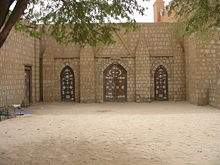
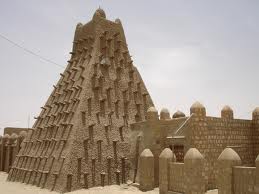
Mansa Musa was a great builder. He had several mosques and madrasas built in Timbuktu and Gao. The most important of its constructions is the University of Sankore. In Niani, his capital, he built an Audience Hall, a building communicating directly with the royal palace through an interior door. It was “an admirable Monument” surmounted by a dome, adorned with arabesques of striking colours. The windows of the upper floor were plated with wood and framed with silver, while those of a lower floor were plated with wood, framed in gold. This palace no longer exists. Like the Great Mosque, the Hall was built in cut stone. The Italian art and architecture scholar Sergio Domian said: “At the height of its power, Mali had at least 400 cities, and the interior of the Niger Delta was very densely populated.” Can you imagine that? In this day and age, how many countries in this world can boast 400 densely populated cities? Yet, the Mali of Kankan Musa claimed it all.
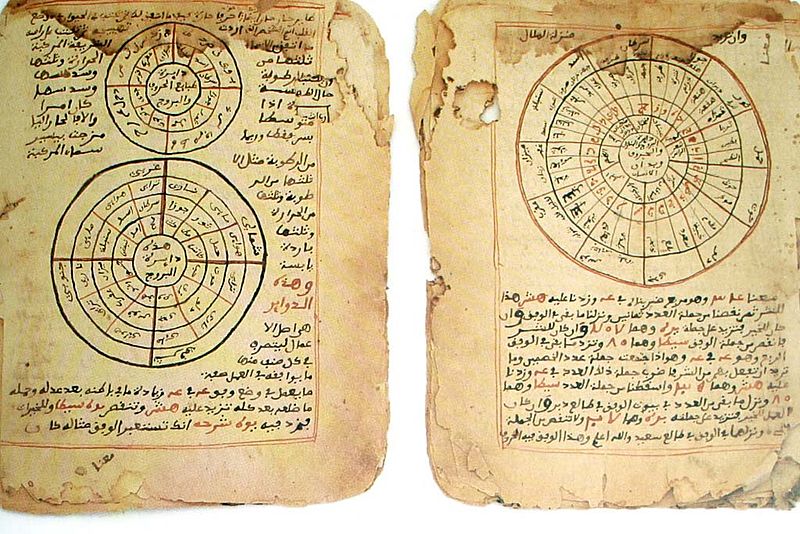
At the end of his life, in 1332 or 1337, the Empire of Mali limits were from the Atlantic Ocean to the Eastern shores of the Niger River, and to the forests of Taghaza in the middle of the Sahara. Kankan Musa was not only a rich man who gave to all, built mosques, and great places of worship, he was also a just conqueror, and a great builder. He took the Empire Mali to its peak, and made it the talk of places as far as the Middle East and Europe. Many Europeans and Middle Easterns would send delegations of architects, merchants, writers, astronomers, mathematicians and teachers, to study in his great university at Timbuktu. So next time someone asks you who was the richest man on planet earth, remember to tell them that before Bill Gates, there was Kankan Musa!

In college, I was always fascinated by my Ugandan friend’s account of the Kabaka of Buganda, of his palace located in Kampala, and of the rich tradition of the Buganda Kingdom. I started wondering what the capital of Uganda‘s name meant. After all, its name is beautiful, Kampala, resonant with grace, peace, and radiance. I was pleasantly surprised to find out that Kampala indeed was named after the graceful impala antelope.

Yes, indeed, before the arrival of the British in the area, the Kabaka (King) of Buganda had chosen the area as his favorite hunting ground because of its numerous rolling hills, and wetlands. This area was also home to several species of antelopes, and particularly the impala.
When the British arrived in the region, they renamed it ‘Hills of the Impala’. The translation in Luganda, the language of the Buganda people, yielded Kasozi Ka Empala (Kasozi Ka meaning hill of), and Empala being the plural for impala. To the listening ear, Ka Empala sounded like one word Ka’Mpala. When the king would go hunting, the Buganda people would say Kabaka a’genze e Ka’mpala (the Kabaka has gone to Ka’mpala). Thus was born the name of the city Kampala.

Kampala then grew to be the capital of the Buganda Kingdom. A lot of cultural heritage buildings can still be found there, such as the Kasubi Tombs, built in 1881, to house the tombs of previous Kabakas. The Kasubi Tombs have been recognized as UNESCO World Heritage Site. Kampala is also home to Lubiri Palace (the royal house of the Kabaka), the Buganda parliament, and the Buganda court of justice.
In 1962, Kampala replaced Entebbe as the capital of Uganda. A big part of the city was destroyed during the war with Tanzania in 1978, which culminated with the removal of Idi Amin Dada from power in 1979, and the civil war. The city has since then been rebuilt.
Kampala is surrounded by hills to the north, papyrus wetlands, and Lake Victoria to the south. Like many cities around the world (including Yaoundé), Kampala also claims to have been built on 7 hills, although it is not quite true. The 7 historical hills of Kampala are:

Kasubi Hill: the first hill in historical importance, and home to the Kasubi Tombs, burial ground of the previous Kabakas of Buganda;
Mengo Hill: where Lubiri Palace is located, as well as the Buganda court of justice, and the Lukiiko, Buganda parliament;
Kibuli Hill: home to the Kibuli Mosque. Interestingly enough, Islam was brought to Uganda before Christianity by Muslim slave traders;
Namirembe Hill: home to the Namirembe Anglican Cathedral. The first Christians in the area were protestants;
Lubaga Hill: site of the Rubaga Catholic Cathedral, and the ‘white fathers’ neighborhood;
Nsambya Hill: home to the Nsambya Hospital;
Kampala Hill: the hill of the impala which hosts the ruins of Fort Lugard. This hill gave its name to the city.
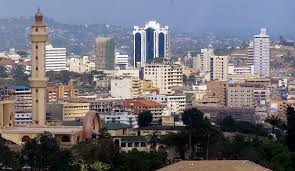
With time, the city spread to Nakasero Hill where the administrative centre and the wealthiest residential area are, Tank Hill, where the water storage tanks that supply the city are located. Mulago Hill is the site of Mulago Hospital, the largest hospital in Uganda. The city is now rapidly expanding to include Makindye Hill and Konge Hill. Kololo Hill to the east of Nakasero hill, is the highest hill in the city, at 1,300 metres above sea level, and is home to the Uganda Museum. As one can see, Kampala is truly a city of hills. Maybe it should be nicknamed the city with the thousand hills or hundred hills. Today, Kampala is a vibrant city, full of history, and modernism. Enjoy this video of Kampala.
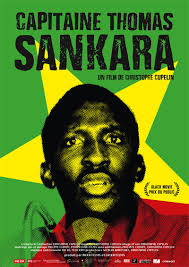
I had to share the trailer of the documentary “Capitaine Thomas Sankara” by Christophe Cupelin, which was shown this year at the FESPACO 2015 in Ouagadougou, Burkina Faso. This is the first time a movie about Thomas Sankara, the African Che, could be shown at the FESPACO in 27 years since Compaore‘s coup. Enjoy!
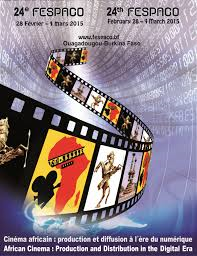
FESPACO 2015 ended last week, and ran from February 28th until March 7th. The festival’s glamour was not at its usual, since the overthrowing of Blaise Compaoré, but it still took place in Ouagadougou, Burkina Faso, and brought in some great African films and documentaries.

This year’s festival featured, for the first time, films from the African diaspora. 720 films competed, and 134 were selected in the 5 categories. The winner of this year’s Golden Stallion of Yennenga was “Fievres” by the French-Moroccan filmmaker, Hicham Ayouch. The film tells the story of a 13 year old boy, displaced and prone to violence who learns that he has a father after his mother is sent to jail, and is sent to live with his father in a Parisian suburb. The beauty of “Fievres” is its focus on telling the tale between a father and son who have to learn to be father-son, and also the cultural identity among immigrants, and practicing Muslims in France.

The Silver Stallion was awarded to Algerian director Belkacem Hadjadj for his film on “Fadhma N’Soumer“, a stunning biopic on the life of the Algerian resistance leader who fought against the French colonial forces in Kabyle. I was so happy to see this movie made, and winning the second prize, as I had written about Lalla Fadhma N’Soumer a while ago, and wanted her praises to be sung. This is truly Africans telling their own stories, and honoring their greatest heroes and heroines. Applauses to director Belkacem Hadjadj for telling our history.
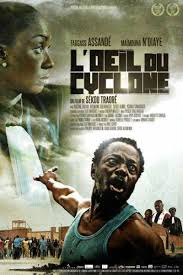
The Bronze Stallion was awarded to Burkinabé director Sekou Traoré “L’Oeil du Cyclone” (The Eye of the Cyclone), which is a political drama set in an unnamed African country plagued by civil war. The film follows an idealistic young lawyer committed to defending a former child soldier charged with war crimes. The movie shows two faces of Africa: the young, idealistic and futuristic, vs. the broken and consumed with the past. The movie also won the festival awards for Best Actress (Maimouna N’Diaye – who is clearly a rising star of African cinema), and Best Actor (Fargass Assandé).
The Burkinabé public finally had the chance to see the documentary “Capitaine Thomas Sankara” by Christophe Cupelin, which would have never been allowed at FESPACO under Blaise Compaore’s tenure (Thomas Sankara‘s murderer, best friend, and coup-formenter). It was a time to celebrate the life of Burkina Faso’s greatest hero. To read more about this year’s FESPACO, check out The Guardian, and the FESPACO homepage.

La tortue ne quitte pas sa carapace (Proverbe Basuto – Lesotho).
The tortoise does not leave its shell (Basuto Proverb – Lesotho).
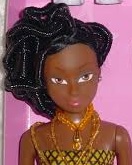
Growing up, the prominent option for dolls in the market were European dolls with European features, like Barbie dolls. The only other option was to make our own dolls with wool, bamboo, wood, raffia, and other materials. For a parent looking to offer his daughter, or niece, a “hip” doll, he/she basically had to get these European dolls that looked nothing like us (nothing wrong with that, but self-love starts with seeing one’s likeness in the most basic daily toy). Some of my friends resorted to coloring those dolls chocolate, so that the doll would look just like them, or braiding their hairs, and dressing them with left-over fabric from their Mommy’s wrappers or Boubou. I was quite pleased by the work of entrepreneur’s Taofick Okoya who created two lines of dolls: the Naija Princess, and the Queens of Africa. The Naija princess is more affordable for the average Nigerian family, and the Queens of Africa is the ‘haut-de-gamme’ of his collection.
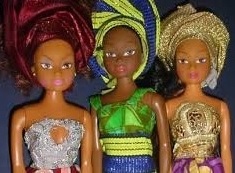
His dolls basically have ‘African’ features, and are from three of the main tribes of Nigeria: Nneka is from the Igbo region, Azeezah is Haussa, while Wuraola is Yoruba. The dolls all wear African clothing from their particular regions, and have their hairs in braids, Afro, or plated. It is simply beautiful. As Mr. Okoya said himself, he first started because his daughter was getting confused about her skin color wishing hers to be just like that of her doll. See… how, even as kids, we get brainwashed? This is where we teach young girls to love and appreciate who they are, their skin colors, and the gorgeous hair they were endowed with naturally and divinely. I am so proud of Okoya’s dolls, which has beaten Mattel’s Barbie on the Nigerian market, and are now sold around the globe. I raise my hat to him, and wish for him to keep up the work, and for others to make dolls more representative of our different cultures: i.e. having Maasai dolls, Bushmen dolls, Bamileke dolls, or making them more “hip” for our daughters. Please do check out the website of Taofick Okoya, Queens of Africa Dolls.

A British man recently decided to return looted art that his grandfather had taken (stolen?) away during the 1897 Benin City Massacre. The article about the art returning is on BBC. I do salute the man for doing it; and I wish the British museums and museums around the world will return art looted by Europeans in African countries and countries around the world. True, the man excuses his grandfather’s acts by saying: “We are taught from a very young age that the killing of enemy combatants under the umbrella of statehood is a regrettable necessity of life.” And excuses the art looting by saying, “To him [his grandfather], it was probably no more than picking up stuff that’s washed up on the beach, because people had fled and nobody owned them any longer.” But he is happy they are now back in Benin City. “These objects are part of the cultural heritage of another people… to the people of Benin City, these objects are priceless.”
I also decided to link back to the story I wrote a while ago about the Benin City Massacre.

Le Crapaud aime l’eau, mais pas l’eau chaude (Proverbe Toucouleur – Senegal, Mauritanie, Mali). – N’exagérons pas.
The toad likes water, but not hot water (Toucouleur proverb – Senegal, Mauritania, Mali). – Do not exaggerate.
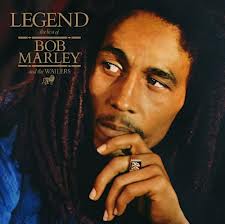
On February 6th, the world celebrated Sir Bob Marley‘s 70th birthday or earth day. People around the world gathered to commemorate the life of the great Reggae legend. There were lots of live performances and exhibitions in Jamaica, and around the world. From February 1-6, there were five-day celebrations featuring international reggae acts, tribute shows, art and food. All these festivities take us back to Bob Marley’s strong message of unity, oneness, and universality, or ONE LOVE: love for all mankind, love for our fellow brothers, love for ourselves, love for our planet, and above all love for our Creator. Someone said that if we were busy loving, there will be no war, and that is truly Sir Marley’s message: “One Love, One Heart. Let’s get together and feel all right.”


 African Heritage