45 medalsfor Africa this year. A record. Wayde Van Niekerk, the South African, being the first African to win a gold medal in sprint, and also broke the world record established by Michael Johnson in 1999 on 400 m. Ethiopian Almaz Ayana also broke the 1993 record in 10000m. Here are the remaining medals from the tally I published before the end of the games.
Cheikh Salla Cisse gave Côte d’Ivoire its very first Gold medal (in less than 80 kg Taekwondo men)
Cheikh Salla Cisse
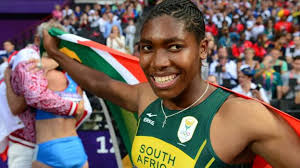
Caster Semenya – 800 m women (South Africa) – Gold
Ruth Gbagbi– Taekwondo less than 67 kg women (Côte d’Ivoire) – Bronze
Francine Niyonsaba – 800 m women (Burundi) – Silver
Margaret Nyairera Wambui– 800 m women (Kenya) – Bronze
Nigeria men Soccer team – Bronze
Caster Semenya
Eliud Kipchoge– Men Marathon (Kenya) – Gold
Julius Yego – Men Javelin (Kenya) – Silver
Almaz Ayana – 5000 m women (Ethiopia) – Bronze
Hagos Gebrhiwet – 5000 m men (Ethiopia)- Bronze
FeyisaLilesa– Men Marathon (Ethiopia) – Silver
Taoufik Makhloufi – 1500 m Men (Algeria) – Silver
Abdoulrazak Issoufou Alfaga – over 80kg Taekwondo men (Niger) – Silver
Oussama Oueslati – less than 80 kg Taekwondo men (Tunisia) – Bronze
Quand le doigt ne sait où aller, il entre dans le nez (Proverbe Bété – Côte d’Ivoire) .- Trop d’inactivité conduit l’homme à n’importe quelle bêtise.
When the finger knows not where to go, it goes into the nose (Bété proverb – Côte d’Ivoire). – Too much inactivity leadsthemantocommitanysortofstupidity.
Thus far, African colors have been flying high at the Rio 2016 olympics, with 31 medals. Here are the names and the medals by country. Congratulations to all the athletes. They make us proud!
Chad LeClos – 200 m freestyle (South Africa) – Silver
Chad LeClos
Chad LeClos – 100 m butterfly (South Africa) – Silver
Shaun Keeling – Rowing (South Africa) – Silver
Cameron van Der Burgh – 100 m breaststroke ( South Africa) – Silver
Dylan Sage – Rugby (South Africa) – Bronze
Seabelo Senatla – Rugby (South Africa) – Bronze
Lawrence Brittain – Rowing (South Africa) – Silver
David Rudisha
David Rudisha – 800 m men (Kenya) – Gold
Taoufik Makhloufi – 800 m men (Algeria) – Silver
Sara Ahmed – weightlifting women (Egypt) – Bronze
Mohamed Mahmoud – weightlifting men (Egypt) – Bronze
Hedaya Malak – Taekwondo women (Egypt) – Bronze
Marwa Amri – Wrestling – less than 58 kg (Tunisia) – Bronze
Ines Boubakri – Fencing (Tunisia) – Bronze
Almaz Ayana
Almaz Ayana – 10000 m women (Ethiopia) – Gold
Vivian Cheruiyot – 10000 m women (Kenya) – Silver
Tirunesh Dibaba – 10000 m women (Ethiopia) – Bronze
Jemima Sumgong – Women Marathon (Kenya) – Gold
Mare Dibaba – Women Marathon (Ethiopia) – Bronze
Wayde van Niekerk
Wayde van Niekerk – 400 m men (South Africa) – Gold
Hyvin Jepkemoi – 3000 m steeplechase (Kenya) – Silver
Mohamed Rabii – Weight Welters men 69 kg (Morocco) – Silver
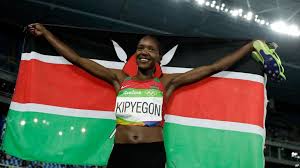
Faith Kipyegon – 1500 m women (Kenya) – Gold
Gensebe Dibaba – 1500 m women (Ethiopia) – Silver
Conseslus Kipruto – 3000 m men steeplechase (Kenya) – Gold
Paul Tanui – 10000 m men (Kenya) – Silver
Faith Kipyegon
Tamirat Tola – 10000 m men (Ethiopia) – Bronze
Luvo Manyonga – Long jump men (South Africa) – Silver
Sunette Viljoen – Women javelin (South Africa) – Silver
Henri Schoeman – Triathlon men (South Africa) – Bronze
Boniface Mucheru – 400 m hurdles men (Kenya) – Silver
Today, I will publish another poem,” Nuit de Sine / Night in Sine,” by Léopold Sédar Senghor. The poem was published in Oeuvre Poetique, Paris, Seuil, 1990 P. 14-15. The English translation was done by Melvin Dixon, in The Collected Poems, 1998, Univ. of Virginia Press.
Nuit de Sine
Femme, pose sur mon front tes mains balsamiques, tes mains douces plus que fourrure. Là-haut les palmes balancées qui bruissent dans la haute brise nocturne À peine. Pas même la chanson de nourrice. Qu’il nous berce, le silence rythmé. Écoutons son chant, écoutons battre notre sang sombre, écoutons Battre le pouls profond de l’Afrique dans la brume des villages perdus.
Voici que décline la lune lasse vers son lit de mer étale Voici que s’assoupissent les éclats de rire, que les conteurs eux-mêmes Dodelinent de la tête comme l’enfant sur le dos de sa mère Voici que les pieds des danseurs s’alourdissent, que s’alourdit la langue des chœurs alternés.
C’est l’heure des étoiles et de la Nuit qui songe S’accoude à cette colline de nuages, drapée dans son long pagne de lait. Les toits des cases luisent tendrement. Que disent-ils, si confidentiels, aux étoiles ? Dedans, le foyer s’éteint dans l’intimité d’odeurs âcres et douces.
Femme, allume la lampe au beurre clair, que causent autour les Ancêtres comme les parents, les enfants au lit. Écoutons la voix des Anciens d’Elissa. Comme nous exilés Ils n’ont pas voulu mourir, que se perdît par les sables leur torrent séminal. Que j’écoute, dans la case enfumée que visite un reflet d’âmes propices Ma tête sur ton sein chaud comme un dang au sortir du feu et fumant Que je respire l’odeur de nos Morts, que je recueille et redise leur voix vivante, que j’apprenne à Vivre avant de descendre, au-delà du plongeur, dans les hautes profondeurs du sommeil.
Night in Sine
Woman, place your soothing hands upon my brow, Your hands softer than fur. Above us balance the palm trees, barely rustling In the night breeze. Not even a lullaby. Let the rhythmic silence cradle us. Listen to its song. Hear the beat of our dark blood, Hear the deep pulse of Africa in the mist of lost villages.
Now sets the weary moon upon its slack seabed Now the bursts of laughter quiet down, and even the storyteller Nods his head like a child on his mother’s back The dancers’ feet grow heavy, and heavy, too, Come the alternating voices of singers.
Now the stars appear and the Night dreams Leaning on that hill of clouds, dressed in its long, milky pagne. The roofs of the huts shine tenderly. What are they saying So secretly to the stars? Inside, the fire dies out In the closeness of sour and sweet smells.
Woman, light the clear-oil lamp. Let the Ancestors Speak around us as parents do when the children are in bed. Let us listen to the voices of the Elissa Elders. Exiled like us They did not want to die, or lose the flow of their semen in the sands. Let me hear, a gleam of friendly souls visits the smoke-filled hut, My head upon your breast as warm as tasty dang streaming from the fire, Let me breathe the odor of our Dead, let me gather And speak with their living voices, let me learn to live Before plunging deeper than the diver Into the great depths of sleep.
C’est au taureau que sièrait la barbe, mais c’est au bouc que Dieu l’a donnée (Proverbe Sérère – Sénégal). Ce n’est pas nous qui décidons de ce que nous avons, le Créateur c’est Dieu.
It is to the bull that the beard would fit better, but God gave it to the goat (Serer proverb – Senegal). We do not decide of our talents, the Creator is God.
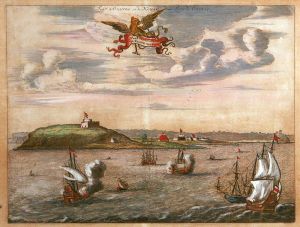
Goree Island: Fort of Nassau and Orange, 17th century (Wikipedia)
Today I will be talking about the island of Gorée, in Senegal. Located less than 4 km from the city of Dakar, Gorée island offers a sure route for ships. Since the 15th century, it has been the center of rivalries between diverse European nations which used it for slave trading. Locally known as “Beer” or “Ber” or “Bir” in Wolof, it was first named “La Palma” by Portuguese in 1444, with some ancient maps also showing the name “Beseguiche” for it. The Dutch navy named it “Goede Reede” or “Good Harbor” in 1588. In 1677, the island was occupied by the French.
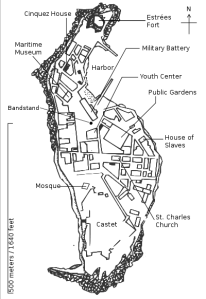
Map of Goree (Wikipedia)
Before I dive further into the atrocities of human trading on the island, I would like to address ideas circulated by some stating that the island of Gorée was never really used for slave trading and that slave trading had been done in Saint Louis in the north or south in Gambia. These claims were so outrageous that the Senegalese government sponsored an international conference on the history of the island, and researched and found original archives from the French Port of Nantes showing that between 1763 and 1775 alone, one port had traded more than 103,000 slaves from Gorée; this thus shows that Gorée was indeed at the epicenter of slave trading, and stating otherwise is an attempt at falsifying history. The first slaves were taken from Gorée in 1536, and the trade continued at least until 1848.
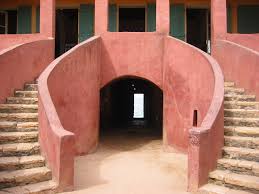
House of Slaves (Wikipedia)
Now back to the island itself. One of the most important if not the main stop on the island is the house of slaves. Of Reddish/pinkish color, this house was first built by the Dutch in 1776, and is the last standing slave house on the island. At the end of the 18th century, the island was a prosperous crossroad of merchants, soldiers, and administrators, with at its center slave trade. Today, it serves as a museum and a memorial to humanity. The upper part of the building like most slave houses was used by the Europeans who lived there; while the bottom part was used to house slaves packed on top of each other in humid, sordid, and disgusting rooms built for 15-20 people but housing sometimes over 100people, while waiting to be taken to the Americas. On the bottom floor, there is a room used to pack young women among which the slave traders would come every night and choose those who will be used for their sexual pleasures; if any of these women were found pregnant from these traders’ visits, they were freed on the island or sent to Saint Louis. There were also rooms to house strong men, children, and women. There was also a dark tiny room where the most defiant ones were stacked on top of each other, and salty water was seeped through the walls to force dehydration and later death. The value of a man depended on his weight and muscles; the minimum weight was 60 kg. The value of a child depended on his/her denture, while that of a woman on her breasts.
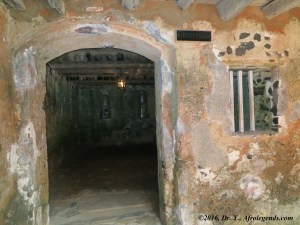
Cell for young girls in the House of Slaves
The small size of the island made it easy for merchants to control their captives. The surrounding waters are so deep that any attempt at escaping would mean sure drowning. With a 5kg metal ball permanently attached to their feet or necks, a captured African who ever tried running away would surely drown in deep sea.
From the door of no return, the slaves were loaded onto ships which took them across the Atlantic. This was their last time on African soil.
Entire families were captured and brought to Gorée, but their destinations were seldom the same: the father could be shipped to America, while the Mother to Brazil, and the child to Haiti or the West indies. Separation was irrevocable.
Cell in the House of Slaves
Not too far from the house of slaves is the castle which was used as a warehouse for millions of captured slaves.
After the abolition of slavery in 1848, the island’s population declined, with many moving to Dakar. Since 1978, the island is a UNESCOWorld Heritage Site.
Today the island of Gorée is a memorial to all those who were separated from their loved ones, their lands, their society, their culture, uprooted and sold like cattle across the globe. It serves as a reminder of humanity’s ugly past, and what it is capable of for capital gain, hatred, and greed. Gorée is and should remain all of that, but also a true reminder to future generations that mankind should be loved, and a man’s life is precious, not to be sold like cattle. Attempts by some to absolve themselves from their ugly pasts should not stop those who were hurt from remembering, for celebrating the lives of those who perished, who were uprooted, and those who survived. Truth is truth whether beautiful or not, it is truth, and remembering is acknowledging all the good those who lost their lives, those who survived, gave to the world, because America will not be America without the Slaves’s lives and hard labor; Brazil will not be Brazil without the blood of those slaves; France will not be France, or Great Britain will not be Great Britain without the sweat and blood of African slaves. So Gorée is a reminder of all of that, and should be cherished for it.
La poule se dit: fouillons des deux pattes; si l’une ne trouve rien, l’autre trouvera(Proverbe Douala – Cameroun).- Ne pas abandoner après un insuccès.
The hen says: “let’s search with two feet; if one does not find, the other will”(Duala proverb – Cameroon). – Do not abandon after a failure.
There once was a man who was walking alone in the forest. He walked for so long that he got hungry. He stopped in a village. There, he was given food, ate so well that he renounced to continue on his trip. He took a wife among the young women of the village, started a home, and no longer thought of leaving.
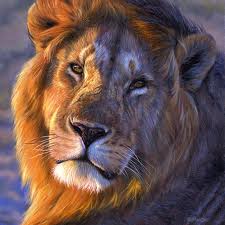
Lion
One day, after a good meal, the man decided to go to the forest which, unfortunately, was full of beasts, especially lions. The man knew not this. As soon as he walked in, the king of the jungle came out with a long roar. Scared, the trembling old man peed on himself. The lion got close, and the old man rushed into a thorny bush. The lion searched in vain; it could not find the man. However, it remained on the lookout for a week, then left disgusted. Then the old man stayed in his bush, completely stunned by his fate. A hunter came around. The man heard his footsteps and called out:
Who goes there?
It’s me
Who are you?
I am a hunter looking for game.
Hunter friend, could you please get me out of here?
But how did you manage to get in there?
It is big fear that drove me in here.
Then! It is a big fear that will get you out soon!
So what will you do?
You will know shortly.
Fire
Then the hunter started collecting firewood under the bush. All of a sudden, he put a fire in several places around the bush. Frightened, the old man rushed out, and with a violent head kick in the thorns, got himself out of danger.
The hunter welcomed him with a large smile. They hugged and became friends.
Told by Amsata Dieye, Contes Wolof du Baol, J. Copans and P. Couty, Ed. Karthala, 1988, p. 81. Translated to English by Dr. Y., Afrolegends.com
How many Spanish cities do you know have a British heritage? How many do you know were named after English kings? How many cities do you know have had three different names in their history? Malabo, the capital of the Equatorial Guinea is such a city.
Since its origin, Malabo has been known by three different names: Port Clarenceor ClarenceCity from 1827 to 1846 under British occupation; Santa Isabel from 1846 to 1973, under Spanish occupation; and Malabosince 1973 as the capital of the independent country of Equatorial Guinea.
Malabo is located on the northern part of the island of Bioko (island previously known as Fernando Po), 32 km from the coasts of Cameroon. Similar to the island of La Réunion, the island of Bioko is volcanic with its mountain Pico Basile towering at 3000 m, which can be seen from Limbe in Cameroon on a clear day.
In 1472, in an attempt to find a new route to India, the Portuguese navigator Fernão do Pó, discovered the island of Bioko, which he called “Fermosa“. Later the island was named after its discoverer,Fernando Poo. In 1507, the Portuguese Ramos de Esquivel made a first attempt at colonization on the island of Fernando Poo. He established a factory in Concepción (currently Riaba) and developed plantations of sugarcane, but the hostility of the insular Bubis people and diseases ended this experience quickly.
With the treaties of San Ildefonso in 1777 and El Pardo in 1778, the Portuguese gave to the Spanish the island of Fernando Poo, Annobon, and the right to conduct trade in the mainland, an area of influence approximately of 800,000km² in Africa, in exchange for the Colonia del Sacramento in the River Plate and the Santa Catalina Island off the Brazilian coast.
Island of Annobon from the skies (3rdWorldProfashional.com)
Later, Spain lost interest in Spanish Guinea (Equatorial Guinea), and authorized the British to use the island as a base for stopping the Slave Trade (this was before the creation of Sierra Leone as a colony for freed slaves). Thus, on 25 December 1827, Port Clarence was born on the ruins of a previous Portuguese settlement. The name was chosen in honor of the Duke of Clarence, who later became KingWilliam IV. The Bubis indigenous to the island called it “Ripotó(place of the foreigners). The city was also known as Clarence City. Descendents from freed slaves mixed in with the local Bubi tribe speaking an afro-anglo-spanish pidgin or creole called « Fernandino ». At first the British dreamt of turning Port Clarence into a great commercial port like those of Lagos and the Cape. However, the installation into the colony was deemed too costly, and isolated. In 1845, with the abolition of slavery, the British negociated with the Spanish, and gave them back control over the city, while still maintaining a stop for their commercial ships. Spain agreed to preserve British interests and to allow free passage to British ships as well advantages, which lasted until the country’s independence in 1968. Spain even maintained the British cultural heritage, Spanish will only become majoritarily spoken around 1920.
Spain regained control of the island in 1855 and the capital Port Clarence was renamed SantaIsabel, in honor of Queen Isabel II. In 1969, one year after independence, SantaIsabelbecame the capital of Equatorial Guinea.
Today, Malabois the commercial and financial center of Equatorial Guinea. The main industry of the city is fish, while cacao and coffee are the main products of export. With its recent discovery over the past decade, oil has become a big industry. Malabo has a port of high tonnage connected mainly to the ports of Douala (Cameroon) and Bata (Equatorial Guinea) and air linked via an international airport. Oil has brought in a lot of investments and development to the country and particularly to the city, which has seen tremendous growth over the past few years.
View of Malabo Cathedral (3rdWorldProfashional.com)
Given that Malabo is the oldest city in Equatorial Guinea, many buildings within the city are built in colonial architecture style remnants of Spanish rule, and coexist today with modern architecture. It is a mix of old and modern, with a reliable road system. In the coastal region north of the city are the bays and capes. Provisions are hard to find, given that it is an island, and the cost of living is high.
Malabo’s harbor on the island of Bioko, Equatorial Guinea (Libreville-airport.com)
With only 1,180 hours of sunshine per year, Malabo, is one of the gloomiest capitals in the world and experiences much fog even when it is not raining. So, it is a lot like London… funny that the British didn’t like it ! Enjoy reading from 3rdWorldProFashional.com and FemmeExpat.com.
Note: 27 Jun 2019 – I have amended the article, as it has been brought to my attention that image 3 is the island of Annobon and not the island of Bioko where Malabo is located. Thank you Apolonio.

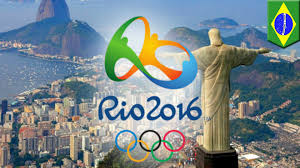 45 medals for Africa this year. A record. Wayde Van Niekerk, the South African, being the first African to win a gold medal in sprint, and also broke the world record established by Michael Johnson in 1999 on 400 m. Ethiopian Almaz Ayana also broke the 1993 record in 10000m. Here are the remaining medals from the tally I published before the end of the games.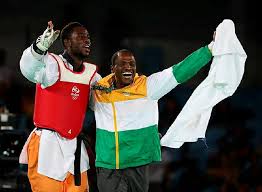

 Quand le doigt ne sait où aller, il entre dans le nez





 It is to the bull that the beard would fit better, but God gave it to the goat




 In
In 


