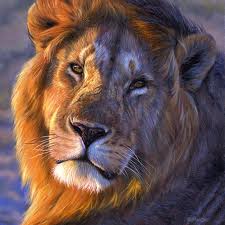
Le lion ne prête pas ses dents à son frère (proverbe Sotho – Lesotho).
The lion does not lend its teeth to its brother (Sotho proverb – Lesotho).

Le lion ne prête pas ses dents à son frère (proverbe Sotho – Lesotho).
The lion does not lend its teeth to its brother (Sotho proverb – Lesotho).
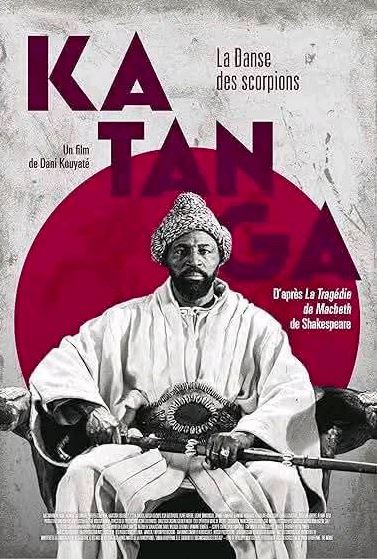
On March 1, 2025, Burkinabè filmmaker Dani Kouyaté was awarded the prestigious Étalon d’or de Yennenga (Golden Stallion of Yennenga). His film, Katanga, la danse des scorpions, is a cinematic adaptation of William Shakespeare’s Macbeth set in an African (Burkinabe) context and told in the Mooré language of Burkina Faso. His movie focuses on the power play in Africa. His win marked Burkina Faso’s first Étalon d’or in 28 years after Buud Yam of Gaston Kaboré, and the third win of Burkina Faso 34 years after the first Tilai of Idrissa Ouedraogo. Beyond the Étalon d’or, Katanga, la danse des scorpions garnered several other accolades, including the Public Prize with an average score of 9.18/10, the Sembène Ousmane Prize from the Ecobank Foundation, the Special Prize from the Cultural and Tourism Development Fund (FDCT), the Special UEMOA Prize for feature fiction, and the Paulin Soumanou Vieyra African Critics’ Prize.
Enjoy the trailer below.
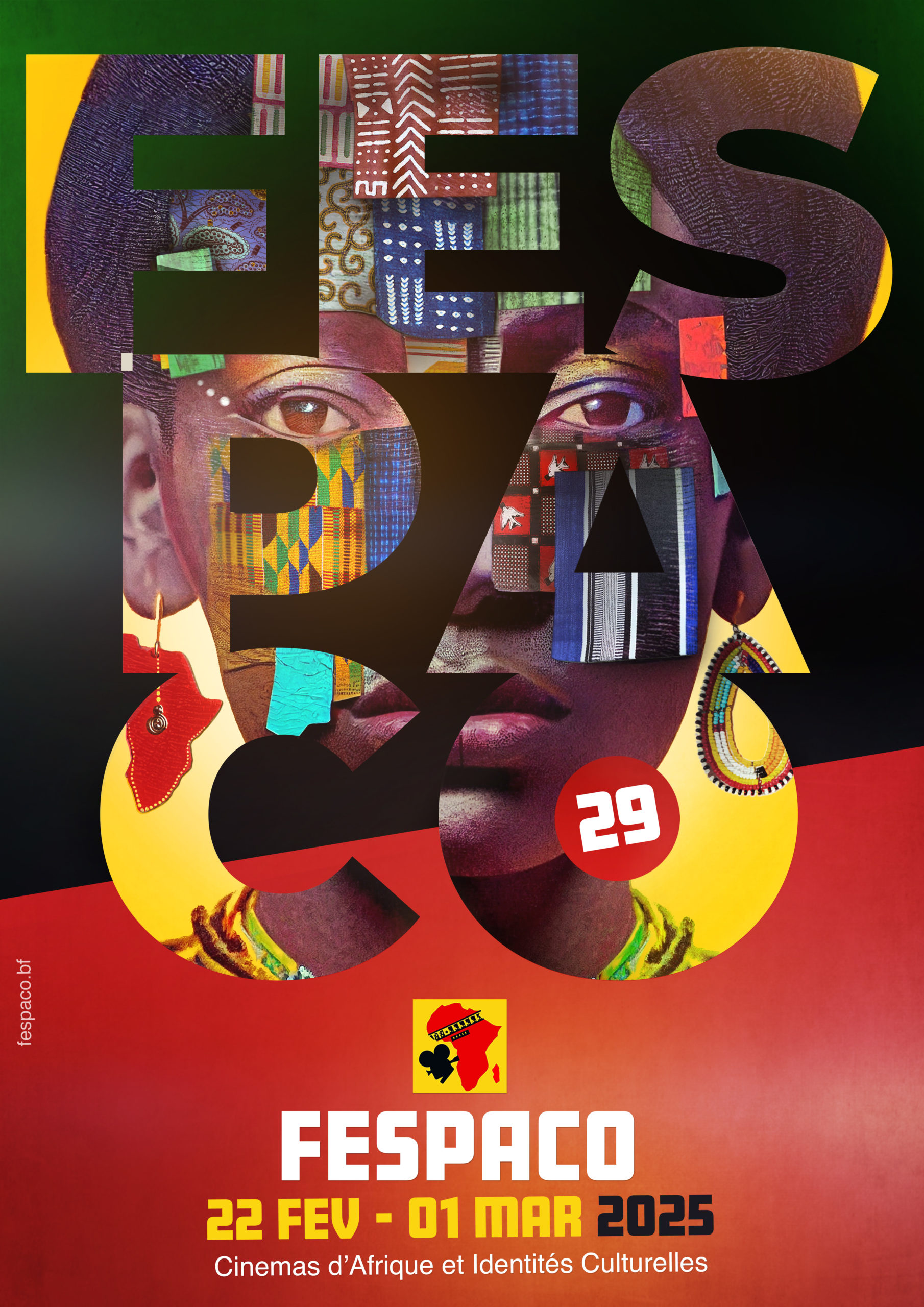
The 29th edition of the FESPACO took place from February 22 to March 1, 2025, in Ouagadougou, the capital of Burkina Faso.
The host country, Burkina Faso was represented by two films: Katanga, la danse des scorpions by Dani Kouyaté and Les Invertueuses by Chloé Aïcha Boro. The guest country of honor, Chad, was represented by Diya by Achille Ronaimou. There were several entries from diverse countries including Egypt, Algeria, Tunisia, Democratic Republic of Congo (DRC), Côte d’Ivoire, Zambia, Somalia and many more.
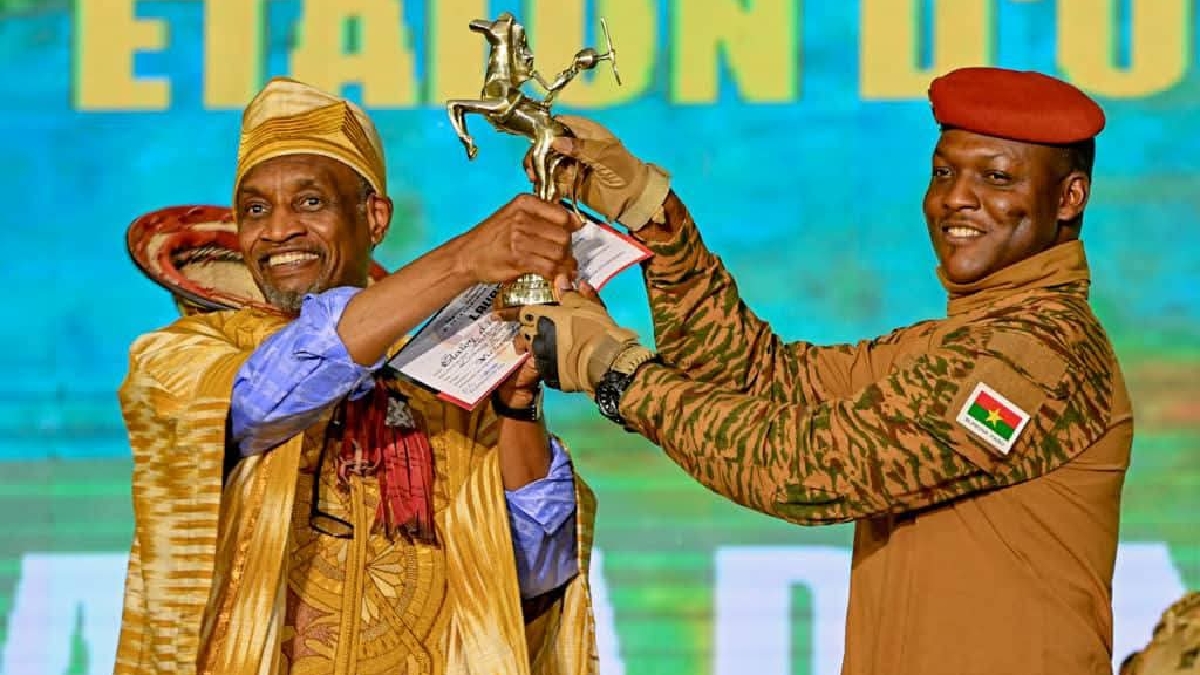
On March 1, 2025, Burkinabè filmmaker Dani Kouyaté was awarded the prestigious Étalon d’or de Yennenga (Golden Stallion of Yennenga). His film, Katanga, la danse des scorpions, is a cinematic adaptation of William Shakespeare’s Macbeth set in an African (Burkinabe) context and told in the Mooré language of Burkina Faso. His win marked Burkina Faso’s first Étalon d’or in 28 years after Buud Yam of Gaston Kaboré, and the third win of Burkina Faso 34 years after the first Tilai of Idrissa Ouedraogo. Beyond the Étalon d’or, Katanga, la danse des scorpions garnered several other accolades, including the Public Prize with an average score of 9.18/10, the Sembène Ousmane Prize from the Ecobank Foundation, the Special Prize from the Cultural and Tourism Development Fund (FDCT), the Special UEMOA Prize for feature fiction, and the Paulin Soumanou Vieyra African Critics’ Prize.

The Somali movie The Village next to Paradise by Mo Harawe won the Silver Stallion of Yennenga. The Bronze Stallion (Étalon de bronze) was awarded to On Becoming a Guinea Fowl by Rungano Nyoni (Zambia).
L’Homme-Vertige by Guadeloupean Malaury Eloi-Paisley won the Golden Stallion in the documentary section, as well as the Paul Robeson Prize for best diaspora film.
During the award ceremony, a special tribute was paid to Malian filmmaker Souleymane Cissé, who had been slated as jury president but passed away shortly before the festival. Dani Kouyaté, upon receiving his award, honored Cissé by saying, “Souleymane Cissé has been a model for me… he lives on in our hearts and minds.”
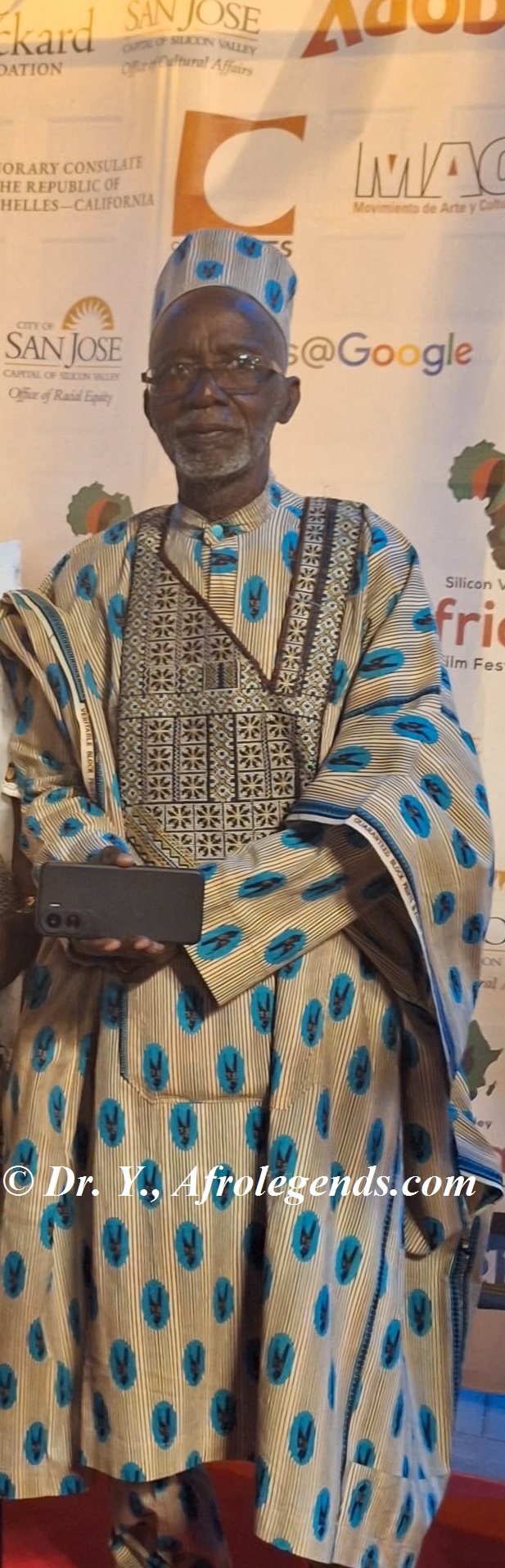
Burkina Faso’s President, Ibrahim Traoré, presented Kouyaté the award and praised film enthusiasts for the “resounding success of this celebration of African cinema.”
“The director [Dani Kouyaté] shows legitimate recognition for the courage and self-sacrifice of our worthy daughters and sons committed to victory over the forces of evil,” Traoré said on social media after the event.
The 30th edition of FESPACO is set for 2027. To read more about FESPACO 2025, please check out TRT Global – FESPACO Festival 2025 shines with cinematic triumphs in Burkina Faso

Le poisson (le crocodile) n’est fort que dans l’eau (proverbe Mambwe, Tonga – Tanzanie, Zambie, Zimbabwe).
The fish (the crocodile) is only strong in the water (Mambwe, Tonga proverb – Tanzania, Zambia, Zimbabwe).

We have previously talked about the Ishango bone, or rather the first evidence of a calculator in the world. Named after the place where it was found in the Democratic Republic of Congo (DRC), the Ishango bone is what is called a bone tool or the craddle of mathematics, and dates as far back as 22,000 years ago, in the Upper Paleolitic era; It is the oldest attestation of the practice of arithmetic in human history.
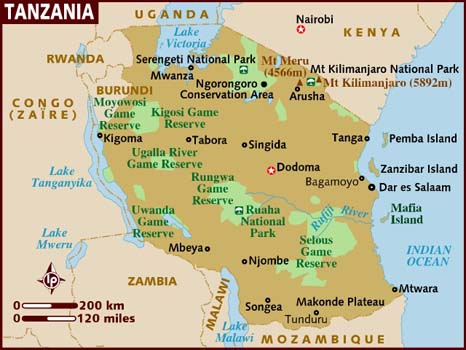
This month, archaeologists have published in the journal Nature their discovery of the earliest known bone tools, showing evidence of their use 1.5 million years ago. These bone tools were found in the Olduvai Gorge, in Tanzania. The tools were carved from elephant and hippopotamus bones. The article, Systematic bone tool production at 1.5 million years ago by de la Torre et al., was published on March 5, 2025, and provides new insights into the intelligence and innovation of East African hominins who showed “a transfer and adaptation of knapping skills from stone to bone,” which until now were thought to be restricted only to European sites dating back 500,000 years.
Excerpts below are from AfricaNews. To read in depth, please check out the original article of de la Torre, I., Doyon, L., Benito-Calvo, A. et al. Systematic bone tool production at 1.5 million years ago. Nature (2025). https://doi.org/10.1038/s41586-025-08652-5 and the Nature Podcast by N.P. Howe & S. Bundell .
As the authors say in the Nature article, “… East African hominins developed an original cultural innovation that entailed a transfer and adaptation of knapping skills from stone to bone. By producing technologically and morphologically standardized bone tools, early Acheulean toolmakers unravelled technological repertoires that were previously thought to have appeared routinely more than 1 million years later.”
=====

Archaeologists have discovered the earliest known bone tools, pushing back evidence of their use by around a million years.
The find suggests early humans had more advanced tool-making skills than previously thought. These 27 fossilised bones, shaped into tools 1.5 million years ago, are rewriting the history of early human technology.
The collection, found in Tanzania’s Olduvai Gorge, provides the earliest evidence of deliberate bone tool-making by ancient hominins. Carved from the thick leg bones of elephants and hippos, the implements reveal that early humans were using more complex toolkits than previously thought.
Researchers know that simple stone tools were being made as far back as 3.3 million years ago. But until now, bone tools were believed to be a much later innovation. The well-preserved artifacts, some measuring up to 40 centimetres, show clear signs of intentional shaping. At the time they were created, our ancestors lived a precarious hunter-gatherer existence on the plans of the Serengeti region, a landscape teeming with wildlife. They made them using a technique similar to how stone tools are made, by chipping off small flakes to form sharp edges, revealing skilled craftsmanship.
… The tools were likely used as handheld axes for butchering animal carcasses, particularly scavenged remains of elephants and hippos. Unlike later tools, they were not mounted on handles or used as spears. Researchers say the uniform selection of bones, primarily large leg bones from specific animals, suggests early humans deliberately sought out the best raw materials for making tools.
… The discovery dates back more than a million years before Homo sapiens emerged. At the time, at least three different hominin species lived in the region, including Homo erectus, Homo habilis, and Paranthropus boisei.
…
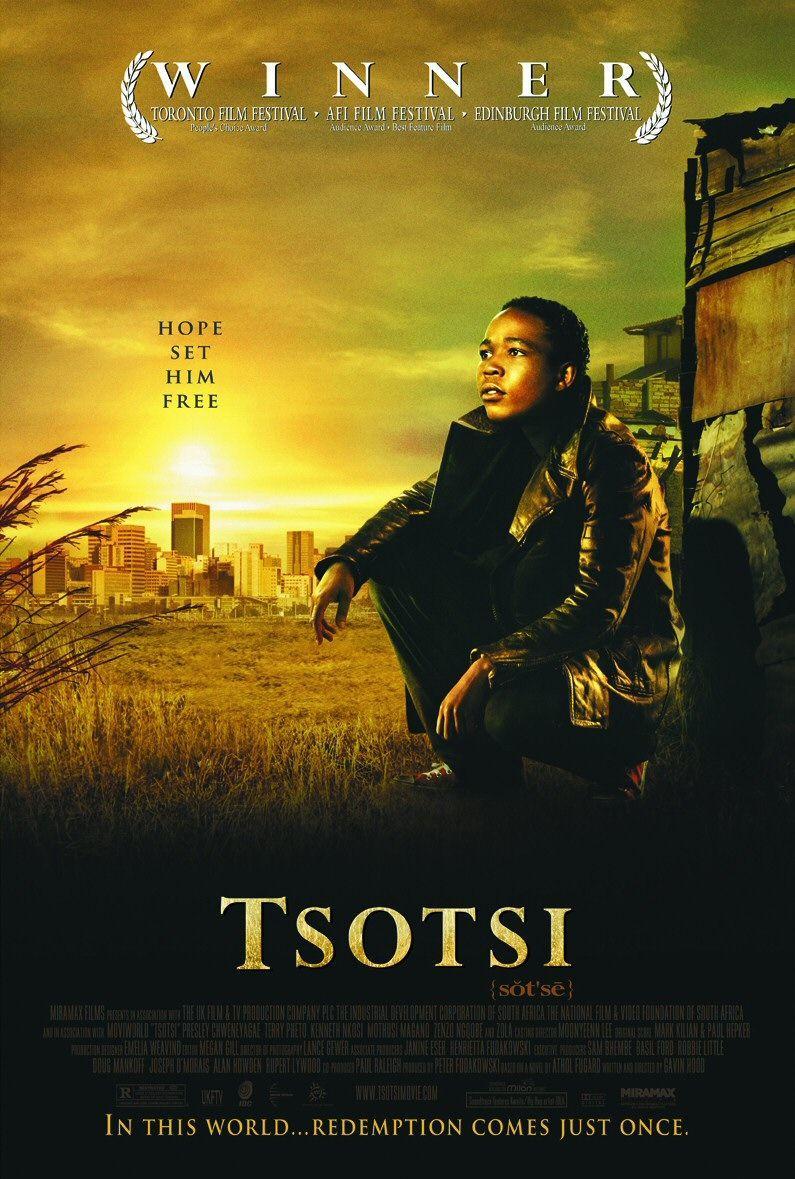
Have you by any chance watched the South African movie “Tsotsi”? In 2006, it was the first South African film and first African film not made in French to win an Oscar for foreign language film and numerous international awards. It tells the story of a ruthless gang leader who steals a car, only to find a baby in the back seat. The movie is based off the novel by the same name “Tsotsi” by South African playwright, novelist, actor, and director widely regarded as South Africa’s greatest playwright Athol Fugard.
This past Saturday, Athol Fugard, who in 1985 was acclaimed as “the greatest active playwright in the English-speaking world” by Time, passed away at the age of 92. His work confronted apartheid and spanned over 7 decades with over 30 playwrights. He was a critic of apartheid and very early broke the rules and included all as in his 1961 breakthrough play, Blood Knot, which featured for the first time in South African history a black and white actor played by Fugard himself, and was played in front of a multiracial audience.
Excerpts below are from the BBC. Enjoy!
=====
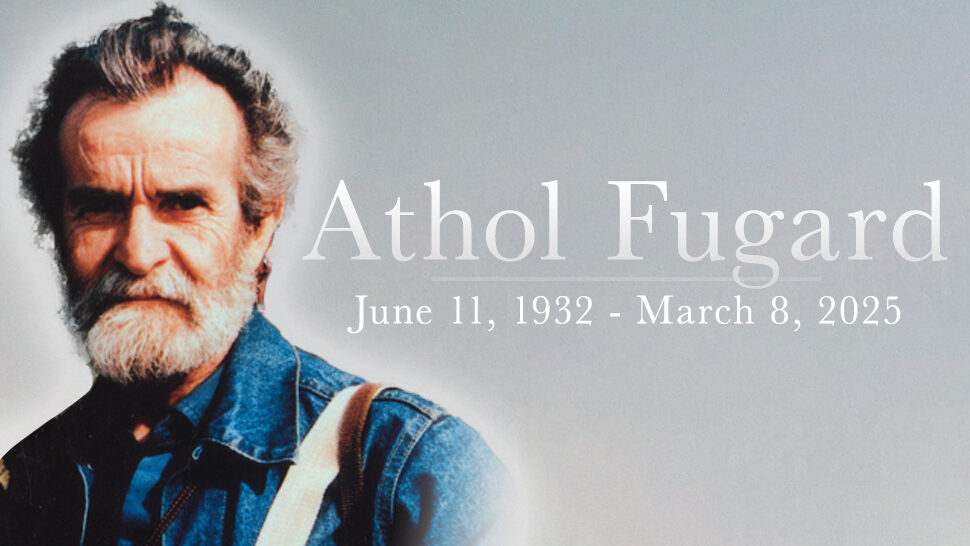
Athol Fugard, who has died aged 92, was widely acclaimed as one of South Africa’s greatest playwrights.
The son of an Afrikaner mother, he was best known for his politically charged plays challenging the racist system of apartheid.
… Fugard wrote more than 30 plays in a career that spanned 70 years, making his mark with The Blood Knot in 1961. It was the first play in South Africa with a black and white actor – Fugard himself – performing in a front of a multiracial audience, before the apartheid regime introduced laws prohibiting mixed casts and audiences. The Blood Knot catapulted Fugard onto the international stage – with the play shown in the US, and adapted for British television. The apartheid regime later confiscated his passport, but it strengthened Fugard’s resolve to keep breaking racial barriers and exposing the injustices of apartheid. He went on to work with the Serpent Players, a group of black actors, and performed in black townships, despite harassment from the apartheid regime’s security forces.
Fugard’s celebrated plays included Boesman and Lena, which looked at the difficult circumstances of a mixed-race couple. Having premiered in 1969, it was made into a film in 2000 starring Danny Glover and Angela Bassett.
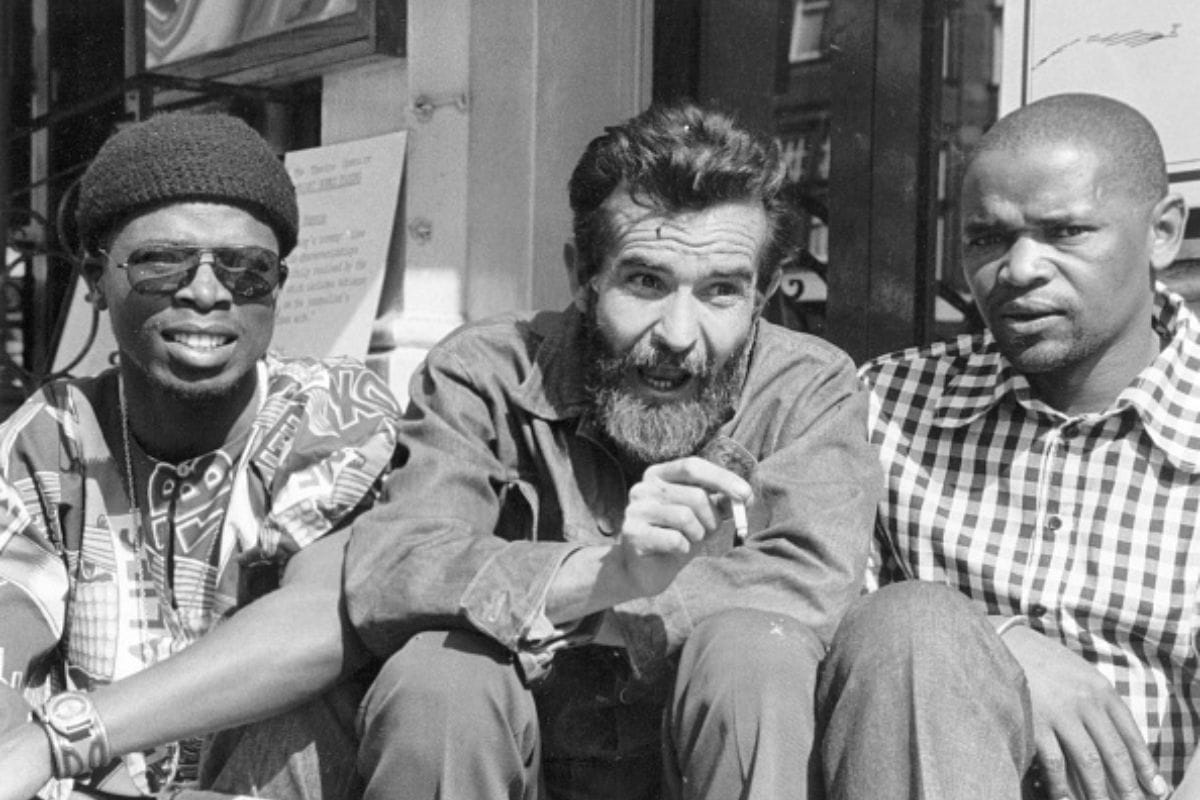
His novel, Tsotsi, was also made into a film, winning the 2006 Oscar for best foreign language movie.
… Other well-known plays by Fugard include Sizwe Banzi Is Dead and The Island, which he co-wrote with the actors John Kani and Winston Ntshona, in a powerful condemnation of life on Robben Island, where anti-apartheid icon Nelson Mandela was imprisoned.
… Fugard won several awards for his work, and received a lifetime achievement honour at the prestigious Tony awards in 2011, while Time magazine described him in 1985 as the greatest active playwright in the English-speaking world.
“Apartheid defined me, that is true… But I am proud of the work that came out of it, that carries my name,” Fugard told the AFP news agency in 1995.
…

Le chien avec sa langue seule lave tout son corps (Proverbe Zandé – République Démocratique du Congo (RDC), République Centrafricaine (RCA), Soudan du Sud). – Une seule femme suffit dans le ménage.
The dog washes his whole body with his tongue alone (Azande proverb – Democratic Republic of Congo (DRC), Central African Republic (CAR), South Sudan). – Only one wife is enough in the household.
At that time, the buffalo was the King of the animals. To drink from the river, you had to wait until it had quenched its thirst first and bathed in it. One day, a lioness whose cub was about to die of itself broke this rule…
The lion was not the king of the animals. At least, he wasn’t at first. Rather, it was Dankélé, a large black buffalo from the savannah, who reigned over the beast people. King Dankélé was a great tyrant, a king who ruled without faith or law. Whether you were right, you were afraid. Whether you were wrong, you were right to be afraid of him.

At that time, there was only one river where all the animals came to drink, but no one was allowed to drink before Dankélé. And Dankélé did not just quench his thirst, he bathed in the river, rolled around in it and did all his business there. It was only after that the others could drink the already dirty water in turn. It was unfair, but that was how it was. You had to put up with it.
But the mother lioness, that day, could not wait for the king to arrive. Her lion cub, who had just arrived in the world, was going to die of thirst. She gave him a little water. She drank a tiny bit herself.
King Dankélé arrived. He was accompanied by members of his court, griots and griottes who sang his praises:

« Ô ! Great Buffalo !
You are greater than Sunjata the great
Greater than Da Monzon the great
Greater than Alexander the Great! »
But King Dankélé, when he was at the edge of the river, saw that they had dared to drink before him, the king. He turned towards his people and, threatening them with his gaze, shouted his anger. And his anger made everyone tremble:
– Who is it… But who dared to drink the king before me? If you don’t point out the culprit, you are all guilty!
The animals, terrified, looked into each other’s eyes. Everyone had seen the lioness giving her cub a drink. But who could take the responsibility of reporting her to this brute of a king? The hyena did so:
– I’m not going to pay for a mistake I didn’t make. It was the lioness who drank before you. That’s it! I just said it.
And immediately, with a leap, King Dankélé crushed the lioness with his big paws.
But the lion cub did not die. He ran away as fast as he could and went into hiding.
He waited and waited until he grew up. When he became a big lion whose roar echoed across the savannah, he went out and said to the buffalo:
– Buffalo, where did my mother go?
The buffalo, intimidated by the strength the lion gave off, stammered:
– Your, your, your mother the lioness.
A counselor whispers in her ear:
– This is the lioness you killed a few years ago because she dared to drink before you.
– Oh yes, that’s right, said the buffalo, turning to the lion. It’s the law, not me. The law is the law. Your mother dared to drink before me, so the law was applied to her. The law is the law, the law is not me.
– The law which applies only to the weakest is an unjust law.
And the lion throws himself on the buffalo, overpowers it, and frees the kingdom of animals.
It is since that day that he is the king of the animals. It is also since that day that he strives to be just and upright.
The French original can be found on Ouologuem Blog. Translated to English by Dr. Y., Afrolegends.com

Yàgg du sabbu waaye dina fóot.
Le temps n’est pas le savon, mais il nettoie les vêtements (Proverbe Ouolof – Sénégal, Gambie). – Le temps guérit toutes les blessures.
Time isn’t soap, but it will clean clothes. (Wolof proverb – Senegal, Gambia). – Time heals all wounds.
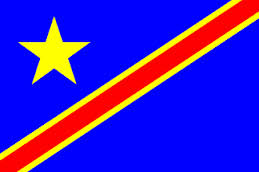
For once the United Nations has decided to intervene in the situation in the Democratic Republic of Congo (DRC). Please remember that this is an organization that is two-faced, saying one thing from one side of the mouth and another from the other. History has told us never to trust the UN because it is an organization that only serves the “strong” nations of this world, helping them exploit the “weaker” ones. Anyways, this past Friday, the UN has called for a ceasefire in the DRC after Goma and Bukavu, two of the largest cities in the eastern part of Congo, in regions rich in minerals that could power the entire earth, were captured by the M23 rebel group backed by Rwanda and its Western masters.
Excerpts below are from Africanews.
=====
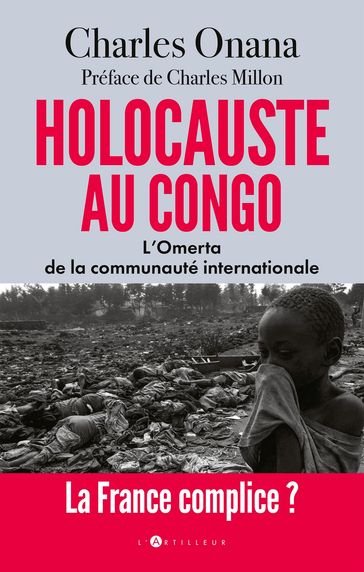
The United Nations Security Council unanimously adopted a resolution on Friday calling for an immediate and unconditional ceasefire in the Democratic Republic of the Congo (DRC).
Rwanda-backed rebels have taken control of two key cities in Congo’s mineral-rich eastern region in less than a month, following a major escalation in their long-standing conflict with Congolese forces.
Nicolas de Rivière is the Representative to the United Nations in France: “There is no military solution to the conflict. The M23 offensive, supported by Rwanda, must end. The priority now is to reach an effective, unconditional, and immediate ceasefire agreement.”
… “While it took the Council some time to reach a consensus, its resilience is evident. On behalf of the Government and all citizens of the Democratic Republic of the Congo, especially those from Bunagana to Kamanyola, Goma, Sake, Minova, Nyabibwe, Kalehe, Kavumu, and Bukavu, I sincerely thank all members of the Council,” said Zénon Mukongo Ngay, the Representative to the United Nations in the Democratic Republic of the Congo.
The rebels are supported by roughly 4,000 troops from neighbouring Rwanda, according to U.N. experts [UN experts, always present on the ground while atrocities are ongoing]. At times, they have threatened to march as far as Congo’s capital, Kinshasa, located over 1,000 miles away.


 African Heritage