When Emperor Tewodros II was crowned King, the British Consul Walter Plowden who knew well the political events of Ethiopia during the 1850s and had foretold the rising star of Kassa, the Emperor’s birth name, the freelance warrior from Qwara, described him as such:
“The King Theodorus is young in years, vigorous in all manly exercises, of a striking countenance, peculiarly polite and engaging when pleased, and mostly displaying great tact and delicacy. He is persuaded that he is destined to restore the glories of the Ethiopian Empire and to achieve great conquests: of untiring energy, both mental and bodily, his personal and moral daring is boundless… When aroused his wrath is terrible, and all tremble; but at all moments he possesses a perfect self-control. Indefatigable in business, he takes little repose night or day: his ideas and language are clear and precise; hesitation is not known to him; and has no counsellors or go-between. He is fond of splendour, and received in state even on a campaign. He is unsparing in punishment — necessary in a wilderness as Abyssinia (at that time). He salutes his meanest (poor) subjects with courtesy, is sincerely though often mistakenly religious, and will acknowledge a fault committed to his poorest follower in a moment of compassion with sincerity and grace. He is generous to excess, and free from all cupidity, regarding nothing with pleasure or desire but munitions of war for his soldiers. He has exercised the utmost clemency towards the vanquished, treating them more like friends than enemies. His faith is signal: without Christ I am nothing.”
Prince Alemayehu, son of Emperor Tewodros II, as photographed in 1868 by Julia Cameron
This is a heartbreaking news. Last week, Buckingham Palace, and the UK government refused to return the remains of Prince Alemayehu, son of Emperor Tewodros II, to Ethiopia. Prince Alemayehu’s remains are still in Great Britain 150 years after his death. How preposterous is this! Few years ago, when the Ethiopian government asked, the British said that they could not identify his bones (Ethiopians urge Britain to return bones of ‘stolen’ prince after 150 years). Today, Ethiopians thought that now that there is a new occupant in Buckingham Palace, King Charles III, Prince Alemayehu’s remains will finally return home. However, Buckingham Palace said that returning his remains will not be possible, as it will disturb the resting place of several others in the vicinity. From not being able to identify his bones a few years ago (when in this day and age the remains of King Richard III of England have been identified 500 years after his death), to disturbing others buried there, it makes us wonder if they ever even took the time to look. These are the same people who only returned the hair of Emperor Tewodros II only in 2019. It is so painful to hear… it feels like part of Emperor Tewodros II is still stuck in England. As one looks at pictures of the young orphaned prince who arrived in the UK at the age of 7, and who died at the age of 18, there is so much pain in his face.
Below are snippets of the article; for the full version, go to the BBC.
=====
Emperor Tewodros II
Buckingham Palace has declined a request to return the remains of an Ethiopian prince who came to be buried at Windsor Castle in the 19th Century.
Prince Alemayehu was taken to the UK aged just seven and arrived an orphan after his mother died on the journey. Queen Victoria then took an interest in him and arranged for his education – and ultimately his burial when he died aged just 18.
But his family wants his remains to be sent back to Ethiopia. “We want his remains back as a family and as Ethiopians because that is not the country he was born in,” one of the royal descendants Fasil Minas told the BBC. “It was not right” for him to be buried in the UK, he added.
… in a statement sent to the BBC, a Buckingham Palace spokesperson said removing his remains could affect others buried in the catacombs of St George’s Chapel in Windsor Castle. “It is very unlikely that it would be possible to exhume the remains without disturbing the resting place of a substantial number of others in the vicinity,” the palace said. The statement added that the authorities at the chapel were sensitive to the need to honour Prince Alemayehu’s memory, but that they also had “the responsibility to preserve the dignity of the departed“.
How Prince Alemayehu ended up in the UK at such a young age was the result of imperial action and the failure of diplomacy. In 1862, in an effort to strengthen his empire, the prince’s father Emperor Tewodros II sought an alliance with the UK, but his letters making his case did not get a response from Queen Victoria. Angered by the silence and taking matters into his own hands, the emperor held some Europeans, among them the British consul, hostage. This precipitated a huge military expedition, involving some 13,000 British and Indian troops, to rescue them [no diplomacy, always force and violence].
British Camp at Zoola, Abyssinia expedition 1868-9 (Source: Victoria and Albert Museum, London)
The force also included an official from the British Museum. In April 1868 they laid siege to Tewodros’ mountain fortress at Maqdala in northern Ethiopia, and in a matter of hours overwhelmed the defences. The emperor decided he would rather take his own life than be a prisoner of the British, an action that turned him into a heroic figure among his people.
Departure of the British expeditionary forces from Maqdala with the loot – Illustrated London News 1868
After the battle, the British plundered thousands of cultural and religious artefacts. These included gold crowns, manuscripts, necklaces and dresses. Historians say dozens of elephants and hundreds of mules were needed to cart away the treasures, which are today scattered across European museums and libraries, as well as in private collections. [In the case ofMaqdalain1868, it is said that15 elephants and 200 mules were needed to cart away all the loot from Maqdala.British forces looted the place with no restrain].
The British also took away Prince Alemayehu and his mother, Empress Tiruwork Wube. [The loot was not enough… the young prince and the Empress too].
When I was growing up, I was fascinated by images on the television, of women on their motorcycles cruising through the streets of Ouagadougou, the capital of Burkina Faso. Seeing women on motorcycles was always a wonder. It was so refreshing, and seemed like such a simple act, yet a mark of independence. These are not women riding Harleys or fast bikes, but simple women wearing wrappers or boubou (The Boubou: A Traditional African Garment) or Faso dan Fani, everyday women taking their children to school, going to work, etc. Even more amazing is that many of these women are Muslim. It is no secret that women in Ouagadougou love their motorcycles. This means of transportation which particularly boomed in the late 1980s is synonymous with independence, freedom, courage, and near infinite possibilities for the women. After all, for anybody who has ridden on a motorcycle, it feels so freeing to have the wind bashing all over oneself while zipping through the city. Today, the country has trained hundreds of women mechanics.
FESPACO 2023
When Thomas Sankara, the president of the Faso, came in power in 1983, he led a series of changes that emancipated women, bringing them closer to equal rights in the society. It is no wonder that Nigerian filmmaker Kagho Idhebor felt the same way as I did, and was so intrigued by these women on their motorcycles, that he made the documentary”Burkina Babes” which was featured at this year’s FESPACO. Excerpts below are from AfricaNews. Enjoy!
====
‘Burkina Babes’ by Kagho Idhebor
In Burkina Faso’s capital, many ride their motorcycles every day to commute, go to school or move around the city.
In 2020, nearly one Burkinabe in seven owned a motorcycle.
the vehicle is also a tool of emancipation, For women like Valérie Dambré
“This defines the Burkinabe woman, the courage of women. In fact, riding a motorcycle demands courage,” the motorist.
When Nigerian filmmaker Kagho Idhebor first came to Ouagadougou he was blown away by how many women whizzed about on motorcycles. So much so that he directed “Burkina Babes“, a documentary on that. It even ran at Africa’s largest film the FESPACO, the pan-African cinema and TV festival of Ouagadougou.
“I have been to couple of parts of the world and even in Nigeria you see a lot of motorcycles, guys driving motorcycles but I have not seen women in the last country driving motorcycles with so much attitude and very independent and that captivated me, like I was blown away!,” the man in his thirties exlaims.
Since 1977, the Women’s School for Skills Initiation and Training is based in Ouagadougou. It has trained over 700 women to be mechanics and bodywork repairers.
…. During his four years in power in the 1980s, which ended traumatically with his assassination, Sankara “played an emancipating role, breaking down traditional mindsets and thrusting women into the public space, outside the home,” she said. “Young women today were brought up on his ideas.”
FESPACO 2023 theme ‘African Cinema and Culture of Peace’
The biennial African film festival, FESPACO, took place this year from 25 February to March 4. On March 4, the winner was announced, and Tunisian Youssef Chebbi won the Golden Stallion of Yennenga (Etalon d’or de Yennenga) for his film ‘Ashkal‘ which centres on the investigation into the killing of a caretaker on a construction site at Carthage on the outskirts of his hometown. He won the first prize over Burkinabe filmwriter Apolline Traore, who picked up the Silver Stallion of Yennenga for the film ‘Sira‘, while the Bronze Stallion was awarded to Kenya’s Angela Wamai for ‘Shimoni‘.
FESPACO 2023
The Festival Panafricain du cinema et de la television de Ouagadougou (FESPACO) is the Panafrican Film and Television Festival of Ouagadougou, which happens to be the largest African film festival. It is held biennially in Ouagadougou, the capital of Burkina Faso. First established in 1969, and boasting some of Africa’s greatest writers and filmmakers (like Ousmane Sembene), the FESPACO offers a chance for African filmmakers and professionals to showcase their work, exchange ideas, and meet other filmmakers, and sponsors.
The Golden Stallion of Yennenga
There were a total of 170 entries selected for the FESPACO festival in the capital Ouagadougou, including 15 fiction feature films in contention for the Yennenga Golden Stallion award and a prize of around $30,000. A big win for women filmmakers, with the second and third prizes won by Apolline Traore and Angela Wamai respectively. Burkinabe filmmaker Apolline Traore won the Silver Stallion for Sira, about a woman kidnapped by Jihadists, and Kenyan director Angela Wamai took home the Bronze Stallion forShimoni, about a schoolteacher rebuilding his life in his remote village after a harsh stint in jail. In 2019, Burkinabe director Apolline Traore had said that any award had to be earned, not considered a token gesture; we are glad for the recognition her work and that of others is getting recognized.
The film, ‘Cuba in Africa‘ produced by Negash Abdurahman won the Thomas Sankara Prize. The film talks about the altruism of Cubans who sacrificed their sons and daughters on behalf of Africa; Cuban volunteers gave their lives to help Angola, Namibia, Guinea Bissau and Cape Verde, and others win independence, and contributed to the fall of apartheid in South Africa. It is a story all Africans should learn.
The 29th edition of Fespaco will be held from 22 February to 1 March 2025, also in Ouagadougou, Burkina Faso.
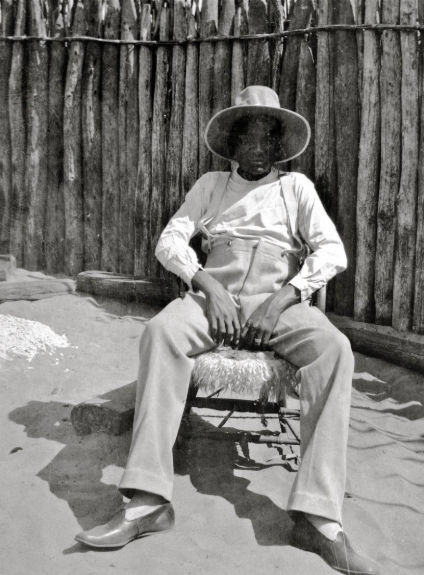
King Mandume ya Ndemufayo, portrait extracted from a photograph of the King with British representatives in South Africa
I found this Kwanyama poem written in honor of King Mandume. It is simple, and rich in culture. It emphasizes the Kwanyama culture: how can one cowardly abandon his king? the only son of his mother? A mother’s only son is everything, so he needs to be protected by those around. It also shows the respect given to the king, as to him were extended leather carpets. From this poem, it is clear that Mandume was a very good rider, a fearless knight, and a fine gunman. The term soba, is the term for king in Kwanyama (Cuanhama in Angola) culture. The reference to the “ragged brother” is based upon the fact that from Kwanyama accounts, Mandume used to “disguise himself in poor clothing and walk about the country to listen to what the people were saying, to see if they were satisfied by his laws” (Loeb, 1962:35), given that he had made significant positive changes to laws; while the Portuguese account on the other hand, state that Mandume used to dress in rags to trick those who would not recognize him as the king, “picking quarrels and exacting cruel vengeance to those who responded to his provocations with crude insults” (Estermann, 1960: 221). When living in the desert, water is crucial to survival; thus, water finds its way into this poem: why would anyone share the little they have with an enemy who has been trying to crush them and force them off their land? Enjoy the poem, translated to English by Dr. Y., Afrolegends.com. To learn more, read “Lyrical Nationalism in Post-Apartheid Namibia” by W. A. Haugh, Lexington Books (2014).
King Mandume ya Ndemufayo, portrait extracted from a photograph of the King with British representatives in South Africa
Mandume, king of the Cuanhama (Oukwanyama) principal subgroup of the Ovambo in Southern Angola, was one of the last and most important resistance leader against Portuguese conquest in Angola. By the size of his army, he could be compared to Samori Touré, but he did not have the same historic aura or military genius and given his very short life, he has remained unknown to many. Yet, in 1915, he held in his hands for 10 days the scourge of the balance of power in Southern Angola directly, and indirectly in Angola as a whole. Mandume is celebrated by many nationalists in Luanda as one of their heroes because he fought against Portuguese advances inside Angolan territory. He was a leader of the Ovambo resistance, defending the independence of his people, the Cuanhama so as not to get absorbed within Angola. Given European drawing of African boundaries during the 1884Berlin Conference, the Cuanhama found themselves between areas of Portuguese West Africa (Angola) and German South West Africa (Namibia); thus Mandume has also entered the pantheon of the Namibian resistance. Who was Mandume?
King Mandume ya Ndemufayo, probably in Oihole, sometime before 1916
Mandume ya Ndemufayo was a simple ethno-nationalist, who refused to be colonized and had about 35,000 to 40,000 armed fighters; more than any Angolan nationalists ever had before 1974. He took over the reins of the Cuanhama kingdom in 1911 and his reign lasted until 1917 when he died of either suicide or machine gun fire while under attack from South African forces. Ya Ndemufayo grew up during a time of significant upheaval in the Oukwanyama kingdom due to the presence of European merchants and missionaries. As King Nande’s nephew (his mother was the king’s sister), he was third in line for succession to the Kwanyama throne. To protect his life as royal child heir to the throne, Mandume had to live in various homesteads. King Nande died on 5 February 1911 and Mandume succeeded him at barely 18 years old. Immediately upon ascending the throne, he moved the royal residence to Ondjiva (now in Angola). He could be thought of as a neo-traditionalist leader, who, even though he studied in the German mission schools, he spoke German, and a bit of Portuguese, and championed the independence of his people. Strongly anti-European, he expelled Portuguese traders from Kwanyama territory to denounce price inflation. Given the great drought and famine which lasted from 1911 to 1916, Mandume issued decrees prohibiting the picking of unripened fruits to protect against droughts and the unneeded use of firearms, an important commodity obtained from European traders. Significantly, he also issued harsh penalties for the crime of rape and allowed women to own cattle, which was previously illegal. Overall, King Mandume sought to restore previous Kwanyama wealth and prosperity against a decaying system of local leadership. Ya Ndemufayo had a reputation for expelling Christians within the Oukwanyama kingdom. Numerous Christian families fled to the Ondonga kingdom of the Ovambos. Ya Ndemufayo did not favor Portuguese Roman Catholic missionaries as well as German Rhenish Missionary Society Protestants within his kingdom. In some European archives, it is said that he was a tyrant, but it is unclear whether it is European propaganda (a case of the hunter telling the story of the hunt) or reality.
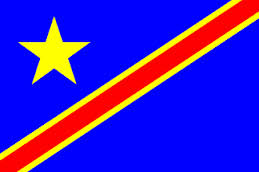
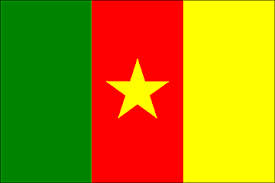
Flag of Ovamboland
Before Mandume, previous Cuanhama kings had fought valiantly against Portuguese invasion of their land, King Weyulu from 1885 – 1904, his brother King Nande (1904 – 1911); unfortunately, they all in the end saw no choice to the inevitable Portuguese colonization. Mandume rejected the idea of Portuguese colonial rule and demanded to be on equal terms with the colonial rulers in their distant capitals.
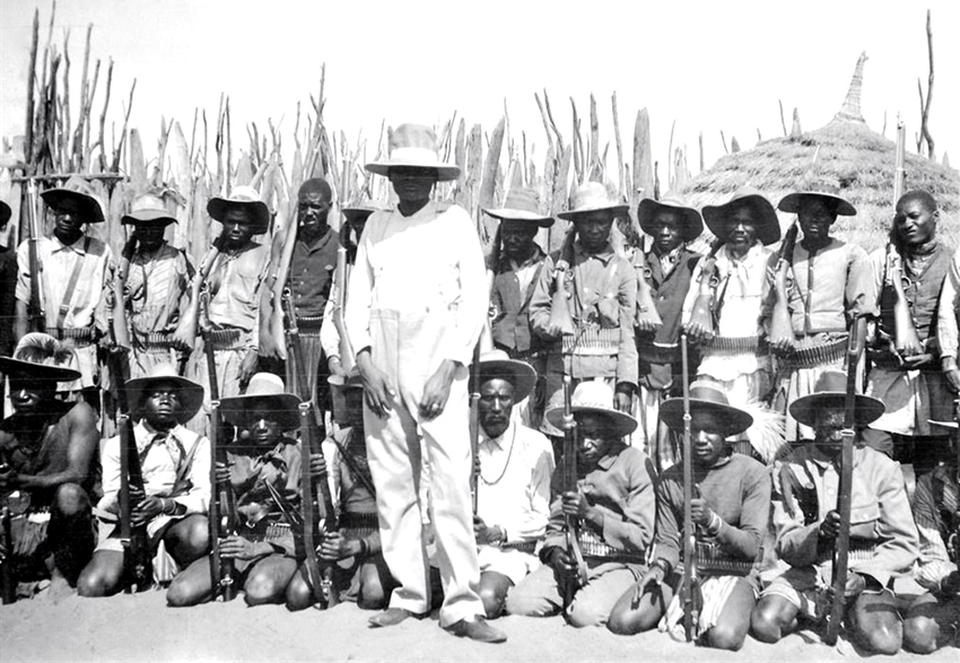
King Mandume with his warriors in Oihole in 1916
No European colonizer seriously challenged the well-organized and well-armed Ovambo kingdoms until 1915 and the beginning of World War I which coincided with a massive local drought. During the Battle of Omongwa in August 1915, ya Ndemufayo and the Kwanyama’s resisted a Portuguese attack led by Pereira de’Eça for three days. On 20 August, Mandume assembled several thousand men and attacked the Portuguese camp shouting “The land does not belong to the white[s]!”. After 10 hours of fighting, the Ovambo were forced to retreat due to a lack of supplies including the water which they had lost. In total, the Portuguese took 35 casualties and 57 wounded; while the Ovambo lost 25 and had 100 wounded. After the battle, the Portuguese also started claiming that German forces were helping the Ovambo because it was unimaginable to them that Africans were able to wage war like Europeans. Simultaneously, the South African forces peacefully conquered the portion of the Oukwanyama kingdom formerly located in German South West Africa; this was at a time when Germany lost the first world war, and thus all its African colonies. German South West Africa’s administration was taken over by the Union of South Africa (part of the British Empire) and the territory was administered as South West Africa under a League of Nationsmandate. Due to losses and lack of water, ya Ndemufayo first relocated the Kwanyama capital to an area south called Oihole, and then later into South West Africa. He used the border line to conduct attacks against Portuguese who were encroaching on his old territory in Southern Angola. However his attacks of Portuguese interests from his territory in South West Africa were not appreciated by the South African authorities who summoned him to Windhoek where he refused to go. In February 1917, after ya Ndemufayo refused to submit to South African control, he died in battle against the South Africans who had mounted an attack against him. The cause of his death is disputed; South African records show his death from machine-gun fire, while oral and popular history described his death as suicide, after being wounded so he could not be taken in by enemy forces. After his death, the South African administration abolished the Kwanyama-Kingship which was only restored in 1998, after over 8 decades.
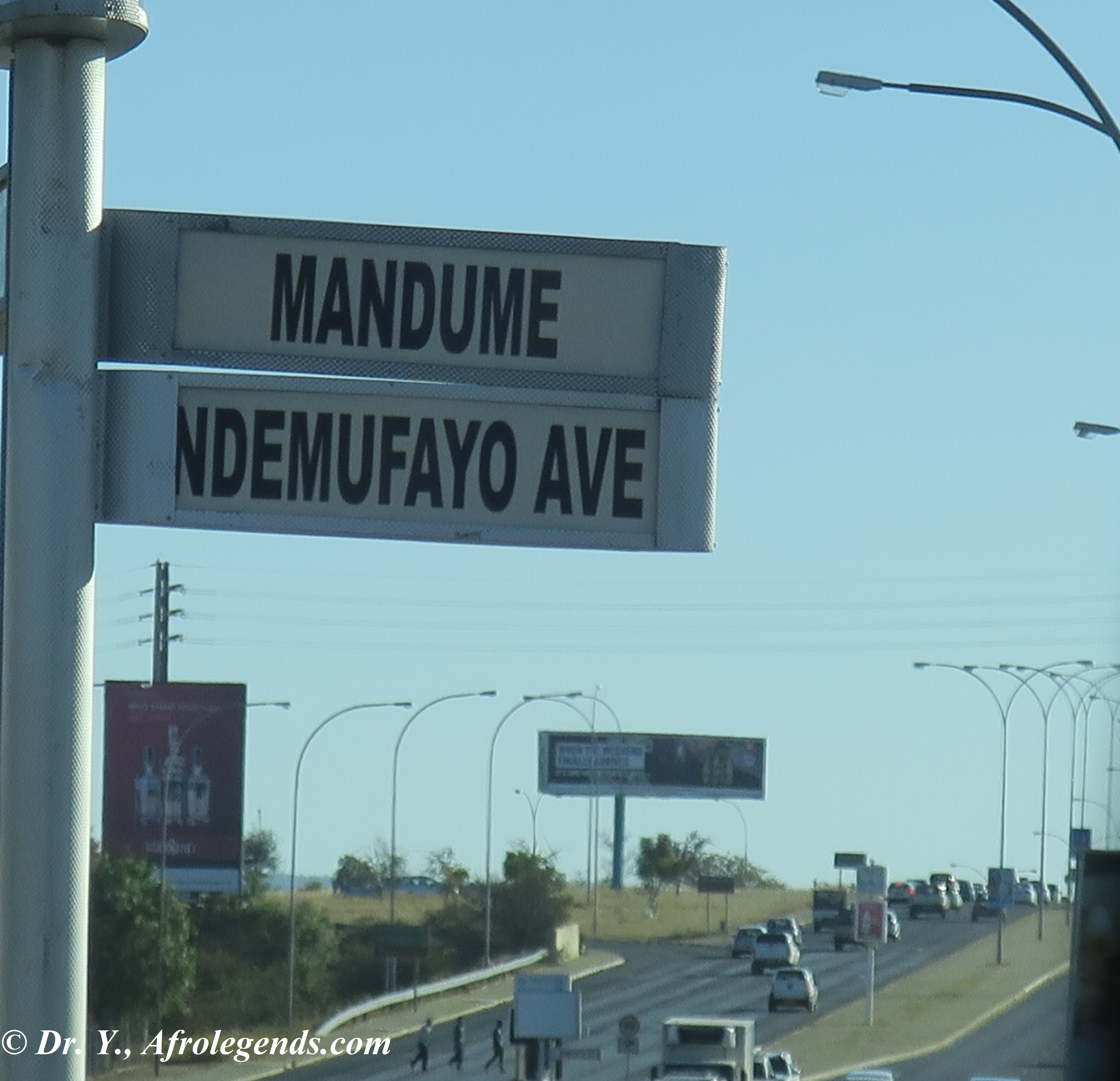
Mandume Ndemufayo Ave in Windhoek, Namibia
Today, Mandume Ya Ndemufayo is honored as a national hero in both Angola and Namibia. He is one of nine national heroes of Namibia that were identified at the inauguration of the country’s Heroes’ Acre near Windhoek. Namibia’s Founding President Sam Nujoma remarked in his inauguration speech on 26 August 2002 that: “It is better to die fighting than to become a slave of the colonial forces.” — These were the defiant words of one of Namibia’s foremost anti-colonialist fighters. He said these words in defiance when the combined [European] colonial forces insisted he should surrender. […] To his revolutionary spirit and his visionary memory we humbly offer our honor and respect.
Early resistant, bronze plaque for King Mandume ya Ndemufayo at the Independence Museum in Windhoek, Namibia
The 100th anniversary of the death of Oukwanyama King Mandume ya Ndemufayo on February 2017 was attended by thousands of Namibians at Omhedi in the Ohangwena region including former Namibian presidents, where President Hage Geingob unveiled a bust of King Mandume. If you ever visit Windhoek, Namibia, make sure to walk along the street named after King Mandume, or visit the Universidade Mandume ya Ndemufayo in Angola. Please check out the article “The Legacy of legendary Oukwanyama King still vivid“, the article from The Namibian, Order out of chaos: Mandume Ya Ndemufayo and Oral History by Patricia Hayes, and lastly Les Africains Tome 8, editions J.A. p.207 (1977) to learn more about this great last resistant to Portuguese colonial advances in Southern Angola and Northern Namibia.
“We are heirs of the revolution” by Thomas Sankara
Almost 4 decades after Thomas Sankara and his 12 companions were treacherously murdered, they are given a burial at the memorial erected in Sankara’s honor in front of the place where they were assassinated, at the Conseil de l’Entente. His family has boycotted the ceremony because, as they say, how can you bury such a hero in the place where he was murdered? In a press release, they said, “We believed and continue to believe that it is fundamental that a space be found that allows to gather and appease hearts, and not to divide and increase resentment,” the Sankaras added in their statement on Sunday, calling the place chosen by the government “conflictual and controversial”. I know that Thomas Sankara now belongs to the entire nation of Burkina Faso, and even to the continent of Africa, but shouldn’t his family have a say as to where he is buried?
At the time of Thomas Sankara and companions’ murders in 1987 ordered by Blaise Compaore and his croonies, Sankara and his comrades were buried in some common fields with no names. Later, their bodies were exhumed in 2015 for legal proceedings.
What do you think? Is it okay to bury Thomas Sankara, our true panafricanist and anti-imperialist revolutionary, who fought for our freedoms, in the place where he was murdered?
As Sankara always said, Homeland or death, we shall overcome!
President Jerry Rawlings of Ghana (Source: thecable.ng)
A couple of years ago, we published the words of President J.J. Rawlings of Ghana on Betrayal. Let’s take a trip down memory lane to revisit that article published here on Afrolegends in 2020, where Rawlings talks about African identity, betrayal and much more. As Amilcar Cabral said, “Let no one tell us that Nkrumah died of a cancer to the throat or some other disease; no, Nkrumah has been killed by the cancer of betrayal …“; the cancer of betrayal is a true gangrene to progress in Africa, how many leaders has it claimed?
=====
In the video below, you will hear J.J. Rawlings talk about the issues always discussed on this blog: the loss of the African soul to westernization, the danger of traitors within the ranks, and more importantly the dangers of globalization. People should really pay attention to all he has to say about betrayal, African identity, and also about the manipulations of the people by the triumvirate that is the multinationals, the media, and the intelligence.
Kwame Nkrumah, First President of Ghana
On betrayal, Jerry Rawlings said, “Something that is worse than an enemy is a traitor.” This is very reminiscent of the speech Amilcar Cabral gave at the funeral of Ghana’s first president Kwame Nkrumah on May 13, 1972, which I translated to English here on Afrolegends, “The Cancer of Betrayal” by Amilcar Cabral. J.J. adds, “As bad as an enemy can be, … something worse than an enemy is a traitor.”
On African identity, Rawlings affirmed, “In the process of trying to modernize, we [Africans] have ended up being westernized. … When I wanted to even name my children African names, heroic names, … the catholic church said no…they will have to be catholic names … [which] are European names.“… “I have a right to my identity, don’t take away my identity!“
“Christianize me if you may, but don’t westernize me!” He talks about the issues of African identity, which is powerfully shown in the poem ‘My Name’ by Magoleng wa Selepe.
On globalization, “The world is manipulated by the multinational corporations, the media, and the intelligence apparatus, … they work as a triumvirate and they are neatly sandwiched… in between the governed people and the governors… the sooner we begin to return, restore, some sense of morality in business ethics, in politics, in the media, intelligence apparatus, …” apply the same morality to all, especially when talking about globalization, applying the same moral standards to all.
This week marks the anniversary of the assassination of Amilcar Cabral, the father of the independence of Cape Verde and Guinea Bissau. To celebrate his life, I have decided to re-post Cabral’s speech given during President Kwame Nkrumah‘s state funerals in Conakry on 13 – 14 May 1972“The Cancer of Betrayal” which I transcribed to French (“Le Cancer de la Trahison“) and translated to English (“The Cancer of Betrayal”) and published on Afrolegends in 2012. As Cabral states, betrayal has been at the heart of so many issues faced by Africa today: ” … fromclass struggle, … from contributions to social structures, from the role of party or other instructions, including armed forces…. My idea on this question will allow us to better understand the greatness of Nkrumah’s work, to understand the complexity of problems he had to face so many times alone,… …. we, Africans, firmly believe that the dead continue living by our sides… . Nkrumah will resuscitate each dawn in the hearts and in the determinations of freedom fighters, in the action of all true African patriots.”
=========
In his last public speech in Conakry, at the funeral of the former Ghanaian president Nkrumah, Amilcar Cabral had denounced the cancer of betrayal that eats up African movements. His comments today take a strange resonance in Guinea as in Angola, and Mozambique, where many movements are demanding power which the Portuguese have not yet abandoned.
Amilcar Cabral
“… What to say? but we must speak otherwise at this point, if we don’t talk, our hearts may burst. Our tears should not infiltrate the truth.We, freedom fighters, we do not mourn the death of a man, even a man who was a comrade and an exemplary revolutionary, because as President Ahmed Sekou Toure often says ‘what is man in front of the infinite being and transgressing of the people and of humanity?’ We do not mourn the people of Ghana scoffed in its most beautiful realisations, in its most legitimate aspirations.We are not crying for Africa, betrayed. We are mourning, yes, of hatred towards those who were able to betray NKRUMAH to serve the ignoble imperialism… Mr President, Africa by requiring through the voice of the people of the Republic of Guinea, as always fairly represented by President Ahmed Sekou Toure, whom NKRUMAH had put in his right place on the Kilimandjaro’s highest summits of the African revolution, Africa rehabilitates itself and through history. President NKRUMAH, which we honor is primarily the great strategist of the struggle against classic colonialism, he is the one who created what we call African positivism, what he called “positive action”, affirmative action. We pay tribute to the declared enemy of neocolonialism in Africa and elsewhere, the strategist of economic development in his country. Mr President,we praise the freedom fighter of the African people who always gave his full support to national liberation movements, and we want to tell you here that we, in Guinea and Cape Verde islands, even though it is true that the most important factor for the development of our struggle outside our country was the independence of the Republic of Guinea,the heroic ‘no’ of the people of Guinea on 28 September 1958. It is also true thatif we went through the struggle regenerated, it was essentially due to the concrete support of Ghana and particularly of President Nkrumah …
Mr. President, we should however in this moment remember that all coins in life have two faces, all realities have positive and negative sides… to all positive action, is opposed a negative action. To what extent is betrayal’s success in Ghana linked to problems of class struggle, from contributions to social structures, from the role of party or other instructions, including armed forces as part of a new independent state. To what level, we shall ask ourselves, is betrayal’s success in Ghana linked to a correct definition of this historical entity and craftsman of history that is the people and their daily work, in defending its own independence conquests? Or to what extent is betrayal’s success not linked to the major problem of the choice of men in the revolution? My idea on this question will allow us to better understand the greatness of Nkrumah’s work, to understandthe complexity of problems he had to face so many times alone… problems that will allow us to conclude that, as imperialism exists, an independent state in Africa should be a liberation movement to power or it would not exist. Let no one tell us that Nkrumah died of a cancer to the throat or some other disease; no, Nkrumah has been killed by the cancer of betrayal that we should uproot… by the cancer of betrayal, that we should root out of Africa if we really want to definitely crush the imperialist domination on this continent. But, we, Africans, firmly believe that the dead continue living by our sides, we are a society of dead and living.Nkrumah will resuscitate each dawn in the hearts and in the determinations of freedom fighters, in the action of all true African patriots. Our liberation movement will not forgive those who betrayed Nkrumah, the people of Ghana will not forgive, Africa will not forgive, progressive mankind will not forgive!”
Translated from French by Dr. Y., afrolegends.com (12 October 2012)
A Young Pele at Santos FC smiling at the camera (Source: Daniel Edwards, Goal.com)
Football has played an integral part to the lives of many around the globe. The 2022 Qatar FIFA World Cup this past November is a testimony to that. The legend Edson Arantes do Nascimento, often known as Pelé, believed by many to be the greatest player that ever lived, passed away at the end of last year. Three-time World Cup winner, Pelé managed to score 757 goals in 831 games throughout his 20 year career although his club Santos claims his tally was closer to one thousand. Pelé was deeply loved in Africa; he was a gifted Black Brazilian footballer, among the first of African heritage to receive such international acclaim, no wonder that in the African independence era, Africans identified with him. His story with Africa was a great love story. To Black Brazilians, he was key in carving out space and recognition for black people in Brazilian football, acclaimed by the masses, without being directly involved in the fight against racism. To Africans and multitudes in the world, he was simply Pelé, the king. Below are excerpts from the BBC article. Enjoy!
====
Being one of the very first young black sporting superstars of the television era, Pelé drew the love and affinity of Africans across the continent.
As decolonisation movements swept across Africa in the late 1950s and early 1960s, Pelé was invited by newly independent countries to play in prestigious friendlies with his club Santos FC and the Brazilian national team.
In his autobiography, Pelé said that the following decades and subsequent repeated trips to the African continent, “changed not only my view of the world, but also the way the world perceived me“.
The author of the Almanac of FC Santos, Guilherme Nascimento, correctly pointed out that the African trips were “so full of stories that there is no clear boundary between legend and fact“.
His time in Algeria, for instance, was like something out of a film. In 1965, the 24-year-old arrived while film director Gillo Pontecorvo was shooting The Battle of Algiers. As a result, it was perfectly normal to see battle tanks shuttle across Algiers from downtown to the Casbah. Algeria’s football-loving President Ahmed Ben Bella scheduled two friendly matches for the occasion – one in Oran on 15 June, and one in the capital, Algiers, four days later. However, on 17 June, Ben Bella’s own Minister of Defence Houari Boumediene carried out a coup d’etat, deposing the president and cancelling the second match. Some credible journalists and historians believe that Boumediene may have used the commotion around Pele’s arrival as a distraction in order to carry out his coup.
… Pele’s trips to Nigeria and the Democratic Republic of Congo have also become shrouded in lore. During both trips, he was apocryphally credited with instilling peace in the country that was hosting him. The Nigerian Civil War raged from 1967-1970, yet when Pele visited in 1969 to play in an exhibition match versus the Nigerian national team, there were claims that a 48-hour ceasefire had been declared. “I’m not sure it’s completely true,” Pelé said in his book. “But the Nigerians certainly made sure the Biafrans wouldn’t invade Lagos while we were there,” he said, recalling a huge military presence. There was never much of a chance of that happening though, as the Biafran separatists were at least 500km (310 miles) away and being pushed back by the army.