Pius Njawe in his own words

Pius Njawe
Pius Njawe

The following excerpts are taken from the article Never a Prisoner published in Pambazuka in 2006, in which Pius Njawe talks about himself.

“I have been a journalist since the age of 15. I started as an errand boy at a newspaper called Semences africaines, in the city of Yaoundé, Cameroon. Over the past 34 years, I have been arrested 126 times while carrying out my profession as a journalist. Physical and mental torture, death threats, the ransacking of my newsroom, etc., has often been my daily lot in a situation where repression and corruption, even within the press, have become the norm. Woe betide the slightest dissenting voice in this context, for it attracts all kinds of wrath, even from so-called colleagues…”

I have never felt like a prisoner when I have been behind bars. You can be in prison without being a prisoner; the real prisoners are those who imprison journalists whose only crime is to inform or to express an opinion… ”

“… my long stay in prison above all stimulated my sense of solidarity with others, particularly the poor and the outcast… strengthened my determination to use journalism as a weapon against all kinds of abuse. For there is no better weapon than words for restoring peace and justice among people…”

To have the privilege of writing taken away from you overnight feels like being victim of a crime…

“During a lecture I once gave to students from a well-known university in New York, the director of the school of journalism made the following remark: “Mr. Njawe, my students and I appreciated your brilliant exposé of the situation regarding press freedom in Cameroon and in Africa in general. But I cannot help wondering one thing: either you invented all these stories to impress us, which I could understand, or everything you have told us is true and I am dying to ask you why you continue to work in the profession in the suicidal situation you describe?”

“It is indeed difficult to understand why people persist in a profession that causes them so much misery and suffering. As regards my own case, I invariably reply to everyone who wonders this, that I entered journalism the way you enter a religion; journalism is my religion. I believe in it, and a thousand trials, a thousand arrests, a thousand imprisonments and as many death threats will never make me change job. On the contrary, the harder it is, the more you have to believe in it and cling to it.”

Even in the depths of a prison cell you can feel good about being a journalist. How many times have I not rubbed my hands in my cell, my fingers itching to once again hold a pen between them, when thinking back over my career? How many times have I smiled when recalling an editorial or an article that helped foil the most atrocious plans against Cameroon and its people? If only for consolation, one sometimes ends up saying: “They’re right to take it out on me like this, after all, I haven’t spared them in my articles…“. ”

Respecting ethical standards is of fundamental importance for anyone wishing to be a journalist. It protects you against all kinds of people who would like to teach you a lesson. When you are facing a judge who is being manipulated, it is your irreproachable professional defense that makes that judge examine his or her own conscience. It is what wins your colleagues over to your cause when you are in difficulty. Doing your job properly therefore seems to be the best advice anyone can give a journalist operating in a context of constant harassment. And doing your job properly also, and above all, means avoiding “gumbo journalism“, a practice becoming increasingly widespread in our profession, where people write what they are paid to write instead of giving real information and the truth. While journalists have the right to earn a decent living, even in emerging nations, honest journalists never need pockets in their shrouds

Journalists perform a social function, which gives them not immunity, but the right to look critically at the way a nation is being run. While playing this crucial role, it is important for them to be protected by the law, but also by the whole of society for which they work… Every time a journalist is silenced, society loses one of its watchdogs.

Pius Njawe: A journalist and a freedom fighter

Pius Njawe
Pius Njawe

Le 3 Mai est la journée internationale de la liberté de presse. Pour moi, quand je grandissais à Douala, la liberté de presse avait toujours été symbolisée par Pius Njawe et son journal ‘le Messager‘. Qui au Cameroun n’a pas lu ‘le Messager’? Qui n’a pas souri sous les caricatures du ‘Messager Popoli‘? Je dévorais assidument chaque page de son journal… Au debut, quand j’étais toute petite, la rubrique ‘Takala et Muyenga‘ était la seule qui m’interessait car elle était amusante et il y avait de très belles carricatures (oui j’admets… j’aimais les dessins). Petit à petit, j’ai commencé à lire l’éditorial écrit par Pius Njawe lui-même, et puis finalement le journal tout entier. Mon père étais un abonné hors-pair, et c’est grâce à lui que le ‘Messager’ est devenu presque synonyme de ‘vraies‘ nouvelles (i.e. non contrôlée par l’etat) dans mes pensées. Pius Njawe avait un don, une passion: il aimait la vérité! Il était à la recherche de la vérité et du bien-être de la société civile.  Il n’avait pas peur d’aller en prison pour avoir publier des articles poignants contre le gouvernement en place; il avait d’ailleurs été arrêté plus de 126 fois. En 2000, Njawe est nommé parmi les 50 heros de la liberté de la presse des derniers 50 ans.

Le Messager
Le Messager

Quand je pense que Njawe avait créé ‘le Messager’ à l’age de 22 ans en 1979, sans même avoir fait d’études avancées… C’est surprenant!… non, impressionant! Il avait toujours était guidé par sa passion, et c’est certainement pour cela que ‘Le Messager’ était si différent de tous les autres journaux de la place: il était authentique, mû entièrement par la passion et la recherche de la vérité impartiale… bref par le journalisme à l’état pur! Que puis-je dire? La perte de Pius Njawe est comme la perte d’une perle precieuse, car Pius Njawe était effectivement une perle rare pour le Cameroun. Il avait résisté pendant 30 ans, et avait payé de cela par ses détentions arbitraires en prison, le saccage de ses bureaux par le gouvernement, l’exil au Benin (qui avait duré 1 an), la fausse-couche de sa femme (qui avait été battue en prison), la mort de sa femme, et ensuite lui-même. Il a payé de sa vie son amour de sa patrie, de la vérité, et du journalisme. Une chose est sûre et certaine, il a touché chacun d’entre nous, et son oeuvre continuera à jamais. Hasta la vista Pius, tu nous a ouvert les yeux à la cause de la démocratie et de la liberté. Tu resteras dans nos memoires comme étant le plus grand combattant, et opposant camerounais, car tu t’es opposé au népotisme, à la dictature, à l’injustice, et à la gabegie. Comme disait si bien Agostinho Neto: “La lutte continue et la victoire est certaine!

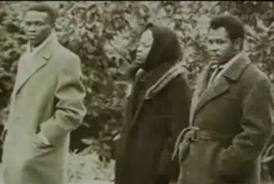
Pius Njawe in jail
Pius Njawe in jail

May 3rd is the World Press Freedom Day. Pius Njawe and his journal ‘le Messager’ have come to symbolize this day to me. Pius Njawe’s pioneering work as the head of leMessager‘ has marked me for as long as I can remember. His journal was not only the first true alternative to Cameroon Tribune (state-owned newspaper), but the real way to find news about what was truly going on in the country. In 2000, the Austria-based International Press Institute listed Mr. Njawe among its 50 world press  freedom heroes of the past half-century. The institute called Mr. Njawe “Cameroon’s most beleaguered journalist and one of Africa’s most courageous fighters for press freedom.” Yes… Njawe was the quintessential freedom fighter in a country where the press was constantly controlled and held under the sword of Damocles by the regime. He was arrested over 126 times, most of the time simply for telling the truth and keeping the government under constant check. He embodied what true journalism is all about: the impartial search for truth. While resisting the regime for over 30 years, he had come to symbolize the true voice of the people, the voice of those who could not speak, those who had no one, the people of Cameroon. We salute you Pius, you were indeed a true freedom fighter, and the true representant of the people! You will sorely be missed!

Check out the website of his newspaper: Le Messager, articles by the Thomson Foundation, The Washington Post and the International Press Institute.

I am posting here a video of him giving a conference about Francafrique in 2009.

Pius Njawe: Cameroun et la Francafrique

The Mpemba effect: Hot water freezes faster than cold water

As an African physicist, I have always wondered why there were no laws, theorems, equations named after African scientists. Living in a world where Schrodinger equation, Bose-Einstein statistics, Pythagorean theorem, and Newton’s laws are norms, and being African, I have always felt left out… It is as if my forefathers were not interested in science, or that modern day Africans were not as bright as Raman (Physics Nobel 1930) or Chandrasekhar (Physics Nobel 1983). Well… I was amazingly surprised when I stumbled upon ‘the Mpemba effect‘: made in Africa, by an African high schooler in 1963 (he later published his findings in 1969). Today, people apply his law without even thinking about where it comes from.

Erasto B. Mpemba, hailing from Tanzania, was still in high school when he came across this phenomenon when freezing hot milk; he noticed that it would freeze before the cold one. After repeating his experiments several times with water and milk, the Mpemba effect was born.  The heat transfer is bigger between the warm water and the freezer, than between the cold water and the freezer, leading to a faster process. Several mechanisms can be used to explain this effect, such as: – Evaporation (endothermic process); – Convection (faster heat transfers); frost formation (the colder water will tend to freeze from the top, reducing further heat loss by radiation and air convection, while the warmer water will tend to freeze from the bottom and sides because of water convection); supercooling; and – dissolved gases (Hot water can hold less dissolved gas than cold water, and large amounts of gas escape upon boiling.  So the initially warmer water may have less dissolved gas than the initially cooler water). More information on the ‘Mpemba effect’ can be found on Mpemba and Osborne, “Cool”, Physics Education vol. 4, pgs 172–5 (1969) and Can hot water freeze faster than cold water?

As of 2002 Erasto B. Mpemba is retired from being Principal Game Officer for the African Forestry and Wildlife Commission. This might not give rise to a Nobel prize, but it is enough to inspire others.

Oliver N’Goma, le roi incontesté du Zouk Africain

Oliver N'Goma
Oliver N’Goma

Le génie incontesté du Zouk Africain n’est plus! J’ai les yeux remplis de larmes, et l’âme fendue, car c’est encore hier que j’écoutais ‘Bane‘, Nge‘, ‘Bijou‘, ‘Chérie‘, ‘Adia‘, et ‘Assombo‘! Oliver N’Goma (affectueusement NOLI) est un artiste Gabonais, dont la voix suave a fait vibrer l’Afrique toute entière au rythme du Zouk en langues Gabonaises.  A mon avis, le don d’ Oliver se mesurait par l’amour des choses bien faites, des melodies dansantes, et de la recherche de la perfection!  L’on pouvait ressentir dans sa musique les rayons de soleil sur la peau, et la joie de vivre.  Beaucoup disent qu’il devait certainement être un grand amoureux, et adorer les femmes… car à travers ses mélodies, l’on se sentait bercer par l’amour et chaque femme se sentait belle et desirée! La chanson ‘BANE‘ sortie en 1989 fait partie des plus grands hits de la musique africaine moderne a l’egal de ‘MARIO‘ de Franco, d’ANCIEN COMBATTANT de Zao, de PATA PATA de Miriam Makeba, ou encore de KWASSA  KWASSA de Kanda Bongo Man.  Ce titre est marqué par un equilibre entre la richesse mélodique africaine, et une rythmique zoukante très efficace pour la danse. L'album BANE de Oliver N'Goma L’album BANE, devient l’une des plus grosses ventes de l’histoire de la musique africaine.  Depuis 1990 aucun autre titre n’a réussi à faire ombre à BANE dans les hit-parades comme dans le coeur du public.  L’album ‘ADIA‘ qui voit le jour mi-décembre 95, est un melange parfait de sophistication et foisonnement rythmique.  En 2001, apparait ‘SÉVA‘, suivit de ‘SAGA‘ en mai 2006.  Tous ces titres confirment clairement le status de roi incontesté du Zouk Africain conferé a Oliver N’Goma!  Cher Oliver, tu nous manqueras certainement, mais ton oeuvre bercera l’humanité pour les siecles a venir!  Si j’etais reine, je te confererais le status de Roi!  Love…

L'album SEVA de Oliver N'GomaOliver N’Goma, the king of Afro-Zouk is no longer!  Hailing from Gabon, Oliver is one of those artists who only come once in a generation, and whose love for perfection make them unforgettable!  His title and album ‘BANE‘ has become one of the most sold singles and albums in the history of African music; it combines warm lyrics, suave melody, and dancing rhythms only found in African cultures!  Oliver N’Goma’s music transcends age, race, and gender… Oliver’s love of life could be felt in his music.  He was a genius, whose music confered love, life, joy, and peace.  Oliver, you will sorely be missed, but your music will remain with us forever. Love…

Miriam Makeba: Speech at the United Nations

Miriam Makeba
Miriam Makeba

Although just a singer, Miriam Makeba decided that she could not stay without telling the world about the oppression suffered by her people at the hand of the apartheid government. So, with a small voice, she stood at the United Nations General Assembly in 1963 and delivered a speech where she exhorted the leaders of this world to act. In her own words, she said:I ask all the leaders of the world: would you act differently, would you keep silent and do nothing if you were in our place, would you not resist if you were allowed no right in your own country because the color of your skin was different from the color of the rulers?

Check it out:


Alexander Pushkin, the Black father of Russian literature

Young Alexander Pushkin

Yes… that’s right! Alexander Pushkin, the father of modern Russian literature, was in reality Black.  His great-grandfather was actually an African slave, Abram Petrovich Gannibal, who later became a general to “Peter the Great”.  The regional origin of Gannibal is often contested as it is often said that he was born in 1696 in the village of “Logon” in modern-day Eritrea (a statue of Pushkin was erected in Asmara in 2009), while others claim that he was from the Logone-Birni area in Cameroon (possibly from the Kotoko kingdom or the Kanem-Bornu Empire).  Today, most agree that he was actually from Cameroon. Interestingly enough, Alexander himself was very proud of his African ancestry.

Alexander Pushkin
Alexander Pushkin

Just to give you a time frame, Pushkin lived from 1799 to 1837 in Russia, and even wrote a book about his great-grandfather entitled “Peter the Great’s Negro,” also known as “Blackamoor of Peter the Great.” He is considered to be the greatest Russian poet and pioneered the use of vernacular speech in his poems, plays, mixing both drama and romance. Alexander Pushkin introduced Russia to all the European literary genres. He brought natural speech and foreign influences to create modern poetic Russian. Even though he lived a short life, he left examples of nearly every literary genre of his day: lyric poetry, narrative poetry, the novel, the short story, the drama, the critical essay, and even the personal letter. He lived a life entirely based on his favorite quote: “Live by the pen, die by the sword.” He lived a very provocative life, and was a real playboy. He died in a duel.

Pushkin's monument in St Petersburg
Pushkin’s monument in St Petersburg

Monuments have been erected in Russia, in St Petersburg, Moscow, and schools do carry his name. PBS did a piece on Frontline, entitled Pushkin Genealogy. It is said that Leo Tolstoy‘s book’s character Anna Karenina is based on Pushkin’s daughter (Maria Gartung), whom Tolstoy described as being extremely beautiful and intelligent. Check out some of his books on Amazon: Eugene Onegin, The Queen of Spades, Boris Godunov, and others… Check out Wikipedia to learn more about the father of modern Russian literature.

Haiti and Toussaint Louverture

Map of Haiti
Map of Haiti

I have been so stricken by the recent tragedy in Haiti, that I thought it would only be fit to talk about Haiti, and celebrate the first Black independent nation in the western hemisphere, and in the world. What better way than to salute Toussaint Louverture, the great black general who defeated Napoleon’s army, and French, British, and Spaniards? What better way than to salute the genius of Toussaint! Think about this: Napoleon, one of the greatest generals that ever lived, being beaten by a… self-educated slave with no military training… being driven off the shores of Haiti by Toussaint who then led his country to independence.

Toussaint Louverture

Well, Toussaint Louverture was a military genius like none other. He was actually born a slave and worked on a plantation, and then earned his freedom. By the time the slave rebellion started, he did not want to join in at first; but later on joined the slave rebellion only to realize that their leaders were inept and would compromise with the white farmers. Toussaint rose through the ranks and became the undisputed leader of the rebellion. He also had two great generals under him: Jean-Jacques Dessalines and Henri Christophe, who would both later become presidents of Haiti.

Toussaint and Haitian revolutionToussaint’s struggle was a struggle for freedom, equal rights, and justice for all. Having earned his freedom before, he knew what it meant to be free, and drafted a constitution. After sending out the French in Saint-Domingue (present day Haiti) in 1799, he turned to spanish Santo Domingo where slavery was still in effect, and took control of the entire island defeating the spaniards, and freeing the slaves. He then started to draft a constitution in 1801 for the entire island of Hispaniola (present-day Haiti and Dominican Republic). The French, the Spanish, and even the Americans hated Toussaint, because of his effect on people. Imagine this: a Black leader freeing slaves, a nation where slaves had taken control of their destiny did not sit well with Americans who still owned slaves and could not bear such a news. By 1803, Napoleon ready to surrender Haiti, decided to meet with Toussaint on a peace deal; but the French tricked Toussaint, and when Toussaint came to the rendez-vous, he was arrested and taken to France by ship where he was put in the coldest prison of France. Toussaint, a tropic guy, died of cold and starvation in this prison.

Toussaint Louverture
Statue of Toussaint

The most important and beautiful about the story of Toussaint and Haiti, is that this was the first time a people rose up, an enslaved people rebelled and succeeded in getting their freedom, and in founding a country…. they were able to defeat the establishment. This is why Haiti is a treasure to the world. Haiti represents a people fighting for their rights, for their freedom, and for their voice to be heard. In the wake of this devastating earthquake, I know the Haitian people will rise from ashes just like the phoenix!

Please watch this documentary about “Toussaint Louverture and the Haitian revolution” from ITVS. To learn more, you can read about Toussaint on Wikipedia, A biography of Toussaint by J.R. Beard, Toussaint Louverture Historical Society, and check out the website Filmsdocumentaires.com which has a snippet of a documentary on Toussaint.

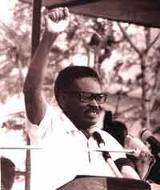
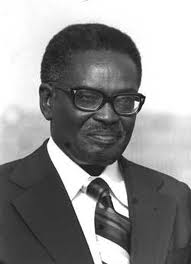
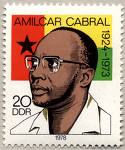
Amilcar Cabral: Discours sur le cancer de la trahison

Amilcar Cabral
Amilcar Cabral on a stamp

“Le cancer de la trahison” est le titre du discours prononcé par Amilcar Cabral (père de l’indépendance Cap-Verdienne et Bissau-Guinéenne) après l’annonce du decès de Kwame N’krumah, 1er président du Ghana. Dans ce discours, Cabral dénonce la trahison qui ronge les rangs de tous les mouvements indépendantistes africains. Nombreux de ces mouvements ou révolutions africaines ont été rongés par le cancer de la trahison. Triste de savoir que Amilcar Cabral lui-même a été assassiné par un traître!

Suivez son discours!

The Forgotten Angel of Rwanda: Capt Mbaye Diagne

Rwanda
Rwanda

I still remember the day the Rwandan genocide started. I was just in “4eme”, and the images of the genocide on TV made me cry at night! What could I do, me… a simple school child in Cameroon, except watching on television and praying for someone or something to stop this butchery! Well… among all the heroes mentioned in books and documentaries about Rwanda, a fellow African heard my cry, a Senegalese UN soldier who was in Rwanda decided to act… with no guns, no arms, and no authorization from the UN, he decided to take destiny in his hands…. He is almost forgotten when people talk of Rwanda: few ever mention the act of bravery from this African soldier stationed there.

Yes… I am talking about the young Senegalese captain Mbaye Diagne who was working for the UN in Rwanda. From the first hours of the genocide, he decided to take destiny in his hands, ignoring orders from the UN telling him to just be an observer. He probably thought: “how can I just look when human beings are being slaughtered? how can I just look when I am a blue beret, a UN officer supposed to maintain peace in the world?” From the first hours of the genocide, he was able to save the children of the prime minister Agathe Uwilingiyimana who was murdered; he hid them in his house, and was later able to take them to safety at the “Hotel des Mille Collines.” From then on, he saved many lives, some even think that he probably saved at least 600 -1000 people.

Capt Mbaye
Capt Mbaye in Rwanda

During the genocide, he was constantly rushing and never stayed put. He had a gift to make people laugh and always wore a smile on his face. He could be familiar with anyone within minutes! He could joke with the Interahamwe at all checkpoints, share a cigarette with them, talk with them… and in the midst of the genocide, even the interahamwe probably liked to see a smile in the midst of all the killings, a glimpse of light in all the darkness! He had to save hundreds of people by carrying 3-5 at a time in his vehicle, not to raise suspicion, and pass at least 23 checkpoints at which he had to stop each time and explain himself each time. All of this was done unarmed! Imagine, … saving hundreds of people unarmed, 3-5 at a time!

Yes… Capt Mbaye with his toothy smile was a light in Rwanda… an African angel sent to save people, an answer to some of our prayers. While learning about Capt’ Mbaye, I couldn’t help but cry, tears of happiness… happiness because all I ever heard in documentaries or books were these acts of bravoure by Europeans (or Rwandans like Rusesebagina in “Hotel Rwanda”)… but no-one mentioned this African child saving another African child! No one ever mentioned that the only UN officers left with Gen. Dallaire in Rwanda were mostly Ghanaians and other Africans like Senegalese Capt Mbaye!

Capt Mbaye at the "Hotel des Mille Collines"

One thing is sure, Capt Mbaye showed that in the midst of uglyness, we have a choice to be either observers or actors! We have a choice to protect, and help others! From the very first day of the genocide, Capt Mbaye decided to listen to his conscience and save people! He gave his life for others and stood on the side of justice; he extended his arms to fellow humans in distress… he loved! He was not superman, he was just Mr. ‘everyone’ reaching to the human side in every single one of us: he talked, negotiated, and smiled with the Interahamwe so-called monsters.

Please watch parts of this great documentary from PBS Frontline, and raise your hat to a true African hero! We, Africans, are the only ones who can truly praise the acts of bravoure, courage, and love of this forgotten angel of Rwanda! What can I say… words cannot express my profound gratitude to have learned the story of someone ordinary who decided to do extraordinary things, and saved hundreds of lives!

Don’t forget to watch Part 2: http://www.youtube.com/watch?v=hgdU1B2bzxw

Madam President: Ellen Johnson Sirleaf

Iron Lady
Iron Lady: Ellen Johnson Sirleaf

There is a say which often goes as such: “When things are so bad that they are irreparable, men leave the power to women or minorities!” (Just look at the USA!) Well… that’s what they will definitely say about Liberia, a country which had been in war for so many years and decades, that the system was so broken down, the country was a mess, no government, no law, no nothing!

Mme President
President of Liberia: Mrs. Ellen Johnson Sirleaf

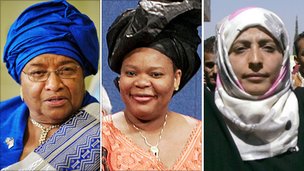
And then was elected Mrs. Ellen Johnson Sirleaf! The first African female head of state! We even beat the USA, we got our woman in power! Yes… here comes the Iron lady of Africa. Few words will express what the inauguration of Mrs Sirleaf meant to me, and thousands of other girls and women across the continent. Truth be told, very few of us ever thought possible the day a woman would be president on our continent. Very few of us thought possible an actual country ruled by a woman, in Africa….! When I was young, I had read about Nzingha the queen of Angola, Hatshepsut the She-pharaoh of Egypt, Beatrice of Congo, Empress Zewditu of Ethiopia… to name just a few; but these emblematic African female leaders seemed so far removed from me, buried in the sands of the past, that as a young African woman my dreams to see a charismatic woman leader in the modern era seemed to be just that… a dream (I still wanted my dream to become a reality)!

Ellen Johnson Sirleaf
Don't mess with my president!

Ellen Johnson Sirleaf is an achieved economist who served as minister of finance of Liberia in the late 70’s. She once supported Charles Taylor against the bloody government of Samuel Doe… but later on criticized him once she realized he was perpetrating bloody crimes in Liberia as well. After Samuel Doe’s coup in 1980, she went into exile in Kenya where she worked for Citibank as director. She returned to Liberia to run against Doe, but was sentenced to 10 years in jail, and was again forced into exile. She later repeated the scenario in 1997 when she ran against Charles Taylor, but lost. She finally won the elections in 2005 to be the first elected female head of state of Liberia, and Africa. Hers is a story of perseverance, endurance, determination, courage, hard work, and above all love for her country. What brought her back so many times to Liberia? Lord only knows! What made her want to challenge Samuel Doe, Charles Taylor, Prince Johnson, etc…? The good Lord only knows! One thing is sure, this is definitely an Iron Lady!

Liberia
Liberia

The video you will see below is a documentary on her first year in power entitled Madam President! It highlights her struggles and victories. How do you re-build a country where there are no institutions? where there are children soldiers? where there is no law? and where a claim to land means nothing after years of war! How do you do that? Well… watch Madam president! surround yourself with the best minds, and some strong women as well! I tell you… Watch and raise your hat to Mrs. President! Yeah… that’s right! Our very first woman president!

To find out more, check out Ellen Johnson Sirleaf on Wikipedia, read her book “This Child Will Be Great“. Laura Bush wrote a piece on her in Time Magazine after she and Condoleezza Rice attended Sirleaf’s inauguration. Ellen Johnson Sirleaf was awarded the Presidential Medal of Freedom in 2007 by president Bush. Check out Follow the Leader to learn more about the people who made the documentary, and this article by BBC.


Madame La Présidente

Check out the rest: Madam president Part 2 and Madam president Part 3