“I ask you and all the leaders of the world: Would you act differently, would you keep silent and do nothing if you were in our place? Would you not resist if you were allowed no rights in your own country because the color of your skin is different to that of the rulers, and if you were punished for even asking for equality? I appeal to you, and through you to all the countries of the world, to do everything you can to stop the coming tragedy. I appeal to you to save the lives of our leaders, to empty the prisons of all those who should never have been there.” Miriam Makeba
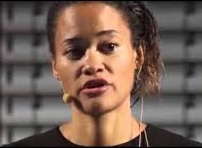
I had to share this snippet of Mallence Bart-Williams’ TEDx talk. It is so good. It says it all! We, Africans, are made to think that we are poor, when in reality, like Jacques Chirac, previous French president, said “without Africa, France will be relegated to a third world power.”
Mallence says it so well…”why is it that, 5000 units of our currency is worth 1 unit of your currency, when we are the ones with the actual gold reserves! It is quite evident that the aid is in fact not coming from the west to Africa, but from Africa to the Western world, the Western world depends on Africa in every possible way!“… “So sweet of you to come with your colored paper for our gold and diamond.” “we want to share with you our wealth and invite you to share with us.” And “…in nature, any species that is over hunting, over exploiting the resources they depend on for nourishment, natural selection will sooner or later take the predator out because it offsets the balance!” This is to all Africans, stop thinking yourself poor, and rise!
I share with you a poem by the late Congolese writer Tchicaya U Tam’si, “Vos yeux prophétisent une douleur”/”Your Eyes Prophesy a Pain.” Gérald-Félix Tchicaya is mostly known by his pseudonym Tchicaya U Tam’si, where U Tam’si means ‘the one who speaks for his country‘. Born in Mpili in the former French Congo (Republic of Congo), he was a poet, journalist, and an activist. He is considered by many as one of the greatest poets of his generation.
Patrice Emery Lumumba
U Tam’si’s poetry uses symbolism, dark humor, and surrealist, corporeal imagery to explore cultural identity in a politically unstable society. A member of the Congolese independence movement, a friend of Patrice Lumumba, U Tam’si creates work on the nature of African identity that is sometimes connected to Aimé Césaire’s Negritude movement, which advocated for the protection of a distinct African culture in the face of French colonialism and European exploitation.
To me, the pain U Tam’si talks about in this poem is that of slavery, of colonialism, of neo-colonialism, of tribalism. He talks as if he was in the 1600s, during slavery times, and predicting more pain.What do you think? What pain is U Tam’si talking about? The original poem was published in Anthologie Africaine: Poésie Vol2, Jacques Chevrier, Collection Monde Noir Poche, 1988; the English translation is brought to you by Dr. Y., Afrolegends.com.
Vos yeux prophétisent une douleur…
Comme trois terrils, trois collines de cendres!
Mais dites-moi de qui sont ces cendres?
La mer obéissait déjà aux seuls négriers
Des négres s’y laissaient prendre
Malgré les sortilèges de leurs sourires
On sonnait le tocsin
A coups de pied au ventre
De passantes enceintes:
Il y a un couvre-feu pour faisander leur agonie
Les feux de brousse surtout donnent de mauvais rêves
“Greatness is indestructible when it is not built on terror, envy, and suspicion, nor gained at the expense of others, but rather based on hope, trust, friendship, and directed for the good of all humanity.”Kwame Nkrumah, first President of Ghana.
“Sometimes it falls upon a generation to be great. You be that great generation. Let your greatness blossom. Of course the task will not be easy. But not to do this would be a crime against humanity, against which I ask all humanity now to rise up.” Nelson Mandela, Message to the Live 8 Concert in Edinburgh, July 2005
Here is your call to greatness! Whatever you do, do it well, be great, let your greatness blossom! The flower below looks like the stems are coming out, just like a generation blossoming!Just like this flower, let your stems come out, and be the very best you can be!
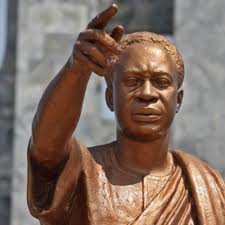
Nkrumah’s sculpture at the Kwame Nkrumah Mausoleum in Accra
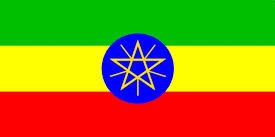
President Kwame Nkrumah, the great, and first president of Ghana once wrote a poem on Ethiopia. Kwame Nkrumah was the mind behind the creation of the Organisation of African Unity (Organisation de l’Union Africaine) which has become the African Union (Union Africaine). He believed in the unity of Africa, not just economic, but in the cooperation within the different states, and their independence. So here is his poem entitled ‘Ethiopia shall rise‘. Remember that Ethiopia is the only African country which was never colonized by Europeans, and as such is the siege of the African Union. Here is his entire speech followed by his poem. In reality, in his eyes, Ethiopia symbolizes the whole of Africa, and his wish is for Africa to rise again! Enjoy!
=========
Addis Ababa, May 25, 1963 YOUR; IMPERIAL MAJESTY, MR. CHAIRMAN, YOUR EXCELLENCIES BROTHERS AND FRIENDS,
Flag of Ethiopia
We have come to the end of a historic and momentous Conference. The decisions we have taken here have made African Unity a reality and we can see clearly a Union Government of Africa in the horizon.
This is the goal which we set ourselves when we struggled in our separate States for Independence. It is also the compelling force which brought us together in Addis Ababa.
As I have said over and over again, the independence of our separate State is meaningless, unless the whole of Africa becomes free and united.
broken chains
The resolutions we have made here are a symbol of our determination to become united and to remain united in an African Community with common aspirations and common objectives. Freedom Fighters in all parts of our Continent can now be assured that they are not alone in their struggle. The whole weight and power of a united Africa is behind them.
After centuries of colonial exploitation and domination, Africa has been re- born. We have discovered our common identity, a force with which we can re-assert our African personality.
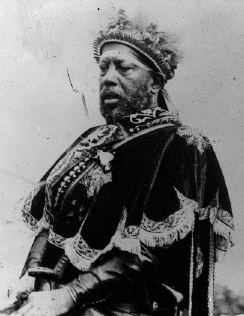
Emperor Menelik II, of Ethiopia
We shall from now on think, plan and work together for the progress and development of our great Continent. In this way, we shall eliminate completely the handicaps, set-backs and humiliation we have suffered under colonialism and imperialism.
We should be happy that at long last, by the adoption of this Charter, we have seen the end of the various groupings and regional blocs. It only remains for me, Your Majesty, on behalf of my colleagues to convey to the Government and people of Ethiopia especially to His Imperial Majesty, my sincere expression of gratitude for a happy and memorable stay in Addis Ababa.
The ancient Greeks identified Ethiopia with the Black Race. I would therefore like to leave with you a little poem on this:
Ethiopia shall rise
Ethiopia, Africa’s bright gem Set high among the verdant hills That gave birth to the unfailing Waters of the Nile Ethiopia shall rise Ethiopia, land of the wise; Ethiopia, bold cradle of Africa’s ancient rule And fertile school Of our African culture; Ethiopia, the wise Shall rise And remould with us the full figure Of Africa’s hopes And destiny.
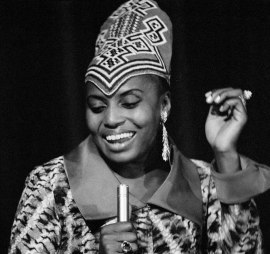
Who has not heard of the famous African love song ‘Malaika?’ The best known version of this song is the one sung by Mama Africa, Miriam Makeba. It is a Swahili song written by Tanzanian Adam Salim in 1945, who composed “Malaika” for his very beautiful girlfriend Halima Ramadhani Maruwa. Their parents disapproved of their relationship, and Halima was forced by her parents to marry an Asian tajir (wealthy man). The song is sung by a poor young man who wishes to marry his beloved ″Angel″ or ″Little bird″ but is defeated by the bride price.
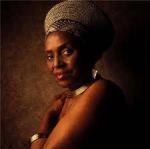
A true African beauty: Mama Africa, Miriam Makeba
This song is the most famous of all Swahili love songs in Tanzania, Kenya and the entire East Africa, as well as being one of the most widely known of all Swahili songs in the world; again, it was made popular around the globe by Miriam Makeba. Malaikameans “angel” in Swahili, and this word has always been used by the Swahili speakers to refer to a beautiful girl.So this is to all the angels out there for this Valentine day.
Malaika
Malaika, nakupenda Malaika
Malaika, nakupenda Malaika
Nami nifanyeje, kijana mwenzio
Nashindwa na mali sina, we,
Ningekuoa Malaika
Nashindwa na mali sina, we, Ningekuoa Malaika
Kidege, hukuwaza kidege
Kidege, hukuwaza kidege
Nami nifanyeje, kijana mwenzio
Nashindwa na mali sina, we,
Ningekuoa Malaika
Nashindwa na mali sina, we, Ningekuoa Malaika
Pesa zasumbua roho yangu
Pesa zasumbua roho yangu
Nami nifanyeje, kijana mwenzio
Ningekuoa Malaika
Nashindwa na mali sina, we, Ningekuoa Malaika
Angel
Angel, I love you angel
Angel, I love you angel
and I, what should I do, your young friend
I am defeated by the bride price that I don’t have
I would marry you, angel
I am defeated by the bride price that I don’t have I would marry you, angel
Little bird, I think of you little bird
Little bird, I think of you little bird
and I, what should I do, your young friend
I am defeated by the bride price that I don’t have
I would marry you, angel I am defeated by the bride price that I don’t have I would marry you, angel
The money (which I do not have) depresses my soul The money (which I do not have) depresses my soul and I, what should I do, your young friend
I would marry you, angel
I am defeated by the bride price that I don’t have I would marry you, angel
Sous l’insistance de mes nombreux amis, je publie ici le message très important de Serena Williams à toutes les femmes du monde. Ceci est de Yahoo News website.
==========
«A toutes les femmes incroyables qui aspirent à l’excellence,
Plus jeune, j’avais un rêve. Je suis sûre que vous en aviez un aussi. Mon rêve n’était pas celui d’un enfant normal, mon rêve était de devenir le meilleur joueur de tennis au monde. Pas la meilleure joueuse “femme” de tennis au monde. J’ai eu la chance que ma famille me soutienne et m’encourage à poursuivre ce rêve. J’ai appris à ne pas avoir peur. J’ai appris combien il est important de se battre pour ses rêves et, plus important encore, de rêver grand. Mon combat a commencé quand j’avais trois ans et je n’ai pas pris une seule pause depuis.
Mais toutes les femmes n’ont pas cette chance, ne sont pas assez soutenues ou sont découragées dans la voie qu’elles ont choisi. J’espère que toutes ensemble, nous pouvons changer ça. Pour moi c’est une question de résistance. Ce que les autres montraient de moi comme des défauts – ma couleur de peau, mon genre – je m’en suis servie pour mon succès. Je ne laisse rien ni personne définir ce que je suis ou mon potentiel. J’ai choisi mon futur. Alors quand le sujet de l’égalité salariale revient sur le tapis, cela me frustre car je sais que, comme vous, j’ai fait le même travail et les mêmes sacrifices que mes homologues masculins. Je ne voudrais pas que ma fille soit moins payée que mon fils pour le même travail. Vous non plus.
Nous le savons, les femmes doivent abattre de nombreuses barrières pour sur la route qui mène au succès. L’une de ses barrières, c’est la manière dont on nous rappelle constamment que nous ne sommes pas des hommes, comme si c’était un défaut. On dit de moi que je suis “l’une des meilleures athlètes féminines”. Est-ce qu’on dit de LeBron [James] qu’il est “l’un des meilleurs athlètes masculins” ? Dit-on cela de Tiger [Woods] ? Ou de [Roger] Federer ?Pourquoi pas ? Ils ne sont pourtant certainement pas des femmes. Nous ne devrions jamais laisser ce genre de choses arriver. Nous devrions être jugés sur nos résultats, non sur notre sexe.
Pour tout ce que j’ai accompli dans ma vie, je suis profondément reconnaissante d’avoir eu des bas et des hauts, qui accompagnent toujours le succès. Et j’espère que mon histoire, et les vôtres, inspireront toutes les jeunes femmes, les encourageront à donner le meilleur d’elles-même, à suivre leur rêve avec une ténacité inébranlable. Nous devons continuer à rêver grand, et en faisant cela, nous encourageons la prochaine génération de femmes à être aussi audacieuses que leurs rêves. »
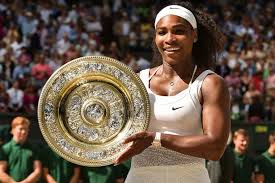
Serena Williams wrote a powerful open letter “to all incredible women who strive for excellence” about gender and sexism for the December issue of Porter magazine. The letter was part of the Incredible Women of 2016 issue reprinted by the Guardian.
==============
To all incredible women who strive for excellence,
When I was growing up, I had a dream. I’m sure you did, too. My dream wasn’t like that of an average kid, my dream was to be the best tennis player in the world. Not the best “female” tennis player in the world.
I was fortunate to have a family that supported my dream and encouraged me to follow it. I learned not to be afraid. I learned how important it is to fight for a dream and, most importantly, to dream big. My fight began when I was three and I haven’t taken a break since.
But as we know, too often women are not supported enough or are discouraged from choosing their path. I hope together we can change that. For me, it was a question of resilience. What others marked as flaws or disadvantages about myself – my race, my gender – I embraced as fuel for my success. I never let anything or anyone define me or my potential. I controlled my future.
So when the subject of equal pay comes up, it frustrates me because I know firsthand that I, like you, have done the same work and made the same sacrifices as our male counterparts. I would never want my daughter to be paid less than my son for the same work. Nor would you.
As we know, women have to break down many barriers on the road to success. One of those barriers is the way we are constantly reminded we are not men, as if it is a flaw. People call me one of the “world’s greatest female athletes”. Do they say LeBron is one of the world’s best male athletes? Is Tiger? Federer? Why not? They are certainly not female. We should never let this go unchallenged. We should always be judged by our achievements, not by our gender.
For everything I’ve achieved in my life, I am profoundly grateful to have experienced the highs and lows that come with success. It is my hope that my story, and yours, will inspire all young women out there to push for greatness and follow their dreams with steadfast resilience. We must continue to dream big, and in doing so, we empower the next generation of women to be just as bold in their pursuits.
« ¡ Las ideas no se matan ! » « Ideas cannot be killed ! »
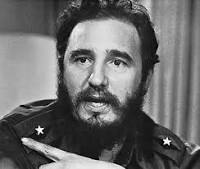
This is the sentence shouted out to the killing squad which was about to execute Fidel Castro on 26 July 1953, and this saved him. Indeed, El Commandante stood for ideas and above all for love: love of humanity, and planet earth. He understood that imperialism was nullifying the human being, and crushing people under its hands. He worked for the freedom of mankind. Fidel showed us that the size of a country or its people does not matter when fighting for great ideas and principles. Cuba is a small country, but its actions, its help, has been immense to Africa for the past 50 years. Even to this day, doctors across Africa are trained in Cuba, and Cuban doctors have vastly supported the health-care services of many countries including Ghana.
Nelson Mandela wrote from Robben Island, about Cuba: “It was the first time that a country had come from another continent not to take something away, but to help Africans to achieve their freedom.” Indeed, Cuba’s help to Africa has been selfless, and loving, and that oftrue brotherhood.
As a towering figure who stayed true to his Marxist-Leninist ideology even after the collapse of the Soviet Union, Fidel Castro has empowered countless Africans. The struggle for liberation from colonial powers by Africans benefited vastly from help from this little country in the western hemisphere.
When Africa cried, Cuba was there. When Portuguese were killing, subjugating, imprisoning Angolans, Bissau-Guineans, Cape Verdians, Mozambicans, Cuba was there. When Apartheid and the South African regime was oppressing (with support of the Western world) Black South Africans cried, and Fidel heed their calls. When Lumumba was killed, and Congo at lost, they called and Fidel answered. When Namibia was crushed, Fidel and Cuba helped free them from the Apartheid regime. When Ethiopians needed help, Fidel provided troops and expertise. When France was perpetrating a genocide in Algeria, Cuba helped free them.
Castro’s support for Africa’s liberation led him to meet with some of the continent’s leaders including Patrice Lumumba of Congo, Ghana’s Kwame Nkrumah, Sam Nujoma of Namibia, Nelson Mandela of South Africa, Muammar Gaddafi of Libya, and Robert Mugabe of Zimbabwe.
Amilcar Cabral
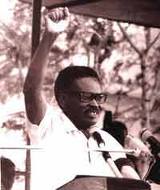
Responding to calls for help from the Angolan leader Agostinho Neto who was trying to liberate his country from the Portuguese, Castro sent troops to Angola. Today, Angola is free of civil war thanks to the unfailing support of Fidel. Cuban soldiers are documented to have fought alongside Namibians and South Africans to prevent the apartheid regime from spreading all over southern Africa. They have also helped in Mozambique, and Guinea Bissau & Cape Verde supporting Amilcar Cabral. Between 1966 and 1974 a small Cuban force proved pivotal in the Guineans’ victory over the Portuguese. This time Cuba’s involvement also stretched to medical support (Cuban doctors) and technical know-how. Ultimately, Cuba’s successful battle against South Africa in Angola also hastened the Apartheid regime’s withdrawal from Namibia after 70 years of occupation, and led to that country’s subsequent independence.
Cuban troops have since the 1960s, served in Algeria, Guinea, Guinea Bissau, Equatorial Guinea, Sierra Leone and Libya. Cuba was a thorn for the imperialists in Africa, France in Algeria, Portugal, Great Britain, South Africa, etc.
Agostinho Neto
In a 1998 speech, Fidel Castro told the South African Parliament (it was his first visit to the country) that by the end of the Cold War at least 381,432 Cuban soldiers and officers had been on duty or “fought hand-in-hand with African soldiers and officers in this continent for national independence or against foreign aggression.”
Altogether fitting was Cuban President Raul Castro’s address at Nelson Mandela’s funeral in 2013. In Johannesburg, Raul reminded his audience: “We shall never forget Mandela’s moving homage to our common struggle when on the occasion of his visit to our country on July 26, 1991, he said, and I quote, ‘the Cuban people have a special place in the hearts of the peoples of Africa’.”
Upon arrival in Havana, Robert Mugabe of Zimbabwe said, “Fidel was not just your leader. He was our leader and the leader of all revolutionaries.”
So in essence, many countries in Africa became independent thanks to Cuba and Fidel Castro, thanks to his ideals and his love of freedom. I am not sure that there is a single African country which has not benefited in some way shape or form from Cuba. We all owe Fidel our love, our lives, our freedom, and we salute him: So long El Commandante, thanks to you, we are free! Thanks to you, we fought a long battle and won! thanks to you, we started new chapters and became ‘free’ countries! Africa owes you so much!









 «
«  As a towering figure who stayed true to his Marxist-Leninist ideology even after the collapse of the Soviet Union, Fidel Castro has empowered countless Africans.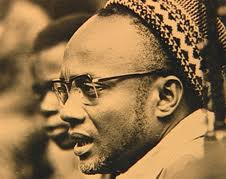
 Altogether fitting was Cuban President Raul Castro’s address at Nelson Mandela’s funeral in
 African Heritage