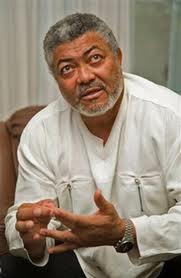
President J.J. Rawlings of Ghana (Source: thecable.ng)
Today, we will talk about the former president of Ghana, Jerry John Rawlings, affectionately called J.J. Rawlings, who passed away last week. Jerry Rawlings is known as the president of Ghana who ushered in a new era of change and economic prosperity in Ghana. Just like the Ghana of today owes a lot to Kwame Nkrumah the father of its independence, the Ghana of today owes a lot to J.J. Rawlings, the father of its economic stability and face-lift.
J.J. Rawlings (source: citizen.co.za)
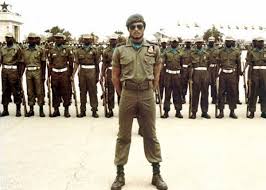
Born on 22 June 1947 in Accra, Ghana, to a Ghanaian mother and a Scottish father who refused to recognize him, Rawlings grew up in Ghana and was a proud son of the land. He attended the notorious Achimota School, and later on enlisted as a Flight Cadet in the Ghana Air Force in 1967. He was later selected for officer cadet training at the Ghana Military Academy and Training school. In 1969, he became commissioned Pilot officer, and then won the coveted “Speed Bird Trophy” as the best cadet in flying and airmanship.
He said that it was during his military service in the Ghana Air Force, that he witnessed the deterioration of discipline and morale, and the high level of corruption that had engulfed the army and Ghana as a whole. He also became aware of the immense social injustices prevalent in the country. He then vowed to change that.
Jerry Rawlings during his time in the Ghana air force (Source: ab-tc.com)
On 15 May 1979, five weeks prior to civilian elections, Rawlings and six other soldiers staged a coup against the government of General Fred Akuffo, but failed and were arrested by the military. He was arrested and sentenced to death in a general court martial, but his statements on the social injustices that motivated his action won him popular support. While awaiting execution, he was freed by a group of soldiers. Claiming that the government was corrupt beyond recognition, he led a group in a successful coup against president Akuffo. What has remained engraved in many Ghanaians’ psyche, and has been seen as the real turning point in the history of the country, is when Rawlings with the 15-memberArmed Forces Revolutionary Council (AFRC), primarily composed of junior officers, ruled for 112 days and arranged the execution by firing squad of 8 senior military officers, and 3 former presidents. This was seen as an unconditional message against corruption, injustices at the hand of a few, and a vindication of the people. Elections were then held, and the AFRC peacefully handed the power to the civilian President Hilla Limann, whose People’s National Party (PNP) had the support of Kwame Nkrumah’s followers. Two years later, Rawlings led another coup which ousted Limann. To those in the west who complained and called him on human abuses, he said that he “was representing the conscience of the armed forces, … and the conscience of the nation.” The nation was suffering from so much corruption, and injustices, at the hand of a few who chose to serve the colonial forces at the detriment of their own people, and Rawlings heard their cry. What do you do when you are faced with gangrene? Do you try to clean and patch it or do you amputate it? I do not condone this, and he himself acknowledged that there were regrettable events, but we need to recognize his great work for his country.
Rawlings ruled Ghana longer than any other president, almost 2 decades, winning 2 elections as a civilian. His rule has been hailed as the start of a new beginning, or rather the rebirth of Ghana, and he should be recognized for his impact on Ghana, and also on Africa.
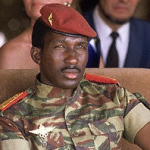
Thomas Sankara, president of the Faso
The charismatic J.J. Rawlings was a great friend of Thomas Sankara, and worked to perpetuate his legacy and revolutionary ideas. When Sankara was assassinated in 1987, Sankara’s wife first found refuge in the Ghana of J.J.. Decades later, when the neighboring country of Cote d’Ivoire and its president Gbagbo were being bombed by foreign forces, Rawlings spoke against it [President J.J. Rawlings denounces the Transfer of President Gbagbo to the Hague tribunal]. He was one of the few African leaders who spoke against the FCFA [The 11 Components of the French Colonial Tax in Africa] and more recently against the ECO [Is France Trying to (re) Colonize Africa?]. His legacy is his pan-Africanism and passion for the continent. This was a man of the people, and it is with great sadness that Ghana mourns the passing of one its great sons, who is celebrated for Ghana’s economic stability.
President J. J. Rawlings of Ghana
On 12 November 2020, J.J. Rawlings passed away at Korle-Bu Teaching Hospital in Accra, just nearly two months after his mother, Victoria Agbotui, in September. The current president, Nana Akufo-Addo has declared a seven-day period of mourning in his honor and flags flown at half-mast. So long comrade… you will be remembered for your hard work and love for your country, and above all for ushering in a new erain Ghana’s history.
On October 4th, 1984, Thomas Sankara addressed the General Assembly of the United Nations. It was a historical speech, as only he, the great orator, could speak. It was moving, it was strong, and it was good. Below is an extract of his speech. For the whole speech, go to thomassankara.net. Enjoy!!!
============
“I speak on behalf of the millions of human beings … thrown out of work by a system that is structurally unjust and periodically unhinged, who are reduced to only glimpsing in life a reflection of the lives of the affluent. I speak on behalf of women the world over, who suffer from a male-imposed system of exploitation. … Women who struggle and who proclaim with us that the slave who is not able to take charge of his own revolt deserves no pity for his lot. This harbors…
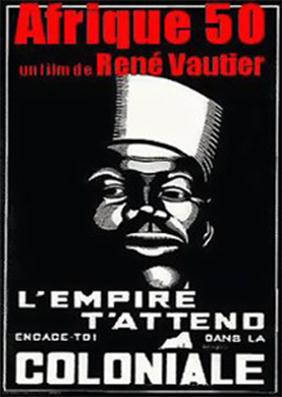
I recently watched a documentary made by René Vautier, Afrique 50. This documentary is the first French anti-colonization movie ever made. Vautier was assigned to French West Africa to make an educational film, but upon arrival he witnessed the appalling conditions of the Africans and the crimes committed against them by the French troops. The result was Afrique 50. For making this documentary, he was thrown in jail, and the documentary was banned for 40 years.
I loved Afrique 50 because it showed West Africa in 1950, a different side of it, and the African society with some of its strong culture and identity. It was a society of togetherness. Vautier tried to show different aspects of a normal day: artisans, farmers, weavers, women cooking, a hairdressing for both boys and girls, men called for prayers, fishermen, boat makers, herders, just normal life under the African sun.
He also showed colonization and its nefarious effects on African cultures and the fact that colonization did not help, but rather empoverished the Africans. He says, “a school is opened when the big companies need an accountant” (On ouvre une école quand les grosses companies ont besoin de comptables), or “a doctor is sent, when the big colonial companies risk running out of manpower” (on envoie un médécin quand les grosses compagnies coloniales risquent de manquer de main d’oeuvre).
Afrique 50 by Rene Vautier – The Empire Awaits you, Join the colonial
In his documentary, Vautier shows how the French destroyed entire villages, killed people, women, kids, pregnant women, etc, because the people were not able to bring in a quota of bananas, or cocoa, or rubber, i.e. to pay the tax which was the penny sum of 3700F.
Vautier says, “colonization is the reign of the vultures,” and these vultures are the big multinationals. He cites, Société Commerciale de l’Ouest Africain (650 millions F of profit in 1949), Compagnie française de l’Afrique occidentale (actuelle CFAO) (365 millions of profit in 1949), Dabom (180 millions of profit), L’Africaine Française, le Niger Français, La Compagnie Française de la Côte d’Ivoire, Unilever who made 11 billions 500 millions of profit in a year / 40 millions a day. Not much has changed today!
It also shows why Africa always looks underdeveloped. Isn’t it surprising to notice that today, lots of large-scale agriculture is not industrialized in sub-saharan Africa? Well because it costs less to these multinationals to have Africans labor fields with hoes, machetes, and more, than buying and maintaining turbines, or tractors. This is cheap labor!
Vautier says “A machine will do the job of 20 Blacks of course, but 20 blacks for 50F a day cost less to the company than the machine, so let’s use the Black” (Une machine ferait le travail de 20 noirs bien sûr, mais 20 noirs à 50F par jour reviennent moins cher qu’une machine, alors usons le noir).
Banana plantation in Cameroon
To this day, 70 years later, not much has changed in the rubber plantations of Liberia, or the cocoa plantations of Côte d’Ivoire, or the banana plantations of Cameroon, or in the forests of Gabon.
Africans are still asking for their lands which were taken by the multinationals (Did You Know about the 999-year Lease granted to Europeans in Kenya ?), and to this day the reply is always brutal and violent; when in the past they had the French administrator and police burn down villages, today they have their puppet governments installed everywhere on the continent crushing the people.
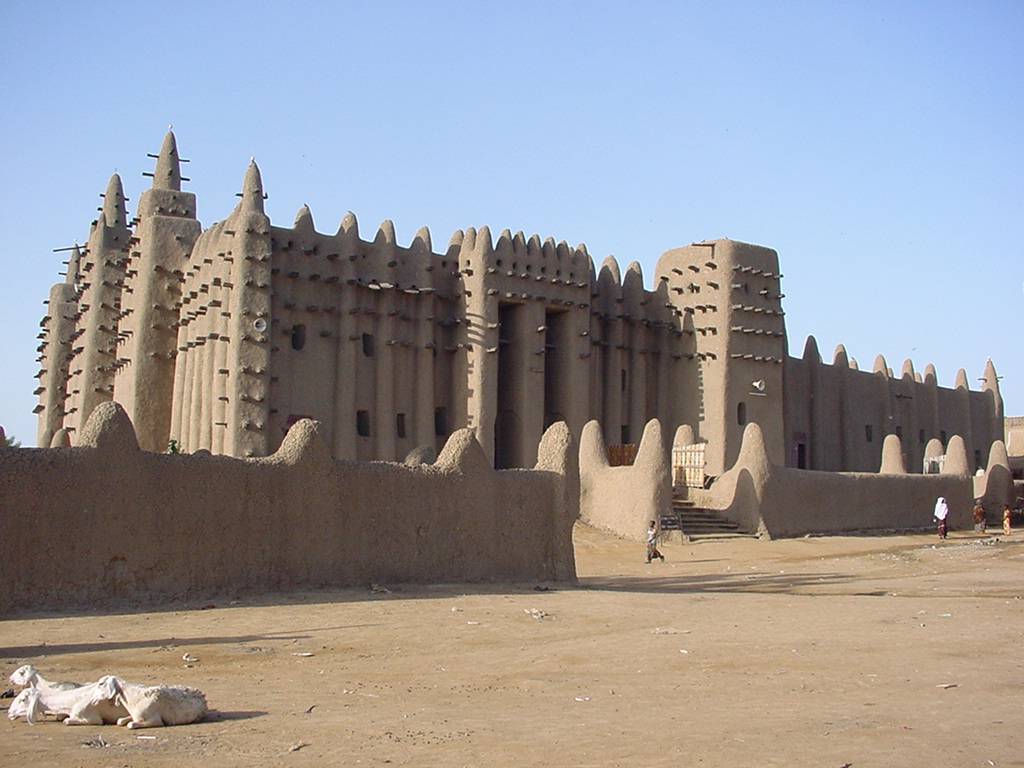
La grande mosquee de Djenne (Mali – heritage du grand empire du Mali)
What I also liked in Afrique 50, was that in 1950, the architecture in Africa was still that of our ancestors. One can see Séguéla, Dimbokro, Kétékre, Daloa, Bouaflé, Palaka, etc… it still looks like the great architecture of Timbuktu and Djenné, sublime, and upstanding. The French came, destroyed, and burnt down those villages, and kingdoms. In the Bamiléké highlands of Cameroon, some kingdoms have no real palaces anymore, or the king’s house is made of zinc roofing, because the colonizers had them burnt down (such as the Bazou royal palace) in the 1950s during the maquis years (French President Acknowledges French Genocide in Cameroon) and before. The mud huts seen today across Africa are a result of years of being crushed and under constant attack by foreigners. When you are constantly attacked, you barely have time to rebuild the old ways, and also with time those with the architectural know-how pass away without passing on their knowledge, and more, we are told that building like the Europeans is sign of modernism even if it not adapted to our environment!
Please enjoy this documentary… It is a real eye-opener! Very little has changed in 70 years, the name has morphed from colonization to neo-colonization, to globalization, to cheap labor, and more!
“In 1844 Merrick found King William more accommodating. The following year, Merrick initiated work along the coast, opening a station among the Isubu of Bimbia and two stations at Aqua Town and Bell Town along the Wouri River estuary. Unaware of difficulties that made the river largely unnavigable, he hoped that the system of creeks might ultimately provide access to the interior. However, Merrick´s first task was to “prepare the way for the preaching of the gospel among the Isubu and the Dualas.” This he did by forming churches and schools and learning the Isubu and Duala [Douala] languages. A gifted linguist, he soon was able to preach in both tongues. He arranged to print some texts and scripture.” Memoir of Joseph Merrick, Missionary to Africa by J. Clarke, London: Benjamin L. Green.
n.d. Journals. BMS Archives A/2. 1850.
Bird’s eye view of then Victoria, now Limbe, and Ambas Bay, Cameroon, in 1884
“The Rev. Joseph Merrick was a native of Jamaica, and of African descent. He was educated in the Society’s schools, and as a youth began in 1837 to preach. He was soon after associated with his father in the pastorate of the church at Jericho. He entered on mission work in Africa in 1843, and laboured most diligently among the Isubu tribe on the Bimbia river. He quickly learned to speak their language with great readiness and precision, and translated a portion of the New Testament into the Isubu tongue. It was partially printed by himself, but was completed at press by Mr. Saker. He died on the 22nd October, 1849, on his passage to England.” Alfred Saker, Missionary to Africa: A Biography, by E.B. Underhill, Baptist Missionary Society, UK, 1884 p.52
“Having set” in order the things wanting in the church “at Clarence [Malabo], Mr. Saker paid a brief visit to Bimbia, where he collected the manuscripts and Isubu translations of the lamented Merrick. Leaving directions for their printing with Joseph Fuller,… ” Alfred Saker, Missionary to Africa: A Biography, by E.B. Underhill, Baptist Missionary Society, UK, 1884 p.52
Joseph Merrick at an Isubu funeral in Bimbia (1845)
“On the mainland, north from Fernando Po [Bioko], towered the volcanic mountain of Cameroons [Mount Cameroon]. Its highest peak-then unexplored-lifted itself 13,700 feet into the blue. Its spurs and outlying hills reached to the sea frontage. On one of its headlands Mr. Merrick was even now at work reducing the language of that particular people – the Isubus – to writing.” Alfred Saker Pioneer of the Cameroon by Emily M. Saker, 2nd Edition London: The Carey Press, 1929, p.42
“The time which had been spent in Bimbia had not been wasted. Earnestly had Mr. Saker co-operated with Mr. Merrick in labour for the welfare of the Bimbians. Inland villages had been visited with the glad tidings of great joy ; chiefs had been seen and taught ; the idlers in the market-places, the fishermen by the seashore, … ” Alfred Saker Pioneer of the Cameroon by Emily M. Saker, 2nd Edition London: The Carey Press, 1929, p.44
1908 painting by R. Hellgrewe of the town of Victoria (now known as Limbe) – Mt Cameroon can be seen in the background
“Mr. Saker was detained in Bimbia for some weeks owing to storms. During his detention he printed at the press some Isubu manuscripts left by the late Mr. Merrick.” Alfred Saker Pioneer of the Cameroon by Emily M. Saker, 2nd Edition London: The Carey Press, 1929, p.119
“On the Friday I made my way to the home of our excellent brother Duckett, about seven miles distant. You will remember him as one of the band who sailed with Mr Clarke in the Chilmark from Jamaica to Africa; he was the most able and devoted of the number. My dear wife knew him well as a faithful co-worker with the sainted Merrick.” The Missionary Herald: Containing Intelligence, at Large, of the Proceedings, The Native Pastors of Jamaica, p. 52 1882
Below are excerpts from an article posted on Pambazuka by Akyaaba Addai-Sebo, where the author compares the obstables faced by the regimes of presidents Kwame Nkrumah and Robert Mugabe almost 40 years later. As you read on, you can see that the British used the same tactics to destroy both economies, when they could not destabilize both men. Such similitudes! Enjoy! For the full article, go to Pambazuka.
Robert Mugabe (History.com)
=====
Despite some shortcomings in his policies, Mugabecould not be pushed to betray the people of Zimbabwe and Africa in general.
Tony Blair’s New Labour purposefully undermined and sabotaged the political economy of Zimbabwe from late 1997. The double-face and double-crossing British politicians therefore crippled the Zimbabwe African National Union-Patriotic Front (ZANU-PF) Red Cockrell in the same manner as Harold Wilson undermined and sabotaged the Nkrumahregime and the Convention People’s Party (CPP) Red Cockrell from 1964.
Kwame Nkrumah
Harold Wilson was the Labour Party prime minister then. Rhodesia was then at the heart of the conflict between Ghana and Britain. Harold Wilson fought President Kwame Nkrumahtomaintain and sustain white supremacist stranglehold as Tony Blair fought Mugabeto maintain and sustain white supremacist stranglehold on Zimbabwean land and finance capital, itself created by the land and the labour of the people.
It must be stated clearly that there can be no capital without land and labour. Capital has no existence of its own. Apartheid and settler colonialism are a politico-military act of land appropriation and enslavement of labour for the crafted purpose of capital accumulation.
Tony Blair’s New Labour party funded and created the opposition Movement for Democratic Change led by Morgan Tsvangirai, a trade union leader. Harold Wilson’s Labour Party aided Kofi Busia, Komla Gbedemah and JWK Harlley to overthrow Nkrumah.
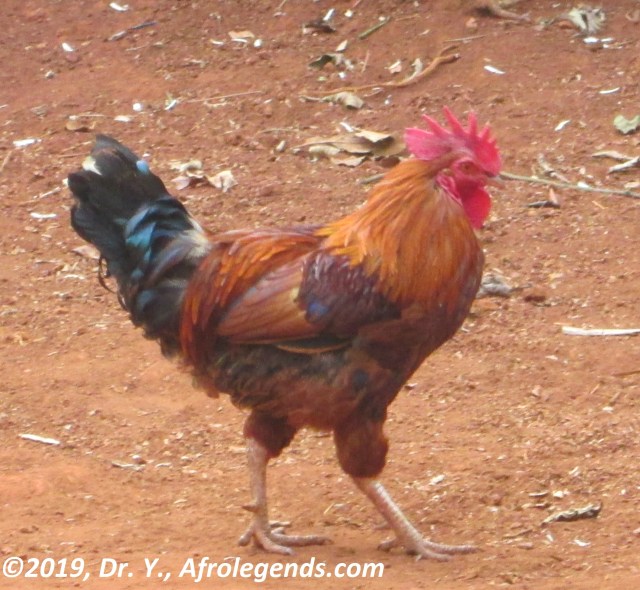
Red cockerel, “Forward Ever, Backward Never”: Convention People’s Party logo and slogan
Whereas Tony Blair and subsequent British prime ministers could not overthrow Mugabe, they destroyed the Zimbabwean economy and created a quicksand underneath the ZANU-PF regime…as did the Wilson government to the CPP regime.
In celebration of the life of Ruben Um Nyobé, I chose to share with you his writings below on this day, 13 September, the day of his assassination in 1958 by French troops in Cameroon. These writings by Ruben Um Nyobé, leader of the UPC, were published in 1959. The book was published as “Constante politique d’unité pratiquée par Ruben Um Nyobe – 1959,” by Union des Populations du Cameroun (UPC). The text below by Ruben Um Nyobe served as a preface to the book, and has been translated to English by Dr. Y. Afrolegends.com . For the original, go to gallica.fr
======
Flag of the UPC
Political Constant of Unity practiced by Ruben Um Nyobe – 1959
Author: Union des Populations du Cameroon
Inform to Enlighten by Ruben Um Nyobe, General Secretary of the Union the Populations du Cameroun (UPC), Leader of the National Resistance for the Liberation of Cameroon
The national aspiration, which has just cumulated in the recognition of our independence, Is the concrete and objective expression of the result of the struggle of our people. No one can claim that independence has been granted to us, we have conquered it. All those who fought for this national liberty, whether dead or alive, have sealed their names in the history of our motherland, their glory will be immortal! But now at the term of a crowned struggle, instead of concord uniting all members of the coalition, a storm of jealousy and hatred, still sweep over our poor little country. Until when obscene passions and the most execrable hypocrisies cease to brave virtue and honesty! Why will cruel selfishness and blind ambitions not recoil before the honor and national dignity? In this flood of provocations and hatreds, where is the future of our children, the tranquility of our homes, the future of the country? Is it possible to build a country without its population? Is there independence without independent citizens? Answer! Yes answer! All those who oppress our people and those who aim to exploit it.
I say that we must give the people the means to hope and the opportunity to have confidence in them. To reach that goal we have some preliminary work to do.
Present the people with clear options for his future.
Prepare for the people a climate of cordiality and put an end to insecurity.
Train the people’s judgment through civic and political culture / instruction.
All this is feasible/possible, so long as it is wanted. No need to dodge the work by creating tribal oppositions.
Map of Kamerun from 1901 to 1960 (Wikipedia)
I add that all those who sow hatred and call for crimes, throw the boomerang, which unfortunately does not clarify the future. In politics, there is good sense and virtue, notwithstanding the apprentices of Machiavelli! In politics, truth is also necessary, even if it hurts and displeases because we do not define the future of the people in lies and slanders! Yes, we have to be realistic! To all my compatriots, I formally repeat this: our enemies in this crucial hour of our history, are those who divide us, because they expose us weakened to the solicitations and appetites of the foreigner…
When one reflects on current events, one reaches a first observation: it is the conception of power and sovereignty which is at stake. If it is true (and it cannot be otherwise) that power comes from the people, is it not up to the people to freely designate their interlocutors? Why pretend to take the place of the people? Why seek to abuse and deceives the masses? To get elected and impose a dictatorship, isn’t it? Finally, we believe that the events of the past should make the darkest adventurers retreat. It is only in ignorance that a dictatorship can be imposed, even if it is subtle. In these conditions our task is clear: to enlighten the people. We must do it and we will do it against all adventures. Our goal is to safeguard the national dignity and sovereignty of Kamerun.
In recent months, racial and social justice, and systemic racism have been at the forefront of the battle for human equality. A few days ago, Mrs. Gisele Yitamben wrote a piece for the World Economic Forum (WEF) where she addressed a very important point in the battle against systemic racism, namely the fact that the history of the victim needs to be told accurately in all its glory and entirety for the healing process to start. There is a saying that “until the lion tells its story, the hunter will always be the hero.” Mrs Yitamben has been most gracious to share with us her ideas on ways to address systemic racism, and expand on her WEF article here. Enjoy!
======
History of Histories is Needed to Address Systemic Racism
By Gisele Yitamben*
“Systemic racism” is used to talk about all of the policies and practices entrenched in established institutions that harm certain racial groups and help others. “Systemic” distinguishes what’s happening here from individual racism or overt discrimination, and refers to the way this operates in major parts of society: the economy, politics, education, and more.
Systemic racism is also a form of racism that is embedded as normal practice within society or an organization. It can lead to such issues as discrimination in criminal justice, employment, housing, health care, political power and education, among other issues.
“Systemic racism has its roots in extractive capitalism”
It is “a deeply rooted prejudice, combined with institutional power and systemic oppression of certain groups of people.” continuing inequalities in education, housing, employment, wealth, and representation in leadership positions are rooted in humanity’s shameful history of slavery and systemic racism.
In the case of African and people of African descent, it is a direct consequence of doctrine patiently distilled, policies developed and communications put in place to downgrade the blacks with the end results of taking their wealth, their souls.
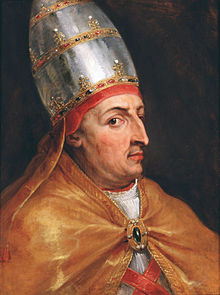
To support the Portuguese expansion, Pope Nicholas V issued a Papal bull on 18 June 1452 authorizing Afonso V of Portugal to conquer Saracens (Africans) and pagans and consign them to “perpetual servitude”. Successive popes reiterated the Bull: Pope Callixtus III in 1456 with Inter Pope Sixtus IV in 1481 and Pope Leo X in 1514 with precise denotations.
Pope Nicholas V
This position of the Catholic Church, accompanied by the legend of Shem in the Bible, that the noble institution disseminated without being encumbered with its real textual and theological foundation, too happy to have new territories of crusades, of evangelization, would be authority sweeping the reluctance herding slave traders and neophyte traders.
The position of the Catholic Church in relation to the slave trade was not going to be an epiphenomenon, far from it, its encouragements to enslavement would continue throughout the Negro period, like doctrinaire activism of the eminent French theologian Bellon de Saint Quentin, who used the “Holy Scriptures” to free the conscience of those who relied on his science.
All sorts of means will be used to dehumanize races, as a matter of policy to seek to assimilate cultures, for example, US and Canada, established boarding schools, prevented native language speaking, and separated children from their parents to put them in foster homes.
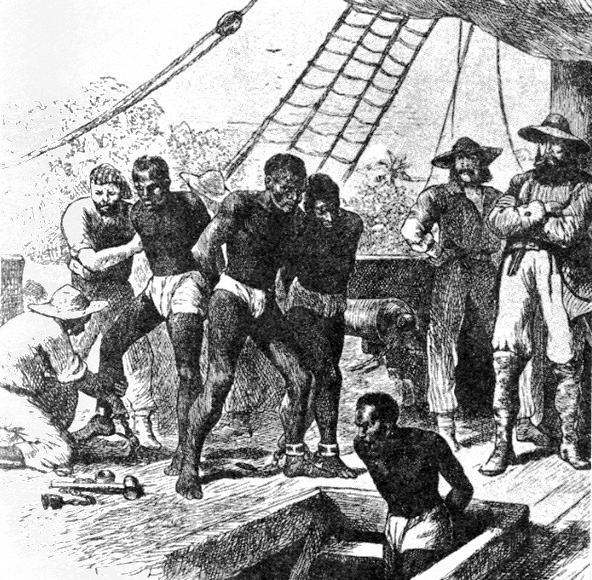
Slaves on board a ship
“People went as far as exhibiting Africans in Zoos”
Human zoos
Paris, the capital of lights celebrated 100 years of freedom, equality and fraternity in 1989 with a “Universal Exhibition”. In addition to the brand new Eiffel Tower, the main attraction offered to the 28 million visitors to the “Universal Exhibition is the “Negro village” and its 400 Africans, exhibited on the Esplanade des Invalides, in the middle of the colonial pavilions. For ten years, these indigenous villages have been present in most of the major exhibitions, and they continued to be so for much of the 20th century in Hamburg, London, Brussels, Chicago, Geneva, Barcelona, Osaka. Senegalese, Nubians, Dahomeans, Egyptians, Lapps, Amerindians, Koreans, and other so-called exotic peoples were thus presented in an environment evoking their countries, often in junk costumes and alongside wild beasts. More than 1 billion visitors rushed to these exhibitions between 1870 and 1940.
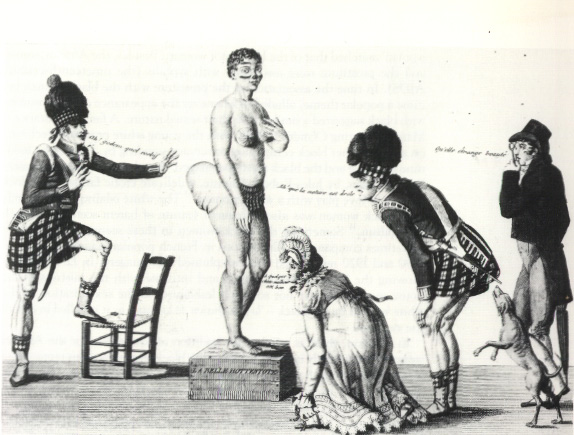
Caricature of Sarah Baartman from the 19th century
One of the most pathetic cases, of those human zoos, is that of Sarah Baartman, who was put on display around Europe as a sexual freak, paraded naked on runways by a keeper who obliged her to walk, sit or stand so that audiences could better see her protruding backside
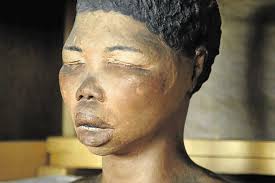
Even when she died, destitute and diseased, the ”Hottentot Venus,” as she was called, did not get a decent burial. Napoleon Bonaparte’s surgeon general made a plaster cast of her body before dissecting it. He preserved her skeleton and pickled her brain and genitals, placing them in jars displayed at Paris’s Museum of Man. Her brain, skeleton, and sexual organs remained on display in a Paris museum until 1974. Her remains weren’t repatriated and buried until 2002.
It was President Nelson Mandelawho took up the cause of trying to get the young woman’s remains a proper resting place. Nelson Mandela sought the intervention of President François Mitterrand for his help in the matter when the two men met in South Africa in 1994. It took 8 more years to finally get Sarah buried.
Exposed face of Sarah Baartman from the French Museum
For more than five centuries, the Doctrine of Discovery and the laws based upon it have legalized the theft of land, labour and resources from Indigenous Peoples across the world. This has regrettably rendered indigenous peoples to be seen as dolls (see history of Sarah Baartman) that appeared not to have made any contribution to the evolution of mankind. Research has proven that modern day medicine took roots from traditional medicines practised by indigenous people. It is the same with other domains of social science.
Addressing the root causes of systemic racism and bias
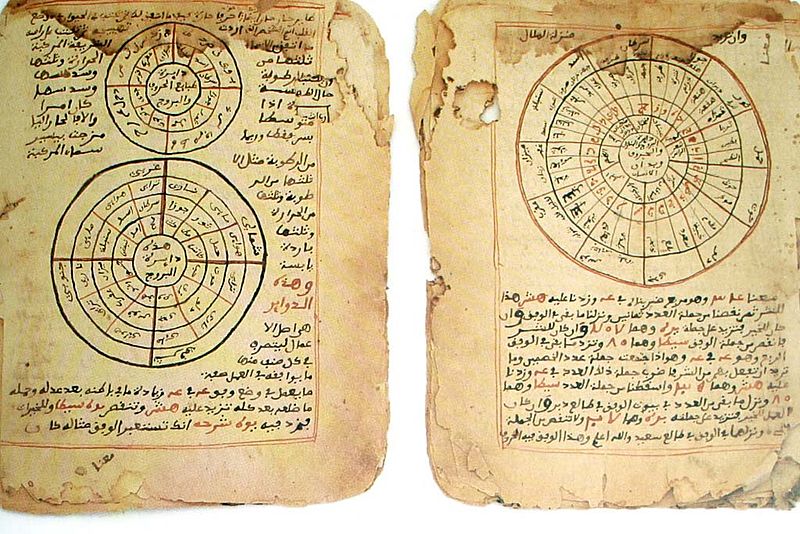
Manuscripts a Tombouctou (Mali) montrant de l’astronomie et mathematique
As a Black woman in Africa, I am living the reality that the “deep roots” of systemic racism lie in extractive capitalism on this continent. Slavery, the colonization of Africa and the economic exploitation and speculation that continues today, are driven by greed for profit which is underpinned by cheap replaceable labour and raw materials seemingly at any cost, using obnoxious cooperative accords inherited from the colonial era [The Charter of Imperialism]. Ultimately, it is greed that has led all European to the systematic and methodical devaluation of all Africans. For centuries, African peoples have been discounted and devalued as the colonizers sought to maximize profits and focused on their own needs and “happiness”. This mindset continues to drive racist attitudes today. What is amazing is that the exploitation of African resources have been going on for 500 years and the minerals are showing no signs of depletion [The Lost Libraries of Timbuktu]!!! This should have called in a big change of the system’s approach.
Current approaches to addressing racism have failed for the most part because they have addressed the symptoms but not the root causes of racism. We see this when we consider that while slavery and colonialism were officially abolished, the system of oppression merely transitioned into Central banks serving slave owners [The Bank of Senegal: Ancestor to the FCFA – producing Bank], but not former slaves [Reclaiming History: Britain’s Forgotten Slave Owners], and police forces serving elected officials rather than ordinary citizens. In Liberia for instance, a country populated by ‘freed’ slaves, plantations enslave the rural populace.
If we want to end systemic racism we need to get beneath the surface and understand what’s really going on, especially on an unconscious or subconscious level. And to do this, we need to go beyond campaigns, slogans and figureheads—important as these are—and re-write the real stories of each race and its contribution to humanity.
Writing the history as it happens
Black Pharaohs of Nubia
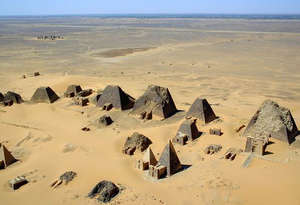
It has always been curious to me that the “black pharaohs” of Egypt – powerful Kushite leaders that ruled all of Egypt from Nubia to the Mediterranean Sea from about 760 B.C. to 650 B.C. – have been largely forgotten by history [The forgotten kingdom of Nubia]. This dynasty of leaders embarked on an ambitious building program up and down the Nile, including the construction of pyramids in modern-day Sudan [Africa’s Forbidden Pyramids: Meroe, Nubia, and Sudan], under which their kings are buried. Yet the average person – black and white alike – if you mention pyramids, they think of those in Cairo first, and are not even aware that such structures exist further down the Nile in Sudan because this southern country is mostly a Black country.
“Black people need to start telling their stories”
In confronting racial stereotypes we need to tell the story as it happens and show how the development of the world is made of interwoven efforts; that will rebuild respect. There’s a reason why the Black Lives Matter activists are targeting statues of colonial and slave oppressors – because they recognize that there is power in these stories and symbols that have kept people trapped for centuries. As David Adjaye – lead designer of the Smithsonian Museum’s National Museum for African American History and Culture in Washington DC –once wrote: “there is a direct relationship between symbols and systems and that people are starting to seek complex truths in new symbols that don’t ignore the losers or the forgotten underbelly of history”.
Pyramids of Nubia, Sudan
For many years, the narratives about Africa have been about misrule, corruption, poverty and hunger, yet it remains one of the richest continents in terms of mineral wealth and agricultural potential. This is not to discount the reality of poor governance and corruption, which I must stress out is being encouraged and promoted by developed countries within the frame work of the exploitation strategy.; Many people lose their lives each year trying to cross dangerous waters into Europe in search of a better life largely because of these factors [Francis Bebey, Fatou Diome, and Immigration]. But there are positive stories we can tell too.
“When we really know each other, their contribution to common history and see that their solutions also hold value, we may start to shift systems”
Africa needs to take the lead in telling her stories to shape a new perception. This new perception will be positively shaped if truth is told. It is not about begging to be accepted. We need to tell the stories that make visible the things we value, the beauty and the power that have been written out of history. We have a saying – “Until the lioness tells her side of the story, the tale of the hunt will always glorify the hunter.”
Driving systems change at the local level
By telling real Africa’s stories (victories and downfalls) and making Black history more visible we can start the work of unraveling the systems that hold racism and oppression in place, but this alone will not be enough. Systemic racism has also to be tackled at structural, institutional and political levels. A system that has historically devalued a whole group of people is by definition exclusionary; we need to therefore re-design systems that value inclusiveness. In this, solutions cannot be imposed from outside. Those that need change most must be involved in bringing it about.
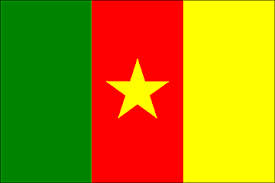
Flag of Cameroon
The COVID-19 pandemic may ironically be showing us a way here. In Cameroun working in remote areas with social entrepreneurs – lockdown measures have effectively cut us off from our usual means of trade; incomes have collapsed and we’ve been forced to create new systems to ensure that people can attend to their basic needs. This has included creating a local currency to allow people to trade during this time and setting up of new localized trade routes. While driven in this instance by necessity, there is power in this approach in that it starts with what is under the control of the beneficiaries and needed and what is valued and then builds around that.
Going forward, we can seek to apply this principle of localization more broadly. When we start to respect others and see that their solutions also hold value, we can start to shift systems. These systems are built on mutual trust.
I believe social entrepreneurs will have a central role to play in this regard by driving localized solutions, for example, creating access to affordable finance for initiatives that can improve livelihoods for future generations of Africans. In this way we can build out a new narrative for the continent and create systems that value people, and their happiness and well-being, over profits.
We are at a historic moment in the fight against systemic racism. There is a wider moral recognition that some things in our society are fundamentally wrong and a broader understanding of the need to address the root causes of these ills. We have an opportunity to uproot systemic racism and it starts with rediscovering what has been forgotten and revaluing what has been systematically devalued.
Gisele Yitamben is the Founder and President of Association pour le Soutien et l’Appui à la Femme Entrepreneur (ASAFE) a social enterprise that provides business training and development services, alternative financing and access to e-commerce to support thousands of women entrepreneurs in Cameroon as well as in Guinea, Benin, Chad and the Democratic Republic of the Congo. She can be reached on myitamben@yahoo.fr
Google Doodle of 28 August 2020 commemorating Alexandre Dumas (Source: Google)
Today I am happily surprised by the Google Doodle of the day which commemorates the French writer Alexandre Dumas, the author of The Three Musketeers and The Count of Monte Cristo, to name just a few of his works. In the Doodle he is clearly depicted as a Black man! Why does it matter? Do you know how long it has taken for him to be recognized as so? Do you know that it took over 100 years for Alexandre Dumas, the most read French writer to be buried at the Pantheon? just because of the color of his skin! It is only in 2002 that, then French president Jacques Chirac had Dumas’ body exhumed and then enterred at the pantheon! The most prolific French writer of all times!
Please check out the article I wrote about this great man a few years ago:
“Did you ever see a chameleon catch a fly? The chameleon gets behind the fly and remains motionless for some time, then he advances very slowly and gently, first putting forward one leg and then the other. At last, when well within reach, he darts his tongue and the fly disappears. England is the chameleon and I am that fly.” King Lobengula
Did you guys hear about the government of Zimbabwe agreeing to compensate white farmers the hefty sum of 3.5 billion dollars? I was shocked! When there is barely any money in the country, and the economy is in shambles, how can the government agree to this? Moreover, did these white farmers ever compensate the Africans after independence in 1980 for using their lands for a century, for abusing them off their lands? And for all the years of economic embargo forced on the country? Lastly, the clause is set so that the country will be paying this debt forever… 12 months to raise half of the money when the country is on life support? This is so disgusting, Robert Mugabe must be rolling in his grave!
Flag of Haiti
So my question is, is Zimbabwe the new Haiti? Remember how Haiti was made to pay France for over a century because of their freedom (When France extorted Haiti, the greatest heist in history)? Because the past slaves had beaten the masters, they were forced to pay France for over a century the hefty sum of 90 million goldfrancs (equivalent to 21 billion U.S. dollars in today’s money – when Jean-Bertrand Aristide requested reparations, he was ousted) after winning its freedom from France…? And this is why Haiti is so poor! Imagine this: Someone abuses you for years, not to say decades and generations, you finally free yourself, and now you are forced to compensate them because you freed yourself through a ruthless battle from their years of inhumanity. How fair is that? We must be living in a different type of world, because I just don’t understand the logic! Now, it would seem to be Zimbabwe’s turn?
I have always been skeptical of Mnangagwa… but now it has been fully confirmed! When I see this, I wonder why Africa’s leadership is so full of traitors, collabos, and haters of their own people! This will be the topic for another day. Excerpts below are from the CNN article of July 29, 2020.
======
Zimbabwe’s government signed an agreement Wednesday worth $3.5 billion to compensate white farmers who were evicted from their land during a controversial and often violent land redistribution program in the early 2000s under former President Robert Mugabe.
“This momentous occasion is historic in many respects, brings both closure and a new beginning in the history of the land discourse in our country Zimbabwe,” said current President Emmerson Mnangagwa, after signing the agreement at State House with Andrew Pascoe, the president of the Commercial Farmers Union of Zimbabwe….
According to the agreement, 50 percent of the $3.5 billion would be paid with 12 months from the day of signing, while the balance is paid within five years.
Economists agree that the Zimbabwean government, cash strapped after years of hyper-inflation and allegations of mismanagement [and economic embargo imposed by Western powers], cannot afford to make the compensation.
In a statement, the Finance Ministry said that they will be issuing long term bonds and that the parties will approach international donors to try and raise the funds.






















 African Heritage