Timbuktu Manuscripts now Available Online

Manuscripts a Tombouctou (Mali) montrant de l'astronomie et mathematique
Manuscripts a Tombouctou (Mali) montrant de l’astronomie et mathematique

I am happy to announce that the Timbuktu manuscripts are now available online. Can you imagine that? Treasures of our ancestors, writings, judgments, mathematical concepts, architectural findings, from those great scribes of ancient times. Up to 40,000 pages will now be available online, covering wide topics from biology to music to religion. 

Sankore Mosque in Timbuktu

With the Islamic attacks on Mali, Timbuktu has been under occupation since 2012 (Tensions Escalating in Mali). As you all know Timbuktu was a great center of knowledge in search for many centuries starting at least in the 12th century. It was visited by people from around the world, in search of knowledge. There were over 700,000 manuscripts at the great Sankore University in Timbuktu, and many more at other public and private libraries including the  Ahmed Baba InstituteAl-Wangari Library, and others (Lost Libraries of Timbuktu, Timbuktu under Attacks: Arise to save African Treasures). Many families smuggled the manuscripts to safety from Timbuktu to the capital of Bamako. The manuscripts contain centuries of African knowledge and scholarship on topics ranging from mathematics to astrological charts, biology, geography, laws, etc. They were written on various materials ranging from ancient paper, goat, sheep and even fish skins. Some were written in verse, poetic meter, while others in narrative styles using dialogues, stories of kings, scribes, noblemen, fables, anecdotes. They were renowned in the world for their physical beauty and outstanding wisdom.

Timbuktu_Abdel Kader Haidara
Dr Abdel Kader Haidara talking about the manuscripts of Timbuktu

In 2014, Dr Abdel Kader Haidara known for his work on the protection and preservation of the Timbuktu manuscripts and who smuggled over 350,000 manuscripts out of the city away from the jihadists, called on Google and invited the company to visit Mali and see the renowned manuscripts and join in the digitization of these treasures. Thus the collection Mali Magic was born as a collaboration between Google, local, and international partners. It took several years of combined efforts from Mali’s traditional leaders, historians, and digital archaeologists to digitize these ancient manuscripts, some dating back to the 11th century

Enjoy this article on the BBC website, and do not forget to visit the amazing work Mali Magic. The Library of Congress has also placed some manuscripts online. 

Timbuktu_Manuscript
Manuscript of Timbuktu (Google Arts and Culture)


Diébédo F. Kéré : First African to Win Prestigious Architecture Prize

Burkina Faso - Diebedo Kere_1
Diébédo Francis Kéré (Source: Azuremagazine.com)

Diébédo Francis Kéré, an architect from Burkina Faso, has just won the prestigious Pritzker prize which some call the Nobel prize of Architecture. With this, Kéré is the first African to ever win such a prestigious award. He has held professorships at the Harvard Graduate School of DesignYale School of Architecture and the Swiss Accademia di Architettura di Mendrisio. In 2017 he accepted the professorship for “Architectural Design and Participation” at TU München in Germany where he has been living since 1985.

Burkina Faso - Diebedo Kere_4
Opera Village in Burkina Faso – Diébédo Francis Kéré’s work (Source: arquitecturaviva.com)

A lot of Kéré’s work is focused on the African continent: parliament buildings in Burkina Faso and Benin, schools and health center in Burkina Faso, and the National Park of Mali. He has also worked on projects in Germany, the United States, and Great Britain among which is the Serpentine Pavilion in London. Light is at the center of his designs because growing up in Burkina Faso, sometimes in the classroom, it was very hot from the weather (Burkina Faso has few rains due to the proximity to the Sahel) and from so many children all bunched together, but there was not much light inside; plenty sunlight outside, no light and too hot inside. Growing up Kéré thought that he could improve the designs and make the life of children in his village and beyond better.

Kéré Architecture is currently working on a new parliamentary building inspired by the palaver tree. It is, he told NPR, a West African symbol of consensus building, and he hopes the building will reflect a commitment both to tradition and democratic process. “Literally speaking, it is a tree under which people come together to make decisions, to celebrate,”…

Burkina Faso - Diebedo Kere_Interior of the Serpentine Pavilion_KereArchitecture_PhotobyIwanBaan
Interior of the Serpentine Pavilion in London – Diébédo Francis Kéré (photo by Iwan Baan – Kerearchitecture.com)

He told the Pritzker prize that, “I grew up in a community where there was no kindergarten, but where community was your family. Everyone took care of you and the entire village was your playground. My days were filled with securing food and water, but also simply being together, talking together, building houses together. I remember the room where my grandmother would sit and tell stories with a little light, while we would huddle close to each other and her voice inside the room enclosed us, summoning us to come closer and form a safe place. This was my first sense of architecture.

The Pritzker Prize website, the LA Times, BBC, and NPR all had really good articles on him. Take the time to read and enjoy!

Revisiting the Mpemba Effect … in Reverse

A while back, I told you about the Mpemba effect, a physics effect demonstrated by a Tanzanian high school student in 1963, Erasto Mpemba, whereby hot water freezes faster than cold water. This is a ‘modern’ (after the 1960s) physics law made in Africa, by an African high schooler, and named after an African (history is full of cases of ‘intellectual’ misnaming i.e. naming the work of an African or others after a European). 

Flag of Tanzania

More recently, scientists John Bechhoefer at Simon Fraser University in Canada, and colleagues, have experimentally demonstrated the Mpemba effect in reverse, also called inverse Mpemba effect, where they observed that under specific conditions a cold particle will heat up faster than a warmer counterpart. The team used optical tweezers to create a tilted double-well potential that confined a colloidal particle, and then measured the particle’s response as a function of its initial temperature. The new measurements indicate the inverse Mpemba effect is much weaker than the conventional, forward effect. The work also experimentally corroborates some of the predicted mechanisms behind both the forward and the inverse effects. The findings were published in the Proceedings of the National Academy of Sciences in January. Excerpts below are from Physics Today; check out the full article which also goes into detail about Erasto Mpemba, and explains the effect in depth. Enjoy!

====

Map of Tanzania

In 1963, a 13-year-old Tanzanian student named Erasto Mpemba and his secondary school classmates were tasked with making ice cream. There was limited room in the freezers, and he found himself falling behind other students. His classmates were boiling milk for the treat, then letting the mixture cool before placing it in the freezer. To stay on track, Mpemba put his hot concoction straight into the freezer. Checking on the dessert some time later, he found it perfectly frozen, while his classmates’ remained liquid.

The idea of water freezing faster when it starts at a higher temperature was christened the Mpemba effect after he published the finding in 1969 with physicist Denis Osborne. …

Ice cream
Ice cream

… a decade ago, computational chemists simulated water molecules and observed the Mpemba effect despite the absence of the supposedly necessary mechanisms. Recently, researchers have also observed the effect in other liquids and magnetic alloys, which indicates that causes specific to water, like hydrogen bonds, cannot fully explain the effect. Further complicating the investigation of the Mpemba effect is that many water-based experiments involve a phase transition between liquid and ice, which is dependent on conditions like the container and environment; that makes measurements hard to obtain and extremely difficult to reproduce.

… Bechhoefer and his team used a simple and unambiguous definition to measure the inverse Mpemba effect: the time it takes a system that starts at one equilibrium temperature to reach another, higher temperature. By using a single colloidal particle, they avoided the unnecessary complications of phase transitions in water and other systems.

In their experiment, optical tweezers create a force and thus a potential in which the particle moves. The potential is a tilted double well, … . The particle can settle into two different local minima, the left or the right valley. The potential qualitatively mimics the states of supercooled water: One local minimum has a slightly higher free energy, representing liquid (left), and the other, representing solid ice (right), has a lower free energy because that state is favored.

… To get the same quality of results observed for the forward Mpemba effect, the team had to perform five times the number of trials—5000 rather than 1000—and they believe they know why. In the forward effect, particles fall quickly into one of the two potential wells. The fraction in the left and the fraction in the right, in general, differ from the fractions that should probabilistically be in each well in equilibrium, after the system has settled to its final temperature. That difference leads to a second, slower step, in which particles hop the barrier into the other well until the correct fractions are attained. If the barrier is tall, the process can be slow and create a sharp separation in time between the initial drop into the well and the hopping. When the Mpemba effect is working at its strongest, the hopping is minimal and the relaxation time to the final equilibrium temperature is short.

Assimi Goïta Speaks to the Malian People: No Sacrifice is too Big for this Country

Mali_Assimi Goita_3
Colonel Assimi Goita

Colonel Assimi Goïta, the president of Mali, recently addressed his people, the Malian people. I was moved by his humility, and depth. We should all aspire to do our part, and support our leaders, and more importantly remember that change starts with each one of us. If we want change, we each have to lend a hand, because it starts with us. We don’t have to wish for martyrs, but start one brick at a time. We are grateful for Assimi Goïta who is trying to bring back dignity to the Malian people, and pray that he can reach his goal, this goal which is ours, and blesses the entire African continent. We pray for him, and countless Malians, and citizens who are standing up. This is a fight for our freedom, our humanity, our dignity… Enjoy! The original is on Afrik-plus. Translated to English by Dr. Y., Afrolegends.com

=====

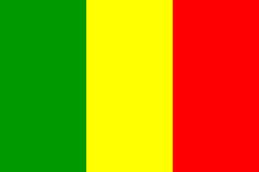
Flag of Mali
Flag of Mali

“I am a mortal, I am not perfect. I am aware of that. History will judge me one day, but in the meantime I just ask for your support. I did not choose this destiny. It imposed itself to me. God knows what He is doing.

I will go all the way but if I die before reaching our ideal, continue the project without me and lay the groundwork for change with my blood and my flesh.

No sacrifice is huge for this country.

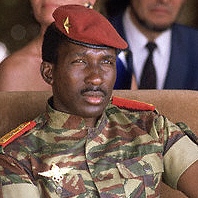
Thomas Sankara
Thomas Sankara a Ouagadougou

I am not Thomas Sankara, or Jerry Rawlings, I am Assimi Goïta. Remember me as a reformer not a revolutionary.

Remember me as the bringer of hope to the people, the one who came when your blood was shed because of your desire for change.

I will go to the end of my mission. I will never betray it, I will not betray your trust.

Death does not scare me, I saw it every day on the battlefield, it is failure that scares me.

Black power fist_1If death marries me on the way to this ideal, do not mourn me.

Do not make my grave a sanctuary.

I did what I thought right for my country. I did it for me but I did it for you too.

I am Assimi, the man who smiles every day with death, his fist closed.

Assimi Goïta

Thomas Sankara’s Murder Trial on Hold

Thomas Sankara
Thomas Sankara a Ouagadougou

The trial to find Thomas Sankara‘s murderers (Who killed Thomas Sankara? The Trial starts in Burkina Faso) has been halted because of last week’s coup in Burkina Faso which saw the removal of president Roch Kaboré (2022 Burkinabé coup d’état). This adds to the fragility of the entire region, where the métropole (France) is impoverishing and destroying the countries it claims to be helping. As always, the ghostly/nonsensical organization that is ECOWAS (CEDEAO) with its nonsensical rules that only favor the old colonial powers came out with some ‘sanctions’. Below are excerpts from the article on ABC News.

====

BurkinaFaso6
Flag of Burkina Faso

The trial has been paused until the constitution is reestablished, a lawyer for the prosecution said Monday.

The suspension comes one week after a military junta overthrew President Roch Marc Christian Kaboré, suspended the constitution and dissolved the national assembly.

Prosper Farama, one of the lawyers for the Sankara family called the suspension a good thing that would respect everyone’s rights. “We have to be patient until the constitution is reestablished for things to be legal,” he said.

… Fourteen people are being charged for Sankara’s killing, including former President Blaise Compaore, who ousted Sankara in a 1987 coup. Compaore is charged with complicity, undermining state security and concealing corpses, according to military documents seen by The Associated Press. He’s being tried in absentia, as he has been in exile in Ivory Coast since he was toppled in 2014.

… “As young Sankarists, we are very worried about the suspension of the trial,” said Passamde Occean Sawadogo a singer and activist. “We remain vigilant so that nothing can jeoparidze the trial’,” he said.

Portrait of a “Mai” (King) of Bornu in the 17th century

Kanem-Bornu court in the 1700s

We can retain without great risk of anachronism the detailed description that a Frenchman – probably a surgeon by the name of Girard held in slavery for a few years in Tripoli – gives in 1685 of the sovereign according to the testimonies he collected in this city.

It is in this case the grandson and fourth successor of Idris Alooma, designated under the name of “Mahi-Hagi-Hali”, that is Mai (Hajj) Ali b. Umar b. Idris, who had reigned, according to D. Lange, from 1639 to 1677.

Idris Alooma

“Those who have seen this prince agree that he is nice looking well-built, and of rich stature, but he is black : his ordinary clothes are a robe of white or blue linen, with long sleeves, very fine and untied : he wears the white turban like the Turks, and his face is always more than half covered, because the Bornu people are ashamed (take shame) to show their mouths, and which covers their face from the tip of the nose to the bottom of the chin.”

Chronology of the Bornu Kings from 1512 to 1671. – Extract from manuscript number 12220 (Nouvelles acquisitions. Bibliothèque Nationale, Paris) – Reproduced by le Bulletin de la Société de Géographie de Paris, 1849

It is good to note that, two centuries later, the European travelers who visited Bornu described the robe of the king in identical terms. Such permanence clearly indicates that this is not an occasional outfit, but one of the ritual and traditional insignia of power.

Les Africains, vol. 3, Editions J.A., 1977, p. 53. Translated to English by Dr. Y., Afrolegends.com

Africans making Strides in the World of Wine

Tinashe Nyamudoka and barrels (Source: jancisrobinson.com)

Have you ever heard of Africans making it into the world of wine? I don’t mean South Africans who have a good history of wine-making, but other countries on the continent? Well, a while back, I had heard about an Ivorian making wines and actually having a vineyard, and now Zimbabweans. As a side story, one of my uncles was once a very pro-eminent wine-taster… I always wondered where he had acquired the taste (given that this is not a tradition for us), but he used to be called upon by the best wineries in France to taste and judge on the quality of their wines. The Guardian had a story about Tinashe Nyamudoka and a new generation of Zimbabweans getting into the wine business. Below are excerpts from that article. Enjoy!

====

A bottle of Kumusha Wine, Cabernet Sauvignon

… When he left [Zimbabwe] in 2008, [Tinashe] Nyamudoka had never tasted wine. Now, he ranks among southern Africa’s top sommeliers and has his own wine label with international sales.

We have a lot going against us as Zimbabweans, and you might think there is nothing good coming out of the country,” says the 36-year-old. “So, for me to be recognised as the [top] sommeliers in the world, being African and Zimbabwean, instils a sense of hope and pride.”

Nyamudoka began his career as a waiter in a Cape Town restaurant, where he learned about the different varieties and tastes of the wines his customers drank. He moved on to become a hotel wine waiter, working alongside some of the city’s leading sommeliers.

After studying his trade [he also has a certificate in wine business management from the University of Cape Town], he won the best wine steward award in a competition for luxury hotels in the Western Cape in 2013.

… His wine label, Kumusha – “home” or “roots” in Zimbabwe’s Shona language – has benefited from his celebrity, producing 200,000 bottles a year, up from 1,200 when it was launched four years ago. “People started embracing it,” he says.

Kumusha wines, Shiraz and Merlot

… The eight Kumusha wines – three reds, four whites and a rosé – are all produced in South Africa. They are sold in the US, the Netherlands, Kenya and Zimbabwe – “my exciting market”, he says. This month, he is starting to export his wines to the UK.

I started this brand from scratch with no aid or financial handouts. It has been pure grit, passion and dedication,” he says. “I want people to understand that you can make it without prejudice.

…. “There’s been an emergence of black sommeliers in the world as the industry becomes more diverse. We see the hospitality offering in Zimbabwe improving and there will be a need for sommeliers.

Syllart Records – A Classic from Pépé Kallé & Empire Bakuba

On Monday, we talked about Syllart Records: The African Equivalent to Motown Records, a label which owns some of the largest African music catalog in the world. Let us pray it remains so, and they can be remunerated at their right One of African’s legends is incontestably Pépé Kallé. Enjoy this rare pearl of Pépé Kallé and Empire Bakuba… this is one is from the Syllart Records Youtube channel.

Syllart Records: The African Equivalent to Motown Records

Syllart Records
Syllart Records

I recently heard about the Syllart Records, a music records label which many considered to be the equivalent of the African continent’s Motown records. The record label leader is Binetou Sylla, the daughter of the founder, the late Senegalese producer Ibrahima Sory Sylla. The label owns the largest African music catalog in the world, spanning the last sixty years of music creation. Its founder, Sylla’s impact on African pop music and its global influence is really wide. Imagine the hard work, the quality, the authenticity, and innovation that went on in his studios! Yet, I had never heard of his name. However, I had heard about some of the artists produced under his label, and danced to their music, such as Ismael Lo, Salif Keïta, Empire Bakuba, Sam Mangwana, Gadji Celi, M’Pongo Love, Tshala Muana, M’bilia Bel, Oumou Sangare, Pépé Kallé, Miriam Makeba, Papa Wemba, or Africando, and so many others.

Syllart Records_Binetou Sylla
Binetou Sylla of Syllart Records (Source: Panafricanspacestation.org.za)

Today, his daughter is working on digitizing all that hard work, and trying to find ways to give rights to the musicians. She says of her father on OkayAfrica, “[My father] preferred to let his work, his music speak for him. He was an ambassador for African music. … [He] excelled at scouting new talent and used Syllart as a launching pad for many who would rise to global stardom.” Enjoy her recent interview to BBC. Check out the Syllart Records YouTube channel.

Who/What do we Celebrate in Africa in 2021 ?

Although 2021 has globally been a tough year, there are still events that lend to celebration. As we turn the page of 2021 and delve into 2022, it is good to note that in 2021, a lot of “firsts” have taken place on the African continent. Below are a few of the events that brought joy. There are many more, of course, but I selected 11. Enjoy, and add in the comments other celebratory events that have marked the continent this year.

  1. Hulda Swai_1
    Professor Hulda Swai

    Tanzanian professor Hulda Swai wins the 2020 prize of the African Union Kwame Nkrumah Continental Awards for Scientific Excellence in February [Professor Hulda Swai of Tanzania Wins Distinguished Science Award: ‘Women are as good as men’]. This is a highly prestigious scientific award in Africa.

  2. In May, a Malian woman gives birth to 9 babies (from natural conception). This marks the first single birth and survival of nonuplets in the world. Halima Cisse, a Malian woman, has given birth to nonuplets, 5 girls and 4 boys, in a hospital in Morocco [World Record: Malian Woman gives Birth to Nine Babies].
  3. Herero_chained
    Chained Herero men

    Germany agrees to pay Namibia €1.1bn over historical Herero-Nama genocide in May of this year. This is historic, late, and probably not enough compared to the loss in human lives… yet it is important! The money will be paid over 30 years in aid programs…  (probably a way to siphon money back to Germany, while appearing to be giving something), and pales in comparison to the billions worth of Namibian diamonds and cobalt mine that will profit German companies in fine print [Germany in Namibia: the First Genocide of the 20th Century].

  4. Laurent Gbagbo
    Laurent Gbagbo

    In June, after 10 years of imprisonment, and over 20 years of persecution, Laurent Gbagbo, the former president of Cote d’Ivoire finally lands home amidst celebrations from his supporters in the country and abroad [Laurent Gbagbo is Back in Cote d’Ivoire]. Although there have been subsequent disappointing actions on his part, it is nonetheless a victory over the International Court of Justice, and all the persecution Blé Goude (How long shall they kill our prophets…?), him, and countless others have gone through, and remains a major cause for celebration, as it shows that, for a just cause, perseverance and determination always bear fruits.

  5. In June, Petra Diamonds pays Tanzanians for its abuse [Petra Diamonds pays £4.3m to Tanzanians ‘abused’ by its contractors]; this is significant as it shows that it is not impossible to demand reparations from these giant companies that pollute our lands and abuse us. It sets a precedent.
  6. Tokyo2020
    Tokyo 2020 Olympics logo (Olympics.com)

    Late July marks the start of the Tokyo 2020 Olympics after one year of postponement, and Africa wins new victories. Tunisian Ahmed Hafnaoui offers the African continent its first medal of the games, by winning gold in the 400m freestyle swimming; Hugues Zango of Burkina Faso gives his country its first ever medal at the Olympics by winning the bronze medal in the men’s triple jump; while Eliud Kipchoge successfully defends his Olympic title at the marathon becoming the 3rd person in the history of the games to win successive marathons [African Wins at the Tokyo 2020 Olympics].

  7. In October, Tanzanian writer Abdulrazak Gurnah is awarded the Nobel Prize of Literature, making him the fifth African to win the illustrious prize [Tanzanian Abdulrazak Gurnah awarded Nobel Prize of Literature]. As you can see, the African literary scene is flourishing.
  8. Somalia_The Gravedigger Wife
    “The Gravedigger’s Wife” by Khadar Ahmed

    A Somali love story, the Gravediggers’ Wife is this year’s FESPACO winner [Somali Love Story, The Gravedigger’s Wife, is this year’s FESPACO winner]. The FESPACO, which is one of Africa’s biggest film festival, took place this year after the pandemic and lockdowns, and an 8-months delay because of security reasons [FESPACO 2021: One of Africa’s Biggest Film Festival is back!].

  9. 100 years after René Maran, an African wins the prestigious French Prix Goncourt. The award was given to Senegalese writer Mohamed Mbougar Sarr. This is the first time that a Sub-saharan African person wins the prize, and the third time for a Black person in the almost 120-years history of the title [100 years after René Maran, An African wins the Prestigious Prix Goncourt], even though people of African descent make up so much of the French population over the past century.
  10. Benin_Fon statue symbolizing Behanzin Man shark
    Benin Fon statue symbolizing Behanzin man shark (Musee du quai Branly – Jacques Chirac)

    In November, France returns some artifacts of the kingdom of Dahomey to the present-day country of Benin; these were looted when the French burnt down the capital of King Behanzin at Abomey over 120 years ago [France returns 26 Artifacts from Behanzin’s Era to Benin]. Similarly, the Benin Bronze cockerel held at the University of Cambridge from the famed Benin Kingdom [Benin City: the Majestic City the British burnt to the ground] has been returned to Nigeria. This is still little, as they should all be returned to their rightful owners; it should not even be up to negotiation.

  11. Congolese Rumba has been recognized as a UNESCO Intangible World Heritage. Congratulations to both Congos, the Republic of Congo and the Democratic Republic of the Congo (DRC) for working together. We do hope that this is just the first step in a collaboration that will extend to other domains including economic success and beyond [Congolese Rumba Wins UNESCO Protected Status].

Now, there are a lot more such as David Diop winning the International Booker prize for his book “At Night All Blood is Black” which focuses on Tirailleurs Senegalais; or the Senegalese influencer Khaby Lame being ranked number 2 on Tik Tok for his wordless humor which transcends language barriers and cultures (he is the fastest growing Tik Tok influencer with 120 million followers); or even Madagascar’s secretary of police, Serge Gelle, swimming for about 12 hours to reach shore after his helicopter crashed in the Indian Ocean off the northeast coast of the country. When rescued, Gelle said “My turn to die has not yet come, thank God.” So let us all be grateful for this year, and for the people and events who have brought joy to our lives, and let us move forward to a new year.