March 8th marks International Women’s Day (IWD). Every year around the world it is commemorated in a variety of ways: it is a public holiday in over 25 countries, and is observed socially or locally in others to celebrate and promote the achievements of women, and address key issues pertaining such as women’s rights, gender equality, equal pay, reproductive rights, violence against women, and many others. In some countries, women march on that, while in others it is customary for men and women to give their female colleagues and loved ones flowers and gifts and show equality towards the other gender. This year, we are posting this beautiful musical collaboration from Tanzania titled “Superwoman“. It is truly an amazing work of art, which celebrates women of all walks of life in song, and highlights Tanzanian and African cultures as a whole. Enjoy and share by telling the ladies around you how awesome they are, and superwomen!
King Mandume ya Ndemufayo, portrait extracted from a photograph of the King with British representatives in South Africa
Mandume, king of the Cuanhama (Oukwanyama) principal subgroup of the Ovambo in Southern Angola, was one of the last and most important resistance leader against Portuguese conquest in Angola. By the size of his army, he could be compared to Samori Touré, but he did not have the same historic aura or military genius and given his very short life, he has remained unknown to many. Yet, in 1915, he held in his hands for 10 days the scourge of the balance of power in Southern Angola directly, and indirectly in Angola as a whole. Mandume is celebrated by many nationalists in Luanda as one of their heroes because he fought against Portuguese advances inside Angolan territory. He was a leader of the Ovambo resistance, defending the independence of his people, the Cuanhama so as not to get absorbed within Angola. Given European drawing of African boundaries during the 1884Berlin Conference, the Cuanhama found themselves between areas of Portuguese West Africa (Angola) and German South West Africa (Namibia); thus Mandume has also entered the pantheon of the Namibian resistance. Who was Mandume?
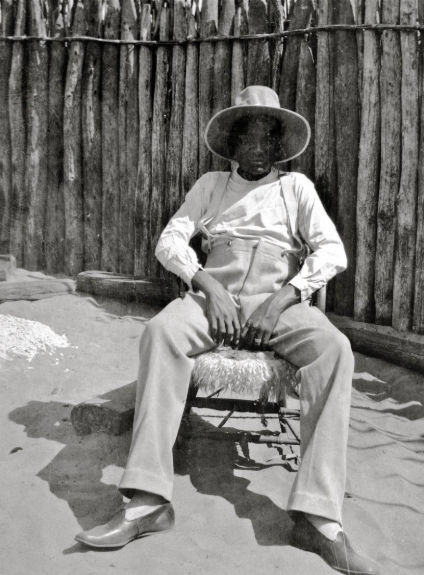
King Mandume ya Ndemufayo, probably in Oihole, sometime before 1916
Mandume ya Ndemufayo was a simple ethno-nationalist, who refused to be colonized and had about 35,000 to 40,000 armed fighters; more than any Angolan nationalists ever had before 1974. He took over the reins of the Cuanhama kingdom in 1911 and his reign lasted until 1917 when he died of either suicide or machine gun fire while under attack from South African forces. Ya Ndemufayo grew up during a time of significant upheaval in the Oukwanyama kingdom due to the presence of European merchants and missionaries. As King Nande’s nephew (his mother was the king’s sister), he was third in line for succession to the Kwanyama throne. To protect his life as royal child heir to the throne, Mandume had to live in various homesteads. King Nande died on 5 February 1911 and Mandume succeeded him at barely 18 years old. Immediately upon ascending the throne, he moved the royal residence to Ondjiva (now in Angola). He could be thought of as a neo-traditionalist leader, who, even though he studied in the German mission schools, he spoke German, and a bit of Portuguese, and championed the independence of his people. Strongly anti-European, he expelled Portuguese traders from Kwanyama territory to denounce price inflation. Given the great drought and famine which lasted from 1911 to 1916, Mandume issued decrees prohibiting the picking of unripened fruits to protect against droughts and the unneeded use of firearms, an important commodity obtained from European traders. Significantly, he also issued harsh penalties for the crime of rape and allowed women to own cattle, which was previously illegal. Overall, King Mandume sought to restore previous Kwanyama wealth and prosperity against a decaying system of local leadership. Ya Ndemufayo had a reputation for expelling Christians within the Oukwanyama kingdom. Numerous Christian families fled to the Ondonga kingdom of the Ovambos. Ya Ndemufayo did not favor Portuguese Roman Catholic missionaries as well as German Rhenish Missionary Society Protestants within his kingdom. In some European archives, it is said that he was a tyrant, but it is unclear whether it is European propaganda (a case of the hunter telling the story of the hunt) or reality.
Flag of Ovamboland
Before Mandume, previous Cuanhama kings had fought valiantly against Portuguese invasion of their land, King Weyulu from 1885 – 1904, his brother King Nande (1904 – 1911); unfortunately, they all in the end saw no choice to the inevitable Portuguese colonization. Mandume rejected the idea of Portuguese colonial rule and demanded to be on equal terms with the colonial rulers in their distant capitals.
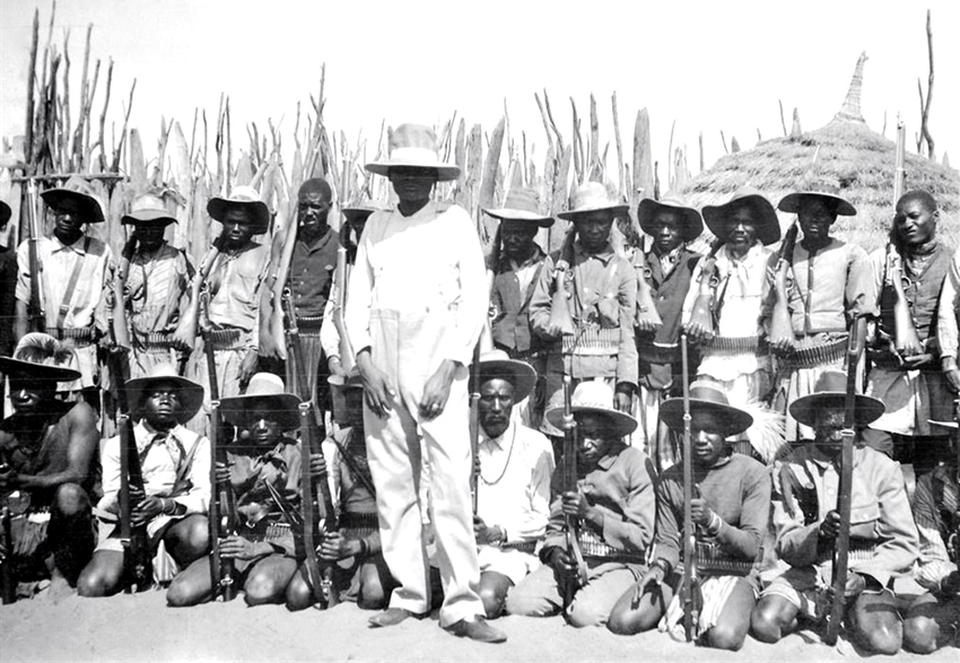
King Mandume with his warriors in Oihole in 1916
No European colonizer seriously challenged the well-organized and well-armed Ovambo kingdoms until 1915 and the beginning of World War I which coincided with a massive local drought. During the Battle of Omongwa in August 1915, ya Ndemufayo and the Kwanyama’s resisted a Portuguese attack led by Pereira de’Eça for three days. On 20 August, Mandume assembled several thousand men and attacked the Portuguese camp shouting “The land does not belong to the white[s]!”. After 10 hours of fighting, the Ovambo were forced to retreat due to a lack of supplies including the water which they had lost. In total, the Portuguese took 35 casualties and 57 wounded; while the Ovambo lost 25 and had 100 wounded. After the battle, the Portuguese also started claiming that German forces were helping the Ovambo because it was unimaginable to them that Africans were able to wage war like Europeans. Simultaneously, the South African forces peacefully conquered the portion of the Oukwanyama kingdom formerly located in German South West Africa; this was at a time when Germany lost the first world war, and thus all its African colonies. German South West Africa’s administration was taken over by the Union of South Africa (part of the British Empire) and the territory was administered as South West Africa under a League of Nationsmandate. Due to losses and lack of water, ya Ndemufayo first relocated the Kwanyama capital to an area south called Oihole, and then later into South West Africa. He used the border line to conduct attacks against Portuguese who were encroaching on his old territory in Southern Angola. However his attacks of Portuguese interests from his territory in South West Africa were not appreciated by the South African authorities who summoned him to Windhoek where he refused to go. In February 1917, after ya Ndemufayo refused to submit to South African control, he died in battle against the South Africans who had mounted an attack against him. The cause of his death is disputed; South African records show his death from machine-gun fire, while oral and popular history described his death as suicide, after being wounded so he could not be taken in by enemy forces. After his death, the South African administration abolished the Kwanyama-Kingship which was only restored in 1998, after over 8 decades.
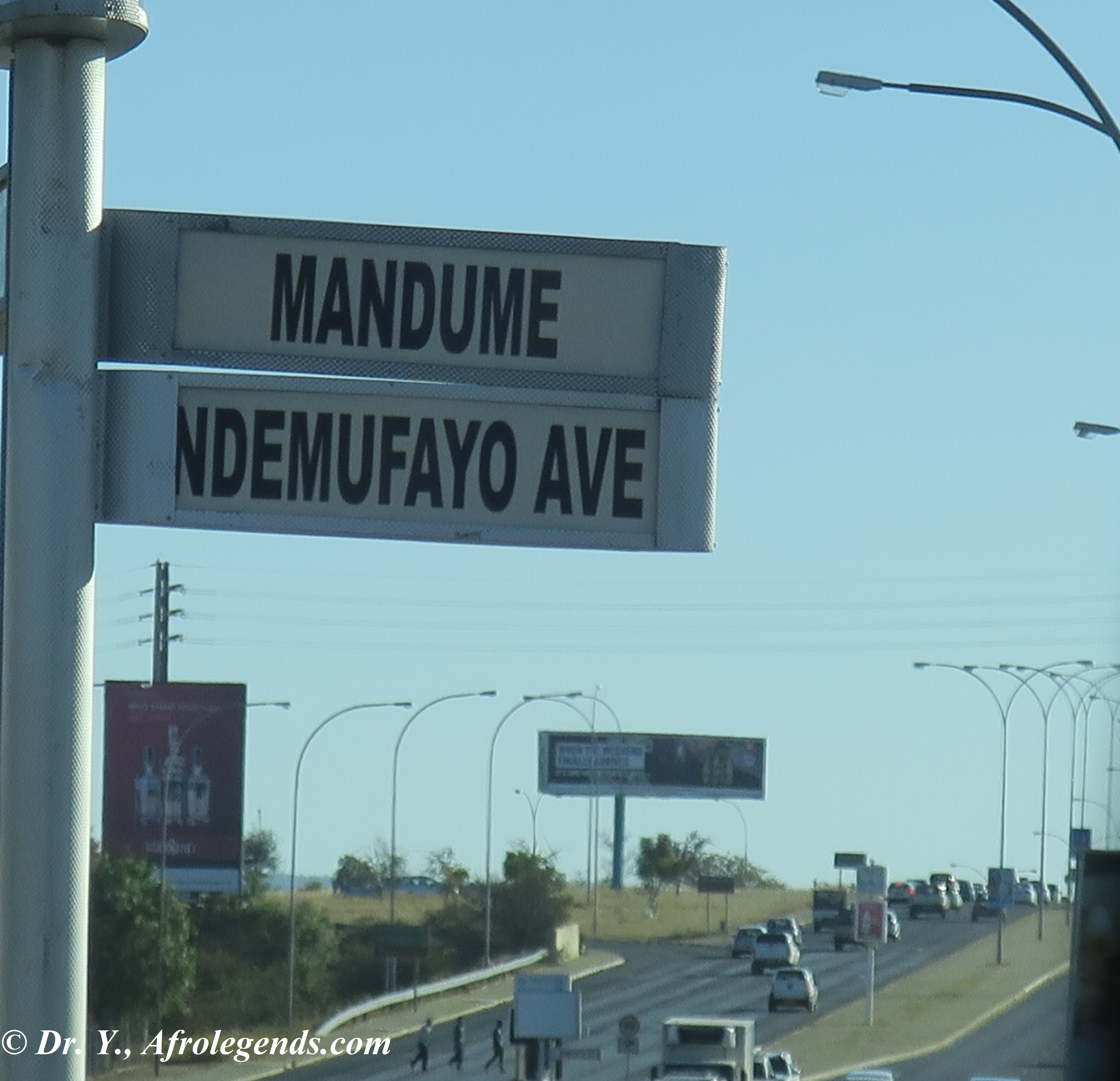
Mandume Ndemufayo Ave in Windhoek, Namibia
Today, Mandume Ya Ndemufayo is honored as a national hero in both Angola and Namibia. He is one of nine national heroes of Namibia that were identified at the inauguration of the country’s Heroes’ Acre near Windhoek. Namibia’s Founding President Sam Nujoma remarked in his inauguration speech on 26 August 2002 that: “It is better to die fighting than to become a slave of the colonial forces.” — These were the defiant words of one of Namibia’s foremost anti-colonialist fighters. He said these words in defiance when the combined [European] colonial forces insisted he should surrender. […] To his revolutionary spirit and his visionary memory we humbly offer our honor and respect.
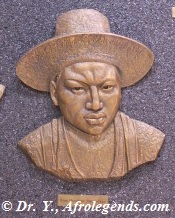
Early resistant, bronze plaque for King Mandume ya Ndemufayo at the Independence Museum in Windhoek, Namibia
The 100th anniversary of the death of Oukwanyama King Mandume ya Ndemufayo on February 2017 was attended by thousands of Namibians at Omhedi in the Ohangwena region including former Namibian presidents, where President Hage Geingob unveiled a bust of King Mandume. If you ever visit Windhoek, Namibia, make sure to walk along the street named after King Mandume, or visit the Universidade Mandume ya Ndemufayo in Angola. Please check out the article “The Legacy of legendary Oukwanyama King still vivid“, the article from The Namibian, Order out of chaos: Mandume Ya Ndemufayo and Oral History by Patricia Hayes, and lastly Les Africains Tome 8, editions J.A. p.207 (1977) to learn more about this great last resistant to Portuguese colonial advances in Southern Angola and Northern Namibia.
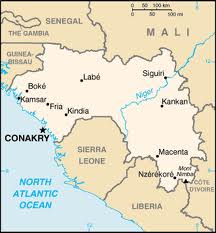
It is no secret that 14 African countries today are still under the French colonial tax (The 11 Components of the French Colonial Tax in Africa), and that every year, France takes home upwards of 500 billion dollars (Africa is funding Europe!) from its currency imposed upon those countries. After all, France has no gold mines on its soil but yet is the 4th world producer of gold, gold coming from Mali, while Mali is among the world’s poorest countries on the planet. It is also no secret that Mali has been trying to free itself from this colonial tax (The French Colonial Tax at the Heart of Mali-France Tensions), and has been working tirelessly to revoke at least 8 of the 11 rules. With the unrest in Burkina Faso brought by the Jihadists from the north who were well protected by the French army brought in to protect Burkinabe interests, but who instead have created further unrest in the area, it is no surprise that Burkina Faso has joined forces with Mali, and now Guinea, to create a strategic axis which will focus on military and trade agreements between the 3 countries. Although we do not particularly trust the Guinean leader, we applaud the union between the two brothers Mali and Burkina Faso, faced with sanctions from the puppet organization that is ECOWAS. We also applaud this ‘federation’ which will give Mali and Burkina Faso access to the sea via Guinea, thus opening up these land-locked territories to further trade. Enjoy excerpts below from the People’s Dispatch; check out also the write-up on AfricaNews.
Like Thomas Sankara said, “La patrie ou la mort, nous vaincrons!”
====
Burkina Faso
The three West African countries, all of whom have recently undergone military takeovers amid rising public anger against France, have agreed to a Bamako-Conakry -Ouagadougou axis, with enhanced cooperation on matters ranging from trade to the fight against insecurity.
As France is getting ready to withdraw its troops from Burkina Faso by the end of the month, signs of a possible realignment in the region are emerging with a tripartite meeting between the foreign ministers of Burkina Faso, Mali, and Guinea—Olivia Ragnaghnewendé, Morissanda Kouyate, and Abdoulaye Diop—held in Burkina Faso’s capital Ouagadougou on February 8 and 9.
The leaders discussed a range of issues, “in particular the success of the transition processes leading to a return to a peaceful and secure constitutional order,” and, importantly, the “revitalization of the Bamako-Conakry-Ouagadougou axis” to make it a “strategic and priority area” on matters including trade and economic exchanges, mining, transport, roads and railway links, and the “fight against insecurity.”
…
Guinea-Conakry
The communique issued following last week’s tripartite meeting condemned the “mechanical imposition of sanctions which often fail to take into account the deep and complex causes of political change,” adding that these measures “affected populations already battered by insecurity and political instability,” “undermine sub-regional and African solidarity,” and “deprive ECOWAS and the AU of the contribution of the three countries needed to meet their major challenges.”
While calling for “technical, financial, concrete, and consistent support” for security efforts and the return to a normal constitutional order, the three countries have agreed to “pool their efforts and undertake joint initiatives for the lifting of the suspension measures and other restrictions.”
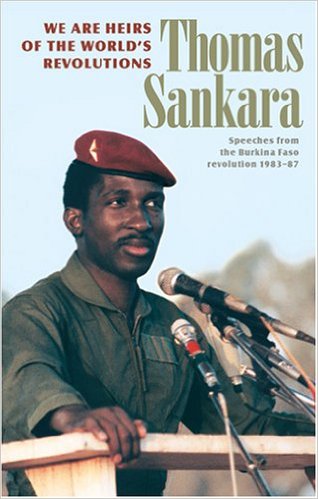
“We are heirs of the revolution” by Thomas Sankara
Almost 4 decades after Thomas Sankara and his 12 companions were treacherously murdered, they are given a burial at the memorial erected in Sankara’s honor in front of the place where they were assassinated, at the Conseil de l’Entente. His family has boycotted the ceremony because, as they say, how can you bury such a hero in the place where he was murdered? In a press release, they said, “We believed and continue to believe that it is fundamental that a space be found that allows to gather and appease hearts, and not to divide and increase resentment,” the Sankaras added in their statement on Sunday, calling the place chosen by the government “conflictual and controversial”. I know that Thomas Sankara now belongs to the entire nation of Burkina Faso, and even to the continent of Africa, but shouldn’t his family have a say as to where he is buried?
At the time of Thomas Sankara and companions’ murders in 1987 ordered by Blaise Compaore and his croonies, Sankara and his comrades were buried in some common fields with no names. Later, their bodies were exhumed in 2015 for legal proceedings.
What do you think? Is it okay to bury Thomas Sankara, our true panafricanist and anti-imperialist revolutionary, who fought for our freedoms, in the place where he was murdered?
As Sankara always said, Homeland or death, we shall overcome!
This is about 2 weeks old news, but it is a victory nonetheless. France has agreed to a request from Burkina Faso’s military leaders to withdraw all its troops from the country within a month. Remember that, as part of the colonial tax forced upon the Burkinabe people by France (and all other 14 past French colonies in Africa – The 11 Components of the French Colonial Tax in Africa, agreement #6), there is one rule which links Burkina Faso to France via defense agreements where France is supposed to help Burkina Faso in case of external attacks. As we have seen, France has not held its part of the bargain, instead funding and letting jihadists proliferate on the Burkinabe territory and committing abuses against the local populations. There were other defense agreements signed in 2018; this is a rescinding on the 2018 agreements. It is the third African country from which France is forced to move out its troops: Central African Republic, Mali, and now Burkina Faso. It is a victory; Little by little… As Agostinho Neto said, “A luta continua, e la vitoria e certa.” Enjoy excerpts below from Al Jazeera. For more, read also the piece by Ramzy Baroud on GulfNews.
====
France will withdraw its troops from Burkina Faso within a month after the West African country’s military rulers asked it to leave, the French foreign ministry said, in a move that will further reduce its presence in a region facing growing violence from armed groups.
In a statement released on Wednesday, the French ministry said it had received notice the previous day that a 2018 agreement on the status of French troops in the country had been terminated.
“In accordance with the terms of the agreement, the denunciation takes effect one month after receipt of the written notification. We will comply with the terms of this agreement by complying with this request.”
France retains some 200 to 400 special forces in its former colony.
On Monday, Ouagadougou said it had decided to end a military accord that allowed French troops to fight armed groups on its territory because the government wants the country to defend itself.
Burkina Faso’s national television reported on Saturday that the government had suspended a 2018 military accord with Paris on January 18, giving France one month to pull its troops out.
Protests against the French military presence have surged in Burkina Faso, partly linked to perceptions that France has not done enough to tackle the violence that has spread in recent years from neighbouring Mali, whose military rulers asked French forces to leave last year and deployed Russian private security contractors instead.
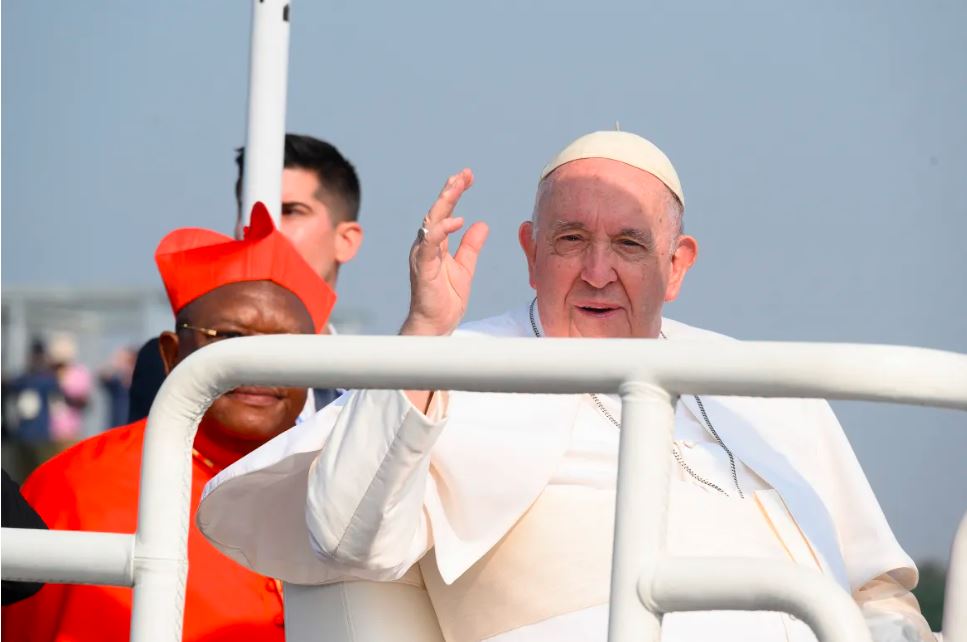
Pope Francis (R) waves as he arrives on the popemobile for the mass at the N’Dolo Airport in Kinshasa. [Source: Arsene Mpiana/AFP – Al Jazeera]There are no coincidences. Is it a surprise that the Pope is visiting the Democratic Republic of Congo (DRC) just after the big signing of cobalt and copper mines to the US? Or South Sudan oil fields (3rd largest in Africa behind Nigeria and Angola)? This is the first visit of the Holy See in the DRC in 37 years, and his second visit to South Sudan! To all the religious people out there, this is not an attack on religion or the Pope, it is just asking questions: let’s face it, your prayers are not the reason the Pope is visiting the DRC or South Sudan; your resources are! Some people tell me that it is because Africa is the future of Catholicism with the largest growing population of Catholics, but why is there no true African presence at the Vatican then? Others say that the Pope is trying to preach peace… President Charles De Gaulle of France once said that, “states do not have friends, they only have interests.” It is best for Africans not to think of love or friendship, but rather in terms interests.
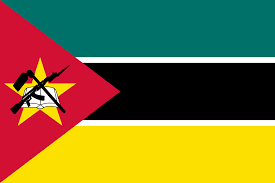
Flag of Mozambique
Remember how the Pope visited Mozambique just before the major signing of the biggest gas fields in the world to the French firm Total and a condominium of commercial banks from around the world descended upon it? Ever since that 15 billion dollars contract with the French firm Total for the oil in Cabo Delgado, and the discovery of one of the largest oil, gas, diamonds, rubies fields in the world, peace in northern Mozambique has become evasive (Who/What did we say goodbye to in Africa in 2020?). Now they want us to believe that there is an Islamist insurgency in Mozambique of all places! The Islamists passed over Congo, Sudan, Kenya, Tanzania, to land in… Mozambique! After his Mozambican visit, Pope Francis sent money to help the people and children of Mozambique who have been displaced by conflict! … Why did the Vatican not help the government of Samora Machel in their fight for independence back in the days? Lastly, to help with peace in Mozambique, Rwandan troops have been sent there. Rwanda today is a world producer of minerals it does not have on its soil, and we know that neighboring Congo is the real provenance of those. Is it then a coincidence that the same Rwanda that is in conflict in DRC, is the same deployed in Mozambique to protect TotalEnergies’ interests in the region?
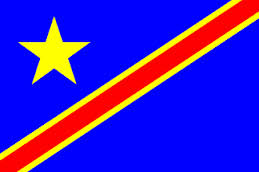
Flag of the Democratic Republic of Congo
To come back to the Pope’s visit to the DRC and South Sudan, I wish that while visiting the country, instead of asking the faithful to pray (1-million mass to celebrate the Pope visit in DRC), the Pope could ask for roads or hospitals… the country probably took out of its coffers the money needed for hospitals or roads, to accommodate his visit. Couldn’t he ask that for his next visit, he would like to go from Kinshasa to Lubumbashi by road or rail (not possible at the moment)? The Pope made a grand speech saying all the things Africans love to hear Pope says Hands off Africa: “Hands off the Democratic Republic of the Congo! Hands off Africa! Stop choking Africa, it is not a mine to be stripped or a terrain to be plundered.” However, for the new African generation, the era of words is over, actions speak louder! There is no secret that since the Ukraine war, many foreign leaders have been visiting Africa in search of the next energy source, even the King of Belgium visited Congo in 2022 for the first time since independence and offered words as usual (King Philippe of Belgium’s Visit to the Democratic Republic of Congo (DRC)); after all, Africa is relatively easy to tame: no united governments, poor governance, corrupt leadership, no cohesion, 54 countries, etc. So it is easy to sign a deal for Nigeria’s oil and gas for X amount, and not give a dime to Niger (France’s backyard) for its uranium for instance. This is where the African Union (AU), had it been an organization at the service of its constituents and not external financial backers, would have played an important role.
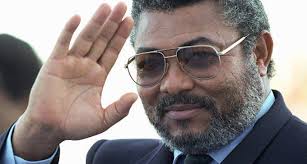
President Jerry Rawlings of Ghana (Source: thecable.ng)
A couple of years ago, we published the words of President J.J. Rawlings of Ghana on Betrayal. Let’s take a trip down memory lane to revisit that article published here on Afrolegends in 2020, where Rawlings talks about African identity, betrayal and much more. As Amilcar Cabral said, “Let no one tell us that Nkrumah died of a cancer to the throat or some other disease; no, Nkrumah has been killed by the cancer of betrayal …“; the cancer of betrayal is a true gangrene to progress in Africa, how many leaders has it claimed?
=====
In the video below, you will hear J.J. Rawlings talk about the issues always discussed on this blog: the loss of the African soul to westernization, the danger of traitors within the ranks, and more importantly the dangers of globalization. People should really pay attention to all he has to say about betrayal, African identity, and also about the manipulations of the people by the triumvirate that is the multinationals, the media, and the intelligence.
Kwame Nkrumah, First President of Ghana
On betrayal, Jerry Rawlings said, “Something that is worse than an enemy is a traitor.” This is very reminiscent of the speech Amilcar Cabral gave at the funeral of Ghana’s first president Kwame Nkrumah on May 13, 1972, which I translated to English here on Afrolegends, “The Cancer of Betrayal” by Amilcar Cabral. J.J. adds, “As bad as an enemy can be, … something worse than an enemy is a traitor.”
On African identity, Rawlings affirmed, “In the process of trying to modernize, we [Africans] have ended up being westernized. … When I wanted to even name my children African names, heroic names, … the catholic church said no…they will have to be catholic names … [which] are European names.“… “I have a right to my identity, don’t take away my identity!“
“Christianize me if you may, but don’t westernize me!” He talks about the issues of African identity, which is powerfully shown in the poem ‘My Name’ by Magoleng wa Selepe.
On globalization, “The world is manipulated by the multinational corporations, the media, and the intelligence apparatus, … they work as a triumvirate and they are neatly sandwiched… in between the governed people and the governors… the sooner we begin to return, restore, some sense of morality in business ethics, in politics, in the media, intelligence apparatus, …” apply the same morality to all, especially when talking about globalization, applying the same moral standards to all.
This week marks the anniversary of the assassination of Amilcar Cabral, the father of the independence of Cape Verde and Guinea Bissau. To celebrate his life, I have decided to re-post Cabral’s speech given during President Kwame Nkrumah‘s state funerals in Conakry on 13 – 14 May 1972“The Cancer of Betrayal” which I transcribed to French (“Le Cancer de la Trahison“) and translated to English (“The Cancer of Betrayal”) and published on Afrolegends in 2012. As Cabral states, betrayal has been at the heart of so many issues faced by Africa today: ” … fromclass struggle, … from contributions to social structures, from the role of party or other instructions, including armed forces…. My idea on this question will allow us to better understand the greatness of Nkrumah’s work, to understand the complexity of problems he had to face so many times alone,… …. we, Africans, firmly believe that the dead continue living by our sides… . Nkrumah will resuscitate each dawn in the hearts and in the determinations of freedom fighters, in the action of all true African patriots.”
=========
In his last public speech in Conakry, at the funeral of the former Ghanaian president Nkrumah, Amilcar Cabral had denounced the cancer of betrayal that eats up African movements. His comments today take a strange resonance in Guinea as in Angola, and Mozambique, where many movements are demanding power which the Portuguese have not yet abandoned.
Amilcar Cabral
“… What to say? but we must speak otherwise at this point, if we don’t talk, our hearts may burst. Our tears should not infiltrate the truth.We, freedom fighters, we do not mourn the death of a man, even a man who was a comrade and an exemplary revolutionary, because as President Ahmed Sekou Toure often says ‘what is man in front of the infinite being and transgressing of the people and of humanity?’ We do not mourn the people of Ghana scoffed in its most beautiful realisations, in its most legitimate aspirations.We are not crying for Africa, betrayed. We are mourning, yes, of hatred towards those who were able to betray NKRUMAH to serve the ignoble imperialism… Mr President, Africa by requiring through the voice of the people of the Republic of Guinea, as always fairly represented by President Ahmed Sekou Toure, whom NKRUMAH had put in his right place on the Kilimandjaro’s highest summits of the African revolution, Africa rehabilitates itself and through history. President NKRUMAH, which we honor is primarily the great strategist of the struggle against classic colonialism, he is the one who created what we call African positivism, what he called “positive action”, affirmative action. We pay tribute to the declared enemy of neocolonialism in Africa and elsewhere, the strategist of economic development in his country. Mr President,we praise the freedom fighter of the African people who always gave his full support to national liberation movements, and we want to tell you here that we, in Guinea and Cape Verde islands, even though it is true that the most important factor for the development of our struggle outside our country was the independence of the Republic of Guinea,the heroic ‘no’ of the people of Guinea on 28 September 1958. It is also true thatif we went through the struggle regenerated, it was essentially due to the concrete support of Ghana and particularly of President Nkrumah …
Mr. President, we should however in this moment remember that all coins in life have two faces, all realities have positive and negative sides… to all positive action, is opposed a negative action. To what extent is betrayal’s success in Ghana linked to problems of class struggle, from contributions to social structures, from the role of party or other instructions, including armed forces as part of a new independent state. To what level, we shall ask ourselves, is betrayal’s success in Ghana linked to a correct definition of this historical entity and craftsman of history that is the people and their daily work, in defending its own independence conquests? Or to what extent is betrayal’s success not linked to the major problem of the choice of men in the revolution? My idea on this question will allow us to better understand the greatness of Nkrumah’s work, to understandthe complexity of problems he had to face so many times alone… problems that will allow us to conclude that, as imperialism exists, an independent state in Africa should be a liberation movement to power or it would not exist. Let no one tell us that Nkrumah died of a cancer to the throat or some other disease; no, Nkrumah has been killed by the cancer of betrayal that we should uproot… by the cancer of betrayal, that we should root out of Africa if we really want to definitely crush the imperialist domination on this continent. But, we, Africans, firmly believe that the dead continue living by our sides, we are a society of dead and living.Nkrumah will resuscitate each dawn in the hearts and in the determinations of freedom fighters, in the action of all true African patriots. Our liberation movement will not forgive those who betrayed Nkrumah, the people of Ghana will not forgive, Africa will not forgive, progressive mankind will not forgive!”
Translated from French by Dr. Y., afrolegends.com (12 October 2012)
Readers, friends, I wish you a beautiful and prosperous year 2023! There were so many joys and losses in 2022, and we hope for the best in 2023. May this new year mark the beginning of new endeavors, the continuation of current ones, and/or the end of old ones. 2022 was quite a year, and many are hoping for something better. Let us turn the 2022 chapter, and start 2023 ready to take off for this new year, never losing altitude during this flight, and trusting for better. May it be filled with health, prosperity, joy, love, happiness, abundance, harmony, and peace!
Happy 2023
The top 6 posts of the year 2022 are listed below: an old-time favorite “Love Poem for my Country” by Sandile Dikeni took first place as the most read post of the year, while another favorite poem “My Name” by Magoleng wa Selepe took second place. The surprise of the year was the post “Why the Name: Morocco ?” which came in, in fifth position, no doubt thanks to Morocco’s outstanding performance at the 2022 Qatar FIFA World Cup where Morocco made Africa proud by becoming the first African country to reach the semi-finals in the history of the World Cup. We, at Afrolegends.com, would like to express our profound gratitude for your constant support, as your readership has carried us forward. Keep trusting, reading, sharing, commenting, reblogging, and liking. We wish you a full and amazing new year, rich in blessings and greatness. Keep your heads up, and may your year bring in new fruits, bright fruits, that stem from unity as beautiful as the fruits in the picture! I love this picture because not only does it symbolize unity, it only symbolizes growth, and beauty! As always, like Agostinho Neto said, “A luta continua … a vitória é certa!”
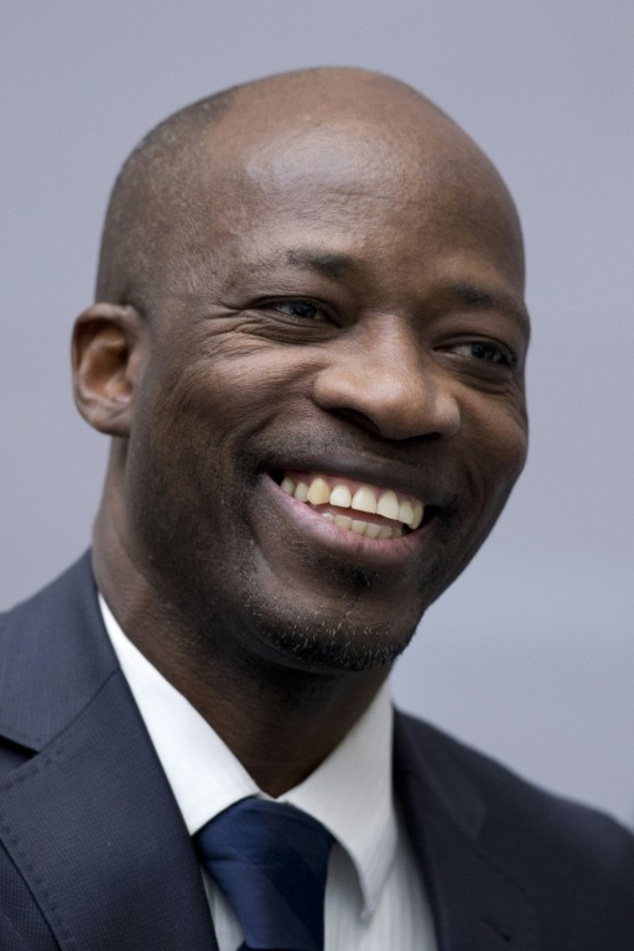
Joy fills my heart… Charles Blé Goudé is home at last! How long has it been? How long has it taken? The battle has been long, but Truth has prevailed! As a reminder, Charles Blé Goudé, Youth minister under Laurent Gbagbo, had been captured in 2013 in Ghana after the foreign attacks on Cote d’Ivoire by France that forced him to find refuge there [How long shall they kill our prophets…?]. He has spent almost a decade in captivity at the Hague at the International Criminal Court justice with Laurent Gbagbo, like many of our leaders who were deported for standing for their people [Deportation of African Heads of States]. They were both acquitted in January 2019, but the prosecution stalled, keeping them in Europe, trying to find ways to overturn the decision, and blocking all their movements. Two years later in 2021, Laurent Gbagbo and Charles Ble Goude were totally acquitted and free at Last, however, only Laurent Gbagbo was allowed to return home which he did in June of last year [Laurent Gbagbo is Back in Cote d’Ivoire]. Blé Goudé has had to beg for many years to get an Ivorian passport from the Ivorian government (Unbelievable right?).
Did the ICC apologize for all the years of hurt? the tarnished image? the ruined life? And of course mainstream media, which yesterday eagerly published those images of Gbagbo and his wife Simone in their room surrounded by rebels, or Blé Goudé now publish one line if anything at all! Unbelievable! They should be sued for playing such major roles in destroying countries, obliterating people’s images, and causing wars! I live you here with excerpts from an article from the BBC. Note, the love the people have for him has caused the government to ask for the population not to show up at his arrival. All these tough years of claiming his innocence, all these years of constant support, and people’s prayers, dedication, love, and determination have born fruits. Truth always wins! It may take years… but it prevails!
====
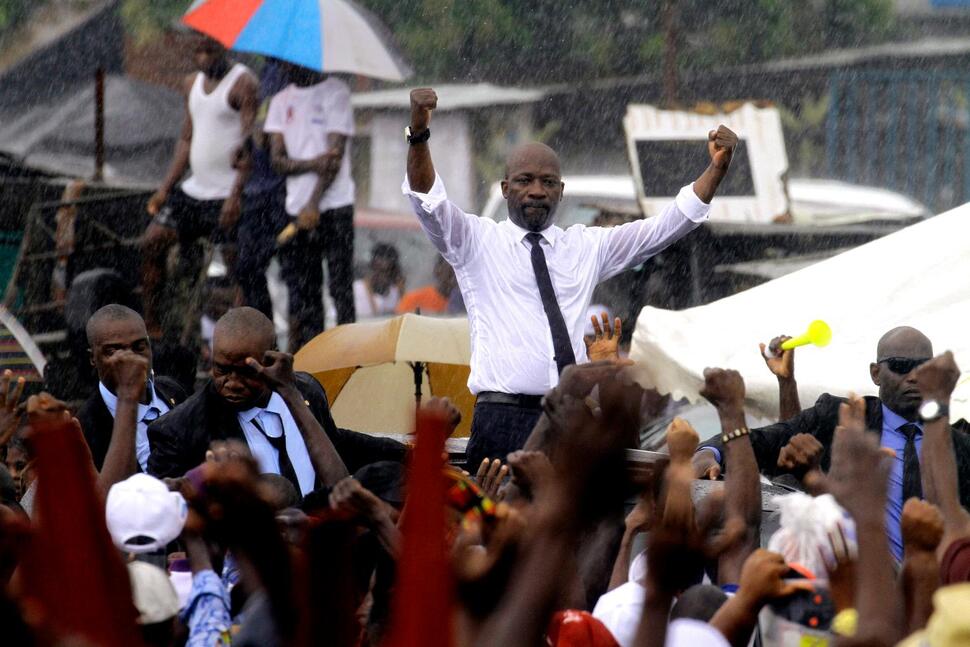
Charles Blé Goudé cheered by supporters upon his arrival in Abidjan, Cote d’Ivoire, on Saturday (Source: Associated Press – USNews.com)
Ivory Coast politician Charles Blé Goudé, once seen as a divisive figure, has flown home after being acquitted by the International Criminal Court.
His charisma and fiery rhetoric led to his nickname “street general”.
… Mr Blé Goudé, 50, arrived in Ivory Coast’s main city, Abidjan, on a commercial flight from neighbouring Ghana on Saturday afternoon [Charles Blé Goudé was actually met at the airport by former First Lady, Simone Gbagbo, accompanied by around a dozen people – these foreign media are always trying to remove Simone from history, but they will not succeed].
There was heavy security at the airport and his supporters were advised not to go there to show respect for all the victims of the 2010 conflict.
But thousands of them gathered in the suburb of Youpougon – a former stronghold of Mr Blé Goudé’s – where he was expected to make a statement, according to his entourage.
….
Mr Blé Goudé fled Ivory Coast the day before Mr Gbagbo’s capture, going to Ghana by road where he lived in hiding for almost two years.
He was then arrested and transferred to the ICC where he first appeared in 2014 charged with committing crimes against humanity, including accusations that he led a militia.
But both Mr Gbagbo and Mr Blé Goudé were acquitted in 2019 after the judges said that the prosecution had failed to prove its case. The decision was confirmed by the ICC’s Appeals Chamber last year.
The former president returned to Ivory Coast in June 2021, where he has since tried to play the role of a peacemaker urging reconciliation.
Mr Blé Goudé obtained a passport from the Ivorian authorities in May and shortly after got the green light to go home.















 African Heritage