Is Air France Resuming Flights in Mali?

Flag of Mali
Flag of Mali

The answer is a resounding NO! or rather not yet! When someone has treated another like a sub-human, it might be hard to all of a sudden recognize the other person’s humanity. This is what Air France has been doing on the African continent. After helping to wipe out Air Afrique, it is no secret that Air France has been the main carrier servicing many African countries for the past decades, and it has enjoyed a perfect monopoly with super-hiked up prices… it is cheaper to fly to Paris from any African capital, than to fly to a neighboring country (story for another day).

Map of Mali with its capital Bamako

On August 7, the commercial company, Air France, decided to take a political stand against the countries of Mali, Burkina Faso, cancelling its flights to those countries without as much as a notice, a real breech of contract, because of the coup d’etat in neighboring Niger. Air France suspended its flights to Mali (seven per week) and Burkina Faso (five) on August 7 after the closure of the airspace of neighboring Niger following the coup in Niger. Imagine all the passengers who had paid tickets? Air France’s service is notoriously bad in Africa, do you think that they reimbursed them? Why should the coup in Niger make Air France stop servicing Mali or Burkina Faso? Just because the countries are neighbors? Imagine a country has issues with say, Germany, then as a result its airline cancels all flights to neighboring Belgium, and Netherlands without as much as a notice… the height of disrespect! how does it make sense?

After the suspension of Paris-Bamako connections by Air France, the Malian authorities decided on August 11 to cancel the company’s authorization to operate this line.

Now Air France would like to resume flights in Mali and Burkina Faso. Air France was set to resume this Friday October 13, and Malian authorities have halted the process with more requests to Air France. If you were the Malian or Burkinabe governments, would you agree? Shouldn’t there be new conditions to the partnership, if it is meant to resume?

To read more, check out SimpleFlying.

Bye Bye to French Troops in Niger

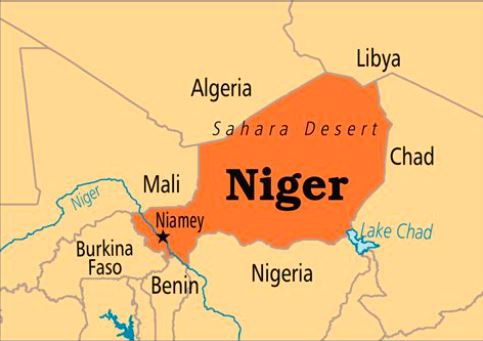
Map of Niger

French troops have started withdrawing from Niger this week. The first convoy of French soldiers was escorted by Niger troops out of the country; they are moving to neighboring Chad where they are planning to stay. The French ambassador to Niger has already left the country, after defiantly ignoring the the numerous requests from the Niger government for him to leave (France set to Withdraw Troops and Ambassador from Niger). To this day, the Western media and the West still call the Niger government “junta leaders” or “mutinous soldiers” while they praise the Gabon military coup leader; such double standards! Niger’s government has also given 72 hours to the UN resident coordinator in Niger to leave the country; citing “underhanded maneuvers” by the U.N. secretary-general to prevent Niger’s full participation at last month’s General Assembly in New York, given that Niger’s representative was denied attendance (can you imagine: a nation belonging to the UN has a conflict with another member state, and the UN (organization supposed to serve all nations) refuses it a chance to talk at its tribune?). The US has now called the deposed president (puppet Bazoum), and suspended aid to Niger, while still maintaining their military drone base in Niger… All Niger people should remain on high alert!!!

Excerpts below are from Al-Jazeera.

=====

French flag

French soldiers have started to withdraw from their bases in Niger, with the first convoy of troops escorted out of the country by Niger’s military as it travelled in the “direction of Chad”, authorities in the capital Niamey said.

Pick-up trucks and armoured personnel carriers laden with French soldiers drove through the dusty outskirts of Niamey on Tuesday, marking a departure demanded by Niger’s military rulers who seized power in July.

In a statement read on state television, Niger’s military called on citizens to cooperate with the troop movements, which it said would involve some of the 1,500 French soldiers leaving Niger by road to Chad, a journey of hundreds of kilometres through sometimes insecure territory.

The troops based in Ouallam have left their base today. These are the operations for the departure of the first ground convoy in the direction of Chad, escorted by our defence and security forces,” the military said.

In addition to the departure by land, “three special flights” have been registered at the airport in Niamey, two for the departure of “97 special forces elements” and one “dedicated to logistics.”

… Approximately 1,000 French troops were stationed in Niamey, with another 400 deployed at two forward bases in the northwest, near Mali and Burkina Faso, ….

Flag of Niger

Niger’s military rulers, which assured the withdrawal will take place in “complete safety”, said remaining French forces would continue to leave on “a timetable agreed to by both parties”.

The United States on Tuesday also formally declared that Niger’s democratically-elected president was removed in a military coup, which results in officially suspending assistance to Niger [what else is new?]. Though there are no plans to change the US troop presence in the country, senior administration officials said….

There are now about 1,000 US defence department personnel in Niger, according to the officials. …

African Governments should make Contracts Public to their Populations!

As we remember the Zambia Sovereign Debt Crisis, the Entebbe airport Uganda-China debt (Ugandan international airport at Entebbe about to be seized by China), the 999-year land lease granted to Europeans in Kenya, and the price of gold in Mali or uranium in Niger, the common thread seems to be that in most of these cases African countries are taken in for a ride, and that these contracts are negotiated without the people’s knowledge, or rather none of these contracts are discussed in the parliaments of these countries were the people’s representatives could all get to vote on it. The contracts are instead negotiated behind closed doors, thus ensuring constant corruption, and of course many years of “walking blindfolded”. If the future of their constituents is going to be traded away, why shouldn’t the people be invited to the negotiation table? Some argue that this would take too long, that sometimes, waiting for parliament’s approval may lead to gridlocks and more… however if the people’s future is going to be signed away like in the case of Zambia and countless African countries, contracts need to be made public. Now if it is confidential, why not release at least the ones that were signed over 20, 50 years ago? or the ones signed at independence (which are now over 60 years old)? This will help the new generations of lawyers to also learn how to negotiate for better contracts in the future. The reason is most likely that, just like in the case of The 11 Components of the French Colonial Tax in Africa, if Africans were made aware of what their forefathers were made to sign, they would have risen in riots, and many of the puppet governments installed to serve the West will all get toppled down.

It is about time that current African governments release the contracts signed at the time of independence!!! More importantly, it is also high time that when negotiating our future away, that we, the people, are invited at the negotiation table so that our children and children’s children and generations to come do not spend centuries paying interest on a debt that keeps increasing because of poor deals! Some may say, “we are in 2023, why do you need to know what happened in the 1960s? We need to focus on the present! Oh yes, but the past will inform the future! The contracts of yesterday still affect today, particularly in Africa, see The 11 Components of the French Colonial Tax in Africa, and The Bank of Senegal: Ancestor to the FCFA – producing Bank. It is because we do not keep archives that we keep repeating the same mistakes over and over. If we all learned from the fact that, for instance, Pascal Lissouba of Congo was deposed because he asked for the re-negotiation of Congo’s oil and dared change partners from French to Americans, and then later under fire he back-pedaled back to French, we will know never to back-pedal and that once we have set our minds for liberty, no matter how hard it is, we should stay the course.

Why is Niger so Poor and Why the Anti-French Sentiment?

Map of Niger

Somebody recently asked why the anti-French sentiment was so high in West Africa and in particular in Niger. After all, France is the land of lights and liberties, so why would anyone not like France? The person argued that Africans and Nigeriens in particular had no reason to have such feelings toward France.

For all who look at the index of countries in the world, Niger is the poorest country in the world, yet it is so rich in uranium, and among the world’s first producers of uranium in the world. For many years, France’s nuclear centrals were fully furnished ONLY by the uranium from Niger, and in 2021 Niger was the main supplier for the EU.

Flag of Niger

Let’s do the math, focusing just on uranium, shall we? Niger produces about 130,000 tons of uranium per year. Uranium was not traded internationally for many years. At some point, the price for 1 kg of uranium was about 200 Euros, worth about 131,118 FCFA (the currency imposed upon Niger and 14 other countries in Africa by France, FCFA, The 11 Components of the French Colonial Tax in Africa). Thus, this uranium should bring to Niger about 26,000,000,000 Euros per year ==> 26,000,000,000 x 655.59 FCFA = 17,045,340,000,000 FCFA. It has been over 50 years that uranium has been exploited in Niger. Thus, 26,000,000,000 Euros in 50 years = 1,300,000,000,000 Euros or 17,045,340,000,000 FCFA in 50 years = 852,267,000,000,000 FCFA.

However, France does not pay Niger’s uranium 200 Euros per kg, but rather 0.80 Euro per kg (4000 FCFA vs 131,118 FCFA Industrial Info Resources)!!! And when Mamadou Tamdja, former president of Niger asked France to increase the price to 10 meager Euros, he was deposed in a coup d’etat (Africa: Can you Feel the Wind of Change?)!

Thus for 130,000 tons of uranium per year, Niger receives 520,000,000,000 FCFA. In 50 years, Niger has only gotten about 26,000,000,000,000 FCFA.

In summary, Niger losses equal 852,267,000,000,00026,000,000,000,000 FCFA = 826,267,000,000,000 FCFA = 1,294,800,000,000 Euros in 50 years of exploitation of Niger. And all this math is without counting the money taken away by France with the FCFA currency (∼50%)! No wonder Niger is so poor!

1000 FCFA (BEAO)

Then in recent days, we heard France’s government claim in the media that France gives out 130,000,000 Euros per year to Niger for help; France is so generous, isn’t it? However, this amount represents about 1/200th of what France has been “taking” home from Niger from uranium only. Remember that France’s companies in Niger (and in countless other African countries) do not pay taxes in Niger, but in France! And this is only the uranium of Niger! Niger has gold, and other resources that France has been taking out dirt cheap. This is only Niger, JUST think about the other 14 African countries!!! NO WONDER NIGER IS POOR… ITS WEALTH IS IN FRANCE’S COFFERS. After this mathematics exercise, if you were Nigerien, can you love France?

P.S.: The current price of uranium is about $73 per lbs, so about 70 Euros/lbs today. This exercise can be done to apply to today’s prices.

France set to Withdraw Troops and Ambassador from Niger

Flag of Niger

The diplomatic tug-of-war between France and Niger has finally come to an end? President Macron of France said that France will be withdrawing its troops and ambassador from Niger. It has taken almost 2 months for France to agree to remove its ambassador and troops. On August 26, Niger’s government asked the French ambassador to join them for talks like they do with all diplomatic representations in their country. France refused and said that they could not talk to a junta, as they only recognized the fallen president Bazoum as an interlocutor. Niger’s authorities then gave the French ambassador, Sylvain Itte, 48 hours to leave their country given that France would not recognize them on their own soil. France refused to withdraw their ambassador, stating that it doesn’t recognize the coup-plotters as the country’s legitimate leaders. Niger’s authorities then revoked the diplomatic immunity of France‘s ambassador and ordered the police to expel him from the West African country. If the ambassador and his family were found anywhere outside of the embassy, they were considered persona non grata and will be deported immediately; they posted military outside which checked every car entering or leaving the embassy.

French flag

President Macron finally came to his senses and has decided to withdraw the 1500 French troops stationed in Niger, as well as his ambassador. This is the best way to avoid further humiliation. This is a step forward. However, the Niger authorities and people need to stay alert, this is not the end. There is no way France or Europe will leave the uranium and other resources of Niger just like that. There are still American, German, and Italian forces on Niger’s soil: there is a strong solidarity among Europeans, they act as a United force. Excerpts below are from the BBC.

=====

Map of Niger

President Emmanuel Macron has said France will withdraw its ambassador and end all military co-operation with Niger following a coup.

France has decided to withdraw its ambassador. In the next hours our ambassador and several diplomats will return to France,” Mr Macron said.

He added that military co-operation was “over” and French troops would leave in “the months to come“.

The military junta [Niger authorities] which seized power in Niger in July welcomed the move.

This Sunday we celebrate a new step towards the sovereignty of Niger,” the junta said, in a statement quoted by AFP news agency.

There are about 1,500 French soldiers in the landlocked West African country helping to fight Islamist militants. The US also has more than 1,000 troops in Niger but these have not been asked to leave.

The decision by Paris follows months of animosity and protests against the French presence in its former colony, with regular demonstrations in the capital Niamey.

The move deals a hammer blow to France’s operations against jihadists in the wider Sahel region and Paris’ influence there. But Mr Macron said France would “not be held hostage by the putschists,” …

Mr Macron said he still regarded ousted Niger President Mohamed Bazoum, currently held prisoner by the coup leaders, as the country’s “sole legitimate authority” and had informed him of his decision. He described the deposed president as a “hostage“.

He was targeted by this coup d’etat because he was carrying out courageous reforms and because there was a largely ethnic settling of scores and a lot of political cowardice,” he said.

Niger is one of several former French colonies in West and Central Africa where the military has recently seized control – it follows Burkina Faso, Guinea, Mali and Chad. …

Anti-French vitriol has flourished in the region in recent years, with many local politicians accusing Paris of carrying out neocolonialist policies – a charge denied by France.

….

Mali, Burkina Faso, and Niger Sign a Mutual Defence Pact

Map of Liptako-Gourma region (Source: aha-international.org)

We raise our hats to Mali, Burkina Faso, and Niger, countries which have signed the Liptako-Gourma Charter, a mutual defense pact to protect their countries, and fight effectively against terrorists which have been occupying the northern parts of their territories.

The Liptako-Gourma Charter establishes the Alliance of Sahel States (AES), which aims to “establish an architecture of collective defence and mutual assistance for the benefit of our populations“, Colonel and leader of Mali, Assimi Goïta wrote on X.

The Liptako-Gourma area is a region of over 370,000 km2, shared among the three countries, and which has been at the heart of the jihadists’ attack in recent years. It is difficult for a single country to face terrorists or try to defend itself, when those jihadists after attacking one run into the neighboring country in impunity. All three countries are faced with the same issues, and by this charter, they unite their efforts to defend themselves, thus tripling their forces.

Map of Mali with its capital Bamako

This alliance will be a combination of military and economic efforts between the three countries“, Mali’s Defence Minister Abdoulaye Diop told journalists. “Our priority is the fight against terrorism in the three countries.”

The West African regional bloc ECOWAS has threatened to intervene militarily in Niger over the 26 July coup. Mali and Burkina Faso have quickly responded by saying that any such operation would be deemed a “declaration of war” against them (Niger Coup d’Etat: Airspace Closure, Sanctions, Diplomatic Overtures?All Eyes on NigerNiger – France Diplomatic Arm Wrestling). Thus the Liptako-Gourma is a clear creation of a defense alliance for these countries, a normal evolution, and a breath of fresh air. As always, united we stand.

Below are excerpts from AfricaNews. The Liptako region was part of the ancient Liptako Emirate, don’t forget to check out the 1891 treaty with France pertaining to the Liptako kingdom.

=====

Flag of Burkina Faso

The military leaders of Mali, Burkina Faso and Niger on Saturday signed a mutual defence pact, ministerial delegations from the three Sahel countries announced in Mali’s capital Bamako.

The Liptako-Gourma Charter establishes the Alliance of Sahel States (AES), Mali’s junta leader Assimi Goita posted on X, the social network formerly known as Twitter. Its aim is to “establish an architecture of collective defence and mutual assistance for the benefit of our populations“, he wrote.

A jihadist insurgency that erupted in northern Mali in 2012 spread to Niger and Burkina Faso in 2015. All three countries have undergone coups since 2020, most recently Niger, where soldiers in July overthrew President Mohamed Bazoum. The West African regional bloc ECOWAS has threatened to intervene militarily in Niger over the coup. Mali and Burkina Faso quickly responded by saying that any such operation would be deemed a “declaration of war” against them.

Map of Niger

– Mutual defence pact –

The charter signed on Saturday binds the signatories to assist one another — including militarily — in the event of an attack on any one of them.

Any attack on the sovereignty and territorial integrity of one or more contracting parties shall be considered as an aggression against the other parties and shall give rise to a duty of assistance… including the use of armed force to restore and ensure security“, it states.

It also binds the three countries to work to prevent or settle armed rebellions.

Never Before Seen Catastrophes hit Morocco and Libya Few Days apart

Flag of Morocco

Our hearts go out to our Moroccan brothers and sisters whose country was hit by a magnitude 6.8 earthquake last Friday; this earthquake, the deadliest seen in the country in over a century, is said to have claimed over 3,000 lives. Similarly, our hearts and prayers accompany our Libyan brothers and sisters whose country was hit by unbelievable floods Tuesday which are said to have claimed between 5,000 – 10,000 lives, and displaced at least 30,000 people; these are also the worst floods Libya has seen in its history. How could such horrendous, never seen before, catastrophes hit countries in the Mediterranean at the same time? Both countries border Algeria on the west and east.

Map of Morocco

Talking about the earthquake in Morocco on Monday, most articles in the Western media, instead of focusing on the catastrophe, were focusing instead on the fact that Morocco has not allowed rescue teams from all countries to enter their territory, but just a few; in particular, they kept mentioning the fact that Morocco had not allowed French teams on the territory. Every article then was written following that angle, i.e. ‘Morocco is accepting rescue teams from some countries and not others,’ or ‘people are dying because the Moroccan government is not allowing all countries to join in the rescue‘… Some of these Western media and countries act like Africans’ pain should be examined with magnifying glasses, and we ought to accept everything. Isn’t it the right of a sovereign country to take its own decisions? Unbelievable, isn’t it? Who cares which rescue teams you allow on your territory? If some countries are so eager to help, why not send money, food, equipment, etc, instead of turning Moroccan pain into a diplomatic issue. By the way, shouldn’t the question instead be ‘Why is Morocco refusing aid from France and some other countries?’ Could it possibly have something to do with the fact that a couple of weeks ago, France asked to use Moroccan airspace to attack Niger, and maybe Morocco would like to make sure all efforts remain humanitarians? France had also asked to use Algerian airspace to attack Niger, but was denied.

Map of Libya (Worldmapblank.com)

Then disaster hit Libya. The death toll is said to be so high because when the storm hit, 2 dams 8 miles apart located outside the city also failed; it is said that the infrastructure was not well-maintained. Given that NATO and its cronies have messed up Libya to the point of no return by pillaging and looting it after killing Kadhafi, there is no real government in the country. Now giant French war planes are landing in Libya for rescue. War planes for humanitarian rescues? The floods hit the city of Derna on the Benghazi side, from where the attack against Kadhafi’s government were mounted in 2011. Since there is no real government or rather the Benghazi puppet government is weak, anything could fly over their airspace, thus making rescue efforts difficult to coordinate.

Our prayers go out to all our Moroccan and Libyan brothers and sisters. Africa stands with you. Neighboring countries should help when possible and remain on high alert.

Celebrating 3 Million Views on the African Heritage Blog !!!

At the end of August, the  African Heritage blog passed the 3 million views cap. This is a celebration of YOU, the readers, and subscribers. Thank you for your constant support, readership, comments, corrections, and contributions. It has not been easy, given the Google search algorithms which have been trying to bury the blog away over the years. Many have said that people no longer read, people no longer have time, the attention span is reducing, times are changing, and most prefer TikTok and all the latest trendy short media form. We, at Afrolegends.com, are thankful for your renewed trust and support, and understand that YOU, the reader, have a choice, and appreciate being part of that choice.

With the current world geopolitical shift involving the BRICS and more, it is clear that the world is changing, and Africa is embarking on a new journey. There is a new Scramble for Africa. The weeks, months, and years ahead will be difficult, fun, unique, and will hopefully mark a new birth for Africa. Please join us as we usher in the new era, the era of the liberation of Africa! As always, as Agostinho Neto said, “A luta continua e la vitoria e certa,” and Thomas Sankara to add, “La Patrie ou la mort, nous vaincrons! / Homeland or death, we shall overcome!” Sankara also said that ” Only Struggle liberates, …” This is a struggle to the finish!

Germany Matches DNA from African Skulls looted during Colonial Era

Flag of Tanzania

Authorities of the SPK Museum, Berlin’s Museum of Prehistory and Early History, have announced this week that they have been able to trace living relatives to ancient skulls pillaged by German forces in East Africa during the colonial era, using DNA analysis.

Map of Tanzania

This is no easy fit, and the museum’s director has lauded it as a “small miracle.” Why? Well because from a study of at least 1,100 skulls found in the 7,700 skulls collection acquired from the Berlin’s Charité Hospital Museum, SPK museum researchers were able to gather enough information on 8 skulls to make a search for specific descendants. A complete genetic match was established between one of the skulls and a man still alive today. The clue: a single word inscribed on the skull “Akida,” who is believed to have been a high-ranking advisor to Mangi Meli, a ruler of the Chagga people in the 1890s in the Kilimanjaro Region of Tanzania. It is no secret the fate that this advisor must have found, given that Mangi Meli was hanged and decapitated by the Germans for leading an uprising against German invaders in 1900, along with 19 other Chagga, Meru, and Arusha leaders; one can only guess that the Akida must have been hanged with King Meli. This raises an important question: where are the skulls of Mangi Meli, and the other Chagga, Meru, and Arusha leaders? We all remember that King Mkwawa’s skull was part of the Treaty of Versailles’s negotiation; so it will be no surprise that other kings’ skulls are found somewhere in the basements of German museums.

Skull of King Mkwawa

The SPK collection is controversial because of its origins: at the end of the 19th century and the beginning of the 20th century, the German empire took thousands of skulls from its colonies for research into racial classification, many of the skulls were from colonial victims, and part of loots. I still have a hard time understanding why, as part of a loot, invaders will take skulls of the defeated, unless it is for more than just a racial study? A few years ago, the SPK returned 20 skulls to Namibia; those skulls were thought to belong the Nama and Herero tribes who suffered a genocide at the hands of Germans at the beginning of the 20th century (Germany Returns Skulls of Namibians Genocide Victims, the first genocide of the 20th century).

Excerpts below are from DW. Enjoy!

=====

Flag of German East Africa

A Berlin museum said on Tuesday it had established a clear link between three skulls taken to Germany during the colonial era and living relatives in Tanzania.

The German capital’s Museum of Prehistory and Early History carried out DNA analysis on hundreds of skulls with the aim of returning the remains to descendants.

Berlin’s SPK museum authority said in a statement that it was the first time that DNA research had provided a clear link between such remains and living descendants.

The relatives and the government of Tanzania will now be informed as soon as possible,” the statement said.

… Museum researchers gathered enough information on eight of the skulls to make a search for specific descendants viable, the SPK said. Saliva samples were taken from possible descendants.

A complete genetic match for one of the skulls was found with a man still alive today.

The skull was marked with the title “Akida” which already indicated that it belonged to a known senior adviser to Mangi Meli (1866-1900), a powerful leader of the Chagga people.

Niger – France Diplomatic Arm Wrestling

Flag of Niger

A lot of events have happened in Niger in recent days. On August 26, Niger’s government asked the French ambassador to join them for talks like they do with all diplomatic representations in their country. France refused and said that they could not talk to a junta, as they only recognized the fallen president Bazoum as an interlocutor. Niger’s authorities then gave the French ambassador, Sylvain Itte, 48 hours to leave their country given that France does not recognize them on their own soil. The Quai d’Orsay (France) said that their ambassador will not leave Niger, stating that it doesn’t recognize the coup-plotters as the country’s legitimate leaders, and said Thursday August 31, that their ambassador remains in place despite the expulsion threats (France defies Niger’s ultimatum). Imagine the arrogance: you are in my house, I ask you to leave, and you refuse to leave, claiming that I have no authority in my house!

Map of Niger

Niger’s authorities have now revoked the diplomatic immunity of France‘s ambassador and ordered the police to expel him from the West African country, according to a statement from the military regime. The communique sent by Niger’s Ministry of Foreign Affairs on Thursday said Itte “no longer enjoys the privileges and immunities attached to his status as a member of the diplomatic staff of the embassy.” The document also says the diplomatic cards and visas of the ambassador’s families have been canceled. The Niger government also cut electricity and water from the embassy. Furthermore, they have posted police and military outside the embassy to check every car that goes in and out of the embassy. If the ambassador and his family are found anywhere outside of the embassy, they are considered persona non grata and will be deported immediately.

Many believe that France is taunting Niger: given that the French embassy (as any diplomatic representation) is considered French soil in Niger, attacking it to remove the French ambassador will be seen as an act of war against France, and will thus give France the full rights to bomb Niger; after all, it is no secret that France has a French military base in Niger with about 1500 soldiers.

Over the weekend, thousands of people have rallied in Niamey, the capital, to demand that France withdraw its ambassador and troops from the West African country as its new military rulers have accused the former colonial power of “interference”. They have now laid siege over the French military bases in Niamey and Zinder, asking for France to leave their country.

Do you see France’s double standard? In Niger, France calls the military who took over the power, “junta“, “putschists“, “coup-plotters“, “mutinous soldiers“, and refuse to recognize their authority even though they are supported by the population; yet in Gabon, France and all western media call the military who deposed the president, the “new president“, “new Head of state“, “new government“. Isn’t it clear to all, which country is really having a revolution for the good of the people?