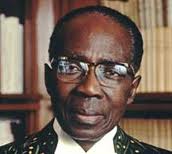
Today, I will publish another poem,” Nuit de Sine / Night in Sine,” by Léopold Sédar Senghor. The poem was published in Oeuvre Poetique, Paris, Seuil, 1990 P. 14-15. The English translation was done by Melvin Dixon, in The Collected Poems, 1998, Univ. of Virginia Press.
Nuit de Sine
Femme, pose sur mon front tes mains balsamiques, tes mains douces plus que fourrure. Là-haut les palmes balancées qui bruissent dans la haute brise nocturne À peine. Pas même la chanson de nourrice. Qu’il nous berce, le silence rythmé. Écoutons son chant, écoutons battre notre sang sombre, écoutons Battre le pouls profond de l’Afrique dans la brume des villages perdus.
Voici que décline la lune lasse vers son lit de mer étale Voici que s’assoupissent les éclats de rire, que les conteurs eux-mêmes Dodelinent de la tête comme l’enfant sur le dos de sa mère Voici que les pieds des danseurs s’alourdissent, que s’alourdit la langue des chœurs alternés.
C’est l’heure des étoiles et de la Nuit qui songe S’accoude à cette colline de nuages, drapée dans son long pagne de lait. Les toits des cases luisent tendrement. Que disent-ils, si confidentiels, aux étoiles ? Dedans, le foyer s’éteint dans l’intimité d’odeurs âcres et douces.
Femme, allume la lampe au beurre clair, que causent autour les Ancêtres comme les parents, les enfants au lit. Écoutons la voix des Anciens d’Elissa. Comme nous exilés Ils n’ont pas voulu mourir, que se perdît par les sables leur torrent séminal. Que j’écoute, dans la case enfumée que visite un reflet d’âmes propices Ma tête sur ton sein chaud comme un dang au sortir du feu et fumant Que je respire l’odeur de nos Morts, que je recueille et redise leur voix vivante, que j’apprenne à Vivre avant de descendre, au-delà du plongeur, dans les hautes profondeurs du sommeil.
Night in Sine
Woman, place your soothing hands upon my brow, Your hands softer than fur. Above us balance the palm trees, barely rustling In the night breeze. Not even a lullaby. Let the rhythmic silence cradle us. Listen to its song. Hear the beat of our dark blood, Hear the deep pulse of Africa in the mist of lost villages.
Now sets the weary moon upon its slack seabed Now the bursts of laughter quiet down, and even the storyteller Nods his head like a child on his mother’s back The dancers’ feet grow heavy, and heavy, too, Come the alternating voices of singers.
Now the stars appear and the Night dreams Leaning on that hill of clouds, dressed in its long, milky pagne. The roofs of the huts shine tenderly. What are they saying So secretly to the stars? Inside, the fire dies out In the closeness of sour and sweet smells.
Woman, light the clear-oil lamp. Let the Ancestors Speak around us as parents do when the children are in bed. Let us listen to the voices of the Elissa Elders. Exiled like us They did not want to die, or lose the flow of their semen in the sands. Let me hear, a gleam of friendly souls visits the smoke-filled hut, My head upon your breast as warm as tasty dang streaming from the fire, Let me breathe the odor of our Dead, let me gather And speak with their living voices, let me learn to live Before plunging deeper than the diver Into the great depths of sleep.
Today, I thought that this poem by Bernard Dadié will be very appropriate. We wear a lot of chains, and the oppressed people of this world may want all the gags removed. Enjoy!
Chaînes
Quelles sont lourdes, lourdes, les chaînes,
Que le Nègre met au cou du Nègre.
Pour complaire aux maîtres de l’heure.
De grâce n’arrêtez pas l’élan d’un peuple !
Brisons les chaînes, les carcans, les barrières, les digues.
Pour inonder l’univers en eaux puissantes qui balaient les iniquités.
Quelles sont lourdes, lourdes les chaînes
Que le Nègre met aux pieds de Nègre
Pour complaire aux maîtres du jour !
Lourdes, les chaînes,
lourdes, lourdes,
les chaînes que je porte aux mains.
Que tombent tous les baîllons du monde !!
Chains
They are so heavy, heavy, the chains,
That the negro puts on the neck of the negro.
To please the masters of the hour.
Please do not stop the momentum of a people!
Let us break the chains, the shackles, the barriers, the dams.
To flood the universe with powerful waters that will sweep away iniquities.
If you are called to be a street sweeper, sweep streets even as Michelangelo painted, or Beethoven composed music or Shakespeare wrote poetry. Sweep streets so well that all hosts of heaven and earth will pause to say, “Here lived a great sweeper who did his job well.”
I really liked this Pambazuka article on the brief history of the passport. For those of us coming from ‘third-world’ countries, the act of applying for visas is both quite expensive and time-consuming. I always wondered why citizens of the ‘developed’ world could enter most countries in the world free of charge, while citizens of underdeveloped countries needed visas. The logic always seemed twisted to me, especially given that the converse was not true. For instance, a South African citizen needs a visa to enter the USA for tourism/business, but an American citizen does not need a visa to enter South Africa for the same reasons, and the list goes on. The article below goes over it. For the full article go to: Pambazuka . Here are some excerpts.
=========
Fatou Diome
[…] In spring 2015, Senegalese author Fatou Diome, whose works include The Belly of the Atlantic, caused a stir during the French talk show Ce soir ou jamais!. Only a month earlier, over 1,000 had drowned in one week in the Mediterranean Sea after their boat had capsized en route from the Tunisian coast to Italy. Diome vented her anger about the current European perspective and discourse on migration. And she expressed her belief that there is an underlying global problem that is rooted in the privileged treatment of a small percentage of the world’s population that depends on a document:
“Europeans see Africans arriving, ok. This migratory movement of populations is tracked and visible. But you don’t see the migratory movement of Europeans going to other countries. This is the migratory movement of those with power, with money. Those who have the right kind of passport. You go to Senegal, you go to Mali, you go to any country in the world, to Canada, to the U.S. Everywhere I go […], I meet French people, German people and Dutch people. I run into them everywhere on this planet because they have the right kind of passport.” (translated from French) (Diome 2015)
‘The Belly of the Atlantic’ by Fatou Diome
Apart from unmasking a very selective European perception and use of the word ‘migration’, Diome addressed an apparent inequality. There is a structural force which privileged nationals can ignore while the unprivileged are confronted with it every day, namely the power of a passport. Clearly, this inequality is not a natural development, but has evolved over time, as a look at the history of this small document shows.
[…] The focus here will be on the international passport. This document is used to control the departure from the home country, entering a foreign country and returning to the home country. All those who have crossed a national border know the process of handing his or her passport to a border official behind a glass panel. This guard checks you and your passport very thoroughly and sometimes asks questions about your purpose of travelling.
Nonetheless, a German passport allows the holder to enter 172 of the Earth’s 192 countries without a visa. Reversely, people from only 81 countries can enter Germany without a visa – an imbalance that quantifies a passport’s power. The development of a passport hierarchy is an advanced process, which has only been taking place for some decades. It leaves citizens from countries such as Somalia, Eritrea, Sudan, South-Sudan, Ethiopia, Congo or Liberia at the bottom of this hierarchy and enforces a restrictive and often arbitrary system of visa issuance on them. This system allows economically and politically powerful nations to use people’s mobility as a bargaining resource and reinforces their dominance. An example of this mechanism is the 2014 FIFA world cup in Brazil: European countries had a keen interest in granting their football-mad citizens free access to the host country. Brazil managed to secure liberalized visa regulations for its own citizens traveling to Europe in return. In this instance, the cultural event gave Brazil negotiating power and that in turn increased its economic and political power. When states lack these material and symbolic resources, they are less able to give their populations access to international networks, exchanges, education and jobs.
World map (Wikipedia)
Alternatives become possible when we start deconstructing the perceived ‘naturalness’ of the status quo. A growing number of intellectuals, scholars, artists and political activists are pointing to the historical development of borders and making us aware of their violence and their arbitrariness. They argue in favor of social and economic advantages that non-existent borders might yield…a world in which we can claim that the passport was just an episode that lasted for little more than a century. It would be a world in which Diome’s statement would ring true for everyone:
“We live in a globalized world in which an Indian might live and make a living in Dakar, someone from Dakar in New York, someone from Gabon might live and make a living in Paris. Whether you like it or not, this is an irreversible fact. So let’s find a collective solution, or move away from Europe, because I intend to stay.” (translated from French) (Diome 2015)
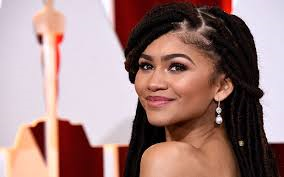
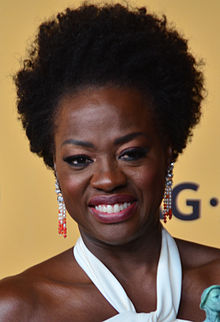
Last year, one journalist made fun of actress Zendaya’s hair because she wore dreadlocks to the red carpet; this reminded me of when Viola Davis had sported a short ‘afro’ to the Oscars … as if it was wrong for a Black woman to wear her hair in natural hairstyles. Why should an African woman be made to conform to something she is not? What is wrong with wearing our hair the way God made it?Without the relaxers, and perms made to straighten or rather beat the African-ness out? Every style should be celebrated.Our cultures are so unique… and the way we dress our hair is so unique, and should be loved and appreciated for what it is, a definition of who we are.
Viola Davis (Wikipedia)
It is high time, African women accept, appreciate, and embrace their heritage. It is impossible to beat the Afro out of oneself… just embrace it, and wear it as a peacock wears its feathers … with great pride! The poem below “African Hair” by Esmeralda Yitamben just says it all, and as I read it, I am proud to be African, born with this amazing hair. The author writes about the versatility of the African (Afro) hair, its beauty, its abundance, its richness, its kinkiness, and yes, its unruliness as well. True, I do not agree with the author’s mention of relaxers, but hey… every style should be valued. The original poem can be found on Kalaharireview.com. Enjoy! (The BBC also did a piece on Afro hair).
‘African Hair’
Kinky hair,
Picky hair,
Wavy hair,
Frizzy hair,
Hair the colour of ebony,
Sometimes sprinkled with hints of mahogany.
As splendid, lush, and full as the equatorial rainforest of Congo,
Woolen and soft like a sheep’s fur.
Shining with shea butter,
like a gem, under the moon’s smile.
O Sustaining Nature,
Blessed are our heads with beautiful hair:
Hair that can be braided, cornrowed, relaxed, and yes, even locked.
From Jamaican style dreadlocks, like Bob Marley’s hair,
To Jackson 5’s Afro,
To Maasai bald heads,
To Fulani princess corn rows,
To Bantu knots,
To Senegalese zillion braids,
To simple, hard-pressed, relaxed hair,
Precious Mother, Thou have blessed the Black race with a lion‘s mane.
What is the definition of feminism? Is it the same when applied to African women? Is there such a thing as African, or Asian, or European feminism? Why should feminism be dismissed as something only good for women, and not men as well? The condition of the woman is closely linked to that of the man, and as a woman is empowered, as she is given her rightful place in society, then are we ALL empowered as a human species. I live you here with a TED speech by Chimamanda Ngozi Adichie, the Nigerian author of the Top New York Times Bestseller book of the year 2014. Yes, she talks about feminism, but in reality, she talks about the reason why ALL of usshould be feminists: including MEN. Imagine for instance a working couple, where the woman in the couple is paid lower than men doing the same job, imagine the impact of that salary on the entire family budget if she was paid the same as a man, the opportunities for her children, healthcare, vacation, well-being, etc. Enjoy! Adichie’s speech ‘We Should All Be Feminists‘ has now been made into a book, which is going to be thought in schools in Norway and Sweden (The Guardian article). And yes feminism is not about angry females or beating men out of the world, it is about girls being given the same chances as boys, women being recognized for their impact on society, being allowed to rise, being intelligent and bright.
I would like to share another poem ‘Ilsm’ontdit‘ by François Sengat-Kuo published in Fleurs de Latérite, Heures Rouges Éditions Clé, 1971. This poem ‘They told me’ is all about reclaiming African-ness. I know it doesn’t quite sound like it, but here is someone who left all to please others, in this case the European masters, and in the end decides to reclaim what is his, his culture, and above all himself. The poem deals with colonization times, the service of African soldiers in World war I and II, and then independence or rather the quest to find oneself. And yes, once he decides to put himself first, they tell him that he is a traitor. I bring you here “Ils m’ont dit” (They Told Me) translated to English by Dr. Y. on Afrolegends.com
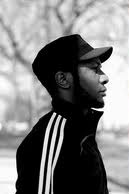
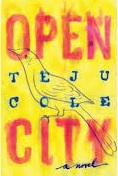
I really liked what Nigerian writer Teju Cole had to say about fighting rape culture, and how it should be a fight for all mankind, because when women are dehumanized, the entire society is. The author of Open City reacts to the Bill Cosby’s controversy in a very articulate manner, and we should all take the time to read it. Enjoy! For the entire text, visit the New Inquiry website, where it is titled ‘Improving on Silence’ by Teju Cole.
=========
Last night, reading the accounts by women who had been assaulted by Cosby, I was overcome with sorrow.
Tricky to say anything about this, but silence is simply not an option. This is everybody’s business. But I’ll say some things to the men who are reading.
“Open City” by Teju Cole
We men benefit, all of us men benefit, from rape culture. We benefit from the pain it causes women because we sprint ahead obliviously; we benefit from the way it knocks them off circuit and opens space for us; we benefit from the way it dehumanizes them so that our own humanity can shine more greatly; and we benefit from the aura of power it gives us as perpetrators or as beneficiaries. And because we benefit, explicitly or implicitly, we are not vociferous enough in our opposition to it. […]
We must fight rape culture, even in its allegedly mild manifestations, we must be grieved with the grief of those who commit the crime and those who benefit from a world built on such crimes, we must oppose men who wade in with stupid explanations and caveats and distractions, we must surrender the poisonous sentimentality that makes us believe a “great artist” over a less well-known woman. Indeed, we must be willing to let anyone go—think of any man you admire, any man at all, alive or in history, close to you or far away, and think to yourself that you must be willing to let him go—if such things are true of him too. And understand that such things can be true of any of them, of any of us. […]
And above all we must listen, to women, and to the significant but vastly smaller number of men who have also been assaulted. So that, gradually, we can collectively begin to slough off this wretched state of affairs in which the first thing someone who has been assaulted thinks is “no one will believe me.”
That’s to men.
And to women: I believe you. And I’m heartbroken about the many ways in which I fail to live up to that belief.
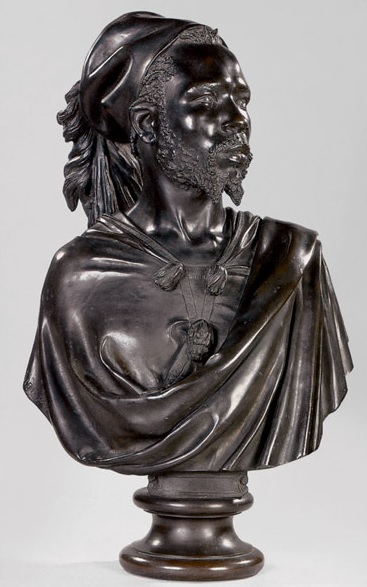
Said Abdullah of the Mayac – Kingdom of Darfur, by Charles Cordier, 1848
In honor of the upcoming Father’s day, I found this poem “He is … Father” by Epiphany. I loved her poem, and so I dedicate it to my father, and to all the great fathers out there.
================
He is … Father
by Epiphany
…He is
the shine in a little girl’s eyes
the icon of a son in the mirror
a husband to his woman
a provider & a leader
the endearing traits of a real man
personified in how He lives
…He is
the strength of the family unit
the shelter in a raging storm
a patriarch to the ancestral tree
his seed produces legacies
to carry on his dynasty
…He is
stability in the midst of adversity
He rules with a gentle hand
teaches his daughter how to be loved
to accept nothing less than a true man
He instills pride in his son
to be the best Man that He can be
Once a year is not enough to give credit where it is due
Today I stumbled upon a poem by Ghanaian author Michael Dei Anang which made me think a lot about Cheikh Anta Diop‘s work of re-educating the world about the place of Africa in history as the cradle of humanity. Michael Dei-Anang was a member of President Kwame Nkrumah‘s (Ghana’s first president) main secretariat and was concerned with the liberation of the rest of Africa still under colonial rule, at the time. Enjoy!



 I really liked this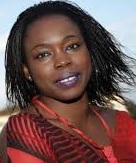

 Nonetheless,







 African Heritage