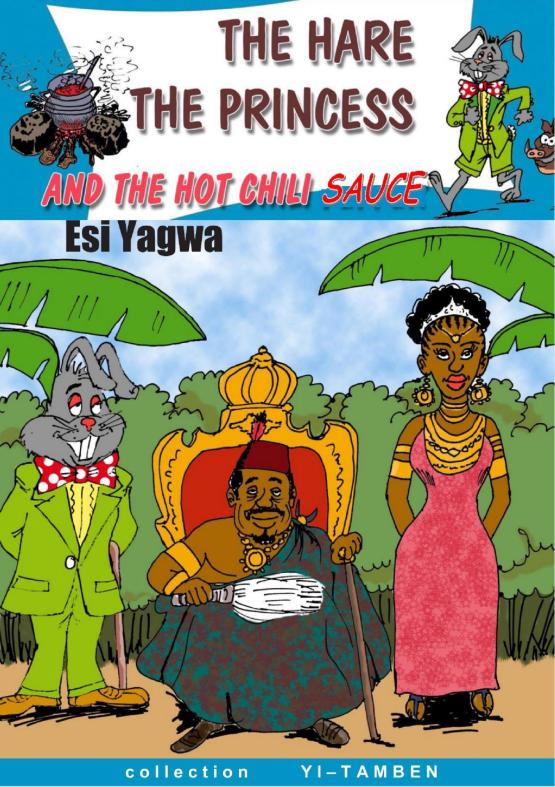
To celebrate our 10-years anniversary, one of our contributors is offering you this amazing book on Amazon . A king, a beautiful princess, and a pot of hot chili sauce… the combination is bound to make you laugh. Enjoy this book, an African Children’s book, for young and young at heart! It is on kindle e-book in both French and English.
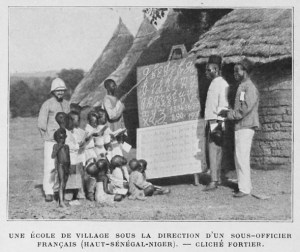
Village school in French West Africa (AOF) 1900s – French assimilationism (Louis Sonolet, Source: http://exhibitions.nypl.org)
The poem ‘My Name‘ by Magoleng wa Selepe has touched many strong chords. It is the truth, and still rings true today. During colonial times, our parents, grandparents, and great-grandparents were stripped of their names and identity: to go to school, they had to have a European name, and very often their own names were distorted because the European colonizer could not spell it properly. Depending on the origin of the colonizer, whether it was France, Great Britain, Germany, or Portugal, one ended up with a French, British, German, or Portuguese name. Enjoy !!!
I just thought about what happened to our fathers, mothers, grandmothers, and grandfathers during colonial times: to go to school African children were forced by European missionaries to adopt a christian name such as John, Peter (Jean, Pierre), etc… as opposed to their good old African name Nomzimo, Makeba, Ndoumbe, Keïta, etc. Thus many Africans who would have just worn the name ‘Ndoumbe Mpondo‘ or ‘Binlin Dadié‘ or ‘Um Nyobé‘ had to adopt a European name such as John + their own name, such that they became: John Ndoumbe Mpondo or Bernard Binlin Dadié or Ruben Um Nyobé. To this day, the tradition has remained… most Africans would have three or four names: their family name, and their given name, plus the European first name and in some cases a European middle name as well. The poem below entitled…
Reblogging this all-time favorite poem on the African Heritage Blog.
A few questions for the readers: what do you like the most about this poem by Sandile Dikeni? What is special? And what made you connect to it? What in this poem describes your country or is there something in it which describes your country?
In the past I have always wished that we, Africans, could be patriotic. I came across this beautiful poem ‘Love poem for my country‘ by South African writer Sandile Dikeni. I really enjoy the way the author describes his country, the valleys, the birds, the ancient rivers, and its beauty. He feels the peace, the wealth, and the health his country brings. He is one with hiscountry.He is at home! His country is not just words or food, or friends, or family, it is more, it is his essence! That is true patriotism, the bond that links us to the bone to our motherland. Enjoy!
My country is for love so say its valleys where ancient rivers flow the full circle of life under the proud eye of birds adorning the…
Nobel laureate and Pulitzer Prize-Winning Author Toni Morrison, the first Black woman to win a Nobel prize in literature, has passed away at the age of 88. I have read some of her books: “The Bluest Eye” which was part of my Dad’s collection and which I devoured, “Beloved” (I saw the movie, and was left with a ‘What just happened?’ feeling at the end of it), “Song of Solomon,” and “Sula“… I have to admit that I started “Jazz” but never finished it for lack of time. To be honest, Toni Morrison and I did not jive… I read the books, but I always felt like I needed to read them more than once to actually understand them. I believe that was her signature: her books were no cookie-cutter type-literature, but profound, heartbreaking, and conscience shakers; they had this earth-shattering effect, where you really walked a mile in the protagonist’s shoes. They also always had this musical and poetic feel to them, … maybe that’s why I kept coming for more?
‘Beloved’ by Toni Morrison
Toni Morrison had an outstanding career. She started late as a writer at age 39 and was editor of textbooks at Random House before fiction: she was the first African American editor there. She then became one of the world acclaimed writer, and professor at some of the best universities in the world: Cornell University and Princeton University. She won the Nobel laureate in Literature in 1993, thereby becoming the first and only Black woman to win it to date. She was even on the cover of Time Magazine in 1998, only the second female writer of fiction and second black writer of fiction to appear on one of the most significant U.S. magazine covers of the era. And … she of course, benefited from the Oprah effect!
“Her writing was not just beautiful but meaningful — a challenge to our conscience and a call to greater empathy,” President Obama wrote Tuesday on his Facebook page. “She was as good a storyteller, as captivating, in person as she was on the page.”
“Narrative has never been merely entertainment for me,” she said in her Nobel lecture. “It is, I believe, one of the principal ways in which we absorb knowledge.”
She also said, “If there is a book that you want to read, but it hasn’t been written yet, you must be the one to write it.” So get ready… it’s your turn to carry Toni Morrison’s torch!
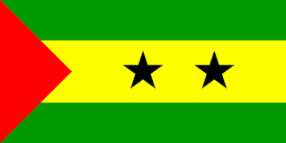
I recently read the national anthem of São Tomé and Príncipe, and thought of how much it represents the aspirations of the entire African continent, especially for French speaking countries which are still under that awful nazi currency system called FCFA through which France has been siphoning over 500 billion dollars every year for free! What do I mean by free? Well, because the FCFA (France’s Colonial Tax on Africa) is a currency of servitude and is a colonial tax paid by African countries to France (Africa is funding Europe!). 14 african countries (15 if you count also the Comoros whose currency is not called the same, but is nonetheless pegged to France) are obliged by France, through a colonial pact, to put 50% (it used to be85%, then 65%, …) of their foreign reserves into France’s central bank under the French minister of Finance control. As we speak today in 2019, Senegal and about 13 other African countries still have to pay colonial debt to France.African leaders who refuse are killed or victim of a coup. To learn more, also read The 11 Components of the French Colonial Tax in Africa.
Flag of Sao Tome and Principe
The national anthem of São Tomé and Príncipe, rightfully titled Independência total (Total Independence), was written by Alda Neves da Graça do Espírito Santo, the celebrated Sao Tomean poet and writer who was a minister on several occasions and also the president of the national Assembly. Her poem for the national anthem was adopted in 1975. As you read it, wherever you see Sao Tome and Principe, replace by Africa, African continent and claim the total independence: “Warriors in the war without weapons, Live flame in the soul of the people, Congregating the sons of [Africa], Around the immortal Fatherland, Total independence, total and complete.” Enjoy!
Zack Mwekassa, Former World Champion of Boxing and Kick Boxing (Source: Glory KickBoxing)
Je vous remercie mon Dieu, de m’avoir créé Noir, … Je suis content de la forme de ma tête faite pour porter le Monde, Satisfait de la forme de mon nez Qui doit humer tout le vent du Monde, Heureux de la forme de mes jambes Prêtes à courir toutes les étapes du Monde.
I thank you God, for making me black, I am happy with the shape of my head shaped to carry the world, Satisfied with the shape of my nose which has to smell all the scents of the world, Happy with the shape of my legs ready to run all the steps of the world.
Bernard Binlin Dadié. The poem above is titled “I Thank you God” or “I thank you my God,”
View of Douala from the airs: on the other side of the bridge (not shown) is Bonabéri, old Hickory Town
I never thought that bombing, grenades, and warships had been used in wars in Africa prior to the 20th century. Little did I know that it had been in use in the 19th century, during the European invasion of Africa that is known as the scramble for Africa. Today we will talk about the first bombings on Cameroonian soil which occurred on 22 December 1884, when Germans on warships SMS Bismarck and SMS Olgabombed Hickory Town (Bonabéri) in Cameroons Town (modern-day Douala). What might have caused these bombings by German forces on Cameroonian soil, long before the area was ever known as Kamerun?
Kum’a Mbappé, Bonaberi 1884 Liberte by Enoh Meyomesse
Well, when the 12 July 1884Germano – Duala Treaty was signed between the representatives of the Jantzen & Thormählen firm and some of the Douala kings, King Ndumbé Lobé Bell and King Akwa, it was not a unanimous choice among the locals. As a matter of fact, most of the population was against the treaty, and sided with Kum’a Mbappé also known as Lock Priso, King of Hickorytown. The other kings had signed treaties ceding their lands to the Germans without consulting with the others. Kum’a Mbappé refused to sign the treaty. On that fateful day, when the Germans raised their flag in Hickory Town, after raising it in Joss Town, Kum’a Mbappé reacted by writing to the German consul: “Pull that flag down. No man buy we. They want to give us plenty dash, we tell them no. Leave us free and not make us plenty trouble.” The Germans, of course, did not heed the warning, and Kum’a Mbappé ordered the flag to be taken down and the mast ripped apart, a German merchant was killed in the fightings that ensued.
Eduard Knorr, in 1884
Kum’a Mbappé and his people courageously resisted and defeated the German army. The Germans were outnumbered. After this defeat, German consul Max Buchner wrote to Germany to send troops with real armament, cannons, bombs, grenades, in order to level out Hickory Town and kill Kum’a Mbappé who was a thorn on his side.
Opposition to German rule followed the annexation of July 1884. Lock Priso still favored the British and staged a rebellion in December 1884. Around this same time, King Bell faced off against his own people, who were largely opposed to the German rule. Bell then found himself up against the other Duala chiefs in the Duala War, which was fought over the killing of a Bonabéri Duala and Bell’s alleged refusal to share his profits with the other sub-lineages. Germans played the competitors against one another – this is a classic technique used by Europeans: divide-and-conquer. They supported the weaker King Bell to counter the powerful KingAkwa.
SMS Olga during the shelling of Hickory Town on December 21, 1884
From December 20th – 22nd, Commander Eduard von Knorr sent by Berlin decided to intervene immediately, and sent ashore a landing party of some three hundred men from warships SMS Bismarck and SMS Olgato arrest the leaders of the anti-German tribes and destroy their villages. The troops from SMS Bismarck that went ashore and landed north of Hickorytown, while the men from SMS Olgawent ashore south of the village. The Germans fought their way into the town, forcing the local forces to retreat into the mangrove forest, where they could not easily be pursued. While this operation was underway, Knorr received word that other hostile locals had attacked the trading post operated by Jantzen & Thormählen in Joss Town and had captured the company’s local manager. Knorr sent SMS Olgaupriver to shell enemy positions, and on 22 December, the landing parties returned to their ships, having lost one man killed aboard SMS Olgaand eight men wounded between the two ships. German sailors descended on Bonabéri, and burnt the city down; the deluge of fire was endless and lasted several days. They also stole the princely bow or Tangué from Kum’a Mbappé’s ship, considered the symbol of the Belé-Belé people (people of Hickory-Town): the Tangué is a sort of a bow, carved and personalized, sort of a pennant that identifies a king among the people of these water tribes. The German consul Max Buchner wrote in his war diary,
Max Buchner
“Lock Priso’s palace is plundered, a colorful and striking image. We set it on fire. But I have asked all the houses to be inspected before to find ethnographic treasures. My main booty is a great wooden carved work, the princely bow (tangué) of Lock Priso, which will be sent to Munich.” [“Le palais de Lock Priso est mis à sac, une image colorée et saisissante. Nous y mettons le feu. Mais j’ai demandé avant d’inspecter toutes les maisons pour trouver des trésors ethnographiques. Mon butin principal est une grande œuvre sculptée en bois, la proue princière (tangué or tangu’a bolo, in Duala language) de Lock Priso, qui sera envoyée à Munich.”]
The bow, Tangué, of Kum’a Mbappé at the Ethnographic Museum of Munich (Wikipedia)
After several days of fighting, the German army won because of their superior arms, and also the help sent by other Duala kings. Negotiations went on, and a peace treaty (i.e. a treaty acknowledging defeat) was finalized on 13 January 1885, forcing Kum’a Mbappé to accept German rule in Hickory Town. This hero of Cameroonian resistance, passed away in 1916.
The symbol of the Belé-Belé people, the Tangué, was only returned over 100 years later, after tireless work from one Kum’a Mbappé’s grandsons, Prince and professor Kum’a Ndumbe III and others. To learn more, please read the book Kum’a Mbappé Bonabéri 1884 Liberté! by Enoh Meyomesse, and visit the website of this proud descendant of Kum’a Mbappé, Prince Kum’a Ndumbe III at AfricAvenir.
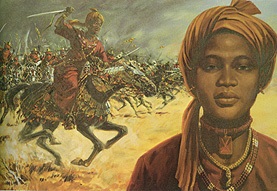
A few years ago, I wrote about Queen Amina of Zazzau: the Great Hausa Warrior born to Rule, the woman remembered today in Nigeria as ‘Amina, rana de Yar Bakwa ta San’ (Amina, daughter of Nikatau, woman as capable as a man). Crowned queen of Zazzau in 1576, Amina expanded her kingdom’s boundaries down to the Atlantic coast; she founded several cities, and personally led an army of 20,000 soldiers to numerous battles. During her 34-year reign, she commanded the construction of a defensive mural around each military camp that she established. Later, those camps evolved into prosperous cities within those walls, and some can still be seen today in northern Nigeria. Those cities are known as walls ‘ganuwar of Amina’ or ‘Amina’s walls‘.
Queen Amina’s achievement was the closest that any ruler had come in bringing the region now known as Nigeria under a single authority.Enjoy this trailer for the movie Aminaby Izu Ojukwu and the website for it: AminaQueenOfZazzau.com; the BBC also made a cartoon about her. With Hollywood’s recent lack of imagination and appropriation of other people’s culture, I would not be surprised that they copy her story to bring it onto big screen. However, Africans should put forward their own stories and value them… not wait for some imagination-hungry entity to come grab it, to all of a sudden value their own history (Black Panther).
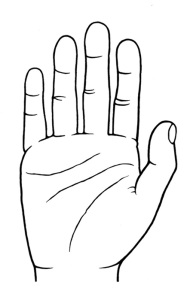
“Les lignes de nos mains sont des lignes de Vie, de Destin, de Coeur, d’Amour. De douces chaînes qui nous lient les uns aux autres, Les vivants aux morts.”
“The lines of our hands Are life lines Destiny lines, Heart lines, Love lines. Soft chains Which bind us One to the other, The living to the dead.”
Bernard Dadié in ‘Les lignes de nos mains’ published in La Ronde des Jours, Edition Pierre Seghers, 1956. The English translation is by Dr. Y., Afrolegends.com. [Note: punctuation was added to write in one line the first sentence].








 African Heritage