“Les lignes de nos mains sont des lignes de Vie, de Destin, de Coeur, d’Amour. De douces chaînes qui nous lient les uns aux autres, Les vivants aux morts.”
“The lines of our hands Are life lines Destiny lines, Heart lines, Love lines. Soft chains Which bind us One to the other, The living to the dead.”
Bernard Dadié in ‘Les lignes de nos mains’ published in La Ronde des Jours, Edition Pierre Seghers, 1956. The English translation is by Dr. Y., Afrolegends.com. [Note: punctuation was added to write in one line the first sentence].
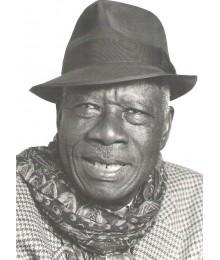
It is with great sadness that I learned of the passing of the great Ivorian writer Bernard Binlin Dadié. Bernard Dadié was a Baobab of African literature, and he was 103 years of age at the time of his passing. On his 100th-year birthday, he had complained of not being able to write as much anymore, given that he still had so much to say! Dadié was a literary virtuoso who brilliantly explored many genres from poetry, to fiction, to theater.
Many have wondered what was the secret of his longevity, and “his children always thought that Dadié was able to surmount all those obstacles and live so long because he was deeply in love with his wife,” said Serge Bilé [« Ses enfants ont toujours pensé qu’il a pu traverser toutes ces épreuves et vivre si longtemps car il était amoureux de sa femme » Jeune Afrique] writer, journalist, and whose mother was a cousin of Assamala Dadié (Dadié’s wife).
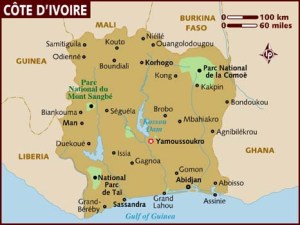
Dadié was born in Assinie, Côte d’Ivoire, and attended the local Catholic school in Grand Bassam and then the Ecole William Ponty. He worked for the French government in Dakar, Senegal. Upon returning to his homeland in 1947, he became part of its movement for independence: he denounced colonialism and neo-colonialism. Before Côte d’Ivoire‘s independence in 1960, he was detained for sixteen months for taking part in demonstrations that opposed the French colonial government.
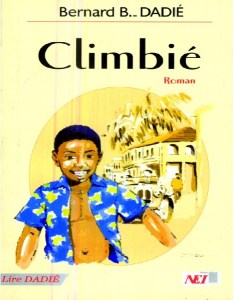
Climbié by Bernard Dadié
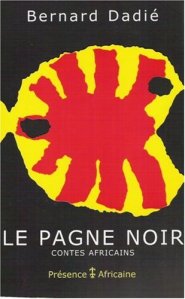
Climbié, his most well-known novel was published in 1956, and was the first Ivorian fiction. With his theater piece The cities (Les Villes), played in Abidjan in April1934, Dadié gave Francophone Africa its first drama piece. I am sure there were others played in the olden ancestral days, but this was the first one written in Molière’s language. He was also the first to win the great literary price of Black Africa (le grand prix littéraire de l’Afrique noire) twice in 1965 with Boss of New York (Patron de New York, Présence Africaine, 1964), and The City where No One Dies (La Ville où nul ne meurt, Présence Africaine, 1969) in 1968. His other big novels are: Le Pagne noir – Contes africains (1955), Un Nègre à Paris (Présence Africaine, 1959), Les voix dans le vent (1970), Monsieur Thôgô-Gnini (1970) ou les poèmes du recueil La rondes des jours(1956). In recent years, his poem “Dry Your Tears Afrika” (“Seche Tes Pleurs” de Bernard Binlin Dadié / “Dry your Tears Afrika” by Bernard B. Dadié) was set to music by American composer John Williams for the Steven Spielberg movie Amistad. Lastly, a street bears his name in Abidjan.
Le Pagne Noir – Contes Africains by Bernard Dadié
Among many other senior positions, starting in 1957, he held the post of Minister of Culture in the government of Côte d’Ivoire from 1977 to 1986. As a twist on fate, next week will come out in Côte d’Ivoire, a book titled 100 writers pay tribute to Dadié (100 écrivains rendent hommageà Dadié) in the Éburnie éditions. Bernard Dadié is the symbol of Côte d’Ivoire‘s deep and rich culture, marking a literary resistance to colonialism and neo-colonialism, and a strong love for his people, continent, and race.
A few years ago, I came across this poem by Sarah Anyang Agbor, and thought I will share it with you today. It focuses on the Anglophone issues of Cameroon: institutionalized divisions rooted in colonial legacies. As the Anglophone crisis persists in Cameroon, as the current Cameroonian government persists in trying to split its own country into further little pieces of the pie, under the politics of divide-and-conquer, I had to share this. Where other countries and governments fight to stay one, fight to remain united, fight to serve their compatriots, this 36-year-old Biya regime indulges in tribalism, division, blindness, mismanagement, embezzlement, violence, repression, incompetence, dilapidation of public goods, nepotism, stupidity, cronyism, … and the list is so long.
Sarah Anyang Agbor (Source: Science Forum South Africa)
Agbor’s poem is inspired by the great American Renaissance author Langston Hughes‘ poem ‘I, Too‘ , whose first sentence is I, too, sing America, in which he expresses the Afro-Americans’ experiences of prejudice and discrimination. In ‘I too, sing Cameroon‘, I love the way she manages to say it all in a few words: “I am the ninth and tenth provinces … I too can feel … .” I love the strength in her words. In reality, what she says can also be applied to other provinces and peoples of Cameroon. The 36-year-old regime has not been good to the majority of its population: no roads, no hospitals, no jobs, destruction of the social net, destruction of the educational system, desolation, ruins, nothing good at all, and all should unite to see it gone forever for it is a total failure. Enjoy! The author also read her poem on the BBC Poetry postcards in 2014.
“I too, Sing Cameroon” by Sarah Anyang Agbor
I too sing Cameroon. I am the ninth and tenth provinces Or is it regions? I just want to be human, Not superhuman Accepted as a person
I know how you perceive me: “Traitor”, “Opposition”, BamiAnglo2 A figment of your own imagination. Why do you see an Anglophone and you hear- “Gunshots!? Crisis!? Protests!? Grumblings!? You got criminals! We’ve got criminals!”
I too can feel I too can dream I too can lead. But you look down on me And call me “Anglofou”3 You say you are the top dog And I the underdog. Now I am the country nigger “Anglofou” Now I am the house nigger.
Tomorrow When the stakes are down Will it be my turn to look down at you? Will I call you “Franco Fool?” Or will I call you brother? That tomorrow will surely come No one will dare say to me: “Anglofou”4; “Parlez Anglais”5 “Les Anglos-la”6
Besides, I have walked up the ladder With the virus of bilingualism And I will sit at the table And you will see the good in me.
I too, sing Cameroon!
– 1 Inspired by the talk on Harlem Renaissance, DVC series at the American Embassy in Yaoundé on 28-09-2007. 2 A Bamiléké who has grown up with English as a second language, hence, such a person is a Bamiléké from predominantly French-speaking Cameroon by origin and Anglophone by culture. 3 Anglophone fool; crazy English-speaking person 4 An abusive term, most often used by Francophones, to denigrate Anglophones. 5 Speak English 6 Those Anglophones
One of Côte d’Ivoire’s most prolific writer is, without a doubt, Bernard Binlin Dadié, the maestro. Some of his poems have been translated in many languages, while others have been set to music for movies, such as “Dry your tears” which was set to music for the Steven Spielberg movie Amistad. Bernard Dadié is a man whose work and versatility have blessed countless people around the globe.
Please enjoy ‘Les lignes de nos mains / The Lines of Our Hands‘ which was published in La Ronde des Jours, Edition Pierre Seghers, 1956. The English translation is by Dr. Y., Afrolegends.com.
‘Les Lignes de nos mains‘ / ‘The Lines of Our Hands‘ by Bernard Dadié
One of Seychelles’ most acclaimed and prolific author is the writer Antoine Abel, who had been an ambassador of the indigenous culture of the island nation. He is considered by many as the father of Seychelles’ literature, and had an extensive career writing novels, short stories, poetry and plays in French, English, and Creole. Most of his work dealt with the folklore of the Seychelles, and the natural environment of the islands, in which he wove in colorful personalities and histories inspired from the local culture. Descending from a family of slaves, he is the first Seychellois writer to expose to wide world to the literary gems of the country.
Below is one of his poems, ‘Dances d’hier‘ translated to English by Dr. Y., Afrolegends.com. Enjoy the poem below, and also check out The Seychelles Ministry for Youth Sports and Culture which ‘remembers Antoine Abel.’
Danses d’hier
J’entends encore les staccatos Le prolongement des sons des tam-tams Des tam-tams du temps jadis
Alors les collines s’enflamment Dans la nuit sèche Les pieds des danseurs Se baignent dans la fine poussière De latérite Et leurs pas scandent sauvagement Un rythme endiablé
J’entends encore les notes rapides La voix étouffée du « commandeur » Se modulant dans l’air tiède du soir.
Alors les échines s’arc-boutent Les unes aux autres Et les hanches roulent comme des houles Les ventres des danseuses voluptueuses Ondulent lascivement… Et des voix confuses s’interpellent Impudemment.
Je perçois toujours les staccatos Les grondements des “grosses caisses” Par delà les années de mon enfance … Je les porte en moi Comme des stigmates.
Dances of Yesterday
I still hear the staccatos The extension of the sounds of the drums The drums from the old days
Then the hills ignite (flare) In the dry night The dancers’ feet bathe in the fine dust of laterite And their steps wildly chant A frenzied rhythm
I still hear the quick notes The muffled voice of the « commander » Modulating in the warm evening air.
Then the backs bridge One with the other And the hips roll like swells The bellies of the voluptuous dancers Wave sensually… And confused voices call out Impudently.
I still perceive the staccatos The rumblings of the “big drums” Beyond the years of my childhood… I carry them in me Like stigmas.
“We cannot hurt ourselves just for the sake of it. When you hurt somebody you hurt yourself. Down the line, the ripple of it comes back to you.” Angélique Kidjo
Here is a poem by Patrice Lumumba (1925–1961), published on Pambazuka News. Patrice Lumumba was elected the first prime minister of the Democratic Republic of the Congo (DRC). Assassinated by Belgian colonialists and the CIA, Lumumba was a founder member of the Movement National Congolais (MNC), which led the Congo to independence. Patrice Lumumba is the symbol of aspirations of an entire continent, and he continues to serve as an inspiration to contemporary Congolese and African politicians. His spirit lives on, and his pride is ours!
=======
Dawn in the Heart of Africa
For a thousand years, you, African, suffered like beast, Your ashes strewn to the wind that roams the desert. Your tyrants built the lustrous, magic temples To preserve your soul, reserve your suffering. Barbaric right of fist and the white right to a whip, You had the right to die, you also could weep. On your totem they carved endless hunger, endless bonds, And even in the cover of the woods a ghastly cruel death Was watching, snaky, crawling to you Like branches from the holes and heads of trees Embraced your body and your ailing soul. Then they put a treacherous big viper on your chest: On your neck they laid the yoke of fire-water, They took your sweet wife for glitter of cheap pearls, Your incredible riches that nobody could measure. From your hut, the tom-toms sounded into dark of night Carrying cruel laments up mighty black rivers About abused girls, streams of tears and blood, About ships that sailed to countries where the little man Wallows in an ant hill and the dollar is king, To that damned land which they called a motherland. There your child, your wife were ground, day and night In a frightful, merciless mill, crushing them in dreadful pain. You are a man like others. They preach you to believe That good white God will reconcile all men at last. By fire you grieved and sang the moaning songs Of a homeless beggar that sinks at strangers’ doors. And when a craze possessed you And your blood boiled through he night You danced, you moaned, obsessed by father’s passion. Like furry of a storm to lyrics of a manly tune From a thousand years of misery a strength burst out of you In metallic voice of jazz, in uncovered outcry That thunders through the continent like gigantic surf. The whole world surprised , wakes up in panic To the violent rhythm of blood, to the violent rhythm of jazz, The white man turning pallid over this new song That carries torch of purple through the dark of night.
The dawn is here, my brother! Dawn! Look in our faces, A new morning breaks in our old Africa. Ours alone will now be the land, the water, mighty rivers Poor African surrendered for a thousand years. Hard torches of the sun will shine for us again They’ll dry the tears in eyes and spittle on your face. The moment when you break the chains, the heavy fetters, The evil cruel times will go never to come again. A free and gallant Congo will rise from black soil, A free and gallant Congo-black blossom from black seed!
Last month, we talked about the griot tradition of West Africa. This African tradition of long lineages of storytellers, historians, and history repositories of the society, extends beyond West Africa, to all over the continent. For the Ndebele of Zimbabwe, the griot is known as the imbongi.
Below is a praise poem celebrating the Ndebele King Lobengula. The poem was recited in Ndebele by imbongi(griot/poet) Mtshede Ndhovu to T.J. Hemans around c.1970. Mtshede Ndhlovu was born when Mzilikazi (Lobengula’s father) was still on the throne, that is, before 1868, making him some 105 years old. His son, Bova Ndhlovu, acted as interpreter, assisting Hemans with the translation.
For the entire poem, with the Ndebele version, please check out African Poems .
====
King Lobengula of Matabeleland
Praise Poem for Lobengula
It roared like a calf. (1) He who has books is at the river crossing. (2) The cumulus cloud which rains from overcast sky. (3) The words of a mountain, King of Mgabi Ndwandwe. (4) The bird that builds with its beak pointing to a pool of water, some say catch it some say leave it that it the way it builds. (5) The black lion of Mabindela. Grass does not burn in the Kalahari, some burns and bends. (6) He was furious and then the tribes and commissioners were angry. (7) Spoor of the leopard that disappears in rivers. (8) The bush buck that strikes with its hooves and damaged the stones. (9) Watch him, the destroyer, because he destroyed the commoners. (10) He who is food they feed from for many many years, when he dies where will they feed from, they will eat jackals and roots. He whose majesty is like that of his father Matshobana. Cattle have popularity, they are lowing and attract afar. He whose path is winding like that of ants. The small bird of the spear, so small it can sit on the spear.
Praises Given to the Kings of the Amandebele, T.J. Hemans, Nada X, 3 (n.p., 1971).
The Ruud Concession
(1) This praise-poem was recorded c.1970, when a new war for Zimbabwe was in progress. Lobengula is contrasted with Mzilikazi for failing to protect the nation. He is a calf compared to a bull and his roaring is not impressive.
(2) Lobengula signed the Rudd Concession in 30 October 1888, granting mining rights to the British South African Company. He assumed the miners would accept his kingship, but it was soon evident that the BSA were coming as colonizers. He who has books is Charles Rudd, the treaty bearer, and the river crossing is the Limpopo, the southern border to Ndebele territory.
(3) A reference to Lobengula’s responsibility as rainmaker. Later in praise [line] 12, he comes food they feed from.
(4) Unlike Mzilikazi, Lobengula drew his legitimacy as chief from his ancestry. See also praises 6 and 13.
(5) Lobengula’s succession was controversial, and his performance as king was disputed.
(6) Mzilikazi was called the tall grass in the Kalahari desert that will burn with men’s leather loin cloths (praise 6). Lobengula is the grass that does not burn.
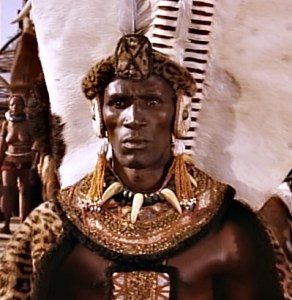
King Shaka of the Zulu people
(7) The signing of the Rudd Concession led to anger on all sides, culminating the war of 1893.
(8) Lobengula’s policies were difficult to follow. See also praise 15, where his course iswinding like that of ants.
(9) Again, this contrasts with Mzilikazi, the bush buck that steps carefully on the rocks, implying diplomatic skills such as wariness.
(10) Mzilikazi’s victories, starting with Shaka, were against enemies of stature. Lobengula is credited with no military virtues and his anger is directed at commoners.
A Ugandan author based in Great Britain whose debut novel was initially rejected by British publishers for being ‘too African‘, has won one of the world’s richest literary prizes.
She will receive $165,000 (£119,000). The prize money is more than double the amount that the Booker Prize winner gets, and organizers say it’s the richest award dedicated to literature after the Nobel Prize. Makumbi’s debut novel Kintu was first published in Kenya four years ago after British publishers rejected it for being “too African”. It was finally released in the UK this January. In Ugandan culture, Kintu is a mythological figure who appears in a legend of the Baganda of Uganda as a creation myth. According to this legend, Kintu was the first person on earth, the father of all people. Although her book is not about this Kintu, it follows a family who believes that there is a curse on them which has followed them over several generations, spanning more than 250 years.
I loved Makumbi’s Commonwealth short story, and lived through the pain of her main character. Now I cannot wait to read her first book and regal in Ugandan history and culture.
Today I give you a poem by the world-renowned Mozambican author Noémia de Sousa. This poem gives vivid pictures: from the empty eye sockets which have lost hope, the mouth torn open in an anguished wound, a body tattooed with wounds unseen and seen… etc. Just reading it, one can feel the pain, see it, and touch it; it is so profound! Yet, she claims that this body is magnificent, that through the pain, it is beautiful. So what body is she talking about? Why, Africa, of course! She wrote this at a time when African countries were still under colonialism, and through this she introduces us to a beautiful Africa, which has gone through so much pain, but yet is still beautiful, and still rises. In general, I will take it a step further, and say that no matter what pain we go through today, we are still beautiful, and we will still rise! (* Maconde — uma das etnias de Moçambique.) Enjoy!
==========
Se Me Quiseres Conhecer By Noémia de Sousa
Se me quiseres conhecer, estuda com olhos de bem ver esse pedaço de pau preto que um desconhecido irmão maconde* de mãos inspiradas talhou e trabalhou em terras distantes lá do Norte.
Ah, essa sou eu: órbitas vazias no desespero de possuir a vida. boca rasgada em feridas de angústia, mãos enormes espalmadas, erguendo-se em jeito de quem implora e ameaça, corpo tatuado de feridas visíveis e invisíveis pelos chicotes da escravatura… Torturada e magnífica. Altiva e mística. Africa da cabeça aos pés — Ah, essa sou eu!
Se quiseres compreender-me vem debruçar-te sobre minha alma de Africa, nos gemidos dos negros no cais nos batuques frenéticos dos muchopes na rebeldia dos machanganas na estranha melancolia se evolando… duma canção nativa, noite dentro…
E nada mais me perguntes, se é que me queres conhecer… Que eu não sou mais que um búzio de carne onde a revolta de África congelou seu grito inchado de esperança.
If You Want to Know Me By Noémia de Sousa
If you want to know who I am, Examine with careful eyes That piece of black wood Which an unknown Maconde brother With inspired hands Carved and worked In distant lands to the North.
Ah, she is who I am: Empty eye sockets despairing of possessing life. A mouth slashed with wounds of anguish, huge flattened hands, Raised as though to implore and threaten, Body tattooed with visible and invisible scars By the hard whips of slavery… Tortured and magnificent. Proud and mystical. Africa from head to toe -ah, she is who I am!
If you want to understand me Come and bend over my African soul, In the groans of the Negroes on the docks In the frenzied dances of the Chopes In the rebelliousness of the Shaganas In the strange melancholy evaporating… From a native song, into the night …
And ask me nothing more, If you really wish to know me… For I am no more than a shell of flesh In which the revolt of Africa congealed Its cry swollen with hope.






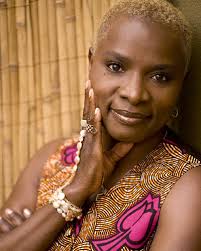 “We cannot hurt ourselves just for the sake of it. When you hurt somebody you hurt yourself. Down the line, the ripple of it comes back to you.”





 African Heritage