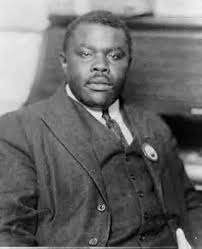
“The Black Woman” by Marcus Garvey

Marcus Garvey
Marcus Garvey
International Women's Day
International Women’s Day

8 March celebrates the International Women’s Day.  I thought of sharing with you, this poem by the great panafricanist Marcus Garvey published on February 28, 1927. To Garvey, the African Woman is the Mother of all Women, the Mother of Beauty, the Mother of Health, the Mother of Wisdom.  All can refer to her as “Mother.”  And she is the African Man’s Wife.  Enjoy!!!

===========

The Black Woman
By Marcus Garvey

Black queen of beauty, thou hast given color to the world!
Among other women thou art royal and the fairest!
Like the brightest of jewels in the regal diadem,
Shin’st thou, Goddess of Africa, Nature’s purest emblem!

Black men worship at thy virginal shrine of truest love,
Because in thine eyes are virtue’s steady and holy mark,
As we see in no other, clothed in silk or fine linen,
From ancient Venus, the Goddess, to mythical Helen.

When Africa stood at the head of the elder nations,
The Gods used to travel from foreign lands to look at thee
On couch of costly Eastern materials, all perfumed,
Reclined thee, as in thy path flow’rs were strewn-sweetest that bloomed.

Thy transcendent marvelous beauty made the whole world mad,
Bringing Solomon to tears as he viewed thy comeliness;
Anthony and the elder Ceasars wept at thy royal feet,
Preferring death than to leave thy presence, their foes to meet.

You, in all ages, have attracted the adoring world,
And caused many a bloody banner to be unfurled
You have sat upon exalted and lofty eminence,
To see a world fight in your ancient African defense.

Today you have been dethroned, through the weakness of your men,
While, in frenzy, those who of yore craved your smiles and your hand-
Those who were all monsters and could not with love approach you-
Have insulted your pride and now attack your good virtue.

Because of disunion you became mother of the world,
Giving tinge of robust color to five continents,
Making a greater world of millions of colored races,
Whose claim to beauty is reflected through our black faces.

From the handsome Indian to European brunette,
There is a claim for that credit of their sunny beauty
That no one can e’er to take from thee, 0 Queen of all women
Who have borne trials and troubles and racial burden.

Once more we shall, in Africa, fight and conquer for you,
Restoring the pearly crown that proud Queen Sheba did wear
Yea, it may mean blood, it may mean death; but still we shall fight,
Bearing our banners to Vict’ry, men of Africa’s might.

Superior Angels look like you in Heaven above,
For thou art fairest, queen of the seasons, queen of our love
No condition shall make us ever in life desert thee,
Sweet Goddess of the ever green land and placid blue sea.


“Je Serai Avec Toi” de Michael Dei Anang / ” I’ll be with Thee” by Michael Dei Anang

A box of Valentine's day chocolate
A box of Valentine’s day chocolate

Michael Jackson once asked in his great song “Will You Be There?” Well, Ghanaian author Michael Dei Anang replied by his poem: ” I’ll be with thee.”  The poem is truly about deep and everlasting love, the one that will always be there shine or freeze, no matter what happens in life.  So, whether you are in a relationship or not, whether you are thinking about love the Valentine’s way, or just looking for a friendship, think of this poem as what you should aspire to be for that other person: always there!  Enjoy!  Since I could not find the original English version, I translated it to English to share with all (French version from Anthologie Négro-Africaine by L. Kesteloot, P. 264, Edicef 1987; English translation by Dr. Y. Afrolegends.com).

Je serai avec toi

Quand les étoiles scintillent dans le ciel,

Et que la lune baigne la Mer

Du flux d’argent de sa lumière

Je serai avec toi

Je serai avec toi

Qu’il fasse jour ou nuit;

Que les cieux

Soient déchirés en deux

Et que les larmes embrument nos yeux

Je serai avec toi

Quand les orages

soulèvent les vagues

Et ploient le seuil jusqu’au sol

Je serai avec toi

Dans la fournaise ou dans la tornade

Je serai avec toi

Qu’il fasse clair ou sombre,

Le jour ou la nuit,

Quand s’appesantit l’angoisse

Que tu sois loin,

Ou que tu sois près ,

je serai avec toi.

Quoique nous soyons séparés

Pour des jours,

Ou que nous allions

Ne laisses pas les peines de la vie

Mordre ton cœur.

Je serai avec toi.

A travers la gloire ou la calomnie

Je serai avec toi

Lorsque le dernier souffle de vie

S’échappera de mon corps, vieille carcasse

Condamnée à pourrir après un mortel combat;

Quand nous aurons fini notre temps

Et traversé la rivière de la vie

Laissant derrière nous notre or et notre argent

Parents, amis et regrets,

Pour rejoindre le souterrain bercail

Je t’attendrai encore

Je serai avec toi.

I’ll Be With Thee

When the stars twinkle in the sky,

And the moon bathes the Sea

The flow of money from its light

I’ll be with thee

I’ll be with thee

Day or night;

Whether the skies

are torn in two

And tears fog our eyes

I’ll be with thee

When storms

Raise waves

And bend and break up the soil

I’ll be with thee

In the furnace or in the tornado

I’ll be with thee

Whether light or dark

Day or night

When dwells anxiety

Whether you are far,

Or whether you are near,

I’ll be with thee.

Though we are apart

For days,

Wherever we go

Do not let life’s troubles

Bite your heart.

I’ll be with thee.

Through glory or slander

I’ll be with thee

When the last breath of life

Will escape my body, old carcass

Condemned to rot after a deadly combat;

When we will have ended our times

And crossed the river of life

Leaving behind us our gold and our silver

Parents, friends, and regrets,

To join the underground fold

I’ll wait again for you

I’ll be with thee.

‘Poetry’ by Amilcar Cabral

Amilcar Cabral on a stamp with the flag of Guinea Bissau

January 20th, is the day of Amilcar Cabral, the father of Cape Verde and Guinea Bissau independence was murdered.  I would like to celebrate this day of remembrance with a poem written by Amilcar Cabral himself.  He used to sign his poem by the name Larbac, which is an anagram of his last name Cabral.  The current poem is attributed to him… I was unable to find the Portuguese version.  Enjoy this poem by one of Africa’s greatest sons.

===========

… No, Poetry …
Do not hide within the inscrutability of my soul
Do not run away from life itself.
Break the invisible bars of my prison,
Open wide the doors of my being
– Come out…
Come out to struggle (life is a struggle)
The men outside call for you,
And you, Poetry, you are also a Man.
Love everyone’s poetry,
– Love Men
Let your poems flow to every race, to all things.
Merge with me …
Oh Poetry,
Take my arms to embrace the World,
Give me your arms to embrace Life
I am my own Poetry.
Amilcar Cabral Poem, 1946

‘Sous-Developpement’ de Charles Ngande / ‘Under-development’ by Charles Ngande

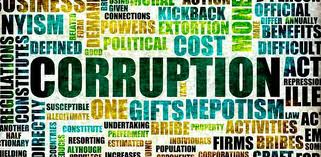
Corruption_2Thinking about all the wasted years of corruption, mismanagement, neo-colonialism, nepotism, and all the -isms going on in many African countries after independence, I thought of sharing with you this poem by the Cameroonian author Charles Ngande.  The poem can be found in Anthologie Négro Africaine by Lilyan Kesteloot, Edicef 1992, P. 329.  The English translation is offered to you by Dr. Y., http://www.afrolegends.com

Sous-développement

J’ai croqué tous mes rêves

Dans les fragiles écuelles de nos indépendances,

Assis

Dans les fauteuils

Des banques étrangères!

Under-development

I chewed all my dreams

In the fragile bowls of our independences,

Seated

In the armchairs

Of foreign banks!

Some of Thomas Sankara’s Famous Quotes

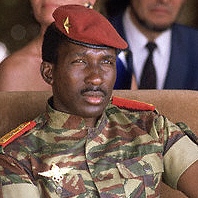
Thomas Sankara
Thomas Sankara a Ouagadougou

15 October 1987 was the day Africa lost one of his greatest sons: Thomas Sankara.  Words cannot express the loss we’ve felt, and the loss Africa and the world suffered on that day.  I would like to share with you some of Thomas Sankara’s famous declarations.

=====================

« Une jeunesse mobilisée est dangereuse, une jeunesse mobilisée est une puissance qui effraye même les bombes atomiques. Il y en a qui possède les bombes atomiques et qui ont des problèmes avec d’autres peuples qui, eux, ne possèdent pas la bombe atomique, mais pourquoi ils n’osent pas l’utiliser ? Parce qu’ils savent très bien, parce qu’ils savent très bien, que dans ces peuples que osent les attaquer, ils trouvent une jeunesse mobilisée, une jeunesse à mourir [A youth mobilized is dangerous, a youth mobilized is a power which scares even atomic bombs. There are those who own atomic bombs, and who have problems with other nations who do not own the atomic bomb, but why don’t they dare using it? Because they know very well, that in these people who they want to attack, they find a mobilized youth, a youth ready to die.] 14 mai 1983 s’adressant aux jeunes de Bobo Dioulasso

« Nos ancêtres en Afrique avaient engagé une certaine forme de développement. Nous ne voulons pas qu’on assassine ces grands savants africains. » [Our ancestors in Africa were actively committed to a certain form of development. We do not want these great African wisemen to be assassinated.] 2 octobre 1984 à Harlem

Burkina Faso
Burkina Faso

« Il faut que l’école nouvelle et l’enseignement nouveau concourent à la naissance de patriotes et non d’apatrides. Mettre un enfant à l’école doit cesser d’être perçu comme un simple placement comptable, si tant est vrai que la transformation continue des sociétés qui incombe aux générations successives comporte des éléments quantifiables et non quantifiables. »  [We need the new school and the new teaching concur with the birth of patriots and not stateless people. Putting a child in school should stop being conceived as a simple accounting investment, if indeed the ongoing transformation of societies which fall on successive generations has quantifiable elements and non-quantifiable.] 17 octobre 1986 Appel de Gaoua sur la qualité de l’enseignement.

« Il n’y a pas de révolution sociale véritable que lorsque la femme est libérée. Que jamais mes yeux ne voient une société où la moitié du peuple est maintenue dans le silence. J’entends le vacarme de ce silence des femmes, je pressens le grondement de leur bourrasque, je sens la furie de leur révolte. J’attends et espère l’irruption féconde de la révolution dont elles traduiront la force et la rigoureuse justesse sorties de leurs entrailles d’opprimées. » [There are no true social revolution until the woman is liberated. May my eyes never see a society where half of the people is maintained under silence. I hear the racket of this silence of women, I suspect the roar of their storm, I feel the fury of their revolt. I wait and hope for the fertile irruption of the revolution for which they will translate the force and rigorous righteousness coming from their oppressed bowels.] 8 mars 1987, Ouagadougou

« La Révolution démocratique et populaire a besoin d’un peuple de convaincus et non d’un peuple de vaincus, d’un peuple de convaincus et non d’un peuple de soumis qui subissent leur destin. »  [The people’s democratic revolution needs a people that is confident and not defeated, a people of conviction and not a subjected people who suffer their fate.] 4 août 1987

African Venus, a sculpture by Charles-Henri Joseph Cordier 1851 (Source: Walters Art Museum)

«Je parle au nom des femmes du monde entier, qui souffrent d’un système d’exploitation imposé par les mâles. Pour ce qui nous concerne, nous sommes prêts à accueillir toutes les suggestions du monde entier, nous permettant de parvenir à l’épanouissement total de la femme burkinabè. En retour, nous donnons en partage à tous les pays, l’expérience positive que nous entreprenons avec des femmes désormais présentes à tous les échelons de l’appareil de l’État et de la vie sociale au Burkina Faso. Des femmes qui luttent et proclament avec nous, que l’esclave qui n’est pas capable d’assumer sa révolte ne mérite pas que l’on s’apitoie sur son sort. Cet esclave répondra seul de son malheur s’il se fait des illusions sur la condescendance suspecte d’un maître qui prétend l’affranchir. Seule la lutte libère et nous en appelons à toutes nos sœurs de toutes les races pour qu’elles montent à l’assaut pour la conquête de leurs droits. » [I speak on behalf of women from around the world, who suffer from an exploitation system imposed by the males. As far as we are concerned, we are ready to welcome all the suggestions from around the world, which will enable us to achieve the full development of the Burkinabe woman. In return, we will share with all the countries, the positive experience that we start with women now present at all levels of the state and the social life of Burkina Faso. Women who fight and proclaim with us, that the slave who is not capable of assuming his rebellion does not deserve that we feel sorry for himself. This slave will respond only to his misfortune if he is deluding himself about the suspect condescension of a master who claims to free him. Only fighting liberates and we call on all our sisters of all races so that they rise up to conquer their rights.] Discours de Sankara à l’ONU le 4 octobre 1984 (texte intégral)

Kofi Awoonor: Celebrating the Life of Ghanaian Poet

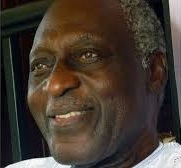
Kofi Awoonor
Kofi Awoonor

Today, I would like to talk about the legendary Ghanaian poet, writer, and diplomat Kofi Awoonor who lost his life this past weekend during the shootings at the Westgate Mall in Nairobi, Kenya.

Well, many articles would tell you all about this man who was born George Kofi Nyidevu Awoonor-Williams, but who will end up using Kofi Awoonor as his pen name.  Kofi Awoonor was a poet whose poetry was based on Ewe / Ghanaian mythology and imagery.  His writings include the oral traditions of African village songs, with their various communal forms, themes, and functions/ceremonies.  For instance, his poem ‘The Purification’ records a sacrifice to the sea-god in a time of poor fishing.  One can find a sense of melancholy in his writings.  Enjoy this snippet from one of his poem ‘Songs of Sorrow.’  To learn more about this man, check this very good article on The Guardian, the BBC, and don’t forget to go to The Poetry Foundation of Ghana to read the end of this poem and other pieces by him.

Songs of Sorrow

I
Dzogbese Lisa has treated me thus
It has led me among the sharps of the forest

Returning is not possible
And going forward is a great difficulty
The affairs of this world are like the chameleon faeces
Into which I have stepped
When I clean it cannot go.
I am on the world’s extreme corner,
I am not sitting in the row with the eminent
But those who are lucky
Sit in the middle and forget
I am on the world’s extreme corner
I can only go beyond and forget.
My people, I have been somewhere
If I turn here, the rain beats me
If I turn there the sun burns me
The firewood of this world
Is for only those who can take heart
That is why not all can gather it.
The world is not good for anybody
But you are so happy with your fate;
Alas! the travelers are back
All covered with debt.

 …

By Kofi Awoonor

“Our Deepest Fear” by Marianne Williamson

I really liked this poem “Our Deepest Fear” which was read by Nelson Mandela during his presidential inauguration speech in 1994.  I also particularly liked the rendition by this year’s South Africa’s Got Talent Botlahle, an 11 year old South African girl, who is a great poet.  Enjoy the poem itself, and Botlahle’s rendition.
==========

Our deepest fear is not that we are inadequate.
Our deepest fear is that we are powerful beyond measure.
It is our light, not our darkness that most frightens us.
We ask ourselves, Who am I to be brilliant, gorgeous, talented, fabulous?
Actually, who are you not to be?
You are a Child of God.
Your playing small does not serve the world.
There is nothing enlightened about shrinking so that other people won’t feel insecure around you.
We are all meant to shine, as children do.
We were born to make manifest the glory of God that is within us.
It is not just in some of us; it is in everyone.
And as we let our own light shine, we unconsciously give other people permission to do the same.
As we are liberated from our own fear, our presence automatically liberates others.

Marianne Williamson – A return to love

The Danger of a Single Story

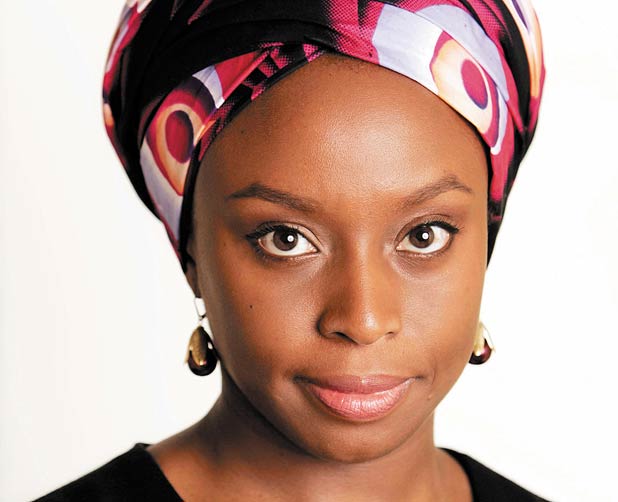
Chimamanda Adichie (Source: interviewmagazine.com)

Today, we will examine ‘The Danger of a Single Story,’ a speech given by the Nigerian author Chimamanda Ngozi Adichie at a TED (Technology, Entertainment, Design) conference.  Like Adichie, I have always felt annoyed by people referring to Africa as a country.  I have also been annoyed by people’s ‘single story’ of Africans.  Just like the author I was guilty of some stereotypes myself.  Growing up in Africa, we often watched documentaries about life in America, and how there was a gun shot death every 13 seconds in the streets of America.  I used to think, “how on earth could people live in a country where there were so many gunshot deaths, drugs, and gangs?” Until I realized that, that was a single story of America, and there were other stories like those of scientific achievements, of Ivy league schools, etc.  So why can’t they, Americans, and others, learn to have other stories of Africa?

This blog is about offering other stories of Africa other than ‘the single story.’  What kind of ‘single stories’ of Africa have you heard?  What stories of Africa would you like to hear?

“Femme Noire” de Léopold Sédar Senghor / “Black Woman” by Léopold Sédar Senghor

Léopold Sédar Senghor

I would like to share with you this poem of the late president of Senegal, Léopold Sédar Senghor.  This poem is an ode to the Black woman, but above all, to Senegal his country.  Yes… after reading it several times, one realizes that Senghor was writing an ode to the Black woman, his mother, his sister, his daughter, but above all to Senegal which could be loved just like a woman, and whose “beauty stroke him to the heart like the flash of an eagle”, and whose “Savannah stretch[ed] to clear horizons, savannah shuddering beneath the East Wind’s eager caresses.” This poem was published in ‘Chants d’Ombre’ (1945), English translation by Melvin Dixon (in The Collected Poetry (CARAF books …)).  As you read Senghor’s poem, do you see other meanings? who do you think was the intended audience? Do you feel, like me, that he is praising Senegal, the land of his ancestors? or is he talking about the woman of his dreams? Enjoy!

Femme noire

Femme nue, femme noire
Vétue de ta couleur qui est vie, de ta forme qui est beauté
J’ai grandi à ton ombre; la douceur de tes mains bandait mes yeux
Et voilà qu’au cœur de l’Eté et de Midi,
Je te découvre, Terre promise, du haut d’un haut col calciné
Et ta beauté me foudroie en plein cœur, comme l’éclair d’un aigle

Femme nue, femme obscure
Fruit mûr à la chair ferme, sombres extases du vin noir, bouche qui fais lyrique ma bouche
Savane aux horizons purs, savane qui frémis aux caresses ferventes du Vent d’Est
Tamtam sculpté, tamtam tendu qui gronde sous les doigts du vainqueur
Ta voix grave de contralto est le chant spirituel de l’Aimée

Femme noire, femme obscure
Huile que ne ride nul souffle, huile calme aux flancs de l’athlète, aux   flancs des princes du Mali
Gazelle aux attaches célestes, les perles sont étoiles sur la nuit de ta   peau.

Délices des jeux de l’Esprit, les reflets de l’or ronge ta peau qui se moire

A l’ombre de ta chevelure, s’éclaire mon angoisse aux soleils prochains de   tes yeux.

Femme nue, femme noire
Je chante ta beauté qui passe, forme que je fixe dans l’Eternel
Avant que le destin jaloux ne te réduise en cendres pour nourrir les racines   de la vie.

Black Woman

Naked woman, black woman                              Clothed with your colour which is life, with your form which is beauty
In your shadow I have grown up; the gentleness of your hands was laid over my eyes.                                                                   And now, high up on the sun-baked pass, at the heart of summer, at the heart of noon,
I come upon you, my Promised Land,
And your beauty strikes me to the heart like the flash of an eagle.

Naked woman, dark woman                        Firm-fleshed ripe fruit, sombre raptures of black wine, mouth making lyrical my mouth
Savannah stretching to clear horizons,
savannah shuddering beneath the East Wind’s eager caresses                                                                 Carved tom-tom, taut tom-tom, muttering
under the Conqueror’s fingers                            Your solemn contralto voice is the
spiritual song of the Beloved.

Naked woman, dark woman                                  Oil that no breath ruffles, calm oil on the
athlete’s flanks, on the flanks of the Princes of Mali
Gazelle limbed in Paradise, pearls are stars on the night of your skin

Delights of the mind, the glinting of red gold against your watered skin

Under the shadow of your hair, my care
is lightened by the neighbouring suns of your eyes.

Naked woman, black woman,
I sing your beauty that passes, the form
that I fix in the Eternal,                                        Before jealous fate turn you to ashes to
feed the roots of life.

“Je vous Remercie Mon Dieu” de Bernard B. Dadie / “I Thank You God” from Bernard Binlin Dadie

Today, We will look at a poem by the most celebrated Ivorian writer Bernard Binlin Dadié.  The poem below is titled “I Thank you God” or “I thank you my God,” and it is an ode to us Africans, raising the self-esteem.  Dadié writes here about his pride of being born Black, around independence, when the colonizer had almost beaten out of us our pride of being Black, our pride of being ‘us’.  Enjoy! a great poem from Bernard B. Dadié.

Je vous remercie mon Dieu,             de m’avoir créé Noir,
d’avoir fait de moi
la somme de toutes les douleurs,
mis sur ma tête,
le Monde.
J’ai la livrée du Centaure
Et je porte le Monde depuis le premier matin.

Le blanc est une couleur de circonstance
Le noir, la couleur de tous les jours
Et je porte le Monde depuis le premier soir.

Je suis content
de la forme de ma tête
faite pour porter le Monde,
Satisfait
de la forme de mon nez
Qui doit humer tout le vent du Monde,
Heureux
de la forme de mes jambes
Prêtes à courir toutes les étapes du Monde.

Je vous remercie mon Dieu, de m’avoir créé Noir,
d’avoir fait de moi,
la somme de toutes les douleurs.
Trente-six épées ont transpercé mon coeur.
Trente-six brasiers ont brûlé mon corps.
Et mon sang sur tous les calvaires a rougi la neige,
Et mon sang à tous les levants a rougi la nature.

Je suis quand même
Content de porter le Monde,
Content de mes bras courts
de mes bras longs
de l’épaisseur de mes lèvres.

Je vous remercie mon Dieu, de m’avoir créé Noir,
Je porte le Monde depuis l’aube des temps
Et mon rire sur le Monde,
dans la nuit
crée le jour.

I thank you God,                               for making me black,
for making me
the sum of all pains,
putting on my head
the world.
I took the world to the Centaur
And I have carried the world since the first morning.

White is a color of                               circumstance
Black is the color of every day
And I have carried the world since the first evening.

I am happy
with the shape of my head
shaped to carry the world,
Satisfied
with the shape of my nose
which has to smell all the scents of the world,
Happy
with the shape of my legs
ready to run all the steps of the           world.

I thank you God, for having created me black
for having made me
the sum of all pains.
Thirty-six swords have pierced my heart.
Thirty-six brasiers have burned my body.
And my blood for all the suffering reddened the snow,
And my blood made the                      east red.

I am still
Happy to carry the world,
happy with my short arms
                of my long arms
                        of my thick lips.

I thank you God, for having created me black,
I carry the world since the beginning of times
And my laughter on the world,
                 at night
                      created the day.