Lobsters and Octopuses are Back in Kenya

Kenya_map
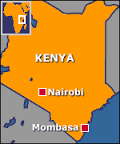
Map of Kenya

Pollution, overpopulation of some areas, as well as over-fishing have wreaked all sorts of havoc for the ecosystem of our planet. One such ecosystem being destroyed is the coral reef along the coasts of Africa. Below are excerpts from an article from the Guardian about Kenyan efforts to reclaim their coral reefs, and bring back the lobsters and octopuses. As the marine life is re-established, let’s hope the industrial fishermen stay away!

====
Lobster_SA
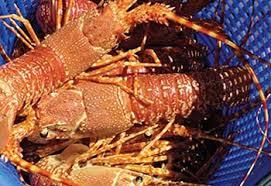
African Lobsters (From South Africa – Source: WildOceans.com.au)

Three years ago, coral reef along the Kenyan coastline was almost totally destroyed in some areas. Rising surface sea temperatures had triggered devastating bleaching episodes for the fourth time in less than two decades, and with the whitening of coral came a dwindling of marine life. Overfishing only exacerbated the problem.

For coastal communities dependent on the sea for their livelihoods, the degradation of the coral reef and its effect on the marine ecosystem threatened to overturn an entire way of life. In some areas surveyed by the Kenya Marine and Fisheries Research Institute (KMFRI), as much as 60-90% of coral was destroyed.

A fightback was needed and so the institute began working with local communities to rehabilitate degraded coral reefs along the country’s coastline. Among the areas targeted was Wasini Island, a tiny strip of land off Kenya’s south-east coast. The results have been startling.

Women on the island have led an initiative to restore degraded coral that has shown how coral restoration techniques can revive marine ecosystems and create sustainable livelihoods for communities that depend on fishing and eco-tourism.
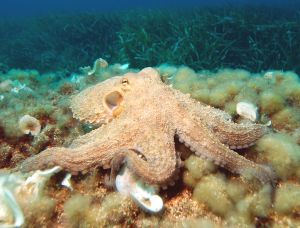
Octopus
Octopus (Source: Wikipedia)

The fish have started coming back since the restoration activities began,” says Nasura Ali, of the Wasini Beach Management Unit, which has about 250 members, of whom roughly 150 are women. More than 40 people have been trained in restoration techniques.

A year-long study by the KMFRI had tested the viability of raising coral fragments from areas affected by bleaching events, explains Jelvas Mwaura at the KMFRI’s department of marine environment and ecology. Many of the corals transplanted from coral gardens to degraded reef areas for the study survived, providing new habitats for fish species including jacks, groupers, emperors and sweetlips.

This success led to funding from the Kenya Coastal Development project (KCDP). Locals on Wasini Island have since grown more than 3,000 corals.

Coral reefs provide shelter and breeding grounds for hundreds of species of marine life. Fish populations in waters around the island have increased three times as much as in other areas, says the KMFRI.
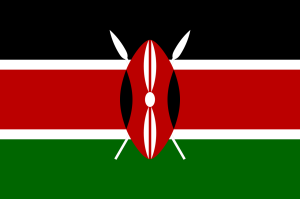
Kenya_flag
Kenyan flag

… The women of Wasini Island have also been restoring fish populations by cultivating seagrass. Overfishing of certain species, such as trigger fish, had led to the disappearance of seagrass because trigger fish fed on the sea urchins that devoured it. Using gunny bags made of sisal to protect the seedlings and prevent them from getting washed away, the women replanted seagrass seedlings on the ocean floor.

In addition to providing food, seagrass plays a key role in the overall coral reef ecosystem, providing shelter to juvenile fish after they hatch by shielding them from strong waves until they mature and move into the coral reefs.

Malagasy Tale: Rakoto and His Bull

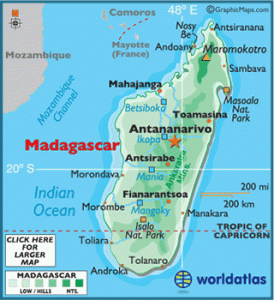
Madagascar_map1
Map of Madagascar (WorldAtlas)

In a village not too far from Antsirabe, lived a man named Rakoto who grew katrony (hashish) in big quantity. Since he liked the katrony too much, he smoked a lot of it every day. He also made clothes (rongony) from it, and made a lot of money that way.

He stacked the grains of katrony and ate them with rice and meat. Every day when he went to his farm to milk his cows, he first smoked 5 stems of katrony and ate a bowl of rice mixed with katrony powder. One day after he had smoked too much before milking the cow, he got the wrong cow and tied the bull. But the bull charged him and cut his left leg.

cow

Since then, all his descendants, the Antsirabe people, are prohibited from touching or smoking the katrony.

Malagasy tale translated to English by Dr. Y., Afrolegends.com

Proverbe Ewe sur la gourmandise / Ewe Proverb on Greediness

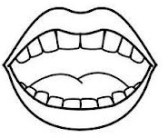
bouche2
La bouche / the mouth

Quand la bouche est pleine, la barbe reçoit les miettes (Proverbe Ewe – Ghana, Togo). – A être gourmand, on se salit.

barbe_6
Homme avec barbe / Man with beard

When the mouth is full, the beard receives the crumbs (Ewe proverb – Ghana, Togo).- Being greedy leads to getting dirty.

Nigerian Words in the English Dictionary

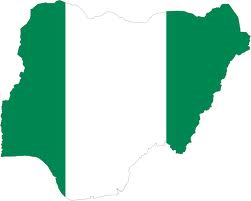
Flag and map of Nigeria

Oh yes… the Oxford English Dictionary has just selected 29 new Nigerian words to be part of its new edition. Allright people, make place for Chop (eat) Okada (Bend-Skin), Mama Put (eatery), Rub Minds(consult and work together), and Next tomorrow (the day after tomorrow), into the Queen’s English Dictionary…. Isn’t it marvelous how each culture adds to another? Even the conqueror at some points gets conquered (just jesting) by finding himself speaking words from the conquered. We, Africans, or those who have been colonized around the world, who have had to learn the language of the oppressor, should consider that language as part of our war trophies, because our ancestors had it pushed down their throats, and today we can speak the oppressor’s language and even understand them better than they do us, or ever wanted to, given their ‘superiority’ complex! Enjoy from the OED website.

====

My English-speaking is rooted in a Nigerian experience and not in a British or American or Australian one. I have taken ownership of English.

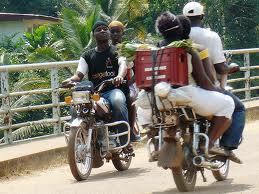
Bend Skin
‘Bend Skin’ in Cameroon = ‘Okada’ in Nigeria

This is how acclaimed Nigerian writer Chimamanda Ngozi Adichie describes her relationship with English, the language which she uses in her writing, and which millions of her fellow Nigerians use in their daily communication. By taking ownership of English and using it as their own medium of expression, Nigerians have made, and are continuing to make, a unique and distinctive contribution to English as a global language. We highlight their contributions in this month’s update of the Oxford English Dictionary, as a number of Nigerian English words make it into the dictionary for the first time.

… One particularly interesting set of such loanwords and coinages has to do with Nigerian street food. The word buka, borrowed from Hausa and Yoruba and first attested in 1972, refers to a roadside restaurant or street stall that sells local fare at low prices. Another term for such eating places first evidenced in 1980 is bukateria, which adds to buka the –teria ending from the word cafeteria. An even more creative synonym is mama put, from 1979, which comes from the way that customers usually order food in a buka: they say ‘Mama, put…’ to the woman running the stall, and indicate the dish they want. 

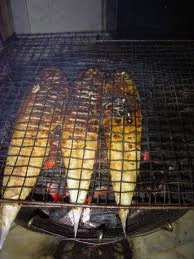
Grilled fish on a charcoal stove / du poisson braise sur un rechaud a charbon

Okadaon the other hand, is first attested twenty years later, and is the term for a motorcycle that passengers can use as a taxi service. It is a reference to Okada Air, an airline that operated in Nigeria from 1983 to 1997, and its reputation as a fast yet potentially dangerous form of transport, just like the motorcycle taxi.

… The oldest of our new additions that are originally from Nigeria is  next tomorrow, which is the Nigerian way of saying ‘the day after tomorrow’. It was first used in written English as a noun in 1953, and as an adverb in 1964. The youngest of the words in this batch is  Kannywood, first used in 2002, which is the name for the Hausa-language film industry based in the city of Kano. It is a play on Hollywood, following the model of Nollywood, the more general term for the Nigerian film industry that was added to the OED in 2018.

Nigerian Pidgin is another rich source of new words for Nigerian English. Sef, first evidenced in Nigerian author Ben Okri’s novel Flowers and Shadows, published in 1980, is an adverb borrowed from Pidgin, which itself could have been an adverbial use of either the English adjective safe or the pronoun self.

… A few other expressions in this update would require some explanation for non-Nigerians: a barbing salon (earliest quotation dated 1979) is a barber’s shop; a gist (1990) is a rumour, and to gist (1992) is to gossip; when a woman is said to have  put to bed (1973), it means that she has given birth; something described as qualitative (1976) is excellent or of high quality.

Description of African Dressing in 1400s

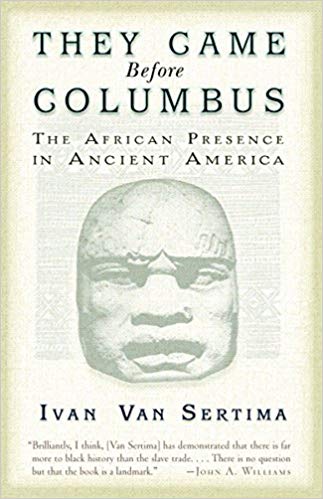
Van Sertima_They came before Columbus
‘They Came Before Columbus, The African Presence in Ancient America’ by Ivan Van Sertima

As I have always said in the past, I truly despise the claim of  The New York Times that Africa’s fabric is Dutch. This is simply a case of falsification of history. As I have proven before, African Fabrics and Textiles traditions is large, existent, and real; it is not just VLISCO-based. Below is an account by a European of African dressing in the 1400s! And yes… the Africans he met wore garments.

They numbered seventeen, of considerable size. Checking their course and lifting up their oars, their crews lay gazing. … We estimated on examination that there might be about one hundred and fifty at the most; they appeared very well-built, exceedingly black, and all clothed in white cotton shirts: some of them wore small white caps on their heads, very like the German style, except that on each side they had a white wing with a feather in the middle of the cap, as though to distinguish the fighting men.

“A Negro stood in the prow of each boat, with a round shield, apparently of leather, on his arm. They made no movement towards us, nor we to them. Then they perceived the other two vessels coming up behind me and advanced towards them. On reaching them, without any other salute, they threw down their oars, and began to shoot off their arrows.

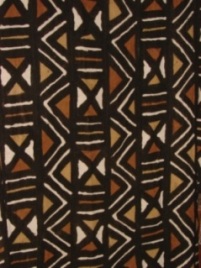
Bogolan
A piece of Bogolan

This encounter between the Portuguese and the boatmen on the Gambia occurred in 1455. It is the only account of West African riverboats documented by Europeans before the coming of Columbus.

G.R. Crone, The Voyages of Cadamosto, London, the Hakluyt Society, 1937, pp. 57-59

Ivan Van Sertima, They Came Before Columbus, The African Presence in Ancient America, Random House, 1976, p.54

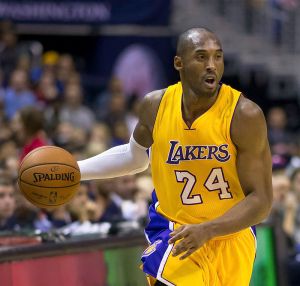
‘I am Black Mamba’ : Arrivederci Kobe Bryant

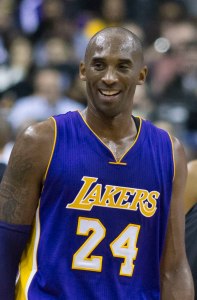
Lakers at Wizards 12/2/15
Kobe Bryant in 2015 (Source: Wikipedia)

I was too young to be in awe by the likes of Michael Jordan  or Magic Johnson. To me basketball was revealed through Kobe Bryant, LeBron James, and all their pairs.

Yes… I am the generation of the Black Mamba. It is with sadness that I learnt of his passing yesterday. I became an amateur basketball lover and player thanks to the ‘Black Mamba’. As an African, I always liked his nickname ‘The Black Mamba‘ because his speed on the court was so similar to that of the animal itself which I was familiar with, and he was especially lethal to his adversaries who never saw him coming. His aura and awesomeness seemed to pervade his life, especially with that big grin of his… always ready to smile and seemingly make others comfortable. Moreover, I was sold when I learnt that he was an American who was tri-lingual, and loved soccer, and just like me was a huge fan of Barcelona and A.C. Milan. Could I ask for more? I was hooked on Basketball then! To me Kobe Bryant was one of the greatest Basketball players the game ever saw!

Kobe Bryant handling ball in 2014
Kobe Bryant handling a ball on court in 2014 (Source: Wikipedia)

Being on the world stage like Kobe, you become somewhat super-human and everyone gets an opinion of you; it is tough not to fall under the pressure. What I liked the most about Kobe Bryant, was his determination, and his drive for perfection. To me, that epitomizes what all of us should strive for: awesome work ethics, tenacity, perfection, and desire to be great. Once you have found a passion in life, you should strive to be a Black Mamba, be like Kobe Bryant: perfect your craft, and go all the way out. Arrivederci Kobe… You have inspired so many of us, given us great memories,… You have made us all ‘Black Mambas’!

Proverb on Being Able to Judge Oneself

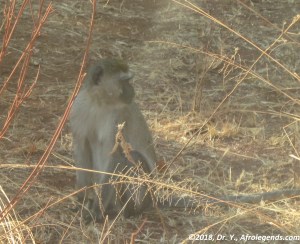
Monkey1Un singe ne voit pas sa chevelure (Proverbe pygmées – Afrique Centrale). – Nul n’est juge en sa propre cause.

A monkey does not see its hair (Pygmy proverb – Central Africa). No one is judge in its own case.

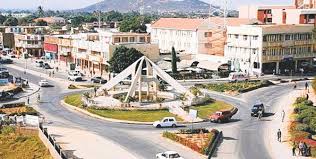
Why the Name: Dodoma ?

Tanzania_Dodoma city center
Dodoma city center (Source: The East African)

I always loved the sound of the name Dodoma, the capital of Tanzania: the way it rolls off your tongue like a dearly beloved, like something or someone so sweet and precious… DO-DO-MA, almost like musical notes! So what do you think Dodoma means?

Well, the name Dodoma is derived from Idodomya, a word in the Chigogo (Gogo) language, which means, “it has sunk.” Tradition says that, an elephant once came to drink at a nearby creek, and got stuck in the mud, and gradually sank. It was then that the villagers exclaimed in amazement, “idodomya!” And from that moment, the place was known as Idodomya, the place where the elephant “has sunk.” It later became Dodoma in 1907 when the Germans colonists, who were probably struggling to pronounce Idodomya, came for the construction of the Tanzanian central railway. The layout followed the typical colonial planning of the time with a European quarter segregated from a native village (European-Only Neighborhoods in African Cities before Independence).

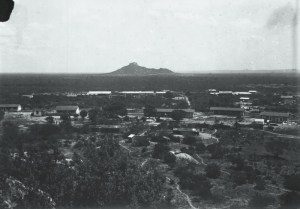
Tanzania_Dodoma 1912
Dodoma in 1912 (Source: Museum of World Cultures)

In 1967, following independence, the Tanzanian government made plans to reorganize its then capital Dar es Salaam, which was undergoing rapid urbanization and population growth. In 1974, after a nationwide party referendum, the capital was moved from Dar es Salaam to a more central location to create significant social and economic improvements for the central region and to centralize the capital within the country. With an already-established town at a major crossroads, the Dodoma region had an agreeable climate, room for development and was located in the geographic centre of the nation. Its location in a rural environment was seen as the ujamaa (family-hood) heartland. The ujamaa concept was a concept championed by the first president of Tanzania Julius Nyerere as part of his social and economic development policies: it was to serve as the basis for an African model of development, or African socialism.

Tanzania_Dodoma Julius Nyerere Square1
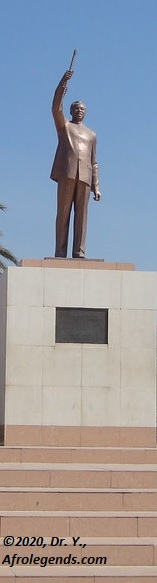
Julius Nyerere Square in Dodoma

However, over the past 40 years, much of the initial design, and intents never came to fruition, and to this day many government offices and embassies have remained in Dar es Salaam, which remains the economic and the de facto capital of Tanzania.

The story of Dodoma and Dar es Salaam is similar to that of Abuja and Lagos in Nigeria, of Brasília and Rio de Janeiro in Brazil, and even Washington, D.C. and New York City in the United States, to name just a few. In many of these cities, there is always an economic capital which is the lung of the country, which dwarfs the political capital in size and energy. Nonetheless these political capitals are still special and unique.

Well, if you ever visit Dodoma, remember that elephant who sank there, try and visit them in all the national parks of the country, but most importantly remember to take with you the ujamaa spirit!

Birds in African Cities and Beyond: The African Kingfisher

Bird_African Kingfisher_1
African Kingfisher

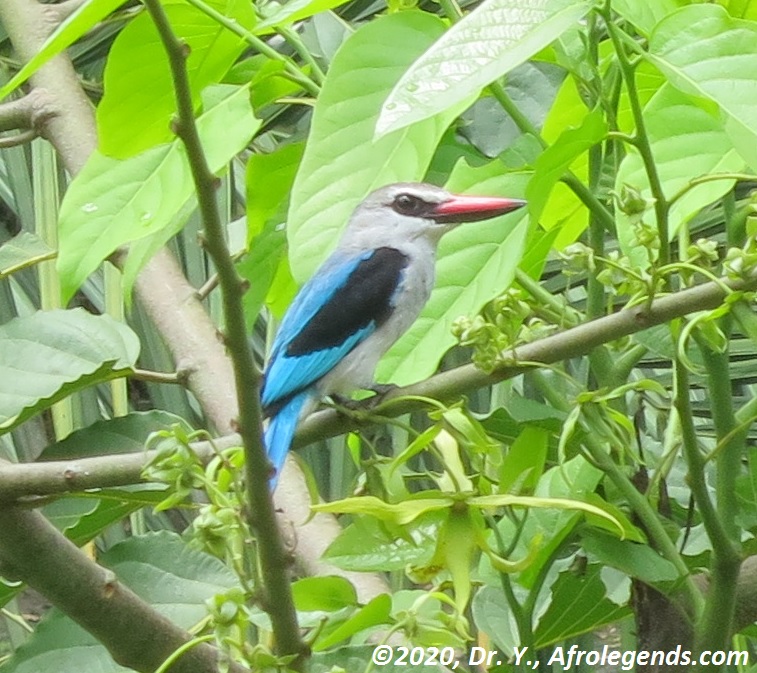
I had to share with you the image of the magnificent bird whose presence graced my mother’s backyard recently. It is beautiful, colorful, and just amazing. Very often in urban settings we often forget to look at nature, and in many African metropolises, we pass birds everyday without a second thought. I was recently introduced to the kingfisher bird. Not being a ‘bird’ person, I had to search for this colorful bird’s name. Did you know that there are 87 species of kingfishers in the world, and about 17 are found in Africa? I believe my mother’s visitor to be a woodland kingfisher or Halcyon senegalensis. However, it would seem to also look like a mangrove kingfisher. I know that it is definitely not the blue-breasted kingfisher. A question for you all is: If you didn’t know where in Africa this bird was coming from, which species do you think it is?

Lastly, this is a call to preserve our biodiversity, and be mindful of our environment; this calls for the necessity to build parks in African cities, not just pour concrete and cement over everything… I know that land is supposedly scarce, but parks will beautify the cities!


Bird_African Kingfisher

Bird_African Kingfisher_2

Proverbe malgache / Malagasy Proverb

Money3L’argent ressemble à l’hôte de passage : aujourd’hui il arrive, demain il n’est plus là (proverbe malgache – Madagascar).

Money is like a passing guest : today he arrives, tomorrow he is gone (Malagasy proverb – Madagascar).