
Celui qui est dans la maison d’un autre, laisse ses défauts à la porte (Proverbe Rwanda).
Whoever is in another’s house, leaves his faults at the door (Rwanda proverb).

Celui qui est dans la maison d’un autre, laisse ses défauts à la porte (Proverbe Rwanda).
Whoever is in another’s house, leaves his faults at the door (Rwanda proverb).
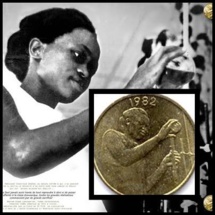
Je suis sûre que si vous êtes de l’Afrique de l’Ouest, et de la zone CFA, vous êtes certainement tombée sur cette pièce de 25FCFA sur laquelle une femme est representée. Eh bien cette femme-là est la toute première femme chimiste de la Côte d’Ivoire, Mme Konan née Dicoh Mariam. Elle est gravée sur la pièce de 25f CFA avec une burette de chimiste.
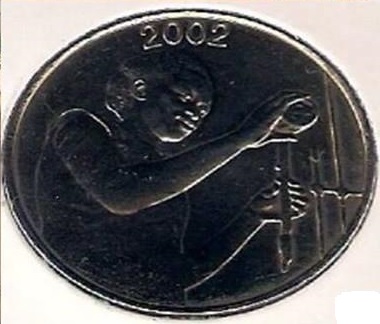
If you are from West Africa, and from the CFA economic zone, you have probably come across the 25 FCFA coin on which a woman is engraved. That woman happens to be the first woman chemist of Côte d’Ivoire, Mrs Konan Dicoh Mariam. She is engraved on the 25 FCFA coin with a burette.

Mrs Konan, a bright chemist who was able to handle a lot of chemistry formulas, is the kind of people we should be talking about; she deserves an excellence prize. She is an example for all the girls and women of Africa, and the world, because she was able to shine by her ambition and motivation. I raise my hat to her and all other women who remain unnamed, because she is a strong and remarkable woman. She is a model who should be remembered in the future by all generations. Wow… first female chemist of an entire country… such a marvelous example of determination!

Un groupe de chasseurs en Afrique et parmi eux un bègue:
Le bègue : “Hip, Hip, Hip ”
Les autres : “Hourra !!!”
Le bègue : “hippopotaaammmee”
=====
A group of hunters in Africa, and among them a stutterer:
The stutterer: “Hip, Hip, Hip”
The others: “Hurray !!!”
The stutterer: “Hippopotaaammmuuss“
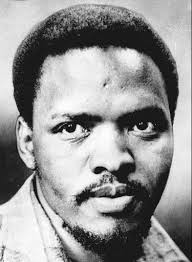
I would like to share with you some quotes by Steve Biko himself. When I read Biko’s words, I realize that he was a true African leader who wanted good for all; he was really ahead of his time. I have also added, at the end, a documentary ‘The Return of Biko‘ by Jeff Ogola. Enjoy!
==========
“The greatest weapon in the hand of the oppressor is the mind of the oppressed.” Speech in Cape Town, 1971
“It is better to die for an idea that will live, than to live for an idea that will die.”
“At the time of his death, Biko had a wife and three children for which he left a letter that stated in one part: “I’ve devoted my life to see equality for blacks, and at the same time, I’ve denied the needs of my family. Please understand that I take these actions, not out of selfishness or arrogance, but to preserve a South Africa worth living in for blacks and whites.”
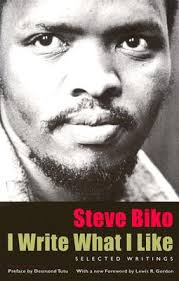
“Merely by describing yourself as black you have started on a road towards emancipation, you have committed yourself to fight against all forces that seek to use your blackness as a stamp that marks you out as a subservient being.” The Definition of Black Consciousness, I Write What I Like, 1978.

“You are either alive and proud or you are dead, and when you are dead, you can’t care anyway.” On Death, I Write What I Like, 1978
“Black Consciousness is an attitude of the mind and a way of life, the most positive call to emanate from the black world for a long time. Its essence is the realization by the black man of the need to rally together with his brothers around the cause of their oppression – the blackness of their skin – and to operate as a group to rid themselves of the shackles that bind them to perpetual servitude.“ The Quest for a True Humanity, I Write What I Like, 1978.
There are also several articles on this African martyr: articles by South African History, The Independent, Time, and Black Agenda Report. Enjoy!!!
The month of September is sadly quite a busy month when it comes to African martyrs: many of our martyrs were either born or assassinated that month, Ruben Um Nyobe, Agostinho Neto, Steve Biko, Amilcar Cabral, Kwame Nkrumah, Gamal Abdel Nasser, to name just a few. Today, I have decided to talk about Steve Biko.
Steve Biko, is known to many as the outspoken leader of the Black Consciousness (BC) movement.
Stephen (Steve) Bantu Biko was born on 18 December 1946 in Ginsberg township, in present-day Eastern Cape, in South Africa. Biko was the third of 4 children, and belonged to the Xhosa ethnic group. He was orphaned at the tender age of 4, after his father passing. As a child, he attended Brownlee Primary School and Charles Morgan Higher Primary School. He was sent to Lovedale High School in 1964, a prestigious boarding school in Alice, Eastern Cape, where his older brother Khaya had previously been studying. During the apartheid era, with no freedom of association protection for non-white South Africans, Biko would often get expelled from school for his political views. He was influenced by Frantz Fanon‘s and Aime Cesaire‘s works, and like Fanon, he first started as a medical doctor, before turning to politics.
Steve Biko was not alone in forging the Black Consciousness Movement. He was nevertheless its most prominent leader, who with others, guided the movement of student discontent into a political force unprecedented in the history of South Africa. Can you imagine that: all alone they created a force that scared the apartheid regime, and started it on its end. Biko and his peers were responding to developments that emerged at the height of the hideous apartheid regime. This culminated with the Soweto uprising of 1976.
The Black Consciousness movement argued that blacks had to overcome the feelings of inferiority instilled into them by 300 years of domination, the “oppression within“, before they could deal with whites as equals. “It [BC] seeks to infuse the black community with a new-found pride in themselves, their efforts, their value systems, their culture, their religion and their outlook to life,” Biko explained in 1971.
Steve Biko was a very charismatic, tall, handsome, and articulate man. Once asked by a judge “Why do you call yourself black, when your skin is brown?” Biko replied “Why do you call yourself white, when you are actually pink?” – he bore himself with rare confidence that showed no hint of any “oppression within.” Remember his famous phrase “Black is Beautiful“, which was an inspiration to the civil rights movement in the USA, and to many other movements across the globe.
In order for Black People to achieve their freedom being political and economical, Steve Biko believed that they should rally together; hence he said: “The realization by the Black man of the need to rally together with his brothers around the cause of their oppression – the blackness of their skin – and to operate as a group in order to rid themselves of the shackles that bind them to perpetual servitude.”
Biko understood that the system we are facing is not just a matter of laws and policies that suppresses us, he knew that the system seeks to undermine our thinking, ideas, values and beliefs, thus he said: “The most potent weapon in the hands of the oppressor is the mind of the oppressed.”
On 18 August 1977, Steve Biko was arrested at a police roadblock under the Terrorism Act No 83 of 1967 and interrogated by officers of the Port Elizabeth security police including Harold Snyman and Gideon Nieuwoudt. This interrogation took place in the Police Room 619 of the Sanlam Building in Port Elizabeth. The interrogation lasted twenty-two hours and included torture and beatings resulting in a coma. He suffered a major head injury while in police custody at the Walmer Police Station, in a suburb of Port Elizabeth, and was chained to a window grille for a day. On 11 September 1977, police loaded him in the back of a Land Rover, naked and restrained in manacles, and began the 1100 km drive to Pretoria to take him to a prison with hospital facilities. He died shortly after arrival at the Pretoria prison, on 12 September. The police claimed (and the apartheid government) his death was the result of an extended hunger strike, but an autopsy revealed multiple bruises and abrasions and that he ultimately succumbed to a brain hemorrhage from the massive injuries to the head, which many saw as strong evidence that he had been brutally clubbed by his captors.
Biko believed in the unity of the oppressed, he also knew we should constantly educate each other on what is happening in our society. Today, Biko’s views could be applied to almost every society where there are oppressed people, oppressed by unfair laws, unfair economics that favors extreme greed, forced into poverty, and dehumanization.
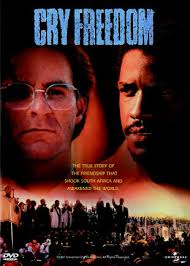
I watched the movie Cry Freedom which talked about Biko’s life, and also about his journalist friend Donald Woods who published the pictures of Biko’s beaten body after his death, thus showing to the entire world that he had been brutally murdered by the South African police. I do recommend it, the main actor is none other than Denzel Washington. To learn more about Biko, you could read his own book I Write What I Like, or the autobiographic book Biko by Donald Woods. In 1980 the singer Peter Gabriel had a world hit titled Biko, in which he sang: “You can blow out a candle/ But you can’t blow out a fire/ Once the flames begin to catch/ The wind will blow it higher.” Let us all, keep the fire of Steve Biko. Enjoy this rare video of Steve Biko talking!
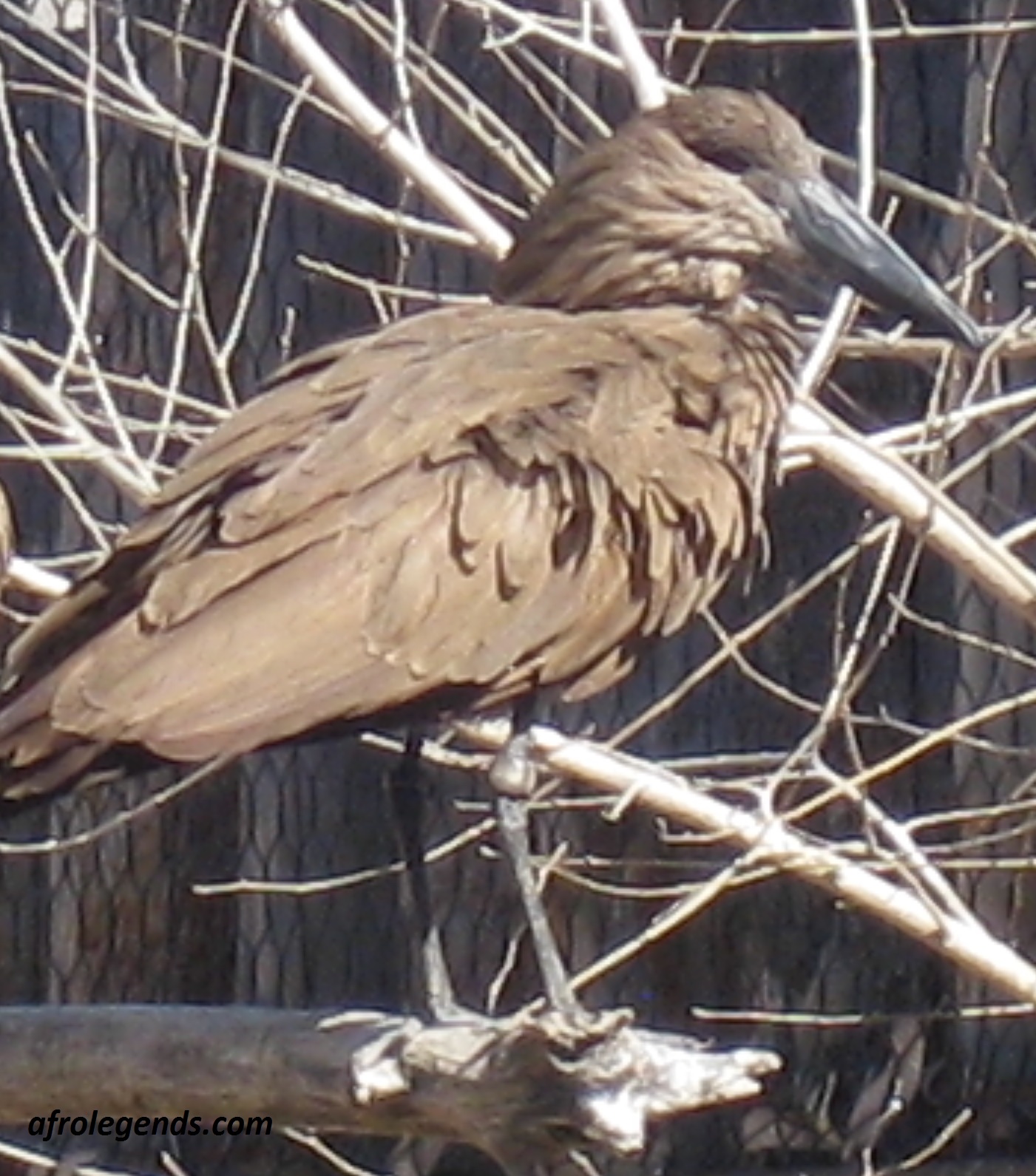
Quand l’oiseau ne connaît pas l’arbre, il ne va pas s’y reposer (Proverbe Douala, Cameroun). – Ne visitez que les bons voisins.
When a bird doesn’t know a tree, it doesn’t rest there (Duala proverb, Cameroon). – Visit only good neighbors.


To all my precious queens out there, I had to share this dear song. The lyrics are simply out of this world, and the ladies in the video just too beautiful. I raise my hat to 2Face Idibia for capturing the African beauty so well. I have included parts of the lyrics below; for the full version, go here: Enjoy!
Just like the sun, lights up the earth, you light up my life
The only one, I’ve ever seen with a smile so bright
And just yesterday, you came around my way
And changed my whole scenery with your astonishing beauty
Ah, you gonna make a brother sing,
You ordinary thing, a supernatural being,
I know you are just brighter than the moon
Brighter than the star, I love you just the way you are.
And you are my African Queen, the girl of my dreams.
You take me where I’ve never been
You make my heart go ting-a-ling-a-ling, oh ahh
You are my African Queen, the girl of my dreams
And you remind me of a thing
And that is the African beauty yahhh
…
Out of a million you stand as one
The outstanding one
I look into your eyes, girl what I see is paradise,
…
So black so beautiful
… I love you, ooohhh yeah, my African Queen, I
Love you, I love you
…
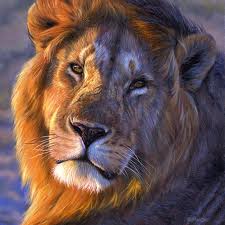
Le lion ne prête pas ses dents à son frère (Proverbe Basuto – Lesotho). Charité bien ordonnée commence par soi-même.
A lion does not lend his teeth to its brother (Basuto proverb – Lesotho). Charity begins at home.
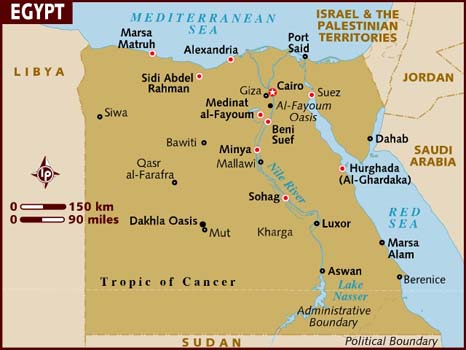
Dear all, today, I would like to talk about the city of Cairo, the capital of Egypt. Have you ever wondered what the name of Africa‘s second most populous city, after Lagos, stood for?

Well, Cairo’s official name is al-Qāhirah, which means literally: “Place or Camp of Mars“, in reference to the fact that the planet was rising at the time of the city’s foundation as well as, “the Vanquisher“; “the Conqueror“; “the Victorious” or, “the Strong” (al-Qahira) in reference to the much awaited Caliph Al-Mu’izz li-Din Allah who arrived from the old Fatimid capital of Mahdia in 973 AD to the city. “The Victorious” is often quoted as the most popular meaning of the name Cairo. The Egyptian name for Cairo is said to be: Khere-Ohe, meaning: “The Place of Combat“, supposedly, in reference to a battle which took place between the Gods Seth and Horus. Sometimes the city is informally also referred to as كايرو Kayro [ˈkæjɾo]. It is also called Umm al-Dunya, meaning “the mother of the world“.

Cairo is located on the shores of the Nile river, as well as on several adjacent islands in the north of Egypt. To the west of the city is Giza, and its ancient necropolis of Memphis on the Giza plateau, with its three great pyramids among which the Great Pyramid of Cheops and the Great Sphinx. The area around present-day Cairo, especially Memphis, had long been a focal point of Ancient Egypt, its pharaohs, and its rich culture, due to its strategic location upstream from the Nile Delta. However, the origins of modern-day Cairo are generally traced to a series of settlements in the first millenium, as Memphis’ importance was declining. In the 4th century AD, the Romans established a fortress town, known as Babylon, along the east bank of the Nile. This fortress remains the oldest structure in the city to this day. Later on, the Caliph al-Mu’izz li Din Allah of the Fatimid dynasty moved his capital from Mahdia in Tunisia to Cairo in 973; and gave the city its present name, al-Qahira (“The Victorious“). Cairo remained the capital through the end of the Fatimid dynasty 200 years later, and has remained the capital of Egypt through the Ottoman rule, and into the modern era.

Indeed, Cairo’s life has been quite victorious. Egypt is the land of so many rich civilizations: the great Pharaohs of Egypt, the Greeks, Babylonians, Romans, Muslims with the introduction of Islam; thus Cairo inherited from this wealth and has been a great melting pot. Egypt as a whole, and Cairo in particular, is like an open museum with monuments reflecting different periods of the world’s history. As Africa’s second largest city, Cairo is a vibrant city, with the oldest and largest film and music industries in the Arab world, and the world’s second oldest institution of higher learning, al-Azhar University founded in 969 AD.
Please enjoy this great city, Cairo, the Victorious, and hopefully think of visiting it.

I liked this poem “Mother to Son” by Langston Hughes… although it is a bit bitter, it is a mother advising her son on life. Enjoy!
=======
Mother to Son
Well, son, I’ll tell you:
Life for me ain’t been no crystal stair.
It’s had tacks in it,
And splinters,
And boards torn up,
And places with no carpet on the floor—
Bare.
But all the time
I’se been a-climbin’ on,
And reachin’ landin’s,
And turnin’ corners,
And sometimes goin’ in the dark
Where there ain’t been no light.
So, boy, don’t you turn back.
Don’t you set down on the steps.
‘Cause you finds it’s kinder hard.
Don’t you fall now—
For I’se still goin’, honey,
I’se still climbin’,
And life for me ain’t been no crystal stair.


 African Heritage