The Khami Ruins: Remnants of a Great Civilization in Southern Africa

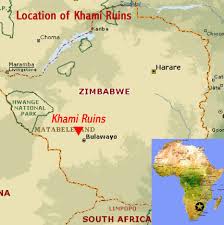
Location of Khami Ruins in Zimbabwe

Today we will be talking about the remnants of a great stone civilization in southern Africa: the city of Khami. The Khami Ruins are the remnants of the capital city of the Kingdom of Butua of the Torwa dynasty . It is located on the west bank of the Khami river, 22 km west of Bulawayo in southern Zimbabwe. It was the capital of the Torwa dynasty for about 200 years from AD 1450 to AD 1644. It emerged at the time of the disappearance of Great Zimbabwe.
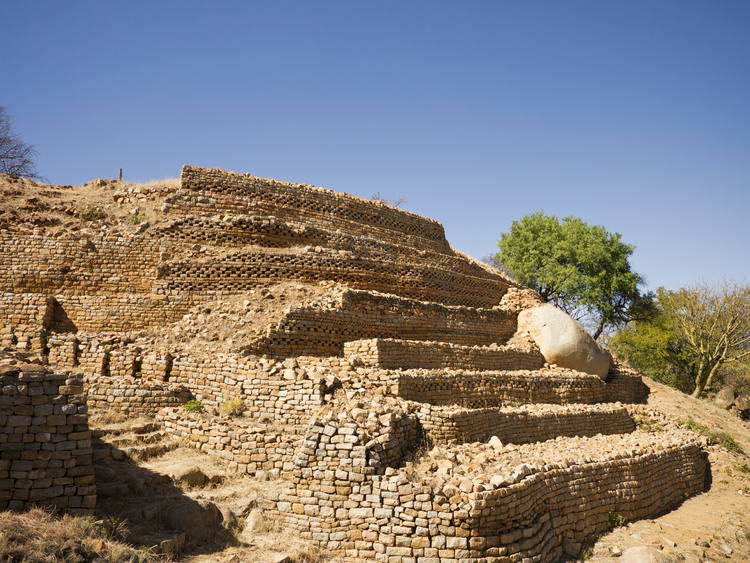
Khami Ruins (WHC-UNESCO website)

Today, the site of the Khami ruins is a national monument and a UNESCO World Heritage Site since 1986. The site is dominated by a series of terraced stone ruins, often highly decorated. It reveals seven built-up areas occupied by the royal family with open areas in the valley occupied by the rest of the population. The complex comprises circular, sometimes terraced, artificial platforms encased by dry stone walls. The beautifully decorated 6m-high by 68m-long retaining wall of the Precipice ruin bears a checkerboard design along its entire length. The imposing front façade marked the main entrance. The Precipice Ruin was a ritual center with the longest decorated stonewall of its kind in the entire sub-region. Nearby are the Cross Ruin with its mysterious stone Dominican Cross, believed to have been placed by a contemporary missionary, and the Northern Platform once used to process gold. The nearby Passage Ruin consists of two adjoining semicircular platforms accessed by a narrow passageway. The platforms, rising 2-7 m above ground, carried clay huts and courtyards where the rest of the populations lived. The remnants of cattle kraals and huts for ordinary people can be seen from the Hill Complex. The ruins include a royal enclosure forming the Hill Complex located on higher grounds, stone walls and hut platforms. There are also ruins on the eastern side of the Khami River.
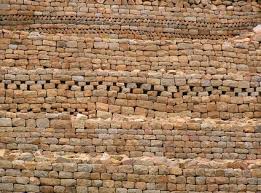
A wall at the Khami ruins showing the herringbone and chessboard patterns
A wall at the Khami site showing the herringbone and checkerboard patterns

To build the structures at Khami required engineering and architectural feats, since the stone found at Khami (laminar granite) was different from that found in other areas of Zimbabwe (biotite). This stone was harder to quarry and produced shapeless building stone; over 60% of the stone produced at these quarries would not have been of building quality. The building blocks thus needed to be shaped, but even then the stones were not suitable for building free-standing dry stone walls. The builders of Khami thus made an innovation and produced retaining walls instead. Moreover, building platforms made the houses cooler than those in the open areas below. Khami’s architecture conforms to that of Great Zimbabwe in a number of archaeological and architectural aspects but it possesses certain features particular to itself and its successors such as Danangombe and Zinjanja. Retaining walls and elaborate decorations were first expressed in the architectural history of the sub-region at Khami.
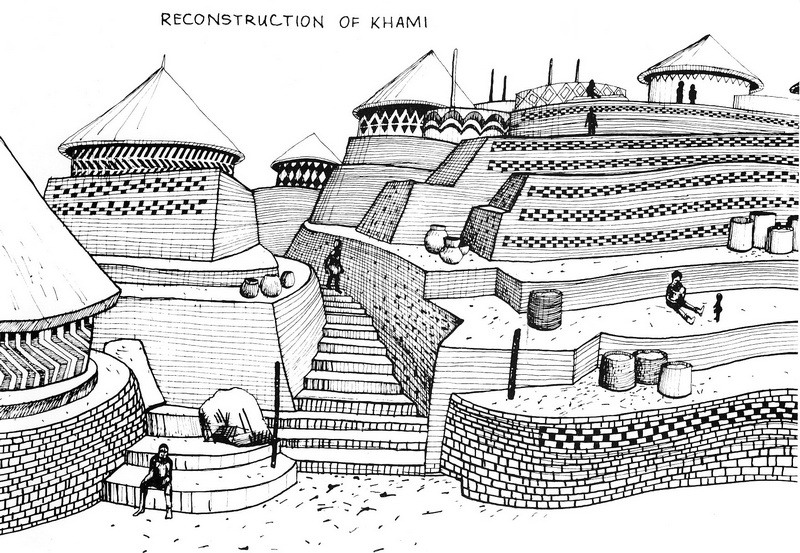
Artist rendition of what the city of Khami would have looked like (historum.com)

Archaeological finds include 16th century Rhineland stoneware, Ming porcelain pieces which date back to the reign of Wan-Li (1573-1691), Portuguese imitations of 17th-century Chinese porcelain, 17th-century Spanish silverware, etc. These indicate that Khami was a major centre of trade, presumably linked (like Mapungubwe and Great Zimbabwe before it) to the Swahili ports on the East Africa coast.
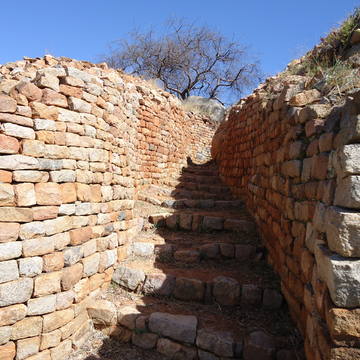
A passageway at Khami (WHC-UNESCO website)

Unfortunately, Khami was invaded by Changamire Dombo, around 1683, who led a Rozwi army from the Mwenemutapa (Monomotapa) state. The Rozwi made Danangombe (Dhlo-Dhlo) another area of the Khami site as the new capital of their empire, the Rozwi Empire. In the 1830sNdebele raiders displaced the Rozwi from Khami. A small site museum provides useful background information to the site itself. If you are ever in the vicinity, do not forget to visit this amazing site, remnant of a great stone civilization.




Proverbe Peul sur l’Impartialité / Fula Proverb on Impartiality

Twins
Twins

Quand une mère a des jumeaux, elle doit dormir sur son dos (Proverbe Peul). – Un chef doit être impartial; il doit s’occuper de tout son monde.

When a mother has twins, she should sleep on her back (Fula proverb). – A chief needs to be impartial; he should take care of all his people.

Made in Togo: A 3D Printer from e-waste

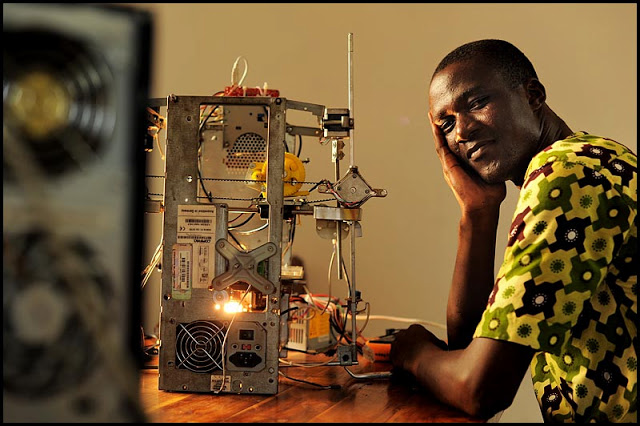
3D printer made by Afate Gnikou (Source: WoeLab.com)
Afate Gnikou and his 3D printer (Source: WoeLab.com)

Just as almost everywhere else in the world, 3D printing offers the possibility of revolutionizing entire industries. In Africa, the 3D printer could bring a new industrial revolution, allowing goods to be made with less dependence on imported commodities, at a cheaper rate, and creating jobs locally. For the past three years, in Lomé, the capital of Togo, members of a small and innovative community have been building 3D printers. The machines are now part of an ambitious education program.

e-waste
e-waste

In Lomé, piles of discarded computers, printers and scanners from industrialized countries accumulate in trash dumps. Afate Gnikou, a system’s developer, has found a place to work on his invention in a group of like-minded computer-lovers. It is called WoeLab; enjoy. BBC also did a video about it.


“We must ALL fight Rape Culture” by Teju Cole

Teju Cole
Teju Cole

I really liked what Nigerian writer Teju Cole had to say about fighting rape culture, and how it should be a fight for all mankind, because when women are dehumanized, the entire society is. The author of Open City reacts to the Bill Cosby’s controversy in a very articulate manner, and we should all take the time to read it. Enjoy! For the entire text, visit the New Inquiry website, where it is titled ‘Improving on Silence’ by Teju Cole.

=========

Last night, reading the accounts by women who had been assaulted by Cosby, I was overcome with sorrow.

Tricky to say anything about this, but silence is simply not an option. This is everybody’s business. But I’ll say some things to the men who are reading.

"Open City" by Teju Cole
“Open City” by Teju Cole

We men benefit, all of us men benefit, from rape culture. We benefit from the pain it causes women because we sprint ahead obliviously; we benefit from the way it knocks them off circuit and opens space for us; we benefit from the way it dehumanizes them so that our own humanity can shine more greatly; and we benefit from the aura of power it gives us as perpetrators or as beneficiaries. And because we benefit, explicitly or implicitly, we are not vociferous enough in our opposition to it. […]

We must fight rape culture, even in its allegedly mild manifestations, we must be grieved with the grief of those who commit the crime and those who benefit from a world built on such crimes, we must oppose men who wade in with stupid explanations and caveats and distractions, we must surrender the poisonous sentimentality that makes us believe a “great artist” over a less well-known woman. Indeed, we must be willing to let anyone go—think of any man you admire, any man at all, alive or in history, close to you or far away, and think to yourself that you must be willing to let him go—if such things are true of him too. And understand that such things can be true of any of them, of any of us. […]

Listen2And above all we must listen, to women, and to the significant but vastly smaller number of men who have also been assaulted. So that, gradually, we can collectively begin to slough off this wretched state of affairs in which the first thing someone who has been assaulted thinks is “no one will believe me.”

That’s to men.

And to women: I believe you. And I’m heartbroken about the many ways in which I fail to live up to that belief.

Why the Name: Oran?

Oran
Oran

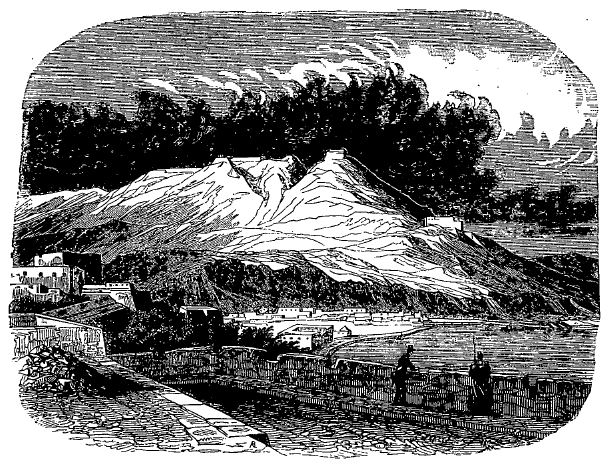
Oran, “the radiant,” is the name often given to the second most populous city of Algeria. In the past, I used to think that the name Oran had something to do with orient, the east. So from “radiant” to “orient”, which is true? or is there another meaning to the name of this beautiful Algerian city?

The name Oran comes from Wahran, which comes from the Berber word Uharu for Lion. One of the known forms of the word, Wadaharan, could come from “Wad + Aharan“, or “the river of Lions.”

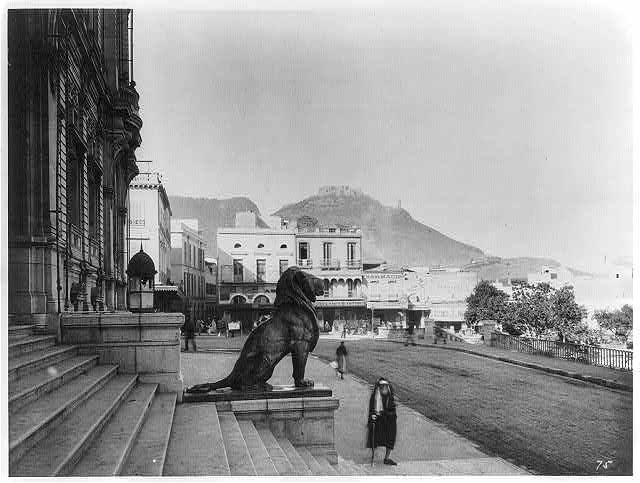
Oran, from City Hall steps, 1894 (Library of Congress)

Several legends link the name of the city to lions. Legend says that in 900 AD, there were still lions in the area; in the mystic legend, a lion had appeared on the grave of the saint patron Sidi El Hourari. The most common tradition traces the name of the city to the dream of the son of the Vizier of Cordoba, who was running away by sea from the tyranny of his father who opposed his marriage to the woman he loved. On his way, a storm arose, and he had a vision of two lion cubs, and a shipwreck on La Plage des Andalouses in Oran.

Either way, the last two lions were hunted on a mountain near Oran referred to as “mountain of lions,” also known as Djebel Kar, the mountain of rubbles. The French name, Mountain of lions, indicates that there were still lions living in that area at the beginning of the 19th century. Two giant lion statues stand in front of Oran’s city hall, symbolizing the city.

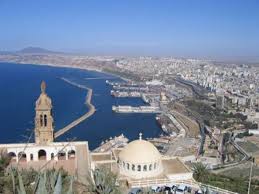
Oran, today
Oran, today

During the Roman empire, the region of Oran was a small settlement called Unica Colonia, which disappeared after the Arab conquest of the Maghreb. Founded in 902 by Moorish Andalusi traders, Oran saw a succession of Arab-Berber dynasties. It was captured by the Spanish under Cardinal Cisneros in 1509, Spanish sovereignty lasted until 1708, when the city was conquered by the Ottomans. Spain recaptured the city in 1732. However, its value as a trading post had decreased greatly, so King Charles IV sold the city to the Turks in 1792 (some sources say that it was conquered, rather than sold to the Bey Mohamed El Kebir). Ottoman rule lasted until 1831, when it fell to the French. During French colonization, Oran saw a rapid development and became Algeria‘s second city.

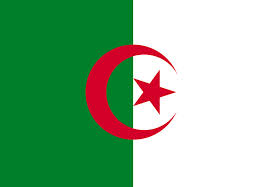
Flag of Algeria
Flag of Algeria

After independence in 1962, Oran remained the capital of the West of the country, and its principal financial, commercial, and industrial center. It is today one of the most important cities of the Maghreb. It is a port city on the Mediterranean sea, located in the northwest of Algeria, 432 km from the capital Algiers, and is the capital of the Oran Province in the gulf of Oran. Oran is a major port and a commercial centre, with three major universities. It is also the birthplace of the Raï, the Algerian folk music made popular by singers such as Cheb Khaled, Cheb Mami, Raïna Raï, and others.

Please enjoy this video of Oran, the city of Lions, Oran the radiant, the city of Raï.


“Raising up a Super-Humanity” by Puno Selesho

I really enjoyed South African law student, humanitarian, and poet Puno Selesho‘s TEDx Pretoria 2015 speech on “raising up a super-humanity”. I simply loved the way she recited her poem, full of energy, and emotions, and above all ready to empower humanity. Enjoy and rise up to be the Super-human you are meant to be!


Proverbe Fang sur l’Experience / Fang Proverb on Experience

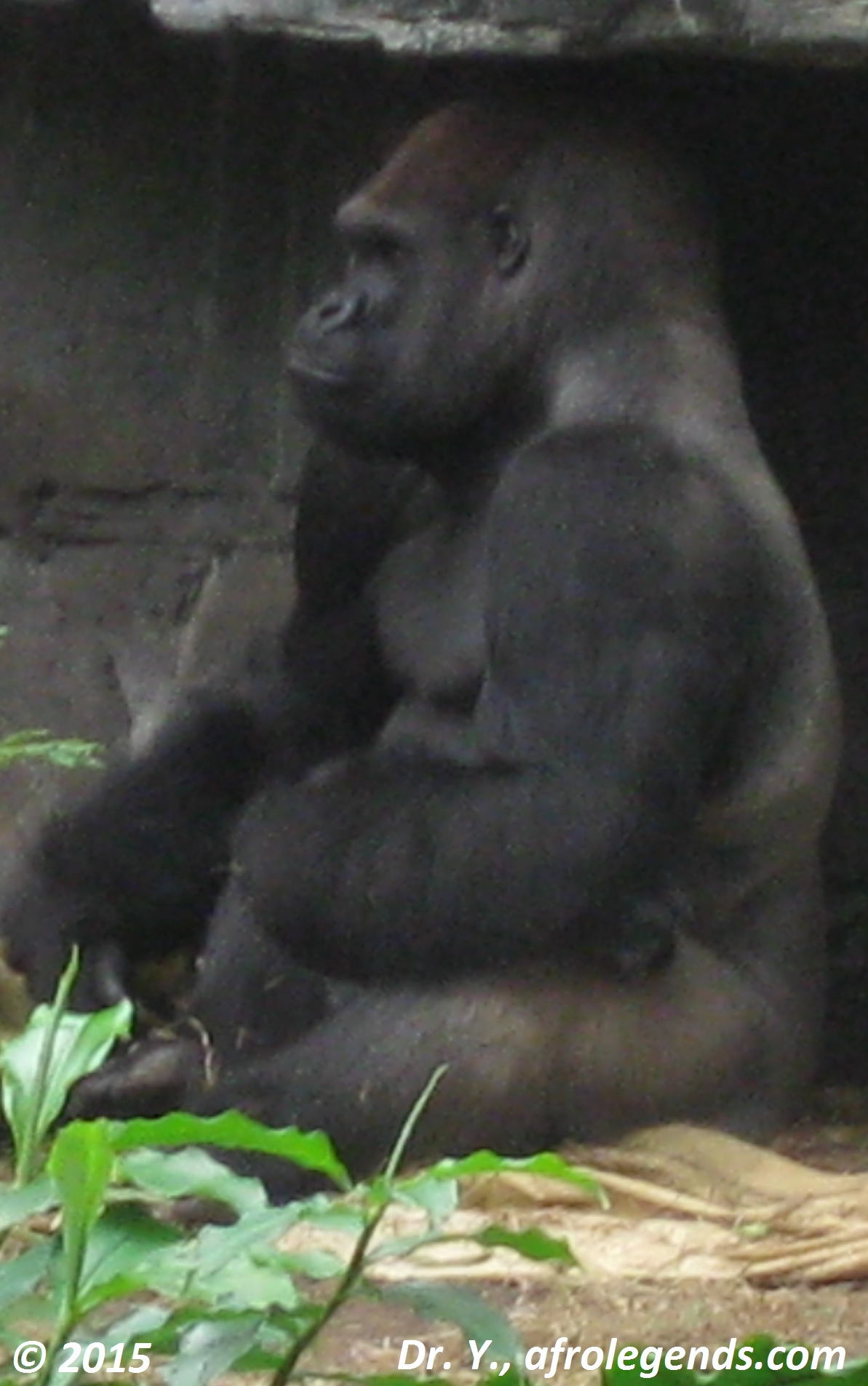
Gorille / Gorilla
Gorille / Gorilla

On n’apprend pas le chemin au vieux gorille (Proverbe Fang – Cameroun, Gabon, République du Congo, Guinée Equatoriale, São Tomé et Principe).

You don’t teach the way to an old gorilla (Fang Proverb – Cameroon, Gabon, Republic of Congo, Equatorial Guinea, São Tomé and Principe).

African Stylists Designing for the Greats of this World

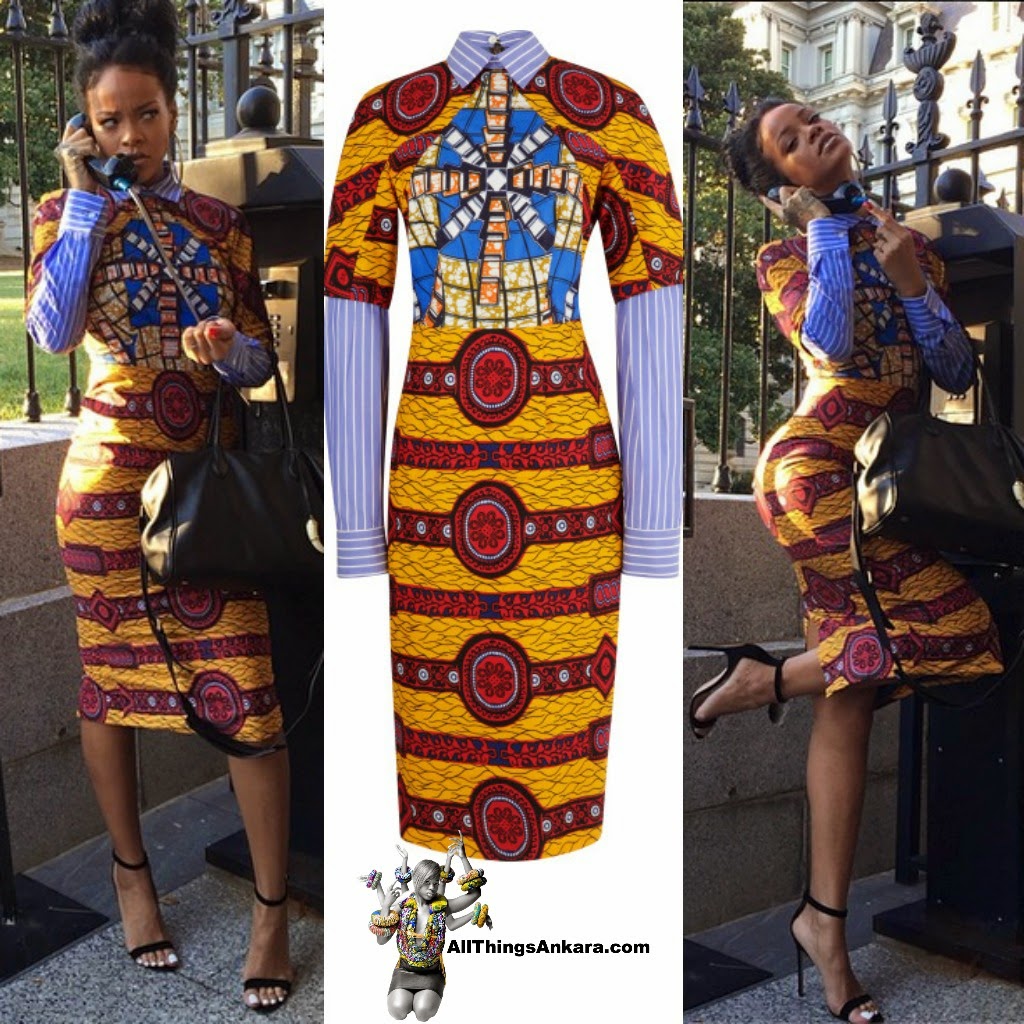
Rihanna rocking a Stella Jean's creation
Rihanna rocking a Stella Jean’s creation (allthingsankara.com)

I couldn’t help but notice the African influence seeping its way through the wardrobe of some of the world’s celebrities. Last fall, Rihanna stunned the world by wearing Ankara fabric at the White House. She was sporting Haitian designer Stella Jean‘s creation, and she was stunning.

Wax Hollandais
Wax Hollandais

I also recently heard about Zimbabwean designer Farai Simoyi, the one behind Nicki Minaj‘s fashion line. Before that Farai Simoyi was a Senior designer at the House of Dereon, the clothing house by mega-artist Beyoncé and her mother Tina Knowles.

So watch out: next time you shop, you may be unconsciously buying some African designs. Enjoy this video about some of the up and coming African designers on the international scene.

Reclaiming History: Britain’s Forgotten Slave Owners

Slave capture
Slave capture

Yesterday, David Olusoga of BBC Two published a documentary on Britain’s Slave Owners part 1: Profit and Loss. His work was very profound, and was of course very painful, as it dealt with slavery. Here is the synopsis, from BBC Two website:

“In 1834 Britain abolished slavery, a defining and celebrated moment in our national history. What has been largely forgotten is that abolition came at a price. The government of the day took the extraordinary step of compensating the slave owners for loss of their ‘property’, as Britain’s 46,000 slave owners were paid £17bn in today’s money, whilst the slaves received nothing.
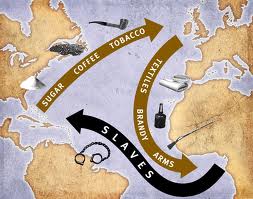
The Transatlantic slave trade

For nearly 200 years, the meticulous records that detail this forgotten story have lain in the archives virtually unexamined – until now. In an exclusive partnership with University College London, historian David Olusoga uncovers Britain’s Forgotten Slave Owners. Forensically examining the compensation records, he discovers the surprising range of people who owned slaves and the sheer scale of the slavery business.

Slaves on board a ship

What the records reveal is that the slave owners were not just the super-rich. There were widows, clergymen and shopkeepers; ordinary members of the middle-classes who exploited slave-labour in distant lands. Yet many of them never looked a slave in the eye or experienced the brutal realities of plantation life.”

Check out the BBC Two website which has an interactive view of it. I also liked the video link below about some instruments of torture used in Jamaica to punish slaves. I invite you to find this outstanding documentary by David Olusoga. Below is an interview he gave.

http://www.bbc.co.uk/programmes/p02wt8p7

Proverbe Gabonais sur le Chef / Gabon Proverb on the Chief

Buffle / Buffalo
Buffle / Buffalo

Le buffle ne se vante pas de sa force devant l’elephant (Proverbe Ambede – Gabon). – Il faut partout une autorité; mais n’enviez pas les chefs.

Elephant
Elephant

The buffalo cannot boast about his strength in front of the elephant (Ambede Proverb – Gabon). – Authority is always needed; but do not envy the chiefs.