As we highlighted last week, Gabon was part of the five African countries invited to the White House last year by US President Donald Trump. Gabon was the only country invited to the summit which was not part of West Africa. Gabon is not only rich in oil but also rich in uranium and manganese, and has one of the world’s largest iron deposit. Gabon has significant iron ore reserves, particularly in the Belinga area, which is estimated to hold about one billion tons of iron ore. Since the visit, Gabon has unveiled several infrastructure deals including the Belinga–Boué–Mayumba railway (901 km) which will open up the north east areas of the country, a new deep-water port, the Boué hydroelectric dam, and a push for local processing of mineral resources.
Yesterday, the president of Gabon Brice Clotaire Oligui Nguema, while in visit in France to meet French President Macron, unveiled yet another project, this time in connection with the French mining group Eramet for the exploitation of Manganese; with hopes of opening the south east region by rehabilitating approximately 650 km of railway linking Owendo near the capital Libreville to Franceville in the east as part of the Trans-Gabon Railway, and the exploitation and transformation of 700,000 tons of manganese (Africanews). There will be three phases including the creation of a factory for the production of manganese oxide to be built in Libreville by 2028, the construction of a unique site in Moanda specially for the transformation of this mineral in Gabon, and lastly the building of new plant for the production of manganese alloys locally to be built in 2031.
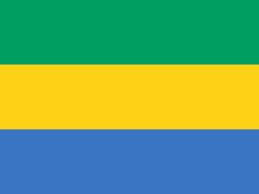
Flag of Gabon
The office of the Gabonese president stated that the agreement will help “generate greater added value within the country, support its industrialisation and boost the competitiveness of the national economy.” These will be followed by other agreements to cover security (maybe consolidating the defense part of The 11 Components of the French Colonial Tax in Africa? Not to forget that Oligui Nguema came to power via a coup) and water and energy sectors.
We applaud all these projects which mark a jump towards the industrialization of the country, and pray that these actually end up benefiting the people, as opposed to the countless other agreements signed over the years which have very little to show for. We still hope that African countries would unite to make stronger contracts/ agreements to get the best deals possible and bigger jumps toward development.
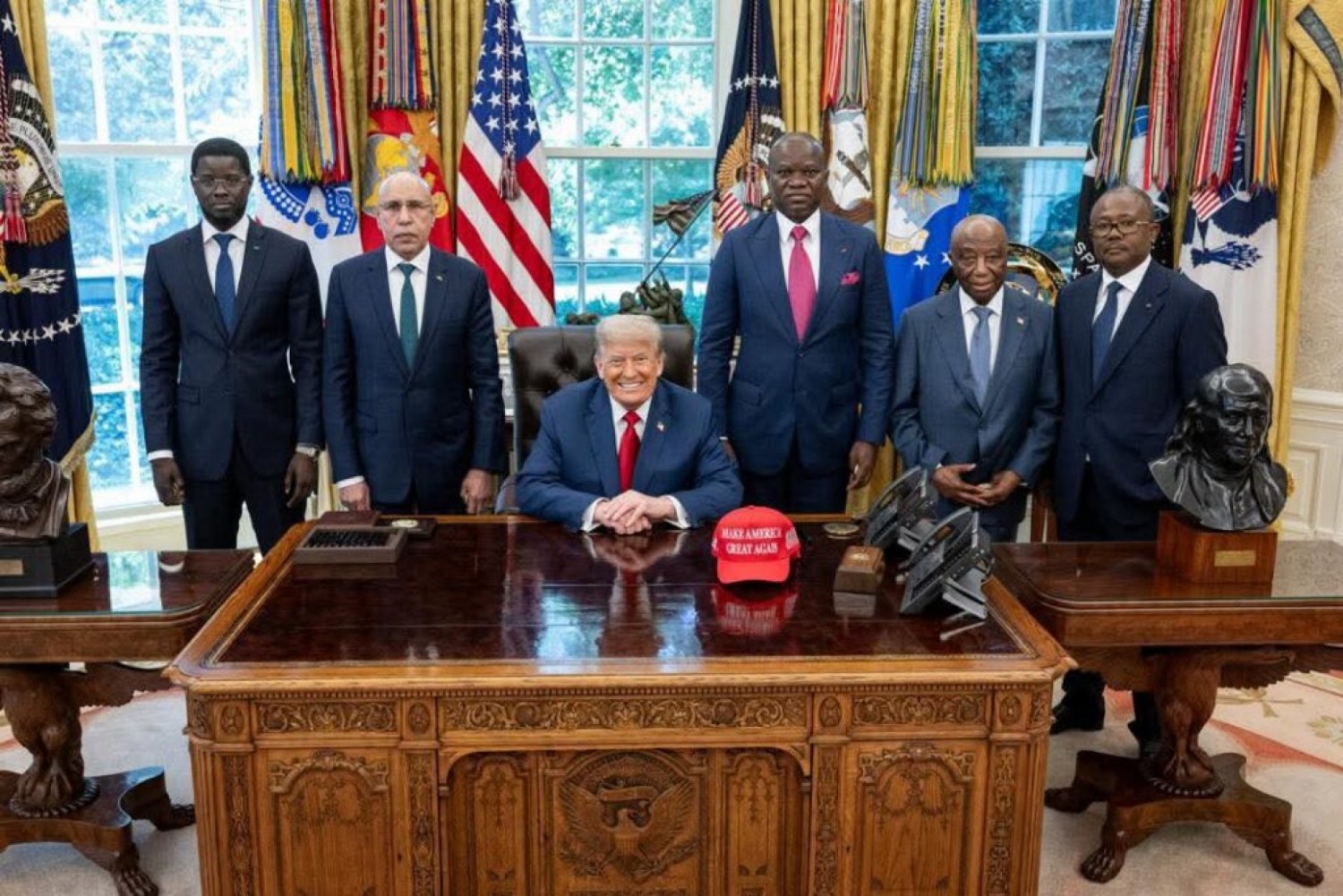
American President Donald Trump and his 5 peers from Africa at the US-Africa Summit. From left to right: Bassirou Diomaye Faye of Senegal, Mohamed Ould Cheikh El-Ghazouani of Mauritania, Donald Trump of US, Brice Oligui Nguema of Gabon, Joseph Boakai of Liberia, and Umaro Embalo Sissoco of Guinea Bissau (Source: Koaci.com)
In July 2025, the presidents of 5 “unusual” African countries were invited to the White House to dine with the President of the United States at the US-Africa Summit. “Unusual” because these were not the normal countries used to being invited to the White House, they were less common choices : Senegal, Gabon, Liberia, Guinea-Bissau, and Mauritania. The choice of the countries was so surprising that even the American president was astonished that the Liberian president spoke such good English without a translator… seemingly forgetting that Liberia is the first African country established by free slaves from America with the capital Monrovia, named after American president James Monroe. In fact, Liberia was the only English-speaking country invited to the summit. Compared to other African heavyweights like Nigeria, Egypt or South Africa, these countries have rather small populations and economies. And in all honesty, how many Americans know that the capital of Mauritania is Nouakchott or can even say it? or that of Gabon is Libreville? Many speculated that the visit had something to do with trade; after all, these countries had, until then, very little trade with the US. So what is it? It is said that Senegal, Liberia, and Mauritania were seen as relatively stable and reform-oriented, making them attractive for: aviation and energy deals, private investment, and infrastructure partnerships.There is nothing wrong that we know of with those deals or development as a whole… but we need to understand why.
Flag of Gabon
We will focus first on the only country invited to the summit which was not part of West Africa, Gabon. With a population a little over 2.5 million inhabitants, one could wonder what American interests in this little country of Central Africa look like, if not oil? After all, it is no secret that for many years, Gabon was the cash cow of France because of its large oil reserves and strong connections with the defunct Elf leadership. Gabon is also rich in uranium and manganese, and has one of the world’s largest iron deposit. Gabon has significant iron ore reserves, particularly in the Belinga area, which is estimated to hold about one billion tons of iron ore. Additionally, the Baniaka Iron Ore Project has an estimated reserve of 758 million tons with a grade of 36.7% iron.
To the visible answers. A few months ago, the president of Gabon Brice Clotaire Oligui Nguema, a former military man who came to power via a coup d’etat and whom the Western media have never called Junta but instead often acclaimed (Gabon and the Double Standards of the International Community), unveiled several infrastructure deals including the Belinga–Boué–Mayumba railway (901 km), a new deep-water port, the Boué hydroelectric dam, and a push for local processing of mineral resources. Gabon is an important oil producer in the region and its government is pursuing large-scale projects including railways, ports, and energy infrastructures. There were also visits with Exxon Mobil and Boeing.
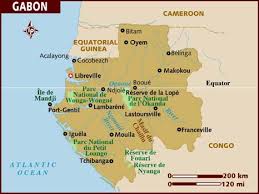
Map of Gabon
The not-so visible answers. Gabon is trying to diversify away from oil. Introducing the Iboga plant, which many believe to be the plant much talked about in the Black Panther movie. The Iboga plant from which ibogaine is extracted is a psychoactive plant central to the Bwiti spiritual traditions of Gabon. It is no secret that the West is currently facing an opioid crisis, and several pharmaceutical companies have already been using iboga on the low, without giving much rights to the country of Gabon. The Iboga primarily grows in Gabon, and the country is attempting to transform the plant into a regulated, economically, valuable, and internationally recognized medicinal resource. The government’s strategy is based on 3 pillars: regulate and control cultivation, partner with pharmaceutical companies and position Gabon as the global hub, as it rightfully is, for legal ibogaine production. This is similar to the how Morocco positioned itself as the world’s leading exporter of medical cannabis. The task is not small, given that these same Western firms have already been manufacturing (without openly labeling) drugs with it. Let us pray we do not have a repeat of what happened to teff, the national grain of Ethiopia – The Need for Countries to Protect What is Theirs : How a Dutch Patented the Ethiopian National Grain. This looks like a part of The New Scramble for Africa: The US does not want to let China and Russia supplant its influence in Africa. Moreover, everything needs to be built in Africa, so to anyone this should be like golden opportunity. Everyone wants a piece of Africa! And you… why do you think Gabon was invited to this summit?
On August 30, 2023, we all woke up to a coup d’etat in Gabon by the army. The military took over, and cancelled the results of Saturday’s election in which Mr. Ali Bongo was declared winner the night before on August 29, but the opposition led by Albert Ondo Ossa claimed it was a fraudulent election. In an announcement on Gabon’s state TV on Wednesday, the coup leaders said their republican guard chief, General Brice Clotaire Oligui Nguema, had been “unanimously” designated president of a transitional committee to lead the country. Note that Oligui is a cousin of Bongo and used to be the bodyguard of Bongo’s father, the late President Omar Bongo. He was also head of the secret service in 2019 before becoming head of the republican guard.
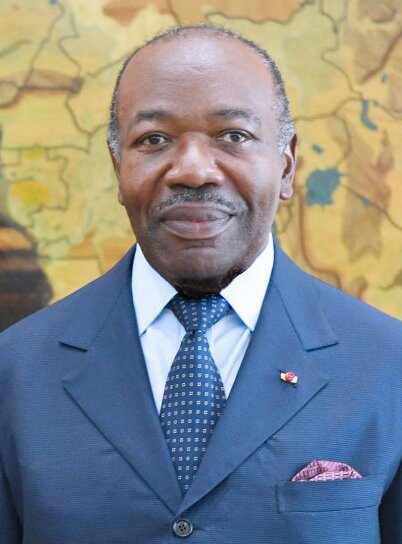
President Ali Bongo
This coup puts an end to 56 years of the Bongo dynasty. Ali Bongo came to power at the end of his father Omar Bongo‘s 42 years in power from 1967 to 2009. Bongo son, Ali, ruled the country for 14 years, and although he had suffered a stroke in 2018, he was vying for a third term in office during these past elections. After his stroke, television appearances had shown him leaning heavily on a silver-topped cane. He had appeared healthier during the latest election when he was again declared victor – until military officers stepped in. Oil-rich Gabon has been known as the piece de resistance of France in the entire central African region.
Map of Gabon
Many who have heard news of the coup in Gabon, which puts an end to 56 years of one family treacherous rule, popped bottles of champagne, and rightfully so. This coup comes on the heels of the one in Niger last month on 26 July 2023, and we cannot help but rejoice and long for genuine change.Is the wind of change really blowing in Gabon as well? or is it simply France understanding that given the current anti-French climate in Africa, and in order to keep control over their biggest cow in the Francafrique’s chessboard, understanding that the people of Gabon had had enough of Ali Bongo, and not trusting that they could control the opposition guy who had been voted by the people, chose to place their very own puppet instead? After all, the day after controversial elections, if the military is there to defend the democracy of the country as they claimed in their speech, why not have votes recounted? Why not have the election results reversed since the people selected Ossa to lead them? Why hold Bongo and son under house arrest, but release the first lady (who is French), Sylvia Bongo Ondimba, who, as everybody knows has been the one leading the country since her husband’s stroke in 2018? Lastly, the new leader is a cousin of Bongo: are we going to have a similar scenario to David Dacko-Jean-Bedel Bokassa of Central African Republic (CAR)?
Upcoming days will tell us which way this wind is blowing.
To read more, check out this article “A ‘Coup’ in Gabon: Who, What, and Why?” on Al Jazeera.
I have always wondered why the second largest city of Gabon is named Port-Gentil… Is it full of kind agreeable souls? Is it a gentle town, very laid-back? Otherwise, why will it be named that way?
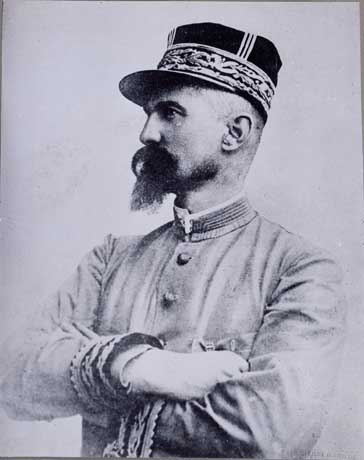
Emile Gentil in 1902
Well, to my surprise, Port-Gentil is named after the French colonial administrator Émile Gentil who served there in 1902. I have a lot of doubts that the man was a kind or gentle soul. From stories of these colonial administrators in Africa, many were more on the ruthless and disagreeable side, particularly towards Africans, whom they saw as savages. Indeed, after investigation into Emile Gentil, it turns out that he had been accused of massacres in Congo in 1905, but had been cleared by the Lanessan commission (what are indigenous’ words against a European’s?… particularly in those days); he was also part of the expedition that was trying to conquer Rabah, a powerful warrior leader in Chad. Gentil is best known for heading two military missions to conquer and consolidate territories north, from modern Gabon up to Chad. … Thus it is only a tiny shot to imagine the atrocities left in his wake… So why is the second largest city of Gabon still named after someone like that? Someone who murdered Gabonese, and other Africans? I know, it sounds sweet, “gentil”, but knowing the source of the name and the atrocities committed against the indigenous populations, why keep the name? If “gentle” is so important, why not translate it into the local language, or roll back to the original name, which is Mandji. It absolutely makes no sense for a city on African soil to bear the name of someone who has been accused of massacres by contemporaries on that very land!
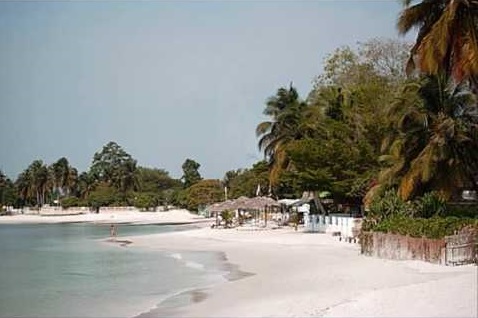
Port-Gentil, Gabon
For completeness, Port-Gentil is located on Lopez Island (in the mouth of the navigableOgooué River) and on a bay sheltered by Cape Lopez, which juts into the Atlantic Ocean. As the nation’s chief port and industrial centre, it is linked by air to Paris and major West African hubs as well as many Gabonese towns. Life in Port-Gentil is much more laid-back than Libreville. It is Gabon’s economic engine, and massive oil and gas rigs loom just off the coast. The city stretches along the beach, is full of pleasant wide streets and a bustling port. One block back from the corniche, Ave Savorgnan de Brazza (named after another European who massacred Africans) has most of the banks, shops and restaurants. Port-Gentil sits on a peninsula; it is actually an island, cut off from the mainland by the delta of the Ogooué River.
Surprisingly, just like many places coveted by Europeans on the African continent, there are no roads connecting Port-Gentil to the rest of the country. How outrageous! How come in 2021, there are no roads connecting the second largest city of a country, the industrial hub, to the rest of it? This seems like a wanted political decision, especially when the country, Gabon, has been the milk cow of Elf, the defunct French oil company (now Total), and is still a big milk cow of France today.
So even though, as always, I would like you to visit the sandy beaches of Port-Gentil, and enjoy the warm hospitality of the Gabonese, I thinkit is about time that the city be renamed! Lastly, ROADS, connections to the rest of the country are a MUST!!!
Two capitals in Africa share the same name: Freetown in Sierra Leone, and Libreville in Gabon; one in English, the other in French. I always knew that Freetown was named the way it was because it was a city founded in 1792 by freed African American Slaves also called Nova Scotian who had fought on the side of the British during the American Revolutionary war. The land was named Freetown as a land for freed slaves.
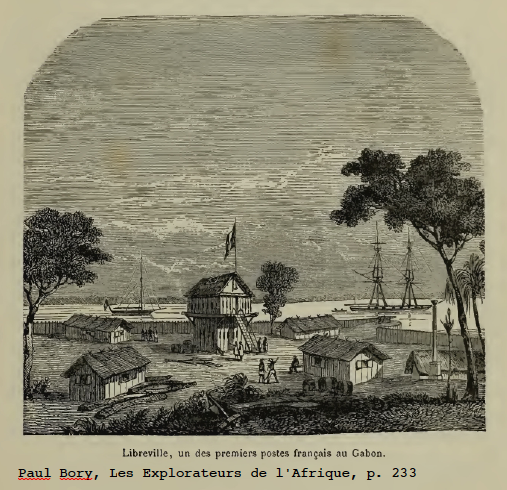
Libreville in 1846
But why on earth is Libreville named free town? Since, there were apparently no freed slaves returning from the colonies, or running away from slavery? I recently found out that the story of Libreville is very similar to that of Freetown, as it does involve slaves! Yes… that’s right! In the old days, i.e. prior to French occupation (the French acquired land there in 1839), the area that is today Libreville was inhabited by the Mpongwé people since the 11th century. In 1846, l’Elizia, a slave ship en route for Brazil, carrying slaves for sale was captured by the French navy near Loango, offshore from the Mbongwé’s kingdom. 260 negroes were thus freed and taken to the Island of Gorée in Senegal in 1846. After an intervention from Paris, 30 – 50 of these slaves will return to Gabon, where the French governor Bouët-Willaumez will take advantage of this, and found Libreville(French for ‘freetown’ or ‘freecity’) in 1849, in close proximity to Fort d’Aumale, where the French navy was installed to “fight” against slavery. The small town, Libreville, was then organized as a “French christian village” around 5 places: the Mpongwé’s place, the freedom place, the Bakélé place, the Pahué place, and the Bulu place, after the main tribes in the area at the time.