Why were those African Countries Invited to the White House for the US-Africa Summit ? The Case of Gabon

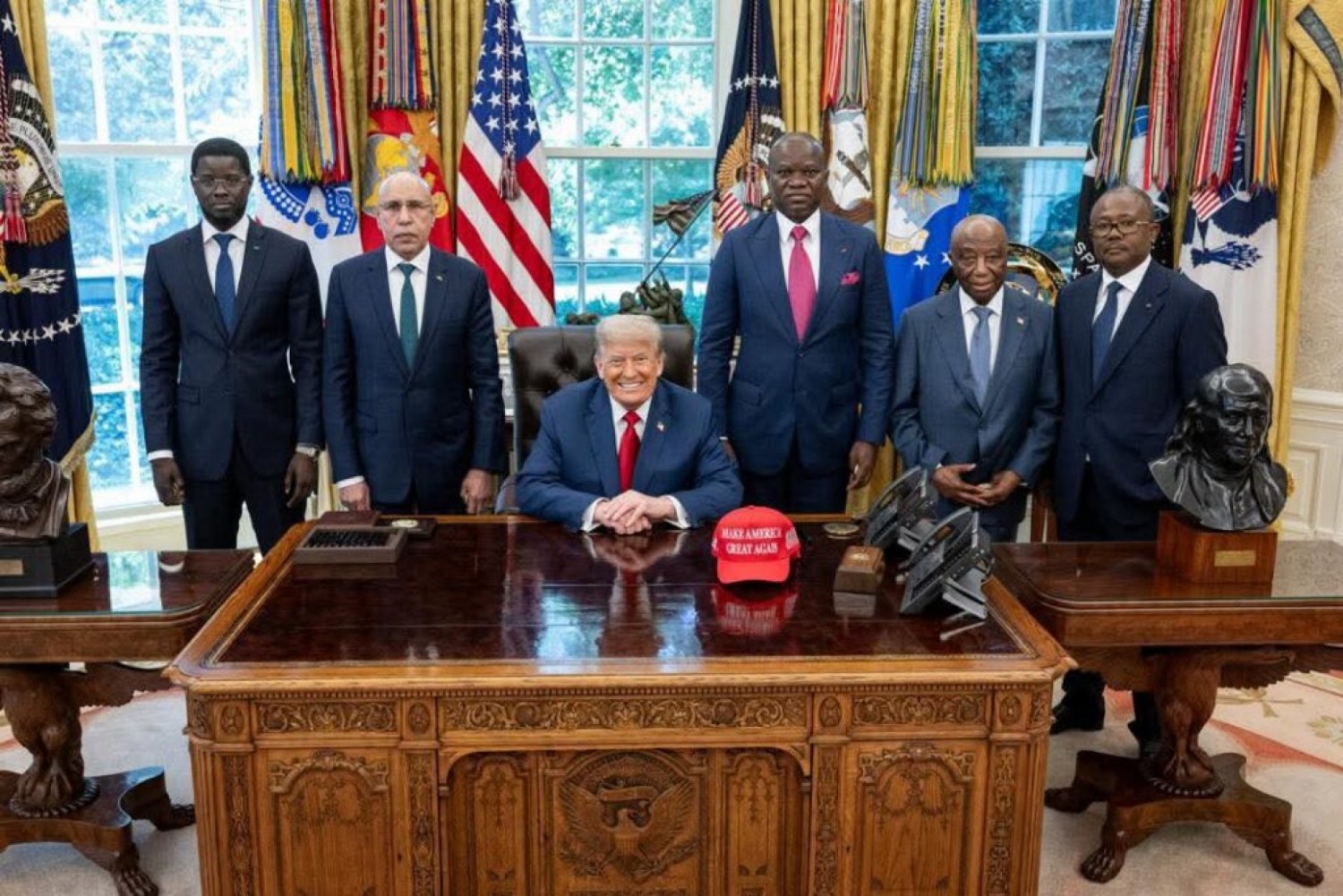
American President Donald Trump and his 5 peers from Africa at the US-Africa Summit. From left to right: Bassirou Diomaye Faye of Senegal, Mohamed Ould Cheikh El-Ghazouani of Mauritania, Donald Trump of US, Brice Oligui Nguema of Gabon, Joseph Boakai of Liberia, and Umaro Embalo Sissoco of Guinea Bissau (Source: Koaci.com)

In July 2025, the presidents of 5 “unusual” African countries were invited to the White House to dine with the President of the United States at the US-Africa Summit. “Unusual” because these were not the normal countries used to being invited to the White House, they were less common choices : Senegal, Gabon, Liberia, Guinea-Bissau, and Mauritania. The choice of the countries was so surprising that even the American president was astonished that the Liberian president spoke such good English without a translator… seemingly forgetting that Liberia is the first African country established by free slaves from America with the capital Monrovia, named after American president James Monroe. In fact, Liberia was the only English-speaking country invited to the summit. Compared to other African heavyweights like Nigeria, Egypt or South Africa, these countries have rather small populations and economies. And in all honesty, how many Americans know that the capital of Mauritania is Nouakchott or can even say it? or that of Gabon is Libreville? Many speculated that the visit had something to do with trade; after all, these countries had, until then, very little trade with the US. So what is it? It is said that Senegal, Liberia, and Mauritania were seen as relatively stable and reform-oriented, making them attractive for: aviation and energy deals, private investment, and infrastructure partnerships.There is nothing wrong that we know of with those deals or development as a whole… but we need to understand why.
Flag of Gabon

We will focus first on the only country invited to the summit which was not part of West Africa, Gabon. With a population a little over 2.5 million inhabitants, one could wonder what American interests in this little country of Central Africa look like, if not oil? After all, it is no secret that for many years, Gabon was the cash cow of France because of its large oil reserves and strong connections with the defunct Elf leadership. Gabon is also rich in uranium and manganese, and has one of the world’s largest iron deposit. Gabon has significant iron ore reserves, particularly in the Belinga area, which is estimated to hold about one billion tons of iron ore. Additionally, the Baniaka Iron Ore Project has an estimated reserve of 758 million tons with a grade of 36.7% iron.

To the visible answers. A few months ago, the president of Gabon Brice Clotaire Oligui Nguema, a former military man who came to power via a coup d’etat and whom the Western media have never called Junta but instead often acclaimed (Gabon and the Double Standards of the International Community), unveiled several infrastructure deals including the Belinga–Boué–Mayumba railway (901 km), a new deep-water port, the Boué hydroelectric dam, and a push for local processing of mineral resources. Gabon is an important oil producer in the region and its government is pursuing large-scale projects including railways, ports, and energy infrastructures. There were also visits with Exxon Mobil and Boeing.
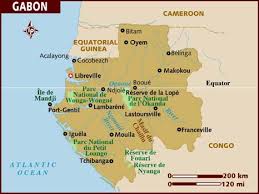
Map of Gabon

The not-so visible answers. Gabon is trying to diversify away from oil. Introducing the Iboga plant, which many believe to be the plant much talked about in the Black Panther movie. The Iboga plant from which ibogaine is extracted is a psychoactive plant central to the Bwiti spiritual traditions of Gabon. It is no secret that the West is currently facing an opioid crisis, and several pharmaceutical companies have already been using iboga on the low, without giving much rights to the country of Gabon. The Iboga primarily grows in Gabon, and the country is attempting to transform the plant into a regulated, economically, valuable, and internationally recognized medicinal resource. The government’s strategy is based on 3 pillars: regulate and control cultivation, partner with pharmaceutical companies and position Gabon as the global hub, as it rightfully is, for legal ibogaine production. This is similar to the how Morocco positioned itself as the world’s leading exporter of medical cannabis. The task is not small, given that these same Western firms have already been manufacturing (without openly labeling) drugs with it. Let us pray we do not have a repeat of what happened to teff, the national grain of Ethiopia – The Need for Countries to Protect What is Theirs : How a Dutch Patented the Ethiopian National Grain. This looks like a part of The New Scramble for Africa: The US does not want to let China and Russia supplant its influence in Africa. Moreover, everything needs to be built in Africa, so to anyone this should be like golden opportunity. Everyone wants a piece of Africa! And you… why do you think Gabon was invited to this summit?

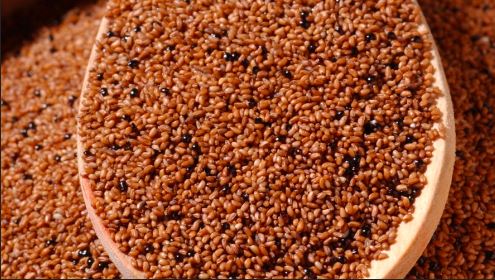
The Need for Countries to Protect What is Theirs : How a Dutch Patented the Ethiopian National Grain

Ethiopia_Teff3
Teff (Source: Huffington Post)

I am furious and shocked to learn that it is possible for a Dutch man to patent an Ethiopian national food! Seriously? I know about the greed of patents… but some things should be off-limit or not even allowed! Teff has been a staple food in Ethiopia for at least the past 2000 years. It is a gluten-free cereal high in protein, iron and fibre, which is considered a super-food. It is the essence of Ethiopian and Eritrean cuisines as it is ground into flour to make injera. Truly, there is no Ethiopian food without injera, thus without teff! Imagine my surprise when I learnt that a Dutchman had patented teff in the Netherlands! First of all, I am stunned that someone can patent a natural growing food, or grains, in another country! Is there no end to greed? And then a few hundred years down the line, they will write in history books that teff originated in the Netherlands, not Ethiopia… ! This is how the falsification of history starts! Africa wise up!

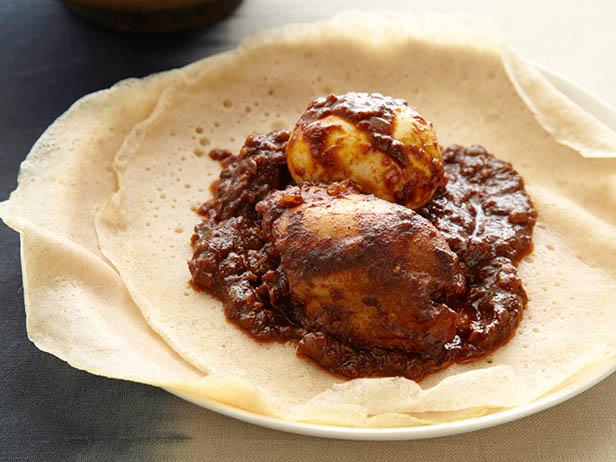
Ethiopia_Doro wot
Doro wot on Injera (Injera is made from teff)

For the story, back in 2003, a dozen varieties of teff seeds were sent to Jan Roosjen, a Dutch agronomist in the Netherlands, through a partnership with the Ethiopian Institute of Biodiversity Conservation for research and development. 4 years later, the European Patent Office granted a patent to his company. Later on, when his company went bankrupt, he continued to sell teff products, and then tried to sue another Dutch company that was marketing teff baked goods. This is when it made headlines, and his patent was declared void in the Netherlands, but it is still valid in the rest of Europe; Ethiopia has gotten lawyers to fight for this. Why should Ethiopia even need lawyers for a case that is so obvious? Teff is Ethiopian, end of story! Now the country has to find lawyers to fight… it is like a never-ending cycle made to impoverish the already disadvantaged countries. Is there nothing in international law that stops this? … all these people who study international law don’t see loopholes like this? What if a country is so poor that it cannot afford lawyers, or what if the story had never made international headlines… then Roosjen would have kept benefiting from something that should go to Ethiopian farmers? Should natural food even be allowed to be patented? I leave you here with excerpts and quotes from several Ethiopians about this from the article in BBC Travel… but note that this is not the first time that Ethiopia has fought for its food treasures,  it sued Starbucks for its coffee names in 2007.

====

Ethiopia_flag
Flag of Ethiopia

… The dispute over who owns teff made international headlines earlier this year after Roosjen tried to sue another Dutch company that was marketing teff baked goods for patent infringement, and his patent was declared void in the Netherlands. When the deadline for an appeal expired in February 2019, many Ethiopians hailed it as a victory on social media.

Ethiopian diplomat Fitsum Arega tweeted that it was great news. “I hope we can learn from this that our national assets must be protected by Ethiopians & friends of #Ethiopia,” he wrote.

But with Roosjen’s patent still in place in other parts of Europe, the war continues. In February [2019], Ethiopia’s attorney general Berhanu Tsegaye tweeted that the government was determined to defend Ethiopia’s legal rights related to teff. “Ethiopia has already deployed a law firm to fight the teff case internationally,” he wrote.

Ethiopia_Coffee map 1
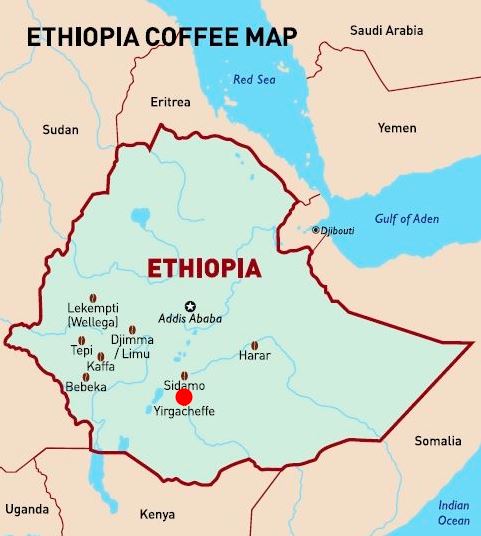
Ethiopia coffee map showing Harar, Sidamo, and Yirgacheffe (Source: Coffeemaven.com)

It is not the first time Ethiopia has had to protect one of its biggest products, with the country previously going into battle against Starbucks over the use of three premium coffee names. After intense talks, the world’s largest coffee chain and the Ethiopian government reached a licencing agreement allowing Starbucks to sell and market Harrar, Sidamo and Yirgacheffe coffee in 2007. According to a report by the World Intellectual Property Organization, the high-profile dispute greatly increased the value of Ethiopian coffee.

Dr Bula Wayessa, who is an expert in indigenous crops, believes the Dutch teff patent stripped millions of Ethiopian farmers of their rights. “It represents a manifestation of global power relations in which multi-million-dollar corporations based in the global north excise cultural appropriation in Third World countries,” he said. “The flaws in the international legal system that give private companies patent ownership without thorough investigation are disproportionally affecting developing countries such as Ethiopia.”

Dr Wayessa, visiting assistant professor at the State University of New York, New Paltz, was born into a teff-farming family in the Oromia Regional State, which is one of Ethiopia’s nine ethnically based regions. He grew up eating injera twice a day and helped cultivate, tend to and harvest the crop after school and in the summer holidays. … He said teff is not just a crop; it is part of Ethiopia’s cultural heritage. “Teff injera is a major common identity marker across more than 80 ethnic groups living in the country,” he said. “It frames Ethiopians’ indigenous food technology and informs their social and national identities by helping to chart social relationships through gathering around the plate and sharing.”

… Sofonias Melese, head of operations at New Ethiopia Tours, said … “Teff is the backbone of our kitchen. We eat it every day – sometimes three times a day – in almost all regions and tribes.”