The German King: A Movie Series about Rudolf Douala Manga Bell, one of Cameroon’s First Resistants to Colonization

Rudolf Douala Manga Bell – ca 1900s

For anyone who has been watching the acclaimed series, The Chosen about the life of Jesus, projects from the Angel Studios are always of great quality. An upcoming series coming from the Angel Studios will be the series, The German King directed by Adetokunboh M’Cormack, entirely based on the life of Rudolf Duala Manga Bell, one of the resistants to German colonization, as a young prince born in Kamerun, raised in Germany alongside Kaiser Wilhelm II, and who fought for the freedom of his people upon his return.  When Rudolf Duala Manga Bell returned home to assume the throne of the Duala people in 1910, he led a rebellion against the oppressive German rule. In 1910, the German governor of Kamerun, Theodor Seitz, approved an urbanization project for the city of Douala (Kamerunstadt had been renamed Douala) set to turn it into one of the largest ports of Africa. The project outlined a plan to relocate the Douala people inland from the Wouri river to allow European-only settlement of the area (European-Only Neighborhoods in African Cities before Independence).  Neighborhoods such as Neu Bell, Neu Akwa, and Neu Deido were to be created for the indigenous people; these new allotments were going to be separated from the ‘European city’ by a barrier 1 km wide (early version of apartheid!).  The expropriations affected most of the Douala clans, who were angered and formed a united front behind Manga Bell.  Rudolf Duala immediately refused, and told the Germans that the treaty signed in 1884 did not stipulate the removal/expulsion of the locals from their lands, and that this separation constituted a form of apartheid. For his rebellion, Duala Manga Bell was later condemned and hanged in 1914.

Rudolf Douala Manga Bell, Leader of Douala people

A poignant scene from the movie is where Rudolf’s wife tells him, as he is torn, having grown with Kaiser Wilhelm II whom he considers a friend and brother: “Wilhelm is not your family! Your family is here! You may talk like them, act like them, dress like them, but you will never be them. Your skin will always be the color of the rich Cameroonian soil, and they will always walk over it, as if they own it. … Rudolf, you do this so that your sons, and your sons’ sons, and their sons will have a land they can call their own.”

I cannot wait for the series to come out, as it shows a very important part of the history of Kamerun during German colonization as well as other leaders like Sultan Njoya, Martin Paul Samba, and others. Please check out the story on the Angel Studios’ website, and above all, do not forget to support the project. Let us all celebrate Rudolph Douala Manga Bell,  the Tét’èkombo (the king of kings), a uniter of Cameroon (already reaching out to other kings), and one of Cameroon’s biggest resistant.

Who/What did we say Goodbye to in Africa in 2021?

2021 was no doubt a tough year the world over, with a continued global pandemic, stressed economies, and much more. What a year! Africa said goodbye to quite a few people, events, and more. Below are a selection of 10 events of 2021. I am sure that I have left quite a few out…

  1. John Magufuli_2
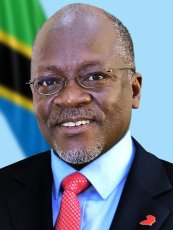
    President John Magufuli of Tanzania

    In March, President John Magufuli of Tanzania changed dimensions. It was heartbreaking to see someone who had done so much for his country go away so suddenly. Nicknamed the “bulldozer” he had a reputation to be incorruptible [So Long to President John Magufuli of Tanzania: The Bulldozer], and under his leadership Tanzania saw growth and development. Magufuli was focused on Tanzania’s economic success and sought to implement ambitious projects that would lift more of his people out of poverty. Under his reign, he expanded free education, and rural electrificationTanzania was one of the fastest-growing economies in the world, thanks to his hard work [President John Magufuli in His Own Words].

  2. SA_Goodwill Zwelithini
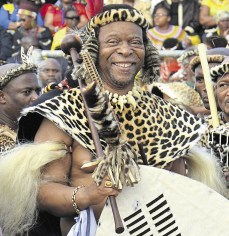
    King Goodwill Zwelithini (Source: sahistory.org.za)

    In March, King Goodwill Zwelithini of the Zulu people of South Africa passed away. He had been king of the Zulu for over 50 years, since 1968 when he had succeeded his father, King Cyprian Bhekuzulu. Over these 50 years, he saw his country change from the apartheid regime to the Rainbow nation. At the time of his passing, the King’s Great Wife, Queen Mantfombi Dlamini was appointed as interim leader of the Zulu Nation under the title of queen regent from March 2021 to April 2021, when she passed away suddenly. King Goodwill Zwelithini was succeeded by his son King Misuzulu Zulu.

  3. In June, the very popular Nigerian pastor T.B. Joshua departed from this planet. He was a legendary charismatic pastor who was visited by presidents, and people from around the world; it is said that his church was Nigeria’s biggest tourist attraction.
  4. Kenneth Kaunda
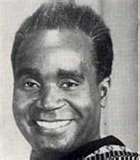
    Kenneth Kaunda

    In June also, Kenneth Kaunda of Zambia, first president of Zambia joined his ancestors. At 97 years old, he was one of Africa’s last surviving liberation leaders. To a generation of Africans, he epitomized the Africa struggle for independence. Affectionately known as Mzee, Kaunda worked tirelessly towards the freedom of the whole of Southern Africa from white rule; he supported the fight of other countries against repressive, racist regimes in South Africa, Malawi, Namibia, Angola, Mozambique and Southern Rhodesia (Why the name: Zimbabwe?). It took several years, but his support never faltered.

  5. In September, Sultan Ibrahim Mbombo Njoya of the Bamun people of Cameroon perished at the hands of the virus which has paralyzed the planet. He was the 19th reigning monarch of the Bamun Kingdom in the Western province of Cameroon. He had succeeded to his father, the sultan Seidou Njimoluh Njoya in 1992. He has been succeeded by his son Nabil Mbombo Njoya. At 28, Nabil Njoya is now the 20th in the Nchare Yen dynasty of the Bamun people.
  6. In November, F.W. De Klerk, former president of South Africa, and last president of the Apartheid era, passed away. He is known for releasing Nelson Mandela from prison, after 27 years, disassembling the apartheid system, and sharing the 1993 Nobel Peace Prize with Mandela.
  7. Ethiopia_flag
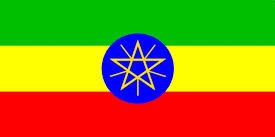
    Flag of Ethiopia

    Ethiopia’s Tigray crisis started bringing tears to our hearts… Not sure how to explain the Nobel Peace prize given to Ethiopia’s prime minister Ahmed Abiy in 2019, when I see him choosing the war path instead of peace now. He is presiding over a protracted civil war that by many accounts bears the hallmarks of genocide. This leads to skepticism towards these “prizes” handed over by the “international” community. It has been over a year now that Abiy ordered a military offensive in the northern Tigray region with the promise to have it resolved quickly. Thousands are now dead, 2 million people displaced, and much more.

  8. Mozambique_Flag
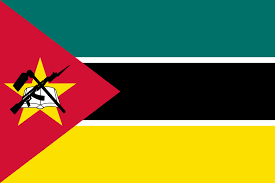
    Flag of Mozambique

    Loss of peace in Mozambique. Last year, I told you about this amazing oil fields and precious minerals found in Mozambique, and all of sudden the presence of Islamic insurgencies [seriously?… Islamic insurgencies… I think these people probably take us for idiots] starting there right after Total signed one of the biggest contracts ever for over $14 Billions, and the united nations of thieves [seriously check it out, banks for Japan, EU, France, India, US, etc…] descended on the country [Who/What did we say goodbye to in Africa in 2020?].

  9. King Kêfa Sagbadjou Glèlè, monarch of the once-powerful Dahomey kingdom, in the country of Benin, has joined his ancestors. Bear in mind that King Kêfa descended from the Agoli-Agbo line, the one installed (not the rightful bearers of the traditions) by the French after King Behanzin was deported to Martinique and then Algeria.
  10. South Africa_Desmond Tutu_1
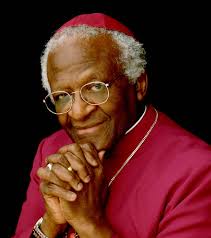
    Archbishop Desmond Tutu (Source: The Namibian)

    Just the day after Christmas, we learned that Desmond Tutu, the 1984 Nobel Peace Prize winner and iconic anti-apartheid fighter was deceased on December 26. As the tributes pour in from around the world, Kenya’s president Uhuru Kenyatta said, Tutu had “inspired a generation of African leaders who embraced his non-violent approaches in the liberation struggle.” At 90, Archbishop Tutu had lived a long fruitful life, battle-tested by life under apartheid. The plans include two days of lying in state before an official state funeral on 1 January in Cape Town.