Ibrahim Traore’s Masterclass: Press Conference on April 2, 2026

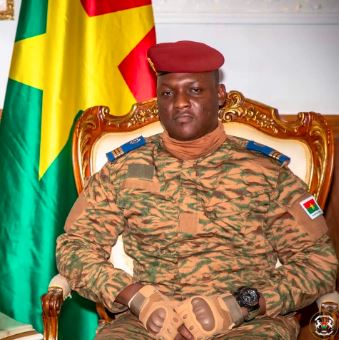
Capitaine President Ibrahim Traore (Source: sig.gov.bf)

On April 2, 2026, President Ibrahim Traoré of Burkina Faso addressed the local and international press for more than 2 hours. He focused on several major themes central to Burkina Faso itself and its relationship with foreign powers. It was a real masterclass. He did not fall for the numerous press’ traps.

Below are some key themes he focused on:

Sovereignty and independence

Traoré emphasized that Burkina Faso must strengthen its sovereignty in all areas: political, economic, and security-related. He framed the country’s current path as a struggle for real independence, and not symbolic autonomy which many African countries have had since their ‘independence‘ in the 1960s. It is important to reclaim our sovereignty! He highlighted that Burkinabé are now in charge of their own army, and is funded and trained by Burkinabé themselves; thus the mindset and strategy have changed and lent to victories against terrorism.
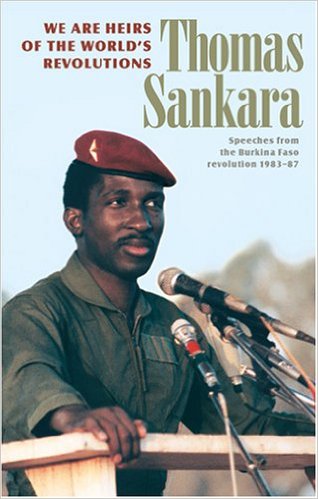
“We are heirs of the revolution” by Thomas Sankara

Economic Liberation

Optimal management of our resources and end the dependency on foreign powers and for Africa to build its own systems. He reminded us, almost like President Thomas Sankara before, that we have to build and plant what we need to achieve self-sufficienty (Thomas Sankara in His WordsThomas Sankara’s Speech at the United Nations / Discours de Thomas Sankara aux Nations UniesThomas Sankara Speech on Debt and Unity“The National Economy: Independent, Self-Sufficient, and Planned at the Service of Democratic and Popular Society” — Thomas Sankara). Taking the example of a spoon that we use to eat, but yet is imported; or Africa which imports food from other countries, when it is the continent with the most arable lands in the world. Something has to change.

Security and the war against terrorism

For a country like Burkina Faso, Western-style democratic systems cannot be simply grafted or copied to a nation like his, fighting terrorism and dealing with Western embargo, and deep institutional corruption. Security and stability must come before adopting external political needs.

Democracy and Media Reactions

President Traoré said that “Burkinabé must forget democracy,” and many Western media were triggered by it. In reality, the president of the Faso (PF) was trying to say that western electoral models cannot function effectively in Burkina Faso during wartime and when it is trying to free itself from imperialist chains.  Moreover, as we have discussed here before, Africans must stop falling into the trap of democracy; the West has cheated Africa for far too long with that word called democracy that most of them do not even apply! The PF also reminded us about the “Charte du Mandé” the very first declaration of human rights in the world established in Africa and which shows that Africa’s ancestral governance should be made more relevant today and is adapted to our struggles.

Burkina Faso
Burkina Faso

Justice and institutional reform

The PF highlighted that the focus is on rebuilding institutions and creating systems that are resistant to corruption and external manipulation. He also showed how old traditional/local/ancestral governments could live in harmony with the modern republican government for the benefit of the homeland.

Africa’s geopolitical position

He positioned Burkina Faso within a broader African struggle for independence. As the leader of the Alliance of Sahel States (AES), he stated that priorities would be on the operationalization of the unified force, the acceleration of regional integration, and the implementation of major economic initiatives. He urged Africans everywhere to see themselves as part of one global community which should fight for its independence.

 

Thomas Sankara: 30-year Anniversary

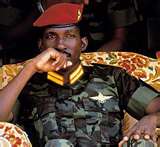
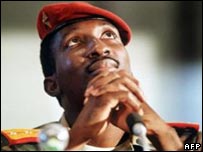
Thomas Sankara
Thomas Sankara a Ouagadougou

Today marks the 30-year anniversary of the death of Thomas Sankara, our African Che.  The first article I ever wrote on this blog was on Thomas Sankara, Thomas Sankara, The African Che. To me, Thomas Sankara is one of the most charismatic, selfless, dedicated, and beautiful African leaders of all times. And I love his sense of humor, and humility. He may not have had a perfect time in power, but what I am certain of, is the deep love he had for his country, his people, and for the whole of Africa. Imagine, someone who renames his country and people to empower them, from Haute Volta to Burkina Faso, the land of the upright man. I would also like to thank the people running the website entirely dedicated to his memory, thomassankara.net; I raise my hat to them, and their tireless work throughout the years.

Here is a summary of Thomas Sankara‘s actions in his 4 years of power. These are taken from thomassankara.net. For the full article, check out Full facts about Thomas Sankara in Burkina Faso . Enjoy the video below!

========

Guevara_1
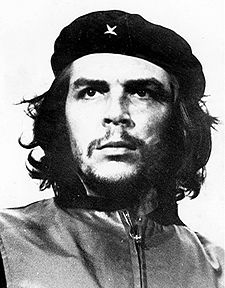
Guerrillero Heroico
Picture taken by Alberto Korda on March 5, 1960, at the La Coubre memorial service

After renaming his country Burkina Faso, here are Thomas Sankara’s accomplishments, [after] ONLY 4 YEARS in power (198387).

Thomas Isidore Noël Sankara (21 December 194915 October 1987) was a Burkinabé military captain, Marxist revolutionary, pan-Africanist theorist, and President of Burkina Faso from 1983 to 1987. Viewed by supporters as a charismatic and iconic figure of revolution, he is commonly referred to as “Africa’s Che Guevara.

– He vaccinated 2.5 million children against meningitis, yellow fever and measles in a matter of weeks.
– He initiated a nation-wide literacy campaign, increasing the literacy rate from 13% in 1983 to 73% in 1987.
– He planted over 10 million trees to prevent desertification
He built roads and a railway to tie the nation together, without foreign aid
– He appointed females to high governmental positions, encouraged them to work, recruited them into the military, and granted pregnancy leave during education.
– He outlawed female genital mutilation, forced marriages and polygamy in support of Women’s rights

BurkinaFaso6
Flag of Burkina Faso

– He sold off the government fleet of Mercedes cars and made the Renault 5 (the cheapest car sold in Burkina Faso at that time) the official service car of the ministers.
– He reduced the salaries of all public servants, including his own, and forbade the use of government chauffeurs and 1st class airline tickets.
– He redistributed land from the feudal landlords and gave it directly to the peasants. Wheat production rose in three years from 1700 kg per hectare to 3800 kg per hectare, making the country food self-sufficient.
He opposed foreign aid, saying that “he who feeds you, controls you.”

Thomas Sankara
Thomas Sankara

– He spoke in forums like the Organization of African Unity [Thomas Sankara Speech on Debt and Unityagainst continued neo-colonialist penetration of Africa through Western trade and finance. • He called for a united front of African nations to repudiate their foreign debt. He argued that the poor and exploited did not have an obligation to repay money to the rich and exploiting.[Thomas Sankara’s Speech at the United Nations / Discours de Thomas Sankara aux Nations Unies]
– In Ouagadougou, Sankara converted the army’s provisioning store into a state-owned supermarket open to everyone (the first supermarket in the country).
He forced civil servants to pay one month’s salary to public projects.
– He refused to use the air conditioning in his office on the grounds that such luxury was not available to anyone but a handful of Burkinabes.

Burkina Faso
Burkina Faso

– As President, he lowered his salary to $450 a month and limited his possessions to a car, four bikes, three guitars, a fridge and a broken freezer.
– A motorcyclist himself, he formed an all-women motorcycle personal guard.
– He required public servants to wear a traditional tunic (the Faso Dan Fani), woven from Burkinabe cotton and sewn by Burkinabe craftsmen. (The reason being to rely upon local industry and identity rather than foreign industry and identity)
– When asked why he didn’t want his portrait hung in public places, as was the norm for other African leaders, Sankara replied “There are seven million Thomas Sankaras.”
– An accomplished guitarist, he wrote the new national anthem himself.

La Patrie ou la mort, nous vaincrons! / Homeland or death, we shall overcome!

Thomas Sankara
Thomas Sankara

In view of recent events in Burkina Faso, and to continue our fight for democracy, for equal rights, for the right of a nation to choose its leaders without military/external forces dictating it, I live you with a quote by President Thomas Sankara, president of Burkina Faso. It was previously published in a “prayer for Cote d’Ivoire.” As the quote goes:

================

La patrie ou la mort nous vaincrons!

Telle était la devise de Thomas Sankara, notre grand Che africain, ce grand maitre de la révolution Burkinabé, le president du Faso. Telle est la devise que nous nous devons de garder dans nos coeurs en ce moment pour le Burkina Faso: savoir que nous nous battons pour notre liberté, pour notre patrie, pour la seule terre que le bon Dieu a bien voulu nous donner! Amandla!… Ngawethu!

Flag of Burkina Faso

Homeland or death, we shall overcome!

Such was the motto of Thomas Sankara, our great African Che, this great master of the Burkinabe revolution, the president of Burkina Faso. This is the motto that we must keep in our hearts for Burkina Faso right now: to know that we are fighting for our freedom, for our country, for the only land God ever gave us! Amandla! …Ngawethu! Power to the People!

Patria o muerte, venceremos!
Tal era el lema de Thomas Sankara, nuestro gran Che de África, este gran maestro de la revolución de Burkina Faso, el presidente de Burkina Faso. Este es el lema que debemos tener en nuestros corazones para Burkina Faso en este momento: saber que estamos luchando por nuestra libertad, para nuestro país, por la tierra sólo Dios nunca nos dio! Amandla!… Ngawethu!

Burkina Faso
Burkina Faso

Pátria ou morte, venceremos!
Esse foi o lema de Thomas Sankara, o nosso grande Africano Che, este grande mestre da revolução burkinabe, o presidente do Burkina Faso. Este é o lema que devemos ter em nossos corações para Burkina Faso agora: saber que estamos lutando por nossa liberdade, para o nosso país, para a única terra que Deus já nos deu! Amandla!… Ngawethu!

http://www.dailymotion.com/video/x13ne25_la-patrie-ou-la-mort-nous-vaincrons-anthologie-des-discours-de-thomas-sankara-version-1_news

Who/what did we say goodbye to in Africa in 2014?

Burkina Faso
Burkina Faso

I have to do a recap of the year 2014. You already know that the number one person we said goodbye to was the dictator and murderer Blaise Compaoré, who was booted out of office the tail between his legs.

1. Blaise Compaoré, booted out of office in 2014. Thomas Sankara‘s murderer taught that he will be eternal in power, and on October 30th 2014, the people of Burkina Faso said ENOUGH!

2. Michael Sata, the President of Zambia, passed on in office on October 28, 2014. He was replaced by Guy Scott, the first white president (albeit interim president) of Zambia since independence.

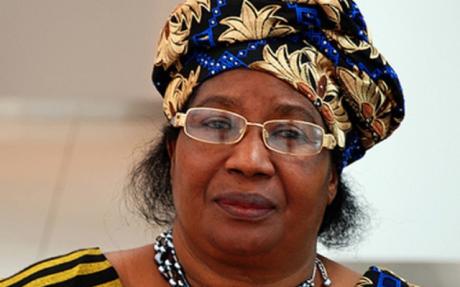
President Joyce Banda

3. Joyce Banda, President of Malawi, who lost the elections this year. She became president of Malawi after Bingu wa Mutharika passed away in 2012. She is succeeded in office by Peter Mutharika. She had been Africa’s second female Head of State.

4. Nadine Gordimer, South Africa’s first Nobel prize of literature, passed away at the age of 90, on 13 July 2014. She was called the one of the great “guerilla of imagination” by poet Seamus Heaney.

Lapiro de Mbanga
Lapiro de Mbanga

5. Lapiro de Mbanga, the voice of the voiceless, the great Cameroonian musician, and activist, left us this year, in March. Lapiro sang for the people, talked about the youth’s shattered dreams, the division, the tribalism, the corruption, the decadence, and the ills of the country. So long Ndinga Man!

6. Abel Eyinga and Charles Ateba Eyene, both of Cameroon, passed away. These were strong outspoken voices of Cameroon, and will forever be remembered.

7. King Kester Emeneya, the king of la Rumba, passed away on 13 February 2014. I had just recently gotten reacquainted with his music, and danced to Nzinzi again. So long King.

8. Mama Gbagbo, the mother of Laurent Gbagbo, passed away this year. Gbagbo who is currently detained by the CPI at the Hague was refused the opportunity to bury his mother. She was over 90 years old.

Maya Angelou
Maya Angelou

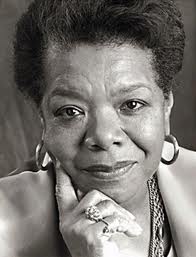
9. The world said goodbye to Maya Angelou in May of this year. Dr. Maya Angelou was one of the world’s best poets. My two favorite poems by Dr. Angelou are ‘Phenomenal Woman‘ and ‘Still I Rise.’ Her African roots are very deep as she was a journalist in Egypt and Ghana. Her life was an embodiment of Truth, and passion.

10. More than 160 immigrants were feared dead after a boat carrying about 200 African immigrants sank off the coast of Libya. How many Lampedusa shipwrecks are we going to have until the world realizes that feeding and destabilizing countries does not help global equilibrium?