Why the name: Kinshasa?

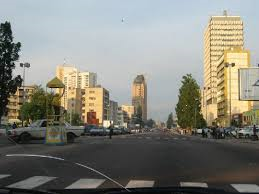
Boulevard of 30 June, in Kinshasa

Today I would like to talk about Kinshasa, the capital and largest city of the Democratic Republic of the Congo (DRC).  It is located on the Congo River, which happens to be Africa’s largest river, the deepest river in the world, and the third largest in the world by the volume it discharges.  Kinshasa is a city of over 9 million inhabitants and directly faces Brazzaville, the capital of the Republic of the Congo: these two sister cities are separated only by the river Congo (the only place in the world where two capitals of two countries face each other). Residents of Kinshasa are known as Kinois.

When did it all start? Well, Kinshasa was founded in 1881 as a trading post by the explorer Henry Morton Stanley who named it Leopoldville in honor of the Belgian king Leopold II, who controled the immense territory of DRC as his private property and not just as a colony.  Prior to 1920, all goods arriving by sea in Congo were carried by porters from Matadi (the main port city of Congo), and Leopoldville over 150 km from the coast.  From 1886 to 1926, Boma (located on the Congo estuary) was the capital of the Belgian Congo; but after 1926, Leopoldville became the capital.
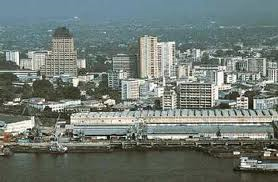
Kinshasa, seen from the Congo river

In 1965, Joseph-Desire Mobutu who had risen to power after coups d’etat against Patrice Lumumba in 1960, and a second one in 1965,  renamed the city Kinshasa in an effort to africanize the names of the people and places in the country.  Kinshassa was the name of a village which used to be near the site of the present city.  In Kikongo, Kinshasa means “the salt market“: “nshasa = salt” and locator ‘ki‘.

The region of Pool Malebo, where Kinshasa is located, has been inhabited since at least the first millenium before our era.  However, before colonization, different Bantu groups have occupied the area.  During the 16th and 17th centuries, the region of Pool Malebo became a major commercial hub between the river basin and the coastal regions.  The Bobangis (also called Bangala, or people of the river) managed the major part of the commerce with the equatorial forest by navigating the river up to the Téké villages of Pool.  During the 18th and 19th centuries, more villages develop themselves in the area, which became known as the Batéké plateau.  The principal Téké villages were Nsasa with almost 5,000 inhabitants, and Ntambo with at least 3,000.  By the time Henry Morton Stanley reached the area on 12 March 1878, the region was already home to 66 villages, and a total population of over 30,000 inhabitants.  Stanley chose this location as it was the area where the Congo river became navigable.
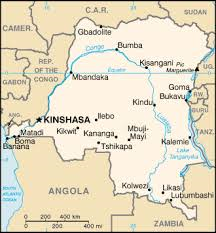
Map of the DRC
Map of the DRC

By the time the city changed its name from Leopoldville to Kinshasa in 1966, the city rapidly grew due to rural exodus of people coming from all parts of the country in search of a better life.  In 1974, Kinshasa hosted ‘The Rumble in the Jungle‘ boxing match, a historic match between Muhammad Ali and George Foreman, in which Ali defeated Foreman to regain the World Heavyweight title.  This has been one of Ali’s most famous matches: if you watch the movie Ali, you can see scenes of Kinshasa there.

Situated in an area belonging to the Batéké and Bahumbu people, the lingua franca of the city is the Lingala, while the administrative language is French.  Kinshasa is also a province of DRC (a bit like the district of Columbia in the US), and is the second largest francophone city in the world, after Paris.  Its current population is 9 million inhabitants, making it Africa’s second largest cities after Lagos in Nigeria.  Please check out the website for the city of Kinshasa, and Kinshasa-Congo travel to learn about the great city of music and art; I also liked the blog kosubaawate which goes through the evolution of Kinshasa then and now (i.e. before independence and now).  Enjoy the video below which I enjoyed for its quality, music, and of course its great content.

Hugo Chavez: ‘Love is the Combustible of Revolution’

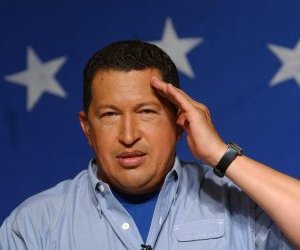
Hugo Chavez
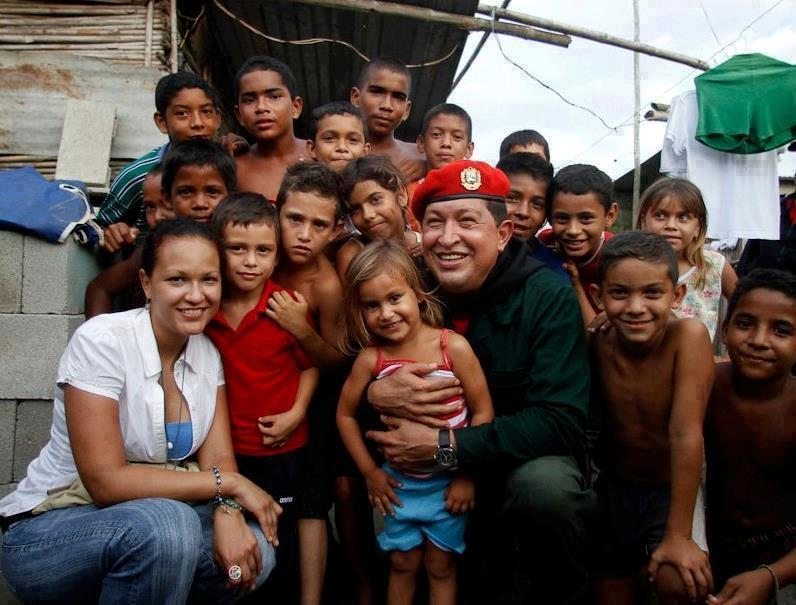
Hugo Chavez

Words cannot express my extreme sadness at the loss of yet another one of our revolutionaries.  ‘El Comandante‘, Hugo Chavez, has left us yesterday to join the land of his ancestors.  I am extremely saddened at his passing, but I am also grateful to have lived in a time when I could see Hugo Chavez at work for his country, at a time when I could see what it meant for a leader of a poor country to have love and vision for his country.  Few leaders in the world have fought against western imperialism as Hugo Chavez did.  He led the bolivarian revolution against the US influence in Venezuela, and Latin America.  He gave back hope to his people, emancipated millions of Venezuelans, regained control of the economy of Venezuela, and worked for world peace by openly opposing the US and its colonial wars.  Millions of Venezuelans regained sight, were taught how to read, or just visited the doctor for the first time, because of Chavez’ laws.  Those will remember him forever.  Hugo Chavez was a bright star who gave hope to millions across the globe.  He gave us the strength to believe that we, the oppressed of the world, could one day be free.  He was often depicted in the Western media as a dictator (but then again, which progressist or revolutionary has ever been depicted otherwise in the western press?) because of his frankness and clear fight for the interest of the Venezuelan people. Chavez was a true sincere politician and loyal to his people.

El Comandante de la Revolucion, Hugo Chavez

El Comandante used to say: “Let the dogs of the empire bark, that’s their job. Our job is to fight to achieve the true liberation of our people.” You (Chavez) gone, who will fight again for us? who will voice our opinions? who will lead us? We have to keep true to your ideals, and keep our head up.  Thank you Commandante, for showing us the way, for showing us beauty and hope in this world.

Hugo Chavez also said: “Love is the combustible of a revolution.” El Comandante gave us just that: love, hope, dignity, and peace. So long, brother. Like Franklin Boukaka said “your work is that of humanity“… you have now joined the greats of this world: Che Guevara, Patrice Lumumba, Thomas Sankara, Kwame Nkrumah, Mouammar Kadhafi, Amilcar Cabral, … Long live to your ideals!

Please enjoy this video “The revolution will not be televised” which shows the coup fomented by the US against Hugo Chavez in 2002 where Chavez was removed from power by American military; and for the first time in world history, a president was brought back to power by his people who refused to give into American threats. The people defeated the machine! This documentary was made possible because of the presence of some European journalists from Arte who were in the country at the moment of the coup.

La Dernière Lettre de Patrice Lumumba / Patrice Lumumba’s Last Letter

Patrice Emery Lumumba

Avec la commémoration de l’indépendance du Congo Démocratique acquise le 1er Juillet 1960, j’ai trouvé bon de poster cette si belle lettre de Patrice Lumumba à Pauline, sa femme (c’est d’ailleurs sa dernière lettre) était très appropriée, car bien que triste, elle est pleine d’espoir à la pensée qu’un jour le Congo sera libre, à la pensée que les enfants congolais doivent tous s’unir pour re-bâtir le Congo!

Ma compagne chérie, Je t’écris ces mots sans savoir s’ils te parviendront, quand ils te parviendront et si je serai en vie lorsque tu les liras.  Tout au long de ma lutte pour l’indépendance de mon pays, je n’ai jamais douté un seul instant du triomphe final de la cause sacrée à laquelle mes compagnons et moi avons consacré toute notre vie.  Mais ce que nous voulions pour notre pays, son droit à une vie honorable, à une dignité sans tache, à une indépendance sans restrictions, le colonialisme et ses alliés occidentaux—qui ont trouvé des soutiens directs et indirects, délibérés et non délibérés, parmi certains hauts fonctionnaires des Nations, cet organisme en qui nous avons placé toute notre confiance lorsque nous avons fait appel à son assistance—ne l’ont jamais voulu.

Ils ont corrompu certains de nos compatriotes. Ils ont contribué à déformer la vérité et à souiller notre indépendance.  Que pourrai je dire d’autre ? 

Que mort, vivant, libre ou en prison sur ordre des colonialistes, ce n’est pas ma personne qui compte.  C’est le Congo, c’est notre pauvre peuple dont on a transformé l’indépendance en une cage d’où l’on nous regarde du dehors, tantôt avec cette compassion bénévole, tantôt avec joie et plaisir.  Mais ma foi restera inébranlable.  Je sais et je sens au fond de moi même que tôt ou tard mon peuple se débarrassera de tous ses ennemis intérieurs et extérieurs, qu’il se lèvera comme un seul homme pour dire non au capitalisme dégradant et honteux, et pour reprendre sa dignité sous un soleil pur.

Nous ne sommes pas seuls.  L’Afrique, l’Asie et les peuples libres et libérés de tous les coins du monde se trouveront toujours aux côtés de millions de congolais qui n’abandonneront la lutte que le jour où il n’y aura plus de colonisateurs et leurs mercenaires dans notre pays.  A mes enfants que je laisse, et que peut-être je ne reverrai plus, je veux qu’on dise que l’avenir du Congo est beau et qu’il attend d’eux, comme il attend de chaque Congolais, d’accomplir la tâche sacrée de la reconstruction de notre indépendance et de notre souveraineté, car sans dignité il n’y a pas de liberté, sans justice il n’y a pas de dignité, et sans indépendance il n’y a pas d’hommes libres.

Ni brutalités, ni sévices, ni tortures ne m’ont jamais amené à demander la grâce, car je préfère mourir la tête haute, la foi inébranlable et la confiance profonde dans la destinée de mon pays, plutôt que vivre dans la soumission et le mépris des principes sacrés.  L’histoire dira un jour son mot, mais ce ne sera pas l’histoire qu’on enseignera à Bruxelles, Washington, Paris ou aux Nations Unies, mais celle qu’on enseignera dans les pays affranchis du colonialisme et de ses fantoches.  L’Afrique écrira sa propre histoire et elle sera au nord et au sud du Sahara une histoire de gloire et de dignité.

Ne me pleure pas, ma compagne.  Moi je sais que mon pays, qui souffre tant, saura défendre son indépendance et sa liberté.

Vive le Congo !  Vive l’Afrique !

Patrice Lumumba

My beloved companion, I am writing these words not knowing whether they will reach you, when they will reach you, and whether I shall still be alive when you read them.  All through my struggle for the independence of my country, I have never doubted for a single instant the final triumph of the sacred cause to which my companions and I have devoted all our lives.  But what we wished for our country, its right to an honourable life, to unstained dignity, to independence without restrictions, was never desired by the Belgian imperialists and their Western allies, who found direct and indirect support, both deliberate and unintentional, amongst certain high officials of the United Nations, that organization in which we placed all our trust when we called on its assistance.

They have corrupted some of our compatriots and bribed others.  They have helped to distort the truth and bring our independence into dishonour.  How could I speak otherwise? 

Dead or alive, free or in prison by order of the imperialists, it is not myself who counts.  It is the Congo, it is our poor people for whom independence has been transformed into a cage from whose confines the outside world looks on us, sometimes with kindly sympathy, but at other times with joy and pleasure.  But my faith will remain unshakeable.  I know and I feel in my heart that sooner or later my people will rid themselves of all their enemies, both internal and external, and that they will rise as one man to say No to the degradation and shame of colonialism, and regain their dignity in the clear light of the sun.

We are not alone.  Africa, Asia and the free liberated people from all corners of the world will always be found at the side of the millions of Congolese who will not abandon the struggle until the day when there are no longer any colonialists and their mercenaries in our country.  As to my children whom I leave and whom I may never see again, to be told that the future of the Congo is beautiful and that their country expects them, as it expects every Congolese, to fulfill the sacred task of rebuilding our independence, our sovereignty; for without justice there is no dignity and without independence there are no free men.

Neither brutality, nor cruelty nor torture will ever bring me to ask for mercy, for I prefer to die with my head unbowed, my faith unshakable and with profound trust in the destiny of my country, rather than live under subjection and disregarding sacred principles.  History will one day have its say, but it will not be the history that is taught in Brussels, Paris, Washington or in the United Nations, but the history which will be taught in the countries freed from imperialism and its puppets.  Africa will write its own history, and to the north and south of the Sahara, it will be a glorious and dignified history.

Do not weep for me, my dear wife.  I know that my country, which is suffering so much, will know how to defend its independence and its liberty.

Long live the Congo!  Long live Africa!

Patrice Lumumba

Remember Ruben: A Rare Video Biography of Ruben Um Nyobé

UPC Leaders (L. to R.) front row: Castor Osende Afana, Abel Kingué, Ruben Um Nyobé, Felix Moumié, and Ernest Ouandié

After my article on one of Africa’s greatest freedom fighter, the Cameroonian leader, Ruben Um Nyobé, I thought that this small rare video with pictures of Um Nyobé would be very fit to add to our knowledge.  Ruben Um Nyobé with the UPC in 1948 were the first in Africa to ask for the independence of their country, Cameroon.  He was murdered by the French colonial administration, and his story was totally buried for many years: it was as if he had had no impact on the lives of Cameroonians, and Africans as a whole.  It is just amazing to realize that, 50 years later, he had spoken at the United Nations tribune three times for the independence and reunification of Cameroon in 1952, 1953, and 1954.  It is amazing to think that in Cameroon, there was someone of the caliber of N’Krumah, Lumumba, and Nyerere… Yes… Ruben Um Nyobé’s place should be at the Pantheon (if it existed) of African legends.  Enjoy!!!

Patrice Lumumba: ’30 June 1960′ Independence Speech

Today, we will do a Memory recall… Please enjoy this great independence speech delivered by Patrice Lumumba in 1960 to the people of Congo, few months before his assassination. It is a pure jewel! The French version is here → LUMUMBA discours. Don’t forget to watch the video!!!

——————-

Men and women of the Congo,

Victorious fighters for independence, today victorious, I greet you in the name of the Congolese Government. All of you, my friends, who have fought tirelessly at our sides, I ask you to make this June 30, 1960, an illustrious date that you will keep indelibly engraved in your hearts, a date of significance of which you will teach to your children, so that they will make known to their sons and to their grandchildren the glorious history of our fight for liberty.

For this independence of the Congo, even as it is celebrated today with Belgium, a friendly country with whom we deal as equal to equal, no Congolese worthy of the name will ever be able to forget that is was by fighting that it has been won, a day-to-day fight, an ardent and idealistic fight, a fight in which we were spared neither privation nor suffering, and for which we gave our strength and our blood.

We are proud of this struggle, of tears, of fire, and of blood, to the depths of our being, for it was a noble and just struggle, and indispensable to put an end to the humiliating slavery which was imposed upon us by force.

This was our fate for eighty years of a colonial regime; our wounds are too fresh and too painful still for us to drive them from our memory. We have known harassing work, exacted in exchange for salaries which did not permit us to eat enough to drive away hunger, or to clothe ourselves, or to house ourselves decently, or to raise our children as creatures dear to us.

We have known ironies, insults, blows that we endured morning, noon, and evening, because we are Negroes. Who will forget that to a black one said “tu“, certainly not as to a friend, but because the more honorable “vous” was reserved for whites alone? Read the full speech here → Patrice Lumumba Independence speech


Lumumba’s death: Could we (Africans) have acted differently?

Frantz Fanon
Frantz Fanon

This is a great article by Frantz Fanon, which I published earlier in French.  (You will find the original here).  In view of all the events occurring in Africa (bombing of Cote d’Ivoire and Libya) with the UN approval, I thought that this article, published in 1964, was so important that I had to translate it into english for all to read! Enjoy…

—————————————————

The great success of the enemies of Africa is to have corrupted the Africans themselves.  It is true that these Africans had vested interest in the murder of Lumumba.  Heads of puppet governments, in a fake independence, faced everyday by massive opposition from their peoples, it did not take long to convince themselves that the real independence of the Congo would put them personally at risk.  And there were other Africans, a little less puppet, but who get frightened when it comes to disengaging Africa from the West.  It seems as if these African Heads of State are still afraid to face Africa.  These, also, though less actively, but consciously, contributed to the deterioration of the situation in Congo.  Little by little, we were reaching the agreement in the West that there was a need to intervene in Congo, we could not let things evolve at this pace.

Gradually, the idea of a UN intervention was taking shape. So we can say today that two simultaneous errors were committed by Africans.

Patrice Lumumba
Patrice Lumumba

And first by Lumumba when he sought the intervention of the UN.  He should have never called on the United Nations.  The UN has never been able to properly solve problems brought to man’s consciousness by colonialism, and whenever it has intervened, it was to actually come to the aid of the colonial power to the oppressed country.  Look at Cameroon.  What kind of peace do the subjects of Mr. Ahidjo kept in check by a French expeditionary force, which most of the time, made ​​its debut in Algeria, enjoy?  The UN, however, controlled the autodetermination of Cameroon and the French government has set up a “Provisional Executive” there.

Look at Viet-Nam.  Look at Laos.

It is not true to say that the UN fail because the causes are too difficult.

In reality the UN is the legal card used by imperialist interests when brute force has failed.  The sharing, the mixed controlled joint committees, under guardianship are international means of torture to break the will of the people, cultivating anarchy, banditry and misery.

Continue reading “Lumumba’s death: Could we (Africans) have acted differently?” →

La mort de Lumumba, l’Afrique aurait-elle pu faire autrement?

Patrice Lumumbe arrêté

L’article qui suit vient du site 2011, Année Frantz Fanon. La similarité entre la démise de Patrice Lumumba 50 ans plutot, et celle de Laurent Gbagbo aujourd’hui pousse a se poser beaucoup de questions. Ici le grand écrivain antillais Frantz Fanon, en 1960, fait une analyse de ce qui n’a pas marché, et ce que Lumumba et les Africains en général devraient faire. Quelle pertinence! et quelle réalité!

———————————————————–

Le grand succès des ennemis de l’Afrique, c’est d’avoir corrompu les Africains eux-mêmes.
Il est vrai que ces Africains étaient directement intéressés par le meurtre de Lumumba. Chefs de gouvernements fantoches, au sein d’une indépendance fantoche, confrontés jour après jour à une opposition massive de leurs peuples, ils n’ont pas été longs à se convaincre que l’indépendance réelle du Congo les mettrait personnellement en danger.  Et il y eut d’autres Africains, un peu moins fantoches, mais qui s’effraient dès qu’il est question de désengager l’Afrique de l’Occident. On dirait que ces Chefs d’État africains ont toujours peur de se trouver face à l’Afrique. Ceux-là aussi, moins activement, mais consciemment, ont contribué à la détérioration de la situation au Congo. Petit à petit, on se  mettait d’accord en Occident qu’il fallait intervenir au Congo, qu’on ne pouvait laisser les choses évoluer à ce rythme.
Petit à petit, l’idée d’une intervention de l’ONU prenait corps. Alors on peut dire aujourd’hui que deux erreurs simultanées ont été commises par les Africains.
Et d’abord par Lumumba quand il sollicita l’intervention de l’ONU.  Il ne fallait pas faire appel à l’ONU.  L’ONU n’a jamais été capable de régler valablement un seul des problèmes posés à la conscience de l’homme par le colonialisme, et chaque fois qu’elle est intervenue, c’était pour venir concrètement au secours de la puissance colonialiste du pays oppresseur. Voyez le Cameroun. De quelle paix jouissent les sujets de M. Ahidjo tenus en respect par un corps expéditionnaire français qui, la plupart du temps, a fait ses premières armes en Algérie ? L’ONU a cependant contrôlé l’autodétermination du Cameroun et le gouvernement français y a installé un “exécutif provisoire”.
Voyez le Viet-Nam.  Voyez le Laos.
Il n’est pas vrai de dire que l’ONU échoue parce que les causes sont difficiles.
En réalité l’ONU est la carte juridique qu’utilisent les intérêts impérialistes  quand la carte de la force brute a échoué. Les partages, les commissions mixtes contrôlées, les mises sous tutelle sont des moyens internationaux de torturer, de briser la volonté d’expression des peuples, de cultiver l’anarchie, le banditisme et la misère.
Car enfin, avant l’arrivée de l’ONU, il n’y avait pas de massacres au Congo.  Après les bruits hallucinants propagés à dessein à l’occasion du départ des Belges, on ne comptait qu’une dizaine de morts.  Mais depuis l’arrivée de l’ONU, on a pris l’habitude chaque matin d’apprendre que les Congolais s’entremassacraient.
On nous dit aujourd’hui que des provocations répétées furent montées par des Belges déguisés en soldats de l’Organisation des Nations Unies.  On nous révèle aujourd’hui que des fonctionnaires civils de l’ONU avaient en fait mis en place un nouveau gouvernement le troisième jour de l’investiture de Lumumba.  Alors on comprend beaucoup mieux ce que l’on a appelé la violence, la rigidité, la susceptibilité de Lumumba.
Tout montre en fait que Lumumba fut anormalement calme.
Les chefs de mission de l’ONU prenaient contact avec les ennemis de Lumumba et avec eux arrêtaient des décisions qui engageaient l’État du Congo.
Comment un chef de gouvernement doit-il réagir dans ce cas ? Le but recherché et atteint est le suivant : manifester l’absence d’autorité, prouver la carence de l’État. Donc motiver la mise sous séquestre du Congo.
Le tort de Lumumba a été alors dans un premier temps de croire en l’impartialité amicale de l’ONU.
Il oubliait singulièrement que l’ONU dans l’état actuel n’est qu’une assemblée de réserve, mise sur pied par les Grands, pour continuer entre deux conflits
armés la “lutte pacifique” pour le partage du monde.  Lire la suite …

Patrice Lumumba: Fierce Guardian of Congolese and African Liberty

Patrice Emery Lumumba

This Monday marked the 50 year anniversary of the assassination of the great African giant Patrice Lumumba.  How could I pass on such an occasion to talk about him?  50 years later, his speech and his vision still  ring true.  Lumumba dared to defy the Belgian King Baudouin by telling him on independence day what he saw as the Belgian hold on Congo. He was blunt! He spoke the truth! He was not malleable… He could not be manipulated by Europeans! He was a menace because he was a free man proud to be Congolese.

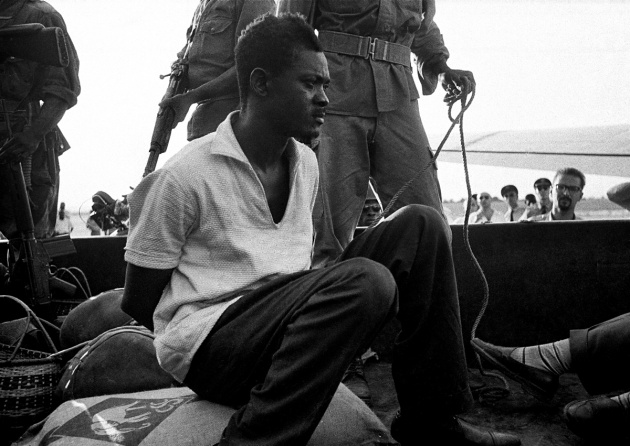
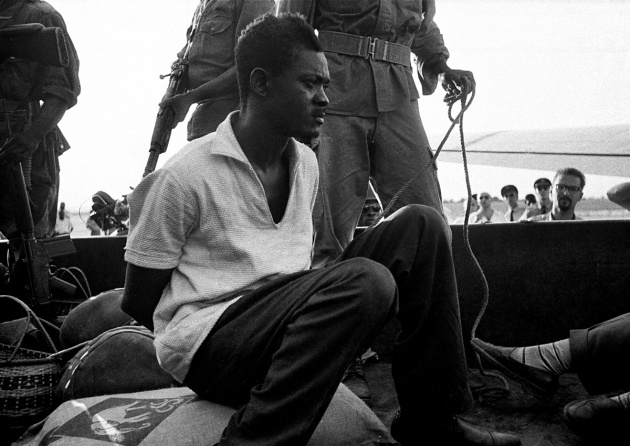
Lumumba detained
Lumumba detained

I always wondered what would have happened if Lumumba had not been so open about his ambitions for his country? What would have happened if he had played their game, and hidden his cards? Then we, Africans, would have never had our African hero! Someone had to say what we all felt: oppressed, hated, enslaved, diminished,… someone had to make us proud of being Congolese/African again… someone had to re-establish our dignity!  That someone happened to be Patrice Emery Lumumba!  Patrice died because he had great ideals, and because he trusted others.  For the problem in the Katanga province, he went to the United Nations; he trusted that establishment to resolve the conflict peacefully, and to help solve the Katanga secession…. Instead they, with all the interests they represented (US, Belgium,France, etc…), refused to help him… the US of Kennedy refused to help him out, and thus he turned to the USSR to keep his country united.  With the USSR, he was able to solve the rebellion in the Katanga and Kasai provinces… but the Americans and Belgians were mad that he had been helped by the Soviets; they decided to have him murdered after this affront (they used Mobutu, and Tshombe)! Once again, we Africans sold our own brother…  I wonder where the Maurice Tshombe, or Kibwe, or the Joseph Mobutu are today… History will remember them as tyrants, dictators, and puppets of the West!  Isn’t it interesting that history keeps repeating itself? Today the United Nations are starting a war in Ivory Coast in the name of installing a puppet-president in a soveraign country… Have you ever seen the UN so vehemently ask for war in a country?  Only in Africa could this be possible…  I used to dream that this was a peace organization! Actually, it is an organization to impose the will of the West on third world resource-rich countries.

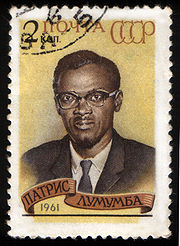
Lumumba on a USSR stamp in 1961
Lumumba on a USSR commemorative stamp in 1961

The following documentary will tell it all: how the Belgians did not like Lumumba because he was not a puppet, how they started the Katanga secession and supported it; how Lumumba went to the UN for help in keeping his country united and was refused help; how Lumumba went to the US to ask for help, and was not even received by president Kennedy; how he turned to the USSR to solve his problem in the Katanga and Kasai provinces; how that event precipitated his end.  50 years later, Lumumba’s ideals and vision are still actual. Lumumba is the symbol of aspirations of an entire continent. His spirit lives on, and his pride is ours!

Lumumba (2000)
Lumumba (2000)

I live you with an excerp from a letter he sent to his wife before his death: “… the future of the Congo is beautiful and [I] expect for each Congolese, to accomplish the sacred task of reconstruction of our independence and our sovereignty; for without dignity there is no liberty, without justice there is no dignity, and without independence there are no free men.”  You can find the Integral version of this letter on AfricaWithin.com, as well as his famous 30 June 1960 independence day speech.  Please don’t forget to check out: Wikipedia, The Guardian which deemed the assassination of Lumumba as the most important of the 20th century, The Daily Nation of Kenya deemed Lumumba the bright spark in a land of despair, and The New York Times which called it an assassination’s long shadow.  At last, the movie Lumumba (2000) is what finally got the Belgian admitting their part in the assassination of Lumumba.