Namibia Makes History as the Only Country in the World where Women hold Key Positions

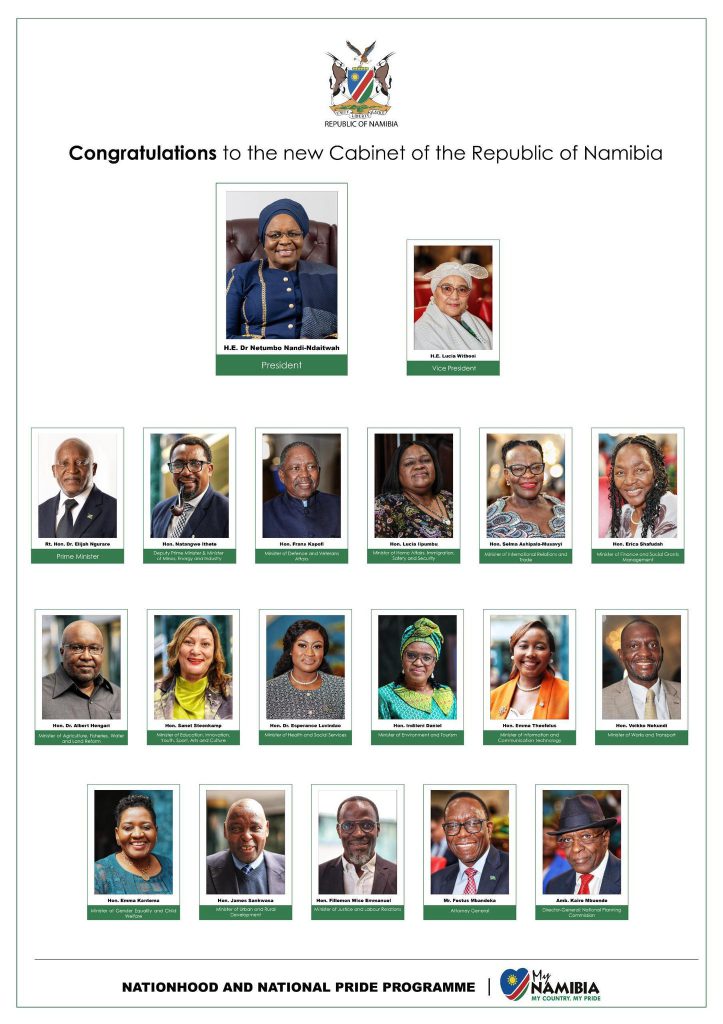
2025 Namibian Cabinet (Source: Malawi24.com)

At the United Nations (UN) general assembly last month, Namibian President Netumbo Nandi-Ndaitwah unveiled the long strides and historic milestones that the country has been making: women make up 57% of the government! Namibia has done what no other country in the world has ever done: the country has a female president Netumbo Nandi-Ndaitwah, vice-president Lucia Witbooi, speaker of the national assembly Saara Kuugongelwa-Amadhila, and secretary general of the ruling party, with 57% of the cabinet held by women, including top ministries such as finance, health, education, and international relations and trade. Namibia is the only country in the world where women hold the top positions. Namibia has closed 81% of his gender gap, ranking 8th globally, and ranking number one in Africa. This is an amazing milestone, and blueprint. Women literally rule in Namibia! Like we already said, as has been proven in history, Africa has a long tradition of having female rulers when no other part of the world does. Congratulations to Namibia, and we hope these women great work.

Excerpts below are from Malawi24. Enjoy President Nandi-Ndaitwah’s speech at the UN general assembly below. 

=====

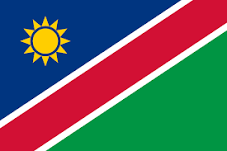
Flag of Namibia

Namibia has entered a new chapter in its political history with the appointment of a groundbreaking all-women leadership at the highest levels of government. On Saturday, newly elected President Netumbo Nandi-Ndaitwah – Namibia’s first female Head of State – announced her inaugural Cabinet, naming Lucia Witbooi as Vice President and Ericah Shafudah as Minister of Finance. Just a day earlier, Saara Kuugongelwa-Amadhila was elected Speaker of the National Assembly, becoming the first woman to lead the country’s parliament. For the first time in Namibia – and in Africa – a nation is led by women across the top three offices of government: President, Vice President, and Speaker of Parliament.

So Long to Sam Nujoma, Namibia’s First President

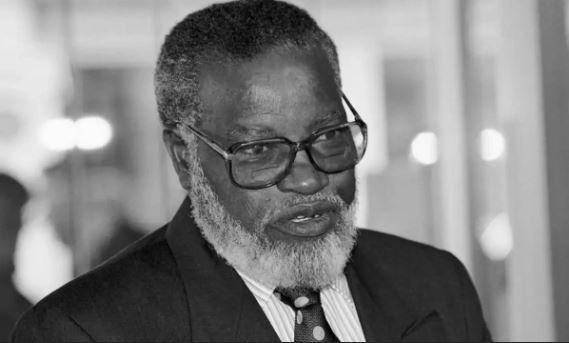
Sam Nujoma (Source: newscentral.africa)
This past Saturday, February 8 2025, Sam Nujoma, Namibia’s first president and founding father passed away at the age of 95. The ancestors are greeting this illustrious brother who fought for the independence of his country. Nujoma led the long fight for independence from South Africa for many years, which culminated with independence on 21 March 1990 of South West Africa, as the country was formerly known. Nujoma helped found Namibia’s liberation movement known as the South West Africa People’s Organisation (SWAPO) in the 1960s. After independence, Nujoma became president in 1990 and led the country until 2005.
Flag of Namibia
Samuel Shafiishuna Daniel Nujoma was born at Etunda, a village in Ovamboland, on 12 May 1929, to Daniel Uutoni Nujoma and Helvi Mpingana Kondombolo, an Uukwambi princess. From his mother, he inherited his strong charismatic influence during his political career.  He was the oldest of 11 children. His childhood was spent taking care of his siblings, tending to the family’s cattle, and farming.
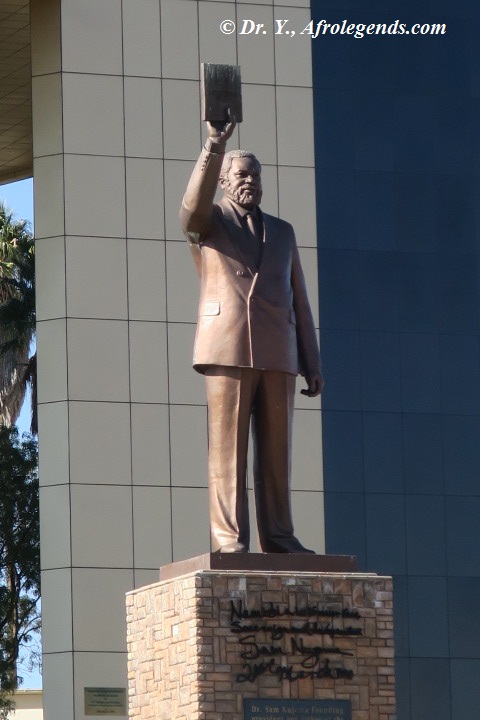
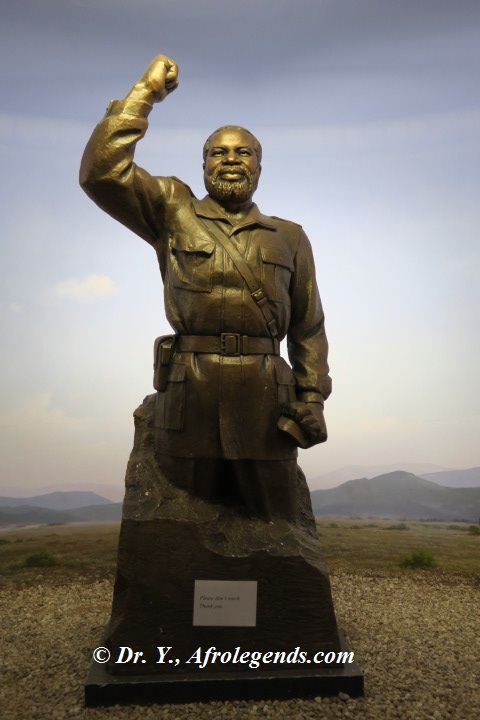
Statue of Sam Nujoma in front of the Independence Museum in Windhoek, Namibia
At the age of 17, Nujoma moved to the harbor town of Walvis Bay, where he slowly learned about the plight of Black people under white-minority rule; he also worked at a general store and later at a whaling station. In 1949, Nujoma moved to Windhoek where he worked as a railway sweeper for the South African Railways (SAR), while he went to night school. It was there that he was introduced to the Herero tribal chief Hosea Kutako, who was lobbying to end apartheid rule in Namibia, then known as South West Africa. Kutako took the young Nujoma under his wing, and mentored him as he became politically active among Black workers in Windhoek who were resisting a government order to move to a new township in the late 1950s. First, he joined with the Ovamboland People’s Congress (OPC) co-founder Jacob Kuhangua to start a Windhoek branch; at its first congress, he was elected president. At Kutako’s request, Nujoma began life in exile in 1960, first to Bechuanaland (now Botswana), then Bulawayo in then Southern Rhodesia (Zimbabwe), and later ending in Tanzania where he was welcomed by President Julius Nyerere. The same year, he was elected president of the South West Africa People’s Organization (SWAPO) in abstencia. The problem of South West Africa, similar to Kamerun, was that they were former German colonies, which had been placed under League of Nations mandate of South Africa in the case of South West Africa, and France and Great Britain for Kamerun; thus the country should have been independent a while back. Nujoma spent a few years asking the United Nations to ensure that the occupying power that was South Africa released control of South West Africa. After many unsuccessful tries, while shuttling from capital to capital in quest for support, he authorized the launch of armed resistance in 1966 against South African forces. The attack marked the beginning of the Namibian War of Independence, which would last more than 25 years.
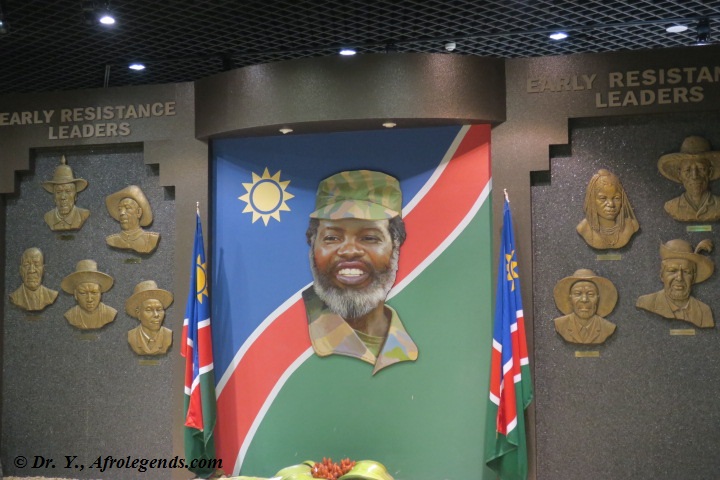
Sam Nujoma on a plaque to Early Resistance Leaders inside the Independence Museum in Windhoek, Namibia
On 19 March 1989, the signing of the cease-fire agreement with South Africa took place. After 29 years in exile, Nujoma returned to Namibia in September 1989 to lead SWAPO to victory in the UN-supervised elections that paved the way for independence. Nujoma was elected first president of the new nation which became independent on 21 March 1990. He was re-elected in 1994 and 1999, and stepped down in 2005. The current president of Namibia, President Nangolo Mbumba said of Sam Nujoma, He “inspired us to rise to our feet and to become masters of this vast land of our ancestors,” … “Our founding father lived a long and consequential life during which he exceptionally served the people of his beloved country.” Namibia’s Vice-President Netumbo Nandi-Ndaitwah, who is due to be inaugurated as president in March after leading SWAPO to victory in elections, said his “visionary leadership and dedication to liberation and nation-building laid the foundation for our free, united nation“.
Bust of Sam Nujoma, inside Independence Museum, in Windhoek, Namibia
South Africa’s President Cyril Ramaphosa said the former Namibian president was an “extraordinary freedom fighter” who played a leading role in not only his country’s fight against colonialism, but also in the campaign that led to the end of the apartheid regime in South Africa in 1994. “President Nujoma’s leadership of a free Namibia laid the foundation for the solidarity and partnership our two countries share today – a partnership we will continue to deepen as neighbours and friends.” South African President Cyril Ramaphosa said Nujoma led Namibia’s independence movement “against the seemingly unshakeable might of colonial and apartheid authorities and forces” and spurred the anti-apartheid movement in South Africa on its own final steps to freedom. “Sam Nujoma inspired the Namibian people to pride and resistance that belied the size of the population,” Ramaphosa said. “Namibia’s attainment of independence from South Africa in 1990 ignited in us the inevitability of our own liberation.”

Germany rules out financial reparations for Namibia genocide

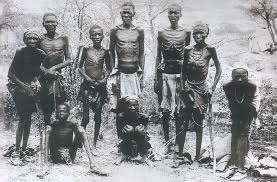
Survivors of the Herero genocide (Wikimedia)

It is no secret that the first genocide of the 20th century was committed by Germany in Namibia [Germany in Namibia: the First Genocide of the 20th Century]… yet to this day Namibians have never gotten reparations, nor an apology. This terrible page of history is usually absent from history books, and all people know is the genocide against the Jews who were compensated. So to hear now that Germany is planning to “offer aid and an apology” is outrageous! Germany says it does not want to set a precedent… yet for Auschwitz there was no question of setting precedents right? They are probably afraid that more genocides will be uncovered, not just for them, but for all those European countries which took part in the scramble for Africa, and they will all be forced to pay… so now they want to give aid… no one wants their aid! After 400 years of slavery, and almost 100-200 years of colonization and neo-colonization, there is a reason why Africa is on its knees… so we do not want “AID,” plus usually this “aid” always comes as “poisoned cakes” with so many clauses and more debts to be repaid… Remember how Germany wanted to pay the Namibian government 10 million Euros [Namibia Rightfully Rejects 10 million Euros Compensation for Genocide]? while Greece is asking for 289 billion Euros? Excerpts from the article below is from the Guardian.

=====

Flag of Namibia

Germany has categorically ruled out financial reparations forming part of a planned formal apology to Namibia for colonial atrocities at the start of the 20th century, amid fears such payments could set a legal precedent for further claims.

… The talks are nearing completion, with broadcaster Deutschlandfunk reporting this week on plans for the president, Frank-Walter Steinmeier, to ask for forgiveness for the genocide in front of the Namibian parliament.

As part of the reconciliation agreement, which has been submitted to both governments, Germany is also to make additional aid payments towards infrastructure, healthcare and job-training programmes in areas of Namibia populated by the descendants of the Herero and Nama tribes.

… “Reparations or individual compensations are not subject of the negotiations,” the report says. “After 100 years they would be unprecedented. The definition of injustice set up by the 1948 convention on the prevention and punishment of genocide does not apply retrospectively and cannot be the basis for financial claims.”

… Yet countries such as Greece and Poland, which were not part of the 1990 agreement, have since repeatedly reiterated their demands to be compensated for economic and human losses sustained at the hands of German forces in the first half of the 20th century.

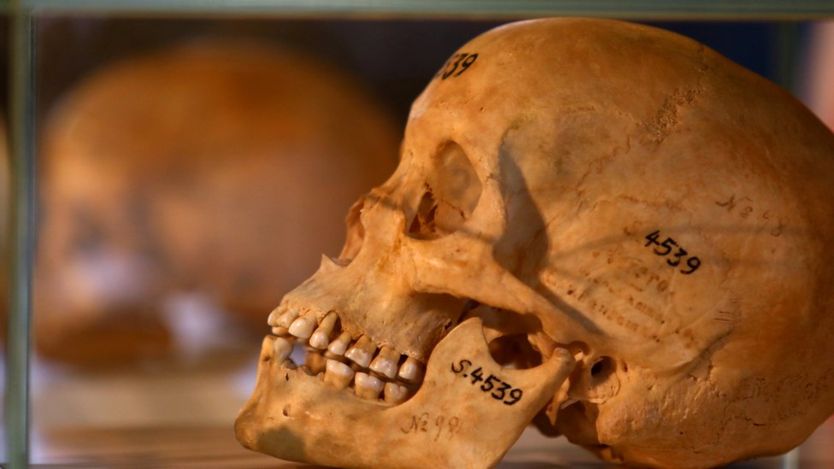
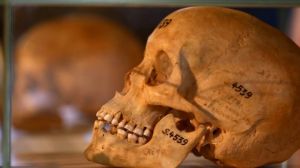
Namibian skulls (Reuters)

The Greek government of the conservative prime minister, Kyriakos Mitsotakis, most recently repeated its wish for negotiations relating to damages worth €289bn on the 80th anniversary of Nazi Germany’s invasion of Greece this April.

Many of the descendants of the Herero and Nama victims continue to reject structural aid and demand direct reparations from Germany. In a joint statement issued this week, the Ovaherero Traditional Authorities and Nama Traditional Leaders Association called the reconciliation agreement a “public relations coup by Germany and an act of betrayal by the Namibian government”.

Namibia Rightfully Rejects 10 million Euros Compensation for Genocide

Survivors of the Herero genocide (Wikimedia)

The guts of these people sometimes! How can Germany after killing, and exterminating the Herero and San people of Namibia, thus perpetrating the First Genocide of the 20th Century, dare offer 10 million Euros for compensation to the Namibian government? Such an insult! Germany must really think that Namibians, Africans, are nobodies, below sub-humans… because it is quite unbelievable! They have almost eradicated an entire race, and to this day, Namibia is struggling because of this. And they give 10 million Euros? 10 millions Euros for torturing, killing, raping, destroying, displacing for years? Do you think they could have dared to make such an offer if the Namibians were Jews? This money is not even what they give as compensations to victims (and sometimes only one) during lawsuits against big companies. I clap for the Namibian government, and hope that they stand their ground; the rest of Africa is watching them! Excerpts below are from an article on the Guardian.

====

Flag of Namibia

Namibia has rejected a German offer of compensation for the mass murder of tens of thousands of indigenous people more than a century ago.

German occupiers in Namibia almost destroyed the Herero and Nama peoples between 1904 and 1908 as they consolidated their rule in the new colony in south-west Africa. Some historians have described the bloodshed as the first genocide of the 20th century.

The two countries have been discussing an agreement on an official apology from Germany and an increase in development aid, but the talks appear now to be running out of momentum.

Namibia’s president, Hage Geingob, said on Tuesday that the most recent offer “for reparations made by the German government … is not acceptable” and needed to be “revised”.

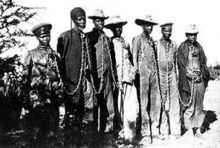
Chained (by German forces) Herero men

No details were provided on Berlin’s proposal, but unconfirmed media reports have referred to a sum of €10m.

…. Other countries in Africa are watching the negotiations between Namibia and Germany closely as they consider launching their own efforts to gain compensation for the violence and theft of decades of European rule.

Germany Returns Skulls of Namibians Genocide Victims

Herero
Survivors of the Herero and Namaqua genocide

I know this dates from last August, 2018, but I had to share. Note that out of the hundreds of skulls taken by Germany, only a bit over 25 were returned; if the German racial study has been discredited, why not return all of them? The excerpt below is from the BBC; for the full article, go to the BBC. As a reminder, the first genocide of the 20th century occurred in Namibia, on African soil. It was perpetrated by Germans on the Herero and Nama people of Namibia. It was extremely brutal and almost wiped out all Herero people. It was a campaign of racial extermination and collective punishment that the German Empire undertook in German South-West Africa (modern-day Namibia) against the Herero and Nama people. It took place between 1904 and 1907 during the Herero Wars. Today it is known as the Namibian genocide or the Herero and Namaqua genocide.

======

Namibia_Skulls
Namibian skulls (Reuters)

Germany has handed back the human remains of indigenous people killed during a genocide in colonial Namibia (German South-West Africa) more than 100 years ago.

… The bones had been sent to Germany for now-discredited research to prove the racial superiority of white Europeans. 

Tens of thousands of Herero and Nama people were murdered in response to an anti-colonial uprising.

Their descendants are still waiting for an apology from the German government.

The genocide began in 1904 after a Herero and Nama rebellion in response to the German expropriation of their land and cattle.

The head of the military administration in what was then known as German South West Africa, Lothar von Trotha, issued an extermination order in October 1904.

Herero_chained
Chained Herero men

The Herero and Nama were forced into the desert and any who were found trying to return to their land were either killed or put into concentration camps.

There is no agreed figure of how many died but some estimates have put it as high as 100,000.

It is thought that 75% of the Herero population and half of the Nama population died.

… There are thought to be hundreds of Namibian skulls in Germany and on Wednesday more than 25 remains were handed back.

Skulls from Germany’s other African colonies, including modern day Cameroon, Tanzania, Rwanda and Togo, were also used in the discredited studies.

In 2016, Germany said it was prepared to apologize in principle but it is still negotiating with the Namibian government over the form of the apology and how to deal with the legacy of the genocide. [Funny how, when it was time to kill, they never negotiated]

Namibia_Hendrik Witbooi
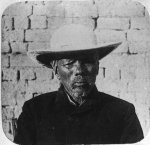
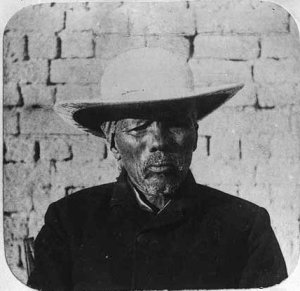
Hendrik Witbooi, Namaqua Chief and freedom fighter

… Germany has argued that it has given Namibia millions of dollars in development aid to support all people in the country. [They forget to tell you that they are still benefiting from the mines and resources of Namibia]

… But descendants of the victims are angry that there has been no apology and no agreement of reparations. They are also unhappy that they are not part of the negotiations. …

Germany Returns Artifacts Stolen From a Namibian Freedom Fighter

Namibia_Hendrik Witbooi
Chief Hendrik Witbooi

At last, Germany is returning artifacts back to Namibia which it had stolen some 126 years ago from a Namibian freedom fighter, Hendrik Witbooi. This is a good step forward, as they also returned the human remains of people they had killed via committing a genocide, last August. As a flashback, the First Genocide of the 20th Century was committed by Germany on the Nama and Herero people of Namibia. During that time, it is estimated that Germany wiped out at least 75% of the Herero and 50% of the Nama population (the Namibian genocide or the Herero and Namaqua genocide). The skulls and bones of the people they decimated had been sent to Germany to study the racial superiority of Europeans. To that effect, tens of thousands of Nama and Herero people were murdered. There are thought to be hundreds of Namibian skulls in Germany and last August about 25 remains were handed back. Their descendants are still waiting today for an apology from the German government, as well as reparations. Skulls from Germany’s other African colonies, including modern day Cameroon, Tanzania, Rwanda and Togo, were also used in these now discredited studies.

Below is the article from Artnet News.

=======

Presentation of cultural objects of robbery
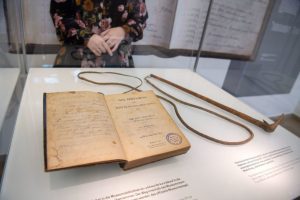
A bible and a whip from the estate of Hendrik Witbooi. (Getty images)

The German city of Stuttgart will return artifacts looted from the country’s colony in what is now Namibia on March 1 during a ceremony with Namibian president Hage Geingob.

German state minister for science Theresia Bauer will travel to Namibia to hand over a whip and bible from the collection of Stuttgart’s Linden Museum that once belonged to Namibian national hero Hendrik Witbooi, a leader in the fight for independence against the German colonizers during the Nama-Herero uprising.

“The restitution of these objects is for us the beginning of a reappraisal of German-Namibian colonial history,” Bauer said in a statement published on the Linden Museum website.

The ceremony is taking place in Witbooi’s hometown of Gibeon, where a museum is being built and will eventually house the items. In the meantime they will be safeguarded by the state. 

Herero_chained
Chained Herero men

German soldiers stole the artifacts during an attack on Witbooi’s stronghold of Hornkranz in 1893. Colonial troops in former German southwestern Africa launched a brutal crackdown on Witbooi’s people after the leader refused to sign a protection treaty to cede territory to the colonizers. In response, German troops ransacked the village, took livestock, burnt huts, and looted possessions.

Both the whip and bible were donated to the Linden Museum in 1902, according to the German art magazine Monopol.

The German imperial empire colonized parts of Namibia from 1884 to 1915. Germany officially [recognized] the Nama-Herero genocide in 2004, in which an estimated 65,000 members of the Nama and Herero tribes were murdered in response to the uprising.

Herero
Survivors of the Herero genocide

In November 2018, the Minister President of Baden-Württemberg said that the German state “is aware of its historical responsibility and is ready to take action. Sending an important message and signaling an important step in the process of reconciliation.”

Today Witbooi is revered as a national hero in Namibia and one of the most important chiefs of the Nama tribes. He is honored by numerous monuments across the country and his portrait is printed on numerous paper bills.

German Protectorates on the West Coast of Africa: 1884 – 1890

Last week I published a poem by  Sarah Anyang Agbor about the Anglophone plight in Cameroon, and the fact that Anglophones as any other children of Cameroon are treasured children of the nation and also ‘sing Cameroon’. Given that the history of Cameroon is so intertwined with that of the European colonizer: first becoming a German colony, then after Germany lost World War I, being divided into 2 and shared between France and Great Britain (the spoils of war, I guess), I have decided to publish here a few notes on German protectorates on the West Coast of Africa from 1884 to 1890. Note below that Cameroons, in the Ambas Bay section, refers to Cameroons Town which was the name for present-day Douala, Criby refers to the city of Kribi, while Victoria refers to present-day Limbe in the country CameroonPorto Seguro is now Agbodrafo and Little Popo is now known as Aného in Togo. South-Western Africa refers to present-day Namibia.

=====

NOTES on German Protectorates on the West Coast of Africa 1884—1890, Map of Africa by Treaty vol 2, P. 694.

Togoland_1908
Togoland in 1908 (R. Hellgrewe)

Togoland.

On the 5th July, 1884, an Agreement was signed between Germany and Togo, by which the territory of the King of Togo, situated on the West Coast of Africa, from the Eastern frontier of Porto Seguro to the Western frontier of Lome or Bay Beach was placed under the Protectorate of Germany.

Cameroons. Togoland. Slave Coast, &c.

On the 12th July, 1884, a German Protectorate was proclaimed over the whole of the Cameroons District, and on the 15th October of the same year†, the following official communication was made by the German Government to the principal Powers of Europe and to the United States Government, notifying the exact extent of territory on the West and South-West Coasts of Africa which had been placed under the protection of the German Empire :—

Baron von Plessen to Earl Granville.

(Translation.)                                                                       German Embassy, 15th October, 1884.

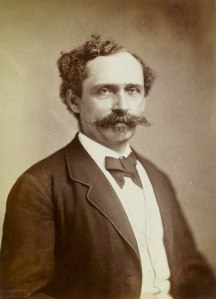
Nachtigal
Gustav Nachtigal

“The Government of His Majesty the Emperor, with a view to insure more effectually German commercial interests on the West Coast of Africa, has taken certain districts of this coast under its protection. This has been effected in virtue of Treaties which have been in part concluded by Dr. Nachtigal, the Consul-General dispatched to West Africa, with independent Chiefs, and partly in virtue of applications for protection made by Imperial subjects, who have acquired certain tracts by covenants with independent Chiefs.

“Accordingly, the Togo tract, with the harbours of Lome and Bageida, the districts of Bimbia, with the Isle of Nicol, Cameroons, Malimba, to its northern extremity, Little Batanga, Plantation, and Criby, on the Slave Coast, and the tract of coastland between Cape Frio and the Orange River, with the exception of Valvisch (Walfish) Bay, in South-Western Africa, have been placed under the protection of His Majesty the Emperor. This has been notified by hoisting the Imperial military standard and planting frontier poles, and the engagement at the same time announced that all demonstrable existing rights of third parties are to be respected.”

Ambas Bay, Victoria.

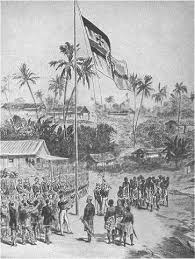
cameroon_kamerun-12-juillet-1884
German flag on the Joss plateau in Cameroons Town (Douala) on 14 July 1884

On the 19th July, 1884, a British Notification was issued announcing the assumption of British sovereignty over Ambas Bay,* but this territory was transferred to Germany on the 28th March, 1887, since which date it has formed part of the German Protectorate over the Cameroons. 

Mahin and Mahin Beach.

On the 29th January, 1885, Mahin was sold by the King of Mahin to a German subject, Herr G. L. Gaiser ; and on the 11th March, 1885, a Treaty was signed by the King of Mahin with the German Commissioner and Consul-General for the West Coast of Africa, Dr. Nachtigal, for extending a German Protectorate over Mahin and Mahin Beach, but it was not ratified by the German Emperor ; and on the 24th October following, both Mahin and Mahin Beach were ceded to Great Britain. 

Bight of Biafra, Slave Coast (Togoland, Little Popo, and Porto Seguro), Senegambia, and Southern Rivers Districts.

On the 24th December, 1885, a Protocol was signed between France and Germany, for defining their respective rights of Sovereignty or Protectorate in the Bight of Biafra, on the Slave Coast (Togoland, Little Popo, and Porto Seguro), on the Coast of Senegambia, and in the Southern Rivers Districts. 

British and German Limits.

On the 1st July, 1890, an Agreement was entered into between the British and German Governments defining their respective spheres of influence in East, West, and South-West Africa. With respect to the West Coast, the line of boundary was marked between the British Gold Coast Colony and the German Protectorate of Togo, the Volta Districts, and the Rio del Rey

† “ National Zeitung,” 15th February, 1885. S.P., vol. lxxvi, p. 756,

*H.T., vol. xvii, p. 57.

Why the Name: Windhoek?

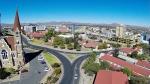
Nambia2Ever wondered what the name of the capital city of Namibia, Windhoek, mean? To me, thinking about the English beginning ‘Wind‘, I wonder if its name has something to do with wind, even though Namibia was never a British colony? However the end part ‘Hoek‘ does not sound English at all. Could the name be a European ‘deformation’ of a local name, the way Yaoundé or Abidjan are?
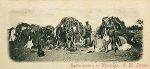
Windhoek_19eme siecle
Windhoek settlement at the end of the 1800s

Well, imagine my surprise when I found out that Windhoek stand for ‘wind-hoek‘ or “Wind Corner” in Afrikaans (Windhuk in German). Knowing that the country was a German colony, why will it have an Afrikaans’ name? The two languages being so close together, maybe the name was first German, and later on Afrikaans, given that the country fell under South African ‘administration’ after Germany lost first world war.  Well, it is said that the city was founded in 1844, by Captain Jonker Afrikaner who named it Windhoek after the Winterhoek Mountains at Tulbagh in South Africa, where his ancestors originated from.

Windhoek_2
Windhoek settlement at the end of the 1800s

In its history, the city of Windhoek has had at least 7 different names: “Aigams” for hot springs as named by the local nomadic Khoekhoe people; “Otjomuise” for the place of steam as named by the local Herero people; both names referring to the hot springs located near today’s city center. It was later named “Queen Adelaide’s Bath” by English explorers in 1836. Then it was named “Concordiaville” by Rhenish Missionaries. In 1840, it was named “Winterhoek” by Jonker Afrikaner and his group of Nama people who were emigrating from the Cape. It became “Windhuk” in 1890 with the German colonization of the country, and it has been “Windhoek” since 1920 under South African administration and has remained so after independence in 1990.

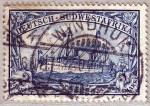
Windhoek_Stamp
Windhoek settlement at the end of the 1800s

Located in the Khomas Highland plateau area, in central Namibia, Windhoek stands at around 1700 m above sea level. It is the social, economic, political, industrial, and cultural center of the country. It is a bustling, growing city, and tourism is playing a big part in the city’s life as well. Enjoy the video below about Windhoek.


Frankie Fredericks: Sprinting to the Finish for Namibia

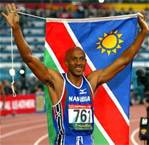
Frankie Fredericks raising the flag of Namibia

The athlete of the week is Frankie Fredericks: the handsome, good-looking, strong, fast, and powerful brother from Namibia.  Yep that’s right, Frankie Fredericks is one of those athletes I loved watching in the 1990s.  Always consistent, always strong, and everpresent, Frankie Fredericks was a force to reckon with.  How many silver medals has he gotten while contending the 100 m and 200 m at the Olympics?  4 Silver medals!  That’s right, an African with 4 silver olympic medals!  He has also won several gold medals at the World Championships, World Indoor Championships, All-Africa Games, and Commonwealth Games.  He is thus far Namibia’s only olympic medalist.

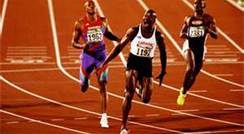
Frankie Fredericks coming 2nd to Donovan Bailey during the 100 m finale at the 1996 Atlanta Olympics

Born in Windhoek, Namibia’s capital, Frankie began running at the age of 13, and particularly loved football (soccer for Americans).  However, when he was awarded a scholarship to attend Brigham Young University, in the USA in 1987, he quickly moved his passion to track and field.  In 1991, as Namibia gained independence from South Africa, Frankie started officially compete for his country.  At the Barcelona Olympics in 1992, Frankie Fredericks won 2 silver medals in 100 m and 200m, giving Namibia its very first olympic medal.  In 1996 at the Atlanta Olympics, Frankie again won 2 silver medals coming 2nd to Donovan Bailey in the 100m, and 2nd to Michael Johnson in the 200 m.  Due to injuries, Frankie was absent at Sydney Olympics in 2000, and Namibia dearly missed him there.  He raced the 200m at the Athens Olympics in 2004, and came out 4th, and finally retired at the end of that year at the age of 37 (Imagine a 37 year-old sprinter coming 4th at the olympics, running against young folks like Shawn Crawford, Justin Gatlin, and Bernard Williams).  At the beginning of that run in Athens, Frankie was given a standing ovation that lasted few minutes, and at the end, he said “It is quite emotional, … I always wanted to go out with a medal, but sometimes in life you don’t get everything you want.” Frankie has run the 100 m under 10 s more consistently than most athletes (he is ranked 4th behind Ato Boldon of Trinidad & TobagoMaurice Greene of the US, and Asafa Powell of Jamaica).

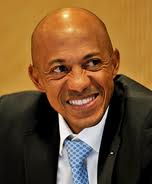
Frankie Fredericks
Frankie Fredericks

Off track, Frankie has a computer science degree and a masters of business administration, and he has created the Frank Fredericks Foundation to foster young Namibian athletes. In 2004, he was  elected by fellow athletes to serve on the board of the International Olympic Committee. Please check out the tribute to Frankie Fredericks given by International Association of Athletics Federations IAAF athletics.

The personable and wildly popular Fredericks spent the greater part of a decade-and-a-half at the pinnacle of his craft, a record for longevity nearly unprecedented in the sprints.  What was always fun about watching Frankie run was his consistency: Frankie was constant on the distance, and a very reliable athlete, training hard to represent his country and continent at the highest level.  I am sure most people had never heard of the country Namibia, but when Frankie was running, the whole world could hear and feel Namibia rising!