In 2024, we said goodbye to many people and things in Africa. Below are a few:
President Hage Geingob (Source: TheHealthSite)
In February, the 3rd president of Namibia, Hage Geingob, passed away in Windhoek, Namibia, from cancer. As a strong freedom and anti-apartheid activist, in his early years, he fought to set the international stage for the South West Africa People’s Organization (SWAPO) and the Namibian fight for independence from South Africa; we remember his years of service and sacrifice for the nation of Namibia, and Southern Africa as a whole. So Long Hage Geingob, Third President of Namibia – African Heritage
In February, Kenyan athlete Kelvin Kiptum and his coach died in a car crash in their home country. Kiptum epitomized athletic brilliance. His record-breaking marathon performances catapulted him into global recognition, with contributions extending beyond the track. In his hometown, Kiptum established programs that provided sports training and education for underprivileged youth, ensuring that his success translated into broader societal impact.
Democratic Republic of Congo (DRC) mineral map (Source: Atlas du continent africain, Jeune Afrique et editions Jaguar, 2000)
In February, the European Union (EU) agreed to discuss the price of minerals coming from the DRC with Rwanda. Unheard of!!! Such a preposterous agreement! The EU and Rwanda signed a Memorandum of Understanding (MOU) to strengthen Rwanda’s role in fostering sustainable development and resilient value chains for critical raw materials MOU on Sustainable Raw Materials Value Chains between the EU and Rwanda. Since then, several mineral-rich Congolese cities have been captured by the M23, a rebellious movement backed by Rwanda. The town with one of the biggest coltan reservoirs in the world, Rubaya was captured by the M23 rebels. Kanyabayonga, Kirumba, Shasha, Vuvano, Kiuli, and Mbwambaliro are other cities that were captured by the M23 this year. Rubaya is rich in coltan, tantalum, cobalt; north Kivu, gold, tin, and of course diamond. Coincidence or Not? Coltan-rich Town Captured – African Heritage
‘Segu’ by Maryse Conde
In April, Maryse Condé, the grande Dame of Caribbean literature left us, aged 90. Condé’s work has touched so many throughout the world, as it was a literary bridge between Africa, the Caribbean, and Europe. Her best work, Segu, is a great favorite. My first encounter with Maryse Condé’s work, was when I read her book “La Belle Créole.” Then I read Segu, and really that was it! I was sold… It was unforgettable, strong, and vivid. Maryse Conde: The Grande Dame of Caribbean Literature is no more – African Heritage
In June, the African National Congress (ANC) of South Africa suffered a historic defeat. The ANC, the party which brought the end of the apartheid regime, lost its parliamentary majority in a historic election on June 1. This puts South Africa on a new political path for the first time since the end of the apartheid system of white minority rule 30 years ANC flag
In August, the longest-serving president of the Confederation of African Football (CAF), the Cameroonian Issa Hayatou joined his ancestors this year. Hayatou was a legend who transformed African football into a powerhouse. His visionary leadership expanded Africa’s presence at the FIFA World Cup from two teams in 1982 to 3, 5, and eventually 10 by 2026. He relentlessly lobbyied for the place of Africa in the world of football, including the dream of an African country hosting the world cup, which materialized with South Africa as a host in 2010. He also expanded the Africa Cup of Nations (CAN), increasing participating teams from 8 to 24, creating more opportunities for African nations to compete on the global stage. His legacy in African football is unmatched.
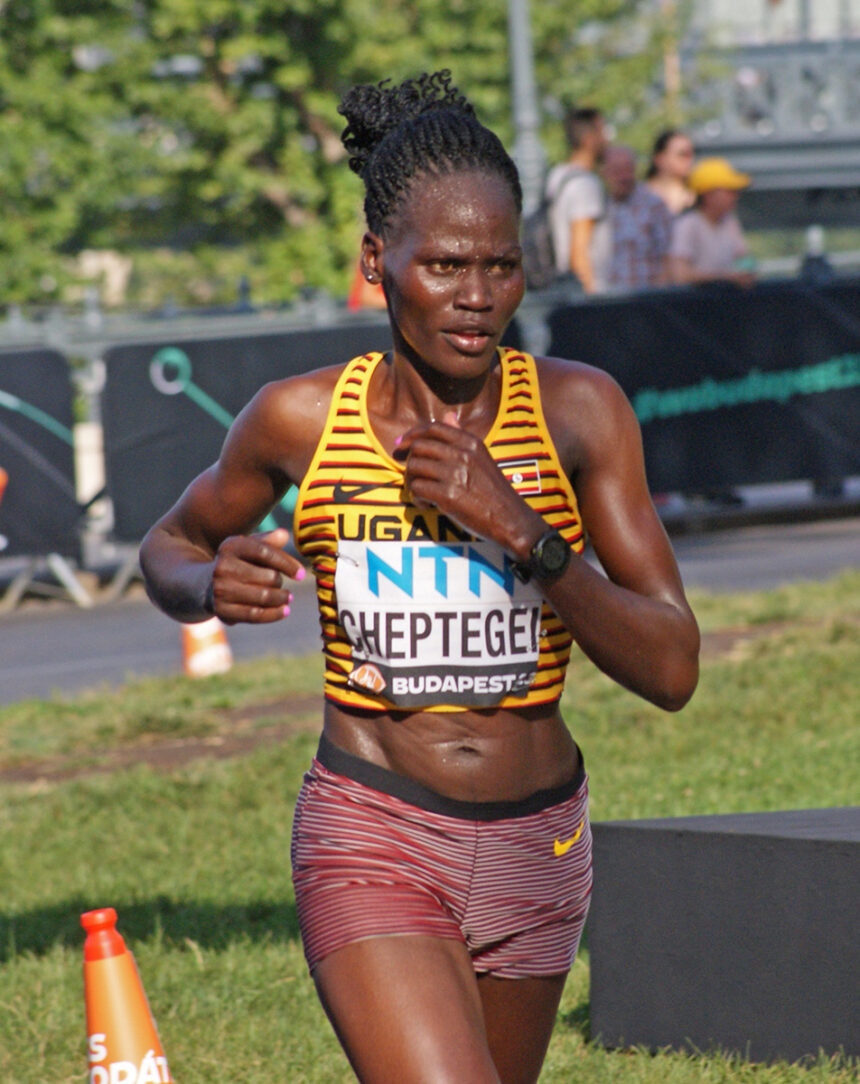
Rebecca Cheptegei (Source: swiftsportsug.com)
In September, talented Ugandan cross-country, long-distance, and marathon runner Rebecca Cheptegei was set ablaze by her former boyfriend who doused her with petrol over a land dispute in northern Kenya; she died of sustained injuries from the fire. As an athlete, her accomplishments included Olympic gold medals, and she was also a member of the Ugandan armed forces. Her death highlighted the domestic violence issues against women in Kenya which has been a big public problem this year with several marches against it.
In October, Hama Amadou, a former prime minister of Niger who consistently pushed for governance grounded in accountability and transparency left us. Despite facing imprisonment and exile due to his political stances, Amadou remained committed to justice and the dream of a prosperous West Africa. He was given all honors for his funerals by the current Nigerien government. His story reflects the perseverance required to navigate political adversity, leaving a legacy of resilience and hope for future reformers.
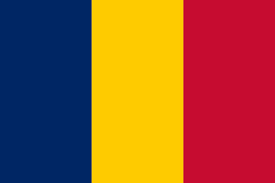
Flag of Chad
Bye bye to French military bases in Chad. France began withdrawing its Mirage fighter jets from Chad on December 10, 2024. Two Mirage 2000-D fighters departed from a French base in N’Djamena and returned to France. This move is part of a larger French military withdrawal from Chad, following the end of the defense cooperation agreement between the two countries on Nov. 29, 2024 when Chad and Senegal Ordered French Military Bases Out of their Territories. While the Chadian president has remained strong in his decision, the Senegalese president has since corrected, saying that it was just the start to start the discussion.
Cyclone Chido’s path of destruction (Source: blog.thegovernmentrag.com)
On December 14, 2024, the island of Mayotte was hit by the cyclone Chido which left total devastation behind. 80% of the island, which is a French overseas department, was destroyed when the cyclone brought winds exceeding 200 km/h (124 mph) and gusts over 225 km/h (140 mph). The current death toll is 35, (French PM says only dozens killed not thousands) but all expect it to be significantly higher in the thousands, given that majority of the population is Muslim (and thus bury their dead within 24 hours), and many were illegals thus had no papers due to the huge illegal migration to that island. Moreover, cyclone Chido also caused significant damage in Mozambique, causing more deaths, making it likely that the numbers given by the French authorities should be significantly higher. During his visit, the French president Emmanuel Macron had the gull to insult the bereaved populations, handing out moral lessons. Our hearts and prayers go out to our brothers and sisters of Mayotte and Mozambique.
The third president of Namibia, Hage Geingob, passed away this past Sunday in Windhoek, Namibia, from cancer. As a strong freedom and anti-apartheid activist, in his early years, he fought to set the international stage for the South West Africa People’s Organization (SWAPO) and the Namibian fight for independence from South Africa. After exile in Botswana, and the United States where he studied, he advocated for the acceptance of SWAPO which was ultimately recognized by the United Nations General Assembly as the sole and authentic representative of the people of Namibia. Namibians’ struggle at the international fora, and their armed struggle launched in 1966, eventually led to the independence of Namibia in 1990 from South Africa. Like Cameroon, Togo, or Tanzania, Namibia had been a German colony known as German South West Africa established in 1884, until Germany lost world War I, after which the League of Nations gave the country to the United Kingdom as a mandate under the administration of South Africa; it was simply like a de facto fifth province of South Africa.
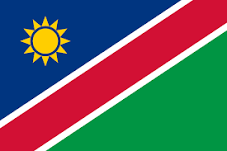
Flag of Namibia
Geingob had served the country as its first prime minister from 1990 to 2002, and then later from 2012 to 2015. Between 2008 and 2012, Geingob served as Minister of Trade and Industry. In 2015, after elections, he became president of the nation, and was set to finish his second and final term this year. Upon his passing on February 4, his deputy, Vice President Nangolo Mbumba, was sworn in as acting president in the capital, Windhoek, to complete the term as allowed by the constitution. Mbumba will be in office until next year, when the winner of this year’s November election will take office.
“The Namibian nation has lost a distinguished servant of the people, a liberation struggle icon, the chief architect of our constitution and the pillar of the Namibian house,” the office of the presidency said.
South African President Cyril Ramaphosa described Geingob as “a towering veteran of Namibia’s liberation from colonialism and apartheid.”
Kenyan President William Ruto said Geingob “strongly promoted the continent’s voice and visibility at the global arena.”
Zimbabwe’s President Emmerson Mnangagwa posted on X that Geingob’s “leadership and resilience will be remembered.”
Last Thursday, the first president of Zambia, Kenneth Kaunda, changed dimensional plane to join his ancestors. At 97 years old, he was one of Africa’s last surviving liberation leaders. To a generation of Africans, and to many of us, Kenneth Kaunda epitomized the African struggle for independence.
Born into a family of 8 children in Lubwa in the north of then Northern Rhodesia (now Zambia), Kaunda was the last born of parents who immigrated from Nyasaland (Malawi). He trained as a teacher, then became involved in politics, first as secretary of the local young men’s farming association and later as a founding member of the Northern Rhodesian African National Congress in 1949. In 1955, both him and Harry Nkumbula, party president were imprisoned for 2 months. Later Kaunda broke away from the ANC, to found his own party, the Zambian African National Congress (ZANC) in October 1958 which was short-lived. In March 1959, the ZANC was banned and Kaunda was sentenced to 9 months‘ imprisonment, which he spent first in Lusaka, then in Salisbury When he was freed from prison in 1960, he joined the principal nationalist party, the United National Independence Party (UNIP), which campaigned and fought against British colonial rule. He was influenced by Martin Luther King Jr. and Kwame Nkrumah, both of whom he met on different occasions. On 24 October 1964 he became the first president of an independent Zambia.
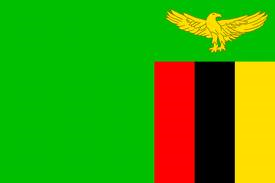
Zambian flag
Kaunda started with the great advantage of leading an African state with a stronger economic base than any of its neighbors but there was a shortage of native Zambians who had the skills and training to run the country [similar to so many African colonies… the Europeans were there to pillage and exploit the resources of the countries, and not build their local forces!]. The policy of sanctions imposed by the British government on the breakaway country proved at least as damaging to the Zambian economy (similar to what they did to Zimbabwe under Mugabe– Is Zimbabwe the New Haiti?) over the years, probably as punishment for his support for the liberation of his neighbors.
Affectionately known as KK, or Mzee, Kaunda worked tirelessly towards to the freedom of the whole of Southern Africa from white rule; he supported the fight of other countries against repressive, racist regimes in South Africa, Namibia, Angola, Mozambique and Southern Rhodesia (Why the name: Zimbabwe?). It took several years, but his support never faltered.
As a testimony, President Hage Geingob of Namibia said in a statement “Africa lost“a giant of a man. …Kenneth Kaunda was a generous, affable, and a resolute leader who freed our region from colonialism.”
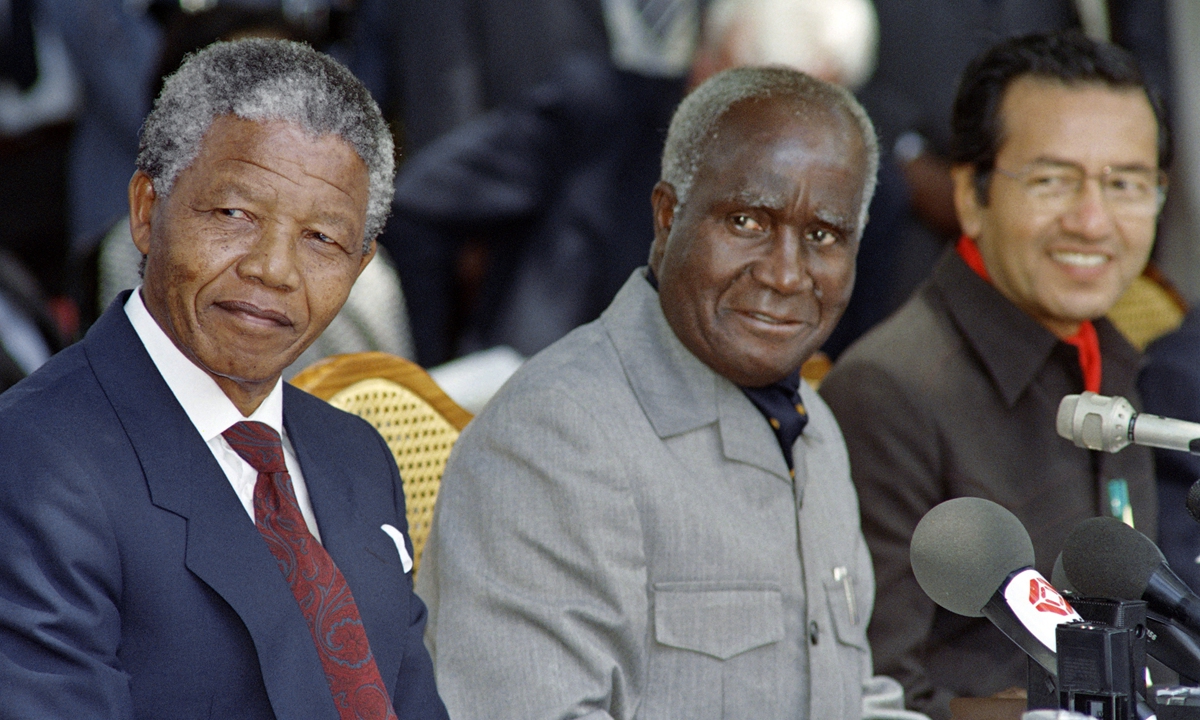
Photo taken on February 28, 1990 showing Zambia’s president Kenneth Kaunda (Center) and South Africa’s African National Congress (ANC) leader Nelson Mandela (L) attending a press conference at the Presidential House in Lusaka. (Source: AFP)
South Africa’s President Cyril Ramaphosa described Kaunda as a “rightfully revered father of African independence and unity… Under his leadership, Zambia provided refuge, care and support to liberation fighters who had been forced to flee the countries of their birth.” “He stood alongside the people of South Africa at the time of our greatest need and was unwavering in his desire for the achievement of our freedom. We will never be able to repay the debt of gratitude,” Ramaphosa added.
“For our founding father, it was not enough for his country Zambia to be liberated when the region and the African continent remained bonded in the shackles of colonialism and apartheid,” current Zambian President Edgar Lungu told mourners at Kaunda’s house in Lusaka … “[Kaunda] soldiered on to seek freedom for humanity.”
Please enjoy articles on the Al-Jazeera and the very good article by the Global Times [With love and respect, Chinese people cherish memory of Zambia’s Kaunda, ‘an old and good friend’]. Please watch the video I posted a few years ago on the great Kenneth Kaunda, Zambia’s first president.
One of Zimbabwe‘s great sons is no longer: Robert Mugabe, the first president of Zimbabwe has passed away. This was a man who tirelessly fought for his country’s liberation, and for the Black race as a whole. Some have called him an icon of liberation, and indeed he was!
Robert Mugabe epitomized the freedom fights of then Rhodesia, a British colony ruthlessly run by a white minority. This once beautiful place had been renamed after Cecil Rhodes a white tyrant who committed the greatest atrocities in that country in the name of the superiority of one race over the other and capitalism. It was only befitting that a freedom fighter like Robert Mugabe should come up, and fight to not only reclaim the land of his ancestors, but also appropriately reinstate it to its past glory, that of Great Zimbabwe !
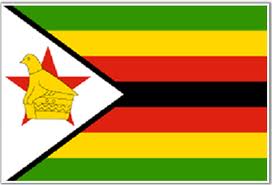
Flag of Zimbabwe
Few people have sacrificed so much for a fight for freedom. After criticizing the government of Rhodesia in 1964, Robert Mugabe was imprisoned for more than a decade without trial. Mugabe lost his then only child while in prison; the colonial government did not allow him to bury him (almost 30 years later, he went on to have other children).
Robert Mugabe embodied Africa’s struggle against colonialism. He was a courageous politician, imprisoned for daring to defy white-minority rule. Later on, he was vilified by the ‘international community‘ (now we all know that this means: parts of Europe + USA) for restoring their lands to Africans, because this attacked whites’ interests in his country. I am not sure how to this day, some people believe that it is okay for less than 5% of the population to own 90% of the land in a country which is not even theirs… that is beyond me… what about those who were born there? what about those whose land it is? Will it be okay if the few Africans who have immigrated to say France, owned 90% of the land there?… Now will we all hear about injustice!
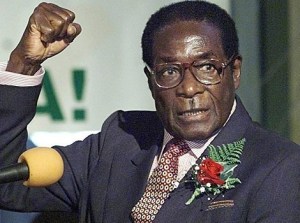
Zimababwe’s President Robert Mugabe chants Zanu PF slogans with supporters gathered at the Harare International Conference Centre in Harare, Wednesday May 3, 2000. (AP Photo/Christine Nesbitt)
Learning of the passing of Robert Mugabe, many world leaders have expressed their condolences… below are just a few.
Julius Malema of South Africa said, “I’m saddened by the passing of our martyr and giant of the African revolution cde President Robert Mugabe. Let’s continue the fight and protect his legacy. We must not allow our enemies to tell us how to remember him; we know our heroes.”
Joseph Kabila, former president of the Democratic Republic of Congo (DRC) said, “We will forever remember the worthy son of Africa, who came to our rescue when our country was victim of a foreign aggressor. The continent has lost one of its pan-African leaders, a hero of independence.”
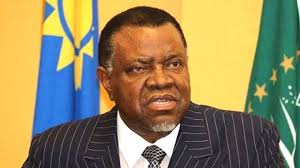
Hage Geingob of Namibia (ZimbabweSituation.com)
Kenya’s President Uhuru Kenyatta said Mr Mugabe had “played a major role in shaping the interests of the African continent” and was “a man of courage who was never afraid to fight for what he believed in even when it was not popular.”
Hage Geingob, president of Namibia added, “… Robert Mugabe [was] an extraordinary revolutionary and tenacious freedom fighter who contributed immensely to Africa and Namibia’s cause for freedom.”
Jerry J. Rawlings, former president of Ghana said, “RIP Comrade Mugabe. You lived for the dignity of your fellow black. Your African pride, dignity and audacity were unassailable.Africa has lost a bold and noble Statesman.”
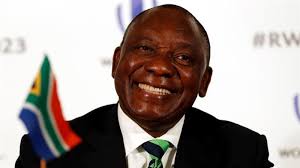
Cyril Ramaphosa of South Africa (AlJazeera.com)
South Africa’s President Cyril Ramaphosa called Mr Mugabe a “champion of Africa‘s cause against colonialism” who inspired our own struggle against apartheid“. And indeed Robert Mugabe supported the fight against apartheid and tremendously helped the ANC in its struggle to defeat that monster called apartheid. Ramaphosa added that under Mugabe’s leadership, “Zimbabwe’s sustained and valiant struggle against colonialism inspired our own struggle against apartheid and built in us the hope that one day South Africa too would be free”. “During the decades of our own struggle, Zimbabwe’s liberation movement supported our own liberation movement to fight oppression on multiple fronts. After Zimbabwe achieved independence, the apartheid state brutalised and violated Zimbabwe as punishment for supporting our own struggle” . “Many Zimbabweans paid with their lives so that we could be free. We will never forget or dishonour this sacrifice and solidarity.”
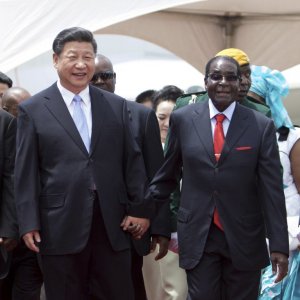
Xi Jinping of China with Robert Mugabe (Source: South China Morning Post)
In his condolence message, Chinese President Xi Jinping said China had “lost an old friend and a good friend.” Foreign ministry spokesman Geng Shuang said Mugabe’s death was deeply mourned in China, noting that the former president opposed foreign interference and actively promoted Beijing’s relations with Zimbabwe and Africa. China described Mugabe as an “outstanding leader of the national liberation movement and statesman” who firmly defended the country’s sovereignty, as African leaders termed him a “liberator” and “pan-Africanist.”
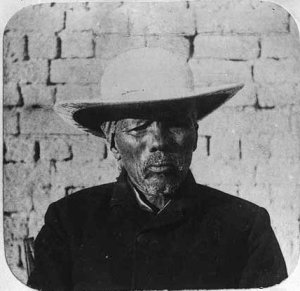
At last, Germany is returning artifacts back to Namibia which it had stolen some 126 years ago from a Namibian freedom fighter, Hendrik Witbooi. This is a good step forward, as they also returned the human remains of people they had killed via committing a genocide, last August. As a flashback, the First Genocide of the 20th Century was committed by Germany on the Nama and Herero people of Namibia. During that time, it is estimated that Germany wiped out at least 75% of the Herero and 50% of the Nama population (the Namibian genocide or the Herero and Namaqua genocide). The skulls and bones of the people they decimated had been sent to Germany to study the racial superiority of Europeans. To that effect, tens of thousands of Nama and Herero people were murdered. There are thought to be hundreds of Namibian skulls in Germany and last August about 25 remains were handed back. Their descendants are still waiting today for an apology from the German government, as well as reparations. Skulls from Germany’s other African colonies, including modern day Cameroon, Tanzania, Rwanda and Togo, were also used in these now discredited studies.
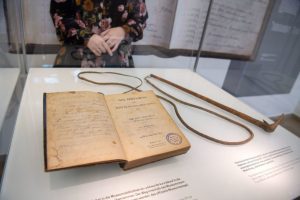
A bible and a whip from the estate of Hendrik Witbooi. (Getty images)
The German city of Stuttgart will return artifacts looted from the country’s colony in what is now Namibia on March 1 during a ceremony with Namibian president Hage Geingob.
German state minister for science Theresia Bauer will travel to Namibia to hand over a whip and bible from the collection of Stuttgart’s Linden Museum that once belonged to Namibian national hero Hendrik Witbooi, a leader in the fight for independence against the German colonizers during the Nama-Herero uprising.
“The restitution of these objects is for us the beginning of a reappraisal of German-Namibian colonial history,” Bauer said in a statement published on the Linden Museum website.
The ceremony is taking place in Witbooi’s hometown of Gibeon, where a museum is being built and will eventually house the items. In the meantime they will be safeguarded by the state.
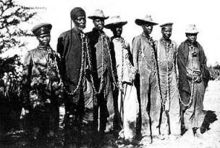
Chained Herero men
German soldiers stole the artifacts during an attack on Witbooi’s stronghold of Hornkranz in 1893. Colonial troops in former German southwestern Africa launched a brutal crackdown on Witbooi’s people after the leader refused to sign a protection treaty to cede territory to the colonizers. In response, German troops ransacked the village, took livestock, burnt huts, and looted possessions.
Both the whip and bible were donated to the Linden Museum in 1902, according to the German art magazine Monopol.
The German imperial empire colonized parts of Namibia from 1884 to 1915. Germany officially [recognized] the Nama-Herero genocide in 2004, in which an estimated 65,000 members of the Nama and Herero tribes were murdered in response to the uprising.
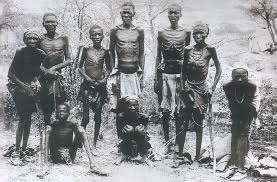
Survivors of the Herero genocide
In November 2018, the Minister President of Baden-Württemberg said that the German state “is aware of its historical responsibility and is ready to take action. Sending an important message and signaling an important step in the process of reconciliation.”
Today Witbooi is revered as a national hero in Namibia and one of the most important chiefs of the Nama tribes. He is honored by numerous monuments across the country and his portrait is printed on numerous paper bills.













 African Heritage