
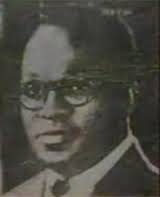
The brilliant economist and martyr of the struggle for the independence of his country, Castor Osendé Afana is considered a national hero in Cameroon, however he is not as well-known as Ruben Um Nyobé, or Felix-Roland Moumié, or Ernest Ouandié. He is the first Cameroonian to earn a PhD in economics. Like those three, he was also assassinated, and paid with his life for his passion for the freedom of Cameroon, and Africa from colonialism.
He talked about the destruction of the economy of African societies by the transatlantic slave trade, including the fact that when a people is forced to hide or run to avoid enslavement, fields are left to rot, and the agriculture suffers letting famine settle in. To that effect, Afana wrote in his thesis, ‘L’économie de l’Ouest africain, perspectives de développment‘, Francois Maspero, Paris : “The destruction and the constant, widespread insecurity resulting from the slave trade caused economic, material, and mental structures to regress; dropping from an advanced stage back to that of a subsistence-gathering economy.
No one could have had the time or the necessary incentive for the long-term development of the land, for the maintenance of new tools, for the upkeep of new production facilities, and so on.” [les destructions, l’insécurité permanente et généralisée consécutives à la traite ont fait régresser les structures économiques, matérielles et mentales du stade évolué au stade de l’économie de cueillette.
Nul ne pouvait avoir le temps ni l’intérêt nécessarire pour une mise en valeur prolongée de la terre, pour l’entretien de nouveaux outils et de nouveaux creusets, etc.]


