The World Bank Wants Nigeria to ‘Open’ up its Oil Market

Flag and map of Nigeria

Early this month, the World Bank made recommendations to the government of Nigeria, asking them to open the country’s borders to allow imports of premium motor spirit imports. This is seen as a way to edge Dangote refineries. On April 7, the World Bank, in its Nigeria Development Update, recommended that Africa’s most populous country prioritize imports, stating that imported fuel will be cheaper than domestically produced petrol. Days later, after the outcry of Nigerians, the World Bank deleted its NDU report and clarified that its recommendation is not a blanket stamp on fuel importation but a broader strategy linked to reforms and consumer protection in Nigeria. It later reversed its earlier stance on downstream oil sector liberalization, stating, “In the case of Nigeria, the focus should be to provide targeted support to the most vulnerable people through their well-functioning social safety net system, and the World Bank Group stands ready to step up its existing support.”
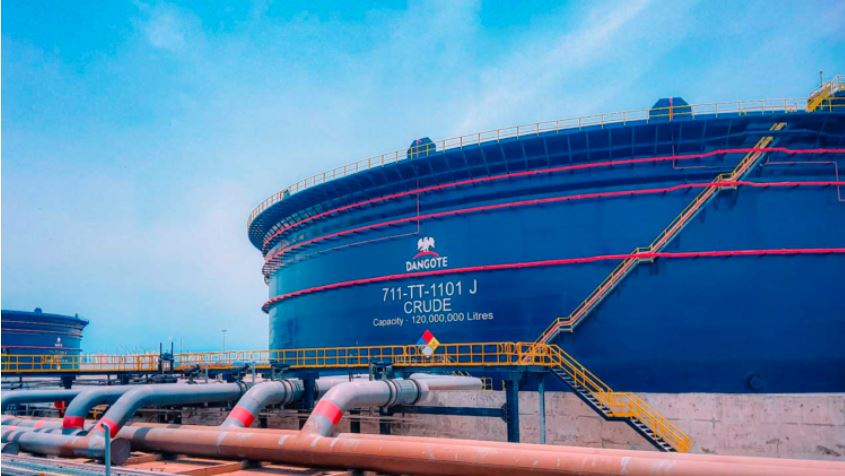
Dangote Refinery (Source: Leadership.ng)

Recall that Aliko Dangote, Africa’s Richest Man Built One of the World’s Largest Oil Refineries in Nigeria, and is now supplying countries in the midst of the Iran war and blockade in the strait of Ormuz. This has been a major game changer for the country and for Africa as a whole. Picture this, you are an oil producer, yet you export the crude oil to be refined elsewhere and later on import it at a higher price and very often low-grade quality (Swiss Firms poison Oil destined for Africa). Dangote has changed this, and at a time where the world is in turmoil because of the blockade in the strait of Ormuz which supplies over 20% of the world’s oil, his refinery has been able to meet demands. The West could not see this ‘independence’ too well, because their oil companies used to own the oil in Nigeria and refine it, and sell it back at premium prices.
Fuel

My question to the ‘caring’ (sarcasm) World Bank is this: where were you when your oil companies, Shell, BP, … were spilling oil in the Niger delta, thus creating major oil pollution? Justice at last from Shell … for Nigerians! Did you recommend that they clean up? Did you recommend that they compensate for all the environmental damages, the loss of livelihood, water contamination, health problems, forced migration, and loss of lives, caused while making humongous benefits? Did you stop Shell when it sold its subsidiary to absolve itself from paying for damages? Yet, your sister organizations at the UN and several human-rights organizations have said that the scale and duration of the oil pollution in the Niger Delta amounts to such a severe environmental injustice that some activists and scholars have described it as an “environmental genocide.” Now the World Bank wants us to believe that it cares so much for Nigerians that it wants them to save money at the pump by allowing foreign imports! REALLY???

After the World Bank redacted their statement, how can sane ‘experts’ make a recommendation to any country that imports is better for their livelihood? particularly to an oil producing country to import oil? They must think we are idiots.

Nigeria should not bow down to that institution which has never helped any country in the world except the imperialist ones that it serves. Nigeria and Africa should stick to working towards its independence (economic, political, cultural, etc) from these vipers!

To learn more, check out the articles at Guardian.Ng, The Africa Report, or the Daily Post Nigeria.

Nigeria to sell its Fuel in Naira – More Countries are Moving away from the Dollar

Flag and map of Nigeria

This is a new turn in the move away from the dollar. Yes! you heard it right… more countries are moving away from the dollar, and more transactions are being done in local currencies. The dollar’s dominance is slowly going away. When the war in Ukraine started in February 2022, and the West leveled a lot of sanctions against Russia, blocking its funds, I bet the end of dollar was not what they foresaw. Now Russia deals with China in Rubles or Yuan, India with China in Rupees, … not dollars! Now Nigeria, Africa’s largest country, is going to sell its oil in Naira!!! Are more countries going to deal in local currencies? Is this the end of the petrodollar?

Excerpts from the article below is from Business Insider Africa. Enjoy!

=====

The federal government of Nigeria has commenced the sale of its crude oil to Dangote Refinery and other refineries in its local currency, naira, effective October 1, 2024.

The naira-for-crude initiative, which has already commenced, would mean that crude would now be sold to the Dangote refinery and others in naira. In return, the Dangote refinery would supply PMS (petrol) and diesel of equivalent value to the domestic market, also in naira.

The Minister of Finance, Wale Edun, confirmed the commencement of this policy in a signed statement on Saturday, October 5, 2024, saying the initiative is a significant step by the government in stabilizing the economy and enhancing Nigeria’s economic growth and development.

… “The strategic initiative and bold step taken by the President Bola Ahmed Tinubu-led Administration is expected to have a lasting impact on Nigeria’s economy, fostering growth, stability, and self-sufficiency, especially as the country continues to navigate the complexities of global markets, this strategic move positions Nigeria for success in the years to come,” the statement read.

… Economic experts explained that the initiative if implemented successfully, will alleviate pressure on the naira, eliminate unnecessary transaction costs, and enhance the availability of petroleum products nationwide.

Africa’s Richest Man Builds One of the World’s Largest Oil Refineries

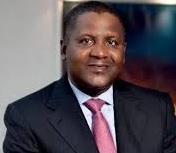
Aliko Dangote (Source: Black Entrepreneur Profiles)

Aliko Dangote, Africa’s richest man, has built one of the world’s largest oil refineries in Nigeria, Africa. The refinery opened its doors last year, and last month shipped out its first boat of refined jet fuel to the Netherlands. It has not been easy with all the challenges and setbacks. This is a dream come true for Africa’s richest man, a dream which has taken several years to materialize. Now, why is this a first? and why are we applauding? 

Although Nigeria is one of Africa’s largest oil producers, the country does not have the capability to refine its own oil, meaning that the country imports fuel! This is the case for all African oil producers, except maybe Libya (if it was not destroyed by the NATO bombs) or Algeria. Picture this! Countries in the whole gulf of Guinea which are rich in oil, and exporting oil to other countries, are also importing oil from abroad… thus the constant oil penury in these countries or the high prices or in some cases the poor quality of gas sent back as in the case of the Swiss firms poisoning oil destined for Africa with levels of sulfur at least 200 times higher than in Europe. 

Dangote Refinery (Source: Leadership.ng)

The plant Dangote built spans nearly 4,000 football fields, is based in the Lekki Free Zone outside of Lagos, Nigeria, and will have the capability to produce 650,000 barrels per day once fully operational. It aims to process enough oil to not only make Nigeria self-sufficient but supply petrol, diesel, and jet fuel to other African countries and beyond. It needs to be said again, this refinery is a true game changer for Nigeria, and for Africa as a whole. In his remarks to the Cable, Dangote said, “The refinery will help boost Nigeria’s economic growth, with the creation of thousands of direct and indirect jobs. During the construction stage, it supported over 150,000 jobs, made up of mostly Nigerians,”… The capacity of the refinery is enough to satisfy domestic demands for refined products. The refinery will export about 50 percent of its production, thereby generating foreign exchange for the country.”

Below are excerpts from an interview Aliko Dangote gave to CNN. In his interview, Dangote mentioned some of the difficulties faced to get crude to refine, relations with other countries, trade policies on the contact, and the ever present visa restrictions for Africans that are still too strong in Africa. Enjoy… for the full interview, go to CNN.

=====

Dangote: “Nobody thought we were going to appear in this industry. So with that, we know there are challenges and that’s the truth, I have to be very open to you, but NNPC, [Nigerian National Petroleum Corporation], they’ve been very helpful. They do their own bit, but some of the IOCs [international oil companies] they’re struggling to give us crude because everybody’s used to exporting and nobody wants to stop exporting, which does not make sense.

CNN: What’s the timeline of Nigeria being completely self-sufficient producing oil, refining oil locally and exporting?

Dangote: Well, if the NNPC put all their refineries to work, Nigeria will be the largest petroleum products export country in the continent. Not only in the continent – it’ll be one of the biggest (worldwide), not as much as India but almost. So let me talk about Dangote Refinery: 40% of our refining products will go outside Nigeria. So that is after meeting the entire demand of Nigeria. We will meet the demand 100%. By June or so, we should be able to fully meet Nigeria’s demand and then because we’re ramping up already, we’re a little bit over 420,000 barrels per day already. So, as we go along, ramping up, I believe by July/August we should be at almost 550,000 barrels per day. Then maybe before end of the year we’ll be at about 650,000.

I’m a big fan of industrialization and Africa can be industrialized, but we, Africans, are the only ones that can industrialize Africa. Nobody is going to come and do it for us. We have to have good policies and the policies have to be consistent, and then we have to make sure that the investment climate is good.