President Biden’s First Visit to Africa : The Lobito Atlantic Railway Project

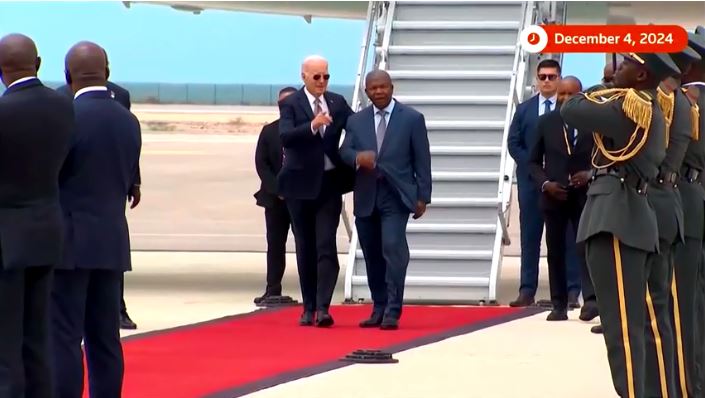
Angola President João Lourenço welcomes U.S. President Joe Biden on the day of his arrival on Dec 4, 2024, at Catumbela Airport in Catumbela, Angola 

What could a president who has just pardoned his son from crimes during thanksgiving weekend when everybody was asleep, be doing in a lightning visit to Africa in the ending times of his term? It sounds fishy right? As we have learnt in the past, the transition times are the shady times of an administration. So what was President Biden doing in Angola at this time? Why wait until the end of his term for his first visit to Africa? Why was he not then at the re-opening ceremony of the Notre Dame Cathedral in France with all world leaders at the end of the week? We are told that this lightning first visit to Africa is to cement a deal that will benefit Angola, the Democratic Republic of Congo (DRC), and Zambia: the deal called the Lobito Atlantic Railway project.

A map of the Lobito Atlantic Railway project (Source: LobitoCorridor.org)

The Lobito Corridor is connected by a stretch of railway infrastructure snaking through mineral (70% of the world’s cobalt is found in the DRC) and oil-rich parts of Angola, the DRC, and Zambia (70% of the world’s copper). Many of these minerals are considered critical for the energy transition adding an additional layer of urgency (The New Scramble for Africa, The Geological Scandal that is the Democratic Republic of Congo (DRC), DRC and Zambia Sign Over Cobalt and Copper Resources Rights to the United States?, When Einstein Wrote to the US President about Congo for its Uranium ). The Lobito project provides a faster access route to the mines in these parts of the world and a pathway to the Atlantic Ocean. The rail route was established in the early 1900s and thrived until the mid-1970s. During the dark days of Angola, in the civil war era, the Angolan parts of the railway were destroyed. From 2006 to 2015, the Lobito project was resurrected/rehabilitated by the Chinese government in the region, who spent over $2 billion rail-for-oil program, but JLo as João Lourenço, the president of Angola is known, has decided to change hands from the Chinese to the Americans and Europeans. In 2022, the Lobito Atlantic Railway concession, a 30-year concession (extendable an additional 20 years), was awarded to a consortium of Western companies.
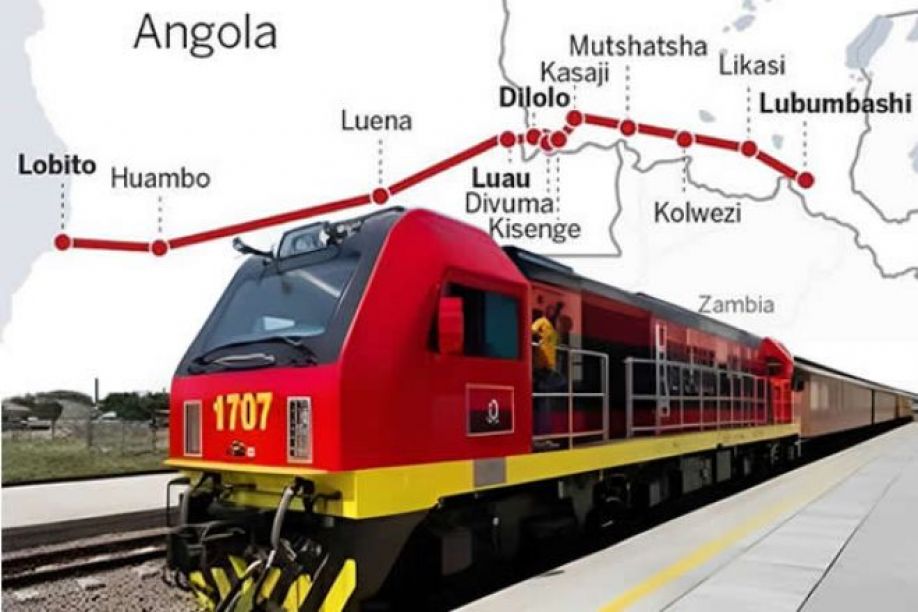
Lobito Atlantic Railway (Source: Angola24horas.com)

This investment represents the first alternative from Washington DC to China’s Belt and Road Initiative. As President Biden said in 2023 during JLo’s visit to Washington, “This [the Lobito railway project] first-of-its kind project is the biggest US rail investment in Africa ever,” … “A partnership between Angola and America is more important and more impactful than ever.” President Hichilema of Zambia said, “This corridor is of vital importance to opening up our countries, to opening up our regions, the continent, and truly the global economy,… This project is a huge opportunity for investment, for trade.”

Many see the Lobito Atlantic Railway project more as a West (US/Europe) vs. East (China) war interest on the African continent; while some imagine a money laundering scheme (after all Africa is known for its opacity in accounting) in the last days of an outgoing administration. You, dear reader, what do you think this is?

For more information, please read the Lobito Corridor, US News, CNN, and the White House press release.

Coincidence or Not? Coltan-rich Town Captured

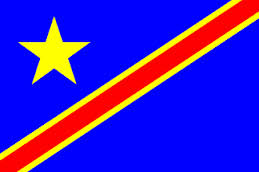
Flag of the Democratic Republic of Congo

As the silent genocide in the east of the Democratic Republic of Congo (DRC) continues, under the complicit eyes of the “international” community, last Friday, the town with the one of the biggest coltan reservoirs in the world, Rubaya, … was captured by the M23 rebels. What is coltan? For those who just discover it, coltan is a dull black metal from which niobium and tantalum are extracted. Thus, the name coltan comes from col in columbite (the niobium-dominant mineral) and tan in tantalite(the tantalum-dominant mineral). It is the material at the heart of the mobile phone boom, and is found everywhere in the computer, automotive, and electronics industries. It has been classified by the US Defense department since World War 2 as a material key to the nation’s security.

Democratic Republic of Congo (DRC) mineral map (Source: Atlas du continent africain, Jeune Afrique et editions Jaguar, 2000)

It is no secret that the M23 rebels are backed by neighboring Rwanda, who is in turn supported by … . Why DRC one may ask? As discussed earlier, Congo is a geological scandal, a country rich with some of the most important minerals on earth.  When much of eastern Congo came under the control of Rwandan forces in the 1990s, Rwanda suddenly became a major exporter of coltan and many other minerals (a Rwandan I spoke to admitted, minerals Rwanda never thought possible are being “discovered” every day on “their soil”), benefiting from the turmoil and weakness of the Congolese government. According to a UN report, the soaring price and interest in coltan has “brought in as much as $20 million a month to rebel groups” and other factions trading coltan mined in northeastern DRC. Lastly, the government of DRC (The Democratic Republic of Congo Accuses Apple) recently threatened many big companies, including Apple, of illegally obtaining minerals including coltan, and therefore of supporting rebels group. Is it then a surprise that Rubaya was captured last Friday? 

Excerpts below are from the BBC. To learn more, please read article on Africanews, and The East African.

=====

A town at the heart of mining coltan, a key ingredient in making mobile phones, has been seized in eastern Democratic Republic of Congo by rebel forces, their spokesman has said.

Rubaya fell into the hands of M23 fighters on Tuesday following heavy clashes with government troops, Willy Ngoma [M23 spokesperson] said. 

The government has not yet commented, but a civil society activist confirmed that M23 had captured the strategic town.

It happened on the day France’s President Emmanuel Macron called on neighbouring Rwanda to “halt its support” for the M23 rebel group.

Mr Macron made his comments after holding talks with DR Congo’s President Félix Tshisekedi in France’s capital, Paris.

Rwanda has repeatedly denied backing the rebels, who have captured much territory in the mineral-rich east during fighting over the past 18 months.

DR Congo is the world’s second-biggest producer of coltan, with most of it coming from the mines around Rubaya in the Masisi district.

Coltan is used to make batteries for electric vehicles and mobile phones.

DR Congo’s government accuses Rwanda of backing the rebels to steal its mineral wealth, an allegation the government in Kigali denies.

….

Patrice Lumumba Speech in Accra, Ghana, in 1958

Patrice Lumumba

Every June 30, we commemorate the “independence” of the Democratic Republic of Congo (DRC) by posting a speech or letter by its first prime minister Patrice Emery Lumumba. The word independence is placed in quotes because we know that independence cha-cha never really occurred and that many African countries including the DRC are still suffering from the sequels of neo-colonialism.

Patrice Lumumba gave the speech below on December 11, 1958 in Accra, Ghana, at a conference sponsored by Kwame Nkrumah, Ghana’s first president who also succumbed to imperialism. In his speech, all the evils that plague Congolese and African societies are cited: Western domination, external domination, balkanization of the Congolese territory (and Africa), and all the ‘ism‘ that undermine the unity of Africa. His speech is still very current today. The speech can be found in its entirety on Blackpast.org.

====

Kwame Nkrumah
Kwame Nkrumah

On December 11, 1958, 34 year old Patrice Lumumba, president of the Congolese National Movement, spoke at the Assembly of African Peoples, an international Pan African Conference sponsored by Kwame Nkrumah, the Prime Minister of newly independent Ghana.  His remarks appear below.  Two years later Lumumba would become the first Prime Minister of the Congo.

Our Program of Action

The Congolese National Movement, which we represent at this great conference, is a political movement, founded on October 5, 1958.

This date marks a decisive step for the Congolese people as they move toward emancipation. I am happy to say that the birth of our movement was warmly received by the people for this reason.

The fundamental aim of our movement is to free the Congolese people from the colonialist regime and earn them their independence.

Flag of the Democratic Republic of Congo

We base our action on the Universal Declaration of the Rights of Man — rights guaranteed to each and every citizen of humanity by the United Nations Charter — and we are of the opinion that the Congo, as a human society, has the right to join the ranks of free peoples.

We wish to see a modern democratic state established in our country, which will grant its citizens freedom, justice, social peace, tolerance, well-being, and equality, with no discrimination whatsoever.

In a motion we recently transmitted to the minister of the Congo in Brussels, we clearly stipulated — as did many other compatriots of ours — that the Congo could no longer be treated as a colony to be either exploited or settled, and that its attainment of independence was the sine qua non condition of peace.

In our actions aimed at winning the independence of the Congo, we have repeatedly proclaimed that we are against no one, but rather are simply against domination, injustices and abuses, and merely want to free ourselves of the shackles of colonialism and all its consequences.

These injustices and the stupid superiority complex that the colonialists make such a display of, are the causes of the drama of the West in Africa, as is clearly evident from the disturbing reports of the other delegates.

Map of the Democratic Republic of Congo

Along with this struggle for national liberation waged with calm and dignity, our movement opposes, with every power at its command, the balkanization of national territory under any pretext whatsoever.

From all the speeches that have preceded ours, something becomes obvious that is, to say the least, odd, and that all colonized people have noticed: the proverbial patience and good-heartedness that Africans have given proof of for thousands of years, despite persecution, extortions, discrimination, segregation, and tortures of every sort.

The winds of freedom currently blowing across all of Africa have not left the Congolese people indifferent. Political awareness, which until very recently was latent, is now becoming manifest and assuming outward expression, and it will assert itself even more forcefully in the months to come. We are thus assured of the support of the masses and of the success of the efforts we are undertaking.

This historical conference, which puts us in contact with experienced political figures from all the African countries and from all over the world, reveals one thing to us: despite the boundaries that separate us, despite our ethnic differences, we have the same awareness, the same soul plunged day and night in anguish, the same anxious desire to make this African continent a free and happy continent that has rid itself of unrest and of fear and of any sort of colonialist domination.

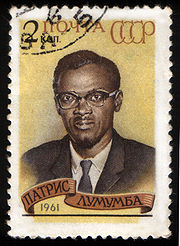
Lumumba on a USSR stamp in 1961
Lumumba on a USSR commemorative stamp in 1961

We are particularly happy to see that this conference has set as its objective the struggle against all the internal and external factors standing in the way of the emancipation of our respective countries and the unification of Africa.

Among these factors, the most important are colonialism, imperialism, tribalism, and religious separatism, all of which seriously hinder the flowering of a harmonious and fraternal African society.

This is why we passionately cry out with all the delegates:

Down with colonialism and imperialism!
Down with racism and tribalism!
And long live the Congolese nation, long live independent Africa!

Belgian King Expresses ‘Deepest Regrets’ for Colonial Past in Congo

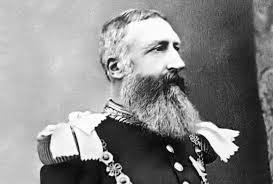
Belgian Congo_Genocide_Leopold II
King Leopold II

It took over 100 years for a Belgian King to finally ‘express his deepest regrets‘ for Belgium’s colonial past in Congo. As we recall, King Leopold II of Belgium perpetrated a genocide in CongoLeopold II took Congo, a country at least 10 times the size of Belgium, as his private property and killed millions of Congolese. It is said that he must have executed and maimed over 15 million people!


So now, Belgian King Philippe wrote a letter to the president of Congo Felix Tshisekedi, on 30 June 2020, the anniversary of the Independence of the Democratic Republic of Congo, stating: “During the time of the Congo Free State [1885-1908], acts of violence and brutality were committed that weigh still on our collective memory. The colonial period that followed also caused suffering and humiliations. I would like to express my deepest regrets for the wounds of the past, the pain of today, which is rekindled by the discrimination all too present in our society.” His remarks fell short of an apology! Should we applaud for this?


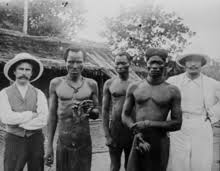
Belgian Congo_Genocide2
Picture of men holding cut-off hands (image by Alice S. Harris in Baringa 1904)

I say NO! To the Belgian King, I say you can eat your “deepest regrets”! Many are calling this progress, but I call this arrogance to wake up one day, and finally say, “I regret the past. Yes…, my grandfather committed acts of violence and brutality, killed your fathers, mothers, brothers, and sisters, … maimed your forefathers, decapitated so many of you … instilled fear into your psyche… destroyed your livelihood, your culture, and the entire foundation of your society.”


And so what? That’s it? Should we clap for you? where is the apology? Didn’t you think we knew that already? Where is the reparation? Don’t you know that Belgium is nothing without Congo? Coincidentally, King Philippe forgot to include the period following that time, from 1908 to the independence of Congo, and then to nowadays with the treacherous role played by Belgium in the assassination of the Congolese Prime Minister Patrice Lumumba, and countless others, and the unrest in the region to this day.

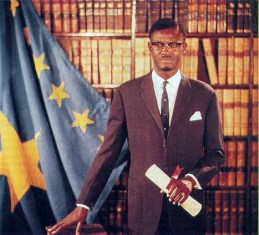
Patrice_Lumumba_official_portrait
Official portrait of Patrice Lumumba, Prime Minister of Congo

And to stand up there, and say I express my deepest regrets for the wounds of the past”… it’s like Hitler waking up today, and telling Holocaust survivors and their descendants, “I killed you, jailed your parents, forced you into exile, brought fear into your souls, and decimated every part of you… I regret it. What can you about it? ” It is simply arrogant! … It is just too easy. Until there is a clear “I am sorry”, until there is a clear “here is what we will do to right the wrongs,” until there is a clear “correction and inclusion in the history textbooks, opening of all classified documents”…. until there is a clear “respect for those killed, and for those living today” until then, there will be no respect for arrogant kings who claim to have been awaken by George Floyd’s killing in the USA and not the atrocities they themselves committed in Congo!

We, the people of Congo, cannot forget… we cannot forget that the unrest in Congo today is a direct result of the atrocities committed by Belgium in the region. We cannot forget the souls of our ancestors who still cry to us for justice today.


Devoir de Mémoire: Gbagbo dans le tourbillon du Golfe de Guinée

Laurent Gbagbo
Laurent Gbagbo

Aujourd’hui, nous allons faire un rappel mémoire, et regardé ce très beau documentaire qui discute des enjeux géopolitiques et économiques de la Côte d’Ivoire, et les  liens avec la République Démocratique du Congo (RDC).  Une chose très importante à retenir c’est que les enjeux du 21 ème siècle se jouent en Afrique, et que la survie des Etats-Unis et de l’Europe face à l’avancée du géant chinois se jouera en Afrique. Alors, il est primordial pour les américains et européens d’éliminer tous ceux qui voudraient ouvrir leurs frontières aux Chinois, ou qui voudraient pour une fois négocier des contrats justes et la dignité de leurs peuples tels Gbagbo. Attention, les élections en RDC auront lieu en Novembre, et nous prions de tous nos coeurs pour la paix et la survie de notre continent.  Nous, Africains, devons rester dignes et exiger d’ être traités comme des egaux et non des subalternes. Nos sous-sols regorgent de richesses, et nous rêvons de les partager avec tous, mais nous sommes désireux d’être traités comme des partenaires économiques et non des colonies. Continuons nos prières pour la Côte d’Ivoire, pour Laurent et Simone Gbagbo et tous leurs collaborateurs qui se sont battus pour la dignité de leur pays, pour la Libye et le Guide Kadhafi qui fait face à la plus grande armée mondiale transformée en gangster, et prions également pour la RDC et pour toute l’Afrique.  Ce n’est pas parce que certains pays qui nous avaient colonisés hier, sont ruinés financièrement aujourd’hui, que nous devons continuer d’être leur chasse gardée.  Arrêtons de nous faire piétiner.  Faisons preuve de lucidité, de vision, de courage, d’unité, et surtout de force.  N’Krumah rêvait d’une Afrique unie… Le Guide Libyen rêve d’une Afrique unie… rallumons cette flamme… arrêtons de nous diviser, et levons-nous comme un seul homme! (Les Etats-Unis avec 50 états forment un seul pays).

N’oubliez pas de regarder les parties 2, 3, et 4.

Lumumba’s death: Could we (Africans) have acted differently?

Frantz Fanon
Frantz Fanon

This is a great article by Frantz Fanon, which I published earlier in French.  (You will find the original here).  In view of all the events occurring in Africa (bombing of Cote d’Ivoire and Libya) with the UN approval, I thought that this article, published in 1964, was so important that I had to translate it into english for all to read! Enjoy…

—————————————————

The great success of the enemies of Africa is to have corrupted the Africans themselves.  It is true that these Africans had vested interest in the murder of Lumumba.  Heads of puppet governments, in a fake independence, faced everyday by massive opposition from their peoples, it did not take long to convince themselves that the real independence of the Congo would put them personally at risk.  And there were other Africans, a little less puppet, but who get frightened when it comes to disengaging Africa from the West.  It seems as if these African Heads of State are still afraid to face Africa.  These, also, though less actively, but consciously, contributed to the deterioration of the situation in Congo.  Little by little, we were reaching the agreement in the West that there was a need to intervene in Congo, we could not let things evolve at this pace.

Gradually, the idea of a UN intervention was taking shape. So we can say today that two simultaneous errors were committed by Africans.

Patrice Lumumba
Patrice Lumumba

And first by Lumumba when he sought the intervention of the UN.  He should have never called on the United Nations.  The UN has never been able to properly solve problems brought to man’s consciousness by colonialism, and whenever it has intervened, it was to actually come to the aid of the colonial power to the oppressed country.  Look at Cameroon.  What kind of peace do the subjects of Mr. Ahidjo kept in check by a French expeditionary force, which most of the time, made ​​its debut in Algeria, enjoy?  The UN, however, controlled the autodetermination of Cameroon and the French government has set up a “Provisional Executive” there.

Look at Viet-Nam.  Look at Laos.

It is not true to say that the UN fail because the causes are too difficult.

In reality the UN is the legal card used by imperialist interests when brute force has failed.  The sharing, the mixed controlled joint committees, under guardianship are international means of torture to break the will of the people, cultivating anarchy, banditry and misery.

Continue reading “Lumumba’s death: Could we (Africans) have acted differently?”