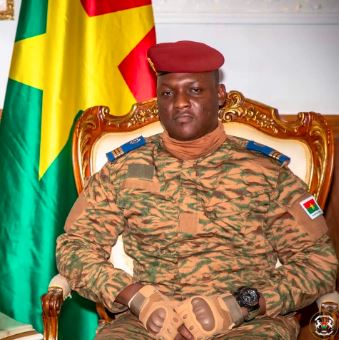
Industrialization in Africa : Ibrahim Traoré Tells it All

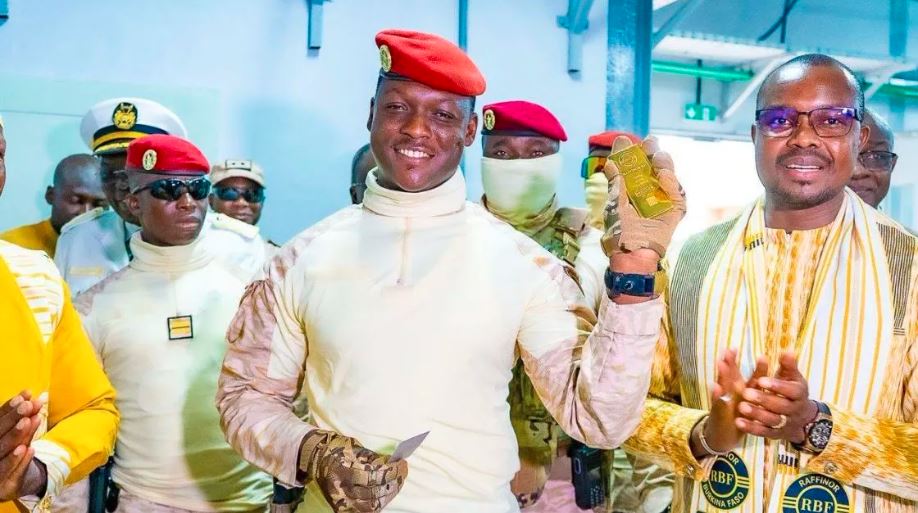
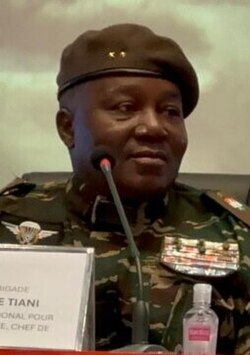
President Capitaine
Ibrahim Traore (Source: sig.gov.bf)

In his April 2, 2026 interview, the President of Burkina Faso, Ibrahim Traoré, showed, through simple examples, like his illustrious predecessor Thomas Sankara, that true sovereignty is impossible without industrialization.

He used simple everyday objects, in layman’s terms, including a spoon, to illustrate how Africa remains trapped in a colonial economic model where it exports raw materials and imports the finished goods at a much higher cost. He took the example of soy beans that are grown locally, yet soy oil is imported; similarly with cotton which is produced locally, yet, clothing is imported from abroad even though there is a local industry. He said that Burkina Faso must stop exporting raw resources only to buy back manufactured items. Doesn’t this remind you of Sankara at the UN tribune? The Faso Dan Fani: Woven Cloth of the Homeland.

Faso Dan Fani

In 1986, the President of the Faso, Thomas Sankara, declared that it was important to “produce and consume Burkinabé.” Thus, Sankara declared “In all the villages of Burkina Faso, we know how to grow cotton. In all villages, women know how to spin cotton, men know how to weave it into cloth, and other men know how to sew those threads into clothes... [Dans tous les villages du Burkina Faso, l’on sait cultiver le coton. Dans tous les villages, des femmes savent filer le coton, des hommes savent tisser ce fil en pagnes et d’autres hommes savent coudre les pagnes en vêtements ]” and further “We should not be slave of what others produce [Nous ne devons pas être esclave de ce que les autres produisent].”

Fuel

Traoré argued that Africa must produce locally, adding value to its own resources instead of enriching foreign industries. Like currently, the world is held up by the energy crisis caused by the Iran war and the blockade of the strait of Ormuz. Can you imagine that some African oil-producing countries like Cameroon, Congo, Gabon, have an oil/fuel penury? How come? well, for instance, Cameroon’s oil refinery burnt down a few years back, and Cameroonian oil is exported to Europe, bought back from them to be imported into the country as cheap toxic fuel! There are countless examples like that: Swiss Firms poison Oil destined for Africa. This is why Africa’s Richest Man Dangote has built one of the world’s largest oil refineries.

Traoré explained that Burkina Faso cannot remain dependent on foreign factories for basic goods. He insisted that local transformation of resources is the only path to real independence. To come back to the spoon example, Burkina Faso exports metal ore, while foreign countries turn it into spoons or tools, and Burkina buys those finished products back.  This is not development; it is dependency!

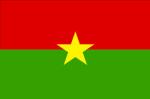
Flag of Burkina Faso

This development must be led by Burkinabe, and Africans themselves. It cannot be dictated by foreign institutions (IMF, World Bank, UN, etc) which do not serve our interests. Africa must build its own industries, and the opportunities and job creations are endless, from the example of the spoon, plates, medicine, clothing, housing materials, etc. True Burkinabe and African sovereignty cannot be done with industrialization!


Ibrahim Traore’s Masterclass: Press Conference on April 2, 2026

Capitaine President Ibrahim Traore (Source: sig.gov.bf)

On April 2, 2026, President Ibrahim Traoré of Burkina Faso addressed the local and international press for more than 2 hours. He focused on several major themes central to Burkina Faso itself and its relationship with foreign powers. It was a real masterclass. He did not fall for the numerous press’ traps.

Below are some key themes he focused on:

Sovereignty and independence

Traoré emphasized that Burkina Faso must strengthen its sovereignty in all areas: political, economic, and security-related. He framed the country’s current path as a struggle for real independence, and not symbolic autonomy which many African countries have had since their ‘independence‘ in the 1960s. It is important to reclaim our sovereignty! He highlighted that Burkinabé are now in charge of their own army, and is funded and trained by Burkinabé themselves; thus the mindset and strategy have changed and lent to victories against terrorism.

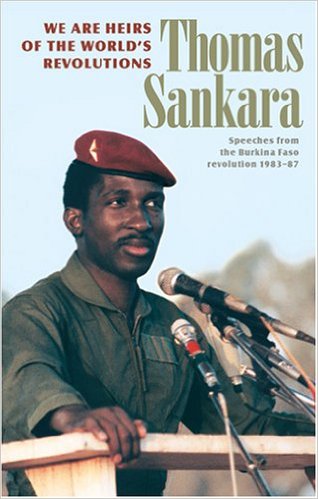
“We are heirs of the revolution” by Thomas Sankara

Economic Liberation

Optimal management of our resources and end the dependency on foreign powers and for Africa to build its own systems. He reminded us, almost like President Thomas Sankara before, that we have to build and plant what we need to achieve self-sufficienty (Thomas Sankara in His WordsThomas Sankara’s Speech at the United Nations / Discours de Thomas Sankara aux Nations UniesThomas Sankara Speech on Debt and Unity“The National Economy: Independent, Self-Sufficient, and Planned at the Service of Democratic and Popular Society” — Thomas Sankara). Taking the example of a spoon that we use to eat, but yet is imported; or Africa which imports food from other countries, when it is the continent with the most arable lands in the world. Something has to change.

Security and the war against terrorism

For a country like Burkina Faso, Western-style democratic systems cannot be simply grafted or copied to a nation like his, fighting terrorism and dealing with Western embargo, and deep institutional corruption. Security and stability must come before adopting external political needs.

Democracy and Media Reactions

President Traoré said that “Burkinabé must forget democracy,” and many Western media were triggered by it. In reality, the president of the Faso (PF) was trying to say that western electoral models cannot function effectively in Burkina Faso during wartime and when it is trying to free itself from imperialist chains.  Moreover, as we have discussed here before, Africans must stop falling into the trap of democracy; the West has cheated Africa for far too long with that word called democracy that most of them do not even apply! The PF also reminded us about the “Charte du Mandé” the very first declaration of human rights in the world established in Africa and which shows that Africa’s ancestral governance should be made more relevant today and is adapted to our struggles.

Burkina Faso
Burkina Faso

Justice and institutional reform

The PF highlighted that the focus is on rebuilding institutions and creating systems that are resistant to corruption and external manipulation. He also showed how old traditional/local/ancestral governments could live in harmony with the modern republican government for the benefit of the homeland.

Africa’s geopolitical position

He positioned Burkina Faso within a broader African struggle for independence. As the leader of the Alliance of Sahel States (AES), he stated that priorities would be on the operationalization of the unified force, the acceleration of regional integration, and the implementation of major economic initiatives. He urged Africans everywhere to see themselves as part of one global community which should fight for its independence.


Another Coup Attempt Against the President of Burkina Faso, Ibrahim Traoré

Capitaine President Ibrahim Traore (Source: sig.gov.bf)

In the wee hours of 2026, while our eyes were focused on Venezuela and the consequences of the American actions in the country, another event, just as earth-shattering was taking place on the African continent. There was another coup attempt on President Ibrahim Traoré in Burkina Faso which did not succeed. The government of Burkina Faso has announced that it has thwarted yet another plot aimed at killing the country’s leader, Captain Ibrahim Traoré, and disable a drone base. Burkinabes have taken to the streets in support of Traoré.

On January 6, Burkina Faso’s Minister of Security, Mahamadou Sana, disclosed that the planned coup, which was expected to be carried out late on January 3, was neutralized “thanks to the professionalism of the intelligence services.” The operation were to “[begin] with the neutralization of Comrade Captain Ibrahim Traoré, Head of State and President of Faso, either at point-blank range or through an operation to mine his residence,” … “there were to be efforts to put the drone base out of service, and a ground military intervention by external forces.” “Our intelligence services intercepted this operation in the final hours. They had planned to assassinate the head of state and then strike other key institutions, including civilian personalities,” Sana stated.

Flag of Burkina Faso

From what we have learned, the operation was financially supported from neighboring Côte d’Ivoire. The sophisticated plan had been hatched by Lt Col Paul Henri Sandaogo Damiba, the military officer and former transition president ousted by Traoré in September 2022, the security minister said in a late-night broadcast.

Capitaine Thomas Sankara

The western media say that Ibrahim Traoré and his government are lying, or fabricating this story to gain popularity; they talk of “alleged coup”, using verbs like “claim”, or like BBC wrote, “Plot to kill Burkina Faso leader foiled, says junta [why are they still calling it a junta after 4 years? When Damiba was there, they never called it such].” This would not be the first time that the government of Côte d’Ivoire would have hands in the destabilization of Burkina Faso. It was through the Côte d’Ivoire channel and government, with help from Liberia, that our brother Thomas Sankara was taken out by France. Now, it would seem to be coming from Damiba, via Côte d’Ivoire, Togo, for the interests of France; as we know Damiba is the front-man for the foreign forces who want to destabilize the country. The goal being to decapitate Burkina Faso, and therefore the AES alliance which includes Niger and Mali.

For more, check out: Newsclick, BBC, AfricaNews, and countless others.

Mali Recovers over a Billion $ for its Miners

Map of Mali 

Imagine being able to recover money from multinationals? Imagine putting the well-being of your people so much at the forefront that you are not afraid of uncovering or exposing corruption or injustice, and of taking on major world multinationals! This is what the Malian government has just done, and as a result has uncovered a billion dollar in arrears! Remember how Pascal Lissouba, the former president of the Republic of Congo, admitted that the Congolese government had no idea how much oil Elf (now Total Energies) was pumping out of its soil, and that they were at the mercy of whatever the company wanted to pay them, which was pennies; when he tried to renegotiate contracts or find better partners, he was deposed by Denis Sassou Nguesso, the Western puppet. Remember Jean Bedel Bokassa of the Central African Republic who admitted that he had no visibility on the amount of diamonds or uranium that French and Swiss companies were extracting from his country. Now, imagine being in your sovereign state, i.e. no Western puppet at your helm, the well-being of your people at the forefront?

AES Logo

Mali (and the other countries of the AES) has been working tirelessly on nationalizing their resources, and renegotiating correctly contracts with multinationals that are extracting their resources. Thus, such an exercise is fruitful in the sense that now, they can audit accounts, and compensate or fight for better compensation for their people better. Today, it was announced that Mali has recovered over a billion dollar in arrears from mining companies! Isn’t this a beautiful Christmas /end of year present? This also makes us pray further for the safety of such governments who place the restoration of their people’s dignity and well-being at the forefront of their efforts. Now, more than ever, they will be the target of the foreign corporations and bandits! Now, more than ever, they need each of us to stand in solidarity with them!

Excerpts below are from Africanews.

=====

Mali has recovered more than a billion dollars in arrears from mining companies after a sweeping audit, its finance minister, Alousséni Sanou, said on Tuesday.

It’s one of the country’s biggest ever clawbacks from its lucrative mining sector.

The military-led government launched an audit of the sector in early 2023 and uncovered massive shortfalls for the state. That paved the way for a new mining code that raises royalties, boosts the state’s ownership in mining companies and scraps stability clauses.

A recovery commission was set up after an audit flagged financial irregularities and shortfalls for the state estimated at between half a billion and a billion dollars.

Timbuktu’s Manuscripts are Returning Home

Map of Mali with its capital Bamako

Last week, the Malian government started returning the famous Timbuktu’s manuscripts home to Timbuktu after over 10 years away. As you remember, we prayed for the manuscripts to be kept safe, as Timbuktu was under Attacks by ‘Muslim fundamentalists’Timbuktu Manuscripts now Available Online. You know the AES is working hard, when it is safe for the Timbuktu manuscripts to return home after over 10 years away! This is a testimony to the hard work of the Malian troops, its people, and its government. The Malian people have shown that an African country can protect itself, recover its territory, and free its own people. Yes… there has been strong collaborations with Russia, and their neighboring brothers of Burkina Faso and Niger, and the formation of the Alliance of the Etats du Sahel (AES). Mali did what France and all its allies could not do with their multiple operations, operation Barkhane, Operation Serval, Task Force Takuba, etc, … wait they were not really there to free the country from terrorism, but rather to finance/protect terrorism, divide the country, so as to be free to do their business. We are proud of Mali, and pray that these manuscripts remain safe as they have been for centuries, in the hands of their very own people.

Excerpts below are from Africanews.

=====

Manuscripts a Tombouctou (Mali) montrant de l'astronomie et mathematique
Manuscripts a Tombouctou (Mali) montrant de l’astronomie et mathematique

The Malian military government on Monday started returning home the historic manuscripts of Timbuktu, which were spirited out of their fabled northern city when it was occupied by al-Qaida-linked militants more than a decade ago.

Islamic radicals destroyed more than 4,000 manuscripts, some dating back to the 13th century, after they seized Timbuktu in 2012, according to the findings of a United Nations expert mission. They also destroyed nine mausoleums and a mosque’s door — all but one of the buildings on the UNESCO World Heritage list.

The majority of the documents dating back to the 13th century — more than 27,000 — were saved by the devotion of the Timbuktu library’s Malian custodians, who carried them out of the occupied city in rice sacks, on donkey carts, by motorcycle, by boat and four-wheel drive vehicles.

Manuscript of Timbuktu (Google Arts and Culture)

… About 706 kilometers (439 miles) from Bamako, Timbuktu sits on the edge of the Sahara desert and has a dry climate. For years, the local municipal and religious authorities have asked for the return of the manuscripts. Diahara Touré, Timbuktu’s deputy mayor, said the famous documents are important to the local people as they “reflect our civilization and spiritual and intellectual heritage.”

… In February, the military government made a commitment to return the manuscripts, according to Bouréma Kansaye, the Malian Minister of Higher Education. He described them as as a “legacy that bears witness to the intellectual greatness and crossroads of civilization” of the city of Timbuktu — “a bridge between the past and the future.”

We now have a responsibility to protect, digitize, study, and promote these treasures so that they continue to enlighten Mali, Africa, and the world,” Kansaye said during Monday’s return ceremony.

Coup against Ibrahim Traoré and Worldwide Support for Him

Capitaine President Ibrahim Traore (Source: sig.gov.bf)

For the past few weeks, the price of gold has hit a record high of $3400. Some of the places with some of the largest gold mines is in the Sahel, the AES. So it is no surprise that there was a recent coup against the president of Burkina Faso, one of the leaders of the AES a few weeks ago.

Ibrahim Traoré, president of Burkina Faso, escaped another coup attempt on his life. Coincidentally, this attempted coup happened the day after the American General Langley lied in front of the US congress saying that Traoré was embezzling the country’s funds for his personal security. It is quite preposterous to hear. Why doesn’t Langley mention Ouattara who has put Ivory Coast in debt and destroyed the country? Why doesn’t Langley mention Paul Biya of Cameroon who has been in power 43 years, and taken the country 60 years backwards? Why doesn’t Langley mention Sassou Nguesso of the Republic of Congo who has siphoned all the country’s money into his pockets and those of his family? Or Faure Eyadema who comes from the Eyadema dynasty? Moreover, how can someone like Ibrahim Traoré who has foregone his presidential salary embezzle money?
Then how disgusting of this man to stand in front of congress and lie? It reminds me of another, a certain Colin Powell, who stood in front of the whole world and spoke of things which never existed in Irak?

Flag of Burkina Faso

Since coming to power, Ibrahim Traoré has bought over 400 tractors for farmers, 953 motorcycles, 710 motor pumps for water, 10,000 tons of fish food, 68,964 tons of fertilizer, 10,000 liters of products to name a few to try to empower the country’s agriculture. In the ministry of health, his accomplishments include buying 15 mobile clinics, 36 vehicles for hospitals, 3 oxygen units, 11 cold rooms, 835 tablets, 1,900 solar refrigerators. There was also the inauguration of a full tomato plant to enhance local productions, and now the plan for the largest Coca Cola plant in Africa.

A Escrava Isaura (Source: primetelenovelas.com)

This Langley dude reminds me of the slave/overseer Domato, in the Brazilian telenovela A Escrava Isaura who was always treating his slave brothers and sisters so much worse than the white master.

Excerpts below are from the BBC first about the Burkina Faso’s coup plot, and secondly about the subsequent protests which have occurred around the world in support of Traoré, Captain Ibrahim Traore: Why head of Burkina Faso military junta dey popular among young Africans? (originally in Pidgin, and translated by Dr. Y.).  These worldwide protests and marches in support of Traoré have taken place in Burkina Faso, Mali, Niger, Ghana, UK, France, all the way even to Jamaica.

=====

Burkina Faso’s military government has said it foiled a “major plot” to overthrow junta leader Capt Ibrahim Traoré, with the army alleging the plotters were based in neighbouring Ivory Coast [this is no secret, but BBC writes it as if the Burkinabe people were hallucinating].

Security Minister Mahamadou Sana said the coup attempt was led by current and former soldiers working with “terrorist leaders“. The intention was to attack the presidential palace last week, he added. The aim of the plan was to “sow total chaos, and place the country under the supervision of an international organisation“, Sana said on state television on Monday.

It is the latest of several claims of attempts to remove the junta leader who seized power in 2022 amid increasing militant attacks. …

=====

Burkina Faso
Burkina Faso

Thousands of people gathered at the Place de la Révolution in Ouagadougou on Wednesday 30 April to show their support to the President of the transition, Captain Ibrahim Traoré.

The demonstration happened after the US commander of AFRICOM, General Michael Langley, told the US Senate Armed Services Committee in early April that the military regime in power in Burkina Faso has taken advantage of the resources of the country, particularly the gold reserves [interesting, why does he mention only gold and no other resources?], for his own protection instead of the population. What General Langley told the US Senate provoked people to react in Burkina Faso and throughout the AES countries and even beyond the region. The government of Burkina Faso condemned the statement by the US military command, made with the ‘aim to spoil the country’s image.’

… The massive support for Burkina Faso’s military leader, Captain Ibrahim Traoré, comes at a time of growing tensions with Western powers. General Langley’s accusations of corruption leveled against the President of the transition, Captain Ibrahim Traoré, instead of weakening the regime in Burkina Faso, has reinforced the status and aura of the young military leader, whose popularity extends beyond national borders.

Alliance des Etats du Sahel (source: linfodusahel.com)

… Traoré quickly adopted an anti-imperialist stance, where he strongly criticized the interference of Western powers, particularly France. They see his decision to draw closer to new partners like Russia and Iran, and to leave certain regional cooperation frameworks (G5 Sahel, ECOWAS) as a stamping of his sovereignty. This geopolitical shift excites young people seeking political and economic independence happy.

… Captain Traoré has become a symbol of resistance to Western influence, particularly French influence, and this has gone positively with the predominantly young population. His revolutionary stance and commitment to African unity appeals to many Burkinabè, especially young people.

There is a third element for me: Ibrahim Traoré’s youth, his outspokenness and his imperialist stance which are inline with another Burkinabe president, Captain Thomas Sankara, whose popularity for almost 40 years after his death is in doubt‘ [says] Seidik Abba, President of the Centre international d’études et de réflexions sur le Sahel (CIRES).

The military regime in power in Burkina Faso is multiplying symbolic and even populist acts to boost its image. The decision to forego the presidential salary and opt for the modest income he receives as army leader also makes his popular with the public.

… Since taking power in 2022, Captain Ibrahim Traoré has undertaken a series of reforms that will strengthen the state’s control over mining resources, particularly gold, for the country’s main export.

“Katanga, La Danse des Scorpions” by Dani Kouyaté

The poster for “Katanga, la danse des scorpions” by Dani Kouyate

On March 1, 2025, Burkinabè filmmaker Dani Kouyaté was awarded the prestigious Étalon d’or de Yennenga (Golden Stallion of Yennenga). His film, Katanga, la danse des scorpions, is a cinematic adaptation of William Shakespeare’s Macbeth set in an African (Burkinabe) context and told in the Mooré language of Burkina Faso. His movie focuses on the power play in Africa. His win marked Burkina Faso’s first Étalon d’or in 28 years after Buud Yam of Gaston Kaboré, and the third win of Burkina Faso 34 years after the first Tilai of Idrissa Ouedraogo. Beyond the Étalon d’or, Katanga, la danse des scorpions garnered several other accolades, including the Public Prize with an average score of 9.18/10, the Sembène Ousmane Prize from the Ecobank Foundation, the Special Prize from the Cultural and Tourism Development Fund (FDCT), the Special UEMOA Prize for feature fiction, and the Paulin Soumanou Vieyra African Critics’ Prize.

Enjoy the trailer below.


FESPACO 2025: Burkina Faso Wins its First Golden Stallion in 28 years!

FESPACO2025 (Fespaco.bf)

The 29th edition of the FESPACO took place from February 22 to March 1, 2025, in Ouagadougou, the capital of Burkina Faso.

The host country, Burkina Faso was represented by two films: Katanga, la danse des scorpions by Dani Kouyaté and Les Invertueuses by Chloé Aïcha Boro. The guest country of honor, Chad, was represented by Diya by Achille Ronaimou. There were several entries from diverse countries including Egypt, Algeria, Tunisia, Democratic Republic of Congo (DRC), Côte d’Ivoire, Zambia, Somalia and many more.

Dani Kouyate receives his Golden Stallion from President Ibrahim Traore (Source: DNE Africa)

On March 1, 2025, Burkinabè filmmaker Dani Kouyaté was awarded the prestigious Étalon d’or de Yennenga (Golden Stallion of Yennenga). His film, Katanga, la danse des scorpions, is a cinematic adaptation of William Shakespeare’s Macbeth set in an African (Burkinabe) context and told in the Mooré language of Burkina Faso. His win marked Burkina Faso’s first Étalon d’or in 28 years after Buud Yam of Gaston Kaboré, and the third win of Burkina Faso 34 years after the first Tilai of Idrissa Ouedraogo. Beyond the Étalon d’or, Katanga, la danse des scorpions garnered several other accolades, including the Public Prize with an average score of 9.18/10, the Sembène Ousmane Prize from the Ecobank Foundation, the Special Prize from the Cultural and Tourism Development Fund (FDCT), the Special UEMOA Prize for feature fiction, and the Paulin Soumanou Vieyra African Critics’ Prize.

Golden Stallion of Yennenga
The Golden Stallion of Yennenga

The Somali movie The Village next to Paradise by Mo Harawe won the Silver Stallion of Yennenga. The Bronze Stallion (Étalon de bronze) was awarded to On Becoming a Guinea Fowl by Rungano Nyoni (Zambia).

L’Homme-Vertige by Guadeloupean Malaury Eloi-Paisley won the Golden Stallion in the documentary section, as well as the Paul Robeson Prize for best diaspora film.

During the award ceremony, a special tribute was paid to Malian filmmaker Souleymane Cissé, who had been slated as jury president but passed away shortly before the festival. Dani Kouyaté, upon receiving his award, honored Cissé by saying, “Souleymane Cissé has been a model for me… he lives on in our hearts and minds.

Malian filmmaker Souleymane Cisse at the Silicon Valley African Film Festival (SVAFF) in 2024

Burkina Faso’s President, Ibrahim Traoré, presented Kouyaté the award and praised film enthusiasts for the “resounding success of this celebration of African cinema.”

The director [Dani Kouyaté] shows legitimate recognition for the courage and self-sacrifice of our worthy daughters and sons committed to victory over the forces of evil,” Traoré said on social media after the event.

The 30th edition of FESPACO is set for 2027. To read more about FESPACO 2025, please check out TRT Global – FESPACO Festival 2025 shines with cinematic triumphs in Burkina Faso

“The National Economy: Independent, Self-Sufficient, and Planned at the Service of Democratic and Popular Society” — Thomas Sankara

“We are heirs of the revolution” by Thomas Sankara

Today, we will end with the third point cited by President Thomas Sankara, last point for revolutionizing all sectors of Burkinabe society. Excerpts below are from “We are Heirs of the World’s Revolutions, Speeches from the Burkina Faso Revolution 1983-87” by Thomas Sankara, Pathfinder Press (2007) p. 50 – 53. Again, as you read, you can see that this is exactly what our leaders of the AES, and Ibrahim Traore of Burkina Faso in particular are applying. The main difference today is that the AES also faces terrorism and the repeated attacks of hordes fabricated by Western powers; so security is one of the major priorities.

=====

… The National Council of the Revolution is therefore aware that the construction of an independent, self-sufficient, and planned national economy requires the radical transformation of present society, a transformation that itself requires the following major reforms:

  • Thomas Sankara
    Thomas Sankara
    Agrarian reform
  • Administrative reform
  • Educational reform

Reform of the structures of production and distribution in the modern sector

The agrarian reform will aim to:

  • Increase labor productivity through better organization of the peasants and the introduction of modern agricultural techniques in the countryside.
  • Develop a diversified agriculture, together with regional specialization.
  • Abolish all the fetters that are part of the traditional socioeconomic structures that oppress the peasants.
  • Finally, make agriculture the basis for the development of industry.
Burkina Faso
Burkina Faso

All this is possible by giving real meaning to the slogan of food self-sufficiency, a slogan that now seems dated for having been proclaimed so often without conviction. First, this will be a bitter struggle against nature, which, by the way, is no more thankless for us than for other peoples who have conquered it magnificently on the agricultural level. … To the contrary, numerous small accomplishments in the agricultural system will allow us to transform our territory into one vast field, an endless series of farms.

Second, this will be a struggle against those who starve the people, the agricultural speculators and capitalists of all types. Finally, it will mean protecting our agriculture against domination by imperialism — with regard to its orientation, the plunder of our resources, and unfair competition from imports against our local products, imports whose only advantage is their packaging aimed at bourgeois afflicted with snobbishness. As for the peasants, sufficiently high prices and industrial food-processing facilities will guarantee them markets for their produce in any season.

Flag of Burkina Faso

The reform should result in a less costly, more effective, and more flexible administration.

The educational reform aims to promote a new orientation for education and culture. It should result in transforming the schools into instruments at the service of the revolution. Graduates of the system should not serve their own interests and the exploiting classes, but rather the popular masses. The revolutionary education that will be taught in the new schools must imbue everyone with a [Burkinabe] ideology, a [Burkinabe] personality that rids the individual of blind mimicry. …

Burkina Faso

Culture in a democratic and popular society, should have a three-fold character: national, revolutionary, and popular. Everything that is antinational, antirevolutionary, and antipopular must be banished. To the contrary, our culture extols dignity, courage, nationalism, and the great human virtues

… Our artists … should seize the opportunity before them to raise our culture to a world level. … Let musicians sing not only of our people’s glorious past, but also of their radiant and promising future.

The revolution expects our artists to be able to describe reality, portray it in living images, and express them in melodious tunes while showing our people the true way forward to a better future. It expects them to place their creative genius at the service of a national, revolutionary, and popular [Burkinabe] culture.

“Women hold up the other Half of the Sky” — Thomas Sankara

“We are heirs of the revolution” by Thomas Sankara

I love what Thomas Sankara, former president of Burkina Faso, said about women. I had previously published it here, Thomas Sankara in His Words. Did you know that Sankara had placed women at the center of his politics? He appointed females to high governmental positions, encouraged them to work, recruited them into the military, and granted pregnancy leave during education. During his time, he outlawed female genital mutilation, forced marriages and polygamy in support of Women’s rights. Excerpts below are from “We are Heirs of the World’s Revolutions, Speeches from the Burkina Faso Revolution 1983-87” by Thomas Sankara, Pathfinder Press (2007) p. 49 – 50.

=====

The weight of age-old traditions in our society has relegated women to the rank of beasts of burden. Women suffer doubly from all the scourges of neocolonial society. First, they experience the same suffering as men. Second, they are subjected to additional suffering by men

African Woman

Our revolution is in the interests of all the oppressed and all those who are exploited in today’s society. It is therefore in the interests of women, since the basis of their domination by men lies in the system through which society’s political and economic life is organized. By changing the social order that oppresses women, the revolution creates the conditions for their genuine emancipation.

The women and men of our society are all victims of imperialist oppression and domination. … they wage the same battle. The revolution and women’s liberation go together. We do not talk of women’s emancipation as an act of charity or out of a surge of human compassion. It is a basic necessity for the revolution to triumph. Women hold up the other half of the sky. 

… Until now, women have been excluded from the realm of decision making. The revolution, by entrusting women with responsibilities, is creating the conditions for unleashing women’s fighting initiative. … They will be involved in all the battles we will have to wage against the various shackles of neocolonial society in order to build a new society. … The final goal of this great undertaking is to build a free and prosperous society in which women will be equal to men in all spheres. 

Burkina Faso

However, we must have a correct understanding of the question of women’s emancipation. It is not a mechanical equality between men and women, acquiring habits recognized as male – drinking, smoking, and wearing pants. That’s not the emancipation of women. Nor will acquiring diplomas make women equal to men or more emancipated. A diploma is not a free pass to emancipation.

The genuine emancipation of women is one that entrusts responsibilities to women, that involves them in productive activity and in the different fights the people face. The genuine emancipation of women is one that compels men to give their respect and consideration. Emancipation, like freedom, is not granted, it is conquered. It is for women themselves to put forward their demands and mobilize to win them