
Even though 2020 was quite a “different” year for a lot of people, there were still a lot of things to celebrate in Africa. Let’s do a review of some of the things we celebrated this year in 2020! There are many more, of course, but I selected 10. Enjoy!
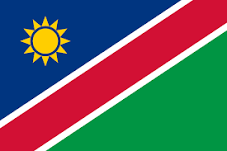
- As you remember, Germany committed the First Genocide of the 20th Century in Namibia. It took them over a century to even acknowledge it. Over the past few years, they have been returning skulls of the Herero they killed, and memorabilia from Herero freedom fighters [Germany Returns Skulls of Namibians Genocide Victims, Germany Returns Artifacts Stolen From a Namibian Freedom Fighter, Have Germans finally acknowledged the Namibian Genocide?]. This year, Namibia rejected a German offer of compensation of 10 million Euros for the genocide. I applaud the strength of the Namibian government for refusing this offer which is a spat from the German: Such an insult! Germany have almost eradicated an entire race, and to this day, Namibia is struggling because of this. And they give 10 million Euros? 10 millions Euros for torturing, killing, raping, destroying, displacing for years? [Namibia Rightfully Rejects 10 million Euros Compensation for Genocide]
- At the end of June, the King of Belgium “expressed his deepest regrets;” it took over 100 years for a Belgian King to finally “express his deepest regrets” for Belgium’s colonial past in Congo. As we recall, King Leopold II of Belgium perpetrated a genocide in Congo. Leopold II took Congo, a country at least 10 times the size of Belgium, as his private property and killed millions of Congolese. It is said that he must have executed and maimed over 15 million people! Not sure what this king wants… deepest regrets is not equal to apology or recognition… so although this is a first in over 100 years, it will not cut it! [Belgian King Expresses ‘Deepest Regrets’ for Colonial Past in Congo, Lumumba’s Children Ask Belgian King for their Father’s Remains]
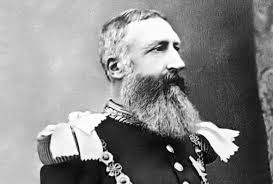
King Leopold II - France returned skulls of Algerian fighters in August, as a first step towards recognition of their wrongdoings (genocide) in Algeria. What is it with these people and skulls is beyond me! As a flashback, Algeria obtained its independence from France after 7 years of a bloody war with France. During that time, France perpetrated a genocide in Algeria… For the first time, a French president, Emmanuel Macron, acknowledged that the colonization of Algeria was a “crime against humanity.” We are now awaiting for recognition of France’s crimes against humanity in Cameroon, and Madagascar, and countless others [French President Acknowledges French Genocide in Cameroon, Fossi Jacob: A Cameroonian Hero and France’s Genocide in Cameroon].
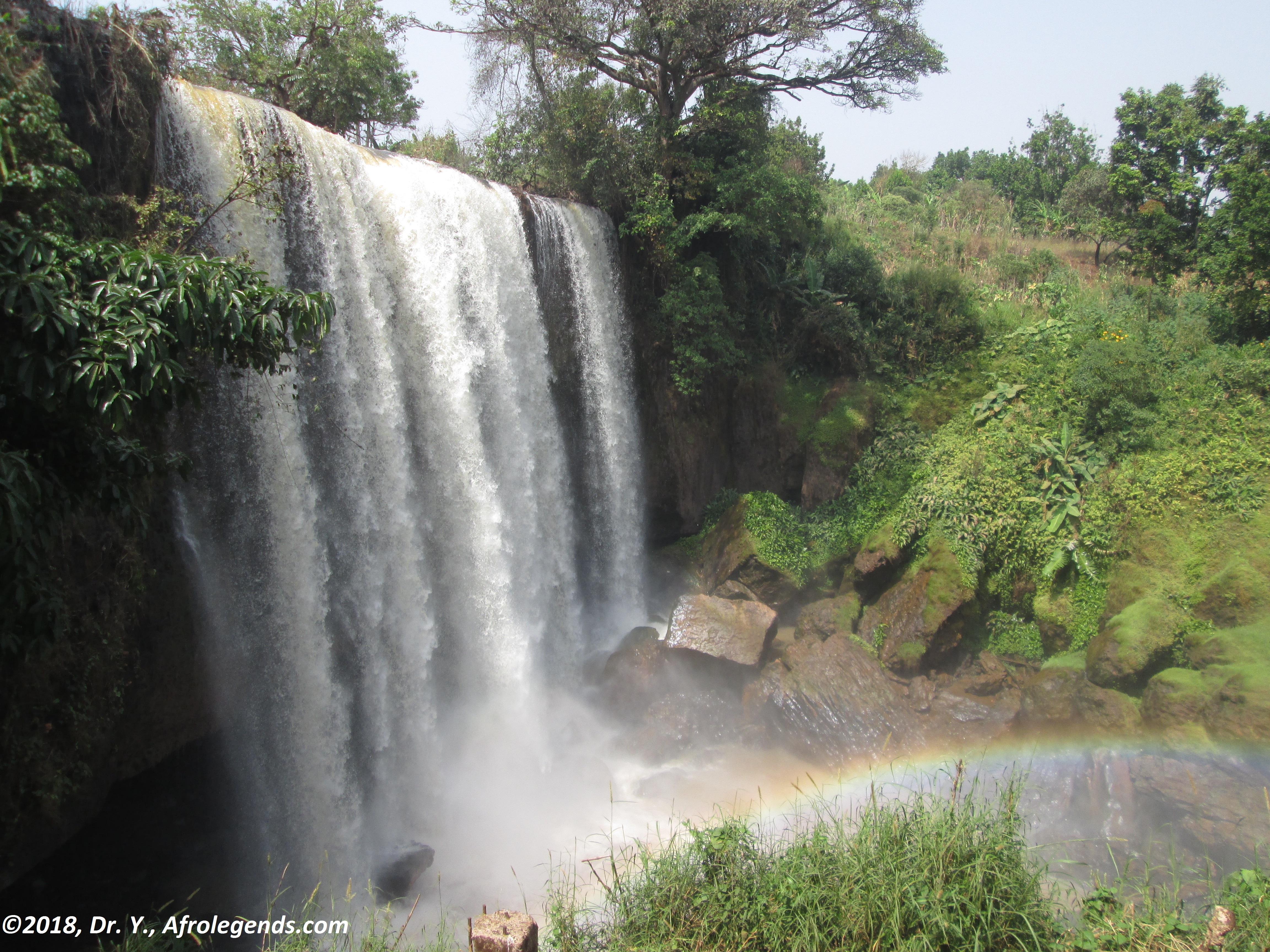
Metche Waterfalls in Cameroon was the site of French genocide there - In Tanzania, Saniniu Laizer, a small-scale miner, became an overnight millionaire in June when he found and sold two rough Tanzanite stones valued at $3.4 millions, and then sold another gem in August for $2 millions. This was the biggest ever found in Tanzania, not sure for the world. These are major records!
- Black South Africans who fought in World War II were finally recognized! This is great… but at the same time sad… why did it take 80 years for their recognition? We all know that African soldiers were key to the liberation of France during World War II, and yet when it came time for the parade on the Bastille, their uniforms were given to their white counterparts for the parade… after all, it should not be read in the annals of history that Africans liberated France! [Thiaroye: A French Massacre in Senegal, ‘Thiaroye Massacre’ by Ousmane Sembene]
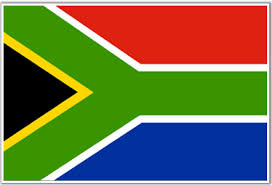
Flag of South Africa - There is strong excitement to the countdown to the African trade. The trading phase under the African Continental Free Trade Area (AfCFTA) by 54 of the 55 countries in Africa, and initially set to begin in July 2020, but now will start on January 1, 2021 [Nigeria signs African Free Trade Area Agreement]. This is a big news for the African continent as it will now allow for free trade across the continent, increasing trade among countries which should have always traded between themselves. This is what was envisioned by Kwame Nkrumah, all the independence fathers, and more recently by Muammar Kadhafi (Africans and the Trap of Democracy) at the AU.
- The world-renowned singer singer-songwriter Angélique Kidjo from Benin kicked off the year 2020 with a monumental performance at the 62nd Grammy Awards in January. She snatched her 4th Grammy award for Best World Album, and rocked the Los Angeles Staples Center. As always (I have had the honor of attending one of her concerts), she brought the true spirit of Africa to the stage as she told all that African music is the bedrock of all music.
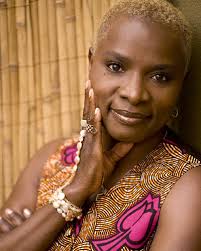
Angelique Kidjo (Source: World Music Central) - Amid the strong racial justice movements that rocked the world this year, the country of Benin has decided to renovate the fort of Ouidah, in Ouidah which was a key city in the slave trade for many centuries; this is a bid to promote tourism in the country, and to honour the suffering and celebrate the overcoming Africans who were captured and inhumanely shipped abroad from the main port of this coastal town [Benin restores the Fort of Ouidah]. Similarly, Somalia has also made a move to culturally reinforce its lands as it signed in February an education and heritage support deal with UNESCO aimed at strengthening efforts to preserve the country’s culture, education, and history.
- This year, there was a good news for African writers. Cameroon’s Djaïli Amadou Amal won this year’s prestigious French Literary Award Goncourt des Lycéens for her novel ‘Les Impatientes‘ — inspired by her personal experiences in a South Sahel patriarchal society; later that week in December she won the Choix Goncourt de l’Orient. Two African authors were shortlisted for the Booker Prize of fiction: Ethiopian Maaza Mengiste, and Zimbabwean Tsitsi Dangarembga. Nigerian author Chimamanda Ngozi Adichie whose novel ‘Half of a Yellow Sun‘ — set during her the Biafra civil war, was voted the best book to have won the Women’s Prize for Fiction in its 25-year history.
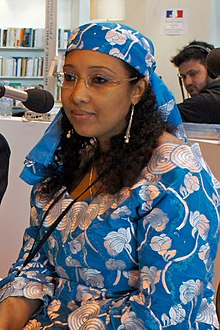
Djaili Amadou Amal (Source: Wikipedia) - “Jerusalema”, the South African song by DJ Master KG featuring Nomcebo Kizode has taken over the world and has gone viral on social media… Jerusalema has become a global phenomenon, even inspiring its own dance challenge. What is even more amazing, is the hit took over the world, and is a Gospel song which talks about God always being close, saving us, and never letting go of us.. The Gospel hit has undoubtedly marked Africa as the soundtrack of the year [South Africa National Heritage Day, The story behind Master KG’s ‘Jerusalema,’ one of the most …].
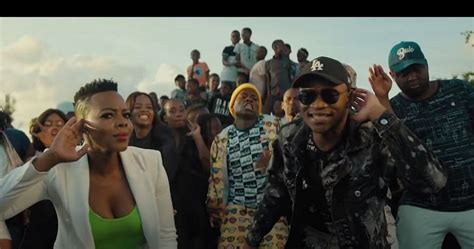
Master KG and Nomcebo Kizode in Jerusalema (Africanews.com)




 African Heritage