I just learned of Chad repaying its $100 million debt to Angola with … cattle, and I simply loved the idea! When you are plagued with a slave currency such as the FCFA, why not go back to the old ways of exchange and trading? Chad owed Angola money, Angola needed cattle, Chad provided the cattle to clear its debt, and now both countries are squared: everyone is happy! Isn’t it the way the world works anyway: you need something, I supply it, and you pay me back by supplying me with the goods you have. Enjoy this article from the BBC!
====
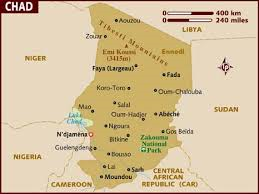
Map of Chad (Source: Lonely Planet)
Chad is repaying Angola a debt of $100m (£82m) with cattle, Angola’s state-run newspaper has reported.
The unusual agreement is seen as creating a win-win situation for both nations – Chad is short of cash while Angola needs cattle.
More than 1,000 cows arrived by ship in Angola’s capital, Luanda, as the first payment, Jornal de Angola reported.
In total, Angola would receive 75,000 cattle over 10 years, meaning it has accepted payment of $1,333 per animal.
Chad would send a further 3,500 head of cattle later this month, the report added.
The cattle trade between Chad and Angola
Chad had proposed repaying the 2017 debt with cattle, and Angola had agreed because it would help the southern African state rebuild its cattle population in drought-affected areas, the state-run daily paper said.
Angola is often hit by drought, causing animals to die of hunger and thirst and leaving many villagers destitute.
Some of the sea creatures that lived underwater in the location where the Sahara desert is today. (Source: American Museum of Natural History 2019)
In October, we talked about how the Sahara had been home to world’s largest sea creatures. Given that Africa is the cradle of humanity, it totally makes sense that it would also be the place where some the world’s largest sea creatures hail from. Now, scientists have charted the climate of the Sahara desert thousands years ago based on the diet of the people there, identifying it as a place which was plentiful with fish: a lot of catfish and tilapia (or rather ancestors of these!). Enjoy excerpts from this The Guardian article.
=====
View of the Sahara desert from space
The Sahara’s shift from savannah with abundant lakes to a largely arid expanse has been traced in the remains of fish eaten thousands of years ago.
Researchers analysing material found in a rock shelter in the Acacus mountains in south-west Libya say they have found more than 17,500 animal remains dating from between 10,200 and 4,650 years ago, 80% of which are fish. About two-thirds of the fish were catfish and the rest were tilapia. The team say telltale marks on the bones reveal the fish were eaten by humans who used the shelter.
It is not the first time fish remains have been found in what are now dry regions of the desert, but the team say it is the first time the ancient climate of the region has been traced through animal remains.
“All the other finds are surface finds, [from] just one layer, one period, one event. Whereas what we have here is a 5,000-year sequence with a lot of bones – so that makes it special,” said Dr Wim van Neer from the Royal Belgian Institute of Natural Sciences, a co-author of the study.
The discovery is the latest in a string of finds from the large Takarkori rock shelter, a site, about 50-60 metres long and 30 metres high, that is thought to have been first used by hunter gatherers more than 10,000 years ago.
Rock art in the Sahara desert (Source: Wikipedia)
Prof Savino di Lernia, a co-author of the study fromSapienza University of Rome, said previous finds at the shelter included evidence of rock art, the earliest signs in Africa of wild cereals being cultivated and their seeds stored, and evidence from pottery shards of dairy practices in Africa dating back nearly 7,000 years ago.
… Writing in the journal Plos One, Van Neer and colleagues report that fish account for about 80% of the animal remains discovered at the site during the 5,000-year period it was used by humans, with mammals making up just over 19%. Birds molluscs and other animals such as turtles account for the rest.
The team found the predominance of fish was not steady but fell from about 90% in the earliest layers to about 48% in those from the most recent period of its occupation.
“The amount of fish is decreasing through time and the contribution of mammals increases, showing that people at Takarkori focussed gradually more on hunting and livestock keeping,” the authors write. But, they add: “It is unclear if this was an intentional process or if this shift could be related to increasing aridity, which made the environment less favourable for fishes.” …
For the 2020 International Women’s day, March 8th, I thought very appropriate to talk about the Aba Women’s War, also known as the Women’s War of 1929, or the Aba Women’s Riots (name given by the British to the movement to minimize its effect), or the Aba Women’s Rebellion. This is thought to be the first anti-colonial revolt organised by women to redress social, political and economic grievances in Nigeria, and possibly in West Africa. The Women’s War of 1929 lasted almost 2 months and encompassed the Owerri and Calabar provinces, an area with over 2 million inhabitants. Over 25,000 women came out to protest. This was a union of women from six ethnic groups: Igbo (the majority), Ibibio, Andoni, Orgoni, Bonny, and Opobo. As a result, in 1930 the colonial government was forced to abolish the system of warrant chieftains, and appoint women to the Native Court system. These reforms have been seen as a prelude to the emergence of mass African anti-colonial nationalism.
International Women’s Day
Many African societies were and still are matriarchal in nature. However, with the contact with the colonizers, their cultures have been altered to reflect that of the oppressor which is patriarchal, or to be a mixture of the two. Colonialism altered the position of various Nigerian women in their societies. Women traditionally were allowed to participate in the government and held a major role in the market. Men and women also worked collaboratively in the domestic sphere, and were recognized to both have important individual roles. Women also had the privilege of participating in political movements. The British, coming from a patriarchal system, saw these practices as “a manifestation of chaos and disorder”, and so they attempted to create political institutions which mirrored theirs (very typical of Europeans). While they considered the political institutions headed by Igbo men, the British ignored those of the women, effectively shutting them out from political power.
The event that ultimately led to the war was direct taxation. In April 1927, the British colonial government in Nigeria took measures to enforce the Native Revenue (Amendment) Ordinance. Direct taxation on men was introduced in 1928 without major incidents. Women feared that they will be next.
Nwanyeruwa (Source: Guardian.Ng)
On the morning of November 18, 1929, a dispute between a woman known as Nwanyeruwa and a tax collector by the name of Mark Emereuwa started in Oloko in Owerri province; the two exchanged angry words, and Emeruwa grabbed Nwanyeruwa by the throat. After this, using the traditional methods of communication, i.e. sending a palm-leaf, which is a symbol of trouble and a call for help, all the women in the neighborhood were rounded up. From the whole countryside women poured into Oloko and proceeded according to custom to “sit” upon the man who had tried to tax Nwanyeruwa. “Sitting on a man” is a local practice of censoring men through all night song and dance ridicule. Thousands of women congregated at the Native Administration centers in Calabar and Owerri as well as smaller towns to protest both the warrant chiefs and the taxes on the market women. The women chanted and danced, and in some locations forced warrant chiefs to resign their positions. The women also attacked European-owned stores and Barclays Bank and broke into prisons and released prisoners. They also attacked Native Courts run by colonial officials, burning many of them to the ground. Colonial Police and troops were called in; they fired into the crowds that had gathered in Calabar and Owerri, killing more than 50 women and wounding over 50 others. Until the end of December 1929, when troops restored order, ten native courts had been destroyed, a number of others were damaged, houses of native court personnel were attacked, and European factories at Imo River, Aba, Mbawsi, and Amata were looted. By 10 January 1930, the revolt was regarded as crushed.
Aba station in the 1920s (Source: Libcom.org)
In the end, it is said that at least 25,000 women were involved in these revolts The women’s protests were carried out on a scale that the British colonial state had never witnessed in any part of Africa. The Aba Women’s War of 1929 prompted the colonial authorities to drop their plans to impose a tax on the market women, and to curb the power of the warrant chiefs. The women’s uprising is seen as the first major challenge to British authority in Nigeria and West Africa during the colonial period. Women were not just fighting for themselves, but also for the men who were falling under the unjust colonial tax system.
So every time we celebrate the International Women’s Day, we need to remember the Aba Women’s War of 1929 in Nigeria which was a strong message to the dominating colonial system that women will not be oppressed; that women’s voices needed to be heard, and most importantly that women too have power!
Now let’s end the week with a dose of optimism. Despite all the hardships endured, African youth are still hopeful and optimistic. Enjoy this article from the Guardian!
====
Young people across Africa are confident that the continent is heading for an era of success fuelled by technology and entrepreneurship, according to a new survey.
The Africa Youth survey, which claims to be the largest of its kind, said there is growing belief in the concept of “Afro-optimism”, fighting persistently negative stereotypes of the continent.
Though most people interviewed were dissatisfied with the state of their own country, almost half believed the continent as a whole was in a healthier state than previously, and two-thirds thought they were living through a transformative “African century”.
… “We have found a youth that refuses to shy away from the very real challenges of Africa, that is honest about what needs to be done and what their role has to be to achieve this – and they are overwhelmingly keen to make that difference.”
The survey covered 14 countries, and included 4,200 interviews with young people aged between 18 and 24.
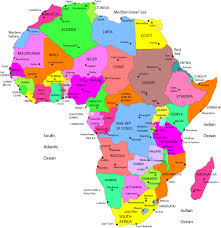
Map of Africa
… Those surveyed had strong opinions about the importance of technology and business, with 81% saying they believed technology could unlock the continent’s potential.
… Commenting on the report, Rosebell Kagumire, editor of the website AfricanFeminism, said … “When we see ourselves as African, as a people, and what we have achieved together and what we have survived together, that makes a better picture,” she said. “It’s a bigger picture. We are looking at African people, really thinking outside the colonial construct.”
She added, however, that the idea of Afro-optimism was often simplistic, painting a picture of “happy Africans”. …
“It assumes a certain lack of complexity. We are allowed to be complex. I don’t think anyone’s in a permanent state of optimism, and certainly not young Africans,” she said.
The biggest concerns were corruption, the creation of new jobs for the continent’s booming young population, and peace and security.
Kagumire pointed out that young people were often disaffected by politics, and women, in particular, felt discriminated against in the corporate world. “Even when people are optimistic, it’s pegged to the realities.”
Meet Dan Abisi, a Kenyan music teacher who makes his own trombones from scratch. I was moved by his love and passion for music which has made him consider cheaper alternatives such as building his own trombone, and thus making it widely available in Kenya. Given that in Kenya, and probably in many African countries, there are very few shops selling these brass instruments (and they are not cheap!), manufacturing it locally is definitely a winner. I don’t know what it takes to manufacture a musical instrument, but I bet spending hours trying to make it sound right is important. Kudos to Dan Abisi who has been making his own trombones and sharing his love of music and the instrument with local Kenyan children!
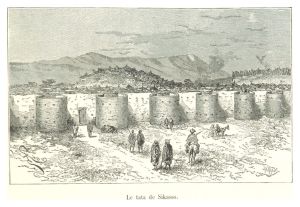
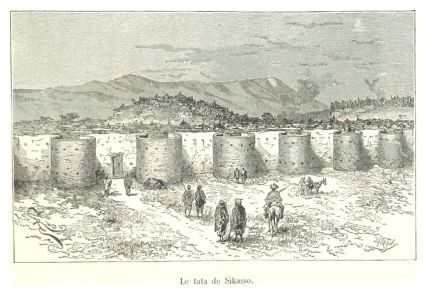
The tata of Sikasso, illustration by Édouard Riou published in Du Niger au golfe de Guinée, Hachette, 1892, by L.G Binger, p. 95
In 1898, the French colonial forces attacked the Tata of Sikasso which had resisted the tireless assaults of Samori Touré and his army for 15 months a decade earlier. Despite strong resistance from Babemba Traoré and his people, they could barely resist the French canons and barbary, and succumbed on May 1, 1898. As always, the French used treachery: the French colonel Marie Michel Alexandre René Audéoud wanted to install a garrison at Sikasso; but Babemba Traoré flatly refused. This resulted in a war between the French colonial forces and the people of Sikasso, which lasted 2 days. In the end, Babemba Traoré, the king, ended his life, abiding by the famous Bamanankan saying “Saya ka fisa ni maloya ye” (literally: death is preferable to shame). The city was then ransacked and plundered.
Below is an account of the barbary of the French colonel Audéoud and his men after their victory in Sikasso. The original in French can be found here on Jacques Morel’s page; the translation to English is brought to you by Dr. Y., Afrolegends.com .
====
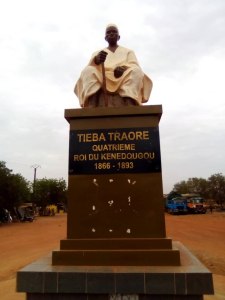
Monument of Tieba Traoréin Sikasso (Source: Wikipedia)
In April 1898, the colonel Audéoudwho is looking for a boost for his promotion, sends captain Morisson demand from Babemba, Tieba’s successor, the “Fama” of Sikasso (in modern-day Mali), and ally – imprudent – of the French in their war against Samori, the establishment of a French garrison in his capital. Babemba refuses. It is war, and the siege of Sikasso where violent counter-attacks of the besieged repeatedly endanger the French troops. But with only three remaining enclosures still standing after resisting for fifteen months to Samori, “the fortress does not last two days when faced with modern artillery,” says Gilbert Comte.
Sikasso resists street by street. A French officer, taking part in the capture of Sikasso, describes the city as such:
“After the siege, the assault. Babemba kills himself. We give the order to plunder. Everything is taken or killed. All the captives, roughly 4000, are herded together.
The colonel [Audéoud] starts the distribution. He himself used to write in a notebook, then gave it up saying, “Share this among yourselves!”. The sharing took place with arguments and blows. Then back on our way! Each European is given a wife of his choice… On our way back we did intervals of forty kilometers with these captives. Children and all those who are tired are killed with the butt of the gun and the bayonet…
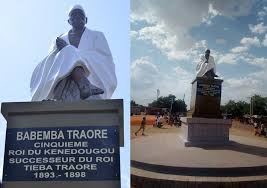
Monument of Babemba Traoré in Sikasso (Source: Face2FaceAfrica.com)
The corpses were left by the roadsides. A woman is found crouching. She is pregnant. We push her with the butt of the gun. She gives birth standing while walking. Has cut the umbilical cord and abandoned the child without looking back to see whether it’s a boy or a girl.
During those intervals, the men requisitioned on the way to carry millet stay five days without rations; receive fifty strokes of rope if they take a handful of the millet they are carrying.
The sharpshooters got so many captives that it was impossible to house and feed them.”
Sources: P. Vigné d’Octon, La Gloire du sabre, Paris, Flammarion, 1900; cité par Jean Suret-Canale, Afrique Noire, Occidentale et Centrale, Éditions sociales, 1968, page 274-275; Gilbert Comte, L’empire triomphant, Denoël, 1988, page 85-86.
The tata of Sikasso, illustration by Édouard Riou published in Du Niger au golfe de Guinée, Hachette, 1892, by L.G Binger, p. 95
Have you ever heard about the Tata of Sikasso or Sikasso Tata, a fortifying wall built in Mali which sustained attacks by some of the greatest conquerors of its time, including none other than the great Samori Touré ? and which was destroyed by the French colonial army ? This structure was probably stronger than some forts found in Europe. This defensive wall is quite reminiscent of the Great Wall of China.
Monument of Tieba Traore in Sikasso (Source: Wikipedia)
The Tata of Sikasso, locally known as Tarakoko, is a fortress built during the reign of King Tieba Traoré between 1877 and 1897, in modern Mali. Tieba Traoré, whose mother came from Sikasso, became King of the Kénédougou Empire and moved its capital to the city of Sikasso. He established his palace on the sacred Mamelon hill and constructed a tataor fortifying wall to defend against the attacks of both the Malinke conqueror Samori Touré and the Frenchcolonial army. The city withstood a long siege from 1887 to 1888 but fell to the French in 1898. This fortified wall was reinforced by Babemba Traoré, Tieba Traoré’s brother, who had succeeded him as king.
The Tata of Sikasso was built for the protection of the city, in a military style. It used to extend through an area of 41 hectares, with its walls reinforced with the addition of earthen walls, bars, and alternate stone beds; the intervals of which were filled with ferrous gravel, earth, and stones. At the time of Samori Touré’s unsuccessful siege, which lasted 15 months from March 1887 to June 1888, the tatahad three concentric enclosures.
The exterior of the tatawas 9 km long, 6 m (∼20 ft) wide at the base and 2 m (∼7 ft) high at the summit. Its height varies between 4 to 6 m.
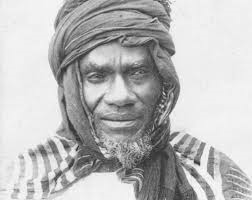
Samori Touré
The intermediary tatawalls were not as big, and also not as wide. Those were meant for merchants, soldiers and nobles.
The inner enclosure encircled the Dionfoutou, which was the part of the city inhabited by the king and his family.
The fortress is still visible today in the actual landscape of the city of Sikasso in neighborhoods such as Mancourani, Medina, Wayerma, Bougoula city and Fulasso. Seven monuments, in the shape of doors, have been built with modern materials on the site of the passages of yesteryear to preserve their memory.
The Tata of Sikasso has been inscribed in the UNESCO World Heritage Tentative list: « Le Tata de Sikasso ».
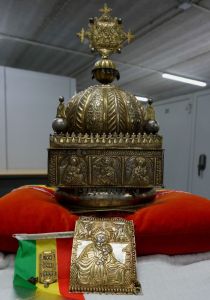
The Ethiopian government has received an18th Centurycrown that had been stolen then hidden in a flat in the Netherlands for21 years.
The crown is thought to beone of just 20 in existence. It has depictions of Jesus Christ, God and the Holy Spirit, as well as Jesus’ disciples, and was likely gifted to a church by the powerful warlordWelde Sellasehundreds of years ago.
Ethiopian Sirak Asfaw, who lives in the Netherlands, discovered the crown in the suitcase of a visitor he was hosting.
Upon realising that it was stolen he held onto it until 2018 when Prime Minister Abiy Ahmed was elected to office. He then reached out to art historian Arthur Brand and Dutch police to help keep it safe until its return home to Ethiopia.
On Thursday, Mr Abiy tweeted photos of him receiving the crown from a delegation that included Dutch Minister for Foreign Trade and Development Cooperation Sigrid Kaag.



















 African Heritage