Celui qui porte des souliers ne craint pas les épines (proverbe Ehwe – Ghana, Togo).
He who wears shoes does not fear thorns (Ewe proverb – Ghana, Togo).

Celui qui porte des souliers ne craint pas les épines (proverbe Ehwe – Ghana, Togo).
He who wears shoes does not fear thorns (Ewe proverb – Ghana, Togo).

In a modern world where drums are no longer used to alert communities (this will be a story for another day), it is imperative to find a solution that will be used to alert all neighbors within a community of some impending issue. Anatoli Kirigwajjo from Uganda has thought of just such an innovation which is based on the ancestral drum tradition. Kirigwajjo is the founder and CEO of Yunga, a local digital security network that enhances neighbor-to-neighbor safety. He was recently awarded “The Africa Prize for Engineering Innovation” dedicated to developing African innovators, an award, founded by the Royal Academy of Engineering in the UK.
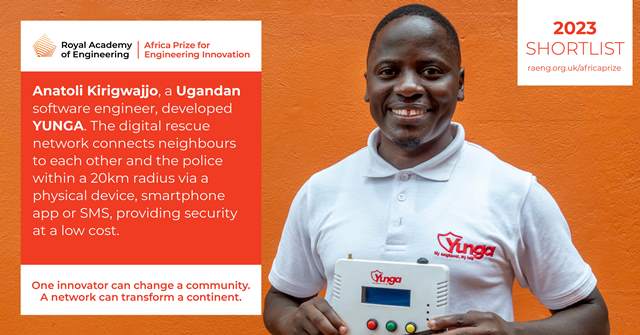
His innovation is based on the “10,000 household model” – a traditional practice where people use drums to alert their community to an emergency. Yunga works by connecting neighbors to one another and to police within a 20 km-radius – through a physical device, smartphone app or SMS service, providing security at a low cost. Picture this, thieves have broken into a house in a neighborhood, the app will alert neighbors of the issue, and they could thus come to their neighbors’ help; or imagine there are some “coupeurs de route” or armed bandits who have blocked the highway and are ransacking travelers at a particular checkpoint, Yunga will alert passengers and the local police of such events, thus enabling drivers to divert to other roadways (not that many exists in rural areas, though). We know how police work is slow in our countries, so enabling neighbors to respond as in the olden days is a true asset to the communities who sometimes feel defenseless in view of ineffective and often late police interventions.
Kirigwajjo said, “I developed Yunga after losing $1,300 worth of assets in a break-in, with little chance of the thieves being caught. We hope that with our household networks, communities will become harder targets for criminals. This will ensure safety, which in turn will create the space for economic activities to thrive.”
So far, Yunga has prevented over 180 cases of community crime and they have plans to expand to additional African markets like Ghana, Kenya and Nigeria. Yunga is a testimony of innovation made to solve local problems. Congratulations to Anatoli Kirigwajjo!
It is good to note that Anatoli Kirigwajjo jointly won the award with South African biomedical engineer Edmund Wessels for his battery-powered portable handheld device which allows gynecologists to diagnose and treat a woman’s uterus without anesthetics or expensive equipment in remote areas. To learn more, check out The Uganda Monitor.
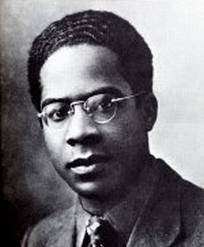
It is no secret that Aimé Césaire, the father of the Négritude movement, was a prolific author and poet. He published over 100 poems, each one more unique than the other. Césaire was not only responsible for Cahier d’un retour au pays natal, a widely acclaimed masterpiece read throughout schools in Africa today, which documented the 20th-century colonial condition, but he was also an accomplished playwright. In what Césaire describes as his “triptych” of plays, La Tragédie du roi Christophe (The Tragedy of King Christophe, another one read in schools), Une Saison au Congo (A Season in the Congo, another masterpiece), and Une Tempête (The Tempest), he explores a series of related themes, especially the efforts of Blacks—whether in Africa, the United States, or the Caribbean—to resist the powers of colonial domination. Like his poetry and polemical essays, Césaire’s plays explore the paradox of Black identity under French colonial rule.
The poem below “The Woman and The Flame” by Aimé Césaire, Solar Throat Slashed: The Unexpurgated 1948 Edition, is from published by Wesleyan University Press, and translated to English by Clayton Eshleman. Enjoy!
=====

“The Woman and the Flame” by Aimé Césaire
A bit of light that descends the springhead of a gaze
twin shadow of the eyelash and the rainbow on a face
and round about
who goes there angelically
ambling
Woman the current weather
the current weather matters little to me
my life is always ahead of a hurricane
you are the morning that swoops down on the lamp a night stone
between its teeth
you are the passage of seabirds as well
you who are the wind through the salty ipomeas of consciousness
insinuating yourself from another world
Woman
you are a dragon whose lovely color is dispersed and darkens so
as to constitute the
inevitable tenor of things
I am used to brush fires
I am used to ashen bush rats and the bronze ibis of the flame
Woman binder of the foresail gorgeous ghost
helmet of algae of eucalyptus
dawn isn’t it
and in the abandon of the ribbands
very savory swimmer

La blessure d’une parole ne guérit pas (proverbe Mongo – République Démocratique du Congo). – Quand on fait de la peine à quelqu’un, on ne l’oublie pas.
The wound from a word does not heal (Mongo proverb – Democratic Republic of Congo). – When one hurts someone, one does not forget.

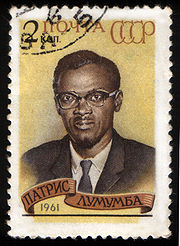
Every June 30, we commemorate the “independence” of the Democratic Republic of Congo (DRC) by posting a speech or letter by its first prime minister Patrice Emery Lumumba. The word independence is placed in quotes because we know that independence cha-cha never really occurred and that many African countries including the DRC are still suffering from the sequels of neo-colonialism.
Patrice Lumumba gave the speech below on December 11, 1958 in Accra, Ghana, at a conference sponsored by Kwame Nkrumah, Ghana’s first president who also succumbed to imperialism. In his speech, all the evils that plague Congolese and African societies are cited: Western domination, external domination, balkanization of the Congolese territory (and Africa), and all the ‘ism‘ that undermine the unity of Africa. His speech is still very current today. The speech can be found in its entirety on Blackpast.org.
====

On December 11, 1958, 34 year old Patrice Lumumba, president of the Congolese National Movement, spoke at the Assembly of African Peoples, an international Pan African Conference sponsored by Kwame Nkrumah, the Prime Minister of newly independent Ghana. His remarks appear below. Two years later Lumumba would become the first Prime Minister of the Congo.
…
Our Program of Action
The Congolese National Movement, which we represent at this great conference, is a political movement, founded on October 5, 1958.
This date marks a decisive step for the Congolese people as they move toward emancipation. I am happy to say that the birth of our movement was warmly received by the people for this reason.
The fundamental aim of our movement is to free the Congolese people from the colonialist regime and earn them their independence.
We base our action on the Universal Declaration of the Rights of Man — rights guaranteed to each and every citizen of humanity by the United Nations Charter — and we are of the opinion that the Congo, as a human society, has the right to join the ranks of free peoples.
We wish to see a modern democratic state established in our country, which will grant its citizens freedom, justice, social peace, tolerance, well-being, and equality, with no discrimination whatsoever.
In a motion we recently transmitted to the minister of the Congo in Brussels, we clearly stipulated — as did many other compatriots of ours — that the Congo could no longer be treated as a colony to be either exploited or settled, and that its attainment of independence was the sine qua non condition of peace.
In our actions aimed at winning the independence of the Congo, we have repeatedly proclaimed that we are against no one, but rather are simply against domination, injustices and abuses, and merely want to free ourselves of the shackles of colonialism and all its consequences.
These injustices and the stupid superiority complex that the colonialists make such a display of, are the causes of the drama of the West in Africa, as is clearly evident from the disturbing reports of the other delegates.

Along with this struggle for national liberation waged with calm and dignity, our movement opposes, with every power at its command, the balkanization of national territory under any pretext whatsoever.
From all the speeches that have preceded ours, something becomes obvious that is, to say the least, odd, and that all colonized people have noticed: the proverbial patience and good-heartedness that Africans have given proof of for thousands of years, despite persecution, extortions, discrimination, segregation, and tortures of every sort.
The winds of freedom currently blowing across all of Africa have not left the Congolese people indifferent. Political awareness, which until very recently was latent, is now becoming manifest and assuming outward expression, and it will assert itself even more forcefully in the months to come. We are thus assured of the support of the masses and of the success of the efforts we are undertaking.
This historical conference, which puts us in contact with experienced political figures from all the African countries and from all over the world, reveals one thing to us: despite the boundaries that separate us, despite our ethnic differences, we have the same awareness, the same soul plunged day and night in anguish, the same anxious desire to make this African continent a free and happy continent that has rid itself of unrest and of fear and of any sort of colonialist domination.
We are particularly happy to see that this conference has set as its objective the struggle against all the internal and external factors standing in the way of the emancipation of our respective countries and the unification of Africa.
Among these factors, the most important are colonialism, imperialism, tribalism, and religious separatism, all of which seriously hinder the flowering of a harmonious and fraternal African society.
This is why we passionately cry out with all the delegates:
Down with colonialism and imperialism!
Down with racism and tribalism!
And long live the Congolese nation, long live independent Africa!
La pluie ne tombe pas seulement sur un seul toit (proverbe Efik – Nigeria, Cameroun; proverbe Mongo – République Démocratique du Congo (RDC)). – Tout le monde a ses difficultés dans la vie.
Rain does not fall only on one roof (Efik proverb – Nigeria, Cameroon; Mongo proverb – Democratic Republic of Congo (DRC)). – Everyone has difficulties in life.
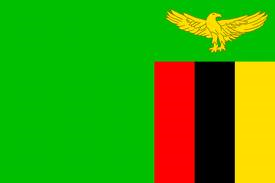
At end of 2021, we all screamed when we heard news that the only Ugandan international airport at Entebbe was about to be seized by China to pay the country’s debt. This was avoided at the last minute. Zambia is another matter all together, when talking about Zambia these days, there is no way to avoid the Zambia Sovereign Debt Crisis: in 2020, it was the first country to declare bankruptcy as the pandemic had drawn it to its knees, and it was on the verge of a full Chinese takeover. Can you only imagine the instantaneous gray hairs a president will get after getting elected and finding that not only are the country’s coffers empty, but above all, the country is so deep in debt that it will need a miracle to come out of it? Today, President Hichilema applauded the debt deal, which is a big step forward. However, one cannot help but wonder what sort of deals were made, and how many generations of Zambians will have to pay for it (DRC and Zambia Sign Over Cobalt and Copper Resources Rights to the United States?). At this point, don’t you think former president Edgar Lungu and its cronies deserve to be prosecuted for madly borrowing away Zambians’ future? Below are excerpts from the BBC.
====

Zambia’s President Hakainde Hichilema can finally breathe a sigh of relief as the outlines of a deal aimed at lifting his country out of its debt crisis have been unveiled.
In 2020, the copper-rich country became the first African nation to default on its debt payments during the Covid pandemic. It was burdened by loans and high interest rates that severely restricted the government’s ability to invest in critical social programmes and infrastructure development, both crucial for economic growth.
Following months of talks, Zambia has now successfully agreed new repayment terms with its state creditors on up to $6.3bn (£5bn) debt, including over $4bn owed to China.
… Although the details of the deal have not yet been released [as always, populations are kept in the dark, while their future is being signed over], it appears that Zambia will be granted an extended repayment time of over 20 years, including a three-year grace period with interest-only payments.
Experts have praised the government for securing the agreement and are hopeful that this will improve Zambia’s economic situation.
Economist Isaac Mwaipopo, from the think-tank the Centre For Trade Policy and Development, believes it will help inspire investor confidence, but urges the government to follow an economic recovery plan.
“There’s a need to come up with a clear plan in terms of reconstructing the economy, especially that we will still be on an IMF programme [which developing country has ever been helped by the IMF?] for the next three years. It will be very important that sectors are identified which can be strategic for growth, boosting job creation and aiding poverty alleviation.”
… By renegotiating the debt terms, Zambia gains valuable breathing space to stabilise its economy, implement necessary reforms and pursue long-term growth. This newfound flexibility can be redirected toward investment in healthcare, education, infrastructure and social welfare.
…
Nul ne peut mener deux pirogues à la fois (Proverbe Douala – Cameroun). – On ne sert pas deux maîtres ; un seul homme, une seule femme.
No one can lead two canoes at the same time (Duala proverb – Cameroon). – One cannot serve two masters; one man, one woman.

For anyone who has been watching the acclaimed series, The Chosen about the life of Jesus, projects from the Angel Studios are always of great quality. An upcoming series coming from the Angel Studios will be the series, The German King directed by Adetokunboh M’Cormack, entirely based on the life of Rudolf Duala Manga Bell, one of the resistants to German colonization, as a young prince born in Kamerun, raised in Germany alongside Kaiser Wilhelm II, and who fought for the freedom of his people upon his return. When Rudolf Duala Manga Bell returned home to assume the throne of the Duala people in 1910, he led a rebellion against the oppressive German rule. In 1910, the German governor of Kamerun, Theodor Seitz, approved an urbanization project for the city of Douala (Kamerunstadt had been renamed Douala) set to turn it into one of the largest ports of Africa. The project outlined a plan to relocate the Douala people inland from the Wouri river to allow European-only settlement of the area (European-Only Neighborhoods in African Cities before Independence). Neighborhoods such as Neu Bell, Neu Akwa, and Neu Deido were to be created for the indigenous people; these new allotments were going to be separated from the ‘European city’ by a barrier 1 km wide (early version of apartheid!). The expropriations affected most of the Douala clans, who were angered and formed a united front behind Manga Bell. Rudolf Duala immediately refused, and told the Germans that the treaty signed in 1884 did not stipulate the removal/expulsion of the locals from their lands, and that this separation constituted a form of apartheid. For his rebellion, Duala Manga Bell was later condemned and hanged in 1914.

A poignant scene from the movie is where Rudolf’s wife tells him, as he is torn, having grown with Kaiser Wilhelm II whom he considers a friend and brother: “Wilhelm is not your family! Your family is here! You may talk like them, act like them, dress like them, but you will never be them. Your skin will always be the color of the rich Cameroonian soil, and they will always walk over it, as if they own it. … Rudolf, you do this so that your sons, and your sons’ sons, and their sons will have a land they can call their own.”
I cannot wait for the series to come out, as it shows a very important part of the history of Kamerun during German colonization as well as other leaders like Sultan Njoya, Martin Paul Samba, and others. Please check out the story on the Angel Studios’ website, and above all, do not forget to support the project. Let us all celebrate Rudolph Douala Manga Bell, the Tét’èkombo (the king of kings), a uniter of Cameroon (already reaching out to other kings), and one of Cameroon’s biggest resistant.

Chaque rivière a sa propre source (proverbe Zulu – Afrique du Sud) . – Dans chaque homme il y a quelque chose de bien.
Every river has its own source (Zulu proverb – South Africa). – In every man there is something good.


 African Heritage