Agriculture in the Kongo Kingdom in the 16th Century

“Quand l’Africain était l’or noir de l’Europe” de Bwemba Bong

I came across another gem in the book of Professor Bwemba Bong, “Quand l’Africain était l’or noir de l’Europe. L’Afrique: Actrice ou Victime de la Traite des Noirs? – Démontage des mensonges et de la falsification de l’histoire de l’hydre des razzias négrières transatlantiques” (When the African was the black gold of Europe. Africa: Actress or Victim of the Slave Trade ? – Dismantling the lies and falsification of the hydra history of the transatlantic Slave Raids).” After the textile industry, this time, it is about the fertility of the Kongo soil, its agriculture, and the different cultures in the 16th century. In the text, it is good to note the ancient grains used in Central Africa at the time: a grain called luco (could it be the finger millet?) from which a white flour similar to wheat, corn (introduced by Portuguese in Kongo, and which had no real value except to feed pigs, just like rice), nuts like palm nuts (from the description of its usage, one can see the beginning of the multi-million dollar palm oil industry), kola nuts, date nuts, and banana tree. As we read, we note the use of some of those grains to feed but also to heal. I wonder if some these native grains are still used today?

Champs Africains
African fields

In his book, Pr. Bong shows that traditional African agriculture was good, and fed correctly its populations from rich and fertile plateaus, until the arrival of the Europeans who collapsed their agriculture so as to turn the economy entirely toward the trade of humans which was the only commodity of interest to them. This led to cycles of famine on a continent full of arable lands and strong agricultural knowledge. The cycle has not changed today on the African continent, with the cash crops cultures destined for consumption in the West and now East, once again leaving streaks of famine on its wake; thus the constant news about famine in Africa in countries rich with arable lands, but which are cultivating say, coffee or cocoa or others for western consumption.

Filippo Pigafetta et Duarte Lopes, Le royaume de Congo et les contrees environnantes (1591), Chandeigne/Unesco, 2002, p. 133-136 (trad. Willy Bal, présentation et notes Willy Bal); Bwemba Bong, Quand l’Africain était l’or noir de l’Europe. L’Afrique: Actrice ou Victime de la Traite des Noirs?, MedouNeter 2022, p. 175-177 (translated to English by Dr. Y, Afrolegends.com). Enjoy!

=====

The entire plateau is fertile and cultivated. It has grassy meadows and the trees are always green. It produces grains of various kinds; the main and best one is called luco. It resembles mustard see, although a little larger. It is crushed with hand mills; a while flour comes out from which we make a white bread, healthy, pleasant to the taste and which is in no way inferior to wheat bread, except that with it we celebrate mass. Such grains are found in abundance throughout the kingdom of Congo where they have been growing for a short time; the seed comes from the banks of the Nile, in the region where this river fills the second lake.

There is also white millet called mazza di Congo, that is to say “Congo grain,” and corn, which is the least esteemed and which is fed to pigs; rice doesn’t have much value either. Corn is called mazza Manputo, that is to say “grain of Portugal,” Portugal in fact bearing the name Manputo. [could this be another origin of the name Maputo in Mozambique?].

Régime de banane plantain
A plantain bunch

There are also various species of trees which produce an enormous amount of fruits, to the point that most inhabitants feed on the fruits of the country, such as citrons, limes, and particularly oranges, which are very tasty, neither sweet nor bitter and which do not in any way inconvenience those who eat them. Mister Duarte recounted (to show the fertility of the country) that he had seen a citron seed, preserved in the pulp and in the citron itself, germinate in four days.

Other fruits are those called banana. We think that they are musa from Egypt and Syria, with the difference that in Congo the banana tree reaches the size of a tree; it is pruned every year so as to produce better. The banana is a very fragrant and very nourishing fruit.

Different species of palm trees also grow on these plateaus : one of them is the date palm, the other is the one which bears Indian nuts called coccos, because inside there is a head that resembles a monkey. Hence the custom in Spain of shouting “coccola” to frighten children.

Tapper harvesting palm wine

There is another species of palm tree, similar to the previous ones and from which oil, wine, vinegar, fruits and bread are obtained. The oil is made from fruit pulp; its color and consistency are those of butter, although it is more greenish; it has the same uses as olive oil and butter; it bursts into flames; it can be used to anoint the body; it is excellent for cooking; we get it from the fruit, as we get oil from olives; we cook it to preserve it. Bread is made with the stone of the fruit, which resembles an almond, although harder; inside, we find a marrow that is good to eat, healthy, nourishing. All this fruit is green, including the pulp and is eaten raw and roasted. Wine is obtained by perforating the top of the tree : a liquor oozes out, similar to milk ; sweet the first days, it becomes sour and over time turns into vinegar, which is used in salad. But the wine is drunk chilled, it is diuretic, to the point that in this country no one offers from grit or stones in the bladder; it intoxicates the one who drinks it in excess; it is very nourishing.
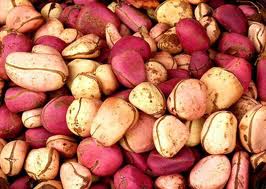
Kola nut
Kola nut

Other trees produce fruits called kola, the size of a pine cone and inside of which are other chestnut-shaped fruits, themselves containing four separate pulps, red and crimson in color. These fruits are kept in the mouth, chewed and eaten to quench thirst and add flavor to the water; they preserve and restore the stomach and are especially effective in liver ailments. Lopes said that a liver of a chicken or other bird, already in putrefaction, sprinkled with the juice of these fruits, became fresh again and almost resumed its previous state. Everyone uses this food commonly, in very large quantities; also it is a good commodity.

We find other wild species of palm trees which bear various edible fruits and whose leaves are used to make mats, to cover houses, to weave baskets, baskets and other objects of the same kind, which we need each day.

Other trees are called ogheghe, the fruits they bear resemble yellow plums, they are excellent to eat and fragrant. We cut branches from these trees, they are planted so closely that they touch each other; they take root and, growing and growing, form palisades and walls around the houses. By then laying mats, we create a fence, a courtyard and these kinds of trellises also serve to provide shade and protect from the heat of the sun.

Tout le monde peut se tromper / Everyone can make mistakes

L’oeil / Eye

L’oeil peut se blesser quand il regarde (Proverbe Zulu – South Africa). – Tout le monde peut se tromper.

The eye can be injured when looking (Zulu proverb – South Africa). – Everyone can make mistakes.

ANC’s Historic 30-year Loss and its Alliance with the DA

Flag of South Africa

Today, President Cyril Ramaphosa has been sworn into office for a second term at the helm of South Africa. He remains in office even though his party, the African National Congress (ANC) party of South Africa, the party that brought the end of the apartheid regime, lost its parliamentary majority in a historic election on June 1, that puts South Africa on a new political path for the first time since the end of the apartheid system of white minority rule 30 years ago. The ANC won just over 40% of the votes cast, short of the majority; the Democratic Alliance (DA) won 22% of the votes coming in second; Jacob Zuma’s uMkhonto we Sizwe (MK) party came in third with 15% of the vote, while Julius Malema’s Economic Freedom Fighters (EFF) came in fourth with 9.5%. The ANC’s historic 30-year loss in South Africa and its subsequent unusual, for lack of a better word, coalition with the Democratic Alliance brings us exactly to try to understand its loss, and ask the fundamental question of why such an alliance? The strong performance by Zuma’s MK took many by surprise as it took the third place that many thought would go to Malema’s EFF. There is also speculation that MK took votes directly from the ANC, due in part to the bitter enmity between former president Zuma and current president Ramaphosa. 

At the end of the elections, the leaders of the different parties shared: “The way to rescue South Africa is to break the ANC’s majority and we have done that,” said John Steenhuisen, the leader of the main opposition DA party. Julius Malema, the leader of the EFF opposition party, said that the ANC’s “entitlement of being the sole dominant party” was over.  The MK Party said one of their conditions for any coalition or agreement with ANC was that Ramaphosa is removed as ANC leader and president. The ANC chose to keep Ramaphosa as president, and make an alliance with the DA.

ANC flag
ANC flag

The reasons for the ANC’s loss (among many others): 1) South Africa has widespread poverty and extremely high levels of unemployment, and the ANC has struggled to raise the standard of living for millions ; 2) persistent lopsided economic inequalities, which still affects the black majority ; 3) rampant corruption ; 4) a lack of public service delivery, particularly in poorer areas ; 5) the frequent power cuts, where intermittent outages have been a near-constant for almost 2 years now; which highlights also the poor shape of infrastructures; 6) the soaring crime rate, with 130 murders and 80 rapes documented every single day in the last quarter of 2023. Above all, the fundamental problem of the ANC is that, at the end of the apartheid regime in 1994, when agreements between both sides were signed, the ANC got the political power, but not the economic; however, the economic power funds the politics and real change.

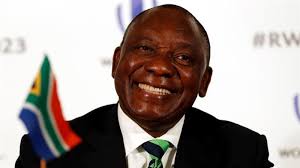
President Cyril Ramaphosa

The ANC has now made an alliance with the DA which is perceived as a mostly white, middle-class party that doesn’t care about the poor which are mostly Black. It will not be an easy pill to swallow for the majority of Black South Africans who remember the suffering under the white-rule apartheid era to welcome the return of white figures to senior political positions (perhaps even the vice presidency?). With this new power-sharing agreement, the two parties would have to get over their past antagonism, particularly the DA’s longstanding and consistent criticism of ANC “corruption”. The free-market DA, is ideologically at odds with the ANC’s social welfare traditions, and seen by many as catering to the interests of the white minority. On paper, the two political opponents have agreed to a common agenda of fixing the country’s infrastructure, providing basic services such as water and power, and creating jobs. Moreover, the DA has been the most critical opposition party for years and doesn’t share the ANC’s pro-Russia and pro-China foreign policy. Next year, South Africa will take over the presidency of the Group of 20 industrialized and emerging-market nations. Will this alliance cause issues for the BRICS (Brazil – Russia – India – China – South Africa)?

To Jacob Zuma and many, this is an “unholy” alliance. Will he be proven wrong or right? To others, this alliance marks the end of the ANC, and the beginning of a very rocky period, which will usher back a system similar to pre-1994 era. What do you think ? To others still, this alliance breaks the monolithic landscape of South African politics, and hopefully ushers a ‘real’ change that will address the issues of South Africans. What will it be? Only time will tell!

“Tribute to Steve Biko” by Dennis Brutus

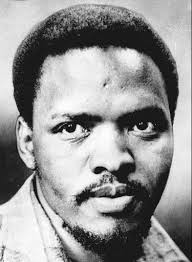
Steve Biko (Source: Britannica / Everett Collection)

The acclaimed South African poet Dennis Brutus wrote a poem in honor of Steve Biko; it was written on the anniversary of the Soweto Massacre a year later on June 16, 1978. Brutus said, “This poem written in tribute to Steve Biko reflects a long interest, including my founding of the Steve Biko Memorial Committee during exile in Chicago. Descriptions of the towns (including King Williamstown) were recalled from an earlier hitchhiking trip, from Port Elizabeth to East London. Twenty years later, Biko’s own fatal interrogation, in September 1977, occurred in the same building in Port Elizabeth in which I had been interrogated years earlier.” Steve Biko is known to many as the outspoken leader of the Black Consciousness (BC) movement. As the movement’s most prominent leader, he guided the movement of student discontent into a political force unprecedented in the history of South Africa that led to the end of apartheid in South Africa. He is known to Afro descendants around the world for his famous phrase “Black is Beautiful“, which was an inspiration to the civil rights movement in the USA, and to many other movements across the globe. Biko believed in the unity of the oppressed.

Tribute to Steve Biko

Poem composed for Steve Biko Day, San Antonio, June 16, 1978

The dusty roads
from Peddie to King
the yellow river
choking with silt
draining to i’Monti
the dust-filmed bluegums
poised and dreaming
in the arid air
the parching dust
harsh in the throat
and hurtful on the eyes
the crude teutonic towns
Hamburg, Berlin, Hanover
with their ominous echoes
— all these he knew
their roads he traversed:
they fired him with resolve
and smoldering anger
their racial hate seethed round him
like the surge of shimmering heatwaves
and laid a thousand lashes
on his taut flesh:
here he planned, dreamed,
waged his struggle
and hardened his will
to confront the butchers
to challenge their terror
—even if they robbed him of his life.
Dennis Brutus 16/6/78

Ne sous-estimez personne / Don’t underestimate anyone

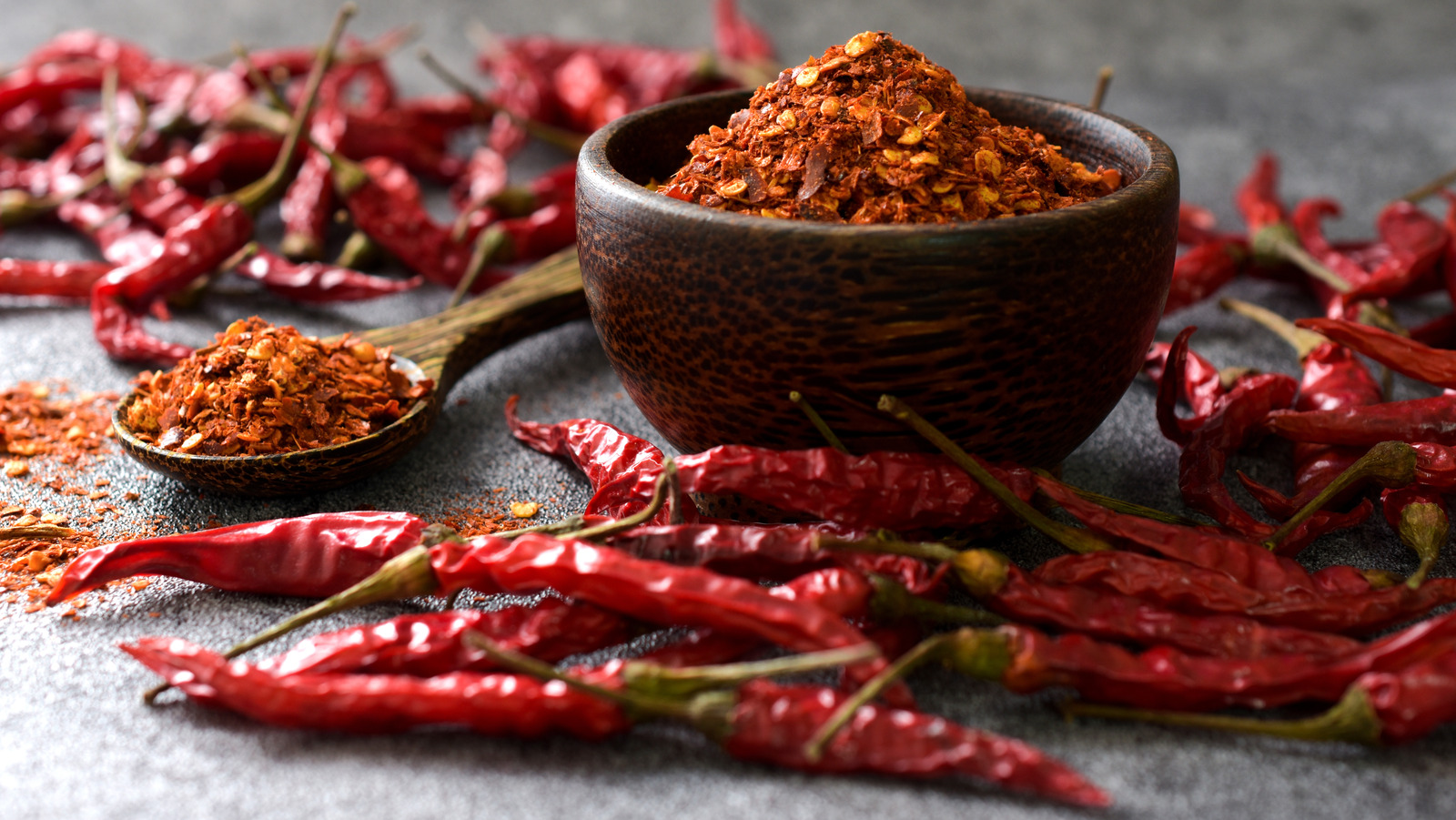
Piment rouge / Red pepper (Source: Mashed)

L’homme est comme le poivre rouge ; si vous n’en avez pas encore mangé, vous ne pouvez estimer combien il est fort (Proverbe Haoussa – Nigeria, Niger, Cameroun, Tchad, Soudan, Ghana, Cote d’Ivoire, Benin, Togo).

Man is like red pepper ; if you have never eaten it, you cannot estimate how strong it is (Hausa proverb – Nigeria, Niger, Cameroon, Chad, Sudan, Ghana, Cote d’Ivoire, Benin, Togo).

Africa’s Richest Man Builds One of the World’s Largest Oil Refineries

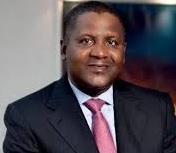
Aliko Dangote (Source: Black Entrepreneur Profiles)

Aliko Dangote, Africa’s richest man, has built one of the world’s largest oil refineries in Nigeria, Africa. The refinery opened its doors last year, and last month shipped out its first boat of refined jet fuel to the Netherlands. It has not been easy with all the challenges and setbacks. This is a dream come true for Africa’s richest man, a dream which has taken several years to materialize. Now, why is this a first? and why are we applauding? 

Although Nigeria is one of Africa’s largest oil producers, the country does not have the capability to refine its own oil, meaning that the country imports fuel! This is the case for all African oil producers, except maybe Libya (if it was not destroyed by the NATO bombs) or Algeria. Picture this! Countries in the whole gulf of Guinea which are rich in oil, and exporting oil to other countries, are also importing oil from abroad… thus the constant oil penury in these countries or the high prices or in some cases the poor quality of gas sent back as in the case of the Swiss firms poisoning oil destined for Africa with levels of sulfur at least 200 times higher than in Europe. 

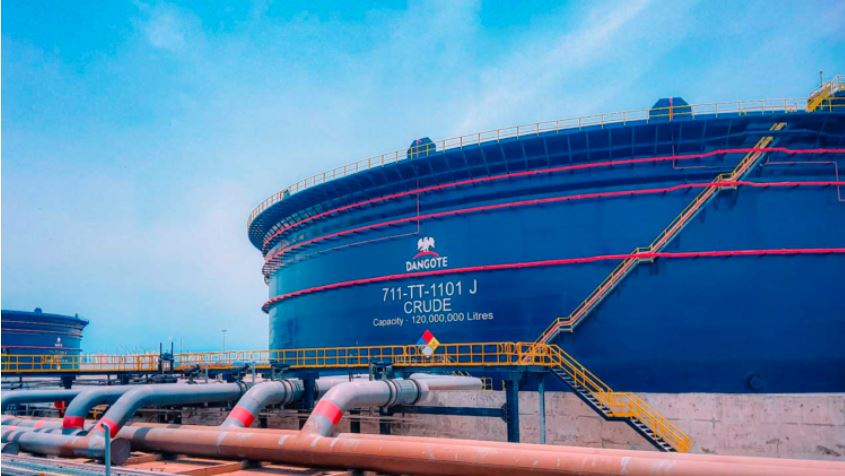
Dangote Refinery (Source: Leadership.ng)

The plant Dangote built spans nearly 4,000 football fields, is based in the Lekki Free Zone outside of Lagos, Nigeria, and will have the capability to produce 650,000 barrels per day once fully operational. It aims to process enough oil to not only make Nigeria self-sufficient but supply petrol, diesel, and jet fuel to other African countries and beyond. It needs to be said again, this refinery is a true game changer for Nigeria, and for Africa as a whole. In his remarks to the Cable, Dangote said, “The refinery will help boost Nigeria’s economic growth, with the creation of thousands of direct and indirect jobs. During the construction stage, it supported over 150,000 jobs, made up of mostly Nigerians,”… The capacity of the refinery is enough to satisfy domestic demands for refined products. The refinery will export about 50 percent of its production, thereby generating foreign exchange for the country.”

Below are excerpts from an interview Aliko Dangote gave to CNN. In his interview, Dangote mentioned some of the difficulties faced to get crude to refine, relations with other countries, trade policies on the contact, and the ever present visa restrictions for Africans that are still too strong in Africa. Enjoy… for the full interview, go to CNN.

=====

Dangote: “Nobody thought we were going to appear in this industry. So with that, we know there are challenges and that’s the truth, I have to be very open to you, but NNPC, [Nigerian National Petroleum Corporation], they’ve been very helpful. They do their own bit, but some of the IOCs [international oil companies] they’re struggling to give us crude because everybody’s used to exporting and nobody wants to stop exporting, which does not make sense.

CNN: What’s the timeline of Nigeria being completely self-sufficient producing oil, refining oil locally and exporting?

Dangote: Well, if the NNPC put all their refineries to work, Nigeria will be the largest petroleum products export country in the continent. Not only in the continent – it’ll be one of the biggest (worldwide), not as much as India but almost. So let me talk about Dangote Refinery: 40% of our refining products will go outside Nigeria. So that is after meeting the entire demand of Nigeria. We will meet the demand 100%. By June or so, we should be able to fully meet Nigeria’s demand and then because we’re ramping up already, we’re a little bit over 420,000 barrels per day already. So, as we go along, ramping up, I believe by July/August we should be at almost 550,000 barrels per day. Then maybe before end of the year we’ll be at about 650,000.

I’m a big fan of industrialization and Africa can be industrialized, but we, Africans, are the only ones that can industrialize Africa. Nobody is going to come and do it for us. We have to have good policies and the policies have to be consistent, and then we have to make sure that the investment climate is good.


The Chemist in Our Purses is no Longer

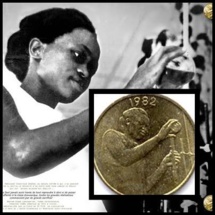
Mrs Dicoh Mariam Konan, first female chemist of Cote d’Ivoire, on the currency with her pipettes

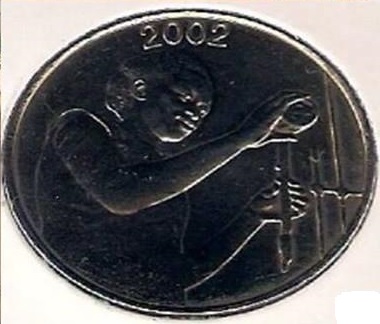
The face on the 25 Francs CFA coin, the chemist Mariam Dicoh Konan is no more. A few years back, we introduced you to the “chemist in your purses,” Une Chimiste dans vos portefeuilles / A Chemist in Your Purse, Mrs Mariam Dicoh Konan. If you are from Côte d’Ivoire, and Francophone West Africa in general, you would have certainly held a 25 F CFA (that treacherous currency  is not our subject today – note there is a difference between FCFA from West Africa and FCFA from Central Africa… same currency, but not interchangeable between zones … another incongruity) coin in your hands at some point, and on that coin is the engraved face of Mariam Dicoh Konan, the first woman chemist of Côte d’Ivoire.  She is engraved on the 25 FCFA coin with a burette. Countless people have walked around with her face in their pockets, without knowing her. Today, the 25 F coin is rarely seen in circulation – inflation has taken care of it.

25FCFA coin

For Mrs Konan, it was an honor to represent her country. Her son recounted to RFI, « To summarize for you a little the greatness of the character, on the anecdote of this 25 CFA franc coin, we were not aware of it. Some people, some lawyers came and said  “but tell me Madam, has anyone asked you for the image rights? You can sue the Central Bank today and demand damages and interests.” She responded curtly, “It is an honor for me to represent my country and Africa on a coin, never will I do such a thing.” This is to tell you who she is as a characterShe was a true patriot who loved her country and continent (I do hope that the country recognized her). We need more Mariam Dicoh Konan around! 

The Textile Industry in Kongo in the 16th Century

“Quand l’Africain était l’or noir de l’Europe” de Bwemba Bong

I came across a gem in the book of Professor Bwemba Bong, “Quand l’Africain était l’or noir de l’Europe. L’Afrique: Actrice ou Victime de la Traite des Noirs? – Démontage des mensonges et de la falsification de l’histoire de l’hydre des razzias négrières transatlantiques” (When the African was the black gold of Europe. Africa: Actress or Victim of the Slave Trade ? – Dismantling the lies and falsification of the hydra history of the transatlantic Slave Raids).” This text talks about the advanced textile industry in the Kingdom of Kongo in the 16th century. We had previously discussed the History of African Fabrics and Textiles and the falsification of history by Western media who are always trying to pretend that African textile industry started with the Dutch company Vlisco! We had also shared a description by Italian explorer Alvise Cadamosto, of clothing worn by Africans in the 15th century (Description of African Dressing in 1400s).

Nzingha's Kingdom
The Kingdom of Kongo with Queen Nzingha’s Kingdom in the south and east

In the 16th century, the Portuguese Filippo Pigafetta et Duarte Lopez wrote about the Kingdom of Kongo describing the economic situation of precolonial Africa, and reported that Africa had nothing to envy to Europe. Some of the fabrics described then, resemble fabrics weaved today by the Kuba people of the Democratic Republic of Congo, who use raffia and make some of the most beautiful hand-woven blankets, clothing, and sculptures. In the text, Lopez described not only the quality of the fabric, but the entire industry needed to create this type of fabric: the kind of tree used, the way the tree was pruned, and the value of the fabric. Another important point is that everyone was dressed within his/her means… thus the idea that Africans were walking naked, as we have previously seen, is another falsification of history!

Filippo Pigafetta et Duarte Lopes, Le royaume de Congo et les contrees environnantes (1591), Chandeigne/Unesco, 2002, p.112-113 (trad. Willy Bal, présentation et notes Willy Bal); Bwemba Bong, Quand l’Africain était l’or noir de l’Europe. L’Afrique: Actrice ou Victime de la Traite des Noirs?, MedouNeter 2022, p.180 (translated to English by Dr. Y, Afrolegends.com). Enjoy!

=====

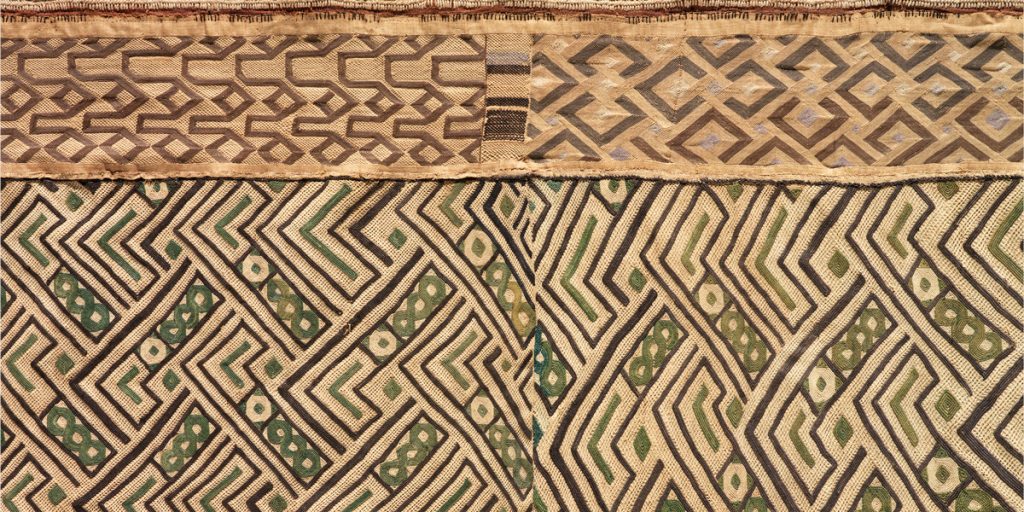
Women’s ceremonial overskirt from the 20th century, made by the Bushongo people. Image courtesy of The Textile Museum and The George Washington University Museum.

“And since we are here, I must decry the extraordinary art with which the inhabitants of this country and neighboring regions weave various kinds of fabrics, such as velvets with pile and without pile, brocades, satins, taffetas, damask, armoisins and other similar fabrics, which are certainly not made of silk, since we do not know the silkworm; if some people dress in silk, it is silk imported from our regions. But these fabrics that we have just listed are taken from the leaf of the palm tree; it is therefore necessary to keep the trees low, and to do this, prune and prune them each year, so that in the new season the leaves will grow more tender.

Le palmier de raphia
le palmier de raphia/ Raffia palm tree

After having treated these leaves in their own way, they draw threads from them, all equally fine and delicate; the longer the thread, the more it is valued because it allows larger pieces to be weaved. In different ways, they make fabrics with pile, resembling velvets, on each side, and sheets called damask with decorative patterns and varied textures, as well as brocades that are called high and those that are called low, which are worth more than our brocade. Only the king and those whom he deems good to do this favor can wear this fabric. The largest pieces are of brocade: they reach four or five palms in length, and three or four in width. The brocade is called incorimbas (named after the region where it is made, which is located around the Vumba river [in northern Congo]). Velvets have the same width: they are called enzacas, damasks are called infutas, satins are called maricas, taffetas are tangas and Anziques are the largest pieces which reach six palms in length and five in width. It is out of these fabrics that we commonly dress, each according to their means. Furthermore, they are light and very robust in water. The Portuguese began to use them as tent canvases: they wonderfully resist to water and wind.”

Africans, let us not Fall in the Trap of Democracy!

We have been reflecting on a word which has been used around the world to destabilize countries: the word “democracy.” This word has been used to impose treacherous regimes and sanctions upon “weaker” countries. By “weaker,” we basically mean those that used to be called “third-world” countries. The “global” world we are getting marched towards does not apply to all; there still needs to be some uniqueness which applies to local issues, needs, cultures, and people.

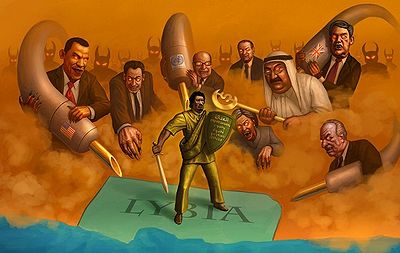
Libya, the Prey of the West

Over a decade ago, we wrote the article “Africans and the Trap of Democracy,” when NATO forces were bombing Libya. Reading it, almost every single word is still relevant today and can be applied to situations in so many countries on the African continent and beyond. Back then, we were shocked that so many Africans were applauding the actions of NATO using the word “democracy” … we hope that they can see what the destabilization of Libya has done to the rest of Africa, and that in reality the word “democracy” is used to fool Africans into hating those who actually work for Africa’s survival and its real independence. Libya under Khadafi was a prosperous country; Singapore, in Asia, under Lee Kuan Yew became one of the most successful economies in the world. There are so many dictatorships in Africa disguised under the name democracies where there are elections every few years and which are praised by the West because they serve their interests in Africa. Let us NOT fall into this trap called “democracy” in Mali, Niger, or Burkina Faso. Instead let us support our brothers of the Alliance of the Sahel (AES), and acknowledge that the continent with the first constitution in the world born in the Empire of Mali, the Kourougan Fouga, cannot learn about ways to govern itself from foreigners. The answer is within!

Enjoy! Africans and the Trap of Democracy

====

With the bombing of the presidential residence in Cote d’Ivoire by French forces for over a week, followed by the arrest of president Laurent Gbagbo, with the current intense bombing of Libya by NATO for the past 6 months, I cannot help but try to answer some of the same justifications used by Africans to approve the bombings by foreign troops on their neighbors’ countries, and ultimately on African soil. Any African who claimed and accepted that Cote d’Ivoire should be bombed by the French, shame on you! Any African who thought that the bombing of Libya was correct… shame on you! Any African who uses the same stupid phrase used by the West to abuse us: “… well Gbagbo had his day, he was in power for 10 years!… or Kadhafi was there 42 years!” Well my friend… Shame on you! Should democracy be imposed using bombs? Should democracy be imposed using warplanes, and Apache helicopters? Is it democracy to bomb the people you plan to help? Is it democracy to deliberately bomb civilian targets, hospitals, state televisions, homes, etc… to, like NATO said “protect civilians”? Was there not a peaceful solution? Was it so hard to re-count the votes in Cote d’Ivoire? Was it so hard to organize elections as Kadhafi asked? Why bomb? Why bomb? Why bomb?…

… I have not seen anywhere that the definition of democracy was “government imposed by external forces, for external forces, to crush the people of a country!” I am tired of this stupid debate the media-lies (CNN, BBC, France24, etc) always bring and which Africans always fall to: “this one is a democrat, and the other one is a dictator.” Please stop bothering people with the same rhetoric, and stop bothering people with your pseudo-democracies where nobody has the right to say anything. Frankly every other year when elections come around, don’t you ever wonder how come with all the bright politicians coming out of top schools, how come we always end up with only 2 (and somehow the worst of all)?

Burkina Faso’s Transition Government Gets a 5-year Confidence Vote by the People

Flag of Burkina Faso

Last Saturday, the people of Burkina Faso came out in a resounding form, via Civil society representatives, security and defence forces and lawmakers in a transitional assembly to approve a new charter which extends the transition government of Ibrahim Traoré, by 60 months starting on July 2, 2024. Thus, at the end of the 2-day national dialogue, Ibrahim Traoré has been given a vote of confidence for 5 more years, at the end of which he can also run for president when the elections take place. This charter also states that elections marking the end of the transition may be organized before this deadline if the security situation permits. As one can see, in a country which has been under attack by jihadist terrorists and whose territory is divided, security and territorial integrity is of utmost importance. [France to Withdraw Troops from Burkina FasoMali, Burkina Faso, and Niger Sign a Mutual Defence PactMali, Burkina Faso, and Niger all leave the ECOWASMali and Niger end Long-Standing Tax Treaties with France].

Now, Western media cry about democracy, and are calling this national dialogue consultation by the people of Burkina Faso, a slide away from democracy, yet they did not see a problem with Ukraine not holding elections given that it is currently a country at war.

Excerpts below are from Jurist News.

=====

Ibrahim Traore lays the foundation for the Thomas Sankara Mausoleum (Source: LeFaso.net)

Burkina Faso’s acting president Captain Ibrahim Traoré, who seized power following a 2022 coup, signed a new amended Transition Charter Saturday that extends the transition period to five years. The original charter called for the transition period to end in July 2024.

Article 22 of the new Transition Charter states that the duration of the transition is set at sixty months starting from July 2, 2024. The provision also states that elections marking the end of the transition may be organized before this deadline if the security situation permits. …

The amended Transition Charter in Burkina Faso also includes several new provisions. For instance, according to Article 5, Captain Traoré now holds the titles of President of Faso, Head of State, and Supreme Commander of the Armed Forces. Additionally, Traoré, along with the Prime Minister and the President of the Transitional Legislative Assembly, will be eligible to run in the presidential, legislative, and municipal elections organized to mark the end of the transition period.

Burkina Faso
Burkina Faso

An alarming pattern [alarming to the West] has emerged across West Africa where military forces have overthrown democratically-elected governments [more like puppet governments of the West], accusing them of breaking promises made to citizens. Burkina Faso has been caught up in this trend. In September 2022, the current military junta took power by ousting the previous military regime under Lt. Col. Paul Henri Sandaogo Damiba, which had itself seized control just eight months prior through a coup that removed President Roch Marc Kaboré from his elected position. Following the latest coup, Captain Traoré was appointed as the transitional president. …