

Fenus unciarum refers to an ancient Roman concept of interest on loans. The term “unciarum” comes from the latin “uncia,” which means “twelfth,” and “fenus” means interest. Essentially, it was a legal term used to describe the interest rate of 1/12 (or about 8.33%) per month, which translates to an annual interest rate of approximately 100%. The Twelve Tables, an early Roman legal code, established this rate to protect borrowers from exorbitant interest rates. This was a common practice in Roman law which was applied in Africa during the slave trade. The debtor who cannot redeem himself becomes a slave: he can redeem himself by selling his son to the creditor. According to the law of the XII tables, the creditor can sell the debtor beyond the Tiber.
The fidelity of this scheme in Black Africa under the slave system is corroborated by Mungo Park, the Scottish explorer who visited West Africa in the 1790s. After an exploration of the upper Niger River around 1796, he wrote a popular and influential travel book titled Travels in the Interior Districts of Africa in which he theorized the Niger and Congo merged to become the same river, though it was later proven that they are different rivers. In this book, he shed a light also on the fenus unciarum use in Africa.

“When a Negro takes goods on credit from Europeans on the coast and does not pay at the agreed time, the creditor has the right, according to the laws of the country, to seize the debtor or, if he cannot find him, someone from his family, or finally, as a last resort, someone from the same kingdom. The person thus seized is detained while his friends are sent to search for the debtor. When the latter is found, an assembly of the chiefs of the place is called, and the debtor is forced, by paying his debt, to release his relative. If he cannot do this, he is immediately seized: he is sent to the coast, and the other is set free. If the debtor is not found, the arrested person is obliged to pay double the amount of the debt, or he himself is sold as a slave…”
From this, one can easily see how an entire kingdom could be captured.
We have been told by many that “Africans sold their brothers” into slavery. However, we have seen before, When the Kongo King, King Mvemba a Nzinga, most commonly known as Afonso I of Kongo, or Nzinga Mbemba, wrote to the King of Portugal against Slavery, that many kings fought against such. King Afonso I was concerned about the depopulation of his kingdom through the exportation of his own citizens into slavery, and complained to the Portuguese king against it. Below, we will see that the above statement is mostly a false statement invented by the guilty to turn the victim into an accomplice.
Here is Guillaume Bosman in La Traite des Noirs au Siècle des Lumières (Témoignages de négriers), p.38 who also confirms the disorganization of Black Africa by slave-trading Europe. He writes:
“there are many people among us who imagine that fathers sell their children here, husbands their wives, and brothers their brothers, but they are wrong. This never happens except out of necessity and for some crime; most of the slaves taken to us are people who have been taken prisoner in war, and whom the victor, considering as his booty, has sold to make a profit.”

On January 13, 2025, the people of Limbe stood together against the alleged ceding of the historic slave trade site to a private company GilGal Tours for 50 year lease!!! Can you imagine that? It’s like the government is once again trying to erase the history of this place. One day, Cameroonians will wake up and find out that their government has sold the entire country away! How can one even fathom selling a national historic site? This site waseven been added to the UNESCO tentative list of World Heritage lists in 2020. How can one even wrap their minds around the ceding of Bimbia to a private company, after so many descendants of slaves taken from its shores have just started to reconcile with their history? After the whole country has reconnected with their history? A few years back, a friend visiting the site was told by her guide that a business man had come to level the place down, and had been stopped just in time; now this? Sure, Limbe, and the country as a whole needs development. Cameroon is full of beautiful places and tourist sites that are not being valued. It is no doubt that the site would benefit from the development in Limbe or simply the road to Bimbia which will open access to the area, and increase touristic benefits. The entire area should be honored !

Below are excerpts of an interview of Pr. Lisa Aubrey by Dunia Magazine. For the full article, check out the website. Please, also find this interview of Pr. Lisa Aubrey and Bwemba Bong. Furthermore, please check out the story of William D. Holland, the descendant of a prosperous prince of the Kingdom of Oku in the Grassfields area of Cameroon, who was sold into slavery because the king feared to be overthrown by him. Lastly, check out the Bimbia Heritage Project.
=====
Names like Gorée (Senegal), Bunce Island (Sierra Leone), Elmina (Ghana) and Ouidah (Benin) are all synonymous to the Transatlantic Slave Trade, and have gained an iconic place in history as locations from whence millions of Africans (up to 15 million it is believed) were transported to Europe and the Americas to be sold as slaves. How about the island of Bimbia? Have you ever heard of her?
Dr. Lisa Aubrey is an associate professor of African American Studies and Political Science at Arizona State University. She is also a Fulbright scholar (2014-15) based at the University of Yaounde I.

Since 2010, Dr Aubrey has been conducting research on Bimbia, a supposedly forgotten or not so often talked about slave trade port she refers to as “The Apertura”, located in the South West region of the central African nation of Cameroon. “It is the site at which African ethnicities in Cameroon were forcibly and cruelly whisked away from their homeland, or killed,” says Dr Aubrey in a recent special edition of Villages D’Afrique magazine. She goes on to note that the Transatlantic Slave Trade on the coast of Cameroon took place between the mid-17th to late 19th century. Dr Aubrey’s research team (between September 2010 and July 2014) were able to locate and validate some 166 slave ship voyages that left Cameroon bound mostly for plantations in the Americas, sometimes via neighboring Equatorial Guinea. “Bimbia is opening the door for broader research,” says the Louisiana, USA native.
…
A few years ago, a colleague of mine visited Antigua, and when he came back, he told me that during his tour of the island, his guide told him that most of the island was peopled by descendants of slaves who all came from Cameroon. I was stunned, as at the time, I did not know of a slave fort in Cameroon, and how could an entire island in the Caribbean be filled with descendants from Cameroon? This was when I started digging, and a few years later, Pr. Lisa Marie Aubrey’s research came out which validated the whole story.
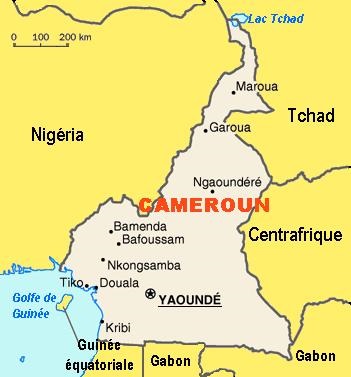
Today, we will talk about a slave fort whose existence was not even known until the 2000s, yet, it is said that at least 10% of all African slaves taken to the new world must have passed through its “gates”. This slave fort is Bimbia, in Cameroon. It is listed nowhere in Cameroonian history books, and even in African books. Even today, children learning about the slave trade in Cameroon, do not know about Bimbia. There is indeed a great silence about the existence of slave forts in the crook of the Gulf of Guinea whether in Nigeria, Cameroon, or Gabon.

Located in the South West region of Cameroon, Bimbia is a small village about 5 km from the seaside city of Limbe, on the hills surrounding the city center. It is strategically located on the Gulf of Guinea, in the nook of its elbow, east of the Bight of Biafra, between Rio del Rey and Cameroons River (as the Wouri river was known back then). The site was only re-discovered in 1987 during the earthworks on the church dedicated to the memory of Alfred Saker church, and is now classified as a national heritage of Cameroon.

What brought Bimbia back from its oblivion? Most likely the fact that since Ancestry DNA has gained in popularity over the years, many African American actors, producers, politicians, such Spike Lee, Quincy Jones, Eddie Murphy, Blair Underwood, Chris Tucker, Condoleeza Rice, Oprah Winfrey, or Brazilian Regina Ribeiro, and more have found their origins in Cameroon. This was surprising, and led to more research to find out where their ancestors could have come from, given the absence of information on slave forts in the region.

According to Pr. Lisa Marie Aubrey of Arizona State University who published her study in 2014, thousands of Africans were taken from the slave fort of Bimbia, similar to Gorée in Senegal, or more. From her research, she found out that at least 166 slave ships left the coasts of Cameroon. Bimbia is not the only slave fort found in the country, Rio del Rey near the Bakassi peninsula and Cameroons Town (Douala) are the others. From the ships inventoried, 9 left the territory in 1600, 98 in 1700, and 59 in 1800. 15 left from Bimbia, 9 from Rio del Rey, and 32 from the Wouri River.
The slaves who arrived in Bimbia from hinterland came from everywhere, but the majority came from the Grassfields, the Bamileke region, Northwest, Noun, Mbam, Tikar region, and even as far north as the Hausa region.

For anyone visiting today, the road to Bimbia from Limbe is a tough road, sometimes impracticable during the rainy season; the site is hidden in a deep and lush green forest, with huge bamboos around. As a matter of fact, the slaves who ran away used this hostile environment with treacherous ravines, hills, and volcanic rocks to hide, to their advantage.
Bimbia was considered such a good location for the ships traveling the coast because of Nicholls Island whose south coast constitutes a deep sea port with at least 6 m depth, thus allowing ships to accost easily with no fear of crashing. Nicholls Island is located 300 m away from Bimbia which is on the continent; thus providing slavers with a perfect path to the continent for slaves. Once the slavers had gotten slaves from Bimbia, they could also make transit on the nearby island of Fernando Po (Bioko – where Malabo, the capital of Equatorial Guinea is located). Thus, slaves were brought from the hinterland, and kept in Bimbia, while awaiting the arrival of the slave ships; once the slave ship arrived, the slaves were taken from Bimbia to nearby Nicholls Island 300 m away, from where they were then moved into the ships to far away destinations never to see their continent again.

For today’s visitor, there are still vestiges that testify of Bimbia’s dark history: brick columns, rusty chains hooked on the falling walls, iron chunks here and there, bells, and the manger where the slaves were fed..
Although Bimbia has now entered the national heritage of Cameroon, it has not yet become as popular a destination as it should, like Goree, Elmina Castle, Cape Coast and others. This may be more due to the lack of organization in the overall tourism of the country, bad governance, and also the accessibility to the place. This is a call to more historians, particularly Cameroonian and African historians to restore the story of Bimbia and many of the other hidden slave forts of West and Central Africa.

This week, the Alliance des Etats du Sahel (AES) which includes Mali, Burkina Faso, and Niger, announced the creation of a joint military force, which will deploy 5000 troops in upcoming weeks in its territory. This force’s goal is to tackle security threats jointly as one-man, as the fight intensifies against the rising extremist violence caused by the foreign forces funded by Western powers. The creation of such a force reminds us of Osagyefo’s Kwame Nkrumah dream of an African union which actually serves its people and members. In this case, we applaud the AES’ effort stemming from a need to survive against the united forces of thieves whose leader in the case at hand is the old colonial power. It is no secret that the old metropolis is not leaving its military bases in Francophone Africa as we have heard, but rather, disguising them, moving them to other neighboring countries or other Lusophone or Anglophone countries of Africa.
Excerpts below are from Reuters.
=====
A joint force of 5,000 troops from military-led neighbours Niger, Burkina Faso, and Mali will soon deploy in their troubled central Sahel region, Niger’s defence chief said on state television.
… Niger Defence Minister Salifou Mody said the new force would have its own air assets, equipment, and intelligence resources and operate across the territory of the three nations, which have formed a cooperation pact known as the Alliance of Sahel States (AES).
“The unified AES force is nearly ready, numbering 5,000 personnel,” Mody said on Tuesday.
… The creation of the three-way alliance followed the countries’ decision to withdraw from West Africa’s main political and economic group ECOWAS, which is still pushing them to reconsider the move that reverses decades of broader regional integration.
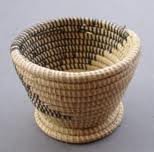
On ne va pas mendier avec un panier (Proverbe Douala – Cameroun). – Modérez vos appetits.
Don’t go begging with a basket (Duala proverb – Cameroon). – Moderate your appetite.

Last February, the European Union (EU) agreed to discuss the price of minerals coming from the Democratic Republic of Congo (DRC) with Rwanda. Unheard of!!! Such a preposterous agreement! The EU and Rwanda signed a Memorandum of Understanding (MOU) to strengthen Rwanda’s role in fostering sustainable development and resilient value chains for critical raw materials MOU on Sustainable Raw Materials Value Chains between the EU and Rwanda. Since then, several mineral-rich Congolese cities have been captured by the M23, a rebellious movement backed by Rwanda. The town with one of the biggest coltan reservoirs in the world, Rubaya was captured by the M23 rebels in May of last year. Kanyabayonga, Kirumba, Shasha, Vuvano, Kiuli, and Mbwambaliro are other cities that were captured by the M23 this year. Rubaya is rich in coltan, tantalum, cobalt; north Kivu, gold, tin, and of course diamond. Just 2 weeks ago, the town of Masisi was captured by the M23 rebels. Coincidence or Not? Coltan-rich Town Captured.
To learn more about Coltan and the town of Masisi, please check out this great article by the Toronto Star. Excerpts below are from the BBC on the capture of Masisi.
=====

Rebel forces backed by Rwanda have captured the town of Masisi in the east of the Democratic Republic of Congo, according to various reports. This is the second town seized by the M23 group in as many days in the mineral-rich North Kivu province. The group has taken control of vast swathes of eastern DR Congo since 2021, forcing hundreds of thousands of people to flee their homes.
Angola has been attempting to mediate talks between President Félix Tshisekedi and his Rwandan counterpart, Paul Kagame. But these broke down last month.
“It is with dismay that we learn of the capture of Masisi centre by the M23,” Alexis Bahunga, a member of North Kivu provincial assembly, told the AFP news agency.
He said this “plunges the territory into a serious humanitarian crisis” and urged the government to strengthen the capacity of the army in the region.
…
It is not clear how many people were killed in the fighting between the M23 and the army and pro-government militias. …
Masisi, which has a population of about 40,000, is the capital of the territory of the same name. It is about 80km (50 miles) north of the North Kivu provincial capital Goma, which the M23 briefly occupied in 2012.
On Friday, the M23 captured the nearby town of Katale. Last year, there were fears that the M23 would once again march on Goma, a city of about two million people.
… In July, Rwanda did not deny a UN report saying it had about 4,000 soldiers fighting alongside the M23 in DR Congo. …

Vous avez pris une petite antilope, ne la lâchez pas parce que vous entendez un gros sanglier (Proverbe Ngombe – République Démocratique du Congo (RDC)). – N’abandonnez pas votre femme parce que vous voyez une autre.
You have caught a small antelope, do no let go of it because you hear a big boar (Ngombe proverb – Democratic Republic of Congo (DRC)). – Do not leave your wife because you see another one.

We are introducing you to the German colonial treaty signed with the Chiefs of Bimbia in Cameroon in July 1884. In a few days, we will tell you a lot more about Bimbia and its important place in the transatlantic slave trade along the gulf of Guinea. By 1898, the Jantzen & Thormählen German trading firm had their headquarters in Bimbia, in the Victoria District, and lands in Debundscha, Isongo Udje and Mokundange. As we read the text, we can still find the River Bimbia in today’s geography of the locality, but what does River Mofinioselle, which sounds like a European butchering of a local name, correspond to?
=====
Agreement with Chiefs of Bimbia.

WE, the undersigned independent Chiefs of the country called Bimbia, situated between the River Bimbia on the south side, the River Mofinioselle on the north side, and up to 5 miles on the sea shore, have, in a meeting held to-day in the German factory on King William’s Beach, voluntarily concluded as follows:—
We give this day our rights of sovereignty—the legislation and management of this our country—entirely up to M. Edward Schmidt, acting for the firm of C. Woorrmann [Woermann], and M. Johannes Vos, acting for Messrs. Johnson and Thormeihlen [Thormälen], both in Hamburgh, and for many years trading in this river.
We have conveyed our rights of sovereignty, the legislation and management of this our country, to the firms mentioned above, under the following reservations:—
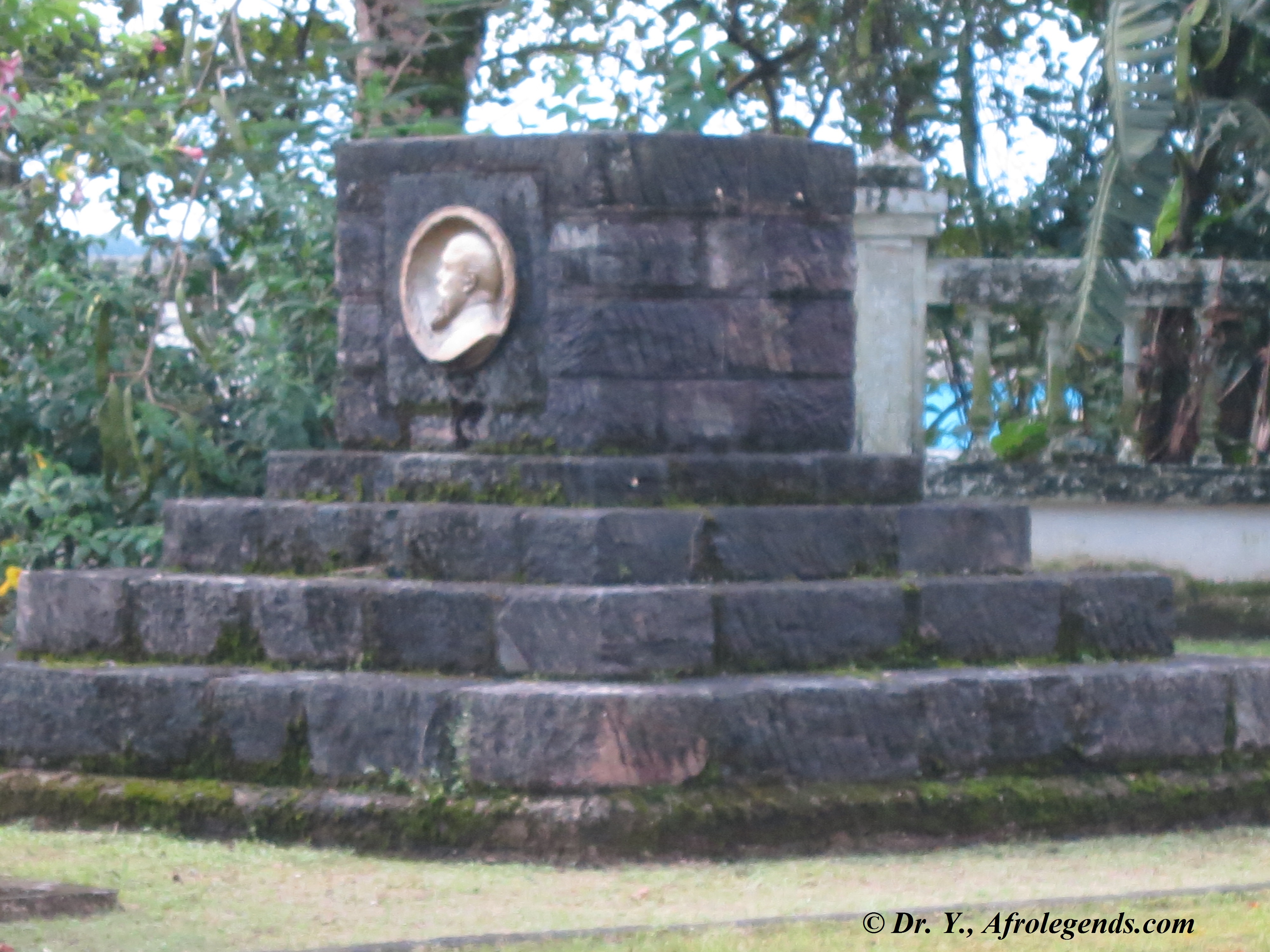
King William’s Town—
(Signed)
QUAN, his X mark.
EKONGOLA, ditto.
FREEBORN, ditto.
MAT KING, ditto.
NEVERWASH, ditto,
DAUBE KING WILLIAM, ditto.
CHARLES ERN ART, ditto.
BIMBIA PINISO, ditto.
JOHN PINISO, ditto.
Two Chiefs of Eciollo Town.
Money Town—
(Signed)
MONEY, his + mark.
JOHNNY MONEY, ditto.
(And 8 Chiefs).
Signed at Bimbia, German Factory, Hanusa, July 11, 1884.


