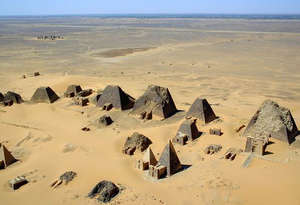
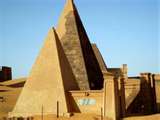
The general public is familiar with Egypt and the pharaohs, but is not so aware that there was a highly important, sophisticated, and independent ancient civilization in Nubia, which is south of Egypt in present-day Sudan. For over a century, Nubian pharaohs dominated Egypt, and their kingdom extended from Lake Chad and well into the middle east. The conquest of Egypt started with Pharaoh Piye of Nubia, and continued with Taharqa who launched the most audacious building campaign of any pharaoh since the New Kingdom (around 1500 B.C.). Under Taharqa, the capitals were Napata and Thebes, and Jebel Barkal the holy mountain.
Black Pharaohs of Nubia
Nubia is a kingdom with 3 times as many pyramids as Egypt. Their language still needs to be decoded, and archaeologists are searching for a Rosetta stone similar to that discovered by Champollion which allowed the translation of Egyptian hieroglyphs. The Nubians were well known for their military genius, and Egyptian pharaohs will sometime hire Nubian mercenaries to fight their battles. Theirs was a civilization of strong queens such as Amanishaket, and Amanitore. One of these queens Candace Amanirenas defeated the roman army of Augustus Caesar.
I have been so stricken by the recent tragedy in Haiti, that I thought it would only be fit to talk about Haiti, and celebrate the first Black independent nation in the western hemisphere, and in the world. What better way than to salute Toussaint Louverture, the great black general who defeated Napoleon’s army, and French, British, and Spaniards? What better way than to salute the genius of Toussaint! Think about this: Napoleon, one of the greatest generals that ever lived, being beaten by a… self-educated slave with no military training… being driven off the shores of Haiti by Toussaint who then led his country to independence.
Toussaint Louverture
Well, Toussaint Louverture was a military genius like none other. He was actually born a slave and worked on a plantation, and then earned his freedom. By the time the slave rebellion started, he did not want to join in at first; but later on joined the slave rebellion only to realize that their leaders were inept and would compromise with the white farmers. Toussaint rose through the ranks and became the undisputed leader of the rebellion. He also had two great generals under him: Jean-Jacques Dessalines and Henri Christophe, who would both later become presidents of Haiti.
Toussaint’s struggle was a struggle for freedom, equal rights, and justice for all. Having earned his freedom before, he knew what it meant to be free, and drafted a constitution. After sending out the French in Saint-Domingue (present day Haiti) in 1799, he turned to spanish Santo Domingo where slavery was still in effect, and took control of the entire island defeating the spaniards, and freeing the slaves. He then started to draft a constitution in 1801 for the entire island of Hispaniola (present-day Haiti and Dominican Republic). The French, the Spanish, and even the Americans hated Toussaint, because of his effect on people. Imagine this: a Black leader freeing slaves, a nation where slaves had taken control of their destiny did not sit well with Americans who still owned slaves and could not bear such a news. By 1803, Napoleon ready to surrender Haiti, decided to meet with Toussaint on a peace deal; but the French tricked Toussaint, and when Toussaint came to the rendez-vous, he was arrested and taken to France by ship where he was put in the coldest prison of France. Toussaint, a tropic guy, died of cold and starvation in this prison.
Statue of Toussaint
The most important and beautiful about the story of Toussaint and Haiti, is that this was the first time a people rose up, an enslaved people rebelled and succeeded in getting their freedom, and in founding a country…. they were able to defeat the establishment. This is why Haiti is a treasure to the world. Haiti represents a people fighting for their rights, for their freedom, and for their voice to be heard. In the wake of this devastating earthquake, I know the Haitian people will rise from ashes just like the phoenix!
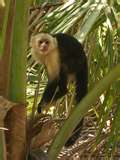
Il était une fois un jeune singe très farceur et qui faisait plus de grimaces que tous ses frères réunis. Un jour, il s’amusait sur les branches d’un cocotier, tout près de la berge d’un fleuve dans lequel vivaient bons nombres de crocodiles.
Le jeune singe venait de réussir trois pirouettes particulièrement acrobatiques et se reposait en s’éventant avec les palmes de l’arbre, lorsque seigneur crocodile surgit de l’eau et rampe au soleil sur la rive.
Petit frère, dit-il d’une voix caverneuse, il me semble que tu as l’air bien triste ce soir. Pourquoi donc n’exécutes-tu pas tes gambades habituelles ?
Je crois que j’ai deviné! Tu as faim et ton cocotier ne porte pas des fruits. Regarde l’autre rive, là-bas, couverte d’arbres aux belles palmes. Vois-tu toutes ces noix de coco? Pourquoi ne vas-tu pas là-bas?
Le jeune singe pousse un soupir, se gratte l’oreille et répond:
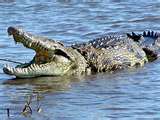
Crocodile
Oncle crocodile, il y a longtemps que je les ai aperçues. J’en ai l’eau à la bouche. Mais ces cocotiers sont de l’autre cotés du fleuve. Comment faire pour y aller? Je ne sais pas nager.
-Qu’à cela ne tienne, mon petit ami. Je t’y transporterai. Tu me réjouis si bien les yeux avec tes jeux et tes acrobaties, que, pour te rendre la gaîté, je vais te charger sur mon dos. Je traverserais le fleuve et, en un rien de temps, tu seras de l’autre coté.
-Grand merci, mon oncle. J’arrive tout de suite, s’écrie le jeune animal sans méfiance. Il descend le long d’une branche et hop! saute sur le dos de seigneur crocodile. Celui-ci se glisse jusqu’à l’eau et la traversée commence.
Quand ils sont parvenus au beau milieu du fleuve, là ou le courant est le plus vif, seigneur crocodile se met à rire:
Coeur
Petit sot! Tu crois n’importe quelle histoire! Si je t’ai pris sur mon dos, ce n’est pas par pitié! Sais-tu que ma chère mère est malade depuis deux semaines? Pour la guérir, il n’y a qu’un seul remède, a dit le féticheur, il faut qu’elle mange le cœur d’un jeune singe! Voilà pourquoi je te transporte jusqu’à son domicile!
Petit singe réfléchit très vite et s’écrie d’un air désolé :
Quel malheur! Cher oncle, pourquoi ne m’avez-vous pas dit cela auparavant ?
Voilà qu’il nous faut rebrousser chemin! Je me suis tellement dépêché de partir avec vous que j’ai oublié mon cœur en haut du cocotier! Quel étourdi je fais! Vite! Vite! Oncle crocodile, revenons là-bas le chercher.
Singe rigole
D’un coup de queue brusque, Seigneur crocodile fait demi-tour et se dirige rapidement vers leur point de départ. Dès qu’ils sont parvenus sur la berge, petit singe saisit la branche qui lui a permis de descendre et, hop! En deux gambades, il est en haut du cocotier. A peine arrivé, il fait deux ou trois vilaines grimaces au seigneur crocodile et lui crie en se moquant de lui.
Cher oncle, qui de nous deux est le plus sot ? Qui de nous deux est le plus crédule ? Vous non plus, vous n’y voyez pas plus loin que le bout de votre nez ! Vous avez cru une histoire qui ne tient pas debout ! Quel animal pourrait vivre sans cœur, même quelques instants? Allez, ignorant! Cherchez une autre dupe!
Conte tiré de “Contes des Lagunes et Savanes,” Collection ‘Fleuve et Flamme,’ édition Edicef, 1975.
“Le cancer de la trahison” est le titre du discours prononcé par Amilcar Cabral (père de l’indépendance Cap-Verdienne et Bissau-Guinéenne) après l’annonce du decès de Kwame N’krumah, 1er président du Ghana. Dans ce discours, Cabral dénonce la trahison qui ronge les rangs de tous les mouvements indépendantistes africains. Nombreux de ces mouvements ou révolutions africaines ont été rongés par le cancer de la trahison. Triste de savoir que Amilcar Cabral lui-même a été assassiné par un traître!
For the start of this new year, 2010, I would like to introduce to you a bright young African writer hailing from Zambia: Dambisa Moyo. Dambisa Moyo, ivy-league educated economist from Harvard and Oxford, was elected one of the world’s 100 most influential people by Time Magazine for the year 2009. Why is she deemed influential? Well, Dambisa Moyo is an economist whose book, Dead Aid: Why Aid Is Not Working and How There Is a Better Way for Africa, was on the New York Times bestseller in 2009. She argues that foreign aid has harmed Africa’s development, and should be phased out.
Dead Aid: Why aid is not working ...
She has been under a lot of fire, because of criticism of foreign aid, Bono, Geldorf, etc… She represents the upcoming young talented African force, which stands up and say “Enough” to aid that fuels corruption, and instead should focus on job creation and support of local entrepreneurship! It is interesting because I always felt that aid was not the answer to the problems of Africa. Like the Chinese proverb says: “Give a man a fish, and feed him for a day. Teach a man to fish, and you feed him for a lifetime.”
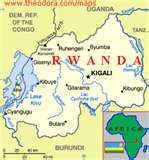
I still remember the day the Rwandan genocide started. I was just in “4eme”, and the images of the genocide on TV made me cry at night! What could I do, me… a simple school child in Cameroon, except watching on television and praying for someone or something to stop this butchery! Well… among all the heroes mentioned in books and documentaries about Rwanda, a fellow African heard my cry, a Senegalese UN soldier who was in Rwanda decided to act… with no guns, no arms, and no authorization from the UN, he decided to take destiny in his hands…. He is almost forgotten when people talk of Rwanda: few ever mention the act of bravery from this African soldier stationed there.
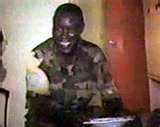
Yes… I am talking about the young Senegalese captain Mbaye Diagne who was working for the UN in Rwanda. From the first hours of the genocide, he decided to take destiny in his hands, ignoring orders from the UN telling him to just be an observer. He probably thought: “how can I just look when human beings are being slaughtered? how can I just look when I am a blue beret, a UN officer supposed to maintain peace in the world?” From the first hours of the genocide, he was able to save the children of the prime minister Agathe Uwilingiyimana who was murdered; he hid them in his house, and was later able to take them to safety at the “Hotel des Mille Collines.” From then on, he saved many lives, some even think that he probably saved at least 600 -1000 people.
Capt Mbaye in Rwanda
During the genocide, he was constantly rushing and never stayed put. He had a gift to make people laugh and always wore a smile on his face. He could be familiar with anyone within minutes! He could joke with the Interahamwe at all checkpoints, share a cigarette with them, talk with them… and in the midst of the genocide, even the interahamwe probably liked to see a smile in the midst of all the killings, a glimpse of light in all the darkness! He had to save hundreds of people by carrying 3-5 at a time in his vehicle, not to raise suspicion, and pass at least 23 checkpoints at which he had to stop each time and explain himself each time. All of this was done unarmed! Imagine, … saving hundreds of people unarmed, 3-5 at a time!
Yes… Capt Mbaye with his toothy smile was a light in Rwanda… an African angel sent to save people, an answer to some of our prayers. While learning about Capt’ Mbaye, I couldn’t help but cry, tears of happiness… happiness because all I ever heard in documentaries or books were these acts of bravoure by Europeans (or Rwandans like Rusesebagina in “Hotel Rwanda”)… but no-one mentioned this African child saving another African child! No one ever mentioned that the only UN officers left with Gen. Dallaire in Rwanda were mostly Ghanaians and other Africans like Senegalese Capt Mbaye!
Capt Mbaye at the "Hotel des Mille Collines"
One thing is sure, Capt Mbaye showed that in the midst of uglyness, we have a choice to be either observers or actors! We have a choice to protect, and help others! From the very first day of the genocide, Capt Mbaye decided to listen to his conscience and save people! He gave his life for others and stood on the side of justice; he extended his arms to fellow humans in distress… he loved! He was not superman, he was just Mr. ‘everyone’ reaching to the human side in every single one of us: he talked, negotiated, and smiled with the Interahamwe so-called monsters.
Please watch parts of this great documentary from PBS Frontline, and raise your hat to a true African hero! We, Africans, are the only ones who can truly praise the acts of bravoure, courage, and love of this forgotten angel of Rwanda! What can I say… words cannot express my profound gratitude to have learned the story of someone ordinary who decided to do extraordinary things, and saved hundreds of lives!
One day Anansi the spider picked some very fat and tasty yams from his garden. He baked them with much care and they came out smelling quite delicious. He could not wait to sit down and eat them.
Just then there was a knock at his door. It was Turtle, who had been traveling all day and was very tired and hungry.
“Hello, Anansi,” said Turtle. “I have been walking for so long, and I smelled the most delicious yams I’ve ever smelled. Would you be so kind as to share your meal with me?”
Turtle
Anansi could not refuse, as it was the custom in his country to share your meal with visitors at mealtime. But he was not very happy, for Anansi was a little too greedy and wanted the delicious yams all to himself.
So Anansi thought to himself and came up with a scheme.
“Please do come in, Turtle. I would be honored to have you as my guest this evening. Sit down, have a chair and help yourself.”
Turtle came inside and sat down, but just as he reached for a yam, Anansi yelled, “Turtle, don’t you know better than to come to the table with dirty hands?”
Turtle looked down at his hands and saw that they were filthy. He had been crawling all day and had not had a chance to clean up.
Turtle washing his feet
Turtle got up and went to the river to clean his feet. He walked all the way back up to the house and Anansi had already begun to eat.
“I didn’t want these tasty yams to get cold, so I had to begin,” said Anansi. “But please do join me now, Turtle.”
Turtle sat down again and reached for a yam, but again Anansi yelled at him.
“Turtle, did you not hear me before? It is not polite to come to the table with dirty hands!”
He looked down and saw that his clean hands had turned dirty once more, since he had to crawl on them to get back to the house.
So he walked down to the river once more to wash himself off. And when he returned this time, he was careful to walk on the grass so his hands would stay clean.
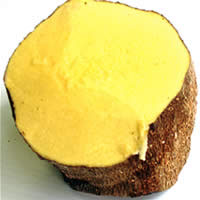
Yellow yam… mmmmhhh tasty!!!
But by the time he sat down at the table, Anansi had finished up the last bit of the tasty yams and not so much as a morsel was left.
Turtle looked at Anansi for a moment and then said, “Thank you for sharing your meal with me. If you ever find yourself near my house, please let me return the favor.” And then he slowly walked out the door and continued on his way.
The days went by and Anansi thought more and more of that meal that Turtle had offered. He got more and more interested in a free dinner and finally could not stand it anymore. He set off one day to find Turtle’s house.
He found Turtle sunning himself on a river bank just around dinner time.
Turtle looked up and saw him and said, “Hello, Anansi, have you come to share evening meal with me?”
“Oh yes, yes!” said Anansi, who was growing hungrier and hungrier by the minute.
Turtle went underwater to his house to set up the dinner table for the two of them. Soon he came back to the bank and said, “Your place is waiting and the food is ready. Please join me, Anansi.”
And then he dived underwater and began to slowly eat his meal.
Anansi floating unable to get underwater
Anansi jumped into the water, but could not get down to the bottom of the river. He tried to swim down, but he was so light that he kept popping back up to the surface.
He tried diving. He tried belly flops. He tried a running jump, but nothing would help him get down to the river bottom.
In the meantime, Turtle was slowly eating his meal.
Anansi was not about to give up a free meal, and was running around wondering what he would do. Finally he had an idea. He started grabbing stones and rocks and stuffed them into his jacket pockets.
Now when he jumped into the water he sank right down to the bottom and was able to take his place at the table.
The table was so beautiful and full of delicious foods. Anansi could hardly believe how many tasty foods were before him and could not wait to start his meal.
But just as he reached for the first morsel, Turtle stopped eating and spoke. “In my country, we do not wear our jackets to the table.” Anansi noticed that Turtle had removed his own jacket before sitting down.
Anansi started to remove his jacket, and as soon as it was off of his shoulders, he went zooming back up to the surface and popped out onto the river bank.
He stuck his head down into the water and saw Turtle slowly enjoying that wonderful banquet. When you try to outsmart someone, you may find that you’re the one outsmarted.
There is a say which often goes as such: “When things are so bad that they are irreparable, men leave the power to women or minorities!” (Just look at the USA!) Well… that’s what they will definitely say about Liberia, a country which had been in war for so many years and decades, that the system was so broken down, the country was a mess, no government, no law, no nothing!
President of Liberia: Mrs. Ellen Johnson Sirleaf
And then was elected Mrs. Ellen Johnson Sirleaf! The first African female head of state! We even beat the USA, we got our woman in power! Yes… here comes the Iron lady of Africa. Few words will express what the inauguration of Mrs Sirleaf meant to me, and thousands of other girls and women across the continent. Truth be told, very few of us ever thought possible the day a woman would be president on our continent. Very few of us thought possible an actual country ruled by a woman, in Africa….! When I was young, I had read about Nzingha the queen of Angola, Hatshepsut the She-pharaoh of Egypt, Beatrice of Congo, Empress Zewditu of Ethiopia… to name just a few; but these emblematic African female leaders seemed so far removed from me, buried in the sands of the past, that as a young African woman my dreams to see a charismatic woman leader in the modern era seemed to be just that… a dream (I still wanted my dream to become a reality)!
Don't mess with my president!
Ellen Johnson Sirleaf is an achieved economist who served as minister of finance of Liberia in the late 70’s. She once supported Charles Taylor against the bloody government of Samuel Doe… but later on criticized him once she realized he was perpetrating bloody crimes in Liberia as well. After Samuel Doe’s coup in 1980, she went into exile in Kenya where she worked for Citibank as director. She returned to Liberia to run against Doe, but was sentenced to 10 years in jail, and was again forced into exile. She later repeated the scenario in 1997 when she ran against Charles Taylor, but lost. She finally won the elections in 2005 to be the first elected female head of state of Liberia, and Africa. Hers is a story of perseverance, endurance, determination, courage, hard work, and above all love for her country. What brought her back so many times to Liberia? Lord only knows! What made her want to challenge Samuel Doe, Charles Taylor, Prince Johnson, etc…? The good Lord only knows! One thing is sure, this is definitely an Iron Lady!
Liberia
The video you will see below is a documentary on her first year in power entitled Madam President! It highlights her struggles and victories. How do you re-build a country where there are no institutions? where there are children soldiers? where there is no law? and where a claim to land means nothing after years of war! How do you do that? Well… watch Madam president! surround yourself with the best minds, and some strong women as well! I tell you… Watch and raise your hat to Mrs. President! Yeah… that’s right! Our very first woman president!
To find out more, check out Ellen Johnson Sirleaf on Wikipedia, read her book “This Child Will Be Great“. Laura Bush wrote a piece on her in Time Magazine after she and Condoleezza Rice attended Sirleaf’s inauguration. Ellen Johnson Sirleaf was awarded the Presidential Medal of Freedom in 2007 by president Bush. Check out Follow the Leader to learn more about the people who made the documentary, and this article by BBC.
– J’avais toujours faim, répondit l’autre. Chez moi, je mangeais tout ce que je trouvais: ma part, celles de mes frères, celle de ma mère et même les provisions. Alors mon père m’a envoyé me rassasier ailleurs… et vous, camarade, peut-on savoir ce qui me vaut le plaisir de vous rencontrer?
– Moi, dit le compagnon, j’ai un ventre si grand que je n’arrive jamais à le remplir tout à fait. J’ai beau manger toute la journée, l’appétit ne me quitte pas. Alors mon père m’a trouvé trop difficile à nourrir et il m’a chassé de la maison.
– Dans ce cas, reprit l’autre, nous sommes faits pour nous entendre.
Au bout d’un moment, le plus jeune pressa son ventre avec ses mains, fit la grimace et soupira:
– J’ai faim!
– Moi aussi, j’ai faim, grogna l’autre.
– Allons chercher à manger!
Comme ils arrivaient à un village, ils se dirigèrent vers le marché et achetèrent un panier plein de haricots bien cuits.
Ils allaient commencer à manger, quand le plus jeune protesta:
– Camarade! Nous avons aussi faim l’un que l’autre; nos deux parts doivent être égales; mais comment faire pour que chacun de nous ait exactement son compte?
– C’est bien simple, dit l’autre: achetons deux aiguilles, nous piquerons à tour de rôle un haricot à la fois; ainsi le partage sera bien fait.
Ils firent comme il avait dit: ils achetèrent deux aiguilles et se mirent à manger en piquant les haricots un à un. Bientot il ne resta dans le panier qu’un seul haricot, un haricot pour deux!……
– Que faire? Demanda l’aîné?
– C’est très facile, répondit le jeune: il suffit de couper ce haricot en deux parties égales.
– Mais qui donc fera la partage? Interrogea l’aîné. Si c’est moi, je garderai la plus grosse part; et si c’est toi, tu te serviras trop bien!
Statuette Fang
Un passant survint à ce moment.
– Aidez-nous, lui demandèrent les deux compagnons. Coupez ce haricot en deux parties égales.
Le nouveau venu sortit son couteau, l’ouvrit, saisit le haricot, le coupa gravement en deux parties, donna une part a chacun des deux compagnons, puis comme il ne voulait rien perdre de cette excellente nourriture, il lécha la lame de son couteau avec tant d’application… qu’il s’entailla la langue.
Dis-moi, toi qui as lu cette histoire, quel est le plus gourmand des trois?
D’après un conte de l’Afrique noire, tiré de Contes de la Brousse et de la Forêt, de A. Davesne. Illustrations tirées du meme livre.
Dear all, today we will be talking about a great true African legend: Miriam Makeba! Well… where should I start? Zenzile Miriam Makeba, affectionately named Mama Africawas a singer who truly showed that music had no boundaries, and that music could be used as a platform to launch a revolution; above all, if you are passionate and excel in something, you can always do great things! Miriam Makeba started as a singer in South Africa, and was even married to the great South African trumpetist Hugh Masekela at one point. This woman sang about her love for her country, her people, and the struggle of her people. Like she said herself: “I was never politically involved. People always think that I’m political or that I sing politics, but I’m not. I just speak the truth. When I say we’re oppressed, I’m not lying. I’m glad I’ve been vindicated, in a way. I could have been in parliament, but I’m not a politician, I’m a singer. I love to sing, that’s what makes me happy” Miriam was a true warrior dedicated to the liberation of African people.
Miriam Makeba on the cover of her album Pata Pata
Miriam Makeba was never allowed the right to return home for 30 years by the apartheid government (from 1960-1990). She was not able to go to her mother’s funeral. Her song Welelais about a child yearning for her mother. In 1961, she sang at President Kennedy’s birthday, as she puts it: “I was the only foreign artist among the big giants of America paying tribute to him.” She spoke at the United Nations in New York, where she said: “I ask all the leaders of the world: would you act differently, would you keep silent and do nothing if you were in our place, would you not resist if you were allowed no right in your own country because the color of your skin was different from the color of the rulers?” Her records were subsequently banned in South Africa. She used her fame to let the world know about the suffering of Black South Africans. Her most popular songs include Pata Pata, the Click Song, and her beautiful rendition of Malaika! She later sang about the Soweto uprising (1976) in her title “SowetoBlues” written for her by Hugh Masekela.
When Miriam married the Black Panther leader Stokely Carmichael, her shows were canceled in the USA, as the FBI was after him. She picked up her bags with her husband and went to Guinea, where president Sekou Toure allowed them in. She even had a Guinean passport and was a United Nations ambassador for Guinea!
True African Beauty
She was finally allowed to return to South Africa after Nelson Mandela got out of jail. He actually asked her to come back… So 30 years later, this great woman of power return to her country after losing her mother, and only daughter Bongi Makeba. I have attached this beautiful documentary. Please watch and celebrate a strong African Woman… a legend, a woman who loved her people so much that she sang about it, and spoke about it at the United Nations. In later years, she has also been an FAO ambassador (to fight hunger), United Nations Goodwill ambassador, and opened a girls’ school in South Africa for orphans, girls who have been raped, etc…
In a way, even though Miriam Makeba lost her only child, she was a mother to all of us, and fought for all South African, and African children. Thank you Beautiful Mama Africa. God loves you! We have to continue your legacy of strong African women, and legends!