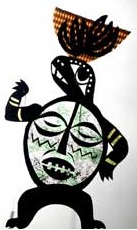
Il était une fois une tortue nommée Eklo, qui avait lié grande amitié avec son voisin Adidi le chat.
Un beau jour, Eklo vient rendre visite à Adidi. A son arrivée, elle s’écrie :
Comme ta maison est vieille et mal entretenue, mon compère ! Ce n’est pas du tout convenable ! Regarde ! Il Ya des fentes dans tous les murs; la porte ne ferme plus; le bois est rongé de partout et plein de gros trous. J’en suis bien peinée car je comptais venir te voir avec quelques amis que tu aurais été très heureux de recevoir. Mais il faut accueillir les visiteurs convenablement.
Afi, la souris
Adidi entend les reproches de son amie. Il a honte et assure Eklo qu’il va se mettre immédiatement au travail pour réparer sa maison. Dans une quinzaine de jours, tout sera prêt pour qu’elle puisse lui amener les visiteurs annoncés. Mais la tortue avait une idée derrière la tête. Un peu avant la date fixée par Adidi, elle va rendre visite à Afi, la souris.
Chère amie, lui dit-elle, je viens te rendre visite, car tu es le chef de la communauté, afin de te transmettre une invitation. Adidi, mon compère, vient de remettre à neuf sa maison. Pour célébrer cet événement, il va donner une grande fête et il m’a chargée de te dire de venir y assister en compagnie de tous les tiens.
Souris pousse un cri de surprise et d’indignation voyons ! Est-ce que tu te moques de moi ? Crois-tu que je vais aller chez un individu qui a déjà tué mon grand-père et ma grand-mère, sans parler d’un bon nombre de membre de ma famille ?
Adidi, le chat, courant apres la souris
Tortue prend sa voix la plus doucereuse et la plus persuasive pour affirmer :
Mais tu n’as rien à craindre. Il n’arrivera rien de mal ni à toi ni aux tiens. Tout cela, c’est du passé ! Maintenant, il faut oublier. D’ailleurs, je te d’amitié qui existent entre Adidi et moi ?
Afi fut convaincue. Au jour dit, accompagnée de toute sa famille, elle suit tortue au domicile de Adidi, Eklo les fait tous entrer dans la maison, puis se précipite à l’extérieur et ferme la porte. Adidi, qui n’attendait que cela, s’élance toutes griffes dehors au milieu des infortunées souris qui, affolées, cherchent vainement une issue pour s’enfuir. En quelques instants, il les a toutes tuées. Ensuite, Adidi appelle la trompeuse Eklo et tous deux fêtent l’événement.
Croire que ceux qui vous ont fait toujours du mal vont devenir brusquement vos amis, c’est être bien sot !
Conte tiré de“Contes des Lagunes et Savanes,” Collection ‘Fleuve et Flamme,’ édition Edicef, 1975.
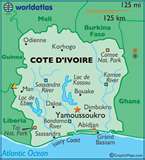
I saw this great article by Guy Kouame Gustave on the crisis in Ivory Coast. Such Truth!
“Carthago Delenda Est!” Carthage Must be Destroyed!
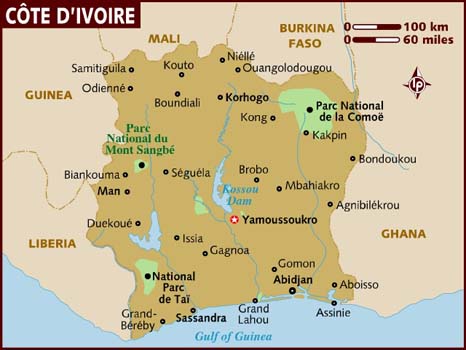
This terrible statement was made by Caton the Elder, a Roman citizen who, in his last days in 153 B.C., led a diplomatic mission to Carthage. Impressed by the economic revival of Carthage, he adopted a systematic anti-Carthaginian attitude that led him to end all his speeches at the Senate by the phrase “Carthago delenda est!”, “Carthage must be destroyed!”. Caton the Elder advocated that Carthage, the competitive city to Rome during the Punic Wars had to be destroyed. Reading the biography of this multi-facet and hatred-filled individual, I couldn’t help but think of Cote d’Ivoire, our country. In fact, revisiting our history since Mr. Alassane Dramane Ouattara’s irruption in the Ivorian political life, one can paraphrase Caton the Elder saying: “Cote d’Ivoire delenda est!”.
The reason is that the successive events that the country has gone through since the election of President Laurent Gbagbo as Head-of-State in October 2000, demonstrate that there is a ferocious relentlessness to destroy the person chosen by the people to lead the country. But more tragically, the country itself, its choices, its soul, and all the institutions and laws on which the nation stands. There is an animalistic conspiracy to make Côte d’Ivoire a failed country.
“Cote d’Ivoire delenda est!”
Declarations such as “I will make this country ungovernable, we are going to gnagami it all!” by ADO, the media, military, political, social, cultural, diplomatic, financial and economic relentlessness (boy! To say the least!), multiple coups and other mistreatments the country is subjected to are all part of the sinister project of the destruction Côte d’Ivoire. Despite multiple sacrifices made by President Gbagbo and the people of Cote d’Ivoire for the sake of peace and democracy, the country continues on suffering since 2002. And the so-called post electoral crisis has just brought to light the sinister plot of destruction and submission against our country.
For recall: December 1999, first coup d’Etat consecutive to the war for power between the heirs of Houphouët Boigny, the first President of Côte d’Ivoire. The coup went well: Bédié is exiled, but Ouattara did not succeed seizing power. General Guéi who led the military transition escaped two assassination attempts. He lost the October 2000 presidential elections and took refuge in his native village. Laurent Gbagbo, the people’s beloved, won the elections and came into office. From that day on a terrible and obnoxious lynching campaign against the country, its founding pillars, and its officials started. The nightmare of the Ivorian people was thus into motion.
Flag of Cote D'Ivoire
“Cote d’Ivoire delenda est!”, “Cote d’Ivoire must be destroyed ! »
The personality, the choices, and the relation and interactions that President Gbagbo has with his people for decades make many uncomfortable. His aspirations to diversify the economic partners of the country and to depart from the ongoing classic infantilizing paternalism from the former colonial power disturb and particularly worry.
ADO, the man of the outside world, has not given up his plans to seize power by all means necessary. He and his allies then decided to make Gbagbo undergo the same fate as Bédié. They set up, prepared, organized, financed, and implemented a coup d’Etat from and with the complicity of some countries of the sub-region and mainly with the help of a part of the international community. In the night of September 19th, 2002, assailants attacked the State. They failed to take over, fled from the economic capital Abidjan, and made up a cyst in Bouaké where they organized a rebellion.
As a physicist, I could not pass on the opportunity to talk about the fellow South African astrophysicist Thebe Medupe ‘s work on Cosmic Africa. Cosmic Africa is a project/documentary about astronomy in African cultures, exploring astronomy among two of the oldest African tribes: the Namib (or Bushmen or San) of Namibia, and the Dogon people of Mali. I heard this documentary one evening on PRI. It felt so great hearing an elder from the Dogon tribe talking about their use of the moon, stars, etc, for their harvest. People still study the sky and the stars to guide them during the hunting season; astronomy is an integral part of their daily lives, dances, and ceremonies. This knowledge of the sky was passed on from generation to generations for the past 500 years.
Thebe Medupe
The Dogon people knew certain celestial bodies that were just discovered/identified properly by Western science in the 50s and 60s. They used the stars in spirituality and devised a divination system as discussed in the movie. One of their great treasures is the knowledge of the star Sirius which Dogon elders confided about its existence to French anthropologists in the 1940s. The Dogon elders said that Sirius had a companion star that was invisible to the human eye.
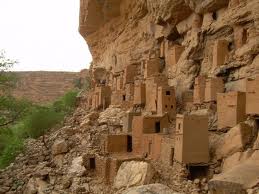
Dogon village
“They also stated that the star moved in a 50-year elliptical orbit around Sirius, that it was small and incredibly heavy, and that it rotated on its axis. All these things happen to be true. What makes this so remarkable is that the companion star of Sirius, called Sirius B, was first photographed in 1970. While people began to suspect its existence around 1844, it was not seen through a telescope until 1862 — and even then its great density was not known or understood until the early decades of the twentieth century. The Dogon beliefs, on the other hand, were supposedly thousands of years old.” To read the full account, check out: The Sirius Mystery and the The Dogon Website.
San (Basarwa/Bushmen) hunters
The Bushmen of Namibia are the oldest people in Africa, as well as in the world. They have lived in the Southern area of Africa for the past 20,000 years, and their celestial stories are just as old. In the documentary, I love the way their celestial stories, and their story of creation was centered around the lion. Isn’t it interesting? The lion, which is the king of the jungle,…purely African! I simply loved it. The sky is interpreted in African terms: giraffes, lions, and zebras are seen among the stars where other people see bears and horses. From the documentary, one sees that the Namib (Bushmen or San) healers welcome the bright evening star, the planet Venus, with a special dance…. The elders observe the shadows cast by the Sun and still count the days by the phases of the Moon, orient themselves, decide when to hunt, harvest, etc… with the sky. They call the Milky Way the Spine of the Night and observe its three different positions during the night: it tells them about time and the changing seasons. Read more about the Khoisan people of Botswana and their fight for survival amidst government/Corporation’s menace.
Il était une fois dans un village deux amis si intimes qu’ils ne se quittaient jamais. A les voir toujours ensemble, on les aurait pris pour des frères jumeaux. L’un était Kakou Ananze, l’araignée, l’autre Gayagui. Chacun d’eux avait une épouse et quatre enfants.
Un jour, une terrible famine s’abat sur le pays. Les deux amis se lamentaient en cherchant nuit et jour un peu de nourriture. Mais bientôt il n’y a plus ni racine, ni tubercule, ni graine à cueillir dans la forêt. Pour ne pas mourir faim, Kakou Ananze et Gayagui décident de se séparer pour tenter de survivre, en quittant le pays pour en chercher un autre moins infortuné.
Village Africain - Parc de Waza (Cameroun)
Gayagui s’en va vers le nord-ouest, emmenant avec lui tous les siens. Chaque fois qu’au cours de son long voyage, il découvre un peu de nourriture, il en fait deux parts. Il partage la première avec son épouse et ses enfants. L’autre il la garde en réserve. Et ils poursuivent leur route. Enfin, ils arrivent dans un village lointain qui semble très prospère. Il demande au chef l’autorisation de s’y installer avec sa famille le chef, pris de pitié, accepte et lui donne un champ à cultiver. Gayagui se met aussitôt au travail. Mais sa femme, épuisée, meurt. Les villageois s’émeuvent devant ce malheur imprévu qui frappe un homme et des enfants si travailleurs et si gentils. Ils aident Gayagui à enterrer son épouse convenablement puis font une collecte dans toute la région pour lui venir en aide. Chacun donne ce qu’il peut: une poule, un mouton, une daba, des calebasses, des semences, de la nourriture etc. Ainsi Gayagui, grâce à leur aide, devient presque riche et peut mener avec ses enfants une vie convenable.
Pendant ce temps, Kakou Ananze s’était mis en marche vers le nord-est, suivi par son épouse et ses enfants. Lorsque Araignée trouvait quelque chose à manger, il le gardait pour lui et le dévorait aussitôt, tandis que le reste de sa famille survivait à grand-peine.
Champs Africains
Un jour, sur le chemin, ils rencontrent un groupe de villageois qui venaient de la région ou s’était installé Gayagui …Et ceux-ci leur apprennent ce qui est arrivé et comment Gayagui a trouvé la fortune. Cette histoire donne à réfléchir à Kakou Ananzè. Lorsque, après bien des jours de marche il parvient avec les siens dans un gros bourg qui parait riche et heureux, Araignée tue sa femme et se met à se lamenter très fort pour éveiller la pitié des habitants: Quel malheur ! Oh ! Quel malheur !que vais-je devenir ! Mes pauvres enfants ont perdu leur tendre mère et moi, une bonne épouse qui m’aidait tant dans mon travail. Nous sommes trop pauvre pour lui faire des funérailles convenables. Quel malheur ! Quel malheur !
Les gens s’approchent pour venir à son venir à son secours Mais ils voient que Madame Araignée a été tuée d’un coup de coupe-coupe, que les enfants sont tout maigres et tout faibles alors que Kakou Ananzè a une mine florissante. Alors ils se méfient, prennent avec eux les enfants pour les nourrir mais laissent Araignée sans lui venir en aide. Celui-ci doit emprunter de l’argent pour la cérémonie des obsèques. Et quand tout est fini, comme il ne peut rien rembourser, il doit se faire engager comme domestique chez de riches fermiers. Comme il est paresseux et égoïste, ses nouveau maîtres ne l’aiment pas et lui donnent plus de coups de bâton que de bonne nourriture. Araignée est bien puni ! C’EST Pourquoi le soir à la veille, il dit toujours à ses enfants: Ecoutez bien votre vieux papa ! N’imitez jamais les autres ! Car ce qui à bien réussi pour eux, peut avoir pour vous une funeste conséquence.
Conte tiré de“Contes des Lagunes et Savanes,” Collection ‘Fleuve et Flamme,’ édition Edicef, 1975.
With this week’s event in Egypt, I thought that a trip down memory lane would be more than appropriate! One of the greatest political figures of modern Arab history and third world politics is the Egyptian president Gamal Abdel Nasser. Nasser was a pure political genius, and had great love and vision for his country, the Arab world, and developing countries in general. He was a strong player in the battle against imperialism in Africa, and in the Arab world. It was in Egypt that Um Nyobe and the UPC sought refuge to keep on working on Cameroon’s independence (this will be a story for another day).
Map of Egypt
He was the first to negotiate the ownership/nationalization of the Suez Canal by Egyptians themselves. At its construction, as in most African countries, it belonged to the British since Egypt had been a British colony. Heled the Egyptian Revolution of 1952 which overthrew the monarchy of Egypt and Sudan, and started a new period of modernization and socialist reforms. He was determined to wean Egypt of its dependency on Western Economies. He was one of the few leaders in the world to declare his neutrality in the Cold War, which was considered very ‘gutsy‘. He moved Egypt toward a socialist economic system and instituted huge land, education and health reforms. As president, he was determined to modernize and improve Egyptians’ standard of living.
Nasser
After the humiliating Egyptian defeat during the Six-Day war against Israel, Nasser took responsibility for the debacle and resigned from the presidency (but thousands took to the street to demand that he returns to power). In his resignation speech he said: “I have taken a decision with which I need your help. I have decided to withdraw totally and for good from any official post or political role, and to return to the ranks of the masses, performing my duty in their midst, like any other citizen. This is a time for action, not grief…. My whole heart is with you, and let your hearts be with me. May God be with us—hope, light and guidance in our hearts.” You can read the entire speech on Al-Ahram Weekly. He died a couple of years later from a heart attack… many believe that the Six-day war defeat was a precursor. More than 5 million people attended his funeral. Nasser always wanted the best for his people!
Flag of Egypt
I wish more presidents, like Hosni Moubarak, in Africa could have the guts to resign from power, and could love their people so much as to want them to have the best. During an assassination attempt on Nasser’s life at a rally in Alexandria during the celebration of the British withdrawal from the Suez Canal, Nasser proclaimed: “If Abdel Nasser dies… Each of you is Gamal Abdel Nasser… Gamal Abdel Nasser is of you and from you and he is willing to sacrifice his life for the nation.” Moubarak today should learn from the past… like Dr. Zahi Hawass (world-renowned director of Egyptian Antiquities) said in a recent interview to BBC: “What will stay here after many years is Egypt… People will die, but Egypt will stay!” Moubarak should thus ask: “What would I be remembered by: those past few days of protests, or the love for my country?” If his answer is the second one, then he knows that he needs to pack his bags, and uphold Egypt’s liberty!
When you love greatness… you come across greatness. A couple of years ago, I watched the Oscars, and one of the nominees for international movies was the South African operatic version of Carmen of Bizet. This made me wonder if there was another orchestra on the continent playing the arts of Mozart, Vivaldi, and Beethoven, to name just a few… and what would that be in an African language. Few days ago, I came across an article on the BBC talking about the Kinshasa Symphony Orchestra. I was so proud to see that this orchestra was entirely founded by Congolese themselves. The ‘Chef d’orchestre’ was a Congolese gentleman who had started the orchestra in 1993 (Armand Diangienda)… and kept it throughout the years. He merged two great musical traditions using Western musical instruments to create Congolese classical music. With time, the orchestra grew: in its early days, it started with 5 cellos for 12 people; now the orchestra counts over 100 members! They even compose their own music in Lingala! Isn’t it amazing? Orchestra members come from all works of life: from cooks, teachers, ‘vendeurs a la sauvette’ (bayam-selam), tailors, to journalists, professors, etc… They are from all ages: mothers, parents, singles… etc… So great was my surprise that I had to write this article and leave you with this great video… Enjoy: Symphony orchestra made in Congo, by Congolese people, for all! Delightful !!!
Please also check the official website for the documentary: Kinshasa Symphony
This Monday marked the 50 year anniversary of the assassination of the great African giant Patrice Lumumba. How could I pass on such an occasion to talk about him? 50 years later, his speech and his vision still ring true. Lumumba dared to defy the Belgian King Baudouin by telling him on independence day what he saw as the Belgian hold on Congo. He was blunt! He spoke the truth! He was not malleable… He could not be manipulated by Europeans! He was a menace because he was a free man proud to be Congolese.
Lumumba detained
I always wondered what would have happened if Lumumba had not been so open about his ambitions for his country? What would have happened if he had played their game, and hidden his cards? Then we, Africans, would have never had our African hero! Someone had to say what we all felt: oppressed, hated, enslaved, diminished,… someone had to make us proud of being Congolese/African again… someone had to re-establish our dignity! That someone happened to be Patrice Emery Lumumba! Patrice died because he had great ideals, and because he trusted others. For the problem in the Katanga province, he went to the United Nations; he trusted that establishment to resolve the conflict peacefully, and to help solve the Katanga secession…. Instead they, with all the interests they represented (US, Belgium,France, etc…), refused to help him… the US of Kennedy refused to help him out, and thus he turned to the USSR to keep his country united. With the USSR, he was able to solve the rebellion in the Katanga and Kasai provinces… but the Americans and Belgians were mad that he had been helped by the Soviets; they decided to have him murdered after this affront (they used Mobutu, and Tshombe)! Once again, we Africans sold our own brother… I wonder where the Maurice Tshombe, or Kibwe, or the Joseph Mobutu are today… History will remember them as tyrants, dictators, and puppets of the West! Isn’t it interesting that history keeps repeating itself? Today the United Nations are starting a war in Ivory Coast in the name of installing a puppet-president in a soveraign country… Have you ever seen the UN so vehemently ask for war in a country? Only in Africa could this be possible… I used to dream that this was a peace organization! Actually, it is an organization to impose the will of the West on third world resource-rich countries.
Lumumba on a USSR commemorative stamp in 1961
The following documentary will tell it all: how the Belgians did not like Lumumba because he was not a puppet, how they started the Katanga secession and supported it; how Lumumba went to the UN for help in keeping his country united and was refused help; how Lumumba went to the US to ask for help, and was not even received by president Kennedy; how he turned to the USSR to solve his problem in the Katanga and Kasai provinces; how that event precipitated his end. 50 years later, Lumumba’s ideals and vision are still actual. Lumumba is the symbol of aspirations of an entire continent. His spirit lives on, and his pride is ours!
Lumumba (2000)
I live you with an excerp from a letter he sent to his wife before his death: “… the future of the Congo is beautiful and [I] expect for each Congolese, to accomplish the sacred task of reconstruction of our independence and our sovereignty; for without dignity there is no liberty, without justice there is no dignity, and without independence there are no free men.” You can find the Integral version of this letter on AfricaWithin.com, as well as his famous 30 June 1960 independence day speech. Please don’t forget to check out: Wikipedia, The Guardian which deemed the assassination of Lumumba as the most important of the 20th century, The Daily Nation of Kenya deemed Lumumba the bright spark in a land of despair, and The New York Times which called it an assassination’s long shadow. At last, the movie Lumumba (2000) is what finally got the Belgian admitting their part in the assassination of Lumumba.
I have wanted to write about Mariama Bâ for the longest time. She is a writer from Senegal… she is the author of “Une Si Longue Lettre” [So Long a Letter], and “Chant Ecarlate” [Scarlet Song]. Her book “Une si Longue Lettre” [So Long a Letter] is considered by many as being the first truly African feminist book, as it describes the woman’s condition in an African and Muslim society. It talks about the place of the woman in society, the effect on polygamy on women and society, and the clash between modernism and traditions. It is written as a letter from a widow Ramatoulaye to her best friend Aissatou who left her husband when he decided to marry a second wife. This book really describes the feminine condition in Africa, and was truly the first to address so overtly the woman’s hurdle in African society. Six months after the publication of “Une Si Longue Lettre,” Mariama Ba passed away… and her novel “Chant Ecarlate” was published posthumously.
Une Si Longue lettre
Chant Ecarlate [Scarlet Song] also deals with feminine conditions, but addresses more the clash between two different cultures the European (of the protagonist Mireille), and the African (of Mireille’s husband), and again polygamy. I always felt deeply connected to Bâ’s first book, and always wondered what a great loss African literature suffered when she left. She will always be an inspiration for many: orphan from her mother, raised by her father and grand-parents, mother of nine children, divorcée, professor, highly educated woman, she embodied the strength and determination that can so clearly be seen in African women. Today, “Une Si Longue Lettre” is an African classic, read in all schools across the continent, and translated in numerous languages. We are forever grateful for her work… she opened the door to many bold young African female writers.
Scarlet Song
The following is an interview that Mariama Bâ gave to Alioune Toure Dia for the magazine Amina in November 1979: Interview de Mariama Bâ à Amina. Relax and enjoy!
Il était une fois un roi très puissant, redouté par toutes les tribus du voisinage et respecté par les siens. Il avait sept fils nés de plusieurs femmes. Mais son épouse préférée ne lui avait donné qu’une fille nommée Sika. Cette jeune princesse était aussi douce que belle. Elle aurait fait la joie de la vieillesse de son père si elle n’avait été victime d’un malheur épouvantable: à l’âge de quatorze ans alors que nulle jeune fille de la région ne pouvait rivaliser en beauté avec elle, elle était brusquement devenue sourde et muette. Car les coépouses, par jalousie de la préférence marquée du roi pour sa mère, avaient voulu atteindre celle-ci par sa Sika par un grand féticheur du pays.
Sika
Le roi ignorait naturellement les agissements de ses épouses mais les mauvaises langues du royaume avaient jasé. Et la rumeur s’était répandue dans le pays. Le roi a fait tout ce qui était en son pouvoir pour que sa fille bien-aimée guérisse. Il a consulté tous les sorciers de quelque réputation, a offert des présents somptueux à tous les marabouts du nord pour qu’ils viennent examiner son enfant. Mais nul n’a pu parvenir à rendre l’ouïe et la parole à Sika. Finalement le roi a résolu d’envoyer sa fille vivre dans un petit village à l’écart, car le spectacle du malheur de son enfant lui déchirait le cœur.
Tortue
Or, Tortue, à l’esprit fertile en inventions a entendu parler de l’affaire et a décidé d’intervenir afin d’en tirer un bon profit. Elle se rend à la cour et demande à parler au roi: “Seigneur, lui dit-elle, que me donnera tu si je réussissais à guérir la princesse? J’ai beaucoup d’expérience et je crois que cela est de mon devoir.”
L’espoir se réveille alors dans le cœur du malheureux père.
“Si tu parviens à rendre l’ouïe et la parole à Sika, je prends le conseil des anciens à témoin, je partagerai mon palais en deux et t’en donnerai la moitié.”
– J’ accepte ton offre, répond Tortue. Dès que j’aurai fait ce que je dois, je t’amènerai ta fille et tu constateras par toi–même qu’elle est redevenue normale.
Miel
Tortue se rend donc dans la forêt qui entoure le village ou l’on avait envoyé la jeune princesse. D’une petite hauteur, elle surveille le chemin. Bientôt, elle aperçoit Sika qui se rend au marigot pour se baigner. Tortue, aussitôt, va déposer, bien en vue, sur une grosse pierre, une calebasse pleine d’un miel délicieux qu’elle s’était procuré. Puis, elle se cache dans un buisson tout près de là.
La princesse arrive au bord de la l’eau, cherche un endroit pour déposer son pagne et aperçoit la calebasse. Poussée par la gourmandise, elle y porte la main tortue sort alors précipitamment du fourré, s’élance sur Sika et la frappe au visage en hurlant:
“Voleuse ! Voleuse ! Comment peux-tu voler le miel que j’ai acheté pour mes enfants?”
La jeune fille abasourdie, se débat. Son indignation est si violente que la parole lui revient.
“Moi une voleuse? Comment oses-tu dire une chose pareille, étrangère? Ne sais-tu pas que je suis la fille unique du roi, la princesse Sika? Veux-tu me lâcher immédiatement!”
Mais Tortue, la très rusée, la ligote avec une corde et l’entraîne derrière elle sur le sentier qui va vers le village, en
Sika angry
criant à tue-tête: “Regardez tous la voleuse de miel! Wuu! Wuu! Sika, la fille du roi n’est qu’une voleuse! Wuu! Wuu! Sika préfère prendre le miel des autres pour le manger que d’aller au marché en acheter.”
A son tour, elle se met à crier: “La veille sorcière! La menteuse! La fille du roi ne doit pas être insultée ainsi. Frappez cette menteuse! Et délivrez-moi! Sika va rendre visite à la panthère de la forêt et la panthère est contente! Sika va visiter le seigneur éléphant ! Et le seigneur éléphant est fier de la recevoir. Honte! Honte! à la vieille qui veut déshonorer la fille du roi par ses mensonges!”
Mais Tortue semble ne vouloir rien entendre. Les habitants du pays sont tellement étonnés d’entendre ces accusations et de voir la princesse qui était muette auparavant, répondre par de grands cris, qu’ils n’osent intervenir.
African village
Tortue continue donc à traîner ainsi derrière elle la jeune fille, en direction de la ville royale. Avec malice, elle poursuit ses clameurs: “Wuu! Sika, la fille du roi est une voleuse de miel! Regardez-la tous! Wuu! Wuu! Sika, voleuse de miel!”
Tandis que la princesse en furie vocifère: “Vieille sorcière! Menteuse! Ce n’est pas vrai! Ce n’est pas vrai!”
Elles arrivent dans cet équipage et au milieu des mêmes hurlements jusqu’au palais. Attiré par le bruit, le roi sort dans la cour et pousse un cri de stupeur: “Ma fille muette parle! Miracle! Miracle!”
Aussitôt, prestement, Tortue détache les liens de Sika et s’incline respectueusement devant le roi.
Quand à la jeune princesse, toujours furieuse, elle se précipite aux pieds de son père: “Père! Père! Punissez cette vieille sorcière qui m’a insultée et humiliée, moi, votre fille unique! Père, punissez-la!”
Tortue victorieuse
Le roi voit que son enfant bien–aimée est complètement guérie et il la calme en disant: “Non ma fille! Je ne punirai pas Tortue. Au contraire, je vais la récompenser car elle a réussi là où les plus grand plus féticheur ont échoué. Elle ne t’a humilié que pour t’obliger à retrouver la parole. Sa ruse a été plus forte que tous les remèdes!”
Il s’approche ensuite de Tortue et déclare: “Grand merci savante Tortue, qui as sauvé mon enfant en la guérissant de son infirmité. La moitie de mon palais est à toi!”
Tortue réussit tout ce qu’elle entreprend car elle connaît bien le cœur des hommes!
Conte tiré de “Contes des Lagunes et Savanes,” Collection ‘Fleuve et Flamme,’ édition Edicef, 1975.
The Obom, in Fang-Beti (Cameroon) language, means tissue of the bark of the Aloa tree. The bark of the “aloa” tree – a widespread tree in the equatorial forest, particularly originating from Cameroon my home country, – was used in former times for the manufacture of loincloths. The Aloa tree has a fibery bark, and is a soft white wood; it grows quite fast, and once at maturity, its flowers drop seeds which grow around the tree. This natural fibre is obtained in Cameroon in traditional ways. The bark layers which have a thickness of 1 to 2 mm, are treated as intact sheets with water steam and are subsequently softened by beating. The full description on how the Obom is extracted can be read in full from the webpage of Etolo Eyah, a Cameroonian artist master of Obom.
Obom painting by Arlette D. Efang
The originality, beauty, and genuineness of the obom bark in combination with modern fabric and leather confers to any creations a touch of exclusivity, in a very ‘green’ manner, leading to sustainable development and handicraft.
Hat made out of Obom bark
The obom enjoys the reputation of being a material of great value and is therefore often also used as canvas for paintings, in witness of the riches of their owners; there are several Cameroonian painters who particularly use the Obom as canvas. This natural fibre can be machine washable and ironed. The use of the obom bark in modern couture is unique. I can testify of this because I have a hat made up of Obom which I have had for over 12 years! Please check out the websites of several stylists and painters, such as Martial Tapolo, Cornelia Orsucci, Peter Musa, Otheo, and Arlette Dorothee Efang, to name just a few. The video below just shows the processus of harvesting and cleaning the tree bark; the bark shown is not obom!