Cesaria Evora: the Barefoot Diva– the Love of Cape Verde

Cesaria Evora
Cesaria Evora

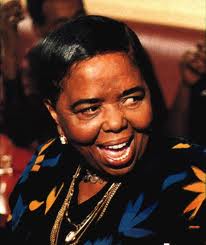
I was quite shocked to learn of the ‘passing’ of Cesaria Evora… It hurts… the barefoot diva, the lady who sang ‘sodade‘ and ‘Angola‘, is no longer. The lady who started singing in her later days, and gained stardomship at the age of 50+, the lady who always performed barefoot on stage is no longer. She exemplified endurance and perseverance. Someone else could have given up… someone else could have said ‘there is no point singing, if I can barely make a living’. She knew all of that, but she also knew that she had a gift for singing and bringing the morna (Cape Verde music) to the international scene. She sang, and went on worldwide tours in her late 60s… giving concerts, etc… at an age when most people would have retired. She was truly an example of strength, confidence, endurance and perseverance. Her life was really all about endurance!
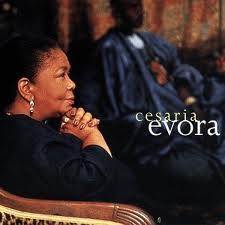
The album titled 'Cesaria Evora'

She lost her dad at the age of 7, and was placed in an orphanage at the age of 10 by her mother who could not raise all her 6 children.  She started singing at the age of 16 in a sailors’ tavern. She won international acclaim for her album ‘La Diva aux Pieds Nus‘ in 1988, and the album ‘Miss Perfumado‘ released in 1992 sealed her international aura.  In 1997, she won the Kora All African Music Awards for best Artist of West Africa, Best Album, and Merit of Jury.  In 2004, came the Grammy in the world category (such a silly category… mixing musicians from Europe, Africa, Asia, and Latin America in one pot… unthinkable) for her album ‘Voz D’Amor‘. Keep singing, and check out her website Cesaria Evora, a video biography on BBC, An article by the Guardian newspaper, USA Today, NY Times, LA Times, So long Cesaria, we will keep singing ‘sodade‘ and dancing the morna, praising ‘Angola‘ and ‘Cabo Verde.’

The Biafran Civil War and the French Connection

Flag of the Biafra republic

With the death of C. Odumegwu Ojukwu, the leader of the breakaway Biafra Republic, I decided to talk about another chapter of the ‘françafrique’ book, i.e. the Biafran war.  At first everybody thought that it was just a Nigerian war, but it is more than that.  It is also a war about France’s position in Nigeria, and their support of the Biafra military, as well as their manipulation of the media.  How the word ‘genocide’ was used to influence public opinion… Jacques Foccart himself happily admitted choosing that word so as to get the attention of President de Gaulle and the French media.  Sadly this war, which lasted from 1967 to 1970, cost many Nigerian lives, for the French and European oil greed. Interesting how history repeats itself as in Sudan vs. South Sudan today!

Biafra before & after (source: MySpace.com/rememberbiafra)

The other day, I was talking to a Nigerian friend of mine, who did not even know that the French had played a major role in that war… see how we (Africans) barely know our history?  He was telling me about the Igbo, Haussa, and Yoruba, and forgot that the French were the ones supplying guns to the Biafrans for the war…  He did not even know that most of the Biafran leaders who ran away sought refuge in Côte d’Ivoire… why? why not Ghana, Benin, or Cameroon? why a French-speaking country further away? Again the French influence.  Somebody told me that Cameroon refused to help because then president Ahmadou Ahidjo in support of his Northern brothers refused to help supply guns… maybe, but why didn’t Ghana do it? or neighboring Benin? Why was the help coming from Gabon, who apparently had no interest in the story? well, because one of the biggest French military base in Africa was in Gabon (and Ivory Coast), and probably because a president in his right-mind would not accept that his territory be used to create war in someone else’s country, and also because someone like Kwame Nkrumah could already see the French connection in the deal.

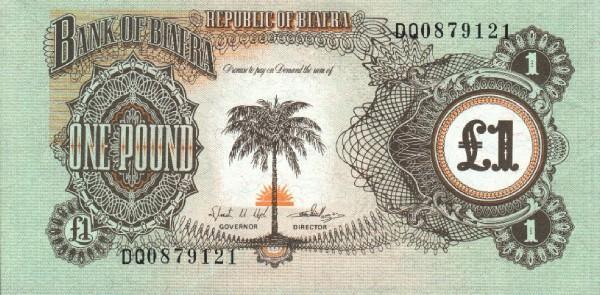
Biafran note for 1 pound

The Biafran war is similar to the Angolan or Mozambique wars or so many other wars in Africa, where many of the strings were pulled by external forces while the African puppets danced on the scene and got killed from the ignorance, and greed of their own leaders.  Please watch this great documentary which sheds some light on the Biafran war, another chapter of the great françafrique.  It is so interesting how Corsica has been wanting their independence from France for ages, but is still not independent to this day.  Look at the United States of America, 50 states, as big as a continent,… but an entire country! Why not in Africa? in Africa, division rather than union is encouraged!

The New York Times wrote an article on Colonel Ojukwu, the one who proclaimed the Biafran republic. A beautiful article by Dr. S. Okechukwu Mezu talks of this Nigerian/Biafran leader. As for the Biafran war, check out: AfricaMasterWeb, ICE Case studies, there are many books written on the Biafra republic and the entire history (you can check out some books on Amazon) I read Half of a Yellow Sun, but I believe that there are better ones on the Biafran war out there (feel free to share if you know of really good ones)… there is a nice article titled Biafra war memories no victor no vanquished, and My memories of the Nigerian-Biafran Civil War

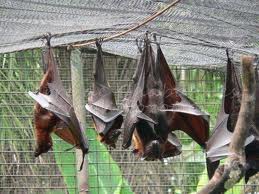
Pourquoi les Roussettes dorment la tete en bas!

Des roussettes - la tete en bas!

Vous est-il jamais arrivé de vous reveiller la tête en bas, toute retournée avec des idées confuses ou brouillées? …  Rien de mieux que ce beau conte africain sur la raison pour laquelle les roussettes dorment la tête en bas! Amusez-vous bien!

==========

Les animaux ont chacun leur façon de se reposer : certains se couchent par terre, d’autres se réfugient dans des terriers, d’autres se perchent sur les branches.  Seuls les membres de la famille des chauves-souris, et en particulier les grandes roussettes, s’accrochent aux branches la tête en bas, le derrière tourné vers le ciel.  Et pourtant, autrefois, elles se perchaient normalement sur les branches, la tête en haut, comme les oiseaux.

Voulez –vous  savoir pourquoi ? Oui, alors voici ce qui est arrivé. Continue reading “Pourquoi les Roussettes dorment la tete en bas!”

Franc CFA: Une Monnaie de Singe / CFA Franc: a Slave Currency

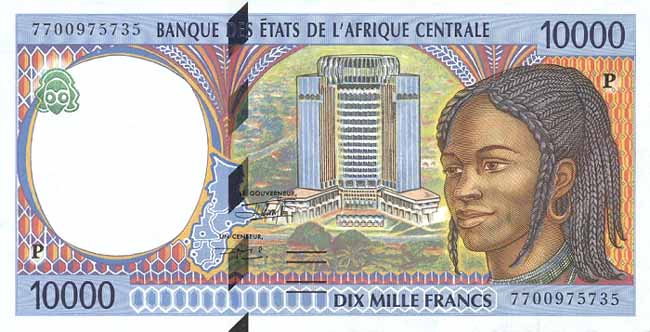
10,000FCFA (BEAC-1992)

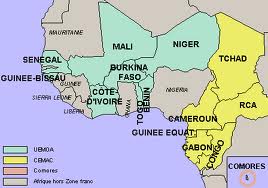
Suite à l’article sur la dévaluation imminente (ou pas) du Franc CFA, j’aimerais juste parler de l’histoire de cette monnaie de singe, car c’est vraiment incroyable que 15 pays africains aient soit-disant la même monnaie, le Franc CFA, et qu’ils ne puissent pas l’utiliser d’une zone à l’autre. Un Sénégalais ne peut pas aller à Yaoundé faire des achats avec ses CFA, car le CFA de l’Afrique de l’Ouest ne vaut rien en Afrique centrale, et vice versa.  Résultat: seulement 7-10 % de rapports commerciaux (import-export) existent entre les zones BEAC (Banque des Etats de l’Afrique Centrale) et BCEAO (Banque Centrale des Etats de l’Afrique de l’Ouest). Tous les échanges des anciennes colonies sont tournés vers la France! Donc, aucun échange réel entre pays parlant la même langue, ayant la même monnaie, et separés par moins de 2 h de vol! C’est comme si l’Euro de France ne valait rien en Allemagne ou en Espagne, et la monnaie devait être convertie!

Carte des pays de la zone CFA

Le Franc CFA ou franc des colonies françaises d’Afrique (plutard, les Français ont essayé de changer l’appellation pour endormir les consciences) fut instaurer pour la première fois en 1945 à la fin de la deuxième guerre mondiale.  C’est une monnaie de singe, car les anciennes colonies françaises versent au trésor de Paris 65 % de leurs revenus, et ensuite paient 20% pour assurer les fluctuations des marchés et couvrir les frais de la Banque de France.  De nos jours, ces anciennes colonies versent 50 % plus les 20%!  Imaginez-vous un seul instant: j’ai 100,000FCFA, et je dois remettre a quelqu’un 65,000 FCFA, et ajouter en plus 20,000 FCFA de frais…. Il ne me restera plus que 15,000 FCFA…  si mes poches hurlent de douleur…  imaginez un peu ce que 70 % ou 85% en plus ou en moins ferait au budget d’un pays tout entier?  Soit la pauvreté extrême, ou un certain équilibre budgétaire.

J’ai collectionné certains articles sur l’histoire du Franc CFA: Franc CFA- Wikipedia, Mamadou Koulibaly: Pourquoi le Franc CFA doit disparaitreLe Franc CFA un outil de controle politique et economiqueLe Franc CFA toujours contrôlé par ParisLe Franc CFA en Sursis … Lisez et regardez! Vous risquez d’être pris de dégoût! Le professeur Nicolas Agbohou que vous verrez dans cette vidéo a écrit un très bon livre a ce sujet: ‘Le Franc CFA et l’Euro contre l’Afrique.’

=========================== (In English →) Continue reading “Franc CFA: Une Monnaie de Singe / CFA Franc: a Slave Currency”

Fire and Rhythm (Fogo e ritmo) by Agostinho Neto

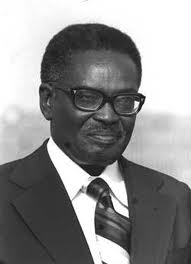
Agostinho Neto
Agostinho Neto

Agostinho Neto was the a medical doctor, a poet, and most importantly the first president of Angola. Today, I would like you to sit back and enjoy a poem written by this great African leader

Fogo e ritmo

Sons de grilhetas nas estradas

cantos de pássaros

sob a verdura úmida das florestas

frescura na sinfonia adocicada

dos coqueirais

fogo

fogo no capim

fogo sobre o quente das chapas do Cayatte.

Caminhos largos

cheios de gente cheios de gente

em êxodo de toda a parte

caminhos largos para os horizontes fechados

mas caminhos

caminhos abertos por cima

da impossibilidade dos braços.

Fogueiras

dança

tamtam

ritmo

Ritmo na luz

ritmo na cor

ritmo no movimento

ritmo nas gretas sangrentas dos pés descalços

ritmo nas unhas descarnadas

Mas ritmo

ritmo.

Ó vozes dolorosas de África!


Fire and rhythm

The sound of chains on the roads

the songs of birds

under the humid greenery of the forest

freshness in the smooth symphony

of the palm trees

fire

fire on the grass

fire on the heat of the Cayatte plains

Wide paths

full of people full of people

an exodus from everywhere

wide paths to closed horizons

but paths

paths open atop

the impossibility of arm

fire

dance

tum tum

rhythm

Rhythm in light

rhythm in color

rhythm in movement

rhythm in the bloody

cracks of bare feet

rhythm on torn nails

yet rhythm

rhythm

Oh painful African voices


.

President J.J. Rawlings denounces the Transfer of President Gbagbo to the Hague tribunal

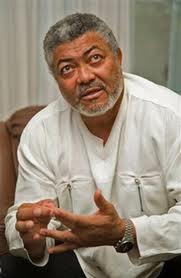
President J. J. Rawlings of Ghana

I have learnt with dismay reports that deposed President Gbagbo of Cote d’Ivoire has been transferred to The International Criminal Court (ICC) on Tuesday, November 29th, following a speedy indictment, in total violation of relevant internationalcode of procedures and in total disregard for the demands of peace in Cote d’Ivoire.

This transfer followed a procedure so hasty that it could be rightfully described as abduction.

My suspicion grows even more, when the prosecuting attorney claiming to be targeting six officials in Cote d’Ivoire, unduly focuses on Gbagbo, the one who is least likely to escape due to his being already in custody.

This eagerness to indict and transfer Gbagbo, who did not run in the face of the bombing of his palace like a common criminal, defies logic and the quest for true reconciliation and sustainable peace in Cote d’Ivoire.

After fifty years of independence, Africa should have all the know-how to bring justice to its own citizens and do away with imported justice.

President Laurent Gbagbo

What kind of prosecution would rather be in haste to bring to justice the victim of an attack, and be lenient on the perpetrator of the attack?

No one is trying to evade justice. But when such justice is drenched in a sea of humiliation and abuses, so as to be governed by self-righteous hatred with its untenable logic, it only befits human conscience to stand up against it for the good of all.

We will not be silent about this because we must not be silent about it as participating members in this human drama.

John Rawlings

Pour la version francaise cliquer sur RevuedePresse-ci.com Continue reading “President J.J. Rawlings denounces the Transfer of President Gbagbo to the Hague tribunal”

Dévaluation imminente du Franc CFA

Billet de 10000 FCFA (1992)

Un article du journal Notre Voie vient d’annoncer la dévaluation imminente du Franc CFA, prévue pour le 1 er Janvier 2012.  Bien que cela m’étonne, c’était à envisager, vu que l’Europe va mal, que la France est en faillite, quoi de mieux que de dévaluer le FCFA et multiplier son argent par 2, et les dettes des pays francophones envers la France qui vont aussi être multipliées.  Les seules personnes à déplorer là-dedans sont bel et bien ces africains, intello ou ignorants, qui ont applaudis lorsque les bombes françaises tombaient sur les civils ivoiriens et le président Gbagbo, tous ceux-là qui ont gloussé de joie quand le peuple libyen se faisait bombarder par 42 nations (l’OTAN) pendant plus de 8 mois.  Ils ont applaudis, disaient-ils, parce que le ‘dictateur’ Gbagbo devait partir… dommage car c’est bien Gbagbo qui avait commencé à imprimer une monnaie ivoirienne (le MIR).  Ils applaudissaient parce que, disaient-ils, le ‘dictateur’ Kadhafi devait partir… dommage car c’est bien Kadhafi qui avait crée et financé le fonds monetaire africain et la Banque centrale africaine qui devaient ouvrir leurs portes ce Décembre… dommage car c’est bien Kadhafi qui préconisait l’indépendance réelle de l’Afrique et une monnaie telle l’or pour les échanges.  Au lieu de cela, les africains sont restés silencieux ou ont gloussé de joie quand deux pays souverains africains étaient bombardés par des forces externes sans aucune déclaration de guerre.  N’avions-nous pas vu le peuple ivoirien se réunir à l’appel de Charles Blé Goudé le 26 Mars pour une veillée en support à leur président? N’avions-nous pas vu le peuple libyen se reunir a Bab-Al-Aziziyah le 1er Juillet, liant leurs mains et leurs drapeaux verts sur plusieurs kilomètres, en support a leur Guide? Que dire de quelqu’un qui applaudit quand la maison de son voisin vole en flammes? Que dire de quelqu’un qui ne bouge pas d’un pouce lorsque la maison de son voisin brûle? Ou lorsqu’elle est pillée de toutes parts? Est-ce un lâche? Est-ce un idiot? Non… plutôt un fou!

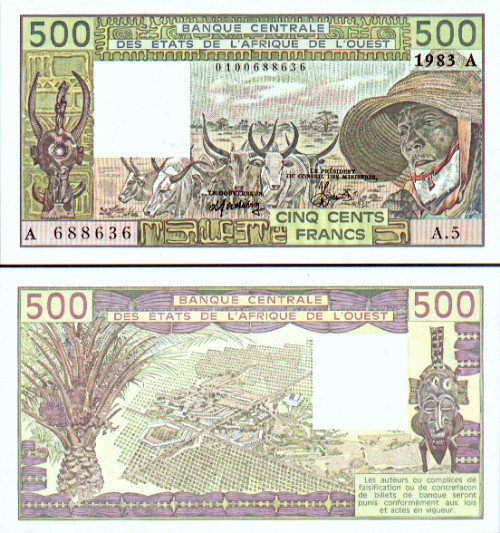
1000cfa (BEAO - 1983)
1000cfa (BEAO – 1983)

Aujourd’hui la dévaluation du Franc CFA est imminente… que faire de ce continent plein de lâches et fous? Qu’est-ce-que le peuple qui a supporté Gbagbo ou Kadhafi doit faire… car là-dedans il y a bien eu des gens censés, il y en a qui ont denoncé et continue de denoncer… Que faire quand il y en a parmi nous qui sont hypnotisés par le mot ‘démocratie’ sans vraiment comprendre ce que c’est que la democratie? … le 26 Mars nous avons vu le peuple ivoirien à Abidjan clamer son amour du beau et de l’indépendance; le 1er Juillet nous avons vu le peuple libyen clamer sa joie et son amour du Guide… c’est ça la vraie démocratie… et non la fusicratie (‘Je ne t’aime pas, je te tue’… ou plutot ‘je désire ton or, alors je te bombarde’).

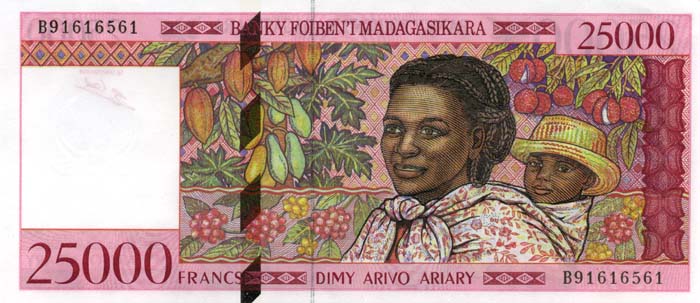
25000 FCFA (Banque Malgache-1994)

J’ai appris il y a de cela quelques jours que la compagnie aérienne Swiss ne s’arrêterait plus au Cameroun, que Air Ivoire avait été vendue à Air France… et j’ai crié le ciel pour cette grosse malédiction, car comme je le disais en Avril lorsqu’on bombardait la Cote d’Ivoire, ‘si on ne fait rien la recolonisation de l’Afrique aura bel et bien commencé!‘  Que penser de ce continent ou on doit prendre Air France pour se déplacer d’une capitale africaine à une autre? Comment comprendre que l’on prenne Air France pour aller de Yaoundé à Brazzaville? de Dakar à Abidjan? ou de Lomé à Ouagadougou? ou de Niamey à Nouakchott? Quelle incongruité? et avec la dévaluation, mes freres africains seront servis! … bonjour l’asservissement total! Comment traiter avec la Chine avec une monnaie de singe? Comment prétendre vouloir de nouveaux rapports et se tourner vers la Chine pour les profits commerciaux quand on doit encore verser 70% de ses revenus à la métropole à cause de cette monnaie? Quelle incongruité! Oh je pleure pour toi, pauvre Afrique… tu es trop pleine de lâches et de fous! Je vous invite a voir cette vidéo sur l’histoire du Franc CFA (N’oubliez pas de regarder Parties 2, and 3).

28 Nov. 2011: Presidential Elections in DRC

Map of the Democratic Republic of Congo

Today is election day in the Democratic Republic of Congo (DRC). I would like to share with you this article by Antoine Roger Lokongo which I found quite interesting and deep, about the third presidential elections in the DRC after 51 years of independence, with a brief history of DRC since independence.  I have included some snippets from the article which I liked. You can read the full article on Panafrican Vision; it is entitled: D.R. Congo Democracy at crossroads – One election, two sources of legitimacy.

==========================

‘Countries do not have permanent friends or allies, they have only permanent interests’

… when Joseph Kabila turned to the Western powers for assistance after the 2006 elections, they said they had other priorities.  Perhaps this was a wake-up call for Joseph Kabila.  This is how, in an interview given to Gettleman of the New York Times, Joseph Kabila himself explained why he turned to the Chinese for help after being disappointed with the West’s empty promises:
‘We said we had five priorities: infrastructure; health; education; water and electricity; and housing.  Now, how do we deal with these priorities?  We need money, a lot of money.  Not a 100 million U.S. dollars from the World Bank or 300 from the IMF [International Monetary Fund].  No, a lot of money, and especially that we’re still servicing a debt of close to 12 billion dollars, and it’s 50 to 60 million U.S. dollars per month, which is huge.  You give me 50 million dollars each month for the social sector and we move forward.  Anyway, that’s another chapter.  But we said: so, we have these priorities, and we talked to everybody.  Americans, do you have the money?  No!  Not for now!  The European Union, do you have three or four billion for these priorities?  No!  We have our own priorities.  Then we said: ‘why not talk to other people, the Chinese?’  So we said, [Chinese] do you have the money? And they [the Chinese] said, well, we can discuss.  So we discussed’.

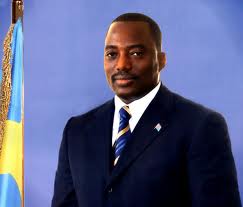
Joseph Kabila, President of DRC

This interview suggests that Joseph Kabila turned to the Chinese only after seeking help from Western powers.  That is exactly the dilemma Patrice Lumumba faced. Increasingly desperate, Patrice Lumumba went on an international trip to enlist Western support (including to Washington, London, Brussels…) to have Belgian troops who had orchestrated the secession of Katanga to leave immediately.  He did not get the support he expected and turned to the Russians for help.  He was immediately accused of being a communist and eventually assassinated.
Congolese leaders turn to other partners other than the ‘traditional Western partners’ because they are in need; and a friend in need is a friend indeed!  They do not mean necessarily to play of the West against the East and so on.  When Joseph Kabila turned to the West, the DRC was almost on the verge of bankruptcy. …

The question we want to deal with now therefore is: ‘What happened after Joseph Kabila turned to the Chinese in his country’s hours of needs?’ Continue reading “28 Nov. 2011: Presidential Elections in DRC”

Alexandre Dumas: Greatest French writer was of… African descent

Alexandre Dumas (source: Wikipedia)

Dear All, I was so surprised when I learned that Alexandre Dumas, yes… the writer of the “Three Musketeers” was just recently (2002) inducted into the Pantheon of Paris, you know… the place where the remains of the most famous/distinguished French citizens are buried. I wondered why?… because the Three Musketeers is the most acclaimed French book adapted to screen, movies, and theater. I wondered why?… because The Three Musketeers and The Count of Monte Cristo are among the most read books by a French author in the world… why only in 2002, 132 years after his death? when Victor Hugo had been indicted in 1885? why since Rousseau, Voltaire, Emile Zola, had all been indicted, while the most read French author, Alexandre Dumas’ remains were not? Well… you’ve guessed it right: Alexandre Dumas was Black! Yes… the great French writer was just like the Russian Father of modern literature Alexander Pushkin: Black! Yes… you can paint it all you want… he was of African descent: he was Black! Just look at his hair! He was actually Haitian, the grandson of a French nobleman and a Haitian slave. See… they hide this to you in the classroom.

The Three Musketeers, by Alexandre Dumas

Alexandre Dumas was born in 1802 in Picardy, France. His paternal grandparents were Marquis Alexandre-Antoine Davy de la Pailleterie, a French nobleman and Général commissaire in the Artillery in the colony of Saint Domingue (Haiti), and Marie-Cesette Dumas, an Afro-Carribean creole of mixed African and French ancestry. His father Thomas-Alexandre Dumas served in Napoleon’s army as general, and later fell out of favor. By the time Alexandre was born, his family was very poor.  His being of mixed race affected him all his life.  He once said to someone who had insulted his mixed-race background: “My father was a mulatto, my grandfather was a Negro, and my great-grandfather a monkey.  You see, Sir, my family starts where yours ends.

The Count of Monte Cristo, by Alexandre Dumas

In 2002, then French president Jacques Chirac had him exhumed from his original burial place and transported to the Pantheon of Paris. Chirac said: “With you, we were D’Artagnan, Monte Cristo, or Balsamo, riding along the roads of France, touring battlefields, visiting palaces and castles—with you, we dream.”  Chirac acknowledged the racism and injustice that had been done to one of the greatest French writers of all time. Imagine that, Dumas’ works have been translated into over 100 languages, and have inspired over 200 motion pictures.

Alexandre Dumas
Alexandre Dumas

Please check out some of these websites which give a detailed biography of Alexandre Dumas: the Alexandre Dumas pere website, and The Literature Network. In 2005, a lost novel by Dumas was found: it is titled The Chevalier de Sainte Hermine (The Knight of Sainte Hermine), was first serialized by Dumas in a French newspaper in 1869 but was never finished by the time of his passing a year later. Imagine if I had known in high school that Alexandre Dumas, the author of the Three Musketeers was black… Imagine how I would have delved further into his writings! Goodness Gracious…  Goodness Gracious! As Dumas would say himself, “One for all, all for one!

The Baobab: Symbol of Power, Presence, Strength, and Grace

A baobab
A baobab

The symbol of my secondary school in Douala, Cameroon, was the Baobab tree.  In the old days, there were baobab trees everywhere in the school yard… by the time I arrived, there were only two left, and by the time I graduated, only one could be seen among all the mango trees that filled the school’s playground.  Found in African savannahs, the baobab is a tree which can grow as tall as 30 m, have a diameter as large as 15 m, and live for over several thousand years. I believe the ones in my school were at least a thousand years old. It is leafless during the dry season. A common description of the baobab is that it looks like it has been pulled from the ground, and re-planted upside down. It actually looks like this for a good reason: during the rainy season (wet months), the water is stored in the thick, corky, fire-resistant trunk to last throughout the dry and harsh season. The baobab flowers are white and luminous, and bloom for only a few hours, after which they fall to the ground leaving pods which are feasted on by baboons, monkeys, antelopes, and elephants. There is a tale about the rabbit and the baobab… which is very funny.

Fruit from baobab tree (source: Wikipedia)

The baobab’s leaves, bark, fruits, and trunk, are all very useful. The bark is used for clothes (just like the obom tree) and ropes, the leaves as seasoning in food or medicine, while the fruit (also known as “monkey’s bread“) is eaten directly or in porridge, or sold in some parts of Africa in a sugary mix as a snack; It is very rich in vitamin C and its fruit pulp is used to make juice. Its trunk will provide shelter for people as well as animals.

Baobab forest in Madagascar

In parts of Zambia and Zimbabwe, local traditions state that God was so displeased with the taste of the fruit of the baobab that it turned it upside down such that its roots were on top. I am not sure if I believe this, but in Cameroon, the baobab is a symbol of strength, power, grace, and presence! No wonder the Disney’s Lion King used the baobab as the tree of life… it is what it is: the tree of life, older than Christ and maybe even older or as old as the Egyptian pyramids! I think my school really embodied just that, it was the oldest secondary public school in the city of Douala, with the strongest records!

The video below is about the alley of baobabs in Madagascar: Enjoy!!!