Letter of a Freed Slave to his Old Master

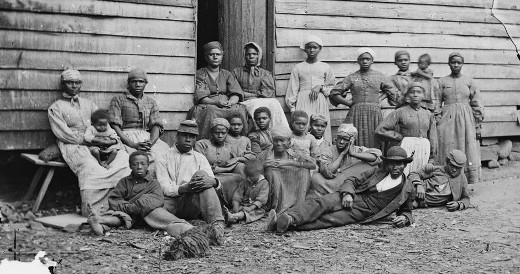
A group of escaped slaves in Virginia in 1862 (courtesy of the Library of Congress)

A newly discovered letter from a freed former slave to his onetime master is creating a buzz. Letters of Note explains that in August of 1865, a Colonel P.H. Anderson of Big Spring, Tennessee wrote to his former slave Jourdan Anderson, requesting that Jourdan return to work on his farm.  In the time since escaping from slavery, Anderson had become emancipated, moved to Ohio where he found paid work and was now supporting his family. The letter turned up in the August 22 edition of the New York Daily Tribune. ENJOY!

———-

Dayton, Ohio,

August 7, 1865

To My Old Master, Colonel P.H. Anderson, Big Spring, Tennessee

Sir: I got your letter, and was glad to find that you had not forgotten Jourdon, and that you wanted me to come back and live with you again, promising to do better for me than anybody else can. I have often felt uneasy about you. I thought the Yankees would have hung you long before this, for harboring Rebs they found at your house. I suppose they never heard about your going to Colonel Martin’s to kill the Union soldier that was left by his company in their stable. Although you shot at me twice before I left you, I did not want to hear of your being hurt, and am glad you are still living. It would do me good to go back to the dear old home again, and see Miss Mary and Miss Martha and Allen, Esther, Green, and Lee. Give my love to them all, and tell them I hope we will meet in the better world, if not in this. I would have gone back to see you all when I was working in the Nashville Hospital, but one of the neighbors told me that Henry intended to shoot me if he ever got a chance.

I want to know particularly what the good chance is you propose to give me. I am doing tolerably well here. I get twenty-five dollars a month, with victuals and clothing; have a comfortable home for Mandy,—the folks call her Mrs. Anderson,—and the children—Milly, Jane, and Grundy—go to school and are learning well. The teacher says Grundy has a head for a preacher. They go to Sunday school, and Mandy and me attend church regularly. We are kindly treated. Sometimes we overhear others saying, “Them colored people were slaves” down in Tennessee. The children feel hurt when they hear such remarks; but I tell them it was no disgrace in Tennessee to belong to Colonel Anderson. Many darkeys would have been proud, as I used to be, to call you master. Now if you will write and say what wages you will give me, I will be better able to decide whether it would be to my advantage to move back again.

Continue reading “Letter of a Freed Slave to his Old Master”

Un Prêté vaut un Rendu

Tortue
Tortue

Tortue et serpent étaient de très grands amis.  Ils se rencontraient fréquemment, passaient de longues heures à converser ensemble.  Souvent, Tortue invitait son compère à partager son repas, quand ce n’était pas serpent qui invitait sa commère.  Bref, tout le monde les appelait les inséparables.  Pourtant un jour, ils se sont fâchés et jamais plus on ne les a vus ensemble.  Leurs voisins étaient très intrigués par cette brouille et auraient bien voulu savoir ce qui s’était passé.  Ils les ont questionnés l’un et l’autre voici ce qu’ils ont fini par apprendre.

Tortue avait prié son ami de venir manger chez elle serpent s’est mis en route, ayant appétit.  Quand il arrive au domicile de son amie, une odeur délicieuse l’accueille, mais il n’y a personne pour le recevoir à l’entrée de la maison.  Il appelle; pas de réponse! alors, il pousse la porte et entre.  Au milieu de la pièce, se trouve une grosse calebasse d’où s’élève un fumet de bonne nourriture.  Mais le récipient est recouvert d’un énorme couvercle.  C’est tortue qui s’est étendue là pour jouer un vilain tour à son compère. Hé, compère, que fais-tu donc là ?  S’écrie serpent, fort surpris de cette attitude.  Ne vois-tu pas qu’avec ta grosse carapace, tu couvres tout le plat et que je ne puis me servir ?  Est-ce une chose à faire ?  ôte-toi de là car j’ai grand appétit.

Serpent (Cobra)
Serpent (Cobra)

Tortue ne bouge ni ne répond, si ce n’est par un ricanement moqueur.  Serpent attend quelques instants espérant qu’elle voudra bien  libérer la calebasse.  Puis voyant qu’elle se moque de lui, il s’en va, pas content du tout.

Quelques jours passent.  Enfin, un beau matin, serpent envoie un de ses fils inviter son amie tortue à venir partager son repas.  Celle-ci fait arrivée, elle découvre serpent soigneusement enroulé sur lui-même et formant un gros couvercle qui bouche entièrement le plat de nourriture avec les anneaux de son corps.

Hé compère, que fais-tu là ? S’écrie-t-elle.  En voilà un couvercle pour Une calebasse !  Pousse-toi donc afin que je me serve à manger.

Serpent se garde de bouger.  Mais il lui répond d’une voix sifflante de colère :

Chère sœur, as-tu donc oublié le vilain tour que tu m’as joué la dernière fois que j’ai été ton invité ?  Si c’est ainsi que tu reçois tes amis, pourquoi veux-tu que je n’aie pas la même attitude ?  Mon devoir est de te rendre la pareille.  Pour honorer ta générosité, je te rends ainsi le bon repas que tu m’as offert !  Peut-on garder des amis si on se moque d’eux ?  Si vous agissez mal envers quelqu’un, pourquoi voudriez-vous que, lui, agisse bien envers vous ?

Conte tiré de “Contes des Lagunes et Savanes,” Collection ‘Fleuve et Flamme,’ édition Edicef, 1975

Cheikh Anta Diop and the African Origin of Civilization

Cheikh Anta Diop
Cheikh Anta Diop

Cheikh Anta Diop was a great Senegalese historian, anthropologist, philosopher, physicist and politician.  He should be considered as one of the greatest scientists after Darwin, as he demonstrated that Africa was the cradle of humanity; that everything started in Africa, and that Egypt and modern day Africans descended from the same ancestors, in other words, were the same people.  Before Cheikh Anta Diop, the world, and Africans in particular, had been taught that Africa was nothing, and that Egypt and Egyptians were not Africans… that the great Egyptian civilization which gave so much to the world, could not have come from the dark brown Africans.  Europeans refused to admit that although in Africa, Egyptians could be Africans i.e. Black, or rather believed that Blacks were so backwards that their ancestors could not have possibly made the great pyramids of Giza or the great sphinx.  Well Cheikh Anta Diop proved them all wrong!

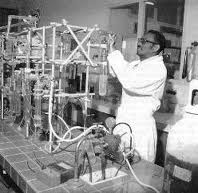
Cheikh Anta Diop in the laboratory

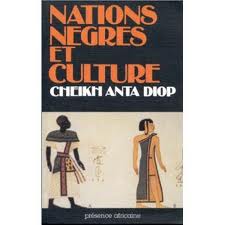
As a physicist, I was amazed to learn that Cheikh Anta Diop was a PhD student of Frédéric Joliot-Curie, the 1935 physics nobel laureate, and Marie Curie‘s son-in-law (first woman to receive a Nobel in Physics, and first to have two nobel prizes). So Diop’s pedigree, in physics terms, was quite impressive!  Moreover, he had earned two PhDs: one in history and the other in nuclear physics.  He was also the only African student of his generation to have received a training in egyptology. He was well-versed in prehistoric archaeology, and linguistics.  It took him almost a decade to have his doctorate degree granted: he submitted a thesis in 1951 which was based on the premise that the Egypt of the great pharaohs and pyramids was an African civilization– it was rejected.  He then published it in 1955, as Nations Nègres et Culture, and received world-wide acclaim.  Two additional attempts at submitting it were rejected, until 1960 when he finally managed to convince a room full of physicists, sociologists, anthropologists, egyptologists, and historians.  Having gone through the hurdle of submitting and defending a doctoral dissertation, I truly raise my hat to someone like Diop who had so much stamina and endurance, and could endure a decade of rejection like that; he was truly destined for greatness!

'Nations Negres et Culture' de Cheikh Anta Diop

In 1974, Diop managed to prove beyond a shadow of a doubt, that Egyptians were Black people.  He obtained pigment from Egyptian mummies and tested for their melanin content.  He was able to determine their melanin content accurately, and later published his technique and methodology for the melanin dosage test in scholarly journals.  This technique is used today by Forensic investigators around the world, to determine the “racial identity” of badly burnt accident victims.

He was affectionately known as the Pharaoh of knowledge, and the Université Cheikh Anta Diop (UCAD) of Dakar was re-named after him.  Check out CheikhAntaDiop.net a website dedicated to this great man, Wikipedia, Cheikh Anta Diop: The Pharaoh of Knowledge, and Africawithin.com.  Don’t forget to read his books: Nations Nègres et Cultures: de l’Antiquité Nègre Egyptienne aux Problèmes Culturels de l’Afrique Noire d’Aujourd’hui, The African Origin of Civilization: Myth or Reality, Precolonial Black Africa, Civilization or Barbarism: An Authentic Anthropology [Civilisation ou Barbarie: Anthropology sans Complaisance], and many others.

'The African Origin of Civilization' by Cheikh Anta Diop

Please watch one of the greatest African thinkers of the 20th century, and above all one of Africa’s greatest sons (… and renowned physicist). I salute this great soul who made us proud of being Africans, who re-define history or rather wrote History the way it should have been, with Africa in its right place, as the origin of civilization. If there was an African Pantheon for great minds, Cheikh Anta Diop’s remains should be in it!

Amilcar Cabral – Tell no lies, claim no easy victories

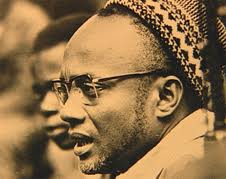
Amilcar Cabral
Amilcar Cabral

January 20th marks the anniversary of the death of Amilcar Cabral, the father of the independence of Guinea Bissau and Cape Verde. As such, I just thought about leaving you with some of his most famous quotes. Enjoy!

A people who free themselves from foreign domination will be free culturally only if, without complexes and without underestimating the importance of positive accretions from the oppressor and other cultures, they return to the upward paths of their own culture, which is nourished by the living reality of its environment, and which negates both harmful influences and any kind of subjection to foreign culture. Thus, it may be seen that if imperialist domination has the vital need to practice cultural oppression, national liberation is necessarily an act of culture.”  Amilcar Cabral, “National Liberation and Culture” Lecture delivered on February 20 at Syracuse University as part of the Eduardo Mondlane Memorial Lecture Series. Eduardo Mondlane was the first President of the Mozambique Liberation Front (FRELIMO) who was assassinated by Portuguese agents on Feb. 3, 1960. historyisaweapon.com

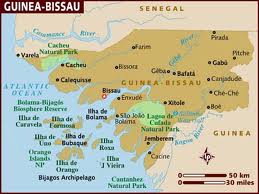
Map of Guinea Bissau

We must practice revolutionary democracy in every aspect of our Party life. Every responsible member must have the courage of his responsibilities, exacting from others a proper respect for his work and properly respecting the work of others. Hide nothing from the masses of our people. Tell no lies. Expose lies whenever they are told. Mask no difficulties, mistakes, failures.  Claim no easy victories…Amilcar Cabral: tell no lies, claim no easy victories

Educate ourselves; educate other people, the population in general, to fight fear and ignorance, to eliminate little by little the subjection to nature and natural forces which our economy has not yet mastered. Convince little by little, in particular the militants of the Party, that we shall end by con­quering the fear of nature, and that man is the strongest force in nature.Amilcar Cabral: Tell no lies, claim no easy victories

Continue reading “Amilcar Cabral – Tell no lies, claim no easy victories”

‘My Name’ by Magoleng wa Selepe

African Savanna
African Savanna

I just thought about what happened to our fathers, mothers, grandmothers, and grandfathers during colonial times: to go to school African children were forced by European missionaries to adopt a christian name such as John, Peter (Jean, Pierre), etc… as opposed to their good old African name Nomzimo, Makeba, Ndoumbe, Keïta, etc.  Thus many Africans who would have just worn the name ‘Ndoumbe Mpondo‘ or ‘Binlin Dadié‘ or ‘Um Nyobé‘ had to adopt a European name such as John + their own name, such that they became: John Ndoumbe Mpondo or Bernard Binlin Dadié or Ruben Um Nyobé.  To this day, the tradition has remained… most Africans would have three or four names: their family name, and their given name, plus the European first name and in some cases a European middle name as well.  The poem below entitled ‘My name‘ by the South African poet Magoleng wa Selepe captures this very well.

My Name

Nomgqibelo Ncamisile Mnqhibisa

Look what they have done to my name……..

the wonderful name of my great-great-grandmother

Nomgqibelo Ncamisile Mnqhibisa

The burly bureaucrat was surprised

What he heard was music to his ears

‘Wat is daai, se nou weer?’

‘I am from Chief Daluxo Velayigodle of emalu podweni

And my name is Nomgqibelo Ncamisile Mnqhibisa.’

Messia, help me !

My name is simple

And yet so meaningful

But to this man it is trash…..

He gives me a name

Convenient enough to answer his whim…..

I end up being

Maria…..

I…………..

Nomgqibelo Ncamisile Mnqhibisa

by Magoleng wa Selepe

Celebrating 100 years of struggle: the African National Congress

ANC flag
ANC flag

Last week, on January 8th 2012, the African National Congress (ANC) celebrated 100 years of existence. I think a trip down history lane is in order.

———————

After the defeat of Zulu, Xhosa, and other African kingdoms in the late 1800s-1900s in the hands of British colonizers, South Africans had to find a new way to fight off the oppressors. Thus, in 1911, Pixley ka Isaka Seme called on Africans to forget the differences of the past and unite together in one national organisation. He said: We are one people. these divisions, these jealousies, are the cause of all our woes today. That national organization saw light on January 8th 1912, when chiefs, representatives of people’s and church organisations, and other prominent individuals gathered in Bloemfontein and formed the African National Congress. The ANC declared its aim to bring all Africans together as one people to defend their rights and freedoms. Its first elected president was John Dube.

South African miners

The 1920s-1930s were marked by actions such as the 1919 campaign against passes by the Transvaal ANC; the militant strike by African mineworkers in 1920; and the social organization of Black workers…  The ANC went through several stages, first, as a church-based lobbying force, a non-violent nationalist movement, and then, as part of an alliance with Indians, Coloureds, and progressive Whites, including Afrikaners and Communists.

The Sharpeville massacre on 21 March 1960 where a group of 5000-7000 marched to protest against passes and were shot on by police forces showed the international community how ruthless the apartheid system was.  Karen Allen of BBC news recalled the massacre with this chilling description: “Thousands of protesters had gathered in Sharpeville, just south of Johannesburg, to protest at the use of the infamous passbooks, or “dompas”, that every black South African was expected to carry and produce on demand. It governed a person’s movement, was a tool of harassment and was one of the most hated symbols of the apartheid state. Sixty-nine men, women and children were gunned down on that day, killed when police officers opened fire on the crowd. The police station – where they had gathered – is now a memorial to the dead.

Nelson Mandela ca 1955

In 1961, the ANC took up arms against the South African White government. It morphed into a violent struggle of resistance and armed combat with Umkhonto we Sizwe (MK) or Spear of the Nation, when the doors to non-violent change were brutally shut by white nationalists who built on British colonial racism to impose apartheid, a practice of physically relocating communities, regulating labour with passes and violent repression. During those years, not only did MK tried to make the country ungovernable to no avail (as they were no match to the repressive white supremacist government of South Africa), but many of its leaders were arrested like Nelson Mandela, Govan Mbeki, and Walter Sisulu, while others like Oliver Tambo and Joe Slovo went into exile.

Continue reading “Celebrating 100 years of struggle: the African National Congress”

Les Petits Métiers: la Vannerie / Small Trades: Basketry

La Vannerie
La Vannerie

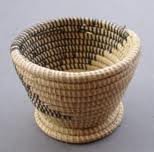
Quand j’étais en classe de 4ème, mes parents m’ont envoyé passé l’été dans un camp de vacances au coeur de la forêt équatoriale.  La vannerie faisait partie du programme de classes instaurées par le camp, en plus de la sculpture du bois (ce sera un article pour un autre jour), la fanfare, la peinture, etc.  Ce qui me fascinait dans l’art de vanner c’était la vitesse avec laquelle l’instructeur pouvait faire des paniers, des chaises robustes, des chapeaux, etc. C’est comme si le raffia glissait sur ses doigts.  Les outils étaient très simples et rudimentaires: un couteau, et le raffia, le rotin, ou des feuilles de palmiers.  Les premiers jours n’avaient pas été facile, car tout semblait difficile: l’art de manier le raffia ou le palmier sans se blesser, et le couteau de vannerie sans maladresse… et je semblais prendre une éternité pour faire un panier.  La vannerie, c’est tout un art: c’est l’art de tresser les fibres végétales et de fabriquer des objets essentiels qui seront utilisés à la cuisine (paniers), au salon (chaises), dans la garde-robe (chapeaux, sacs), et pour la décoration.  Amusez-vous à regarder un vannier à l’oeuvre au Cameroun.

——————

African basket
African basket

When I was in middle school, my parents sent me to a camp in the heart of the equatorial forest for the summer.  Basketry was part of the curriculum, as well as wood sculpting (the subject of another post), orchestra, painting, etc. What used to fascinate me was the art, and speed with which the instructor used to weave a basket, make robust chair, and hats. It was as if the raffia was flowing through his hands. The tools used to weave were very simple and rudimentary: a hat, and raffia, rattan, or palm tree leaves. The first days were quite tough since everything seemed super-difficult: the art of weaving raffia or palm tree leaves without hurting myself, and the knife without clumsiness… and it seemed to take me an eternity to make a basket. Basketry is an art: it is the art of weaving fibers to make essential objects that will be used in the kitchen (baskets), the living room (chairs), the wardrobe (hats, bags), and for decoration. Enjoy this video of a basket-maker in action, in Cameroon.

Compère Lièvre et Compère Singe

Compère Singe
Compère Singe

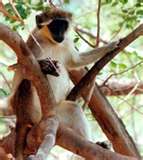
Il était une fois deux grands amis, Compère singe et Compère lièvre, le roi de la ruse.  Un jour, ils étaient allés chasser ensemble.  Mais, avant de partir, compère lièvre avait bourré ses joues de sel, prévoyant de jouer un vilain tour à son compagnon.  Le vent, très violent, apporte tout à coup des débris de feuilles mortes mêlées de poussière dans les yeux de linge, l’aveuglant complètement :  Frère, dit-il à son ami sur un ton suppliant, je n’y vois plus goutte.  Je t’en prie !  Souffle-moi dans les yeux pour m’enlever ces poussières qui me font souffrir.

Compère lièvre sourit car c’est bien ce qu’il a prévu.  Il s’approche de son compagnon et souffle dans les yeux de celui-ci tout le sel qu’il conservait dans ses joues.

Le pauvre singe pousse un hurlement de douleur tandis que les larmes ruissellement sur son visage.  Il comprend alors que son ancien ami veut sa mort et s’enfuit en se heurtant contre tous les obstacles qu’il rencontre sans pouvoir les apercevoir.

Seigneur lion, entendant les cris de douleur de l’infortuné, accourt, arrête le malheureux singe aveugle et l’interroge.  Singe lui raconte alors son aventure et lui explique de quelle manière compère lièvre a voulu le tuer pour le dévorer.

Compère Lièvre
Compère Lièvre

Seigneur lion, pris de pitié, accepte de souffler sur les yeux de singe pour le débarrasser des débris de feuilles, des poussières et du sel qui le font si fort souffrir.  Mais lorsqu’il commence à souffler, un peu de sel vole jusqu’au visage du roi des animaux qui, rendu furieux par la souffrance, d’un coup de dent, arrache un œil de singe et l’avale.

Singe, hurlant de douleur, prend aussitôt la fuite.  Seigneur lion se lance à sa poursuite.  Mais les frères de singe viennent au secours du pauvre borgne et le font grimper tout en haut d’un arbre.  Là-haut, une fois en sécurité, singe remercie ses frères et leur raconte ses malheurs.  Chacun des singes décide de l’aider.  L’un après l’autre, ils rétrécissent leurs yeux et en prélèvent un petit morceau.  Puis avec ce que tous ont sacrifié, ils fabriquent un œil tout neuf pour leur frère.

C’est pourquoi, vous le remarquerez facilement, maintenant, les singes ont de petits yeux bien enfoncés dans le crâne.

Conte tiré de “Contes des Lagunes et Savanes,” Collection ‘Fleuve et Flamme,’ édition Edicef, 1975

Happy 2012!

Fireworks
Fireworks

My fellow friends, may 2012 be the year of all achievements, and of all greatness! I would like to thank all those who visited my blog and future visitors.  I wish you all wonders without borders… I wish you all peace and serenity for the year 2012! To all those who witnessed the events in Côte d’Ivoire and Libya, to all those who were speechless and bewildered, to all those who felt powerless in 2011, keep your heads up… and keep on fighting. Like Agostinho Neto used to say: a luta continua… a vitória é certa!

The Kanem-Bornu Empire: linking ancient Chad, Libya, Cameroon, Niger and Nigeria

Kanem-Bornu court in the 1700s

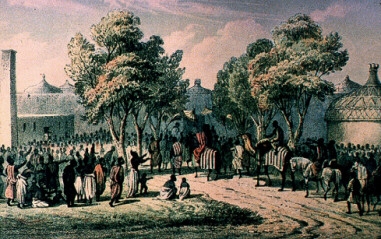
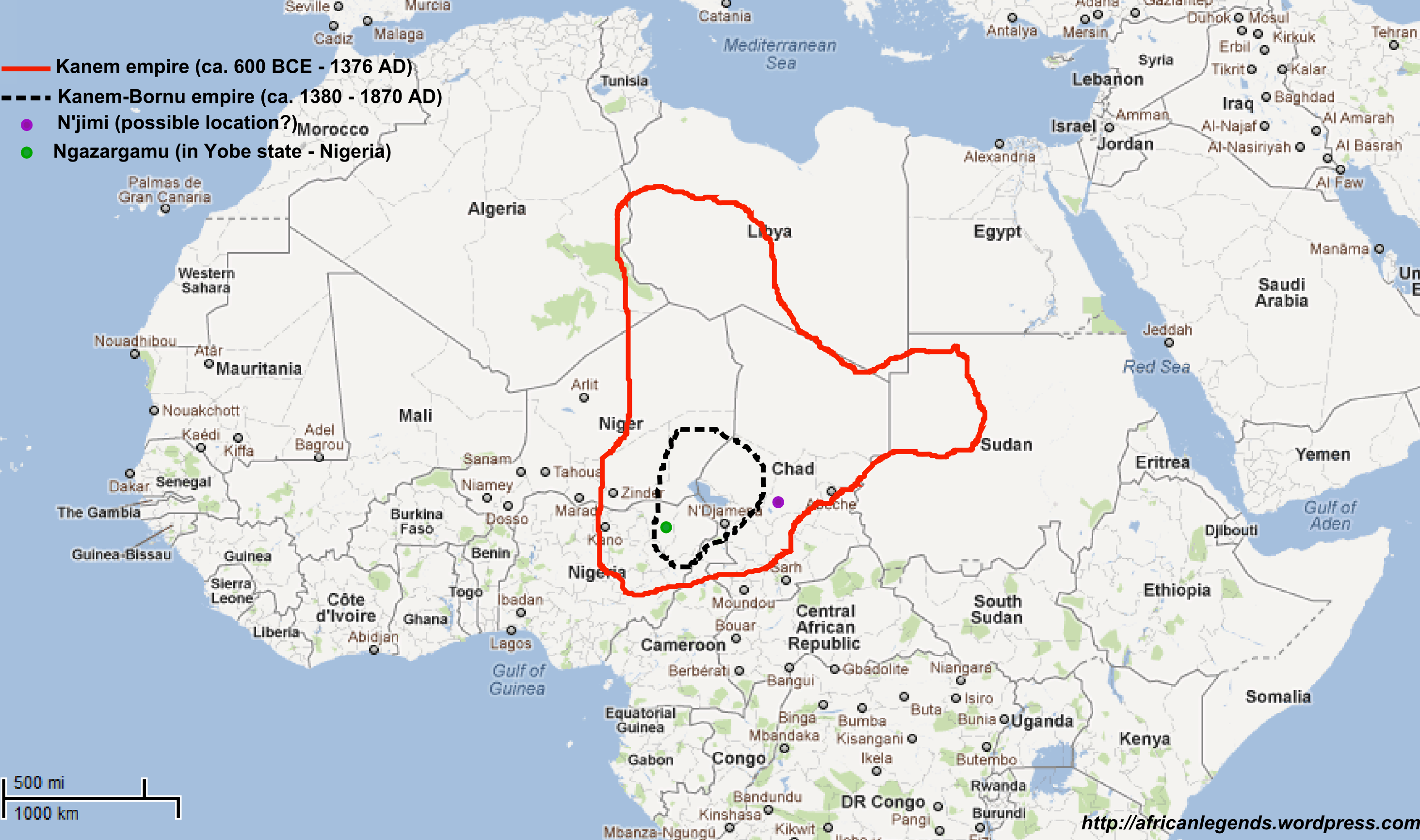
When the Zaghawa (people of Kanem) arrived in the area around Lake Chad, they found independent walled-cities states from the Sao civilization, a civilization which had flourished around the 6th century, with its center around the Chari river, south of Lake Chad.  The Zaghawa adopted some of the Sao customs, but fight among the two lasted from the 7th century until the 16th.  The conquest of Kanem by the Zaghawa was done under the Duguwa dynasty which was started by King Sef (also known as Saif… some people eager to change African history state that the Zaghawa were from Yemen… but we all know that they were local people) about 700 CE. The dynasty, Sayfawa or Sefuwa, is named for King Dugu, one of Sef’s sons, who was ruling about 785 CE.  Abandoning their nomadic lifestyle, the Zaghawa established a capital at N’Jimi (meaning “south” — the location of this town is still unknown, but it is believed to be around Lake Fitri).  Under the rule of Dugu, Kanem expanded to become an empire.  The Zaghawa kings, called maï, were regarded as divine and belonged to a ruling establishment known as the Magumi. They were recognized for a great amount of horses.  Kanem’s expansion peaked during the reign of Maï Dunama Dabbalemi (ca. 1221-59) and extended northward into the Fezzan region (Libya), westward into Kano (Nigeria), eastward to Ouaddaï (or Wadai), and southward into the Adamawa grasslands (Cameroon). They converted to islam around the 11th century CE.

Group of Kanem-Bu warriors in the 1800s

By the end of the 14th century, internal struggles and external attacks had torn Kanem apart. Between 1376 and 1400, six Maïs reigned, but were killed by foreign invaders.  Finally, around 1396 the Bulala invaders forced the once strong Sayfawa dynasty to abandon Njimi and move to Bornu on the western edge of Lake Chad.  Around 1472, Maï Ali Dunamami fortified the Bornu state, and established the capital at Ngazargamu, which had more fertile lands. Over time the inter-marriage between the Kanembu and the Borno people created a new people, the Kanembu, and a language called Kanuri.

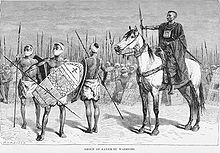
The Kanem-Bornu empire peaked during the reign of Maï Idris Alooma (ca. 15711603) who is remembered for his great military and diplomatic skills.  His main adversaries were the Hausa to the west, the Tuareg and Toubou to the north, and the Bulala to the east. One epic poem tells of his victories in 330 wars, and over 1,000 battles.  He was a true military genius, and some of his innovations included the use of fixed military camps (with walls), permanent sieges, and “scorched earth” tactics, armored horses and riders, the use of Berber camels, of skilled Kotoko boatmen, and of iron-helmeted musketeers trained by Turkish military advisers. He had very strong diplomatic ties with Tripoli, Egypt, and the Ottoman empire, which at some point sent a 200-member ambassadorial party across the desert to Alooma’s court in Ngazargamu.  The state revenues came from tribute from vassal states, trans-saharan trade route, and slave trade. Many products such as cotton, natron (sodium carbonate), kola nuts, ivory, ostrich feathers, perfume, was, and hides were exported north via the Sahara desert.

Map of the Kanem and Kanem-Bornu empires

By the end of the 17th century, the empire started declining, and by the 18th century, it only extended westward into the land of the Hausa. By the early 19th century, the declining empire could not sustain the advance from the fulani warriors of Usman Dan Fodio who proclaimed the jihad war against the non-muslims.

To learn more about the Kanem-Bornu empire, check out: Jamtan.com, Daily Kos- Ancient Africa, BlackPast.org, The empire by the lake. Don’t forget to check out the book “Kanem-Borno: One Thousand Years of Splendor (Kingdoms of Africa)”  by Philip Koslow.  Back in those days, Lake Chad covered an area of about 10,000 m2… today it has sadly shrunk down to 1,300 m2, and is still shrinking! I could not find a really good map of the Kanem or Kanem-Bornu empire, so I used Google maps  and known maps from history books to make my own with some of the boundaries cited earlier. I have overlaid the Kanem and the Kanem-Bornu empires on the same map to give a better idea. Enjoy!