In the past I have always wished that we, Africans, could be patriotic. I came across this beautiful poem ‘Love poem for my country‘ by South African writer Sandile Dikeni. I really enjoy the way the author describes his country, the valleys, the birds, the ancient rivers, and its beauty. He feels the peace, the wealth, and the health his country brings. He is one with hiscountry.He is at home! His country is not just words or food, or friends, or family, it is more, it is his essence! That is true patriotism, the bond that links us to the bone to our motherland. Enjoy!
My country is for love so say its valleys where ancient rivers flow the full circle of life under the proud eye of birds adorning the sky.
My country is for peace so says the veld where reptiles caress its surface with elegant motions glittering in their pride
My country is for joy so talk the mountains with baboons hopping from boulder to boulder in the majestic delight of cliffs and peaks
My country is for health and wealth see the blue of the sea and beneath the jewels of fish deep under the bowels of soil hear the golden voice of a miner’s praise for my country
My country is for unity feel the millions see their passion their hands are joined together there is hope in their eyes
Anton-Wilhelm Amo was a respected Ghanaian German philosopher who taught at the Universities of Halle and Jena in Germany in the 1730s… That’s right… you read it well, 1730! This man is said to be the first African to be awarded a doctorate degree from a European university, and to later teach there. Who was Anton-Wilhelm Amo?
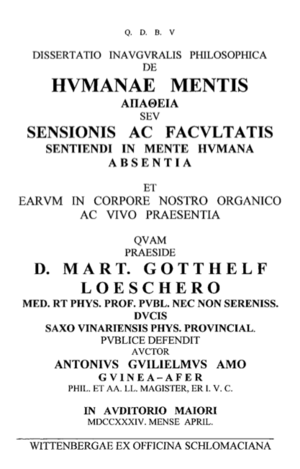
Anton-Wilhelm Amo was born in 1703 in Awukena near the town of Axim in Ghana. At the young age of 4, he was taken to Amsterdam; some accounts say that he was taken into slavery, others that he was sent to Amsterdam by a missionary based in Ghana. Either way, he was given as a present to the Duke of Brunswick-Wolfenbüttel. Amo was raised as a member of the family, and attended the Wolfenbüttel Ritter-Akademie from 1717 to1721, and then the University of Helmstedt from 1721 to 1727. He also met with the great German mathematician and philosopher Gottfried Leibniz who was a frequent visitor of the Wolfenbüttel palace. He then attended the Law school at the University of Halle in 1727, and finished his preliminary studies in two years at the end of which he wrote a dissertation thesis titled “The Rights of Moors in Europe.” He went on to further study philosophy and earn a doctorate degree in philosophy from the University of Wittenberg in 1734. Amo was a learned man, and a true polyglot as he mastered six languages: French, English, German, Dutch, Latin and Greek.
He was appointed professor of philosophy at the University of Halle in 1736, and went by his preferred name Antonius Guilelmus Amo, Afer of Axim. He taught psychology, ‘natural law‘, and the decimal system. He then published his second major work: ‘Treatise on the Art of Philosophing Soberly and Accurately (Tractatus de Arte Sobrie et Accurate Philosophandi). In 1740, he joined the University of Jena in Jena, central Germany. During the early years of the reign of Frederick II of Prussia, Amo was invited to the court in Berlin as a government councilor. Amo was also elected a member of the Dutch Academy of Flushing.
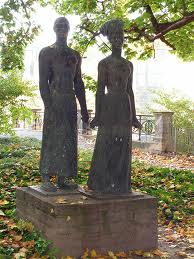
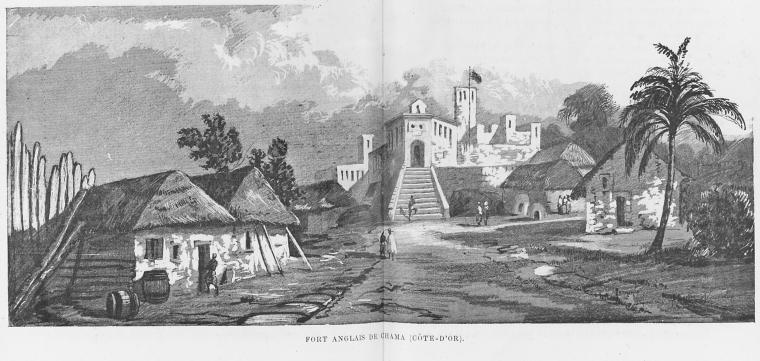
There were lots of social changes in Germany in the 1740s, and people were becoming less liberal, xenophobe, racist, and Amo himself was subject to public threats from his ennemies. Eventually, Amo returned to his land of birth, Ghana, and settled back in Axim where he was honored as a traditional doctor and worked as a goldsmith (by some accounts). He was laid to rest in Fort San Sebastian in Shama, Ghana, in 1759. Today, the University of Halle-Wittenberg annually awards the Anton-Wilhelm Amo prize to deserving students. There is also a statue in Halle in his honor. This man was at the time thought to be among the most prominent German thinkers of his times.
Fort San Sebastian or Fort Shama in Ghana, Henri Frey 1890
For more on this great man, please check out Anton Wilhelm Amo by Marilyn Sephocle (Journal of Black Studies Vol. 23, No. 2, Special Issue: The Image of Africa in German Society (Dec., 1992), pp. 182-187), Anton-Wilhelm Amo from SUNY Buffalo, The Life and Times of Wilhelm Anton Amo by W. Abraham, Transactions of the Historical Society of Ghana 7 (1964) P. 60-81, Anton Wilhelm Rudolph Amo, Anton-Wilhelm Amo, a Ghanaia Philosopher in 18th Century Germany on the blog of Justin E. H. Smith, and lastly Black History Month in Europe 2007: Amo’s Ghost where the blog’s author asks very poignant questions about the life of Amo. Everytime you think of Africa as the dark continent, or think that Africans were illiterate people, or had no ‘light’, think about Anton-Wilhelm Amo the great Ghanaian-German philosopher of the 1700s who taught great minds in Europe, and was among the most prominent German philosphers of his time.
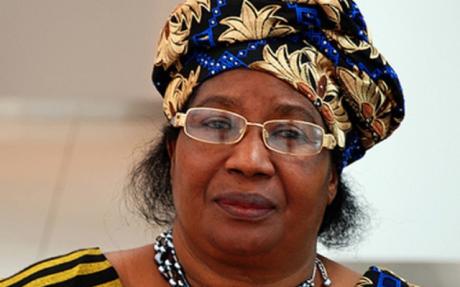
Malawi has a new president: it is her excellency Joyce Hilda Mtila Banda. The passing of president Bingu wa Mutharika of Malawi was announced last Saturday. As written in the constitution, the vice president stepped in as head of state. On Saturday, April 7th 2012, Joyce Banda became Malawi’s first female president, and Africa’s second female head of state after Ellen Johnson Sirleaf of Liberia. Immediately after being invested, Banda called on the nation to mourn Mutharika with dignity and she thanked Malawians for staying calm during the power transition period. She said she was accepting the presidency with total humility and that she would strive to serve the nation earnestly.
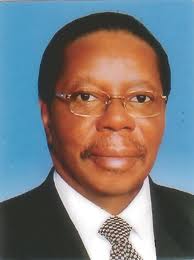
President Bingu wa Mutharika
Joyce Banda is stepping into the shoes of Bingu wa Mutharika who had recently been disavowed by the ‘international community’, and Malawi was put under embargo from UK, US, and EU. I wonder which way she will go: restore and do the good will of the international community, or try to restore Malawians’s rights to happiness (could the two be linked?)… Tough choice isn’t it? Only time will tell which way the balance will tip!
Today, I would like to remind everybody that April 11th, 2011 is the day the re-colonization and balkanization of Africa started anew. On 11 April 2011, Africa was raped in broad daylight… the presidential palace of Côte d’Ivoire, the national television, the siege of parliament, were bombed, and the president of the country, Laurent Gbagbo, and his entourage, were captured like vulgar thieves by the French army, ONUCI forces, and rebel forces (Laurent Gbagbo – No to a Complicit Silence, Côte d’Ivoire- 20 ans de destabilisation mis a nu). Many Ivorians had to seek refuge in neighboring countries, Ghana and Liberia, while the genocide of the Guéré and Wê people occurred. All this was done in broad daylight, as other African heads of state clapped and saluted France and the ‘international community’ for restoring democracy (see Africans and the Trap of Democracy)… or rather tyranny in Côte d’Ivoire. One year on, Côte d’Ivoire, the beautiful, looks like a ghost of herself. I remember crying, praying, marching against the inferno that descended upon Côte d’Ivoire the beautiful. Yes… fire descended upon Côte d’Ivoire. Here is the video which Gregory Protche, of Gri-Gri International, published and which I particularly enjoyed, making a retrospect on what really happened during the post-electoral crisis in Côte d’Ivoire: how an entire country was put under siege, embargoed, no banks, no medicine… just bombs, and how Alassane Ouattara never won the elections. A few weeks later, this was also done to another country just north of Côte d’Ivoire, Libya. I still cannot believe that many Africans saw the bombing of a country by external forces as good, and still see it as such… How could anyone applaud when their neighbor’s house is on fire? Today Mali is in turmoil… who will be next (Failure of African Leadership)?
Enjoy “5 reasons not to march for the victory of Ouattara” by Gregory Protche.
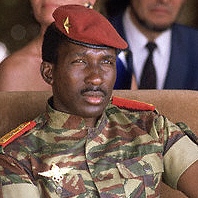
Le lion du Boulkiemdé, Boukary Kaboré raconte ses derniers jours avec le capitaine, Président du Faso, le Che Africain, Thomas Sankara, et la largesse d’esprit de ce grand homme. Proche de Thomas Sankara durant la révolution, le capitaine Boukary Kaboré dirigeait une des 4 regions militaires.
Dans les jours qui suivirent l’assassinat de Thomas Sankara, il refusa de faire allégeance à Blaise Compaoré. Il refusa d’organiser une montée sur Ouagadougou arguant du fait qu’il ne voyait pas qui pouvait diriger le pays. Ce sont finalement des militaires proches de Blaise Compaoré qui vont assaillir la ville de Koudougou procédant à un véritable massacre des militaires restés fidèles au Lion. Il réussira à s’enfuir de justesse pour se réfugier au Ghana.
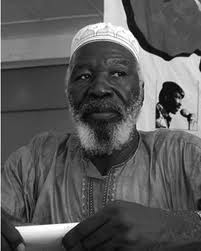
Boukary Kaboré
Il revient longuement sur tous ces évènements. ll raconte aussi combien il a tenté vainement de protéger Thomas Sankara qui ne voulait pas de protection (il dit si bien en parlant de Thomas: ‘comment protéger un président qui aime se déplacer à vélo?‘), les tentatives pour le convaincre de démissionner afin d’éclaircir la situation politique, comment était organisée la sécurité de la présidence, comment on a acheté un des fidèles, etc…
Regardez, écoutez, et que ceci vous apporte un élément de clarté sur la mort de notre héros, et grand ‘Che’ africain, Thomas Sankara.
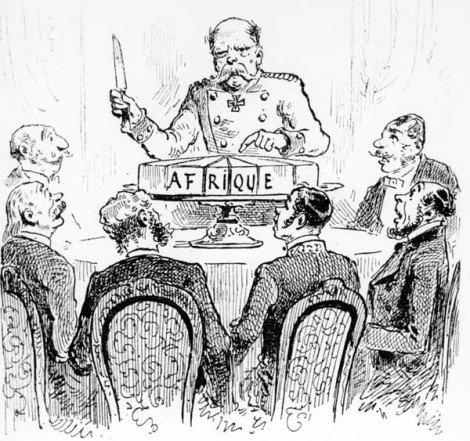
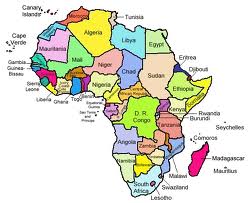
Le partage de l'Afrique à la Conférence de Berlin de 1884
As we talk about neo-colonialism, and the new conquest of Africa, I thought about sharing this poem ‘They Came‘ by the Cameroonian writer François Sengat-Kuo published in Fleurs de Latérite, Heures Rouges Éditions Clé, 1971. In the poem, he talks about colonization and how Africans were fooled by European missionaries who were always preceding European explorers and armies. I particularly like the sentence: “they came, … bible on hand, guns behind.” How true! In the days of colonization, Europeans claimed to be bringing civilization and christianity to pagans across the globe. Today, they bring development, globalization, and democracy… same ol’ thing → submission and slavery of the people. Enjoy!
I have never been as disgusted as I am with the current African leadership. As I stunningly watch Mali descend into chaos, after Cote d’Ivoire, Libya, Sudan, and so on… I wonder what kind of people are heading our countries. It doesn’t take a genius to see that we are being cheated, abused, and killed by imperialism and those hungry and bankrupt capitalists. As I pondered on all that, I read this great speech by cde Kwanisai Mafa of Zimbabwe delivered in commemoration of the Sharpeville massacre in South Africa this year on March 21st 2012. For the integral speeck, check it out on Mathaba.
=============
“Comrades and friends,
I bring you revolutionary greetings from the landed people of Zimbabwe, north of the great Limpopo River. By landed people, I mean the people who are now sovereign, who now exercise total control and ownership of their land and the vast natural resources endowed to them by God. …
Land ownership and control of mineral wealth are at the heart of Africa’s struggle for self determination. Land ownership and control of mineral wealth aptly justify the theme of today’s engagement.
LAND IS AN ECONOMIC POWER ….
Nowhere is Pan Africans being severely tested in Africa than in Zimbabwe. The current tidal wave of global pessimism and sanction against the people of Zimbabwe has made life excruciatingly challenging for the common folk. The government of Zimbabwe sought to unlock the value of its people in an exercise dubbed the Third Chimurenga.
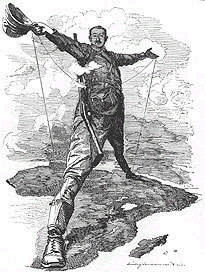
Cecil Rhodes with his transafrican railroad project from Cairo to Cape Town - Founder of de Beers diamond company, owner of Rhodesia... - the most imperialist ever
Resistance to this exercise has been fierce as both former colonial settlers (who happen to be white) and their sympathizers sought to discredit it as, illegal and not consistent with human rights. Ironically, where were these human rights watchdogs when our forefathers were butchered and dispossessed of their land. Where are these human rights watchdogs when Israel is daily making the lives of Palestinian a living hell? Where were they when NATO attacked a sovereign nation like Libya violating international law? ….
The United Nations has become a tool of US imperialism for decolonizing nations especially the United Nations Security Council. There is selective application of law. Our leaders are being dragged to Hague to the International Criminal Court of Justice, yet western nations who are killing innocent people in Iraq, Palestine, Libya and elsewhere go with impunity. This is hypocritical. …
Comrades and friends , the levels of mediocrity in African leadership has risen to sanctity. The revolution is now eating its own children. Surely this cannot continue unabated, battle lines must be drawn, be drawn clearly and conspicuously.
Our African leaders are sacrificing our continent and our founding values and aspirations on the altar of narrow, parochial, self serving, personal and selfish interests.Stooges and imperialist lapdogs in form of opposition parties and democracy are being bankrolled by western intelligence organizations to extinguish, purge and obliterate all liberation movements and replace them with their puppets that are prepared to surrender our God given Africa to global imperialism for thirty pieces of silver.
Flag of Zimbabwe
Our African leaders have become our contemporary Judas Iscariot. Colonel Muammar Gaddafi who gave sanctuary and military assistance to African liberation movements especially to South Africa was sold out by those whom he supported.
Who is Judas Iscariot? I don’t need your answer now South Africans?
The late legendary Reggae superstar Bob Marley, who I love so much (peace be upon him), in his song Redemption Song, he asked for how long should we stand aside while our prophets are being killed. No leader said a word against the bombardment of Libya by NATO not even the African Union yet the author and founder of the African Union was Gaddafi.The biggest question we should ask ourselves is who is next ?”
Les hommes de la savane savent tout qu’Azui, le lièvre, est le plus astucieux des animaux. Mais ils sont si vaniteux qu’ils sont sûrs, eux, d’être plus intelligents que compère lièvre et disent tous : Moi, homme, je ne peux pas être dupé par un animal, même par le plus rusé de tous !
Des ignames
Voici pourtant ce qui est arrivé un jour. Dans la forêt, et dans la savane voisine, il n’y avait presque plus rien à manger cette année-là. Les animaux, affamés, sortaient de la brousse et venaient rôder autour des villages, cherchant sur le sol le moindre grain de mil oublié. Azui s’était caché dans un fourré, non loin du chemin que suivaient les paysans pour aller cultiver leurs champs. Il a observé un homme qui tous les soirs, s’en revenait chez lui, portant de grosses ignames sur la tête. Que faire pour s’en emparer ? Le lendemain, un peu avant le passage de l’homme sur le chemin, Compère lièvre s’y étend sans bouger, contrefaisant le mort. L’homme arrive près de lui, voit : Voilà un lièvre qui n’est pas mort depuis bien longtemps, se dit-il. Je vais aller déposer mes ignames près de la hutte, à la lisière de la forêt, et je vais revenir chercher cet animal. Puis il se remet en marche. Dès qu’il a disparu, Compère lièvre se relève et court par un raccourci, en direction de la hutte. Quand il y arrive, il trouve les ignames que l’homme a déposées avant de revenir sur ses pas chercher le lièvre qu’il croit mort. Azui ramasse les ignames, les charge sur son dos et file à toute vitesse vers sa maison, tout content d’avoir à manger pour plusieurs jours. Quand à l’homme, bien entendu, il ne trouve pas le lièvre mort sur le chemin … pas plus que les ignames, quand il est de retour à la hutte. Il comprend alors un peu tard qu’il a été dupé par le rusé animal. Ah oui ! Vraiment, on peut dire que compère lièvre est le plus astucieux de tous les êtres vivants de la savane !
Conte tiré de “Contes des Lagunes et Savanes,” Collection ‘Fleuve et Flamme,’ édition Edicef, 1975
First of all, I would like to praise the victory of Macky Sallin Senegal againstAbdoulaye Wade… Apparently, and the foreign press does not want to give the real results,Wade received a real K.O.… He was apparently knocked out withless than 30% of voicesin thesecond round of the presidential elections in Senegal. Congratulations to Macky Sall and the people of Senegal who defeated the octogenarian Abdoulaye Wade. I am particularly joyous becauseAbdoulaye Wade has viciously destabilized some of the most stable countries in Africa in the past few years: Guinea, Cote d’Ivoire, Libya, and recently Mali.This man totally served the western interests of stopping the formation of a United States of Africa, or rather the FMA (Fonds monetaire Africain), and the formation of a common currency. He betrayedKadhafi, and many others. I have no pity for somebody who was ready to transform his country into a monarchy… like Togo and Gabon… he just made the mistake of thinking that Senegal was Togo or Gabon. He should pay for his crimes and should also be prosecuted for crimes against humanity in Cote d’Ivoire and Libya. So long Gorgui… You will not be missed!
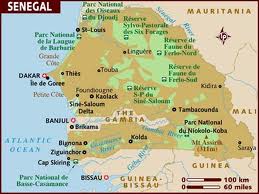
Map of Senegal
As I said,this is a people’s win… however, history (on the continent) has shown that simple alternance of power does not mean a true system change.Macky Sall may be good willing, full of good intentions, but how can he act if he does not even control his country’s currency? how can he act when the true power resides elsewhere, in the hexagon?Well we wish Macky Sall the best, and all children of Africa rejoice for his victory and that of the Senegalese people.We also hope that there could be light at the end of the tunnel, and give Macky Sall our entire support in leading his country.
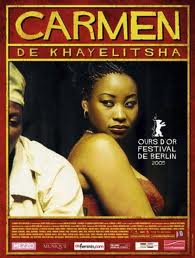
All praise to the 2005 South African version of Carmen of Bizet: U-Carmen e-Khayelitsha. This operatic is set entirely in a South African township, in Cape town, Khayelitsha, and it is entirely in Xhosa, one of South Africa’s main languages! Thrilled is a word that cannot explain my joy… In all honesty, I was amazed to see an entire opera entirely set in Africa, with African actors. A modern-day Carmen, the film carries the energy known to belong to South African singers. These authentic voices shed a new light on opera, and bring in a full South African touch. It brings out the dynamic heat of township life through the exciting combination of a violent gangster tale intertwined with an almost supernatural love story. As it unfolds, it explores the issue of the position of a strong woman in a male-dominated society, the issue of wealth and fame, and abuser and victim. I am sure Georges Bizet himself would have been stunned by director Mark Dornford-May’s rendition of his work. It definitely deserved all the awards it got, among which the 2005 Golden Bear at the Berlin film festival.















 African Heritage