The Lost Message

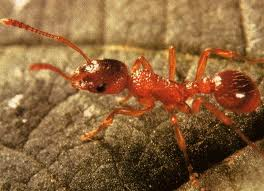
Red ant
Red ant

THE ant has had from time immemorial many enemies, and because he is small and destructive, there have been a great many slaughters among them.  Not only were most of the birds their enemies, but Anteater lived almost wholly from them, and Centipede beset them every time and at all places when he had the chance.  So now there were a few among them who thought it would be well to hold council together and see if they could not come to some arrangement whereby they could retreat to some place of safety when attacked by robber birds and aninials.  But at the gathering their opinions were most discordant, and they could come to no decision.

There was Red-ant, Rice-ant, Black-ant, Wagtail-ant, Gray-ant, Shining-ant, and many other varieties.  The discussion was a true babel of diversity, which continued for a long time and came to nothing.  A part desired that they should all go into a small hole in the ground, and live there; another part wanted to have a large and strong dwelling built on the ground, where nobody could enter but an ant; still another wanted to dwell in trees, so as to get rid of Anteater, forgetting entirely that there they would be the prey of birds; another part seemed inclined to have wings and fly.  And, as has already been said, this deliberation amounted to nothing, and each party resolved to go to work in its own way, and on its own responsibility.
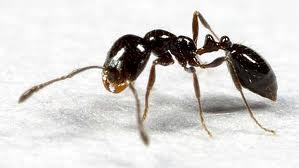
Black ant
Black ant

Greater unity than that which existed in each separate faction could be seen nowhere in the world; each had his appointed task, each did his work regularly and well.  And all worked together in the same way.  From among them they chose a king-that is to say some of the groups did-and they divided the labor so that all went as smoothly as it possibly could.  But each group did it in its own way, and not one of them thought of protecting themselves against the onslaught of birds or Anteater.

The Red-ants built their house on the ground and lived under it, but Anteater leveled to the ground in a minute what had cost them many days of precious labor.  The Rice-ants lived under the ground, and with them it went no better.  For whenever they came out, Anteater visited them and took them out sack and pack.  The Wagtail-ants fled to the trees, but there on many occasions sat Centipede waiting for them, or the birds gobbled them up.  The Gray-ants had intended to save themselves from extermination by taking to flight, but this also availed them nothing, because the Lizard, the Hunting-spider, and the birds went a great deal faster than they.

When the Insect-king heard that they could come to no agreement he sent them the secret of unity, and the message of Work-together. But unfortunately he chose for his messenger the Beetle, and he has never yet arrived at the Ants, so that they are still to-day the embodiment of discord and consequently the prey of enemies.

South African Folk Tales, by James A. Honey, 1910, Baker & Taylor Company.

Why the name: Maputo?

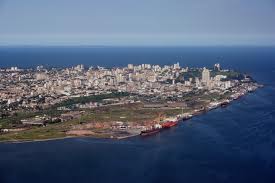
Modern day Maputo
Modern day Maputo

I was always intrigued by the name Maputo.  Maputo is the capital of Mozambique.  It used to be known as Lourenço Marques.  I once had a Mozambican friend who would refer to Maputo as Lourenço Marques and I always wondered why the name change and what it meant?

Maputo is known as the City of Acacias (because many of its streets are bordered by acacias) or the Pearl of the Indian Ocean; it is located 77 km from the South African border.  The city was built on the northern bank of the Esturio do Esprito Santo, an estuary which leads to the Maputo Bay on the West.  Prior to the arrival of the Europeans in the area in the 1500s, the area was known as an exchange place between Arabs and Africans, and was known as Catembe, on the southern bank of the estuary.  In 1502, the Portuguese Antonio de Campos was the first European to get to Maputo Bay, but it was the navigator Lourenço Marques who explored it truly for the first time in 1544.  Initially, the bay was known as Delagoa bay, as it was the first maritime transit from Goa.  It was a village whose main economy was based on the Ivory trade.  It is only in 1876, that the city became known as Lourenço Marques, after the navigator.  A commission was sent by the Portuguese government in 1876 to drain the marshy land near the settlement, to plant the blue gum tree, and to build a hospital and a church.  A city since 1887, it superseded the Island of Mozambique as the capital of Mozambique in 1898.  In 1895, the construction of a railroad to Pretoria in South Africa, caused the city’s population to grow.

Lourenco Marque (Maputo) ca 1905
Lourenco Marques (Maputo) ca 1905

In February of 1976, after briefly claiming back its pre-colonial name of Cam Phumo (1975-1976), named after a Shangaan chief who lived in the area before the arrival of Lourenço Marques), Lourenço Marques was renamed Maputo, with its origin in the Maputo river which flows into the Esturio do Esprito Santo, also renamed Maputo bay.  During the liberation war of FRELIMO against Portugal (1964 – 1974), the Maputo river, which marks the southern border of Mozambique with South Africa, became symbolic with the slogan Viva Moambique unido do Rovuma ao Maputo, i.e. Long-live the united Mozambique from Rovuma to Maputo, the Ruvuma river being the northern border of Mozambique with Tanzania.  All symbols of colonial times were erased: the names of streets which carried the names of Portuguese heroes or important days, and Portuguese history, etc, were replaced to reflect Mozambican history, African revolutionary figures, and Mozambican choices.

 Today, Maputo is a melting pot of several cultures dominated by the Bantu and Portuguese, but also influenced by Arab, Indian, and Chinese cultures (brought in from Goa and Macao).  It is also very well-known for its beautiful style colonial architecture.

National Youth Day: What does it mean?

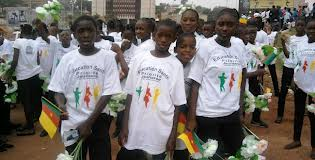
Youths during the parade celebrating Cameroon's National Youth Day
Youths during the parade celebrating Cameroon’s National Youth Day

February 11th marked the celebration of the Cameroonian Youth Day.  Growing up, I always wondered what it really meant, apart from the day-off from school, the school parades, and the presidential speech, what does it really mean? What is the purpose of a youth day?

For starters, Cameroon’s National Youth Day is a national holiday, meant to mark the importance of the youth, and youth rights in the country.  On that day, several parades occur throughout the country led by different schools.  It was a priviledge to be chosen to attend these parades.  For a child, it is one of those few events where one can stand proudly, and march for the country (that is, if you were part of the parade).  The true essence of a national youth day, and the reason why it was created, is to empower the youth, and give them a greater sense of their country, and what it meant to be part of that great country.  It is also a way for the government to let the youths or the young-at-heart know that they are valued as the future of the nation, and an essential segment of the population.  Sadly today, the government does not care about inspiring the youth, or protecting the youth; sadly today, few youths are proud of being Cameroonian, many run abroad looking for better tomorrows, when yesterday all dreamt of returning home.

I thought of introducing a song celebrating the youth, ‘ma revolution’ by Didier Awadi dedicated to all revolutionaries, all the youths, all the patriots, and all those who want to affect real good change in Africa.  Most importantly, this song leans on all the great Africans who have inspired the youths and the people of their countries or kingdoms.  Enjoy!

Do you celebrate youth day in your country? And what does it mean to you? How do we influence the youth towards a true awakening of the society?

Nigeria wins the African Cup of Nations 2013

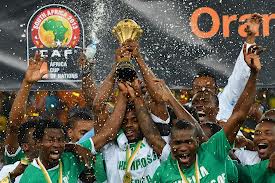
Super Eagles lifting the trophy

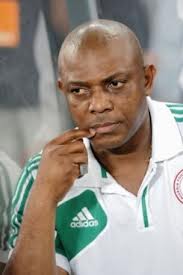
I watched Nigeria’s victory yesterday with great delight. I must admit that after they defeated Cote dIvoire in quarter-finals. I already felt that Nigeria would be the winners and honestly, the Stallions of Burkina Faso were no match to the Super Eagles of Nigeria.  I am also delighted because this was Nigerias first victory since 1994 (19 years), and Stephen Keshi has become the first man to win the African Cup of Nations both as a player and as a coach. Truly the victory should be dedicated to him, and his hard work. He started coaching Togo and qualified them to the world cup  in 2010, and once the Togolese were qualified they sacked him to hire a European coach. Keshi went on to coach Mali, and now his beloved country Nigeria. At first the Nigerian federation did not want to give him the job, but it is hard to deny Keshi’s greatness. They finally gave him the job, and then did not pay him for 2 months prior to the cup (the Nigerian federation would have never dared doing that to a European coach).

Stephen Keshi, Nigeria's coach
Stephen Keshi, Nigeria’s coach

I am truly happy for Keshi, who, this week again, mentioned the fact that Africans coaches were just as good as European coaches, and could manage African teams and lead them to greatness. He did just that to a team which had known no real success since 1994 he redeemed Nigerias super eagles, and showed to everyone that Africans could and should trust African coaches just like the Egyptians used to trust Hassan Shehata who led them to three successive African Nationss cup (2006, 2008, and 2010). Truly, I dedicate this victory to Stephen Keshi, and to all the African coaches who love their country and only dream of being given the chance to take their countries to greatest heights.

Just for fun, somebody said on BBC, that “whenever Cameroon is not at the cup, Nigeria wins“… I didn’t know that we were the “bête noire” of Nigeria. I guess everyone knows their strongest opponents… even footballers!

African Cup of Nations 2013 – onto semi-finals

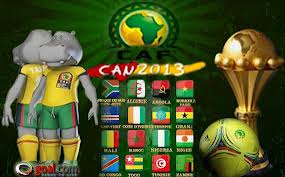
CAN 2013
CAN 2013

My prediction for the first day of the quarter finals of the African Cup of Nations was right on: Ghana did beat Cape-Verde by a 2-0, and Mali edged out the host country South Africa 1-1 by penalty shoot out (3-1), and advanced to the semi-finals.

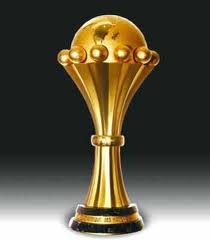
The Africa Cup of Nations/ La Coupe d'Afrique des Nations
The Africa Cup of Nations/ La Coupe d’Afrique des Nations

However, on the 2nd day, all went wrong. The cup’s big favorite, Côte d’Ivoire, were edged out by valiant Nigeria by 2-1.  The Super Eagles of Stephen Keshi maintained the pressure on the Elephants throughout the game, and came out the stronger side.  All hails to Stephen Keshi who managed to line up a strong offense, and defense, to take down the mighty favorites Côte d’Ivoire of Didier Drogba.  Unfortunately, this ends up the dream of the ‘greatest generation’ (as Didier Drogba, Bonaventure Kalou, Kolo Touré, Yaya Touré, Boubacar Barry, etc are known) of Côte d’Ivoire to ever lift up the African Cup of Nations.  Although I am sad for Didier Drogba who has been one of Africa’s greatest players of the past decade (and one of the world’s best forwards), I salute Nigeria’s hard work which got them through to the semi-finals.  After lifting cups in Europe, Didier never got a chance to lift an African trophy… quite sad…

Lastly, Burkina Faso beat Togo 1-0 to find themselves in their first ever semi-final.

The line-up for Wednesday will be fun to watch: Ghana vs. Burkina Faso (you have guessed who will be my favorite to win that game: Ghana), and Nigeria vs. Mali promises to bring the heat up (Nigeria of Stephen Keshi being my favorite).

Who do you think will end up in the final of the 2013 African Cup of Nations? What do you think the scores for the semi-finals will be?

African Cup of Nations 2013

The Africa Cup of Nations/ La Coupe d'Afrique des Nations
The Africa Cup of Nations/ La Coupe d’Afrique des Nations

Tomorrow, Saturday will mark the beginning of the quarter-finals of the African Cup of Nations.  I have to admit that just like last year, my two favorites are Côte d’Ivoire and Ghana.  The Chipolopolo showed a very poor display of their skills this year, and the champions never advanced to the quarter-finals, the first time in 20 years that a champion (since Algeria) doesn’t make it through the first stage.

The game to watch (i.e. the clash of titans) in the quarter-finals, will be Cote d’Ivoire vs. Nigeria. Personally, after Nigeria so-so display, I rest fully on the elephants to send the Super Eagles packing.

The other game will be Mali vs. South Africa.  The Bafana Bafana of South Africa have not been a strong team since 1996, and so my hope is the greatest for them.  However, they have the home court advantage as the cup is taking place in South Africa. Mali, with Seydou Keita, looks a lot stronger.

CAN 2013
CAN 2013

Burkina Faso vs. Togo is a so-so game… Anybody’s guess on who will be the winner is good; I give the slight upper edge to Togo.

Lastly, Ghana vs. Cape-Verde will be a nice game to watch. First because this is Cape Verde’s first ever participation at the African Cup of Nations, and also because they have truly earned their place at the CAN, and have so far pleased by their work.  The Blue Sharks also happens to have a singing coach who brings joy to the players. This said, I believe Ghana to be the favorite and the strongest side, and I think Asamoah Gyan‘s teammates will be eager to clear last year’s defeat and finally lift the trophy.

I can’t wait to watch a Côte d’Ivoire vs. Ghana final… Elephants vs. Black Stars …the ‘great generation’ as Drogba‘s teammates are known, vs. Ghana’s greats…that promises (if it happens) to be a hot game!  I can already see fire on the mountain.

France returns smuggled Nok artefacts to Nigeria

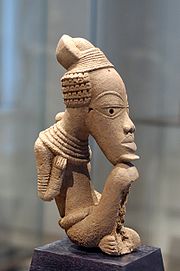
Nok Sculpture from the Louvre museum

France has returned today to Nigeria five ancient terracotta sculptures which had been smuggled out of the country in 2010.  Experts say Nok art is the earliest attempt at portraiture yet discovered in Nigeria.  Over the past 100 years, Nok art has been discoverd in a large area near the Jos plateau in northern Nigeria.  The Nok culture shows that African societies were quite versatile in iron works, and terracotta.  I had posted an article earlier on the Nok culture.  I am just glad to see that sometimes the French, with the pressure from the country from which it was stolen, can return stolen artefacts.  There are so many of our artefacts, manuscripts which have been stolen and are still kept in museums in France.  Applauds to the Nigerian government which kept demanding the return of their artefacts.  These should all be returned. I fear that very soon, we will also find Timbuktu’s manuscripts at the Louvre.

Enjoy the article from BBC, and my article on the Nok civilization.

Le Discours d’Adieu du Roi Behanzin

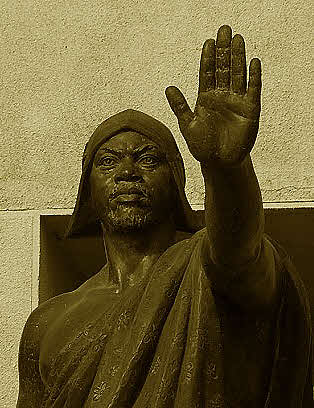
Statue of Behanzin in Abomey, Benin

Je viens de me rendre compte que le site djime.com qui était entièrement dedié au roi Béhanzin, n’est plus actif. J’ai donc decidé de poster ici, la version francaise, l’originale du discours d’adieu du roi Behanzin. J’avais deja traduit dans son intégralité ce discours du roi Behanzin en anglais. The English version here.

=============

« Compagnons d’infortune, derniers amis fidèles, vous savez dans quelles circonstances, lorsque les Français voulurent accaparer la terre de nos aïeux, nous avons décidé de lutter.

Nous avions alors la certitude de conduire notre armée à la victoire. Quand mes guerriers se levèrent par millier pour défendre le Danhomè et son roi, j’ai reconnu avec fierté la même bravoure que manifestaient ceux d’Agadja, de Tegbessou, de Ghézo et de Glélé. Dans toutes les batailles j’étais à leurs côtés.

Malgré la justesse de notre cause, et notre vaillance, nos troupes compactes furent décimées en un instant. Elles n’ont pu défaire les ennemis blancs dont nous louons aussi le courage et la discipline. Et déjà ma voix éplorée n’éveille plus d’écho.

An Amazon warrior ca 1890

Où sont maintenant les ardentes amazones qu’enflammait une sainte colère ? Où, leurs chefs indomptables : Goudémè, Yéwê, Kétungan ? Où, leurs robustes capitaines : Godogbé, Chachabloukou, Godjila ? Qui chantera leurs splendides sacrifices ? Qui dira leur générosité ?

Puisqu’ils ont scellé de leur sang le pacte de la suprême fidélité, comment accepterais-je sans eux une quelconque abdication ? Comment oserais-je me présenter devant vous, braves guerriers, si je signais le papier du Général ?

Non ! A mon destin je ne tournerai plus le dos. Je ferai face et je marcherai. Car la plus belle victoire ne se remporte pas sur une armée ennemie ou des adversaires condamnés au silence du cachot. Est vraiment victorieux, l’homme resté seul et qui continue de lutter dans son cœur. Je ne veux pas qu’aux portes du pays des morts le douanier trouve des souillures à mes pieds. Quand je vous reverrai, je veux que mon ventre s’ouvre à la joie. Maintenant advienne de moi ce qui plaira à Dieu ! Qui suis-je pour que ma disparition soit une lacune sur la terre ?

Partez vous aussi, derniers compagnons vivants. Rejoignez Abomey où les nouveaux maîtres promettent une douce alliance, la vie sauve et, paraît-il, la liberté. Là-bas, on dit que déjà renaît la joie. Là-bas, il paraît que les Blancs vous seront aussi favorables que la pluie qui drape les flamboyants de velours rouge ou le soleil qui dore la barbe soyeuse des épis.
Compagnons disparus, héros inconnus d’une tragique épopée, voici l’offrande du souvenir : un peu d’huile, un peu de farine et du sang de taureau. Voici le pacte renouvelé avant le grand départ.
Adieu, soldats, adieu !…

Behanzin, the Last King of independent Dahomey

Guédébé… reste debout, comme moi, comme un homme libre. Puisque le sang des soldats tués garantit la résurrection du Danhomè, il ne faut plus que coule le sang. Les ancêtres n’ont plus que faire de nos sacrifices. Ils goûteront mieux le pur hommage de ces cœurs fidèles unis pour la grandeur de la patrie. C’est pour quoi j’accepte de m’engager dans la longue nuit de la patience où germent des clartés d’aurore. Guédébé, comme le messager de la paix, va à Ghoho où campe le général Dodds. Va dire au conquérant qu’il n’a pas harponner le requin. Va lui dire que demain, dès la venue du jour, de mon plein gré, je me rends au village de Yégo. Va lui dire que j’accepte, pour la survie de mon peuple, de rencontrer dans son pays, selon sa promesse, le président des Français. »

extrait de – Kondo le requin – Jean PLYA – Ed. CLE

“Ilha” de Amilcar Cabral / “Island” by Amilcar Cabral

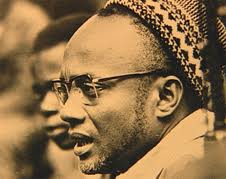
Amilcar Cabral
Amilcar Cabral

January 20th, 2013 marks 40 years since the murder of the Father of Bissau-Guinean and Cape-Verdean independence: Amilcar Cabral.  Africa today is still mourning the loss of one of his greatest sons.  I thought it would be nice to publish one his poems.  Yes… Amilcar Cabral was not just an agronomic engineer, or an independentist, or a freedom fighter, he was also a nature lover and a great writer.  Enjoy! One can already guess that the following poem is about the island of Cape Verde. (The English translation was taken from, ”AMILCAR CABRAL, Freedom fighter,1924-1973“, by Carlos Pinto Santos)

ILHA

Tu vives — mãe adormecida —

nua e esquecida,

seca,

batida pelos ventos,

ao som de músicas sem música

das águas que nos prendem…

Ilha

teus montes e teus vales

não sentiram passar os tempos,

e ficaram no mundo dos teus sonhos

— os sonhos dos teus filhos —

a clamar aos ventos que passam,

e às aves que voam, livres

as tuas ânsias!

Ilha:

colinas sem fim de terra vermelha

— terra bruta —

rochas escarpadas tapando os horizontes

mas aos quatro cantos prendendo as nossas ânsias!


ISLAND

Mother, in your perennial sleep,

You live naked and forgotten

and barren,

thrashed by the winds,

at the sound of songs without music

sung by the waters that confine us…

Island:

Your hills and valleys

haven’t felt the passage of time.

They remain in your dreams

– your children’s dreams –

crying out your woes

to the passing winds

and to the carefree birds flying by.

Island :

Red earth shaped like a hill that never ends

– rocky earth –

ragged cliffs blocking all horizons

while tying all our troubles to the winds!


How long shall they kill our prophets…?

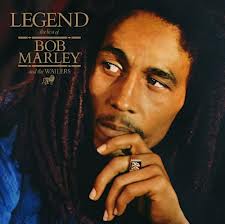
Bob Marley
Bob Marley

How long shall they kill our prophets…?” as Bob Marley said, “… while we stand aside and look?”Sir Bob Marley said it all: How long shall we let these conquerors beat us down? bombard us? kill our prophets? What were Lumumba, Sankara, Cabral, Um Nyobé, Ouandié, Khadafi, Ben Barka, or Gbagbo’s sins? To love their country: to want to save their countries from western greed. What were we doing when they were all killed? Why on earth are we, Africans, just looking (and sometimes applauding) while some countries, Côte d’Ivoire, Libya, and now Mali are being bombed? Why and how long are we going to look while our prophets are being killed?

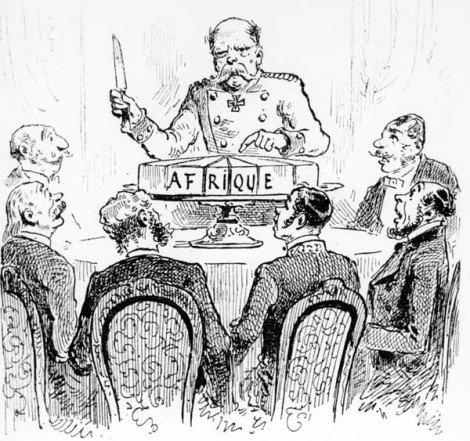
Le partage de l'Afrique a la Conference de Berlin de 1884
Le partage de l’Afrique a la Conference de Berlin de 1884

I just heard of Charles Blé Goudé being arrested. My heart is broken as I hear some Africans applaud… yes my heart is shattered when I hear people say “oh he deserved it.” Deserved what? Deserve being beaten to death because he stood up for his country while external forces were invading it? Deserve being humiliated because he dared walk out in the streets of Abidjan bare-handed to fight external forces, because he brought the youth together, because he woke Ivorians and Africans to their rights to respect, independence, and fairness? Yes… as Sir Marley said: “Emancipate yourself from mental slavery [slavery of the mind; slavery mentality: ignorant mentality]”… “Have no fear for atomic energy.” Some African head of states said when Côte d’Ivoire and Libya were being bombed ” It is better not to say anything; we will just agree with these westerners otherwise they will bomb us too!” now peaceful Mali is under attack; peaceful and desertic Mali is being bombed. Which other peaceful African country will be next? It is better to rise, save our prophets, and talk… than to drink the milk of cowardice, fear, treachery, and ignorance. Have no fear for atomic energy, just stand against injustice… that is way better than treachery or the cancer of betrayal as Amilcar Cabral called it.  Enjoy Sir Marley, and remember that the milk of cowardice never saved our ancestors, and will never save us; our ancestors thought that they were sparing themselves from harm, but 50, 100, 500 years later their children are still fighting the battles they should have fought in the first place.  History repeats itself… are we still going to stand aside while our prophets are being killed? are we going to fear atomic energy, and run as cowards? No matter how far we run, or how much we hide, they are coming for us… we might have seeming peace for 20 years, but our children will still have to fight our battles!