Very often, Africans are depicted on old pictures as naked people, walking around without any clothing. This seems to be quite at odd with the fact that the Dutch textile company VLISCO has been installed in Africa, more precisely in Togo, since 1846. So how could pictures from the 1800s and early 1900s only show naked Africans? The BBC recently ran a story on VLISCO and African textile tradition actually being European. The New York Times claimed that Africa’s fabric was entirely Dutch. I find this quite appalling, and I call this a falsification of history.
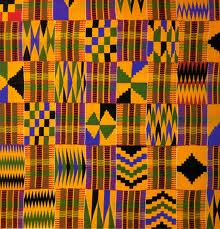
For starters, before VLISCO, Africa had a very rich textile industry as noted by Kankan Moussa‘s entire delegation being clothed from cotton woven with golden threads in 1300s during his pilgrimage to the Mecca (this will be a story for another day), or the Kanembu clothing tradition which dates as far back as the 800s. It is misleading to believe that the Wax hollandais is the only fabric worn by Africans, when we know that the Bogolan rises from a long tradition of weavers in Mali, or the Kente cloth of Ghana.A piece of Bogolan cloth
So what is the history of African fabric? Is there an African history of textile?
As pointed earlier, the African fabric industry is very old, and dates as far back as 5,000BC when ancient Egyptians began cultivating flax and weaving it into linen. An ancient pottery found at Badari shows an ancient depiction of a loom dating back to this period, while a 12th dynasty image from the tomb of Khnumhotep shows weavers using a horizontal loom (ca 2400 BC). Moreover, pyramids, sculptures, and hieroglyphs clearly show all Egyptians clothed.Even their neighbors to the south, the Nubians, had a flourishing textile industry, as can be seen on images on pyramids at Meroë, and images of the great queen Amanishakheto, as well as those of pharaoh Piye.Later on, as several civilizations flourished throughout Africa, cotton became a more commonly used fabric. The explorer Ibn Battuta does mention the presence of weavers in the Mali empire, and in Timbuktu, in the 1300s. As Islam was introduced in West Africa, many began wearing today’s version of the boubou.Kente cloth
Today, one can find a full tradition of textile flourishing throughout Africa. The Bogolan or ‘mud cloth’ is hand-woven fabric hailing from Mali. Kente cloth, is Ghana’s national fabric, with the most expensive ones made with golden threads for kings only (in the olden days). It is said that the British explorers were amazed by the beauty of the Ashanti king’s attire. Cameroon has a long history of cloth made from the bark of trees, with some fabric particularly made from the obom. Fibers from the raffia are still commonly used to make bags, and clothing. Moreover, in West Cameroon, Kings are dressed with finely woven clothing made by the best weavers of the kingdom embellished with beads. The Pygmies use bark cloth made from tropical fig trees, while people from Chad and the Central African Republic weave cotton strips on horizontal looms; they use a variety of natural dyes.
Ndebele woman
The Kuba people of the Democratic Republic of Congo, use raffia and make some of the most beautiful hand-woven blankets, clothing, and sculptures. The Ndebele of South Africa and Zimbabwe have a rich tradition of gorgeous colorful quilts and blankets entirely hand-made. Many would envy the elegance, color, and presentation of well-dressed Ndebele women.
So why are the New York Times and the BBC trying to falsify history?Even VLISCO patterns are not Europeans, as they are inspired by Africans, and made to address the needs of the African population. Yes, Africans wear have worn VLISCO textiles and many Nana Benz have prospered from it, but that doesn’t mean that they do not have their own rich tradition of textile. Africans have their textile industry which dates back millennia, and has probably inspired many in the world. So today as you wear a wax hollandais, remember that there are Kente cloth, Bogolan, and many other beautiful garments made by local artists well-deserving of praise.I am leaving you with a documentary video on Kente cloth weaving. Enjoy!
Hunger and want forced Monkey one day to forsake his land and to seek elsewhere among strangers for much-needed work. Bulbs, earth beans, scorpions, insects, and such things were completely exhausted in his own land. But fortunately he received, for the time being, shelter with a great uncle of his, Orangutan, who lived in another part of the country.
When he had worked for quite a while he wanted to return home, and as recompense his great uncle gave him a fiddle and a bow and arrow and told him that with the bow and arrow he could hit and kill anything he desired, and with the fiddle he could force anything to dance.
The first he met upon his return to his own land was Brer Wolf. This old fellow told him all the news and also that he had since early morning been attempting to stalk a deer, but all in vain. Then Monkey laid before him all the wonders of the bow and arrow that he carried on his back and assured him if he could but see the deer he would bring it down for him. When Wolf showed him the deer, Monkey was ready and down fell the deer. They made a good meal together, but instead of Wolf being thankful, jealousy overmastered him and he begged for the bow and arrow.
Brer Wolf
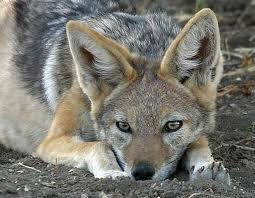
When Monkey refused to give it to him, he thereupon began to threaten him with his greater strength, and so when Jackal passed by, Wolf told him that Monkey had stolen his bow and arrow. After Jackal had heard both of them, he declared himself unqualified to settle the case alone, and he proposed that they bring the matter to the court of Lion, Tiger, and the other animals. In the meantime he declared he would take possession of what had been the cause of their quarrel, so that it would be safe, as he said. But he immediately brought to earth all that was eatable, so there was a long time of slaughter before Monkey and Wolf agreed to have the affair in court.
Monkey’s evidence was weak, and to make it worse, Jackal’s testimony was against him. Jackal thought that in this way it would be easier to obtain the bow and arrow from Wolf for himself. And so fell the sentence against Monkey. Theft was looked upon as a great wrong; he must hang. The fiddle was still at his side, and he received as a last favor from the court the right to play a tune on it.
He was a master player of his time, and in addition to this came the wonderful power of his charmed fiddle. Thus, when he struck the first note of “Cockcrow” upon it, the court began at once to show an unusual and spontaneous liveliness, and before he came to the first waltzing turn of the old tune the whole court was dancing like a whirlwind. Over and over, quicker and quicker, sounded the tune of “Cockcrow” on the charmed fiddle, until some of the dancers, exhausted, fell down, although still keeping their feet in motion. But Monkey, musician as he was, heard and saw nothing of what had happened around him. With his head placed lovingly against the instrument, and his eyes half closed, he played on, keeping time ever with his foot.
African fiddle
Wolf was the first to cry out in pleading tones breathlessly, “Please stop, Cousin Monkey! For love’s sake, please stop!”
But Monkey did not even hear him. Over and over sounded the resistless waltz of “Cockcrow.”
After a while Lion showed signs of fatigue, and when he had gone the round once more with his young lion wife, he growled as he passed Monkey, “My whole kingdom is yours, ape, if you just stop playing.”
“I do not want it,” answered Monkey, “but withdraw the sentence and give me my bow and arrow, and you, Wolf, acknowledge that you stole it from me.”
“I acknowledge, I acknowledge!” cried Wolf, while Lion cried, at the same instant, that he withdrew the sentence.
Monkey gave them just a few more turns of the “Cockcrow,” gathered up his bow and arrow, and seated himself high up in the nearest camel thorn tree.
The court and other animals were so afraid that he might begin again that they hastily disbanded to new parts of the world.
South African Folk Tales, by James A. Honey, 1910, Baker & Taylor Company.
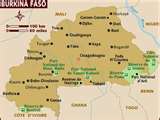
May 3rd marks the World Press Freedom Day, or simply World Press Day. This day is to raise awareness of the importance of the freedom of the press and remind governments across the world to respect the right to freedom of expression. Today I would like to commemorate the life of an African journalist hailing from Burkina Faso, Norbert Zongo, who just like the great Cameroonian journalist Pius Njawe, stood for justice and fought injustice.
Norbert Zongo was the publisher and editor of Burkina Faso newspaper L’Independant. On 13 December 1998, Norbert Zongo was assassinated after his newspaper investigated the murder of a driver (David Ouédraogo) who had worked for the brother of the president Blaise Compaoré, François Compaoré. Zongo’s burned body was found along with the bodies of three other people: his brother Ernest Zongo, his chauffeur Ablasse Nikiema, and Blaise Ilboudo, in a vehicle near Sapouy, 100 km from the capital Ouagadougou. An investigation showed that Zongo was killed for political reasons. His murder rocked Burkina Faso, and manifestations arose within the country, and neighboring countries. The most violent manifestations took place in the city of Koudougou, Zongo’s birthplace, and government supporters organized a militia armed with clubs engaged to hunt protesters in many cities of the country.
Burkina Faso
Bowing to popular discontent, President Blaise Compaoré, had to open a judicial investigation where his brother was charged for murder and harboring the body of the victim in connection with the death of David Ouédraogo who died of torture. The charges were later dropped by a military tribunal. In August 2000, five members of the presidential guard were charged for the murder of Ouédraogo, were convicted and sentenced to lengthy prison terms, but all were later freed. In seven years of trial, one suspect, a member of the presidential guard was charged, but the accusing witness later recanted. The Zongo trial ended in July of 2006 with a non-place which caused an international outcry.
Norbert Zongo is also the writer of the book, The Parachute Drop (Le Parachutage), which was translated to English and published in 2004. Many of his articles can be found in the review Mobutuization of Burkina Faso.
Today, Norbert Zongo is celebrated as a martyr, one who stood for truth, in a country where not many dared to talk. This is why he should be the man of the day, for a day like World Press Day: He dared to talk, he expressed the truth to enlighten others, and sought justice for another man. In 2003, a documentary was made to talk about his murder: Borry Bana, the fatal destiny of Norbert Zongo. In 2012, a memorial was erected at the Highway N6 (Ouagadougou – Léo) near Sapouy, exactly where Zongo was murdered. Please watch this video of Norbert Zongo talking to African youths. His message is that of maintaining intrinsic values of principle, of growth, of conscience.
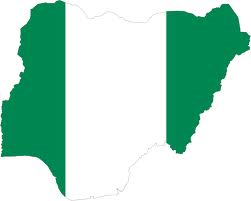
I came across this article on Nigeria, which can be applied to many countries in Africa. This is more of a wake up call, rather than just a critic. This expresses a need for re-building the minds, the brains, and the experiences of Africans. This is very close to the poem ‘No More‘ by Kelvin Karani. You can read the entire article on African Spotlight. So, after reading this article, I would like to you to answer these questions: Do African countries need re-branding or re-building? How do we stop importing and start producing ourselves? Since we have all that is needed to feed ourselves, how do we get to the level where every child is well-fed? How do we improve our infrastructures, etc…? Thomas Sankaramanaged, in less than 4 years as president, to bring his country to the level of food self-sufficiency. How do we get rid of our debts? How do we create jobs for our youths? What is needed to come out of this inferno cycle? While you are at it, please watch Thomas Sankara’s speech on eliminating the debt.
============
Few days ago, I spent 10 billion Naira to celebrate my 52nd birthday! I am Nigeria!!!.
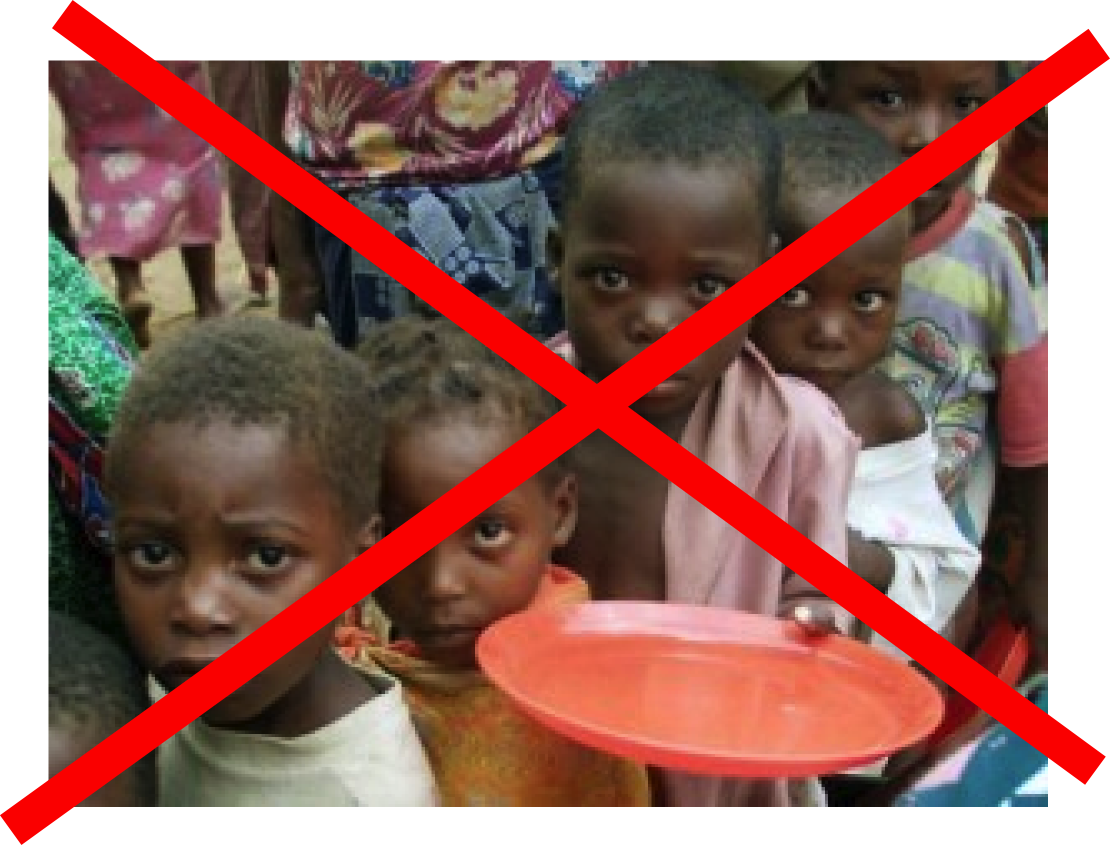
I am divided into 36 unequal states, plus my capital territory, christened ABUJA . I have millions of acres of arable land and billions of cubic litres of water, but I cannot feed myself. So I spend $1 billion to import rice and another $2 billion to import milk. I produce rice, but don’t eat it.I have 60 million cattle but no milk.I have the capacity to feed the whole of Africa but I import most food instead. I am hungry, please help and re-build me. […]
I wanted change so I stood all day long to cast my vote. But even before I could vote, the results had been announced. When I dared to speak out, silence was enthroned by bullets. My rulers are my oppressors, and my policemen are my terrors. I am ruled by men in mufti, but I am not a democracy. I have no verve, no vote, no voice, please re-build me.
I have over 50 million youths with no jobs, no present and no future. So my sons in the North have become street urchins and their brothers in the South have become militants. My nephews die of thirst in the Sahara and their cousins drown in the waters of the Mediterranean. My daughters walk the streets of Lagos, Abuja and Port Harcourt , while their sisters parade the streets of Rome and Amsterdam. I am inconsolable, please re-build me.
Bend Skin in Cameroon (known as Okada in Nigeria)
My people cannot sleep at night and cannot relax by day. They cannot use ATM machines, nor use cheques. My children sleep through the staccato of AK 47′s, see through the mist of tear gas, while we all inhale Carbon Monoxide, poisonous CO-2 from popular ‘I better pass my neighbour’ (portable generators) and ‘Okada’ (motorbike taxis) The leaders have looted everything on ground and below. They walk the land with haughty strides and fly the skies with private jets (28 of which were bought in the last 12 months). They have stolen the future of generations yet unborn and have money they cannot spend in several lifetimes, but their brothers die of hunger. I want justice, please re-build me.
I can produce anything, but import everything. So my toothpick is made in China; my toothpaste is made in South Africa; my salt is made in Ghana; my butter is made in Ireland; my milk is made in Holland; my shoe is made in Italy; my vegetable oil is made in Malaysia; my biscuit is made in Indonesia; my chocolate is made in Turkey and my table water made in France. My taste is far-flung and foreign. I no longer cook at home but take pride in eating at take-away outlets fashioned after the Western style of living. Anything made in my land is inferior; I prefer those made in England, America or Europe . To crown it all, items made in my land but specifically sent abroad with made in England labels are brought back from ‘Oyinbo’ land at 5 times the original price it would have gone for had it been sold as home made, please re-brand me. […]
… I have four (4) refineries, but prefer to import fuel, so I waste more billions to import petrol and diesel. I have no security in my country, but would rather send troops to keep the peace in another man’s land. I have 160 dams, but cannot get water to drink, so I buy ‘pure’ water that broils my inwards. I have a million children waiting to enter universities, but my ivory dungeons can only take a tenth (10 %). I have no power (electricity), but choose to flare gas, and vote billion of dollars every year to generate electricity but not a single watt has come from it. So, my people have learnt to see in the dark and stare at the glare of naked flares. I have no direction, please re-build me.
Children begging
My people pray to God every morning and every night, but commit every crime known to man because re-branded identities will never alter the tunes of inbred rhythms. Just as the drums of heritage heralds the frenzied jingles, remember – the Nigerian soul can only be Nigerian – fighting free from the cold embrace of a government that has no spring, no sense, no shame. So we watch the possessed, frenzied dance, drenched in silent tears as freedom is locked up in democracy’s empty cellars. I need guidance, please re-build me.
But then, why can I not simply be me, without being re-branded? Or does my complexion cloud the colour of my character?Does my location limit the lengths of my liberty? Does the spirit of my conviction shackle my soul? Does my mien maim the mine of my mind? And is this life worth re-branding? Is it re-branding that I need or complete re-building?…
To re-build a wobbling structure, there is need for dismantling of existing one (remember, if the foundation can be destroyed, what can the righteous do?).. Shall I then consider the idea muted by some of my own who have fled abroad? Some call for ‘Separation for Co-operation’ , others call for true Federalism – while others are yet asking for the return to Parliamentary system. Which way do I go? on October 1, 2009, I celebrated my 50th birthday and my 52nd was just celebrated. I do not want to carry on in my golden age without direction, … so, please, help me God. Re-mould and Re-Build me.
When I was little, I always wondered why the name Cotonou was given to a major city in Benin. I used to think that the name was probably a French transcription of the word ‘coton’ (cotton) for ‘coton – ou’, and that maybe there used to be a lot of cotton there … but nowhere did I find cotton to be the main export or agriculture of Cotonou or Benin.
For starters, Cotonou is the largest city and the economic capital of the Republic of Benin. Cotonou is known in West Africa for its international market Dantokpa, which is hosted over 20-hectares, and is the largest market in the whole of West Africa, generating over 1 billion CFA-Franc per day. Cotonou is also well-known for its Zemidjans (or moto-taxis, similar to the Cameroonian bend-skins), and its pollution arising from its use of bad petrol (essence frelatée) also known as kpayo, which is fraudulously imported from neighboring Nigeria.
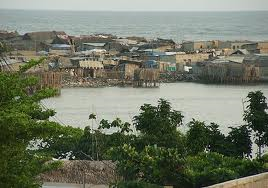
Cotonou, today.
Located on the coastal strip between Lake Nokoué, and the Atlantic ocean, Cotonou’s name comes from the Fon language and means “mouth of the river of death.” At the beginning of the 19th century, Kotonou(as it was then spelled) was a small fishing village. It was originally ruled by the Kingdom of Dahomey until a treaty made with the French by King Ghezo in 1851 allowed the French to establish a trading post at Cotonou. When Glèlè succeeded to his father Ghezo, the territory of Kotonou was ceded to France by a treaty signed on 19 May 1868. After Glèlè’s death in 1889, his son Behanzin tried, unsuccessfully, to challenge the treaty. The town Cotonou then developed itself quickly to become today the largest harbor in the region.
As the economic capital of the republic of Benin, Cotonou hosts 2/3 of the industries of the country, and is the seat of the main enterprises and banks of Benin. It also hosts many of the governmental institutions of the country. It is now the turntable of commerce in the region, especially because of its close proximity with the Nigerian border (and used to be a place for the conversion of the naira), and is the main port for its neighbor land-locked Niger, which is the world’s first producer of uranium. Enjoy this nice video of Cotonou by benin-passion.com.
Today, We will look at a poem by the most celebrated Ivorian writer Bernard Binlin Dadié. The poem below is titled “I Thank you God” or “I thank you my God,” and it is an ode to us Africans, raising the self-esteem. Dadié writes here about his pride of being born Black, around independence, when the colonizer had almost beaten out of us our pride of being Black, our pride of being ‘us’. Enjoy! a great poem from Bernard B. Dadié.
Je vous remercie mon Dieu, dem’avoir créé Noir, d’avoir fait de moi la somme de toutes les douleurs, mis sur ma tête, le Monde. J’ai la livrée du Centaure Et je porte le Monde depuis le premier matin.
Le blanc est une couleur de circonstance Le noir, la couleur de tous les jours Et je porte le Monde depuis le premier soir.
Je suis content de la forme de ma tête faite pour porter le Monde, Satisfait de la forme de mon nez Qui doit humer tout le vent du Monde, Heureux de la forme de mes jambes Prêtes à courir toutes les étapes du Monde.
Je vous remercie mon Dieu, de m’avoir créé Noir, d’avoir fait de moi, la somme de toutes les douleurs. Trente-six épées ont transpercé mon coeur. Trente-six brasiers ont brûlé mon corps. Et mon sang sur tous les calvaires a rougi la neige, Et mon sang à tous les levants a rougi la nature.
Je suis quand même Content de porter le Monde, Content de mes bras courts de mes bras longs de l’épaisseur de mes lèvres.
Je vous remercie mon Dieu, de m’avoir créé Noir, Je porte le Monde depuis l’aube des temps Et mon rire sur le Monde, dans la nuit crée le jour.
Ithank you God, for making me black, for making me the sum of all pains, putting on my head the world. I took the world to the Centaur And I have carried the world since the first morning.
White is a color of circumstance Black is the color of every day And I have carried the world since the first evening.
I am happy with the shape of my head shaped to carry the world, Satisfied with the shape of my nose which has to smell all the scents of the world, Happy with the shape of my legs ready to run all the steps of the world.
I thank you God, for having created me black for having made me the sum of all pains. Thirty-six swords have pierced my heart. Thirty-six brasiers have burned my body. And my blood for all the suffering reddened the snow, And my blood made the east red.
I am still Happy to carry the world, happy with my short arms of my long arms of my thick lips.
I thank you God, for having created me black, I carry the world since the beginning of times And my laughter on the world, at night created the day.
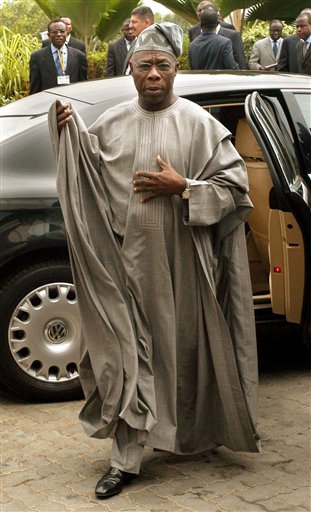
President Olusegun Obasanjo of Nigeria, famous for his grand boubous
Yesterday I wore my green boubou with intricate gold embroidery in the front for a special African celebration. To say that I looked like royalty is simply an understatement. I looked majestic! So, for starters, you might ask me what is a boubou? Well, a boubou(or bubu, or grand boubou, or grand bubu) is an African garment worn by men and women in much of West Africa, and parts of Central Africa. The boubou generally consists of up to three pieces: a long-sleeved shirt, a pair of tie-up trousers that narrow at the ankles, and an open-stitched overflowing wide sleeveless gown worn over these two; all three are usually the same color, and were historically made from silk, but nowadays are made up of cotton or sometimes synthetic fabric made to resemble silk. The whole will be incomplete without a hat or chechia of any color. A woman’s boubou would differ from a man’s boubou by the fact that it will consists of two pieces: a wrapper at the bottom, and a large overflowing gown to top it all off, and of course an intricate headscarf. Its name comes from the wolof‘mbubb’, which made it into French, as boubou. In Yoruba, it is known as agbada; in Hausa, it is babban riga, while in Tuareg, it is k’sa grand boubou.
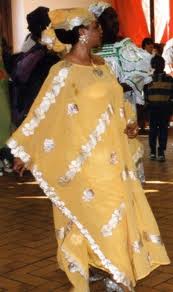
Woman wearing a boubou
The tradition of the boubou is old, and can be traced back to as far as the 8th century. Its origin lies with the clothing worn by the Islamized Tukulor (Toucouleur), Mandé, and Songhai peoples of the great Takrur and Ghana empires, and 13th century Mali and Songhai empires. In West Africa, the nobles of the different people were already wearing a garment more or less similar to the actual boubou. The different patterns in the embroidery already had precise meanings which varied for different ethnic groups and regions. The rest of the population, in majority craftsmen and farmers, wore garments similar to tunics for the upper body, and a wrapper or baggy trousers for the lower body.
In the past, in West Africa and Central Africa, only Islamized peoples used to wear the boubou: Fulani, Toucouleur, etc. … the other ethnic groups all had their own traditional garments of more or less similar genre. With trade among the peoples, the fashion industry, many African stylists (such as Alphadi) have specialized into the boubou and it has now gained international exposure.
The video below is short and simple, and addresses the boubou. It is a small documentary from Arte. Enjoy!
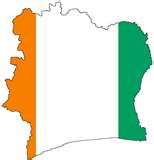
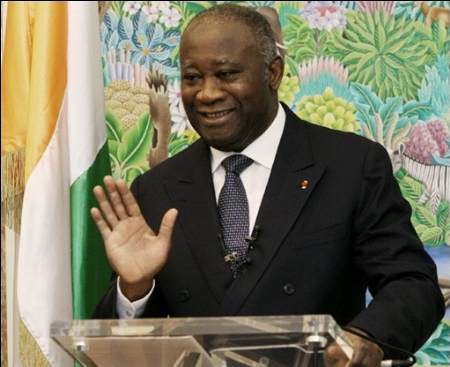
It was on 11 April 2011, exactly 2 years ago, that Côte d’Ivoire, the land of the elephants, was defaced! Yes… I remember the tears streaming down my cheeks as I watched an African country being bombed by a foreign country (France) for … frauds during elections. Before then, I had heard the term ‘francafrique‘, but always thought that it belonged to the past, and never for once thought that in this day and age, after African nations had just celebrated “50 years of independence”, we could be bombed. See the irony of everything? How could our people celebrate 50 years of independence in 2010, and then be bombed in 2011, because of internal affairs? Whether anybody likes it or not, what happened in Côte d’Ivoire was an internal affair: fraud during elections, and international observers sent in to monitor elections all said that there were frauds in the northern part perpetrated by the armed rebels of Alassane Dramane Ouattara (ADO). Since Gbagbo was the man to take down, we then heard that the ‘international community’ was summoning Gbagbo to step down. Who remembers this nice ‘international community’ summoning Bush to let Al Gore take power after election fraud in the US in 2000?
And ever since, France and the ‘developed’ nations have not stopped bombing us: they even ganged up to bomb Libya, now Mali, Central African Republic, … it’s like “who is going to be next?” Yes… centuries and years before, Africa was raped… but it never just stared you in the face like this… or rather they did not openly bomb us? Is it true? the Napalm bombs dropped in Cameroon during the independence war, or the bombs used in Algeria during the Algerian war, or in Madagascar claim otherwise. … I guess in 50 years of independence, our history books had always been written by others, and we willingly let ourselves be brainwashed.
Laurent Gbagbo
Some may ask “why are you writing this now? what good will it do? ADO is in power, Gbagbo is in prison, so there is nothing else to do.” Well… my friends, you sound like losers. We owe it to future generations to write “our” story ourselves, tell “our” side of history. Everybody, or at least … nobody should spend 50 years thinking that they were independent like we did for the past 50. We all need to know that Gbagbo stood for a higher fight, and bravely stood for his country. Because of him we all openly saw what happened in Côte d’Ivoire: how the head of the electoral commission was ‘bribed’ by the French and American ambassadors in Côte d’Ivoire, how Africa was bribed with stupid temporary seats on the UN security council (South Africa, Nigeria and Gabon), how the Nigerian president was called 11 times in a day by the French one (Sarkozy) to force the CEDEAO and ECOMOG to military intervene in Côte d’Ivoire, how Jacob Zuma (the president of South Africa) abandoned Gbagbo (like he later did with Kadhafi, in a 360-degree turn), how the African Union was full of stupid cowards who all sided with the European union, how the international community declared an embargo on medicine (drugs), and refused to deliver any drugs as the country was being bombed, how they blocked cocoa from Côte d’Ivoire (the number one producer of Cocoa in the world) until after ADO took over, how the African intelligentsia just crucified Gbagbo and 50% of Ivorians in a go (without ever voicing a word of reason), how Gbagbo was betrayed by his main generals (Mangou and Kassaraté), and finally how France bombed the presidency of Côte d’Ivoire, murdering thousands on its way. The list is so long… and Yes… we all saw it… and today some are silent… we have to write… it is our duty to our children.
Our celebrated writer, Chinua Achebe said: “There is that great proverb — that until the lions have their own historians, the history of the hunt will always glorify the hunter.” … “It’s not one man’s job. It’s not one person’s job. But it is something we have to do, so that the story of the hunt will also reflect the agony, the travail — the bravery, even, of the lions.”
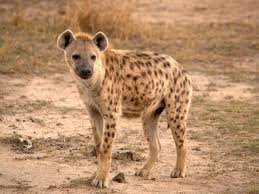
Jackal and Hyena were together, it is said, when a white cloud rose. Jackal descended upon it, and ate of the cloud as if it were fat.
When he wanted to come down, he said to Hyena, “My sister, as I am going to divide with thee, catch me well.” So she caught him, and broke his fall. Then she also went up and ate there, high up on the top of the cloud.
When she was satisfied, she said, “My greyish brother, now catch me. well.” The greyish rogue said to his friend, “My sister, I shall catch thee well. Come therefore down.”
He held up his hands, and she came down from the cloud, and when she was near, Jackal cried out (painfully jumping to one side), “My sister, do not take it ill. Oh me! Oh me! A thorn has pricked me and sticks in me.” Thus she fell down from above, and was sadly hurt.
Since that day, it is said that Hyena’s hind feet have been shorter and smaller than the front ones.
South African Folk Tales, by James A. Honey, 1910, Baker & Taylor Company.
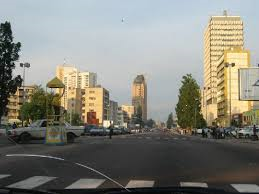
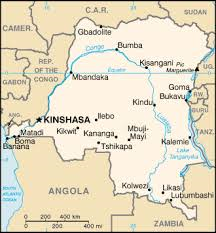
Today I would like to talk about Kinshasa, the capital and largest city of the Democratic Republic of the Congo (DRC). It is located on the Congo River, which happens to be Africa’s largest river, the deepest river in the world, and the third largest in the world by the volume it discharges. Kinshasa is a city of over 9 million inhabitants and directly faces Brazzaville, the capital of the Republic of the Congo: these two sister cities are separated only by the river Congo (the only place in the world where two capitals of two countries face each other). Residents of Kinshasa are known as Kinois.
When did it all start? Well, Kinshasa was founded in 1881 as a trading post by the explorer Henry Morton Stanley who named it Leopoldville in honor of the Belgian king Leopold II, who controled the immense territory of DRC as his private property and not just as a colony. Prior to 1920, all goods arriving by sea in Congo were carried by porters from Matadi (the main port city of Congo), and Leopoldville over 150 km from the coast. From 1886 to 1926, Boma (located on the Congo estuary) was the capital of the Belgian Congo; but after 1926, Leopoldville became the capital.
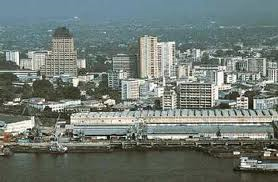
Kinshasa, seen from the Congo river
In 1965, Joseph-Desire Mobutu who had risen to power after coups d’etat against Patrice Lumumba in 1960, and a second one in 1965, renamed the city Kinshasain an effort to africanize the names of the people and places in the country. Kinshassa was the name of a village which used to be near the site of the present city. In Kikongo, Kinshasa means “the salt market“: “nshasa = salt” and locator ‘ki‘.
The region of Pool Malebo, where Kinshasa is located, has been inhabited since at least the first millenium before our era. However, before colonization, different Bantu groups have occupied the area. During the 16th and 17th centuries, the region of Pool Malebo became a major commercial hub between the river basin and the coastal regions. The Bobangis (also called Bangala, or people of the river) managed the major part of the commerce with the equatorial forest by navigating the river up to the Téké villages of Pool. During the 18th and 19th centuries, more villages develop themselves in the area, which became known as the Batéké plateau. The principal Téké villages were Nsasa with almost 5,000 inhabitants, and Ntambo with at least 3,000. By the time Henry Morton Stanley reached the area on 12 March 1878, the region was already home to 66 villages, and a total population of over 30,000 inhabitants. Stanley chose this location as it was the area where the Congo river became navigable.
Map of the DRC
By the time the city changed its name from Leopoldville to Kinshasa in 1966, the city rapidly grew due to rural exodus of people coming from all parts of the country in search of a better life. In 1974, Kinshasa hosted ‘The Rumble in the Jungle‘ boxing match, a historic match between Muhammad Ali and George Foreman, in which Ali defeated Foreman to regain the World Heavyweight title. This has been one of Ali’s most famous matches: if you watch the movie Ali, you can see scenes of Kinshasa there.
Situated in an area belonging to the Batéké and Bahumbu people, the lingua franca of the city is the Lingala, while the administrative language is French. Kinshasa is also a province of DRC (a bit like the district of Columbia in the US), and is the second largest francophone city in the world, after Paris. Its current population is 9 million inhabitants, making it Africa’s second largest cities after Lagos in Nigeria. Please check out the website for the city of Kinshasa, and Kinshasa-Congo travel to learn about the great city of music and art; I also liked the blog kosubaawate which goes through the evolution of Kinshasa then and now (i.e. before independence and now). Enjoy the video below which I enjoyed for its quality, music, and of course its great content.














 African Heritage