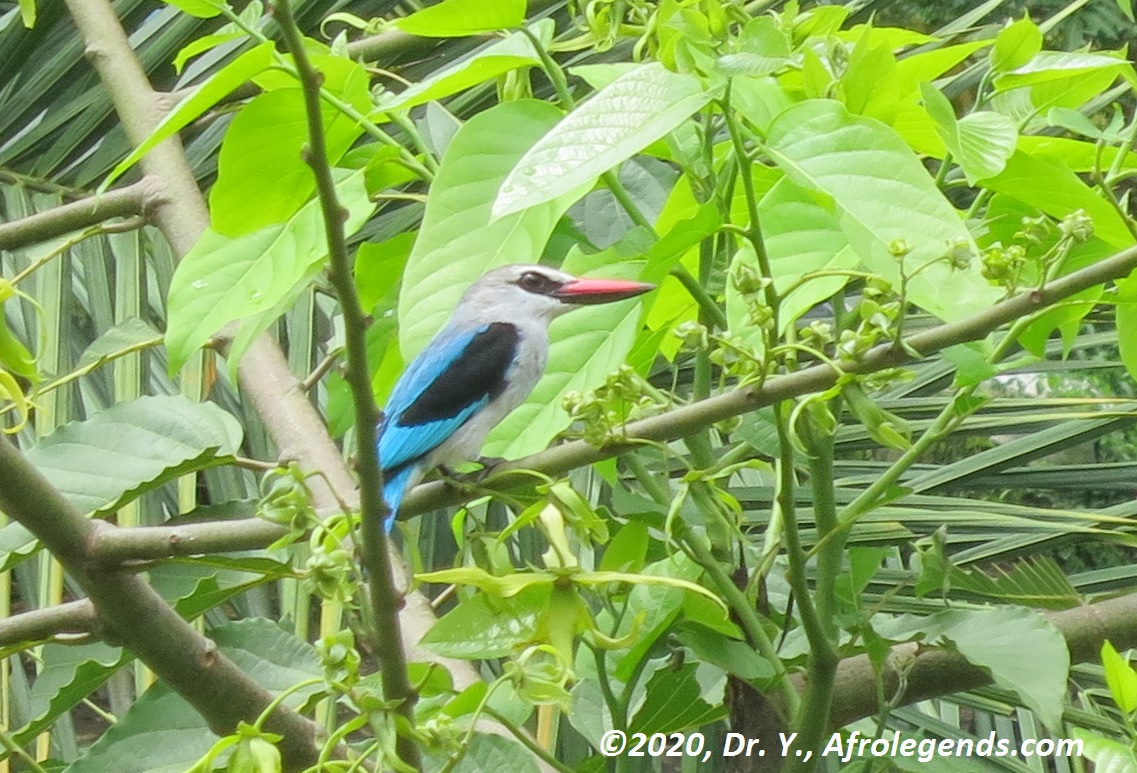
Même le petit oiseau a des plumes à la queue (Proverbe Shambala – Tanzanie). – Le pauvre aussi a quelque chose.
Even the little bird has feathers on its tail (Shambaa proverb – Tanzania). – The poor also has a something.

Même le petit oiseau a des plumes à la queue (Proverbe Shambala – Tanzanie). – Le pauvre aussi a quelque chose.
Even the little bird has feathers on its tail (Shambaa proverb – Tanzania). – The poor also has a something.
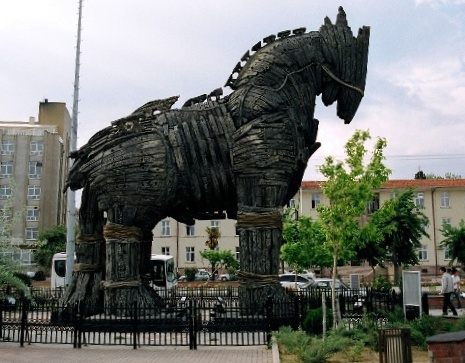
Have you ever received a poisoned gift? Do you remember the Fall of Troy with the story of the Trojan horse as told in the Odyssey of Homer? The Greeks built a huge wooden horse at the behest of Odysseus, and hid a select force of soldiers inside including Odysseus himself; they pretended to sail away leaving the wooden horse behind, and the Trojans thinking that it was a gift from the Greeks pulled the horse into their city as a victory trophy. That night, the Greek force came out of the horse, opened the city gates for the rest of the Greek army, and destroyed the entire city defeating the Trojans.
Last week, we heard Bill Gates say that he will be leaving the majority of his $200 billions to the future of Africa towards education, healthcare, and innovation. His focus will be maternal and child health, infectious diseases, and poverty. He plans to work closely with governments, local organizations, and partners across Africa to implement plans. It is quite laudable that such a rich man would want to “give away” his fortune. However, one cannot be blinded by some loud elements that would make this questionable.

In 2009, the Bill & Melinda Gates Foundation was involved in a clinical trial of cervical cancer vaccines in India which killed and handicapped thousands of girls, causing the organization to be kicked out of the country. In December 2024, Gates called India “a laboratory to try things,” which caused an uproar. Indian farmers have also protested against controversial laws promoting privatization of agriculture passed by the government supported by Gates.

In Kenya, the Bill & Melinda Gates Foundation faced criticism for its involvement in the livestock vaccination; the green revolution promised by Gates through one of his organizations AGRA has wreaked so much havoc and destruction. There have also been adverse effects of some of his other vaccines (including meningitis or tetanus) on young girls, or the polio vaccine which caused issues, in some cases there are claims of young girls getting sterilized or dying. This caused the removal of the foundation’s diplomatic immunity in the country. Can you imagine a non governmental organization and its staff receiving diplomatic immunity from legal action in a country? What are they hiding to need such? This was canceled in April 2025. Recently, we heard about genetically modified (GM) mosquitoes introduced by his foundation in Djibouti to fight malaria; who has approved this? Once the mosquitoes are released in Djibouti, what is to stop them from crossing the border to Eritrea, Ethiopia, Somalia, or even Yemen?
Thus, when this same person, who for many years was the richest man on earth and thus could pay off any government in the world, says he is pledging his money to Africa for “maternal and child health“, it raises concerns. Remember when Melinda Gates said that “family planning is vital” and pledged almost $5 billion to ensure that the African woman is less fertile, less encumbered and yes, she said more “liberated“. In a 2010 TED talk, Bill Gates expressed the hope that vaccines along with “family planning” could bring population growth to nearer zero.
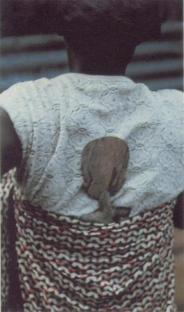
Why is the fertility of the African woman such a problem to these people (remember Macron and his monologue about African women having too many children?)? We do not worry about theirs, why worry about ours? In a world where some countries (Japan, Italy, South Korea, …) are facing population crises, not producing enough children to regenerate the society, and trying to find ways to circumvent this, why do these people have issues with African fertility? It is no secret that the African population represents 18% of the world’s population, and has the youngest population in the world.
Thus, when Bill Gates says he is pledging his money for the well-being of Africa… it is clear that Africans should treat it as a Trojan horse. Why Africa? As shown in the article by S. Ahmed, and others on India, there are 54 countries and governments in Africa with very poor control and thus there will be little accountability for anything that could possibly go wrong, and as Gates said about India, and maybe now Africa, it is so easy “to try things” on the continent without much control! Africans, beware of free money! There is no free lunch out here!
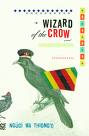
On the black woman. “I believe that black has been oppressed by white; female by male; peasant by landlord; and worker by lord of capital … the black female worker and peasant is the most oppressed. She is oppressed on account of her color like all black people in the world; she is oppressed on account of her gender like all women in the world; and she is exploited and oppressed on account of her class like all workers and peasants in the world. Three burdens she has to carry.” Wizard of the Crow
On unity. In A Grain of Wheat, Ngũgĩ stressed the importance of unity of resisting tyranny, “Our fathers fought bravely. But do you know the biggest weapon unleashed by the enemy against them? It was not the Maxim gun. It was division among them. Why? Because a people united in faith are stronger than the bomb.”
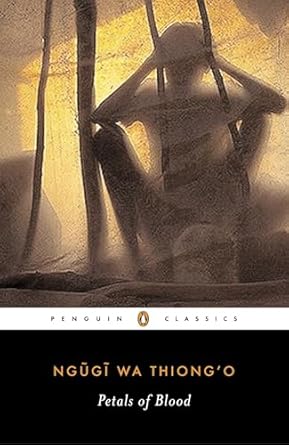
Like Sengat-Kuo in his poem “Ils sont venus“, Ngũgĩ highlighted in Petals of Blood the holy trinity of the Bible, the guns, and commerce to conquer and oppress Africans, “He carried the Bible; the soldier carried the gun; the administrator and the settler carried the coin. Christianity, Commerce, Civilization: the Bible, the Coin, the Gun: Holy Trinity.“
Language as a weapon. In his groundbreaking book Decolonising the Mind: The Politics of Language in African Literature, he championed the use of the mother tongue, arguing, “To speak one’s language is to celebrate one’s identity, … but to impose a language is a way to divide people – it is to practice tribalism of another kind.”
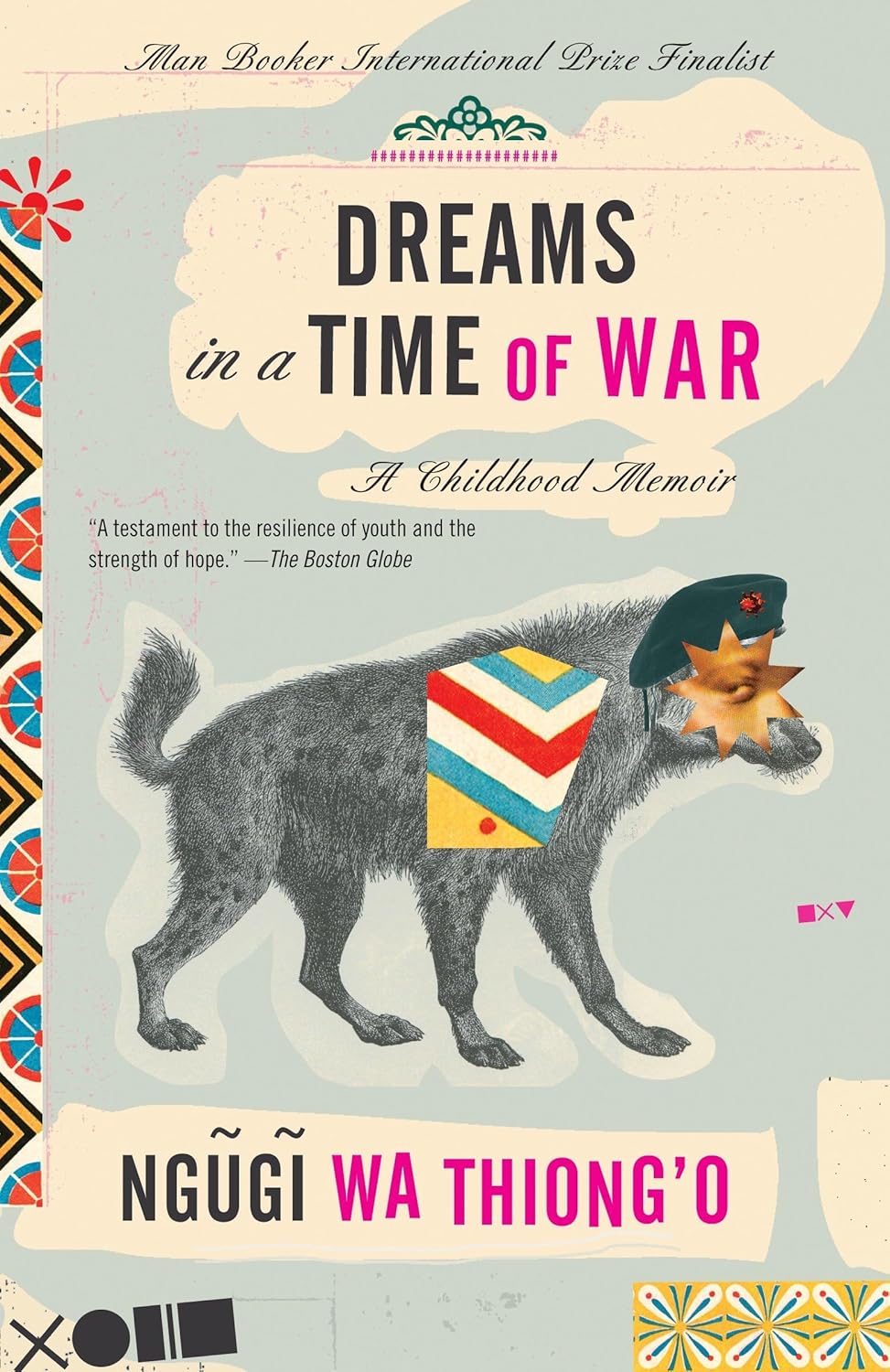
On Women condition. In Wizard of the Crow, Ngũgĩ said, “The condition of women in a nation is the real measure of its progress.“
On self-validation. in Dreams in a Time of War, he added “Belief in yourself is more important than endless worries of what others think of you. Value yourself and others will value you. Validation is best that comes from within.“

World acclaimed Kenyan writer Ngũgĩ wa Thiong’o is no longer. Millions of school children in Africa grew up reading his first books Weep not child (1964), the first novel in English published by an East African, followed by The river between (1965) and A Grain of Wheat (1967). A Cameroonian friend of mine used to love reading The river between, and could recite almost every line. Weep not child explored the impact of the Mau Mau rebellion on a young boy’s family and education, The river between focused on the cultural clash between traditional Gikuyu society, while A Grain of Wheat focused on the disillusionment of the post-independence era.

Like the venerated Chinua Achebe, Ngũgĩ wa Thiong’o was counted among the baobabs of modern African literature, as the author of several novels, plays, short stories, critical pieces, and children books. Like Achebe, he was tipped several times to win the Nobel Prize for Literature, leaving fans dismayed each time the medal slipped through his fingers. We are counted among those fans who each time hoped, but were always disappointed… it’s like the real African authors never get rewarded. This is a lesson for all that we need to reward our own, create awards and celebrate our own, instead of waiting for others to celebrate them. His daughter Wanjiku wa Ngũgĩ who announced his passing on May 28, 2025, said, “He lived a full life, fought a good fight. As was his last wish, let’s celebrate his life and his work.”

Ngũgĩ reached fame writing in English, and then decided to write in Gikuyu, his mother-tongue. Today, his books are written in Gikuyu, and then translated into English; he was a strong proponent of African languages and was adamant about expressing his art in Gikuyu. Like so many East African leaders, he attended the prestigious Makerere University in Uganda, and later the University of Leeds in the UK. Upon his return to Kenya, he taught at the University of Nairobi where he worked to “decolonize the minds,” campaigning to decolonize the curriculum by prioritizing African literature and languages. He was instrumental in the abolition of the English Literature Department in favor of a broader, African-centered literary program. The 1970s decade also saw him drop his patronym James Ngugi, to be fully known as Ngũgĩ wa Thiong’o.
His work spanned over six decades, documenting the transformation of his country, Kenya, from a colony of Great Britain to a democracy with all its issues. He fought the government and was arrested several times, and spent a year at a maximum security prison where he wrote his novel Devil on the Cross (Caitaani mũtharaba-Inĩ), the first modern novel in Gikuyu, written on prison toilet paper. Once out of prison, faced with constant harassment from the government, he went into exile and taught at some of the world’s best universities, including Yale University, New York University, Northwestern University, and the University of California, Irvine where he was a Distinguished Professor of English and Comparative Literature and served as first director of the International Center for Writing and Translation.

His was a unique voice, a voice which never stopped to urge for the decolonization of the minds. To this effect, he wrote Decolonising the Mind: The Politics of Language in African Literature (1986) which advocates for linguistic decolonization of Africa; the book became one of his best known non-fiction work. In his speech at Wits University in Johannesburg in 2017, titled ‘Secure the base, decolonise the mind’, Ngũgĩ spoke about the ‘power relationship between the language of the conqueror and the language of the vanquished’, and asked whether, after fifty years, we have ‘regained the cultural and intellectual independence that we had lost to colonialism’, adding ‘I have always argued that each language, big or small, has its unique musicality; there is no language, whose musicality and cognitive potential, is inherently better than another,’ he said [The Johannesburg Review of Books]. Ngũgĩ is survived by 9 children of whom 4 are also authors like himself.
To learn more, please check out The Johannesburg Review of Books, Nyakundi Report, Pulse Kenya, and the BBC. So long to our Kenyan giant of literature… we will not weep, but keep celebrating Ngũgĩ wa Thiong’o ‘s life!
 C’est par ses paroles qu’on entre dans les pensées d’un autre (proverbe Ga – Ghana). – Si vous voulez connaître quelqu’un, faites le parler.
It is through his words that we enter through another’s thoughts (Ga proverb – Ghana). – If you want to know someone, get them talking.

A few months ago, president Macron of France accused Africans of being ingrates… it was quite a surprise given that France has been living off of 500 billion Euros from Africa every year just from that slave currency which is the FCFA (Africa is funding Europe!, FCFA: France’s Colonial Tax on Africa) and without giving much in return. This, however, is nothing new. In another century, there was another Frenchman who accused enslaved Africans in the colony of being ingrates! Ingrate for what: being enslaved? getting ripped off from their home and continent, beaten day in and day out with their humanity trampled to the ground? There is really nothing new under the sun!
=====

Joseph-Elzear Morenas wrote in the 1800s: “ Negroes have been accused of ingratitude towards whites who, it is said, feed them : singular humanity which consists of giving just enough to live to a wretch who is forced, with whip lashes, to work all day for a master who alone reaps all the fruits. Mr. Count de Vaublanc responds to this : “that the Negroes only work from sunrise, that Sunday is for them.” He should have added, if the master wants it: because finally if it does not suit him, the slave is obliged to work on Sunday just like on other days. The same speaker states that “the Negroes are happier than the peasants of our provinces, and he claims that the begging that exists in our European cities is a much more cruel plague than the slavery of which people wrongly complain.” If anyone could believe that this language is the result of a conviction produced by ignorance of what is happening in the colonies, it would be enough to tell him that Mr. Count de Vaublanc, who is said to be co-owner of a sugar refinery in the parish of Basse-Terre, in Guadeloupe, is one of the four deputies that the colonists maintain in Paris to defend their interests.
[On a accusé les Noirs d’ingratitude envers les Blancs qui, dit-on, les nourrissent : singulière humanité que celle qui consiste à donner juste de quoi vivre à un malheureux qu’on force, à coups de fouet, de travailler toute la journée pour un maître qui en recueille seul tout le fruit. M. le comte de Vaublanc répond à cela :”que les Noirs ne travaillent que depuis le lever du soleil, qu’ils ont pour eux le Dimanche”. Il aurait dû ajouter, si le maître le veut : car enfin si cela ne lui convient point, l’esclave est obligé de travailler le Dimanche tout comme les autres jours. Le même orateur affirme “que les Noirs sont plus heureux que les paysans de nos provinces, et il prétend que la mendicité qui existe dans nos villes d’Europe, est une plaie bien plus cruelle que l’esclavage dont on se plaint à tort”. Si quelqu’un pouvait croire que ce langage est le résultat d’une conviction produite par l’ignorance de ce qui se passe dans les colonies, il suffirait de lui apprendre que M. le comte de Vaublanc, que l’on dit être copropriétaire d’une sucrerie dans la paroisse de la Basse-Terre, à la Guadeloupe, est un des quatre députés que les colons entretiennent à Paris pour defendre leurs intérêts.]
J.-E. Morenas, Précis historique de la traite des Noirs et de l’esclavage colonial, Slatkine Reprints, Genève, 1979, P.73-74

Il ne faut pas demander au sel d’être sucré (proverbe Bamiléké – Cameroun). – On ne demande pas à un homme mauvais de faire du bien.
Don’t ask for salt to be sweet (Bamileke proverb – Cameroon). – Don’t ask a wicked man to do good.

I love this message of our general and president Assimi Goïta: “if I die before reaching our ideal, continue the project without me and lay the groundwork for change with my blood and my flesh. No sacrifice is huge for this country“[Assimi Goïta Speaks to the Malian People: No Sacrifice is too Big for this Country]. This is indeed the motto that all the leaders of the AES, Assimi Goïta of Mali, Abdourahamane Tchiani of Niger, and Ibrahim Traoré of Burkina Faso lead with and live by. They all created the Alliance of the Sahel (AES) so as to be strong together, uniting their forces, people, and resources to fight together against the forces of imperialism. Now the west is trying hard to break apart the union by singling out Traoré (Coup against Ibrahim Traoré and Worldwide Support for Him). Traoré is brilliant, no doubt. He has been doing an awesome job, no doubt. And he has been the true communicator in the AES plan. He is young, and appeals to the youths of the entire continent. He speaks with great charisma, and confidence, which scares many. He is a true son of Burkina Faso inspired by the great Thomas Sankara.
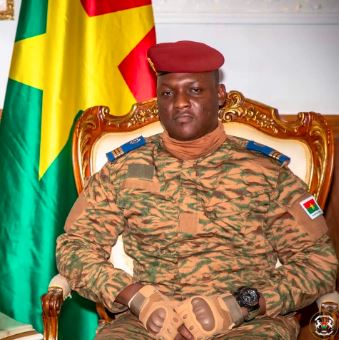
A mother does not love one child over the other. She loves each one, albeit differently and uniquely, given the uniqueness of each child. Mama Africa loves all her leaders of the AES equally and together we will free the whole. Thus, it is important to know that we, Africans, cannot afford to have just one Traoré, for we are all Traoré, and we should all endeavor to have thousands of Traoré, Tchiani, and Goïta throughout the continent, for history not to repeat itself. We have to be careful… and take care of our leaders, and make sure we keep working towards total freedom. Just a few years back (not even 5 years), John Magufuli of Tanzania was here, Pierre Nkurunziza of Burundi was here and we, Africans, applauded them. Both went down… and we all cried… we need to make sure history does not repeat itself! Let’s have Millions of African Leaders: Be the Leader You Want to Have!
Below are excerpts from an article from the BBC explaining why Ibrahim Traoré is loved… yet claiming that it is a “skillfully built persona af a pan-africanist”… pure nonsense… they really have not known him when he was younger. Had they known him, they would have known that there is nothing ‘built’ about him, and it is not a persona… when an African stands up proudly and with confidence without the complex of inferiority, they call it a persona. Our duty is to all be Ibrahim Traoré!
=====

A charismatic 37-year-old, Burkina Faso‘s military ruler Capt Ibrahim Traoré has skilfully built the persona of a pan-Africanist leader determined to free his nation from what he regards as the clutches of Western imperialism and neo-colonialism.
His message has resonated across Africa and beyond, with his admirers seeing him as following in the footsteps of African heroes like Burkina Faso’s very own Thomas Sankara – a Marxist revolutionary who is sometimes referred to as “Africa’s Che Guevara“.
“Traoré’s impact is huge. I have even heard politicians and authors in countries like Kenya [in East Africa] say: ‘This is it. He is the man’,” Beverly Ochieng, a senior researcher at global consultancy firm Control Risks, told the BBC.
“His messages reflect the age we are living in, when many Africans are questioning the relationship with the West, and why there is still so much poverty in such a resource-rich continent,” she said.

After seizing power in a coup in 2022, Traoré’s regime ditched former colonial power France in favour of a strong alliance with Russia, that has included the deployment of a Russian paramilitary brigade, and adopted left-wing economic policies.
This included setting up a state-owned mining company, requiring foreign firms to give it a 15% stake in their local operations and to transfer skills to Burkinabé people.
The rule also applied to Russian miner Nordgold, which was given a licence in late April for its latest investment in Burkina Faso’s gold industry.
As part of what Traoré calls a “revolution” to ensure Burkina Faso benefits from its mineral wealth, the junta is also building a gold refinery and establishing national gold reserves for the first time in the nation’s history.
… The junta [they still call it a junta, even though, he has received a full vote of confidence for 5 years by the entire Faso nation – like said before: Gabon and the Double Standards of the International Community] has also nationalised two gold mines previously owned by a London-listed firm, and said last month that it planned to take control of more foreign-owned mines.
Enoch Randy Aikins, a researcher at South Africa’s Institute for Security Studies, told the BBC that Traoré’s radical reforms had increased his popularity in Africa. “He is now arguably Africa’s most popular, if not favourite, president,” [No, Traore does not want to be the most popular or the favorite, he just wants to do right by his people! – Thus African, let us follow his footsteps and make our countries and continent proud!] Mr Aikins said.

… Ms Ochieng said that Traoré first caught the attention of Africans when he spoke at the Russia-Africa summit in 2023 [that is not true… we already knew him before 2023], telling African leaders to “stop behaving like puppets who dance every time the imperialists pull the strings“.
… Traoré’s popularity comes despite the fact that he has to fulfil his pledge to quell a 10-year Islamist insurgency failed [has he failed? What did the French, and Operations Barkhane via the Takuba Task Force and Serval… – that compendium of all western nations- do in over 10 years in the region? And who was funding these terrorist groups?] that has fuelled ethnic divisions and has now spread to once-peaceful neighbours like Benin. [yeah right… we know who is in Benin – France!].
… “Traoré is stylish and confident, with a very open face and a small smile. He is also a powerful orator, and presents himself as a man of the people.”
…

I came across another gem in the book of Professor Bwemba Bong, “Quand l’Africain était l’or noir de l’Europe. L’Afrique: Actrice ou Victime de la Traite des Noirs? – Démontage des mensonges et de la falsification de l’histoire de l’hydre des razzias négrières transatlantiques” (When the African was the black gold of Europe. Africa: Actress or Victim of the Slave Trade ? – Dismantling the lies and falsification of the hydra history of the transatlantic Slave Raids).” After the textile industry, and the Agriculture in the Kongo Kingdom, this time, it is about the rich fauna of the Kongo in the 16th century.
In his book, Pr. Bong shows that the wealth of the African fauna, and in this case at hand, of the Kongo basin. Note the use of ostrich and peacock feathers for umbrella, and the special place of the peacock whose feathers serve as symbol of royalty; or the skin of the pelican which is so warm that it was used to warm people when feeling cold; or even these birds who sang arias so much that they were esteemed by royalty since ancient times.
Filippo Pigafetta et Duarte Lopes, Le royaume de Congo et les contrees environnantes (1591), Chandeigne/Unesco, 2002, p. 112-113 (trad. Willy Bal, présentation et notes Willy Bal); Bwemba Bong, Quand l’Africain était l’or noir de l’Europe. L’Afrique: Actrice ou Victime de la Traite des Noirs?, MedouNeter 2022, p. 179-180 (translated to English by Dr. Y, Afrolegends.com). Enjoy!
=====
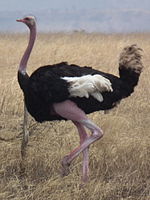 Let us now talk about birds, and first of all of ostriches, which hold first place due to their height. They are found in the regions of Sundi and Batta, towards Murombos. Their young hatch in the heat of the sun. The feathers are used to make badges and war standards. Mixed with peacock feathers, they are arranged in the shape of an umbrella. Since we have come to speak of peacocks, let us say that they are raised in Angola, in a wood surrounded by walls; the king does not allow anyone else to possess them, because their feathers serve as insignia of royalty. Ancient stories tell us that Alexander the Great had made this bird, when it was seen for the first time in Europe, an object of important privileges.
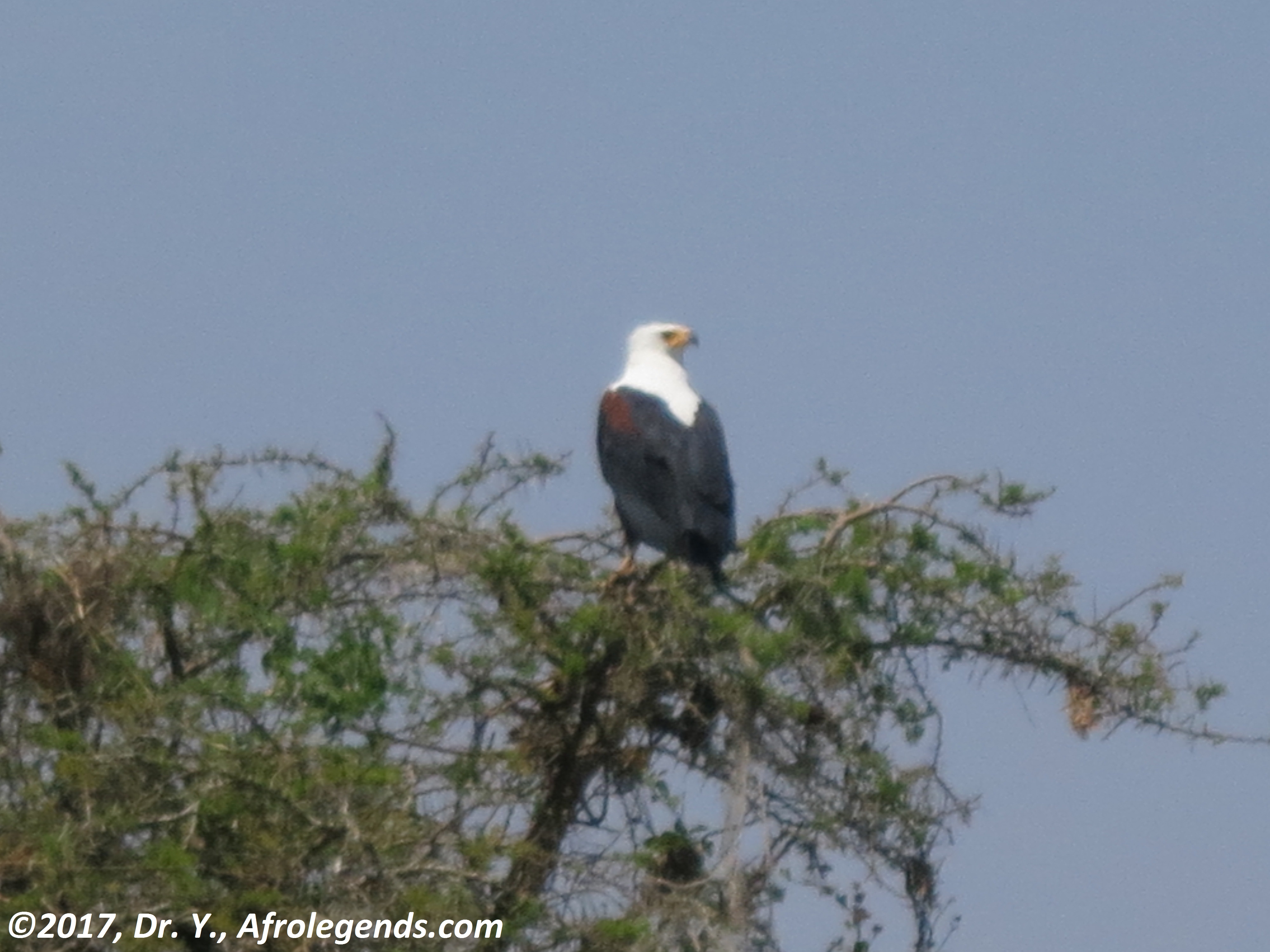 There are also roosters, called guinea fowl, and hens, geese, ducks of all kinds, both wild and domestic, partridges in such quantity that children catch them with a snare. We also see other birds like pheasants called “gallignoles”, pigeons, turtledoves, passerines called becfigues [ortolan] and which are innumerable, birds of prey like golden eagles, falcons, vultures, sparrowhawks and many others, which the inhabitants do not use for hunting.
Also seabirds, like those that the Portuguese call pelicans: they are white, large, swim underwater and have such a wide throat that they can swallow a whole fish; moreover, these birds have such a strong stomach and have such natural heat that they can digest whole fish; their skin is so warm that the inhabitants of the country use it as a means of warming up in case of a cold stomach; therefore it is esteemed.
There are also many white egrets and gray herons living in these marshes, called royal. There are other birds, which resemble cranes: about the size of storks, they are very beautiful to see with red beaks and feet, most of the feathers red and white, some dark gray. The locals call them flamingos by analogy. The flesh of these birds is eaten.
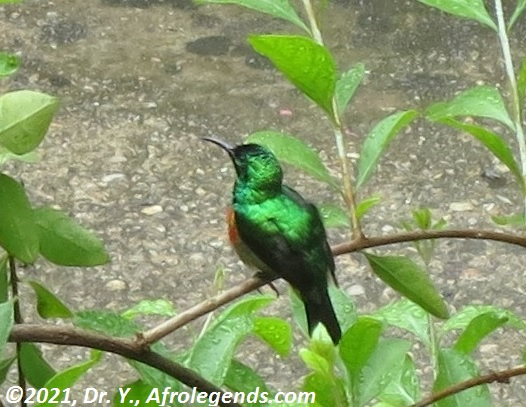
Various species of parrots are also found: some are large with gray plumage, very talkative, others are small, green and hardly speak. Let us also note small birds that are called singers, larger than canaries, with red beaks and plumage; others, green with black legs and beaks: the song of these is the sweetest of all, one would almost say that they speak while singing; still others, multicolored. All these birds sing diversely, so well that the lords of this country, since ancient times, have always kept them in cages and greatly appreciated their song.

Là où votre ennemi vous prépare une tombe, Immana vous fera une sortie (Proverbe Burundais – Burundi).
Where your enemy prepares a grave for you, Immana will make a way out for you (Burundian proverb – Burundi).


