 Avant d’avaler, d’abord mâcher (Proverbe Vakaranga – Zimbabwe). Avant de divulguer quelque chose, vérifier si c’est vrai.
Before swallowing, chew first (Vakaranga proverb – Zimbabwe). Before disclosing something, check its veracity.

Avant d’avaler, d’abord mâcher (Proverbe Vakaranga – Zimbabwe). Avant de divulguer quelque chose, vérifier si c’est vrai.
Before swallowing, chew first (Vakaranga proverb – Zimbabwe). Before disclosing something, check its veracity.
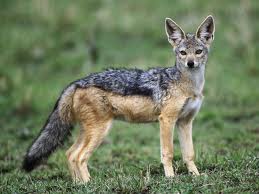

The Sun, it is said, was one day on earth, and the men who were travelling saw him sitting by the wayside, but passed him without notice.
Jackal, however, who came after them, and also sitting, went to him and said, “Such a fine little child is left behind by the men.” He then took Sun up, and put it into this awa-skin (on his back). When it burnt him, he said, “Get down,” and shook himself; but Sun stuck fast to his back, and burnt Jackal’s back black from that day.
South African Folktales, J.A. Honey, 1910, Baker and Taylor Company.

Yaoundé, the capital of Cameroon and its second largest city after Douala, is often known as “the city with the seven hills” because of the hills surrounding it… but what does it really mean? Does its name refer to its hills?
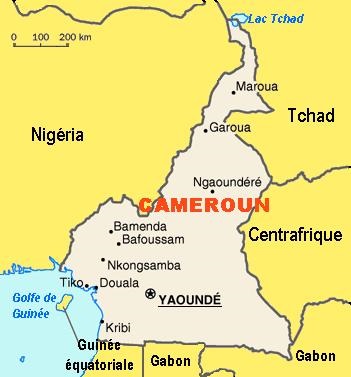
In Béti, Yaoundé is often called, Ongolo-Ewondo, or the Ewondos’ enclosure (la clôture des Ewondos). The city was born around 1889, when the German traders implanted a camp in the Ewondo region and called it Sono station after a local Ewondo chief Essono Ela who had offered them hospitality (the Germans had encountered a strong resistance in the Vouté and Eton regions). Hearing locals from the coast refer to it as Ya-Ewondo or Among the Ewondo (chez les Ewondos), the Germans called it ‘Jaunde’ and it later turned into ‘Yaunde’, and in French Yaoundé. The station later turned into an administrative region under the leadership of the botanist Zenker who established a detailed map of the area in 1890. Upon its creation, it was first a scientific post (probably because of the botanist), and later in 1895 became a military and trading post for ivory and rubber.

Yaoundé was not always the country’s capital. After the 1909 volcanic eruption of Mt Cameroon in Buéa (Gbéa) which was then the capital, and the humid climate of Douala, the Germans decided to move the capital to Yaoundé because of its central location and its milder climate (and of course, no volcano). After Germany’s defeat in World War I, Cameroon was placed under French (the eastern regions) and British protectorate (the western regions). Yaoundé consequently became the capital of French Cameroon, and continued as the capital of the Republic of Cameroon after independence (it was first the Federal Republic of Cameroon in 1961, then The United Republic of Cameroon in 1972, which then officially became the Republic of Cameroon in 1984). From 100 inhabitants on 2 acres on land at the end of the 19th century, Yaoundé is today a vibrant city home to almost 2 million inhabitants.
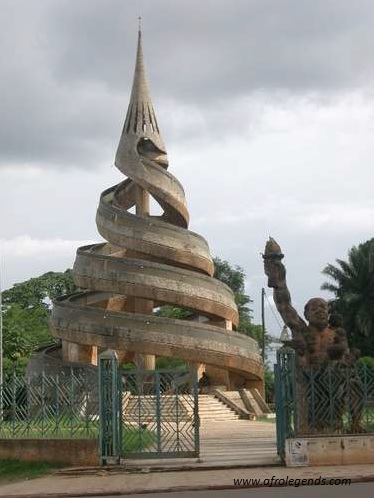
Yaoundé lies at the center of the nation, at about 600 – 1000 m above sea level. The city first grew around the Mfoundi river. A network of hills make up its landscape such as Mts Mbam Minkom (1295 m), Nkolodom (1221 m), Messa, Fébé, Akokdoué in the North and West, and Mt Eloumden (1159 m) in the south. The rivers are the Mfoundi, Ekozoa, Biyeme, and Mefou. Today, Yaoundé is the siege of power, the presidential palace, the house of parliament, all ministries and embassies. Please enjoy this song of one of Cameroon’s great singers: André-Marie Tala about Yaoundé, and its beauty. What I have always liked about Yaoundé are its hills (and the red soil): from the top of one them, other parts of the city can be seen; it gives a feeling of “breathing in” or “taking in” the beauty of the entire city. Feel the joy of visiting this city which, like Rome has 7 hills. Enjoy the Rome of Africa!

Un Léopard ne mange pas de poisson (Proverbe Ekonda, République Démocratique du Congo (RDC)). Un grand chef ne s’occupe pas de bagatelles.
A leopard does not eat fish (Ekonda Proverb, Democratic Republic of Congo (DRC)). A great chief does not busy himself with nonsense.
My fellow friends, may the year 2014 be the year of all greatness, success, joy, love, happiness, abundance, harmony, and peace! I would like to thank all those who visited my blog, and all my future visitors … I am grateful for your trust and faith in my blog. We have more than doubled the number of viewers, and subscribers this year: keep on visiting, keep on sharing, and keep on commenting. I wish you all wonders without borders, grace, and peace for 2014!
There was a lot to celebrate in Africa in 2013. Here are some of those things.
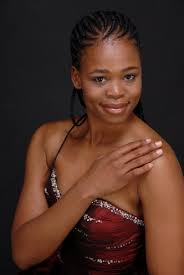
– In January, South African opera singer, Pretty Yende, was the first African to perform at the Metropolitan Opera House in New York City. You can watch her interview on BBC.
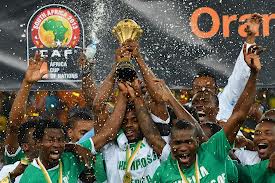
– On February 10, Nigeria’s Super Eagles won this year’s African Cup of Nations. Stephen Keshi’s team made us all proud.
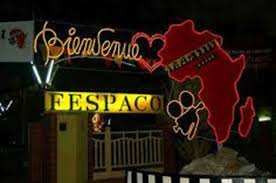
– In March, FESPACO 2013 was a success and featured movies and documentaries from across the continent.
– On March 14, Uhuru Kenyatta won Kenya’s presidential elections. These elections were the people’s choice, and Uhuru Kenyatta defeated the ‘machine’-chose guy Raila Odinga (Obama’s cousin); a very good example of democracy by Africans for Africans.
– In April, Cecile Kyenge became the first Black minister nominated in Italy. Dr. Kyenge is originally from the Democratic Republic of Congo.
– On 31 July, Zimbabwe general and presidential elections went peacefully with the full re-election of Robert Mugabe.
– In August, 12 political figures from Laurent Gbagbo‘s FPI were released in Côte d’Ivoire. Among them was Pascal Affi N’Guessan, previous prime minister of Gbagbo, who was unjustly detained without hearing for 2 years.
– NoViolet Bulawayo was the first black African woman and Zimbabwean author to be shortlisted for the prestigious Man Booker Prize for her novel We need new names.
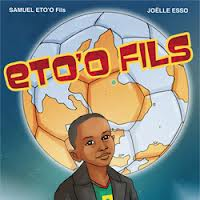
– In September, Samuel Eto’o Fils (Cameroonian and one of Africa’s best soccer forward) came out with an autobiographic comic book. Birth of a Champion is the first comic book on an African football player, and will hopefully inspire many youths around the globe.
– In November, Cameroonian author Léonora Miano won the 2013 Feminina Prize for her novel La Saison de l’Ombre, which talks about slavery from those who lived after seeing their relatives captured.
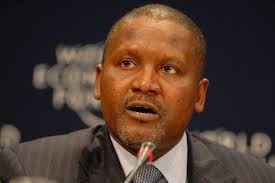
– Nigerian billionaire Aliko Dangote, Africa’s richest man, vowed to build the largest privately owned refinery in Nigeria, which produces more oil than any other African country but must import most of the motor fuel and diesel it uses because existing refineries are dilapidated and inefficient.
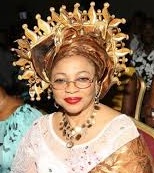
– This year also saw two African women cross the billionaire bar: Isabel Dos Santos of Angola, and Folorunsho Alakija of Nigeria. Alakija is actually the richest black woman billionaire ahead of Oprah.
– Five (5) African nations won their tickets to the World cup in Brazil 2014. The 5 countries are: Algeria, Cameroon, Cote d’Ivoire, Ghana, and Nigeria.
In the year 2013, we said goodbye to some people, some events, and some things. Here are 10 of those:
– Well, in January, we said goodbye to rebels in Mali thanks to the French intervention with the Operation Serval (the Françafrique is back, and very well).
– The South African athlete, Oscar Pistorius made us almost regret ever celebrating Valentine’s Day with his arrest for the murder (or not?) of his girlfriend Reeva Steenkamp on 14 February.
– On 5 March, El Commandante, Hugo Chavez left us. Lots of tears cannot express how we all felt, and how many Africans felt about his passing.
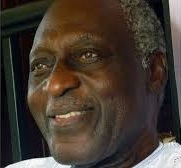
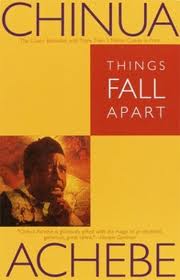
– Chinua Achebe made our world fall apart when he left us on 22 March. We did cry, but above all we reconnected with his great work so that ‘Things [would not] fall apart.”
– On 3 July, Egyptian President Mohamed Morsi was ousted by the army which was supported by millions of people.
– There were another rebels in Central African Republic (CAR) with the ousting of president François Bozizé.
– We said goodbye to yet another writer, this time Ghanaian writer/diplomat Kofi Awoonor who was killed during the scandalous Westgate shopping mall shootings in Nairobi on 21 September.
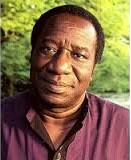
– In 3 October, a boat carrying 500 illegal immigrants toppled in the Mediterranean sea near Lampedusa killing 366 people. Italy declared a national day of mourning.
– The M23 rebels in Democratic Republic of Congo (DRC) were defeated by the Kabila government with help from the UN troops (remember the UN used to be in the region, and never did anything – I wonder what changed this time) at the end of October and beginning of November.

– Le ‘Seigneur’ Tabu Ley Rochereau left us on 30 November 2013. We are still celebrating the maestro’s work and his influence on generations of Congolese and African artists.
– We said goodbye to Nelson Mandela on 5 Dec. 2013. Madiba left us, and we all cried for this great symbol of strength, forgiveness, and greatness in Africa.

Les doigts de la main n’ont pas la même longueur (Proverbe Bété – Côte d’Ivoire). Les hommes ne sont jamais égaux.
The fingers of the hand do not have the same length (Bété Proverb – Côte d’Ivoire). Men are never equal.
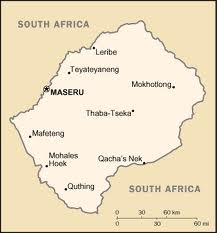
Today, I would like us to look into Maseru, the capital of Lesotho, a landlocked country located inside South Africa. Maseru is a Sesotho word which means “the place of the red sandstone.” Maseru is located on the Caledon river, directly on the border with South Africa. The city was first established as a police camp, and later on became the capital of the country when it was under British protectorate. Maseru lies in a shallow valley in the Hlabeng-Sa Likhama foothills of the Maloti mountains. Its elevation is 1,600 m above sea level.
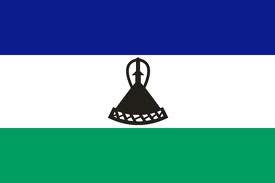
Lesotho is the world’s highest altitude country, in other words, it is the only country in the world which lies 1,000 m above sea level; its lowest point of 1,400 m is thus the highest in the world. Over 80% of the country lies 1,800 m above sea level. Lesotho is the land of the Sotho people, and the official languages are Sesotho and English.
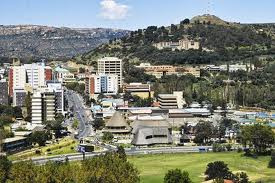
One may wonder how come such a small country (just over 30,000 km2) could reside independently inside South Africa, when we know very well the Boers’ expansion in South Africa and their thirst of land. Well, in June 1838, when the TrekBoers attacked the country, the King Moshoeshoe I signed a treaty with the British governor of the Cape colony. After fighting several wars with the Boers from 1858 to 1868, King Moshoeshoe I sought British protection who agreed to make Basutoland into a British protectorate in 1868. In 1869, the British signed a treaty at Aliwal North with the Boers that defined the boundaries of Basutoland, and later Lesotho, which by ceding the western territories effectively reduced Moshoeshoe’s kingdom to half its previous size (see… the colonists never really helped, they just assigned themselves big part of African kingdoms, like that pie Africa became after the Berlin Conference in 1884). Enjoy this video, and discover Maseru.
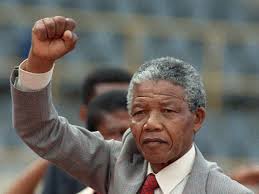
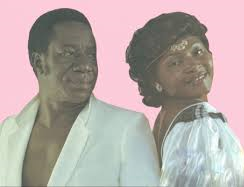
M’bilia Bel and Tabu Ley Rochereau once sung for the liberation of Nelson Mandela. As we are celebrating both the king of Rumba, Tabu Ley Rochereau, and one of the greatest freedom fighters of our time, Nelson Mandela, I only saw fit to share with you Sisi Mandela sung by the greats to celebrate another Great!


 African Heritage