The Hunt of Lion and Jackal

Lion
Lion

LION and Jackal, it is said, were one day lying in wait for Eland.  Lion shot (with a bow) and missed, but Jackal hit and sang out, “Hah! hah!

Lion said, “No, you did not shoot anything.  It was I who hit.

Jackal answered, “Yea, my father, thou hast hit.

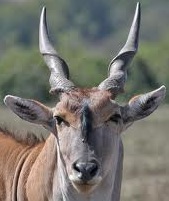
Eland
Eland

Then they went home in order to return when the eland was dead, and cut it up.  Jackal, however, turned back, unknown to Lion, hit his nose so that the blood ran on the spoor of the eland, and followed their track thus, in order to cheat Lion.  When he had gone some distance, he returned by another way to the dead eland, and creeping into its carcass, cut out all the fat.  Meanwhile Lion followed the blood-stained spoor of Jackal, thinking that it was eland blood, and only when he had gone some distance did he find out that he had been deceived.  He then returned on Jackal’s spoor, and reached the dead eland, where, finding Jackal in its carcass, he seized him by his tail and drew him out with a swing.

Lion upbraided Jackal with these words: “Why do you cheat me?

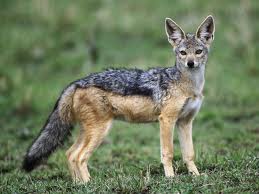
Jackal
Jackal

Jackal answered: “No, my father, I do not cheat you; you may know it, I think.  I prepared this fat for you, father.

Lion said: “Then take the fat and carry it to your mother ” (the Lioness) ; and he gave him the lungs to take to his own wife and children.

When Jackal arrived, he did not give the fat to Lion’s wife, but to his own wife and children; he gave, however, the lungs to Lion’s wife, and he pelted Lion’s little children with the lungs, saying: “You children of the big-pawed one!  You big-pawed ones!

He said to Lioness, “I go to help my father (the Lion);” but he went far away with his wife and children.

South African Folktales, J.A. Honey, 1910, Baker and Taylor Company.

Proverbe Douala sur le Respect du Chef / Duala Proverb on the Respect of the King

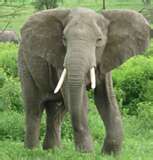
Elephant
Elephant

Même si l’éléphant est maigre, il reste le roi de la forêt (Proverbe Douala – Cameroun).  Il faut respecter les chefs malgré tout.

Even if an elephant is thin, he still remains the king of the jungle (Duala Proverb – Cameroon).  Kings should be respected despite all.

Why the name: Liberia?

Liberia
Liberia

What comes to mind when you hear the name of the country Liberia? … Liberty, freedom?

Exactly, the colony of Liberia was started by the American Colonization Society (ACS) in 1820 which repatriated free slaves from the United States to Liberia.  Why exactly was that territory chosen versus any other is a mystery.  I suspect that it was just a replica of what the British were doing, as they had started repatriating free slaves from Nova Scotia (Canada) to Sierra Leone as early as 1792.  It is therefore no surprise that Liberia is a neighboring country to Sierra Leone.  On July 26, 1847, the free slave settlers issued a Declaration of independence (modeled after that of the US), and created the Republic of Liberia, with its capital Monrovia named after the American president James Monroe, one of the supporters of the ACS.

Flag of Liberia
Flag of Liberia

However, before the arrival of the 500+ free slaves from America, modern-day Liberia was located in an area known as the Pepper Coast or Grain Coast (La côte des graines) or Melegueta Coast in honor of the grains of paradise or melegueta pepper, a very common in West African cuisines.  The Portuguese actually named it Costa da Pimenta, meaning Pepper Coast, in the 1500s.  The area was inhabited by Mende people, Dei, Bassa (not to be confused with the Bassa people of Cameroon), Kru, Gola, and Kissi people.  The Pepper Coast has been inhabited at least as far back as the 12th century and perhaps earlier.

Mme President
President of Liberia: Mrs. Ellen Johnson Sirleaf

There was actually a clash between the free African Americans who came to identify themselves as Americo-Liberian, and the local indigenous people.  The Americo-Liberians developed a culture based around American notions of superiority and racial supremacy: they felt superior to the indigenous people.  This was probably at the root of the Liberian civil wars which lasted several years.  As Liberia struggles to heal the wounds of war, it is making big steps toward democracy, peace, and freedom.  It was also the first country in Africa to elect a woman president: Mrs. Ellen Johnson Sirleaf.

Today, as you enjoy the video below on Liberia, I would like to ask a question: with all the wars and political instabilities seen in Liberia, has the country’s name affected its history or destiny? Has its name been a curse or a blessing?

“Je Serai Avec Toi” de Michael Dei Anang / ” I’ll be with Thee” by Michael Dei Anang

A box of Valentine's day chocolate
A box of Valentine’s day chocolate

Michael Jackson once asked in his great song “Will You Be There?” Well, Ghanaian author Michael Dei Anang replied by his poem: ” I’ll be with thee.”  The poem is truly about deep and everlasting love, the one that will always be there shine or freeze, no matter what happens in life.  So, whether you are in a relationship or not, whether you are thinking about love the Valentine’s way, or just looking for a friendship, think of this poem as what you should aspire to be for that other person: always there!  Enjoy!  Since I could not find the original English version, I translated it to English to share with all (French version from Anthologie Négro-Africaine by L. Kesteloot, P. 264, Edicef 1987; English translation by Dr. Y. Afrolegends.com).

Je serai avec toi

Quand les étoiles scintillent dans le ciel,

Et que la lune baigne la Mer

Du flux d’argent de sa lumière

Je serai avec toi

Je serai avec toi

Qu’il fasse jour ou nuit;

Que les cieux

Soient déchirés en deux

Et que les larmes embrument nos yeux

Je serai avec toi

Quand les orages

soulèvent les vagues

Et ploient le seuil jusqu’au sol

Je serai avec toi

Dans la fournaise ou dans la tornade

Je serai avec toi

Qu’il fasse clair ou sombre,

Le jour ou la nuit,

Quand s’appesantit l’angoisse

Que tu sois loin,

Ou que tu sois près ,

je serai avec toi.

Quoique nous soyons séparés

Pour des jours,

Ou que nous allions

Ne laisses pas les peines de la vie

Mordre ton cœur.

Je serai avec toi.

A travers la gloire ou la calomnie

Je serai avec toi

Lorsque le dernier souffle de vie

S’échappera de mon corps, vieille carcasse

Condamnée à pourrir après un mortel combat;

Quand nous aurons fini notre temps

Et traversé la rivière de la vie

Laissant derrière nous notre or et notre argent

Parents, amis et regrets,

Pour rejoindre le souterrain bercail

Je t’attendrai encore

Je serai avec toi.

I’ll Be With Thee

When the stars twinkle in the sky,

And the moon bathes the Sea

The flow of money from its light

I’ll be with thee

I’ll be with thee

Day or night;

Whether the skies

are torn in two

And tears fog our eyes

I’ll be with thee

When storms

Raise waves

And bend and break up the soil

I’ll be with thee

In the furnace or in the tornado

I’ll be with thee

Whether light or dark

Day or night

When dwells anxiety

Whether you are far,

Or whether you are near,

I’ll be with thee.

Though we are apart

For days,

Wherever we go

Do not let life’s troubles

Bite your heart.

I’ll be with thee.

Through glory or slander

I’ll be with thee

When the last breath of life

Will escape my body, old carcass

Condemned to rot after a deadly combat;

When we will have ended our times

And crossed the river of life

Leaving behind us our gold and our silver

Parents, friends, and regrets,

To join the underground fold

I’ll wait again for you

I’ll be with thee.

Proverbe Burundais sur l’Amour / Burundi Proverb on Love


L'amour / Love
L’amour / Love

Il ne fait jamais nuit là où on s’aime (Proverbe du Burundi).

It never gets dark where there is love (Burundi Proverb).

11 Feb 2014 : Cameroon’s National Youth Day

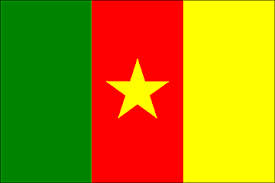
Flag of Cameroon
Flag of Cameroon

Today happens to be the Cameroonian National Youth Day.  I have been thinking about the true meaning of a youth day.  For as long as I can remember, it has always been a speech from the President, and marches/parades from children across the nation.  But is that really what the National Youth Day is all about?  Well, for starters, I must admit that growing up, I was always really proud of marching on that day.  It was as if somehow, I suddenly mattered to the country… as if, from my child’s world, I could somehow influence changes in my country: bring clean water, stop the electricity cuts, build bridges, make better roads, build airports, etc.  It was as if, by marching, I had a say in the direction of my country, I was important; I mattered!  11 February was not just a day off to watch the parade on TV, it was a special day, a day dedicated to me, to my needs as a youth, to my well-being, to my inner desires, and to my potentials.

Youths during the parade celebrating Cameroon's National Youth Day
Youths during the parade celebrating Cameroon’s National Youth Day

As a teenager, the thought started to thaw a little bit, was 11 February only about the President’s speech?  was it just a time to cajole me as a youngster into thinking that I was important? that there was light at the end of the tunnel? that I was the future of the country, when around me, adults were feeling like the future had been beaten out of them? How was I supposed to make changes, when looking at big brothers ahead, I could only see unemployment looming in the horizon?  How was I supposed to concentrate into doing well in school or achieving all these great things I was asked to, when the future looked so grim?  What was the future going to look like with me in the picture?

Today, I see that it was actually necessary to acquire all this education, to read, and to focus, because in reality, even if the president’s speeches were empty words… I have the obligation, no the duty, to think of my elders: Ruben Um Nyobe, Felix Moumié, Abel KinguéOsendé Afana (who was Cameroon’s first PhD in economics), Ernest Ouandié, and countless others who sacrificed themselves so that I could be better.  Yes… it sounds so easy, but to think about it should bring fire, no, rage into our hearts.  Just thinking about all the great minds we have, all this great potentials, talented musicians who influence the world (like Ekambi Brillant who produced Angélique Kidjo who is now a world star), footballers, writers (Mongo Beti), comedians, doctors, scientists, journalists (Pius Njawe), who live and die like paupers, should give extra, ten times, 100 times more fire into our hearts, and really make us realize that we are the indeed the future of our country, and nobody else will build it for us, not even 80 years-old ministers.  I live you here with K’naan hymn to the youth which was sung during the 2010 FIFA World Cup: “Out of the darkness, I came the farthest, … Learn from these streets, it can be bleak.  Accept no defeat, surrender, retreat.  So we struggling, fighting to eat, And we wondering when we’ll be free ... we patiently wait for that fateful day… it is not far away… when I get older, I will be stronger, they’ll call me freedom just like a waving flag“.

Black Presence at the Sochi 2014 Winter Olympics

Sochi 2014
Sochi 2014
Flag of Togo
Flag of Togo

Yes, I know… you are probably going to say what? Africans? Blacks at the Winter Olympics? Given that most of us, Africans, grew up without any snow, how could we possibly compete at the Winter olympics?  Well, I wanted to have you give a shout out to some of our sisters from Togo at Sochi 2014 : Alessia Afi Dipol competing in alpine skiiing (born and raised in Italy, check out Alessia’s website to learn more), and Mathilde Amivi Petit Jean competing in cross country skiing (she represented France at the Junior level, before switching to compete for Togo in 2013).  Mathilde said “If I was told I would one day compete at the Olympic Games, I would never have believed it would be in the colours of Togo.” Representing another African country is Luke Steyn from Zimbabwe in Alpine skiing.  Sadly, this year, there will be no snow leopard from Ghana: Kwame Nkrumah-Acheampong to cheer us.

Flag of Zimbabwe
Flag of Zimbabwe

Other athletes of African ancestry from the Carribbeans to watch will be Bermuda  Tucker Murphy in cross-country skiing, and Jamaica‘s Wayne Blackwood, Marvin Dixon, and Winston Watts in Bobsleigh.

Shani Davis
Shani Davis

Now, the big one to look out for will be American super star (or at least mine) Shani Davis who wowed us in Turin 2006, and Vancouver 2010.  I have been waiting for him for the past 4 years, and really look forward to seeing him speed skate to gold in Sochi making him the first male speed skater to win gold at three (3) consecutive winter olympics.

The American women’s bobsleigh team features six athletes and five of them are African-American.  For the first time in women’s bobsled history, the teams will feature black women in the front, piloting. Watch out for Elana Meyers, Jazmine Fenlator, Aja Evans, Lauryn Williams with the biggest olympic pedigree of the 5, and of course the ever famous Lolo Jones.

Robin Szolkowy & Aliona Savchenko

Another athlete to watch out for will be Robin Szolkowy of Germany, whose father is from Tanzania and mother from Germany.  Szolkowy is a German pair skater, who skated with partner Aliona Savchenko to win the Bronze medal at the Vancouver Olympics in 2010.  Canadian Bobsleigh Lascelles Brown will also be present this year.  Sister Nkeiruka Ezekh, is a Russian Federation curling athlete which has participated at all olympics since Salt Lake 2002Just raise your hat to all these brothers and sisters proudly representing the continent, and other countries.  There are probably more athletes of African ancestry at Sochi 2014, and if you find any… just share with me as well.

Proverbe Bayombe sur la Tentation / Bayombe Proverb on Temptation

Safoutier
Un safoutier / A safou tree

Le fruit de safou qui depasse le mur de la parcelle du voisin vous séduit (Proverbe Bayombe – Zambia).

The Safou fruit which exceeds the neighbor’s plot seduces you (Bayombe proverb – Zambia).

The Timkat Festival or the Ethiopian Epiphany

Young girl attending the Timkat Festival (Carlos de Souza, AFP)
Timkat festival
Timkat festival

Today, I would like to talk about the Timkat Festival, which is an Ethiopian celebration of Epiphany.  It is usually celebrated on 19 January or on 20 January on leap years (which is the 10th day of the Terr – Ethiopian calendar).  This festival celebrates the baptism of Jesus Christ on the Jordan river by John the Baptist.  It is particularly praised for its reenactment of the baptism.  Pilgrims come from around the country to celebrate the Epiphany, which lasts three (3) days.  During the ceremonies of Timkat, the Tabot, a model of the Ark of the Covenant, is reverently wrapped in rich cloth and borne in procession on the head of the most senior priest to a place near the river, where a special tent will be erected for it.  The Tabot represents the manifestation of Jesus as the Messiah when he came to the Jordan river for baptism; this holy relic is also said to hold the ten commandments as handed down to Moses by God on Mount Sinai.  The Divine Liturgy is celebrated near a stream or pool early in the morning (around 2 a.m.).  Then the nearby body of water is blessed towards dawn and sprinkled on the participants, some of whom enter the water and immerse themselves, symbolically renewing their baptismal vows.  It is a feast of celebration, and processional crosses of varying size and elaboration as well as various Ethiopian artifacts can be seen on the occasion.  Participants wear the traditional shamma, which is a thin, white cotton wrap worn like a toga and as headdress.  The best place to attend the event is in Lalibela, Gondar, or Addis Ababa.  The actual ark of the Covenant is said to be held in a place in northern Ethiopia, guarded by priests who have sworn never to leave the chapel grounds.

Here are photojournals from The Guardian, the Huffington Post, and the BBC on the Timkat Festival; my favorite one is from the Guardian.  Enjoy!!!

Proverbe du Burundi sur le Choix d’une Epouse / Burundi Proverb on the Choice of a Wife

African princess
African princess

La femme que Imana (Dieu) t’a destinée vaut mieux que celle choisie par l’oeil (Proverbe du Burundi).

The wife Imana (God) has chosen for you is better than the one chosen by the eye (Proverb from Burundi).