Treaty of Wuchale: The Treaty which led to European Colonialism’s Defeat in Africa

Battle_of_adwa2
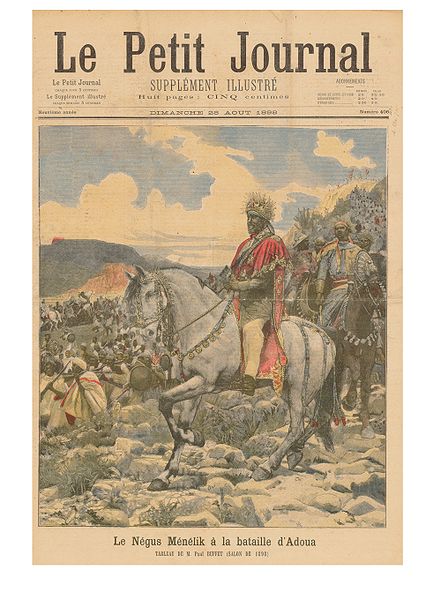
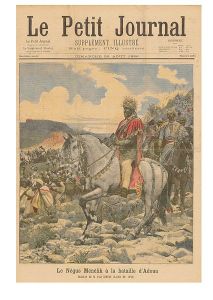
Edition of the Petit Journal of August 1896 titled: “Negus Menelik II at the Battle of Adwa”

In Africa, Ethiopia is the only country which was never colonized by a European power. This was the result of the famous Battle of Adwa on March 1, 1896, which marked the Ethiopian victory against Italian colonialism. The Battle of Adwa against Italy arose from the deceitful 1889 Treaty of Wuchale between the Ethiopian Empire and Italy, a treaty whose article 17 had two different meanings in Amharic and Italian versions: The Amharic version recognized the sovereignty of Ethiopia and its relationship with Italy as just a diplomatic partnership, while the Italian version made Ethiopia Italy’s protectorate The moment that discrepancy/trickery was uncovered, Empress Taytu Betul was the first to agitate Emperor Menelik II and other men to stand up for liberty, and dignity against Italian aggression. I am publishing here the Treaty of Wuchale. Special thanks to the Horn Affairs website for publishing the English version in its entirety. Some claim that Article 3 actually paved the way for Italians to claim Ethiopian lands (Eritrea). Well, here is the document of one of those treacherous treaties signed or rather forced upon Africans by European powers. Thank goodness for Taytu Betul, Menelik II, and their team of loyal and intelligent ministers and interpreters. I have attached the pdf version too.

===============

Treaty of friendship and trade between the kingdom of Italy and the Empire of Ethiopia (Treaty of Wuchale)
ethiopia
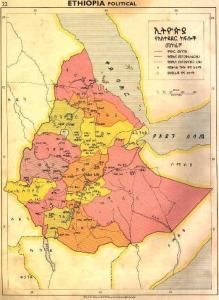
Map of Ethiopia before 1911

His Majesty King Umberto I of Italy and Menelik His Majesty The King of Kings of Ethiopia, in order to make meaningful and lasting peace between the two Kingdoms of Italy and Ethiopia have agreed to conclude a treaty of friendship and commerce .

And His Majesty the King of Italy having delegated as his representative, Count Pietro Antonelli, Commander of the Crown of Italy, Knight SS. Maurice and Lazarus, his extraordinary posted by His Majesty the King Menelik, whose full powers were found in good and due form, and His Majesty the King Menelik concluded in his name as King of Kings of Ethiopia, agreed and concludes the following Articles:

Article 1. There will be perpetual peace and friendship between His Majesty the King of Italy and His Majesty the King of Kings of Ethiopia and between their respective heirs, successors, servants and protected populations.

Article 2. Each Contracting Party shall be represented by a diplomatic agent accredited to I’altra and may appoint consuls, agents and consular officers in the other.
Such officials shall enjoy all the privileges and immunities according to the customs of the European governments.
Map of Eritrea
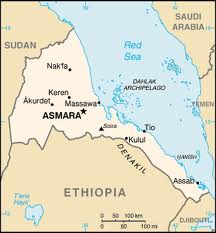
Map of Eritrea

Article 3. To remove any ambiguity about the limits of the territories over which the two Contracting Parties shall exercise sovereign rights, a special commission composed of two delegates and two Ethiopians will draw on Italian soil with special signals a permanent boundary line whose strongholds are established as below:
a) the line of the plateau will mark the Ethiopian-Italian border;
b) from the region Arafali Hala, Sagan and Asmara are villages in the Italian border;
c) Adi and Adi Nefas Joannes Bogos will be on the side of the Italian border;
d) by Adi Joannes a straight line extended from east to west will mark the border between Italy and Ethiopia.

Article 4. The monastery of Debra Bizen with all their possessions will remain the property of the Ethiopian government but will never use it for military purposes.

Article 5. The caravans from or to Massawa to Ethiopian territory pay on one single law of the customs entry of 8 per cent on the value of the goods.
Menelik_II_ethiopia
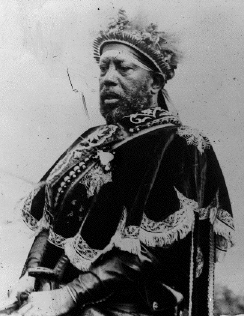
Emperor Menelik II, of Ethiopia

Article 6. The trade of arms and ammunition from or through Massawa to Ethiopia will be free for the only King of Kings of Ethiopia.
Whenever they want to get the passage of such kinds will make regular application to the Italian authorities, bearing the royal seal.
The wagons with load of weapons and ammunition will travel under the protection and cover of Italian soldiers until alconfine Ethiopia.

Article 7. The subjects of each of the two Contracting Parties will be free to enter, travel, go out with their merchandise and effects in the other country and will enjoy greater protection of the Government and its employees.
And, therefore, strictly forbidden to people on both sides armed contractors to meet many or few and pass their borders in order to impose itself on people and groped by force to provide food and livestock.

Article 8. The Italians in Ethiopia and Ethiopians in Italy or Italian possessions can buy or sell, take or lease and in any other manner dispose of their property no less than the natives.

Article 9. And fully guaranteed in both states the option for other subjects to practice their religion.

Article 10. Any disputes or quarrels between the Italians in Ethiopia will be defined by the Italian in Massawa or his delegate.
The fights between Italians and Ethiopians will be defined by the Italian in Massawa or his delegate and a delegate of the Ethiopian.
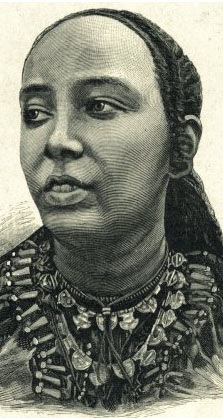
Taytu_Betul5
Empress Taytu Betul of Ethiopia

Article 11. Dying in an Italian in Ethiopia or an Ethiopian in Italian territory, the local authorities were carefully kept all his property and held at the disposal of government to which the deceased belonged.

Article 12. In any event, circumstance or for any Italians accused of a crime will be judged by the Italian.
That is why the Ethiopian authorities shall immediately deliver to the  Italians in Massawa accused of having committed a crime.
They also accused the Ethiopians of crime committed on Italian soil will be judged by the Ethiopian.

Article 13. His Majesty the King of Italy and His Majesty the King of Kings of Ethiopia is obliged to deliver criminals who may have become refugees, to escape punishment by the rulers of one on the other domains.

Article 14. The slave trade was against the principles of the Christian religion, His Majesty the King of Kings of Ethiopia is committed to prevent it with all his power, so that no caravan of slaves can cross its member.

Article 15. This Treaty shall be valid throughout the Ethiopian Empire.

Article 16. While in the present Treaty, after five years from the date of signature, one of two High Contracting Parties may wish to introduce some modifications to do so, but he must prevent the other a year earlier, while remaining firm and every single concession on territory.
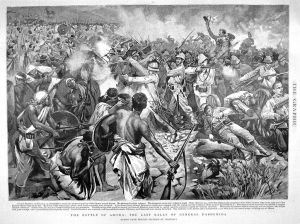
Battle_of_adwa6
The Battle of Adwa, 1896

Article 17. His Majesty the King of Kings of Ethiopia can [1] use the Government of His Majesty the King of Italy for all treatments that did business with other powers or governments.

Article 18. If His Majesty the King of Kings of Ethiopia intends to grant special privileges to nationals of third state to establish businesses and industries in Ethiopia, will always be given, under equal conditions, preference to the Italians.

Article 19. This treaty being drafted in Italian and Amharic and the two versions agree with each other perfectly, both texts shall be deemed official, and will in every respect equal faith.

Article 20. This Treaty shall be ratified.

In witness whereof, Count Pietro Antonelli on behalf of His Majesty the King of Italy, His Majesty the King of King Menelik of Ethiopia, in his own name, signed and affixed their seal to this Treaty, at the camp Uccialli of 25 miazia 1881 corresponding to May 2, 1889.

Imperial Seal of Ethiopia
For His Majesty the King of Italy Pietro Antonelli

Ratification of MS, Monza, September 29, 1889

****************

[1] Article 17 has an obligatory sense in the Italian language version of the Treaty.

St Mary of Zion: Africa’s Oldest Church

africa-oldest-churst-st-mary-of-zion
St Mary of Zion church (sacred-destinations.com)

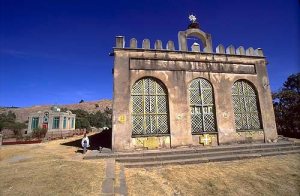
The Church of St Mary of Zion with the Treasury containing the Ark of the Covenant in the background (left) is the oldest church (Christian church) on the African continent. First built in the 4th century AD in Aksum, Ethiopia. It is the most important church in Ethiopia.

In the 4th century AD, the Axumite prince Ezana, the first Christian ruler of the Kingdom of Axum (Present-day Eritrea and Ethiopia), was instructed in Christianity by two Syrian monks shipwrecked on the Red Sea coast. The prince promoted Christianity when he became King Ezana, and he is regarded as a saint in both the Ethiopian Orthodox and Catholic churches. The original church is believed to have been built during the reign of Ezana, and has been rebuilt several times since then, including during the reign of Fasilides in the 17th century. St. Mary of Zion was the traditional place where Ethiopian Emperors came to be crowned. And indeed, if an Emperor was not crowned at Axum, or did not at least have his coronation ratified by a special service at St. Mary of Zion, he could not be referred to by the title of “Atse” or Emperor of Ethiopia.

African Hair Styling: The Mathematics of Cornrows

Nok9a
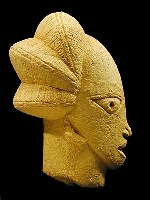
Nok sculpture of a woman

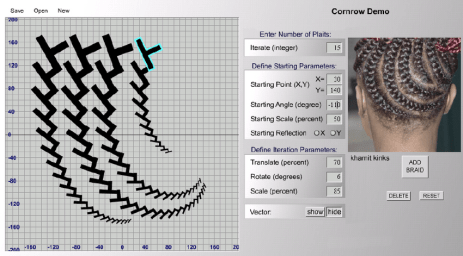
Today, we will be talking about hair, African hair, and hairstyles. One of the very common hairstyles used for Afro hair is cornrows. These were worn by women and men of centuries past as seen on Nok sculptures dating back 3rd century AD, Mende masks, Benin Kingdom masks, and are still worn today with great pride. Kings and queens adorned those like crowns. The great Emperor Tewodros II of Ethiopia wore them proudly! Imagine my surprise when I found a website where they had computed the way cornrows are made. Cornrows use about 4 geometrical concepts: translation, rotation, reflection and dilation. The styles are numerous ranging from simple linear compositions to complex curves and spirals. Check out this website and learn about the mathematics behind cornrows! Enjoy!

screenshot-of-cornrow-curves-simulation-software
Screenshot from CSDT.rpi.edu

Proverbe sur un règne paisible / Proverb on a Peaceful Reign

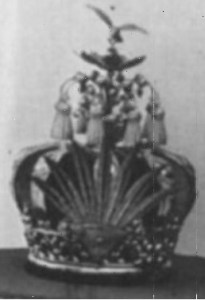
Royal Crown of Madagascar as worn by King Radama II, Ranavalona I's successor (ca 1862)
Royal Crown of Madagascar as worn by King Radama II, Ranavalona I’s successor (ca 1862)

Si le chef a de bons conseillers, il règne en paix (Proverbe Fante – Ghana).

If a king has good advisors, he reigns in peace (Fante proverb – Ghana).

Thomas Sankara Speech on Debt and Unity

Thomas Sankara
Thomas Sankara a Ouagadougou

This past weekend saw the anniversary of Thomas Sankara’s assassination. In memory of this great man who graced our continent. I decided to repost his speech on African debt, which after almost 30 years is still very actual. His speech in one of unity. Imagine if we had been united, would there have been a Libya 2011, or Cote d’Ivoire 2011, or all the subsequent others? Unity does make us strong.

===========

Thomas Isidore Sankara, our African hero, was killed for his convictions, love of his people and his country. This great hero gave one of the greatest speech I have heard about the problem of the  African debt. Such an eloquence! Such Truth my Lord! Such humor! I do agree with him that the African debt cannot be entirely paid… and that the African nations who do not show up at the UA summit should not have favors extended to them the same as those who attend the meetings. Moreover, he talks about living and breathing African: his delegation and himself were entirely dressed by Burkinabés tailors with cotton from Burkina Faso. Please watch, listen, and celebrate one of the greatest man the African continent has ever seen! Don’t forget to watch part 2 as well.

Yaa Asantewaa or the Ashanti Cry for Freedom

asantewaa
Queen Yaa Asantewaa in Batakarikese (Ceremonial war dress)

On 17 October 1921, the great Ashanti warrior queen Yaa Asantewaa passed away. Her story is that of a queen who rallied masses to fight for their independence; hers is a story of courage, determination, and stamina. Yaa Asantewaa led a rebellion against the British at a time when the men surrounding her were low in spirit, afraid, and discouraged. She arose them to fight for their independence, and for their nation.  Her fight against British colonialists is a story woven throughout the history of Ghana.

asante_map-1800s
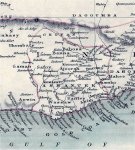
Ashanti Kingdom ca 1800s

Yaa Asantewaa was born in 1840 in the Gold Coast in the Kingdom of Ashanti. She was a successful farmer, mother, intellectual, politician, human right activist, Queen and leader. Yaa Asantewaa became famous for leading the Ashanti rebellion against British colonialism to defend the Golden Stool, symbol and soul of the Ashanti nation (19001901). She promoted women emancipation as well as gender equality. She was the sister of the Ruler of Ejisu (Ejisuhene) Nana Akwasi Afrane Okpase, an ethnic group in present-day Ghana.

ashanti_prempeh-124-palaver-and-submission_1896
January 1896: British formally annexing the Ashanti Kingdom – depiction of governor’s discussions with Prempeh I

During her brother’s reign, Yaa Asantewaa saw the Asante Confederacy go through a series of events that threatened its future, including civil war from 1883 to 1888. When her brother died in 1894, Yaa Asantewaa used her right as Queen Mother to nominate her own grandson as Ejisuhene. When the British exiled him in the Seychelles in 1896, along with the King of Asante Prempeh I and other members of the Asante government, Yaa Asantewaa became regent of the Ejisu-Juaben District. As seen earlier, this was the European’s way of dealing with African kings, as in Benin Kingdom. Sending a king to exile was usually followed by the looting of their land. This has led to the discovery of lots of Africa’s valued arts and crafts in Europe, which to this date have not been returned to their rightful owners.

ashanteewarcaptain_1834
Ashanti captain 1819

After the deportation of Prempeh I, the British governor-general of the Gold Coast, Frederick Hodgson, demanded the Golden Stool. This request led to a secret meeting of the remaining members of the Asante government at Kumasi, to discuss how to secure the return of their king. There was a disagreement among those present on how to go about this. Yaa Asantewaa the Queen Mother of Ejisu, was at the meeting. The chiefs were discussing how they should make war on the white men and force them to bring back the Asantehene. She saw that some of the chiefs were afraid. Some said that there should be no war. They should rather go to beg the Governor to bring back the Asantehene King(Nana) Prempeh.

Disgusted by the men’s behavior, Yaa Asantewaa stood up and addressed the members of the council with these now-famous words:

Now, I see that some of you fear to go forward to fight for our king. If it was in the brave days of Osei Tutu, Okomfo Anokye, and Opoku Ware I, chiefs would not sit down to see their king to be taken away without firing a shot. No European could have dared speak to chiefs of Asante in the way the governor spoke to you this morning. Is it true that the bravery of Asante is no more? I cannot believe it. It cannot be! I must say this: if you, the men of Asante, will not go forward, then we will. We, the women, will. I shall call upon my fellow women. We will fight! We will fight till the last of us falls in the battlefields.

ashanti_golden_stool_31_january_1935
The Golden Stool in 1935

With this, she took on leadership of the Asante Uprising of 1900, gaining the support of some of the other Asante nobility. She led the famous war knows as the War of the Golden Stool against the British. After several months, the British Gold Coast governor eventually sent a force of 1,400 to quell the rebellion. During the course of this, Queen Yaa Asantewaa and 15 of her closest advisers were captured, and they too were sent into exile to the Seychelles. She died there on 17th of October 1921. Three years later, on 27 December 1924, Prempeh I and the other remaining members of the exiled Asante court were allowed to return to Asante Kingdom. Prempeh I made sure that the remains of Yaa Asantewaa and the other exiled Asantes were returned home for a proper royal burial. She was buried with all the honors due a queen like her.

Yaa Asantewa’s War was the last major war led by an African woman. She embodied courage and strength when faced with the injustice of the European invader. She is honored with a school named after her, ‘Yaa Asantewaa Girl’s Secondary School’ In Kumasi in 1960. Many young girls in Ghana are proudly named after her.

ashanti-king-palace-being-burned-and-ransacked-by-british-in-1874-after-3rd-angloashanti-war
Ashanti King Palace being ransacked and burnt by the British in 1874 after the 3rd Anglo-Ashanti war

She is immortalized in the song:

Koo koo hin koo

Yaa Asantewaa ee!

Obaa basia

Ogyina apremo ano ee!

Waye be egyae

Na Wabo mmode

(“Yaa Asantewaa

The woman who fights before cannons

You have accomplished great things

You have done well”)

Proverbe Akan sur l’Absence de Choix / Akan Proverb on the Lack of Choices

Chien1
Dog

Ce n’est pas que le chien préfère les os à la viande, mais la viande on ne la lui donne pas (Proverbe Akan – Ghana, Côte d’Ivoire). – Faites de nécessité bon coeur; faites contre mauvaise fortune bon coeur.

bonesIt is not that the dog prefers bones to meat, it is just that meat is not given to it (Akan proverb – Ghana, Côte d’Ivoire). – Make do with what you have.
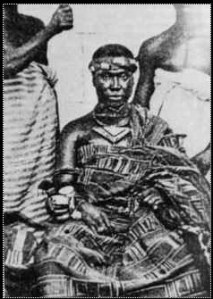
Prempeh I: The Last Asantehene Before British Colonization

prempeh_i
Asantehene Prempeh I

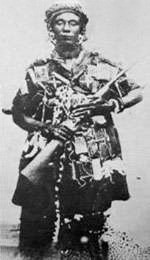
Prempeh I was the Asantehene (King) of the Kingdom of Ashanti. He was born as Prince Kwaku Dua III Asamu of the Kingdom of Ashanti, and he took the name of Prempeh I upon ascension on the throne at the young age of 16. His reign was a troubled one as it fell during the time of British invasion/colonization of the Gold Coast. In essence, he was the last king of the Kingdom of Ashanti before the Gold Coast fell under British protectorate.

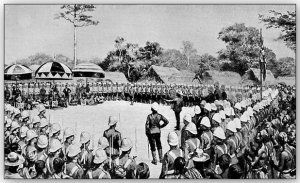
Europeans were already installed in the region and had been trading on the coast since the 15th century for gold and slaves (as we saw with the slave castles of Elmina and Cape Coast). By the beginning of the 19th century, the British government decided to formalize its control of the Gold Coast. They dispatched a force to conquer the Ashanti. They only won the war against the disciplined Ashanti because of the superiority of their artillery and rifles over the traditional muskets of the Ashanti. Once in Kumasi, the capital, the British hastily looted the royal palace and burned the town to the ground. The defeated Ashanti had already released their prisoners and subsequently were forced into agreeing to a treaty to give up claims on coastal territories, to cease the practice of human sacrifice and to pay a huge indemnity of 50,000 ounces of gold. This was known as the Wolseley’s expedition. The Gold Coast was then declared a Crown Colony.

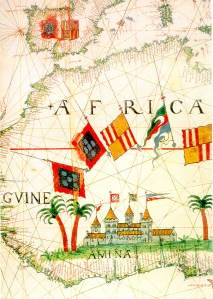
Elmina 16th century
16th Century map of West Africa with Fort Elmina

Having lost their invincibility in war, the Ashantis were now faced with rebelling neighboring tribes, and the Ashanti confederation was descending into civil war. The Ashanti had become so weak that, in 1888, they asked the British governor to send an arbitrator from the coast to decide who, amongst rival claimants, should be the next Asantehene. The governor’s delegate decided in favor of the 16 year-old Prempeh. But Prempeh I turned out to be no puppet and refused to agree that Ashanti should become a British Protectorate.

Asantehene Prempeh I began an active campaign of the Ashanti sovereignty. The British offered to take the Kingdom of Ashanti under their protection, but Asantehene Prempeh I of the Kingdom of Ashanti refused each request. Asantehene Prempeh I stated, “My Kingdom of Ashanti will never commit itself to any such policy of protection; Ashanti people and the Kingdom of Ashanti must remain an independent sovereign state as of old, and at the same time be friends with all white men“.

prempehi_1
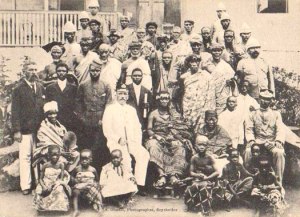
Prempeh I and his suite in the Seychelles (taken by F.A.L. Ramseyer) ca 1900-1903

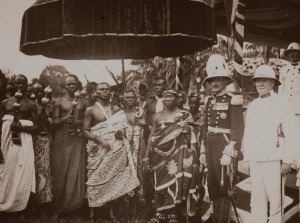
Still wary of the French in Ivory Coast and alarmed by a resurgent Ashanti, the British now (1894) “remembered” that the Wolseley indemnity had never been paid. Prempeh I tried to appeal directly to a fellow sovereign, Queen Victoria, and sent an embassy to London to plead his cause. But the British government refused to give his delegates an audience for almost a year and mounted another elaborate British army expedition to Kumasi. Prempeh I refused to allow the Ashanti to fight, partly because of the memory of the Wolseley expedition and partly because of the British support for him during the succession dispute. Instead, he diplomatically greeted the troops as his guests when they marched into Kumasi, in January of 1896. The British governor arrived and coldly received Prempeh I and his chiefs. Prempeh I desperately tried to placate the invaders and to the horror of his people, he demeaned himself by prostrating himself before the governor in a sign of submission. The governor’s only response was to demand the gold promised to Wolseley. Prempeh could not provide such a huge indemnity at once but offered to pay in instalments starting with 680 ounces as a down payment. This was refused and then, to the astonishment of the Ashantis, Prempeh and some of his main chiefs were suddenly arrested.

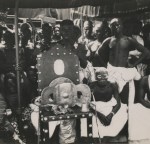
Prempeh I’s place was looted. His throne is still displayed in the Royal Signals Museum at Blandford in England. The abducted Asantehene, Prempeh I, some of his relatives and advisors were first taken to Elmina for about a year, then to Freetown in Sierra Leone until 1900 when, upon the outbreak of Yaa Asantewaa (story for another day), the British feared proximity and sent the royal party to the Seychelles, in the Indian Ocean.

Once there, Prempeh I spent time in his villa on Mahe, the largest of the Seychelles’ island in the Indian Ocean. Prempeh I’s villa, and 16 new wooden houses with sandy floors and roofed with corrugated iron-sheets were built in Seychelles and allocated to the various Asante’s nobles. The place was called the Ashanti Camp. Prempeh made an effort to educate himself in English and made sure that the children received education.

prempehi_back-in-kumasi
Prempeh I reinstated in Kumasi in 1926 (Source: thekingdomofAsante.com)

On 27 December 1924, Prempeh I and the other remaining members of the exiled Ashanti court were allowed to return to Ashanti Kingdom. Upon his return, and to appease the Ashanti people, the British created for Prempeh I the official position of Kumasehene in 1926, position which he held until his death in Kumasi, Ghana, on 12 May 1931. He was succeeded by his heir apparent Prempeh II of the Kingdom of Ashanti.

Prempeh I was definitely a king caught between trying to hold the sovereignty of his people, and keeping peace, while working with the British invader peacefully. Was his approach the correct one when faced with a greedy, heartless, and treacherous opponent? For more information, please check out Kreol magazine, The Kingdom of Asante, asantekingdom.org websites which are full of great articles.

Deportation of African Heads of States

prempeh_i
Prempeh I of Ashanti Kingdom

History repeats itself! Over 100 years ago, African Heads of states, Emperors and Kings, were deported by European colonizers for defending their people, lives, independence, land, livelihood, and themselves. Some were killed, and others were exiled. In those days, they were deported to other territories in Africa, far from their lands. Today, 100 years later, they are being deported to the Hague or to some other African lands again. Here are a few, and I am sure you know others.

Prempeh I, Asantehene of Ashanti Kingdom deported to Seychelles in 1896 by British forces. His throne is still displayed at the Royal Signals Museum in Blandford, England. He was allowed to return after 24 years in exile.

asantewaa
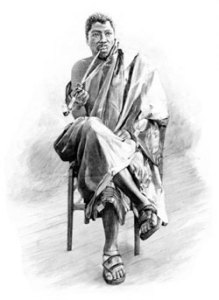
Yaa Asantewaa of Ashanti Kingdom

Queen Yaa Asantewa of the Ashanti Kingdom was deported to Seychelles in 1902 by the British. She arose her people to fight against the British. She died in exile.

Samori Toure, Founder and leader of the Wassoulou Empire, was deported to Gabon (on an island of the Oogoue) in 1898 by the French. He died in exile.

Samori
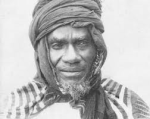
Samori Touré

Behanzin, King of Dahomey,was deported to Martinique and then later Algeria by the French. He died in exile in Algeria in 1906.

The Oba of Benin Kingdom deported to Calabar by the British in 1897. He died in exile.

Gungunyane, King of Gaza in Mozambique, first sent to Lisbon, and then later to the island of Terceira on the Portuguese Azores. He died in exile in 1906.

Behanzin, the Last King of independent Dahomey

Cheikh Amadou Bamba, of Senegal, deported to Gabon in 1895 by the French. He was brought back 7 years later in 1902, but deported to Mauritania in 1903 for 4 years, before being brought back to Senegal. He died in Senegal.

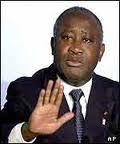
Nowadays, Laurent Gbagbo, President of Côte d’Ivoire, deported to the Hague in the Netherlands 2011 by the French and the Ivorian Ouattara. He is still there.

Laurent Gbagbo
Laurent Gbagbo

Charles Ble Goude, Youth Minister of Côte d’Ivoire deported to the Hague in Netherlands in 2011 by the French, and the Ivoirian Ouattara. He is still there.

Moussa Dadis Camara, President of Guinea, shot and almost left for dead, deported to Burkina Faso(let’s call the cat by its name). …

And the list goes on… How long will it last? Can we not judge our people ourselves? Is this a choice by the people for the people? Are we really independent?

Proverbe Congolais sur l’Expérience / Congolese Proverb on Experience

PirogueVous ne pouvez savoir si l’eau est froide que si vous la touchez (Proverbe Ntomba – République Démocratique du Congo).- L’expérience est la meilleure conseillère.

You cannot tell whether the water is cold unless you touch it (Ntomba Proverb – Democratic Republic of Congo).- Experience is the best advisor.