Ernesto Che Guevara’s Letter to Fidel Castro about Congo

Guevara_1
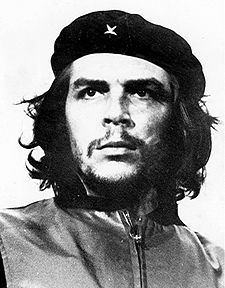
Guerrillero Heroico
Picture taken by Alberto Korda on March 5, 1960 at the La Coubre memorial service

Here are excerpts from the letter of Che Guevara to Fidel Castro about his time and recommendations for Congo. For the full letter and more information, visit The Guardian, and read the book The African Dream: The Diaries of the Revolutionary War in the Congo by Ernesto Guevara and Aleida Guevara.

Che Guevara’s words, “we can’t liberate by ourselves a country that does not want to fight; you’ve got to create a fighting spirit and look for soldiers with the torch of Diogenes and the patience of Job, ” still ring true today. We’ve got to create a fighting spirit. My question to you readers is, HOW? How do you instill in people a ‘fighting spirit’?

======

Congo, 5/10/65
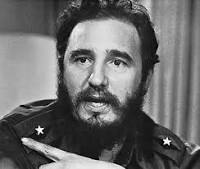
fidel-castro_4
Fidel Castro

Dear Fidel

I received your letter, which has aroused contradictory feelings in me – for in the name of proletarian internationalism, we are committing mistakes that may prove very costly. I am also personally worried that, either because I have failed to write with sufficient seriousness or because you do not fully understand me, I may be thought to be suffering from the terrible disease of groundless pessimism.

When your Greek gift [Emilio Aragonés, a member of the Cuban central committee] arrived here, he told me that one of my letters had given the impression of a condemned gladiator, and the [Cuban health] minister [José Ramón Machado Ventura], in passing on your optimistic message, confirmed the opinion that you were forming.
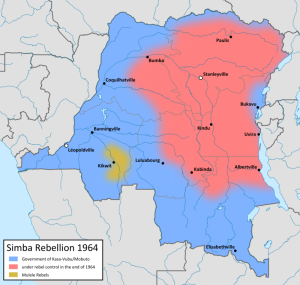
DRC_1964
Map of the Congo in 1964. The territory affected by the Simba rebellion is in red and the Kwilu rebellion in yellow. (Wikipedia)

You will be able to speak at length with the bearer of this letter who will tell you his firsthand impressions after visiting much of the front; for this reason I will dispense with anecdotes. I will just say to you that, according to people close to me here, I have lost my reputation for objectivity by maintaining a groundless optimism in the face of the actual situation. I can assure you that were it not for me, this fine dream would have collapsed with catastrophe all around.

In my previous letters, I asked to be sent not many people but cadres; there is no real lack of arms here (except for special weapons) – indeed there are too many armed men; what is lacking are soldiers. I especially warned that no more money should be given out unless it was with a dropper and after many requests. None of what I said has been heeded, and fantastic plans have been made which threaten to discredit us internationally and may land me in a very difficult position.

I shall now explain to you.

Soumialot [Gaston Soumialot, president of the Supreme Council of the Revolution] and his comrades have been leading you all right up the garden path. It would be tedious to list the huge number of lies they have spun.
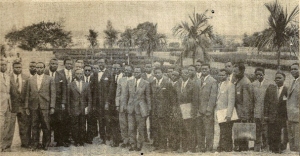
DRC_First_Congolese_government
Mulele (third from the right) with the Lumumba Government, 1960

There are two zones where something of an organised revolution exists – the one where we ourselves are, and part of Kasai province (the great unknown quantity) where Mulele [Pierre Mulele, former minister under Patrice Lumumba and the first leader to take up arms] is based.

In the rest of the country there are bands living in the forest, not connected to one another; they lost everything without a fight, as they lost Stanleyville without a fight. More serious than this, however, is the way in which the groups in this area (the only one with contacts to the outside) relate to one another.

The dissensions between  Kabila [then second vice-president of the Supreme Council of the Revolution and head of the eastern front where Guevara was] and Soumialot are becoming more serious all the time, and are used as a pretext to keep handing towns over without a fight. I know Kabila well enough not to have any illusions about him. I cannot say the same about Soumialot, but I have some indications such as the string of lies he has been feeding you, the fact that he does not deign to come to these godforsaken parts, his frequent bouts of drunkenness in Dar es Salaam, where he lives in the best hotels, and the kind of people he has as allies here against the other group.
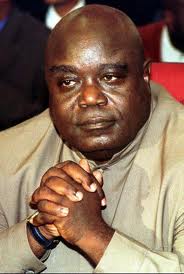
Kabila_pere
Laurent-Desire Kabila

Recently a group from the Tshombist [pro-government] army landed, in the Baraka area (where a major-general loyal to Soumialot has no fewer than a thousand armed men) and captured this strategically important place almost without a fight. Now they are arguing about who was to blame – those who did not put up a fight, or those at the lake who did not send enough ammunition. The fact is that they shamelessly ran away, ditching in the open a 75mm recoilless gun and two 82 mortars; all the men assigned to these weapons have disappeared, and now they are asking me for Cubans to get them back from wherever they are (no one quite knows where) and to use them in battle.

Nor are they doing anything to defend Fizi, 36km from here; they don’t want to dig trenches on the only access road through the mountains. This will give you a faint idea of the situation. As for the need to choose men well rather than send me large numbers, you and the commissar assure me that the men here are good; I’m sure most of them are – otherwise they’d have quit long ago. But that’s not the point. You have to be really well tempered to put up with the things that happen here. It’s not good men but supermen that are needed…

And there are still my 200; believe me, they would do more harm than good at the present time – unless we decide once and for all to fight alone, in which case we’ll need a division and we’ll have to see how many the enemy put up against us. Maybe that’s a bit of an exaggeration; maybe a battalion would be enough to get back to the frontiers we had when we arrived here and to threaten Albertville.
Guevara_3
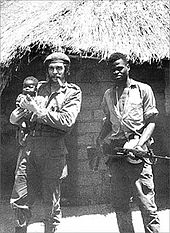
37-year-old Guevara, holding a Congolese baby and standing with a fellow Afro-Cuban soldier in the Congo Crisis, 1965

But numbers are not what matters; we can’t liberate by ourselves a country that does not want to fight; you’ve got to create a fighting spirit and look for soldiers with the torch of Diogenes and the patience of Job – a task that becomes more difficult, the more shits there are doing things along the way.

The business with the money is what hurts me most, after all the warnings I gave. At the height of my “spending spree” and only after they had kicked up a lot of fuss, I undertook to supply one front (the most important one) on condition that I would direct the struggle and form a special mixed column under my direct command, in accordance with the strategy that I outlined and communicated to you.

With a very heavy heart, I calculated that it would require $5,000 a month. Now I learn that a sum 20 times higher is given to people who pass through just once, so that they can live well in all the capitals of the African world, with no allowance for the fact that they receive free board and lodging and often their travel costs from the main progressive countries. Not a cent will reach a wretched front where the peasants suffer every misery you can imagine, including the rapaciousness of their own protectors; nor will anything get through to the poor devils stuck In Sudan. (Whisky and women are not on the list of expenses covered by friendly governments, and they cost a lot if you want quality.)
Guevara_4
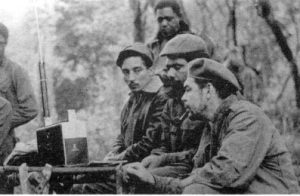
Listening to a Zenith Trans-Oceanicshortwave radio receiver are (seated from the left) Rogelio Oliva, José María Martínez Tamayo (known as “Mbili” in the Congo and “Ricardo” in Bolivia), and Guevara. Standing behind them is Roberto Sánchez (“Lawton” in Cuba and “Changa” in the Congo), 1965.

Finally, 50 doctors will give the liberated area of the Congo an enviable proportion of one per thousand inhabitants – a level surpassed only by the USSR, the United States and two or three of the most advanced countries in the world. But no allowance is made for the fact that here they are distributed according to political preference, without a trace of public health organisation. Instead of such gigantism, it would be better to send a contingent of revolutionary doctors and to increase it as I request, along with highly practical nurses of a similar kind.

As the attached map sums up the military situation, I shall limit myself to a few recommendations that I would ask you all to consider objectively: forget all the men in charge of phantom groups; train up to a hundred cadres (not necessarily all blacks)… As for weapons: the new bazooka, percussion caps with their own power supply, a few R-4s and nothing else for the moment; forget about rifles, which won’t solve anything unless they are electronic. Our mortars must be in Tanzania, and with those plus a new complement of men to operate them we would have more than enough for now. Forget about Burundi and tactfully discuss the question of the launches. (Don’t forget that Tanzania is an independent country and we’ve got to play it fair there, leaving aside the little problem I caused.)

Send the mechanics as soon as possible, as well as someone who can steer across the lake reasonably safely; that has been discussed and Tanzania has agreed. Leave me to handle the problem of the doctors, which I will do by giving some of them to Tanzania. Don’t make the mistake again of dishing out money like that; for they cling to me when they feel hard up and certainly won’t pay me any attention if the money is flowing freely. Trust my judgment a little and don’t go by appearances. Shake the representatives into giving truthful information, because they are not capable of figuring things out and present utopian pictures which have nothing to do with reality.

I have tried to be explicit and objective, synthetic and truthful. Do you believe me?

Warm greetings …

Ernesto Che Guevara’s Contribution to Africa’s Struggles for Independence

Guevara_1
Guerrillero Heroico
Picture taken by Alberto Korda on March 5, 1960 at the La Coubre memorial service

9 October marks the 50th anniversary of Ernesto Che Guevara ‘s assassination. As many in countries around the world celebrate the life of this great man who gave his life selflessly to liberate the masses from imperialism, a look at his impact in Africa is on the order.

Even though Che Guevara’s expedition in Congo (modern-day Democratic Republic of the Congo (DRC)) resulted in failure, what it showed was an example of the solidarity of ‘third-world’ countries against Western imperialism.

The Argentine-born guerilla “spent a while with us in the forest, but he found that our leaders lacked political maturity and he preferred to go,” Shibunda said of Che’s seven-month adventure with the Simba (“Lion” in Swahili) rebels in South Kivu province. Yet he was growing disillusioned, finding that Simba forces lacked revolutionary fervor. As a military mission, the Cuban adventure in eastern Congo was, as Che Guevara himself admitted in his diary, a failure. Their plan had not taken into account the fact that the level of political organization in the Congolese rebellion was extremely weak; that Guevara and his comrades knew almost nothing about the African society they were presuming to mould; or that the pro-Western regime had the help of powerful white mercenaries in the region.

Guevara_3
37-year-old Guevara, holding a Congolese baby and standing with a fellow Afro-Cuban soldier in the Congo Crisis, 1965

I was a simple soldier” in 1965, General Lwendema Dunia, now in his 80s,  says in a hut in South Kivu’s capital Bukavu, recalling how Che “taught us how to make a revolution. He gave us military training and taught us politics.” But “once we started to take from the people and trample on revolutionary ideals… they left,” he said.

By October 1965, Che wrote to Fidel Castro: “It’s not really weapons that are lacking here… Indeed, there are too many armed men and what is lacking are soldiers.”

When Che Guevara left, there was a great battle,” Shibunda adds.

Truth be told, Che’s work in Congo marked a decisive moment in Cuba’s great relationship with Africa. Although the Congo’s mission had been a failure, it marked the turning point for great Cuban victories in Africa, where Cuba helped Amilcar Cabral and Guinea Bissau achieve independence, Angola of Agostino Neto as well, and provided support to the anti-apartheid struggle in South Africa, and independence in Mozambique. So like they say, sometimes, in order to achieve greatness, you have to fall… so sad that Che Guevara never lived to reap the fruits of his hard work in Africa. 

Proverbe sur l’Attention / Proverb on Attentiveness

eggsSi vous portez un panier d’oeufs, ne dansez pas (Proverbe Ambede – Gabon).
If you carry a basket of eggs, do not dance (Ambede proverb – Gabon).

Achenyo Idachaba tells us how to turn a deadly plant into a thriving business

Lake Victoria1
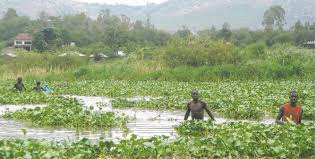
Fishermen wade through water hyacinth in Lake Victoria (Source: Lilian Ochieng, The East African)

Ever heard of the Water hyacinth (Jacinthe des eaux)? that plant that has been suffocating rivers around the globe? That plant can be seen as one drives on the Wouri River bridge in Douala, and in major cities in Africa as it proliferates in the local rivers. Often, one can see fishermen in boats trying to uproot the plant? Years ago, Lake Victoria (Africa’s largest body of fresh water) was luscious, today the water hyacinth has had negative effects on its ecosystem, not only depriving the lake of its oxygen thus reducing nutrients for fishes, blocking water ways, and breeding all sorts of new diseases. This plant is not native of Africa. Achenyo Idachaba has turned a major problem for the local fishermen and villages as their source of livelihood was being extinguished by this plant, into a source of revenue while getting rid of the plant and developing arts and crafts. Enjoy her TED talk.

Mugabe to Trump: “Blow Trumpet of Peace”

Last week at the UN general assembly, President Mugabe of Zimbabwe asked President Trump of the United States to “blow the trumpet of peace.” I liked this, because I believe every leader out there should be blowing the trumpet of peace, and as a matter of fact, everyone of us has the mission to blow the trumpet of peace in our homes, at work, in our cities, in our countries, to make the world a better place for all of us. Enjoy!

Proverbe Xhosa / Xhosa Proverb

MonkeyQue le singe qui quitte son arbre fasse attention (Proverbe Xhosa – Afrique du Sud). – Qui part à la chasse perd sa place.
May the monkey who leaves its tree be careful (Xhosa proverb – South Africa). – Move your feet, lose your seat.

Thomas Fuller: African Slave and Mathematician in the 1700s

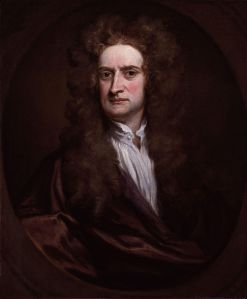
Newton_Isaac_Newton_by_Sir_Godfrey_Kneller,_1701
Sir Isaac Newton

Here is a quote from the obituary of an African man born somewhere between modern-day Liberia and Benin in 1710, and enslaved and shipped to become a slave in America: “Thus died Negro Tom, this self-taught arithmetician, this untutored Scholar! — Had his opportunities of improvement been equal to those of thousands of his fellow-men, neither the Royal Society of London, the Academy of Science at Paris, nor even Newton himself, need have been ashamed to acknowledge him a Brother in Science” [Columbian Centenial, December 29, 1790, No. 707, p.123, col.32, Boston, Massachusetts]. So who was this Negro Tom, a slave who was given an obituary in an American journal in the 1700s?

ArithmeticsThomas Fuller, also known as Negro Tom or the “Virginia Calculator”, can be called today a mental calculator or simply a human calculator. In today’s world when most people run to their phones or calculators to find answers, He solved problems faster than over 99% of men of his time, and in his head!

When Thomas Fuller was 70 years old, a Philadelphia Quaker and businessman, William Hartshorne, and three fellow Quakers traveled from Philadelphia to meet the slave known for his arithmetic feats. One of the visitors took notes and made calculations on paper, and the others fired questions at the gray-haired old slave.

First question: How many seconds are there in a year and a half? In about two minutes came Tom Fuller’s reply — 47,304,000.

Next question: How many seconds has a man lived who is 70 years, 17 days and 12 hours old? Fuller’s answer — 2,210,500,800 — came in a minute and a half. “Objection,” called the recorder, who was busily multiplying on paper. He challenged Fuller’s answer as being too large. But Fuller retorted promptly” ” ‘top, massa, you forget de leap years.” By adding the seconds of the leap years, the recorder finally acknowledged the correctness of Fuller’s result.

calcul1
Calcul

The final question was proposed to Fuller: Suppose a farmer has 6 sows and each sow has 6 female pigs the first year, and they all increase in the same proportion each year. At the end of the 8th year, how many sows will the farmer have? The question was stated in such a way that Fuller misinterpreted it. As soon as the statement was clarified, his lightning mind responded: 34,588,806. (Fuller misinterpreted the question because the term “proportion” was ambiguous.)

These questions were asked at a time when Thomas Fuller was 70 years old; just imagine how fast he must have been when he was younger? It is such a pain that such a great mind was imprisoned in slavery!

Nigeria_Yoruba
Yoruba man ca 1800s

His capacities were not a rarity in Africa. It is now known that Thomas Fuller must have already developed his calculation abilities in Africa. John Bardot’s 1732 account of people in Fida on the coast of Benin: “The Fidasians are so expert in keeping accounts, that they easily reckon as exact, and as quick by memory, as we can do with pen and ink, though the sum amount to never so many thousands: which very much facilities the trade the Europeans have with them.”

To learn more about Thomas Fuller, please check out the original article in the American Museum, Vol.V, 62, Phila., 1799., and the work of the Mathematicians of the African diaspora. Also check out this article in The Christian Science Monitor by Jane H. Pejsa, “A Wizard in any age.” I think the title should have been “a wizard in any age, and under any circumstances” because without slavery Tom Fuller would have been a genius and his name would have been on our lips the same way Newton’s has been for the past 300 years!

The Quest for a Fiancée

African princess
African princess

One day, two young men went looking for their future wife. They went towards the village and found a young girl. They were well received by her family who killed a chicken and offered it to them in a good meal.

While eating, one of them, thinking himself more clever, while the other was distracted, put his chicken bones in the other’s plate.

pouleFor desert, they were given peanuts (jinguba), the young man who thought himself more clever, did it again. After eating his peanuts, he would throw the peelings under the legs of his friend when he was distracted. Once the meal finished, the father of the young girl said:


My daughter will marry the one who ate and left the chicken bones and peanuts peelings. I do not want for in-law the one who has swallowed everything.

Thus, the young girl was given to the one who had been trapped by his friend.

Morale of the tale: Caution, do not try to trap your neighbor, for it could turn against you!

56724432
Sera de Leba in Huíla province, Angola (source: Panoramio.com)

This is an Olunyaneka tale from Lubango in the Huíla province of Angola. The original in Portuguese can be found on CONTAFRICA. The English translation is by Dr. Y., Afrolegends.com.

Proverbe sur l’experience acquise avec l’âge/ Proverb on Experience acquired through Age


Rain5
Pluie / Rain

Ce qui a été mouillé par la pluie, ne saurait plus l’être par la brume (proverb Ovimbundu – Angola). – Le vieillard peut faire seul ce dont le jeune est incapable.


Brume- fog
Brume / Fog

What has been wet by the rain, can no longer be made wet by the fog (Ovimbundu proverb – Angola). – The old man can do alone what the young one cannot.

Celebrating 1 Million Views on the African Heritage Blog!!!

20170920_1Million viewsI would like to thank all my readers, and all the subscribers who have seen us through this journey. I never thought I would get to see the African Heritage blog reach the 1 Million views! Thank you to all of you for your constant support, and I promise to always bring you good content, and stories. This is truly a celebration to you, and to your readership! To celebrate, I am living you here with a gift available on Amazon!

A king, a beautiful princess, and a pot of hot chili sauce… the combination is bound to make you laugh. Enjoy this book, an African Children’s book, for young and young at heart! It is on kindle e-book.

cover-image
The Hare, The Princess, and the Hot Chili Sauce