Africans, let us not Fall in the Trap of Democracy!

We have been reflecting on a word which has been used around the world to destabilize countries: the word “democracy.” This word has been used to impose treacherous regimes and sanctions upon “weaker” countries. By “weaker,” we basically mean those that used to be called “third-world” countries. The “global” world we are getting marched towards does not apply to all; there still needs to be some uniqueness which applies to local issues, needs, cultures, and people.

Libya, the Prey of the West

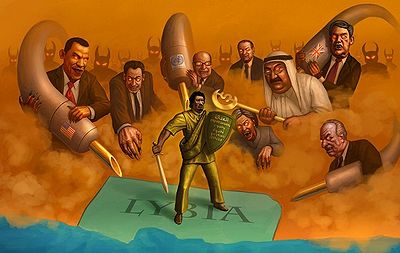
Over a decade ago, we wrote the article “Africans and the Trap of Democracy,” when NATO forces were bombing Libya. Reading it, almost every single word is still relevant today and can be applied to situations in so many countries on the African continent and beyond. Back then, we were shocked that so many Africans were applauding the actions of NATO using the word “democracy” … we hope that they can see what the destabilization of Libya has done to the rest of Africa, and that in reality the word “democracy” is used to fool Africans into hating those who actually work for Africa’s survival and its real independence. Libya under Khadafi was a prosperous country; Singapore, in Asia, under Lee Kuan Yew became one of the most successful economies in the world. There are so many dictatorships in Africa disguised under the name democracies where there are elections every few years and which are praised by the West because they serve their interests in Africa. Let us NOT fall into this trap called “democracy” in Mali, Niger, or Burkina Faso. Instead let us support our brothers of the Alliance of the Sahel (AES), and acknowledge that the continent with the first constitution in the world born in the Empire of Mali, the Kourougan Fouga, cannot learn about ways to govern itself from foreigners. The answer is within!

Enjoy! Africans and the Trap of Democracy

====

With the bombing of the presidential residence in Cote d’Ivoire by French forces for over a week, followed by the arrest of president Laurent Gbagbo, with the current intense bombing of Libya by NATO for the past 6 months, I cannot help but try to answer some of the same justifications used by Africans to approve the bombings by foreign troops on their neighbors’ countries, and ultimately on African soil. Any African who claimed and accepted that Cote d’Ivoire should be bombed by the French, shame on you! Any African who thought that the bombing of Libya was correct… shame on you! Any African who uses the same stupid phrase used by the West to abuse us: “… well Gbagbo had his day, he was in power for 10 years!… or Kadhafi was there 42 years!” Well my friend… Shame on you! Should democracy be imposed using bombs? Should democracy be imposed using warplanes, and Apache helicopters? Is it democracy to bomb the people you plan to help? Is it democracy to deliberately bomb civilian targets, hospitals, state televisions, homes, etc… to, like NATO said “protect civilians”? Was there not a peaceful solution? Was it so hard to re-count the votes in Cote d’Ivoire? Was it so hard to organize elections as Kadhafi asked? Why bomb? Why bomb? Why bomb?…

… I have not seen anywhere that the definition of democracy was “government imposed by external forces, for external forces, to crush the people of a country!” I am tired of this stupid debate the media-lies (CNN, BBC, France24, etc) always bring and which Africans always fall to: “this one is a democrat, and the other one is a dictator.” Please stop bothering people with the same rhetoric, and stop bothering people with your pseudo-democracies where nobody has the right to say anything. Frankly every other year when elections come around, don’t you ever wonder how come with all the bright politicians coming out of top schools, how come we always end up with only 2 (and somehow the worst of all)?

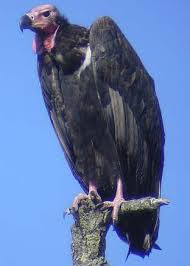
Les Vautours / The Vultures by David Mandessi Diop

David Mandessi Diop

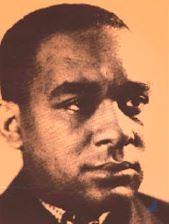
I found this gem of a poem by the great African poet David Mandessi Diop. Diop was born in France, of a Cameroonian mother from the royal Bell line with illustrious members such as Rudolf Duala Manga Bell and Ndumbe Lobe Bell (King Bell) both kings of the Duala people, and a Senegalese father. Although he died young, in a plane crash in 1960, he has left a strong imprint on African poetry. His most famous poem, Africa, has been one of my favorites growing up and was thought in schools throughout the continent. His work always focused on a condemnation of colonialism and slavery, while filled with hope for an independent Africa.

Vautour / Vulture

Thus, the poem Les Vautours (The Vultures) explores the horrors of colonialism and its impact on Africa. As one can guess, the Vultures are the colonizers who preyed on a fragile Africa, and exploited it with extreme violence. With the arrival of the Europeans, there was a clash of civilizations, Christianity was imposed upon our ancestors via machine guns as noted by the author’s reference to “monotonous rhythm of Pater-Nosters,” and slavery and later forced labor took a toll on them in the plantations or on the roads built referenced as “bloody monument.” When the author mentions “mutilated promises through machine guns,” it reminds us, for example, of the Thiaroye Camp where the tirailleurs were killed by French forces for simply asking for their pension after having served to free France from Nazi forces during World War II. As always, the author finishes on the high note of hope “Spring will put on flesh under our steps of light.” As one reads this poem, it appears that The Vultures are still at work on African soil, but the Spring is putting on flesh under Africans’ steps as we can see in the AES and more.

The original was published in Coups de pilon, Présence Africaine, 1956. Translated to English by Dr. Y., Afrolegends.com

=====

Les Vautours par David Mandessi Diop / The Vultures by David Mandessi Diop

Les VautoursEn ce temps là

A coups de gueule de civilisation

A coups d’eau bénite sur les fronts domestiqués

Les vautours construisaient à l’ombre de leurs serres

Le sanglant monument de l’ère tutélaire

En ce temps là

Les rires agonisaient dans l’enfer métallique des routes

Et le rythme monotone des Pater-Noster

Couvraient les hurlements des plantations à profit

O le souvenir acide des baisers arrachés

Les promesses mutilées au choc des mitrailleuses

Hommes étranges qui n’étiez pas des hommes

Vous saviez tous les livres vous ne saviez pas l’amour

Et les mains qui fécondent le ventre de la terre

Les racines de nos mains profondes comme la révolte

Malgré vos chants d’orgueil au milieu des charniers

Les villages désolés l’Afrique écartelée

L’espoir vivait en nous comme une citadelle

Et des mines du Souaziland à la sueur lourde des usines d’Europe

Le printemps prendra chair sous nos pas de clarté.

The VulturesIn that time

When civilization struck in a fit of anger

When holy water struck domesticated foreheads

The vultures built in the shadow of their claws

The bloody monument of the tutelary era

In that time

Laughter died away in the metallic hell of the roads

And the monotonous rhythm of Pater-nosters

Covered the screams on plantations run for profit

O sour memory of extorted kisses

Promises mutilated by machine-gun blasts

Strange men who were not men

You knew all the books you did not know love

Or the hands that fertilize the womb of the earth

The roots of our hands deep as the revolt

Despite your hymns of pride among graveyards

Villages laid to waste and Africa dismembered

Hope lived in us like a citadel

And from the mines of Swaziland to the heavy sweat of Europe’s factories

Spring will take shape under our steps of light.

When Einstein Wrote to the US President about Congo for its Uranium

Albert Einstein in 1947

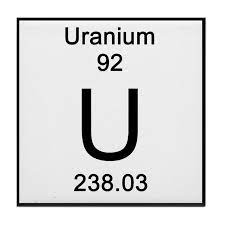
In 1939, Nobel prize winner of physics Albert Einstein signed a letter written in conjunction with Hungarian physicist Leo Szilard, which was then sent to the President of the United States Franklin D. Roosevelt, in which he noted the importance of uranium, and warned of the possibility that Nazi Germany might develop a nuclear bomb. In the letter, countries where uranium ore was found in abundance were cited, among which was then Belgian Congo.

It is no secret that the uranium used in the bombs that were dropped on Hiroshima and Nagasaki came from the Democratic Republic of Congo, then Belgian Congo.

The document became known as the “Einsten letter” which marked the beginning of the atomic age, and also launched the race for the uranium of Congo, and later for other Congolese minerals that were found to be important for the energetic needs of the United States.

Democratic Republic of Congo (DRC) mineral map (Source: Atlas du continent africain, Jeune Afrique et editions Jaguar, 2000)

A top-secret American Intelligence report published in November 1943 mentioned the Congolese uranium: “The most important deposit of uranium yet discovered in the world is in the Shinkolobwe Mine in the Belgian Congo.”

The Congo’s “known resources of uranium, which are the world’s largest,” the report concluded, “are vital to the welfare of the United States. Definite steps should be taken to insure access to the resources for the United States.”

After the “independence” of the Belgian Congo, the new Prime Minister Patrice Emery Lumumba made it clear that he would not give the U.S. the same freedom to control Congo’s uranium as had Belgium. On July 11, 1960, the Katanga province where the Shinkolobwe mine (which produced the ore for the bombs dropped on Nagasaki and Hiroshima) was located seceded from the country.  Lumumba was assassinated on January 17, 1961. Since then, the country has spiraled in a cycle of instability, violence and war which today has claimed the lives of over 10 million people, at the heart of which is the control of the minerals of Congo.

As we now know the place that uranium holds in the energetic needs of many countries, what do you think of the place of Niger? and then of other African countries rich in key minerals? Will the predator leave the prey?

Read more at Atomic Archive.

=====

Einstein’s Letter to President Roosevelt – 1939

Albert Einstein
Old Grove Road
Peconic, Long Island
August 2nd, 1939

F.D. Roosevelt
President of the United States
White House
Washington, D.C.

Sir:

Some recent work by E. Fermi and L. Szilard, which has been communicated to me in manuscript, leads me to expect that the element uranium may be turned into a new and important source of energy in the immediate future. Certain aspects of the situation which has arisen seem to call for watchfulness and if necessary, quick action on the part of the Administration. I believe therefore that it is my duty to bring to your attention the following facts and recommendations.

In the course of the last four months it has been made probable through the work of Joliot in France as well as Fermi and Szilard in America–that it may be possible to set up a nuclear chain reaction in a large mass of uranium, by which vast amounts of power and large quantities of new radium-like elements would be generated. Now it appears almost certain that this could be achieved in the immediate future.

This new phenomenon would also lead to the construction of bombs, and it is conceivable–though much less certain–that extremely powerful bombs of this type may thus be constructed. A single bomb of this type, carried by boat and exploded in a port, might very well destroy the whole port together with some of the surrounding territory. However, such bombs might very well prove too heavy for transportation by air.

The United States has only very poor ores of uranium in moderate quantities. There is some good ore in Canada and former Czechoslovakia, while the most important source of uranium is in the Belgian Congo.

In view of this situation you may think it desirable to have some permanent contact maintained between the Administration and the group of physicists working on chain reactions in America. One possible way of achieving this might be for you to entrust the task with a person who has your confidence and who could perhaps serve in an unofficial capacity. His task might comprise the following:

a) to approach Government Departments, keep them informed of the further development, and put forward recommendations for Government action, giving particular attention to the problem of securing a supply of uranium ore for the United States.

b) to speed up the experimental work, which is at present being carried on within the limits of the budgets of University laboratories, by providing funds, if such funds be required, through his contacts with private persons who are willing to make contributions for this cause, and perhaps also by obtaining co-operation of industrial laboratories which have necessary equipment.

I understand that Germany has actually stopped the sale of uranium from the Czechoslovakian mines which she has taken over. That she should have taken such early action might perhaps be understood on the ground that the son of the German Under-Secretary of State, von Weizsacker, is attached to the Kaiser-Wilhelm Institute in Berlin, where some of the American work on uranium is now being repeated.

Yours very truly,

SignatureAlbert Einstein

The “Einstein-Szilard letter” or the “Einstein Letter”

Senegal Presidential Elections: Bassirou Diomaye Faye is set to be the next president

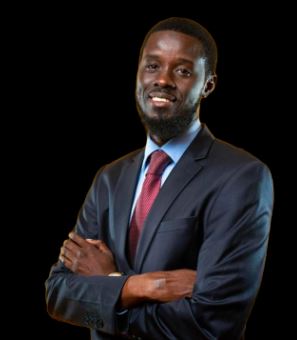
Bassirou Diomaye Faye (Source: Seneweb.net)

Senegal opposition presidential candidate Bassirou Diomaye Faye, a political newcomer popular among the masses, came out of Sunday’s elections in Senegal with a strong lead. On Monday morning, his main rival, Amadou Ba conceded defeat. Faye who has been brought to the front of the Senegalese politics just over a week after he was released from prison, has been mentored by the true candidate of the masses Ousmane Sonko who everybody loved, but who the government had managed to disqualify from standing for election because of a bogus conviction. Faye contested the elections as an independent given that his party Patriots of Senegal (PASTEF), founded by Ousmane Sonko, had been dissolved. He ran under the slogan of “Diomaye mooy Ousmane” (meaning, Diomaye is Ousmane in Wolof) given that most Senegalese who voted for him, were in reality voting for his beloved mentor Sonko. At 44 years-old, he will be the youngest African president, and fifth president of Senegal.

Ousmane Sonko (Source: Leral.net)

We applaud the victory of the people of Senegal who stood strong in the face of Macky Sall, the incumbent’s holdup tactics on the constitution and the power. We applaud the victory of the Senegalese masses who have shown that they would not stand still while their democracy is torn into pieces. We hope that Bassirou Diomaye Faye will keep his promises of including Sonko whom the people voted; Sonko campaigned by telling all that voting for Faye was like voting for him. We hope that Faye will keep the promises made of weeding out corruption, getting out of the CFA Franc zone, renegotiating mining and hydrocarbon contracts. The country is expected to start hydrocarbon production this year. He has his work cut out for him, with the high unemployment rate. Senegal is a young nation, and Senegalese dream of finally helping their country launch into the 21st century with pride; they are ready, and hopefully Faye will offer new opportunities to the disillusioned youth.

Below are excerpts from the BBC.

====

Diomaye mooy Ousmane (Source: Kalenews.net)

Few had heard of him a year ago, and now he is set to become president.

Bassirou Diomaye Faye’s extraordinary rise caps a rollercoaster period in Senegalese politics that caught many off-guard. Months in jail alongside ally and kingmaker Ousmane Sonko ended suddenly, with the pair released the week before the presidential election.

Now Mr Clean, as he’s nicknamed, must get to work on the sweeping reforms he has promised.

Methodical” and “modest” are words often used to describe the tax collector, who celebrates his 44th birthday on Monday.

Fighting poverty, injustice and corruption are top of Mr Faye’s agenda. While working at the Treasury, he and Mr Sonko created a union taskforce to tackle graft.

Gas, oil, fishing and defence deals must all be negotiated to better serve the Senegalese people, says Mr Faye. He is ushering in an era of “sovereignty” and “rupture” as opposed to more of the same, he told voters, and that is especially true of ties to France. Senegal’s president-elect says he will drop the much-criticised CFA franc currency, which is pegged to the euro and backed by former colonial power France. Mr Faye wants to replace it with a new Senegalese, or regional West African, currency, although this will not be easy… Strengthening judicial independence and creating jobs for Senegal’s large young population are also key priorities for Mr Faye …

Bassirou Diomaye Faye was announced in February as the so-called “Plan B” candidate, replacing the charismatic opposition firebrand Ousmane Sonko.

Both men founded the now-disbanded Pastef party, both men are tax collectors, and both men found themselves jailed last year on charges they said were politically motivated.

Mr Sonko ended up being convicted of two offences, which meant he was barred from the election, so Mr Faye stepped in.

Flag of Senegal
Flag of Senegal

Bassirou is me,” Mr Sonko told supporters recently. “They are two sides of the same coin,” Pastef colleague Moustapha Sarré agrees.

… the pair’s relationship could usher in a new style of leadership.

Maybe they will establish a tandem and break away from the hyper-presidential model of having an all-powerful head of state.

Sonko is of course the uncontested leader of Pastef – an icon, even… [But] the two have had a [dynamic of] complicity and collusion.”

Despite the shortened campaign period, Senegal’s citizens were adamant they would turn out and use their vote, Christopher Fomunyoh – of the National Democratic Institute for international affairs – told BBC Newsday.

Senegal is in the process of confirming that democracies can self-correct and come out stronger and more resilient.”

‘Ma vie est une chanson / My Life is a Song’ by Francis Bebey

music_1Below is ‘Ma vie est une chanson‘ or ‘My Life is a Song‘, a love poem by Cameroonian author Francis Bebey, a poem celebrating his love for the African woman, in this case for his lover. As we remember that Francis Bebey was multi-talented as a journalist, writer, sculptor and musician, it is no surprise that the title of his poem is “My Life is a Song”. He even headed the UNESCO music department researching and documenting traditional African music. In the poem, he highlights that he was born from the love of the earth with the sun, thus a birth that was very celebrated and a life full of love. As we read the poem, Bebey’s love for his country is abundantly clear as he dreams of taking his lover there, and not only that, but lets her know that his country is where to find the love between the earth and the sun; it is almost as if he was telling all that he was born on the equator. Moreover, let’s face it, the link between the earth and the sun is undeniable, unbreakable, unavoidable, constant, and forever omnipresent. He is so taken by the love so much so that his life is a song that he will sing everyday to his precious one. Wouldn’t you all like to be loved like that? Enjoy!

The poem Ma vie est une chansonby Francis Bebey, was published in Anthologie africaine: poésie, Jacques Chevrier, Collection Monde Noir Poche, Hatier 1988. Translated to English by Dr. Y. Afrolegends.com.

Ma vie est une chansonOn me demande parfois d’où je viens

Et je reponds “je n’en sais rien

Depuis longtemps je suis sur le chemin

Qui me conduit jusqu’ici

Mais je sais que je suis né de l’amour

De la terre avec le soleil”

Toute ma vie est une chanson

Que je chante pour dire combien je t’aime

Toute ma vie est une chanson

Que je fredonne auprès de toi

Ce soir il a plu, la route est mouillée

Mais je veux rester près de toi

Et t’emmener au pays d’où je viens

Ou j’ai caché mon secret

Et toi aussi tu naîtras de l’amour de la terre avec le soleil

Toute ma vie est une chanson

Que je chante pour dire combien je t’aime

Toute ma vie est une chanson

Que je fredonne auprès de toi.

My Life is a SongI am sometimes asked where I come from

And I answer “I don’t know

For a long time I have been on the way

That leads me here

But I know that I was born from the love

between the land and the sun”

My whole life is a song

That I sing to tell you how much I love you

My whole life is a song

That I hum next to you

Tonight it has rained, the road is wet

But I want to stay close to you

And take you to the land where I come from

Where I hid my secret

And you too will be born from the love of the earth with the sun

My whole life is a song

That I sing to tell you how much I love you

My whole life is a song

That I hum next to you.

So Long Hage Geingob, Third President of Namibia

President Hage Geingob (Source: TheHealthSite)

The third president of Namibia, Hage Geingob, passed away this past Sunday in Windhoek, Namibia, from cancer. As a strong freedom and anti-apartheid activist, in his early years, he fought to set the international stage for the South West Africa People’s Organization (SWAPO) and the Namibian fight for independence from South Africa. After exile in Botswana, and the United States where he studied, he advocated for the acceptance of SWAPO which was ultimately recognized by the United Nations General Assembly as the sole and authentic representative of the people of Namibia. Namibians’ struggle at the international fora, and their armed struggle launched in 1966, eventually led to the independence of Namibia in 1990 from South Africa. Like Cameroon, Togo, or Tanzania, Namibia had been a German colony known as German South West Africa established in 1884, until Germany lost world War I, after which the League of Nations gave the country to the United Kingdom as a mandate under the administration of South Africa; it was simply like a de facto fifth province of South Africa.

Flag of Namibia

Geingob had served the country as its first prime minister from 1990 to 2002, and then later from 2012 to 2015. Between 2008 and 2012, Geingob served as Minister of Trade and Industry. In 2015, after elections, he became president of the nation, and was set to finish his second and final term this year. Upon his passing on February 4, his deputy, Vice President Nangolo Mbumba, was sworn in as acting president in the capital, Windhoek, to complete the term as allowed by the constitution. Mbumba will be in office until next year, when the winner of this year’s November election will take office.

The Namibian nation has lost a distinguished servant of the people, a liberation struggle icon, the chief architect of our constitution and the pillar of the Namibian house,” the office of the presidency said.

South African President Cyril Ramaphosa described Geingob as “a towering veteran of Namibia’s liberation from colonialism and apartheid.”

Kenyan President William Ruto said Geingob “strongly promoted the continent’s voice and visibility at the global arena.”

Zimbabwe’s President Emmerson Mnangagwa posted on X that Geingob’s “leadership and resilience will be remembered.”

Freedom rather than Slavery by Sekou Touré

Sekou Toure, Cover Time Magazine, Feb. 16, 1959

President Sekou Touré of Guinea was the first president of a country in what was then colonial French Africa to say ‘NO’ to France by asking for its independence []. 66 years later, his words still ring true, especially as we watch the struggle for freedom of Mali, Burkina Faso, and Niger [Mali – Burkina Faso – Guinea Agree to form a Tri-Country AxisMali and Niger end Long-Standing Tax Treaties with FranceMali, Burkina Faso, and Niger Sign a Mutual Defence Pact]. Africans are still not free of their own destinies [The 11 Components of the French Colonial Tax in AfricaAfrica is funding Europe!], and it is only normal to fight for it.

On 25 August 1958, Sekou Touré said: “Il n’ya pas de dignité sans liberté. Nous préférons la liberté dans la pauvreté à la richesse dans l’esclavage.”

[There is no dignity without freedom. We prefer freedom in poverty to wealth in slavery].

Mangi Meli’s Grandchildren Continue the Search for His Skull

Mangi Meli of the Chagga of Moshi, ca 1890s (Source: Deutsche Fotothek)

Last week, the German President apologized for colonial past in Tanzania just a few days after the grandson of Mangi Meli reiterated his demand for the return of his grandfather’s skull. The story was published in the BBC. To us, Africans, it is a painful read: how can someone decapitate your father, and then take away his skull is inconceivable. It has been over 120 years; and some ask us to forgive, forgive when words are not followed by actions?

Excerpts below are from the BBC.

=====

Isaria Anael Meli has been looking for his grandfather’s remains for more than six decades.

He believes the skull ended up in a Berlin museum after his grandfather, Mangi Meli, along with 18 other chiefs and advisers, was hanged by a German colonial force 123 years ago.

Map of Tanzania

After all this time, a German minister has told the BBC the country is prepared to apologise for the executions in what is now northern Tanzania.

Other descendants have also been searching for the remains and recently, in an unprecedented use of DNA research, two of the skulls of those killed have been identified among a museum collection of thousands [Germany Matches DNA from African Skulls looted during Colonial Era].

Mt Kilimanjaro in 1911

It is rare to find an acacia tree on the lower slopes of Mount Kilimanjaro. Its twisting branches reach above the steep road and stand out among the denser lush vegetation.

At one time, it shaded a market for the villagers of Tsudunyi, a part of what is now called Old Moshi, who lived off the fertile land and enjoyed the cooler temperatures that the higher altitude brought.

But this focal point for the community became the scene of a great tragedy. Despite the peace of the natural surroundings today, its impact has reverberated down the decades.

It was here on 2 March 1900 that, as the descendants tell it, one-by-one the 19 men were hanged. They had been hastily tried the day before, accused of plotting to attack the German colonial forces.

Mangi Meli and his Njama 1890s at the German Moshi Boma (Source: Deutsche Fotothek)

 Mangi Meli, the most prominent mangi, or chief, among those who were killed, had in 1892 successfully defeated the German forces. That success was later reversed and by the end of the 19th Century, the Europeans were keen to stamp their authority on this part of what was known as German East Africa.

They wanted to make an example of Mangi Meli and other local leaders who may have been planning an uprising.

The humiliation did not end there. While most of the torsos are believed to be buried in a mass grave somewhere near the tree, their heads were at some point removed, packed up and sent 6,600km (4,100 miles) to the German capital. In some cases the complete skeletons were shipped.

When speaking about what happened to his grandfather, Mr Meli does not sound angry, but there is a sadness in his voice and a sense of bewilderment that this was allowed to happen.

The lively 92-year-old was told about the killing of Mangi Meli by his grandmother, who he says was forced to watch the execution, and explains that the chief came to him at night telling him that he would return one day.

Always, always, always he was coming to me in my dreams,” he says.

His floppy sun hat and twinkling eyes when he smiles disguise his tenacious personality.

Since at least the 1960s, Mr Meli had been writing to the German and Tanzanian authorities urging them to look for the remains of his grandfather.

Flag of Tanzania

He says officials tried to put him off by telling him that relevant records had been destroyed during World War Two. But Mr Meli was not deterred.

Visitors are always crying: ‘Tell all the people of Germany to return the skull.’

They kept it somewhere just because they thought the Mangi Meli family were small people – believing that they could do what they wanted. But remember that this skull is needed by the whole country – not me, myself, only.”

There is a sense of profound loss that goes beyond the idea that this was a historical injustice.

Mangi Meli, the Chagga Leader Who Resisted the Germans in 1890s

Mangi Meli of the Chagga of Moshi, ca 1890s (Source: Deutsche Fotothek)

Last September, we talked about a German museum which was able to match the DNA from looted African skulls to their descendants today. One of the skulls had a single word inscribed “Akida” who was believed to be a high-ranking advisor to Mangi Meli, a ruler of the Chagga people. It is no secret the fate that this advisor must have found, given that Mangi Meli had been hanged and decapitated by the Germans for leading an uprising against German invaders in 1900, along with 18 other ChaggaMeru, and Arusha leaders; it is not a far guess that Akida must have been hanged with King Meli.

Who was Mangi Meli?

Sultan Mandara of the Moshi in 1888

Mangi (King) Meli was a ruler of the Chagga people of Moshi, one of the sovereign Chagga states, in the 1890s. He was the first son of Mangi Rindi Mandara from his second wife Sesembu. Born in 1866, he ascended his father’s throne in 1891. It is said that he was smart, exuberant, and extremely valiant.

Meli is hailed as one of the heroes of the former Tanganyika colony which was part of German East Africa which encompassed Rwanda, Burundi (Ruanda-Urundi), modern-day Tanzania (except Zanzibar), and part of the Kionga triangle in Mozambique. Meli has been prominent in the fight against colonial encroachment on the slopes of Mount Kilimanjaro.

Mangi Meli and his Njama 1890s at the German Moshi Boma (Source: Deutsche Fotothek)

At the time when he became Mangi, the Germans were trying to lay hold on African territories, and every means were used. In 1892, there was an incident involving a young girl who the German forces wanted to capture, and when the Mangi of Moshi refused, the German troops fired, and the Moshi retaliated, killing one Askari (African serving in the German colonial forces). The German troops, led by Lt von Bulow, attacked, but were successfully defeated by Mangi Meli. This victory of the Meli made the Germans back down for 51 days.

Friedrich von Schele

Based on the lie of a “Chagga revolt” orchestrated by a neighboring king, Mangi Marealle of Marangu who had made pacts with the Germans including the notorious murderer explorer Carl Peters, Col. Friedrich von Schele, the deputy governor, led the Germans as they moved back to Kilimanjaro on July 31, 1892, launching an effort to seize Meli of Moshi, destroying and plundering Meli’s lands. Yet they could not capture Mangi Meli. They occupied his lands and started enslaving his people. However, bidding his time to strike back, Mangi Meli united over following years with other Mangis of neighboring Chagga states, forming alliances with other Meru and Arusha kings as well. However, his plan was betrayed by an informant from Mangi Marealle. This plan culminated on 02 March 1900, when the Germans called the Chagga kings whom they accused of fomenting rebellion.

Hanging of Chagga men by the German Colonial Government ca 1890s – 1900

After his capture, Meli was convicted of rebellion and was hanged alongside 18 other kings and noblemen of ChaggaMeru, and Arusha; one of these kings was Mangi Ngalami of the Siha Kingdom, one of the numerous Chagga states. Their execution was public. However, when Meli was hanged, he did not die immediately; it is said that he hung on the tree for 7 hours alive until he was shot by a soldier. Following his death, the German colonial administration ordered his head be severed from the body; this was the fate for many executed on that day. The skulls are believed to have been sent to Berlin to Felix von Luschan, an anthropologist and curator at the Royal museum of Ethnology of Berlin, who requested them to Lt. Col. Moritz Merker who was second in command at the German military outpost of Moshi.

Mangi Ngalami, King of Shira, with another chief and their entourage. Reproduction from Johannes Schanz/ H. Adolphi, Am Fuße der Bergriesen-Ostafrikas, and published with the permission of the Evangelisch-Lutherisches Missionswerk Leipzig (Source: The Dial)

Today, descendants of both Mangi Meli and Mangi Ngalami and others are searching for the skulls of their ancestors. The grandson of Mangi Meli, Isaria Meli, has founded a foundation to search for the skull of Mangi Meli and turned to Stiftung Preußischer Kulturbesitz (SPK, Prussian Cultural Heritage Foundation) in 2016 to identify the remains of his grandfather, to no avail. Efforts are being made to recover his remains (and those of the other kings) and return them for proper burial in Tanzania. In Chagga culture, and many African cultures, the burial of a body after death is an essential ritual; without a proper funeral and resting place, the soul cannot find peace. Many of the skulls and remains ended up in different museums of Berlin, or in private collections (I cannot fathom why someone would want someone’s skull in their private collection ???). There are cases where entire skeletons were shipped to Germany. This was the case when in 1902, the whole skeleton of Mangi Lobulu of the Meru, another leader executed at the same time as Mangi Meli and Mangi Ngalami, was sent to Germany by Merker; over the decades, it eventually made its way to the American Museum of Natural History in New York City where it was located by German researcher Konradin Kunze 100 years later. 

Please check out Flinn Works production “Mangi Meli Remains,” and read the article in the Dial

As you think of Mangi Meli, remember his bravery, and celebrate his spirit for the freedom of the Chagga people, and others, on the slope of Mount Kilimanjaro.

Will the King grant the Return of the Skull of Kenyan Resistance Leader Koitalel Arap Samoei?

Flag of Kenya

King Charles III is visiting Kenya on October 31. The leaders of the Nandi community in Western Kenya are requesting the returns of the skull of Koitalel arap Samoei, their chief, spiritual, and military leader killed by the British in 1905. Samoei waged a fierce resistance against the colonialists, and was killed by British soldier Richard Meinertzehagen, who had tricked him (the usual European colonial trick) into attending a truce meeting. A few months ago, we discussed the refusal of King Charles III to return the remains of Prince Alemayehu, son of Emperor Tewodros II, to Ethiopia; Ethiopians were told that returning his remains will not be possible, as it will disturb the resting place of several others in the vicinity (UK rejects Calls to Return Ethiopian Prince’s Remains). NONSENSE! Will the king agree to the return of the skull of Koitalel arap Samoei? Or will this be like the skull of King Mkwawa?

Koitalel arap Samoei, Supreme leader of the Nandi people of Kenya

Who was Koitalel arap Samoei?

Koitalel arap Samoei was the fourth of five sons of Kimnyole arap Turukat, Orkoiyot (king / Supreme leader) of the Nandi people of Kenya. His brothers were Kipchomber arap Koilege, Kipeles arap Kimnyole, Chebochok Kiptonui arap Boisyo, and Siratei arap Simbolei. His father, Kimnyole arap Turukat, was a strong leader with outstanding prophetic talents who predicted the arrival of Europeans on his soil. It is said that he also predicted his son Koitalel’s murder. Concerned by his son’s bravery, and to protect them all, Kimnyole sent 3 brothers to live among the Kipsigis people, while Koitalel was sent to live with the Tugen people.

Nandi warriors, ca 1905-1923

At Kimnyole’s passing, 25 years-old Koitalel succeeded to his father after a succession dispute with his brother Kipchomber arap Koilege. In the end, Koitalel was crowned Orkoiyot of the Nandi people, while his brother became the first Orkoiyot of the Kipsigis . He was a strong and fierce warrior. When the British started building the Uganda Railway going from Mombasa in Kenya to Kampala in  Uganda passing through the Nandi territory, Koitalel led an eleven-year resistance movement against the railway. He understood that this marked the doom for his people, and most likely dispossession of their ancestral lands. The Nandi people were fierce warriors and never gave up, even when faced with British artillery. Samoei was a strategic military leader, planning surprise attacks on the railroad workers, and the British when they least expected. He resisted fearlessly.

Richard Meinertzhagen ca 1922

For almost 12 years, the British could not capture him. On October 19, 1905, to end the resistance, British officer Richard Meinertzhagen lured Koitalel to a peace truce meeting after leading a rebellion against the colonial invasion of the Nandi. Both parties agreed to come with five companions each. While Samoei brought five companions, Meinertzhagen brought an entire battalion of 80 people, 75 of which hid in the bushes surrounding the area. When Koitalel extended his hand to greet Meinertzhagen, he killed Koitalel with a shot at point-blank range. Then the British man decapitated Koitalel’s body and took his head to London as proof of his death as well as a macabre trophy of colonialism. This was such a traumatic event to the Nandi people that it ended the Nandi resistance. This is a people who had time-outs to allow all parties to take care of wounded warriors.

Kipsigis warriors ca 1954

The colonial administration subsequently set about banishing, detaining or killing his brothers and sons. In 1909, his brother Kipeles arap Kimnyole was installed by the colonial government as Orkoiyot; Kipeles died in 1912. In 1919 Koitalel’s second son, Barsirian Arap Manyei took over the leadership. However, his reign only lasted until 1922, at which point the British colonial government incarcerated him. He stayed in jail until 1964, making him the longest-serving political prisoner in the history of Kenya; after his release, he died in abject poverty.

Today, there is a museum built in the Nandi Hills to commemorate Koitalel Arap Samoei and his effort. He has also been celebrated by the Google Arts and Culture. Koitalel Arap Samoei is seen as Kenya’s first freedom fighter.

As King Charles III visits Kenya, the Nandi elders are calling for the repatriation of the skull of their great leader, Koitalel Arap Samoei, and their cultural artifacts and compensation for the grievous atrocities suffered during the colonial era.  Do you think King Charles III would return Koitalel arap Samoei’s skull?