There was a lot to celebrate in Africa this year. Below are just a few:
Alliance des Etats du Sahel (AES) (Source: Alliance-sahel.org)
In January, Mali, Burkina Faso, and Niger left the ECOWAS creating a major seismic shift in the organization. Mali, Burkina Faso, and Niger all leave the ECOWAS. This came as no surprise given that the coup to topple puppet governments in their respective countries, the ECOWAS had suffocated these countries by suspending all three countries and imposing heavy sanctions on Mali and Niger that exacerbated the populations’ sentiments that it is a puppet organization serving foreign interests. Niger even tried to amend the situations by inviting ECOWAS representatives to the country, but only the member from Togo showed up. Why should anybody remain in an organization that punishes its member populations?
In January, Ghanaian artifacts were returned home for the first time in 150 years, on a “loan”. Ghana Artefacts “Return” Home 150 years later … on Loan. It is a disappointment that African governments can only get “loans” for what is dutifully theirs from those institutions which have amassed millions over the year from the exhibition of stolen African artefacts.
The Elephants are winners of the Africa Cup of Nations 2023 (Source: CAFonline.com)
In February, the Elephants of Cote d’Ivoire gave us a thrill from being redeemed in the knockout stage with 2 defeats (among which a 4-0 loss against Equatorial Guinea) that left them open to elimination, and a redemption that came from being one of the four best 3rd-placed team, a coach sacking, and a coach change, to lift the trophy of the Africa Cup of Nations. It was a real “Coup du Marteau” (Tam Sir, we are talking about your special song!) The Ivorians added to their previous Nations Cup wins of 1992 and 2015 (Côte d’Ivoire wins the 2015 Africa Cup of Nations) and became the first tournament hosts to triumph since Egypt lifted the trophy in 2006. CAN 2023: the Elephants of Côte d’Ivoire are the New Champions
Bassirou Diomaye Faye (Source: Seneweb.net)
In March, Bassirou Diomaye Faye was elected president of Senegal, making him the youngest African president at 44. This was a joyous moment for the Senegalese people who stood to have their democratic system and constitution upheld. Faye is very unconventional, as the youngest with no political background (he was previously a tax officer), he is also the first Senegalese president to openly have two wives. With his friend and Prime Minister Ousmane Sonko, we hope for better governance for Senegal. Senegal Presidential Elections: Bassirou Diomaye Faye is set to be the next president. Either way, the Senegalese have demonstrated once again, that although their democracy is young, it is not to be messed with!
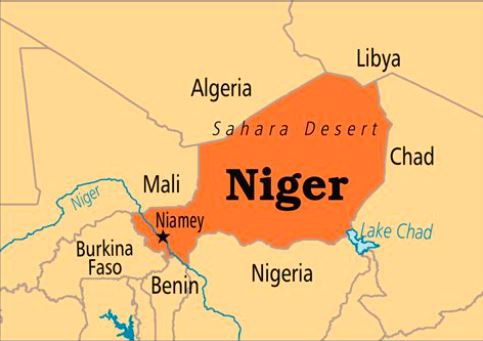
Map of Niger
In mid-March, Niger suspended military “cooperation” with the USA, with immediate effect. Operating from years of condescending treatments of those deemed inferior, particularly of Africans, the Americans had decided to dictate their will, like the French before, to Niger people and deny their sovereign rights to choose their own partnerships in their fight against terrorism. The spokesman of Niger’s government, Colonel Amadou Abdramane, exposed the fact that the military “cooperation” with the US was not even a real one, i.e. the US had installed their largest drone base in Africa, and possibly in the world, in Niger via a verbal agreement only, and the Niger people had to pay for the American base in their country, while the Americans never raised a hand to help Niger fight against terrorist attacks that were maiming their citizens [Bye Bye to French Troops in Niger, France set to Withdraw Troops and Ambassador from Niger]. Niger suspends military “cooperation” with the US, effective immediately.
Alliance des Etats du Sahel (source: linfodusahel.com)
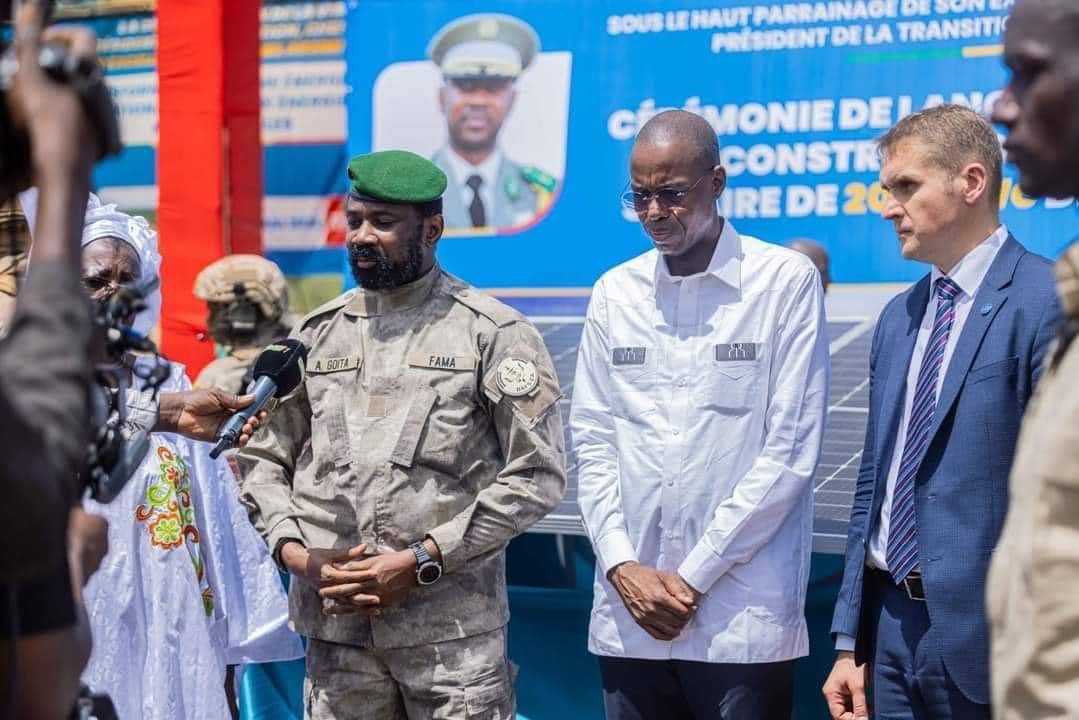
Mali, Niger, and Burkina Faso’s leaders met on July 6, 2024 in Niamey, Niger, as part of the first summit of the Alliance des Etats du Sahel (AES – Alliance of the Sahel States). During the summit, the three leaders signed a confederation treaty aimed at strengthening the links between the three nations in terms of defence, and other aspects such as the economy, infrastructures, and more. They reinforced their mutual defence pact.
Right before the Paris Olympics, brother Biniam Girmay of Eritrea made history by becoming the first African to win a stage at the Tour de France, and two more stage victories which helped him capture the green jersey for the highest points scorer – a first for anyone from the continent.
Faith Kipyegon winning historic 3rd gold medal at the Paris 2024 Olympics (source: Kelly Ayodi for Olympics Kenya – EastleighVoice.co.ke)
The Paris 2024 Olympics ended with a strong show from African athletes who shined in various disciplines, and represented many countries including outside of Africa. They made us proud and served us joy, endurance, and passion. We will list just a few. We had a lot of firsts, like our Kenyan sister Faith Kipyegon who won her 3rd successive Olympic gold in the women’s1500 m, making her the first African athlete to ever win gold in the same event 3 times in a row. Our brother Letsile Tebogo of Botswana earned the top most place in the Men’s 200 m thus giving Botswana and Africa as a whole its first ever olympic gold medal in the 200 m; Tebogo also led the Botswana’s team to a silver medal in the
Letsile Tebogo after winning gold in 200m (Source: Onuaonline)Men’s 4x400m relay, again a first for any African country ever. Ugandan brother JoshuaCheptegei delivered on his promise for his last Olympics to be memorable by winning gold in the Men’s 10,000 m, and landing Uganda its first gold at the games. Tatjana Smith of South Africa made her country proud by winning gold and silver medals in the Women’s 200m and 100m breaststroke events. Akani Simbine and South African track team delivered us silver in the Men’s 4 x 100 m relay, again a first for South Africa, and for Africa as a whole. Kaylia Nemour gave Algeria and Africa its very first victory ever in gymnastics with a gold in the Women’s Uneven bars in artistic gymnastics. Tamirat Tola, who was just added to the Ethiopian Olympics’s team 2 weeks prior, took home the gold medal in the Men’s Marathon. AhmedElgendy won the first gold medal for Egypt at any Olympics, becoming the first African and person to win in the new discipline of Men’s Modern Pentathlon. Cabo Verde got its very first medal at the Olympic games through David de Pina who won bronze in the Men’s 51 kg Boxing. Zambian Muzala Samukonga won the bronze medal in the Men’s 400m, giving his country its very first Olympic medal.
Aliko Dangote, Africa’s richest man, has built one of the world’s largest oil refineries in Nigeria, Africa. The refinery opened its doors last year, and in May shipped out its first boat of refined jet fuel to the Netherlands. Since then, the refinery has gotten into agreements with the Nigerian governments and neighboring ones as well.
Paris Paralympics 2024 (Source: https://www.paralympic.org/paris-2024)Africa shone at the Paralympics, winning 64 medals, with Morocco getting the most medals with 15 medals, but Algeria topped the continent’s medal table thanks to its 6 gold medals vs. 3 gold for Morocco. Most medals were won in para-athletics and para-powerlifting disciplines. Veteran RaouaTlili of Tunisia cemented her place as a legend in the F41 discus throw and shot put, winning 2 gold medals this year, giving her a total of 8 gold medals for her country, having competed in each Olympics since
Raoua Tlili (Source: Outlook India)
Beijing 2008. Nigeria’s Mariam Eniola Bolaji became the first African to win an Olympic or Paralympic medal in Badminton. Yovanni Philippe gave Mauritius its first medal ever by securing a bronze medal in the men’s T20 400m; while Annaba native, Brahim Guendouz won gold in para-canoeing’s KL3 class over 200m, giving Algeria its first ever medal in a discipline outside of para-athletics, para-judo, and para-powerlifting.
Gael Faye and his book Jacaranda
African authors made great wins and firsts: they won the most important literary awards in French literature: the Goncourt prize, which was awarded to Kamel Daoud for his third novel titled «Houris», and the Renaudot prize awarded to Gaël Faye for «Jacaranda». Daoud’s novel is currently in a controversy. Africans win the Goncourt and Renaudot 2024 Literary Prizes.
AndakiaA Senegalese startup, Andakia, has just introduced the very first African AI: AWA. AWA is a Wolof-speaking artificial intelligence system; it is the brainchild of Alioune Badara Mbengue. In an interview to TRT Afrika, Mbengue said, “AWA is the first AI that understands and speaks perfect Wolof. Our vision is to extend AWA to other African languages, enabling Africa to become a leader in digital innovation and ensure technological sovereignty tailored to its needs.” Users need to simply engage in a spoken exchange with the AI interface in Wolof, seeking general information or asking it to perform tasks such as ordering a taxi, ordering a meal, or carrying out financial and other transactions. This is revolutionary as it addresses the needs of the population. We applaud the amazing work of our brother and his team, and truly the sky is the limit.
“Rwanda, la Verite sur l’Operation Turquoise” de Charles Onana
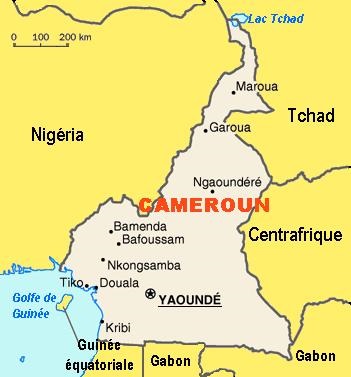
On Monday, a French court found the Franco-Cameroonian journalist and author Charles Onana guilty of downplaying the 1994 Rwandan genocide. Onana has been condemned to pay 8400 Euros of penalty. His editor, Damien Serieyx has also been found guilty and condemned to pay 5000 Euros. They also have to further pay 11,000 Euros in compensation to human rights organisations that filed the suit. The book at the center of the controversy is, “Rwanda, la vérité sur l’opération Turquoise: quand les archives parlent.”
The court said that Onana’s book had “trivialised” and “contested” in “an outrageous manner” the genocide that occurred between April and July1994. Onana’s lawyer, Emmanuel Pire, insisted that Onana did not question that genocide took place, or that Tutsis were particularly targeted as per the BBC; but rather that many lost lives in the 1994 horrendous events including Tutsis, Hutus, and Twas. Onana invites all to read his book without pulling passages out of context, but reading the book in its entirety. Both Onana and his publisher have appealed against the verdict.
“Holocauste au Congo, L’Omerta de la Communaute Internationale” by Charles Onana
Could this be a vendetta against Onana for shedding light on the horrors happening in the East of the Democractic Republic of Congo (DRC), with his book “Holocaust in Congo: the International Community’s Omerta“? Until his book and a few by others like Patrick Mbeko, Michela Wrong, Pierre Pean, …, the international community had turned a blind eye on the atrocities committed in the DRC. With over 10 million dead, 7 million internally displaced, 500 000 woman raped, the story should have been in the front pages of news outlets around the world, yet it is a total blackout. Why? Because of the Geological Scandal that is the Democratic Republic of Congo (DRC), The New Scramble for Africa with Congo as the centerpiece, and the special first rate place played by that country ‘wrongfully’ dubbed by some as the Switzerland of Africa.
“We are heirs of the revolution” by Thomas Sankara
Today, we will end with the third point cited by President Thomas Sankara, last point for revolutionizing all sectors of Burkinabe society. Excerpts below are from “We are Heirs of the World’s Revolutions, Speeches from the Burkina Faso Revolution 1983-87” by Thomas Sankara, Pathfinder Press (2007) p. 50 – 53. Again, as you read, you can see that this is exactly what our leaders of the AES, and Ibrahim Traore of Burkina Faso in particular are applying. The main difference today is that the AES also faces terrorism and the repeated attacks of hordes fabricated by Western powers; so security is one of the major priorities.
=====
… The National Council of the Revolution is therefore aware that the construction of an independent, self-sufficient, and planned national economy requires the radical transformation of present society, a transformation that itself requires the following major reforms:
Thomas SankaraAgrarian reform
Administrative reform
Educational reform
Reform of the structures of production and distribution in the modern sector
The agrarian reform will aim to:
Increase labor productivity through better organization of the peasants and the introduction of modern agricultural techniques in the countryside.
Develop a diversified agriculture, together with regional specialization.
Abolish all the fetters that are part of the traditional socioeconomic structures that oppress the peasants.
Finally, make agriculture the basis for the development of industry.
Burkina Faso
All this is possible by giving real meaning to the slogan of food self-sufficiency, a slogan that now seems dated for having been proclaimed so often without conviction. First, this will be a bitter struggle against nature, which, by the way, is no more thankless for us than for other peoples who have conquered it magnificently on the agricultural level. … To the contrary, numerous small accomplishments in the agricultural system will allow us to transform our territory into one vast field, an endless series of farms.
Second, this will be a struggle against those who starve the people, the agricultural speculators and capitalists of all types. Finally, it will mean protecting our agriculture against domination by imperialism — with regard to its orientation, the plunder of our resources, and unfair competition from imports against our local products, imports whose only advantage is their packaging aimed at bourgeois afflicted with snobbishness. As for the peasants, sufficiently high prices and industrial food-processing facilities will guarantee them markets for their produce in any season.
Flag of Burkina Faso
… The reform should result in a less costly, more effective, and more flexible administration.
The educational reform aims to promote a new orientation for education and culture. It should result in transforming the schools into instruments at the service of the revolution. Graduates of the system should not serve their own interests and the exploiting classes, but rather the popular masses. The revolutionary education that will be taught in the new schools must imbue everyone with a [Burkinabe] ideology, a [Burkinabe] personality that rids the individual of blind mimicry. …
Burkina Faso
Culture in a democratic and popular society, should have a three-fold character: national, revolutionary, and popular. Everything that is antinational, antirevolutionary, and antipopular must be banished. To the contrary, our culture extols dignity, courage, nationalism, and the great human virtues.
… Our artists … should seize the opportunity before them to raise our culture to a world level. … Let musicians sing not only of our people’s glorious past, but also of their radiant and promising future.
The revolution expects our artists to be able to describe reality, portray it in living images, and express them in melodious tunes while showing our people the true way forward to a better future. It expects them to place their creative genius at the service of a national, revolutionary, and popular [Burkinabe] culture.
“We are heirs of the revolution” by Thomas Sankara
I love what Thomas Sankara, former president of Burkina Faso, said about women. I had previously published it here, Thomas Sankara in His Words. Did you know that Sankara had placed women at the center of his politics? He appointed females to high governmental positions, encouraged them to work, recruited them into the military, and granted pregnancy leave during education. During his time, he outlawed female genital mutilation, forced marriages and polygamy in support of Women’s rights. Excerpts below are from “We are Heirs of the World’s Revolutions, Speeches from the Burkina Faso Revolution 1983-87” by Thomas Sankara, Pathfinder Press (2007) p. 49 – 50.
=====
The weight of age-old traditions in our society has relegated women to the rank of beasts of burden. Women suffer doubly from all the scourges of neocolonial society. First, they experience the same suffering as men. Second, they are subjected to additional suffering by men.
African Woman
Our revolution is in the interests of all the oppressed and all those who are exploited in today’s society. It is therefore in the interests of women, since the basis of their domination by men lies in the system through which society’s political and economic life is organized. By changing the social order that oppresses women, the revolution creates the conditions for their genuine emancipation.
The women and men of our society are all victims of imperialist oppression and domination. … they wage the same battle. The revolution and women’s liberation go together. We do not talk of women’s emancipation as an act of charity or out of a surge of human compassion. It is a basic necessity for the revolution to triumph. Women hold up the other half of the sky.
… Until now, women have been excluded from the realm of decision making. The revolution, by entrusting women with responsibilities, is creating the conditions for unleashing women’s fighting initiative. … They will be involved in all the battles we will have to wage against the various shackles of neocolonial society in order to build a new society. … The final goal of this great undertaking is to build a free and prosperous society in which women will be equal to men in all spheres.
Burkina Faso
However, we must have a correct understanding of the question of women’s emancipation. It is not a mechanical equality between men and women, acquiring habits recognized as male – drinking, smoking, and wearing pants. That’s not the emancipation of women. Nor will acquiring diplomas make women equal to men or more emancipated. A diploma is not a free pass to emancipation.
The genuine emancipation of women is one that entrusts responsibilities to women, that involves them in productive activity and in the different fights the people face. The genuine emancipation of women is one that compels men to give their respect and consideration. Emancipation, like freedom, is not granted, it is conquered. It is for women themselves to put forward their demands and mobilize to win them.
Every October 15, we talk about Thomas Sankara, the father of the Burkinabe revolution. Today, we will bring back some of his words, from “We are Heirs of the World’s Revolutions, Speeches from the Burkina Faso Revolution 1983-87” by Thomas Sankara, Pathfinder Press (2007) p. 46 – 48. You will see that President Ibrahim Traoré in particular, and the leaders of the AES as a whole (Mali, Burkina Faso, and Niger Sign a Mutual Defence Pact), are following in Thomas Sankara’s footsteps in the defense of their homeland against foreign forces which have used terrorism to balkanize the region and terrorize the people for over a decade now. “Each citizen should work to revolutionize his sector of activity. … a conscious people cannot leave their homeland’s defense to one group of men, however competent they may be. Conscious people take charge themselves of their homeland’s defense.” Tomorrow, we will talk about points (2) and (3).
=====
Thomas Sankara
The August revolution does not aim to establish one more regime in Upper Volta [Burkina Faso]. It represents a break with all previously known regimes. Its ultimate goal is to build a new Voltaic [now Burkinabe] society, within which the [Burkinabe], driven by revolutionary consciousness, will be architect of his own happiness, a happiness equal to the efforts he will have made.
To do this, the revolution – whether the conservative and backward forces like it or not – will be a deep and total upheaval that will spare no domain, no sector of economic, social, and cultural activity.
Revolutionizing all domains and all sectors of activity is the slogan of the day. Strengthened by the guiding principles laid out here, each citizen should work to revolutionize his sector of activity, whether he finds himself.
The philosophy of revolutionary transformations is already affecting the following sectors: (1) the national army; (2) policies concerning women; and (3) economic development.
(1) The national army: its place in the democratic and popular revolution
Flag of Burkina Faso
According to the defense doctrine of the revolutionary Upper Volta, a conscious people cannot leave their homeland’s defense to one group of men, however competent they may be. Conscious people take charge themselves of their homeland’s defense. To this end, our armed forces constitute simply a detachment that is more specialized than the rest of the population for Upper Volta’s internal and external security requirements. …
The revolution imposes three missions on the national armed forces:
To be capable of combating all internal and external enemies and to participate in the military training of the rest of the people. This presupposes an increased operational capacity, making each soldier a competent fighter, unlike the old army, which was merely a mass of employees.
To participate in national production. Indeed, the new soldier must live and suffer among the people to which he belongs. The days of the free-spending army are over. From now on, besides handling arms, the army will work in the fields and raise cattle, sheep, and poultry. It will build schools and health clinics and ensure their functioning. It will maintain roads …
To train each soldier as a revolutionary militant. Gone are the days when the army was declared to be neutral and apolitical, while in fact serving as the bastion of reaction and the guardian of imperialist interests. Gone are the days when our national army conducted itself like a corps of foreign mercenaries in conquered territory. Those days are gone forever. Armed with political and ideological training, our soldiers, … will instead become conscious revolutionaries, at home among the people like a fish in water.
As an army at the service of the revolution, the National Popular Army will have no place for any soldier who looks down on, scorns, or brutalizes his people. An army of the people at the service of the people – such is the new army we are building in place of the neocolonial army, which was utilized to rule over the people as a veritable instrument of oppression and repression in the hands of the reactionary bourgeosie. …
The trial against Charles Onana opened up yesterday, Oct. 7th, in Paris, France, and he is being accused of complicity in contesting the 1994 Rwandan genocide. Under French law, it is an offence to deny or “minimize” the fact of any genocide that is officially recognized by France. Mr Onana’s trial will be “historic, since there is not yet any case law strictly speaking related to Rwanda” on questions of Holocaust denial, as Camille Lesaffre, campaign manager for NGO Survie, one of the organizations which brought the case forward, told AFP.
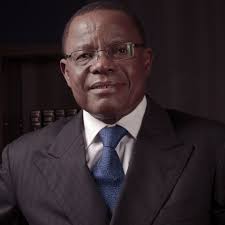
Charles Onana
Friends, please rise in support of the Franco-Cameroonian author and journalist Charles Onana. Onana has been among those who have questioned the narrative of the Rwandan genocide of 1994 (NOT whether it happened or not) and by extension the Congolese genocide which has been ongoing for almost 3 decades and been swept under the rug. Thanks to his constant hammering, and his books, many now know that there is an ongoing genocide in the East of the Democratic Republic of Congo (DRC), and more importantly that, these massacres have been going on for the past 30 years, and above all that Congo’s destabilization is coming from Rwanda, which serves as a pawn for foreign powers who want a part in the enormous resources of the DRC.
“Rwanda, la Verite sur l’Operation Turquoise” de Charles Onana
I have listened to Onana on several occasions and have read several of his books: nowhere does he question the Rwanda genocide or its happening; he is not a negationist. As his lawyer, Emmanuel Pire, told the AFP news agency, his book published 5 years ago, was “the work of a political scientist based on 10 years of research to understand the mechanisms of the genocide before, during and after”. Over the past 25 years, Onana has meticulously documented and questioned first the narrative about the place of France in the Rwandan genocide via its Operation Turquoise (Rwanda, la vérité sur l’opération Turquoise : Quand les archives parlent enfin). On April 6, 1994, the airplane transporting 2 sitting presidents, presidents Juvénal Habyarimana of Rwanda and Cyprien Ntaryamira of Burundi was shot in mid-air; to date, it has not brought an uproar as to how or why the plane of 2 presidents had been shot down. This is what really triggered Onana’s interest in the region: if it were anywhere in the world, this would have produced an uproar and multitudes of investigations, but somehow, in the case of Africa, it has been total silence. In 2006, a French investigation concluded that Paul Kagame, president of Rwanda, was responsible for the killing, to which Kagame responded that the French were only trying to cover up their part in the genocide. We know that since Sarkozy, France has been playing the kissing game with Rwanda.
“Holocauste au Congo, L’Omerta de la Communaute Internationale” by Charles Onana
In his works, Charles Onana simply demonstrates that since 1994, the world has been witnessing the masked invasion of Congo by militias and troops of Paul Kagame, sponsored by the West. His latest book, “Holocaust in Congo, the International Community’s Omerta” is a true gem. Onana has even brought a case, on October 4, against the president of Rwanda, after receiving death threats.
Over the years, Onana has detailed and stood for the Congolese, and now, thanks to his work, and those of others, people now know that there is a silent genocide in the east of Congo which has been going on for almost 3 decades and whose victims approximate over 10 millions deaths, 500,000 raped women, and yet the world has been silent, even though some like Dr. Denis Mukwege, Nobel Peace Laureate, are being recognized for their work helping the victims of those attacks.
The questions should be: why is there a silence on the genocide of the Congolese people? Why is there a silence on the aggression of troops supported by Rwanda on Congo? How can there be a systematic killing of millions of people in a country, and total silence? Who benefits from this? Then people will talk of the international community as a group which represents the world… NO… the international community only serves the interests of the few who benefit from Congo, the geological scandal that it is, being brought to its knees. Let’s all come out in support of Charles Onana.
Africa is a very rich continent, and one of its most important wealth is its youth… Africa is young, and the West, as seen by many of its generals and politicians, trembles. As Africans, it is our duty to free our continent. We can no longer stay behind while others get fat over our resources. As young Africans, it is our destiny to rise and conquer our freedom; we can no longer live it to others, or think future generations will do it for us… the future is now, if we cannot impact today, we will never change tomorrow.
I saw this speech by Nathanael Minoungou, alias Nael Melerd, a Burkinabe who shared a call to action to all Burkinabe and to all Africans. Time is of the essence. Africa, Rise! Enjoy! I have translated a few lines… For the whole speech, watch his video!
Burkina Faso
“…
The biggest scam of time, the biggest scam of the century, is not to rob a country, but to make a young person believe that he has time ahead of him. A young person does not have time, time is for the old … I hear, “Enjoy your youth because we only live once,” lies and scams, we only die once, we live every day.
… Africa is invincible because of its youth, as long as this youth remains awake and takes its responsibilities … if we cannot defeat you, we must by all means make you waste time, time that you do not even have …
How do you manage to have time, while people call your country poor?
How do you manage to have time while your land is exploited, while Africa is assisted at almost all levels?
How do you manage to have time in the midst of reconquering food sovereignty while the fields are idle in the village due to a lack of able-bodied workers?
How do you manage to have time in the midst of the fight against terrorism when even the elderly are enlisting to defend the homeland?
How do you manage to have time when people work during the day, and at night become watchmen that are called wayiha? … how do you manage to have time?
How do you manage to have time in the middle of rebuilding while you have “made in China” on your t-shirt and underwear?
Capitaine President Ibrahim Traore (Source: sig.gov.bf)
… African youth has not suffered from poverty, … illiteracy, … African youth has rather suffered from a lack of reference points and worthy leaders … until today when these youth can finally turn to you, Comrade President Captain Ibrahim Traore … From now on, everything has changed, because everything has become urgent, because everything has happened quickly, and because Africa is proud!
That is why, if you are the Captain, know that from now on, all the young people in this room, in uniform or not, are now soldiers engaged at the front for the sovereignty of Africa! … If you accept the sacrifice, stand on your feet ! ATTENTION!“
Every September we celebrate the lives of some of Africa’s great leaders who were either born or assassinated during that month, Ruben Um Nyobe, Agostinho Neto, Amilcar Cabral, Kwame Nkrumah, Gamal Abdel Nasser, and Steve Biko. I found this quote in Steve Biko’s book I Write What I Like p.32, by Sekou Touré, the Guinean leader who said NO to the France of General De Gaulle (Guinea: the country who dared say ‘NO’ to France). This quote by Sekou Touré is so on point, as it matches the revolutionary spirit that should be found in each African who fights to free his land. Each one of us is needed for the revolution, but we cannot just be bystanders, but need to add our hands to the fight. African leaders need to fashion the revolution with the people, if they want to free their lands.
“To take part in the African revolution, it is not enough to write a revolutionary song; you must fashion the revolution with the people. And if you fashion it with the people, the songs will come by themselves and of themselves.
In order to achieve real action you must yourself be a living part of Africa and of her thought; you must be an element of that popular energy which is entirely called forth for the freeing, the progress and the happiness of Africa. There is no place outside that fight for the artist or for the intellectual who is not himself concerned with, and completely at one with the people in the great battle of Africa and of suffering humanity.”
Kaylia Nemour celebrates with the Algerian flag (Source: Reuters / Independent)
As the Paralympics 2024 are currently under way in Paris, and as paralympians show us that there is so much beauty in life, today, we will focus on yet another African athlete who gave her country the highest honors at the Paris 2024 Olympics. The athlete of our focus today is Algerian Kaylia Nemour, the goldmedalist in gymnastics in Women’s uneven bars. Born in France of an Algerian father and a French mother, Nemour was representing France until last year when she switched her country to represent that of her father, Algeria. The switch came as a result of a rift between her and the French Gymnastics Federation which did not clear her to resume training after a knee surgery despite the fact that she had been cleared by her surgeon, and which also wanted Nemour to leave her club and train in Paris under their supervision instead, but she did not want to, and opted instead to switch to representing Algeria. She still lives and trains in France, at her club Avoine Beaumont Gymnastique whose director is her mother.
Kaylia Nemour in action during the uneven bars final (Source: EPA / Independent.co.uk)
Since Nemour opted to represent Algeria, she has been on fire. At last year’s world championships, she won a silver medal on uneven bars, the first World medal ever by a gymnast representing an African nation. She is also an African all-around champion and has an element named after her in the Code of Points (The Nemour). This year at the Paris 2024 Olympics, she handed Algeria and Africa as a whole, its very first gold medal in gymnastics. She also got the best score of her life in the event, with a score of 15.700. Her victory is reminiscent of the victory of the great Algerian Hassiba Boulmerka who won the gold medal at the Barcelona 1992 Olympics in the Women’s 1500m, thus handing her country its very first Olympic gold medal ever.
Flag of Algeria
We are proud of Kaylia’s choice to represent Algeria, it must not have been an easy choice, and we are also happy that the Algerian federation has been supportive of her. Her coach, Marc Tcherlinko, said, “It [representing Algeria] was not in the plan,but life serves you some curves, some rivers you must cross. For two years she stayed focused on her goal – the Olympics. What she’s achieved is amazing.” Nemour is considered by many as one of the best gymnasts of her generation on uneven bars. As a result of her Olympic victory, she has been decorated with the Ahid National Order of Merit of Algeria presented by the nation’s president. Just after her win, she said: “I am very, very, very happy with what I was able to do today. … It was my ultimate dream, years of work and hard work, details. … I am really honored to have been able to win this medal, first for me and for Algeria too.” I am sure Nemour has set an example for countless Algerian and African little girls. The future is bright for Nemour and promising for Algeria and the continent as a whole in gymnastics.
Letsile Tebogo after winning gold in 200m (Source: Onuaonline)
Since Frankie Fredericks of Namibia, who used to always win silver at the Olympics in the 1990s, no African has gotten close to the gold medal in the 100-200 m distances until Letsile Tebogo of Botswana who won the first African gold in the Men’s200 m discipline ever, at the Paris 2024 Olympics. He also helped Botswana and an African country land silver in 4 x 400 m Men’s relay. By winning the gold medal at the Paris 2024 Olympics, Tebogo became the first Olympic gold medal winner from Botswana and the first runner from Africa to win the 200m final at the Olympic Games. He set a new African record by shaving off 0.04 seconds off his previous best to clock 19.46 s. “Africans can be sprinters, too,” he said in an interview to NBC Sports.
Letsile Tebogo (Source: SportNewsAfrica)
Tebogo started with a strong love for football (soccer). At the age of six, Tebogo was already a well-rounded footballer and sprinter. His teachers encouraged him to practice both sports, but injuries hampered his football career so he opted to focus solely on track. As he explained in an interview with Runblogrun.com., “I used to run past people and won medals. I also played football. Every time though I went to play football I was being benched.” “[This] made me frustrated…and prompted my decision to go back to athletics as I saw [that] I am able to put food on the table for my family from that,” added the runner whose single mother Seratiwa Tebogo struggled to raise him and his younger sibling. His mother, who was his pillar, passed away this past May and did not get to see her son achieve this great accomplishment, but there is no doubt that she would be very proud of her son. Tebogo dedicated his 200m gold medal win to her, and held up his shoe to the camera after the race, which featured his mother’s birthdate on it. He also painted her initials on his nails. … ” I’ve had such a huge blow that affected me deeply so I’m still trying to get the confidence back into the body. It’s not about injuries, it is all about my mum.” Reflecting on his Paris Olympic victory, Tebogo shared, “It was a truly memorable race. Heading into the final, my coach told me his job was done and the rest was up to me—to finish the race healthy, medal or not. I’m glad I could finish stronger than before, carrying the memory of my mother with every stride. She’s watching from above, and I know she’s proud. I chose not to mark the date of her death on my shoe because it’s too emotional.”
Flag of Botswana
He “didn’t take sprints seriously until 2019” when he raced his first major 100m in 10.68s and clocked 21.12s in the 200m. “For a while, I didn’t pay more attention to athletics until about 2018-2019 when I realized I could go professional with it,” Tebogo said. “The motivation to get into athletics was from watching the big guys likeIsaac Makwala, Karabo Sibanda and Nijel Amos,” explained Tebogo. “However, I just really wanted some change in the country, so I had to do something different from the big guys, that’s why I opted to compete in the 100m and 200m.”
Like so many track and field athletes in the sprint distances, he looks up to Usain Bolt, the fastest man in the world and 8-times Olympic champion, and dreams of running faster and faster. “It’s time for Africa to take charge over the sprints and every event,” he said in the interview with Runblogrun.com.
Since his Olympic triumphant victory in Paris, he has been taking charge by winning 2 other games so far. Keep an eye out for Tebogo tonight at the Diamond League event in Rome, Italy.