“Je pense à toi, mon amour, ma bien-aimée, Ne m’abandonne pas, Je pense à toi, Mon amour Ma chérie” … [“I am thinking of you, my love, my beloved. Do not abandon me, my love, my dear …“]
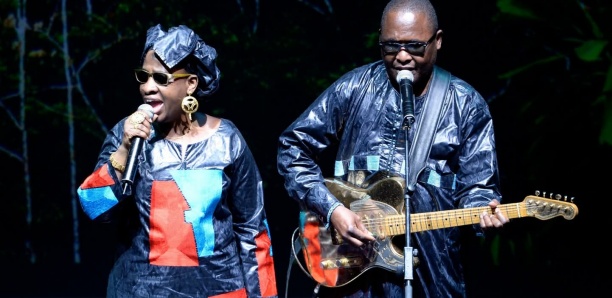
Those are the words of the song that propelled the blind Malian duo Amadou & Mariam onto the international scene, beyond West Africa. Those words rocked the lives of millions of African children as a lullaby in some cases. Sadly, Amadou, from the duo, is no longer.
Map of Mali with its capital Bamako
The duo Amadou & Mariam was made up of singer and guitarist, Amadou Bagayoko, and his wife Mariam Doumbia. The Grammy-nominated duo Amadou & Mariam was a blind duo from Mali. They both met at the Institute for the young blind in Bamako in 1976, in the capital of Mali. Bagayoko became blind at the age of 15, while Mariam was at age 5. Mariam started singing at weddings from a young age, while Amadou played instruments. At the institute, they joined the Eclipse Orchestra and quickly became a couple both on stage and in real life. They got married in 1980. Their music blend their traditional Malian sounds emanating from the kora or balafon, with the rock guitars and Western blues. This iconic couple became a source of inspiration to countless artists from Bamako to Dakar, to Abidjan or Conakry. Their music has been anchored in the rich tradition of griots of West Africa [The Griot, the Preserver of African Traditions].
Amadou & Mariam went on to sell millions of albums across the world. They composed the official song for the 2006 football World Cup in Germany, and played at the closing ceremony concert for the 2024 Paris Olympics. They even played for Barack Obama, at the concert marking the US president’s Nobel Peace prize award, and were nominated for a Grammy award in 2010. So long Amadou, and courage to Mariam and the family. Please check out this really good eulogy from Seneweb.com
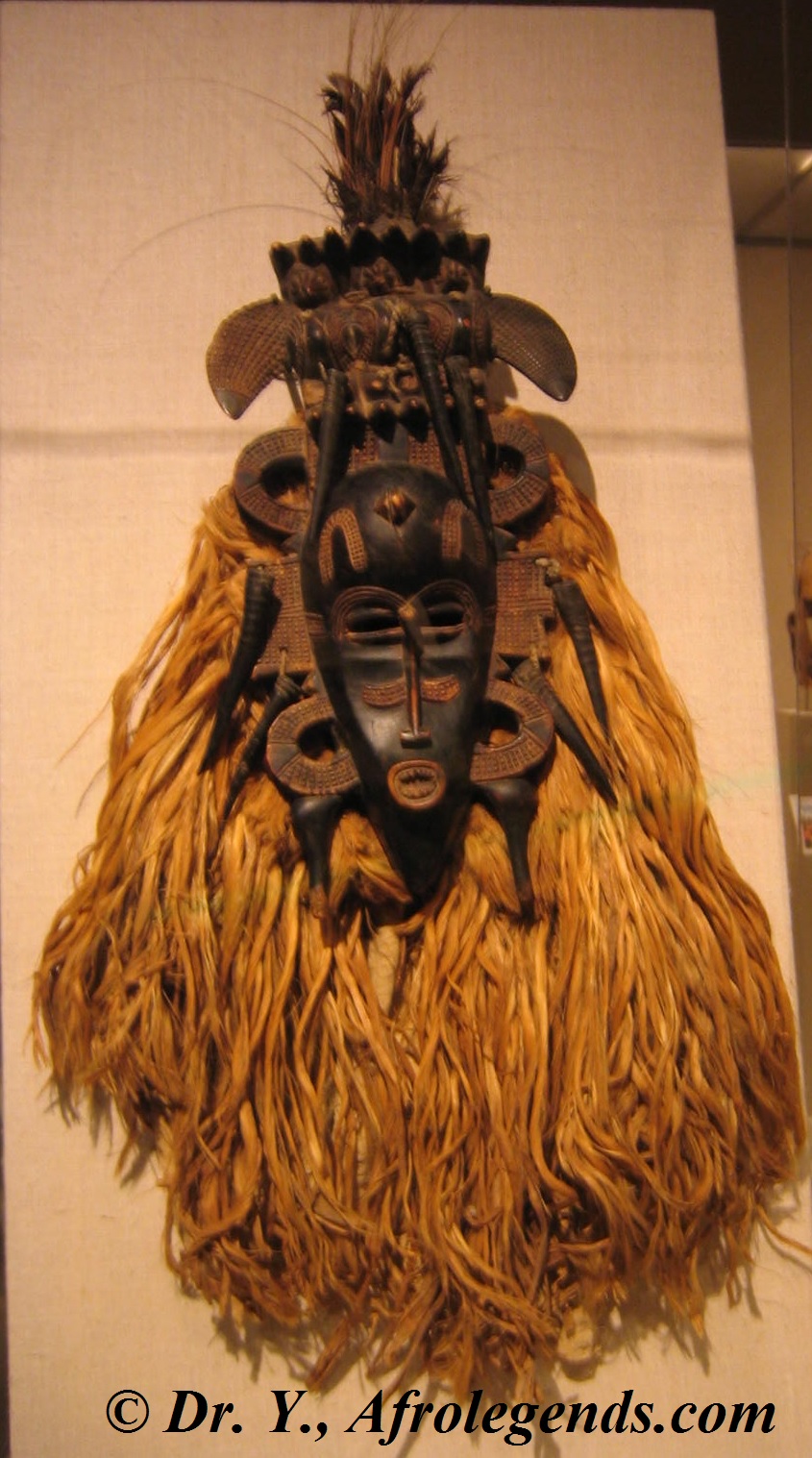
In Africa, there is the concept of fetishism which has been prevalent as a description of African beliefs. Thus, a fetish is an object which holds spiritual power or supernatural significance. Given that African statues hold deep cultural, spiritual, and symbolic significance [Authorship in African Art: The Case of Yoruba Art], the term fetishism has been historically associated to them. Early European anthropologists have linked African religions and statues to fetishism. However, we are learning that this was a technique designed by Europeans to denigrate and dehumanize the African person so as to justify slavery [Dum Diversas or The Vatican’s Authorization of Slavery] early on, and colonialism later on.
Cheikh Anta Diop, the great Senegalese historian, anthropologist, philosopher, physicist, and politician, showed in his book, Nations Nègres et Culture: de l’Antiquite nègre égyptienne aux problèmes culturels de l’Afrique noire d’aujourd’hui, that fetishism in Africa is not an inherent school of thought, but rather arose from the disconnection of modern Africans to their original religions due to violent exposure to centuries of attacks (slavery) from the West. Thus, he said,
Cheikh Anta Diop
“From one end of Black Africa to the other, passing through Egypt, the statues were originally intended to be the support of the immortal “double” of the ancestor after his earthly death. Placed in a sacred place, the statue was the object of offerings and libations: this fact, misinterpreted by Westerners, created the false idea of fetishism. In reality, there is a tendency towards fetishism, that is, idolatry, only where the meaning of the cult has been forgotten through a break in tradition.”
Cheikh Anta Diop, Nations Nègres et Culture, Présence Africaine, Paris p. 339 (1954). Translated to English by Dr. Y, Afrolegends.com.
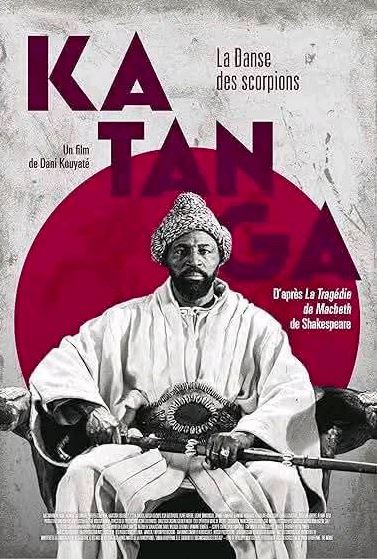
The poster for “Katanga, la danse des scorpions” by Dani Kouyate
On March 1, 2025, Burkinabè filmmaker Dani Kouyaté was awarded the prestigious Étalon d’or deYennenga (Golden Stallion of Yennenga). His film, Katanga, la danse des scorpions, is a cinematic adaptation of William Shakespeare’s Macbeth set in an African (Burkinabe) context and told in the Mooré language of Burkina Faso. His movie focuses on the power play in Africa. His win marked Burkina Faso’s first Étalon d’or in 28 years after Buud Yam of Gaston Kaboré, and the third win of Burkina Faso34 years after the first Tilaiof Idrissa Ouedraogo. Beyond the Étalon d’or, Katanga, la danse des scorpions garnered several other accolades, including the Public Prize with an average score of 9.18/10, the Sembène Ousmane Prize from the Ecobank Foundation, the Special Prize from the Cultural and Tourism Development Fund (FDCT), the Special UEMOA Prize for feature fiction, and the Paulin Soumanou Vieyra African Critics’ Prize.
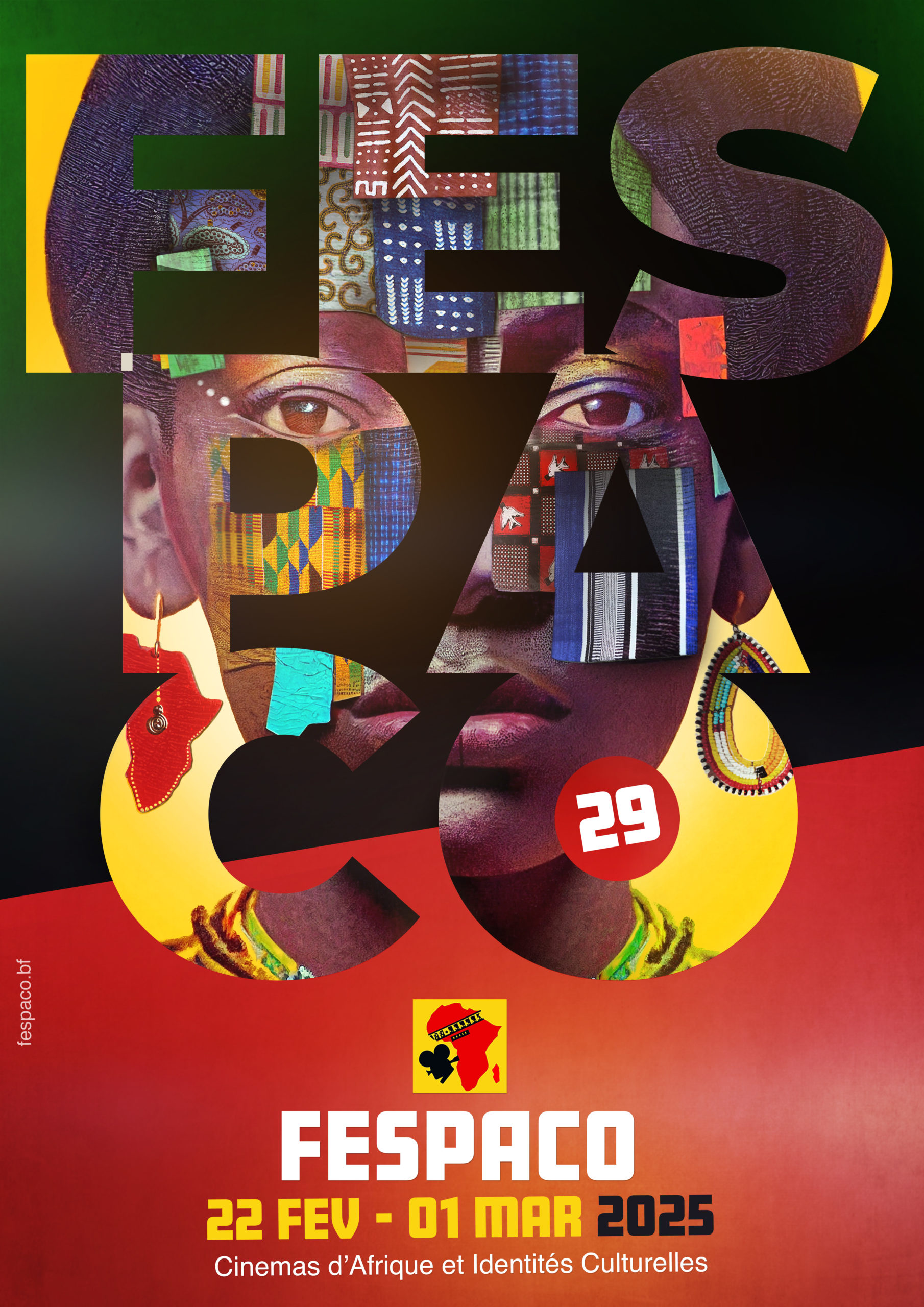
The 29th edition of the FESPACO took place from February 22 to March 1, 2025, in Ouagadougou, the capital of Burkina Faso.
The host country, Burkina Faso was represented by two films: Katanga, la danse des scorpions by Dani Kouyaté and Les Invertueuses by Chloé Aïcha Boro. The guest country of honor, Chad, was represented by Diyaby Achille Ronaimou. There were several entries from diverse countries including Egypt, Algeria, Tunisia, Democratic Republic of Congo (DRC), Côte d’Ivoire, Zambia, Somalia and many more.
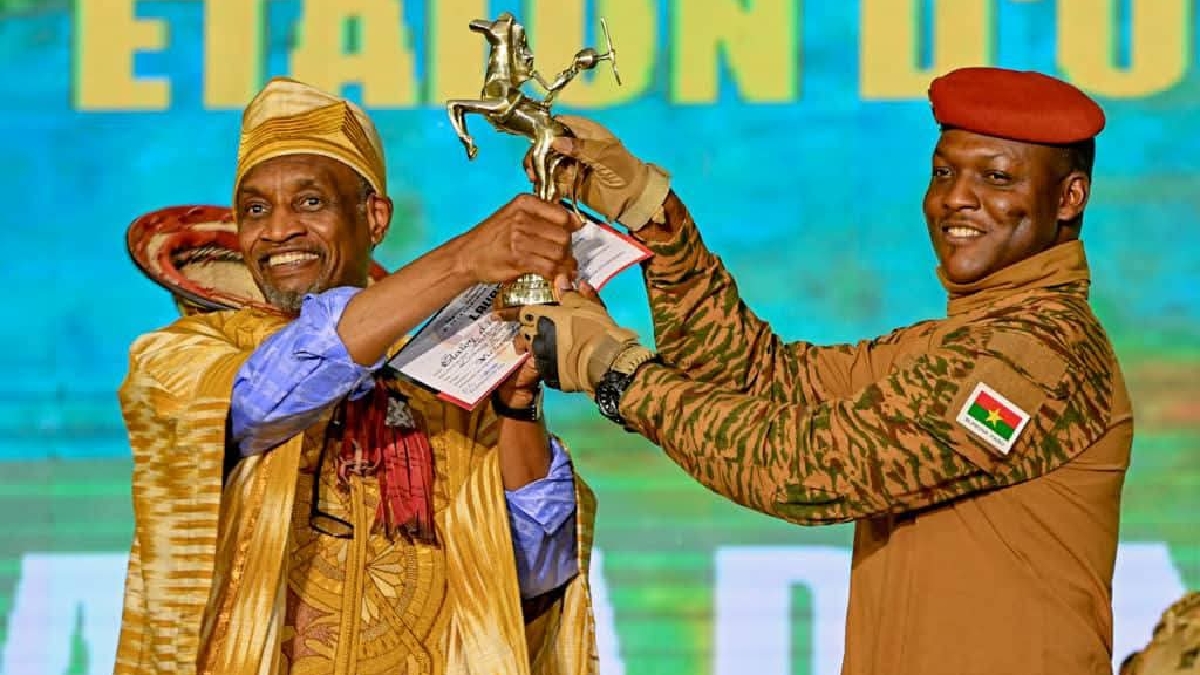
Dani Kouyate receives his Golden Stallion from President Ibrahim Traore (Source: DNE Africa)
On March 1, 2025, Burkinabè filmmaker Dani Kouyaté was awarded the prestigious Étalon d’or de Yennenga (Golden Stallion of Yennenga). His film, Katanga, la danse des scorpions, is a cinematic adaptation of William Shakespeare’s Macbeth set in an African (Burkinabe) context and told in the Mooré language of Burkina Faso. His win marked Burkina Faso’s first Étalon d’or in 28 years after Buud Yam of Gaston Kaboré, and the third win of Burkina Faso 34 years after the first Tilaiof Idrissa Ouedraogo. Beyond the Étalon d’or, Katanga, la danse des scorpions garnered several other accolades, including the Public Prize with an average score of 9.18/10, the Sembène Ousmane Prize from the Ecobank Foundation, the Special Prize from the Cultural and Tourism Development Fund (FDCT), the Special UEMOA Prize for feature fiction, and the Paulin Soumanou Vieyra African Critics’ Prize.
The Golden Stallion of Yennenga
The Somali movie The Village next to Paradiseby Mo Harawe won the Silver Stallion of Yennenga. The Bronze Stallion (Étalon de bronze) was awarded to On Becoming a Guinea Fowl by Rungano Nyoni (Zambia).
L’Homme-Vertige by Guadeloupean Malaury Eloi-Paisley won the Golden Stallion in the documentary section, as well as the Paul Robeson Prize for best diaspora film.
During the award ceremony, a special tribute was paid to Malian filmmaker Souleymane Cissé, who had been slated as jury president but passed away shortly before the festival. Dani Kouyaté, upon receiving his award, honored Cissé by saying, “Souleymane Cissé has been a model for me… he lives on in our hearts and minds.”
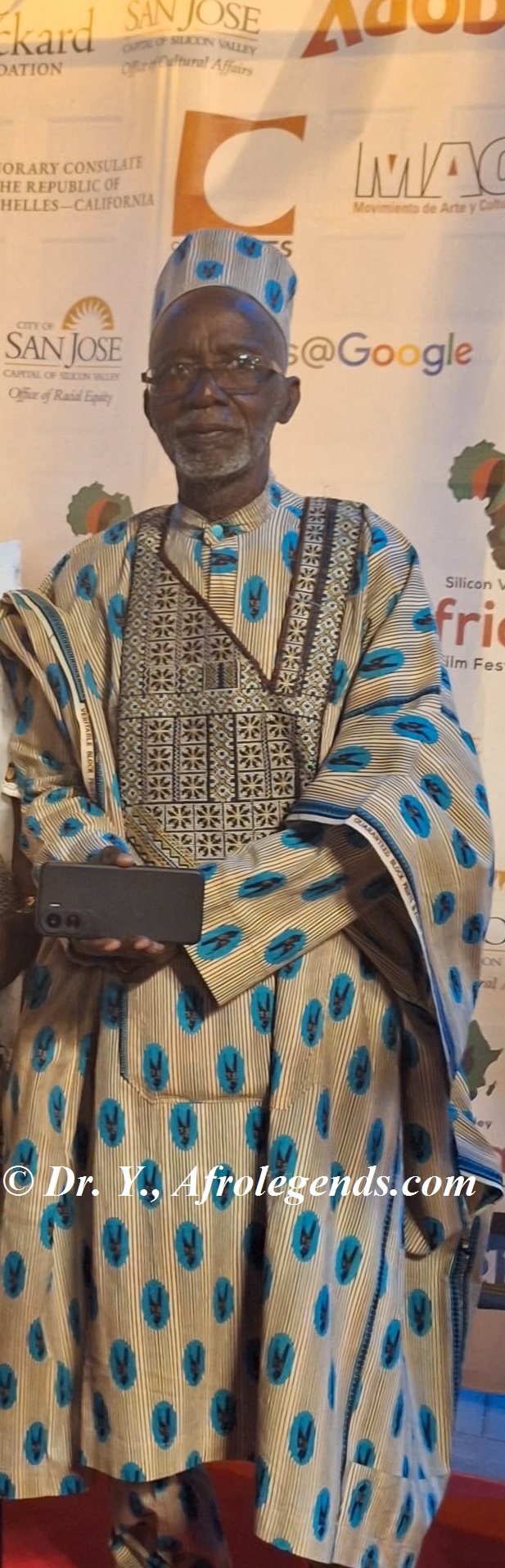
Malian filmmaker Souleymane Cisse at the Silicon Valley African Film Festival (SVAFF) in 2024
Burkina Faso’s President, Ibrahim Traoré, presented Kouyaté the award and praised film enthusiasts for the “resounding success of this celebration of African cinema.”
“The director [Dani Kouyaté] shows legitimate recognition for the courage and self-sacrifice of our worthy daughters and sons committed to victory over the forces of evil,” Traoré said on social media after the event.
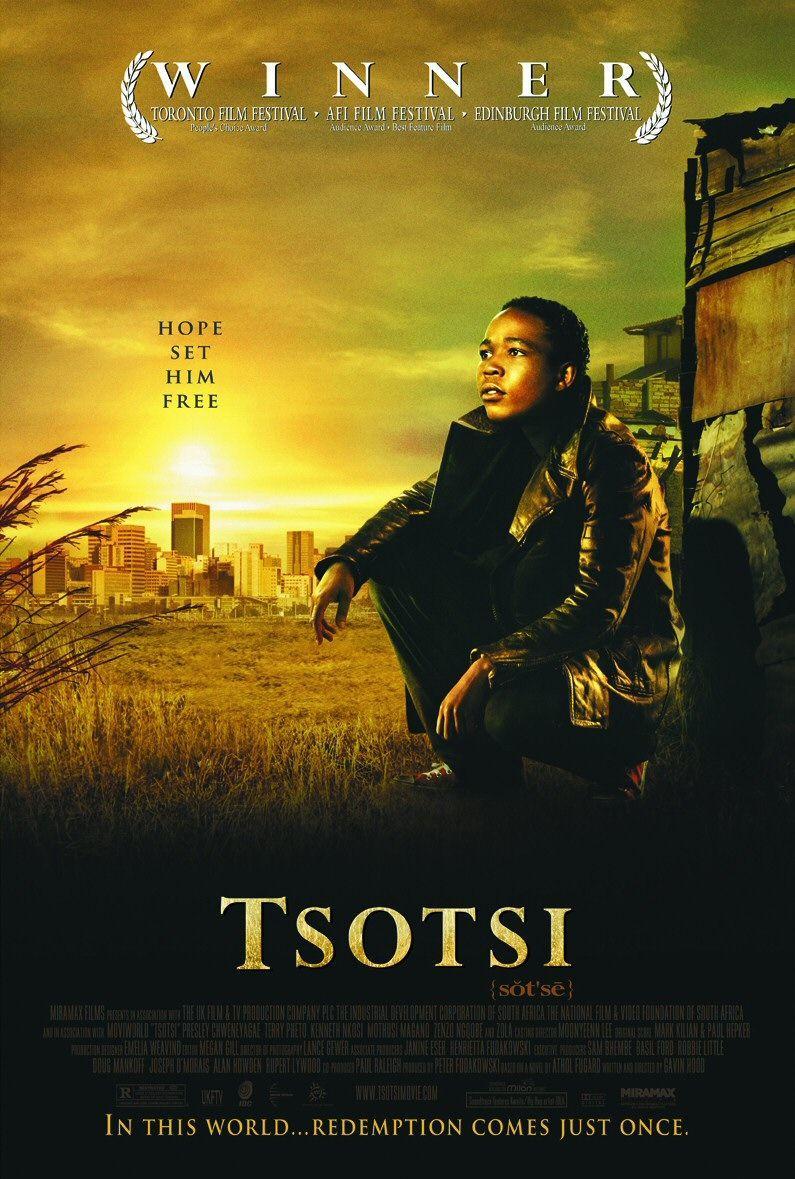
Have you by any chance watched the South African movie “Tsotsi”? In 2006, it was the first South African film and first African film not made in French to win an Oscar for foreign language film and numerous international awards. It tells the story of a ruthless gang leader who steals a car, only to find a baby in the back seat. The movie is based off the novel by the same name “Tsotsi” by South African playwright, novelist, actor, and director widely regarded as South Africa’s greatest playwright Athol Fugard.
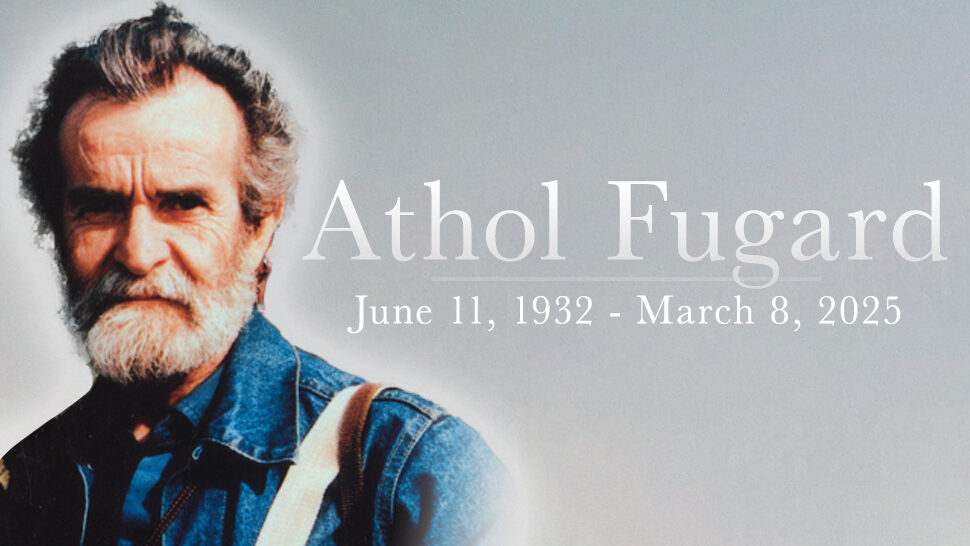
This past Saturday, Athol Fugard, who in 1985 was acclaimed as “the greatest active playwright in the English-speaking world” by Time, passed away at the age of 92. His work confronted apartheid and spanned over 7 decades with over 30 playwrights. He was a critic of apartheid and very early broke the rules and included all as in his 1961 breakthrough play, Blood Knot, which featured for the first time in South African history a black and white actor played by Fugard himself, and was played in front of a multiracial audience.
Athol Fugard, who has died aged 92, was widely acclaimed as one of South Africa’s greatest playwrights.
The son of an Afrikaner mother, he was best known for his politically charged plays challenging the racist system of apartheid.
… Fugard wrote more than 30 plays in a career that spanned 70 years, making his mark with The Blood Knot in 1961. It was the first play in South Africa with a black and white actor – Fugard himself – performing in a front of a multiracial audience, before the apartheid regime introduced laws prohibiting mixed casts and audiences. The Blood Knot catapulted Fugard onto the international stage – with the play shown in the US, and adapted for British television. The apartheid regime later confiscated his passport, but it strengthened Fugard’s resolve to keep breaking racial barriers and exposing the injustices of apartheid. He went on to work with the Serpent Players, a group of black actors, and performed in black townships, despite harassment from the apartheid regime’s security forces.
Fugard’s celebrated plays included Boesman and Lena, which looked at the difficult circumstances of a mixed-race couple. Having premiered in 1969, it was made into a film in 2000 starring Danny Glover and Angela Bassett.
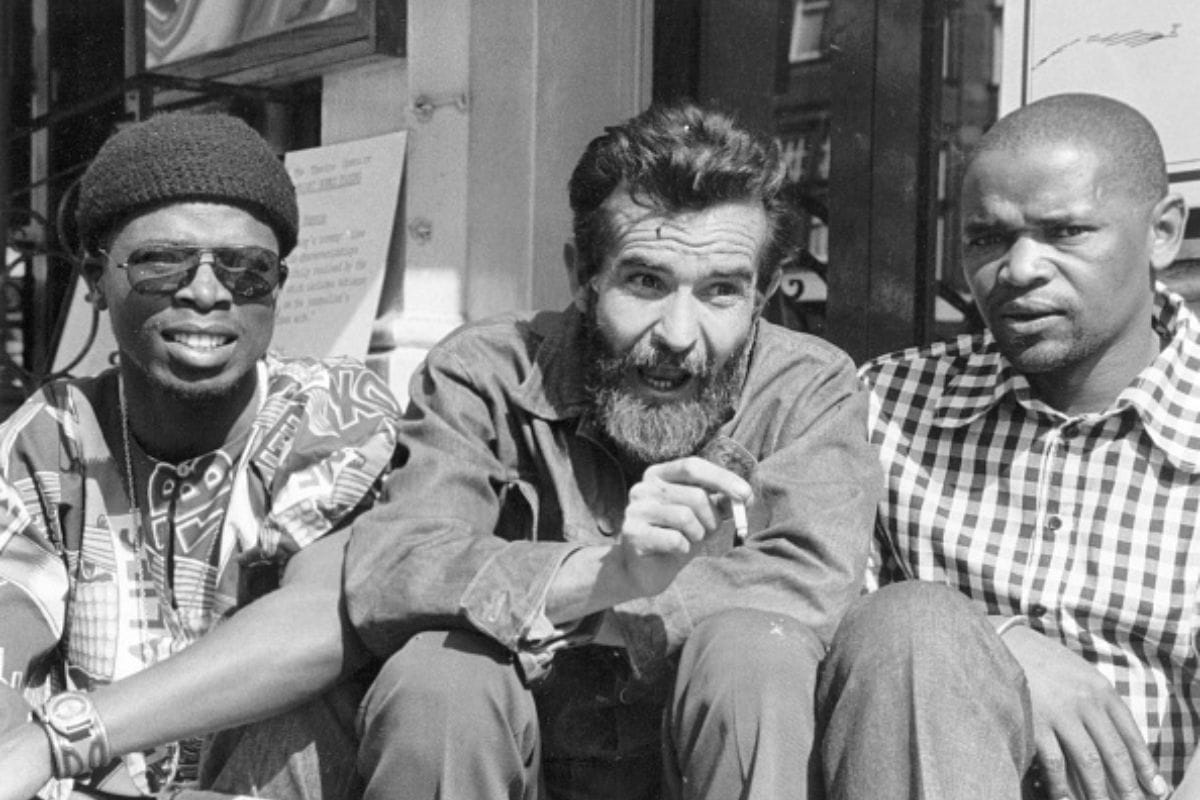
John Kani (left), Athol Fugard (center) and Winston Ntshona at the Royal Court Theatre in 1973. Picture: Evening Standard/Getty Images
His novel, Tsotsi, was also made into a film, winning the 2006 Oscar for best foreign language movie.
… Other well-known plays by Fugard include Sizwe Banzi Is Dead and The Island, which he co-wrote with the actors John Kani and Winston Ntshona, in a powerful condemnation of life on Robben Island, where anti-apartheid icon Nelson Mandela was imprisoned.
… Fugard won several awards for his work, and received a lifetime achievement honour at the prestigious Tony awards in 2011, while Time magazine described him in 1985 as the greatest active playwright in the English-speaking world.
“Apartheid defined me, that is true… But I am proud of the work that came out of it, that carries my name,” Fugard told the AFP news agency in 1995.
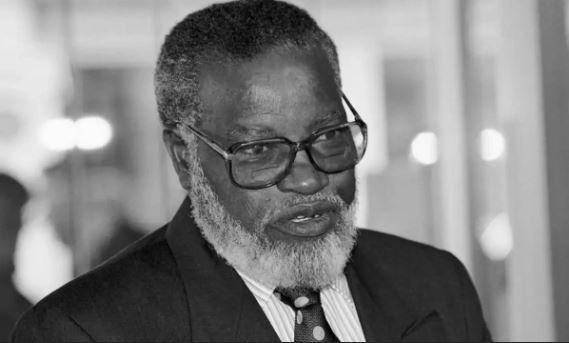
Sam Nujoma (Source: newscentral.africa)
This past Saturday, February 8 2025, Sam Nujoma, Namibia’s first president and founding father passed away at the age of 95. The ancestors are greeting this illustrious brother who fought for the independence of his country. Nujoma led the long fight for independence from South Africa for many years, which culminated with independence on 21 March 1990 of South West Africa, as the country was formerly known. Nujoma helped found Namibia’s liberation movement known as the South West Africa People’s Organisation (SWAPO) in the 1960s. After independence, Nujoma became president in 1990 and led the country until 2005.
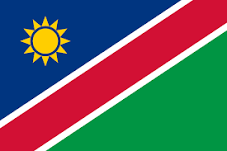
Flag of NamibiaSamuel Shafiishuna Daniel Nujoma was born at Etunda, a village in Ovamboland, on 12 May 1929, to Daniel Uutoni Nujoma and Helvi Mpingana Kondombolo, an Uukwambi princess. From his mother, he inherited his strong charismatic influence during his political career. He was the oldest of 11 children. His childhood was spent taking care of his siblings, tending to the family’s cattle, and farming.
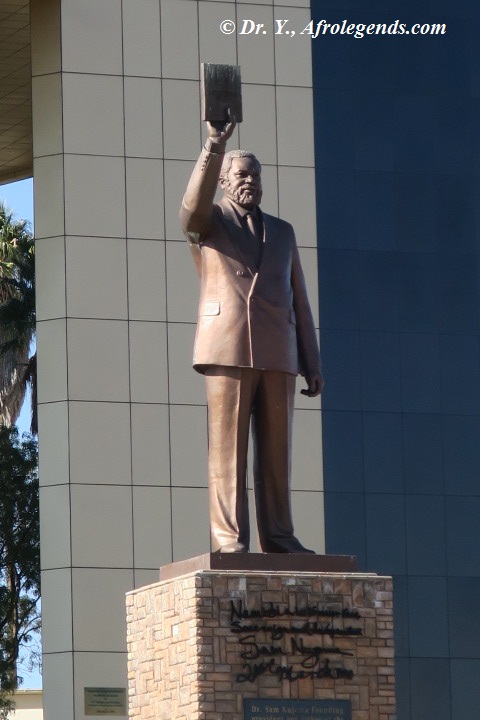
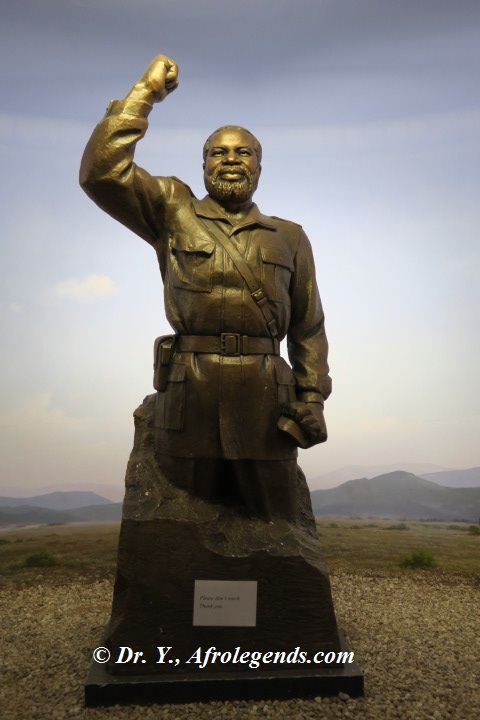
Statue of Sam Nujoma in front of the Independence Museum in Windhoek, Namibia
At the age of 17, Nujoma moved to the harbor town of Walvis Bay, where he slowly learned about the plight of Black people under white-minority rule; he also worked at a general store and later at a whaling station. In 1949, Nujoma moved to Windhoek where he worked as a railway sweeper for the South African Railways (SAR), while he went to night school. It was there that he was introduced to the Herero tribal chief Hosea Kutako, who was lobbying to end apartheid rule in Namibia, then known as South West Africa. Kutako took the young Nujoma under his wing, and mentored him as he became politically active among Black workers in Windhoek who were resisting a government order to move to a new township in the late 1950s. First, he joined with the Ovamboland People’s Congress (OPC) co-founder Jacob Kuhangua to start a Windhoek branch; at its first congress, he was elected president. At Kutako’s request, Nujoma began life in exile in 1960, first to Bechuanaland (now Botswana), then Bulawayo in then Southern Rhodesia (Zimbabwe), and later ending in Tanzania where he was welcomed by President Julius Nyerere. The same year, he was elected president of the South West Africa People’s Organization (SWAPO) in abstencia. The problem of South West Africa, similar to Kamerun, was that they were former German colonies, which had been placed under League of Nations mandate of South Africa in the case of South West Africa, and France and Great Britain for Kamerun; thus the country should have been independent a while back. Nujoma spent a few years asking the United Nations to ensure that the occupying power that was South Africa released control of South West Africa. After many unsuccessful tries, while shuttling from capital to capital in quest for support, he authorized the launch of armed resistance in 1966 against South African forces. The attack marked the beginning of the Namibian War of Independence, which would last more than 25 years.
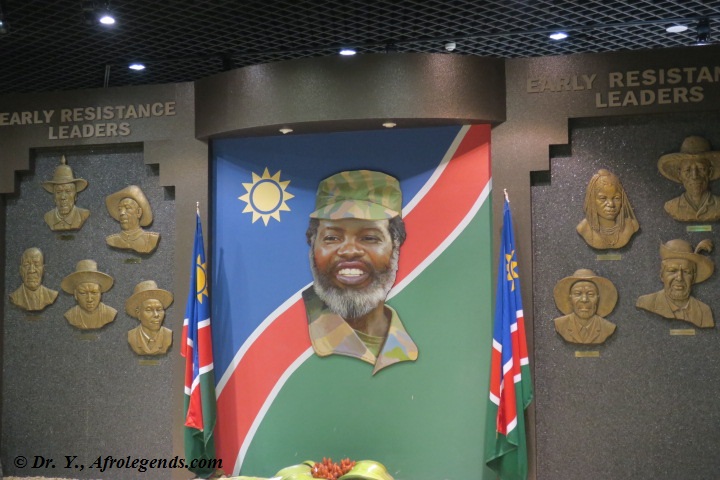
Sam Nujoma on a plaque to Early Resistance Leaders inside the Independence Museum in Windhoek, Namibia
On 19 March 1989, the signing of the cease-fire agreement with South Africa took place. After 29 years in exile, Nujoma returned to Namibia in September 1989 to lead SWAPO to victory in the UN-supervised elections that paved the way for independence. Nujoma was elected first president of the new nation which became independent on 21 March 1990. He was re-elected in 1994 and 1999, and stepped down in 2005.
The current president of Namibia, President Nangolo Mbumba said of Sam Nujoma, He “inspired us to rise to our feet and to become masters of this vast land of our ancestors,” … “Our founding father lived a long and consequential life during which he exceptionally served the people of his beloved country.”
Namibia’s Vice-President Netumbo Nandi-Ndaitwah, who is due to be inaugurated as president in March after leading SWAPO to victory in elections, said his “visionary leadership and dedication to liberation and nation-building laid the foundation for our free, united nation“.
Bust of Sam Nujoma, inside Independence Museum, in Windhoek, Namibia
South Africa’s President Cyril Ramaphosa said the former Namibian president was an “extraordinary freedom fighter” who played a leading role in not only his country’s fight against colonialism, but also in the campaign that led to the end of the apartheid regime in South Africa in 1994. “President Nujoma’s leadership of a free Namibia laid the foundation for the solidarity and partnership our two countries share today – a partnership we will continue to deepen as neighbours and friends.”
South African President Cyril Ramaphosa said Nujoma led Namibia’s independence movement “against the seemingly unshakeable might of colonial and apartheid authorities and forces” and spurred the anti-apartheid movement in South Africa on its own final steps to freedom. “Sam Nujoma inspired the Namibian people to pride and resistance that belied the size of the population,” Ramaphosa said. “Namibia’s attainment of independence from South Africa in 1990 ignited in us the inevitability of our own liberation.”
There was a lot to celebrate in Africa this year. Below are just a few:
Alliance des Etats du Sahel (AES) (Source: Alliance-sahel.org)
In January, Mali, Burkina Faso, and Niger left the ECOWAS creating a major seismic shift in the organization. Mali, Burkina Faso, and Niger all leave the ECOWAS. This came as no surprise given that the coup to topple puppet governments in their respective countries, the ECOWAS had suffocated these countries by suspending all three countries and imposing heavy sanctions on Mali and Niger that exacerbated the populations’ sentiments that it is a puppet organization serving foreign interests. Niger even tried to amend the situations by inviting ECOWAS representatives to the country, but only the member from Togo showed up. Why should anybody remain in an organization that punishes its member populations?
In January, Ghanaian artifacts were returned home for the first time in 150 years, on a “loan”. Ghana Artefacts “Return” Home 150 years later … on Loan. It is a disappointment that African governments can only get “loans” for what is dutifully theirs from those institutions which have amassed millions over the year from the exhibition of stolen African artefacts.
The Elephants are winners of the Africa Cup of Nations 2023 (Source: CAFonline.com)
In February, the Elephants of Cote d’Ivoire gave us a thrill from being redeemed in the knockout stage with 2 defeats (among which a 4-0 loss against Equatorial Guinea) that left them open to elimination, and a redemption that came from being one of the four best 3rd-placed team, a coach sacking, and a coach change, to lift the trophy of the Africa Cup of Nations. It was a real “Coup du Marteau” (Tam Sir, we are talking about your special song!) The Ivorians added to their previous Nations Cup wins of 1992 and 2015 (Côte d’Ivoire wins the 2015 Africa Cup of Nations) and became the first tournament hosts to triumph since Egypt lifted the trophy in 2006. CAN 2023: the Elephants of Côte d’Ivoire are the New Champions
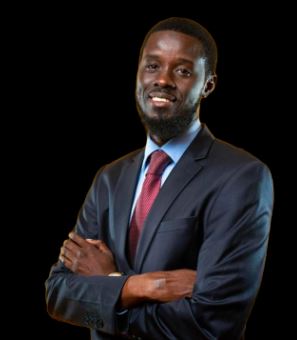
Bassirou Diomaye Faye (Source: Seneweb.net)
In March, Bassirou Diomaye Faye was elected president of Senegal, making him the youngest African president at 44. This was a joyous moment for the Senegalese people who stood to have their democratic system and constitution upheld. Faye is very unconventional, as the youngest with no political background (he was previously a tax officer), he is also the first Senegalese president to openly have two wives. With his friend and Prime Minister Ousmane Sonko, we hope for better governance for Senegal. Senegal Presidential Elections: Bassirou Diomaye Faye is set to be the next president. Either way, the Senegalese have demonstrated once again, that although their democracy is young, it is not to be messed with!
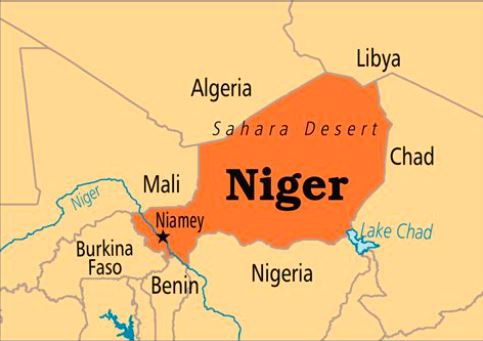
Map of Niger
In mid-March, Niger suspended military “cooperation” with the USA, with immediate effect. Operating from years of condescending treatments of those deemed inferior, particularly of Africans, the Americans had decided to dictate their will, like the French before, to Niger people and deny their sovereign rights to choose their own partnerships in their fight against terrorism. The spokesman of Niger’s government, Colonel Amadou Abdramane, exposed the fact that the military “cooperation” with the US was not even a real one, i.e. the US had installed their largest drone base in Africa, and possibly in the world, in Niger via a verbal agreement only, and the Niger people had to pay for the American base in their country, while the Americans never raised a hand to help Niger fight against terrorist attacks that were maiming their citizens [Bye Bye to French Troops in Niger, France set to Withdraw Troops and Ambassador from Niger]. Niger suspends military “cooperation” with the US, effective immediately.
Alliance des Etats du Sahel (source: linfodusahel.com)
Mali, Niger, and Burkina Faso’s leaders met on July 6, 2024 in Niamey, Niger, as part of the first summit of the Alliance des Etats du Sahel (AES – Alliance of the Sahel States). During the summit, the three leaders signed a confederation treaty aimed at strengthening the links between the three nations in terms of defence, and other aspects such as the economy, infrastructures, and more. They reinforced their mutual defence pact.
Right before the Paris Olympics, brother Biniam Girmay of Eritrea made history by becoming the first African to win a stage at the Tour de France, and two more stage victories which helped him capture the green jersey for the highest points scorer – a first for anyone from the continent.
Faith Kipyegon winning historic 3rd gold medal at the Paris 2024 Olympics (source: Kelly Ayodi for Olympics Kenya – EastleighVoice.co.ke)
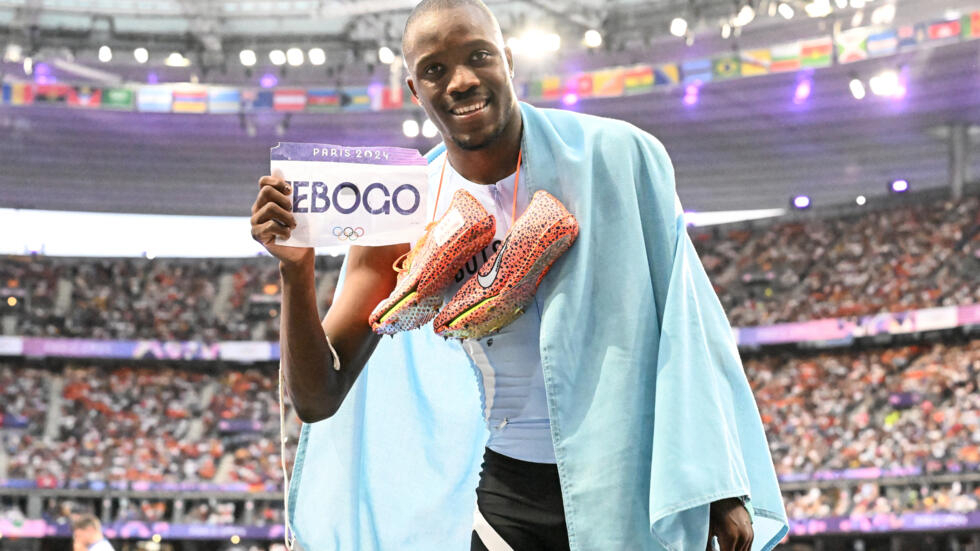
The Paris 2024 Olympics ended with a strong show from African athletes who shined in various disciplines, and represented many countries including outside of Africa. They made us proud and served us joy, endurance, and passion. We will list just a few. We had a lot of firsts, like our Kenyan sister Faith Kipyegon who won her 3rd successive Olympic gold in the women’s1500 m, making her the first African athlete to ever win gold in the same event 3 times in a row. Our brother Letsile Tebogo of Botswana earned the top most place in the Men’s 200 m thus giving Botswana and Africa as a whole its first ever olympic gold medal in the 200 m; Tebogo also led the Botswana’s team to a silver medal in the
Letsile Tebogo after winning gold in 200m (Source: Onuaonline)Men’s 4x400m relay, again a first for any African country ever. Ugandan brother JoshuaCheptegei delivered on his promise for his last Olympics to be memorable by winning gold in the Men’s 10,000 m, and landing Uganda its first gold at the games. Tatjana Smith of South Africa made her country proud by winning gold and silver medals in the Women’s 200m and 100m breaststroke events. Akani Simbine and South African track team delivered us silver in the Men’s 4 x 100 m relay, again a first for South Africa, and for Africa as a whole. Kaylia Nemour gave Algeria and Africa its very first victory ever in gymnastics with a gold in the Women’s Uneven bars in artistic gymnastics. Tamirat Tola, who was just added to the Ethiopian Olympics’s team 2 weeks prior, took home the gold medal in the Men’s Marathon. AhmedElgendy won the first gold medal for Egypt at any Olympics, becoming the first African and person to win in the new discipline of Men’s Modern Pentathlon. Cabo Verde got its very first medal at the Olympic games through David de Pina who won bronze in the Men’s 51 kg Boxing. Zambian Muzala Samukonga won the bronze medal in the Men’s 400m, giving his country its very first Olympic medal.
Aliko Dangote, Africa’s richest man, has built one of the world’s largest oil refineries in Nigeria, Africa. The refinery opened its doors last year, and in May shipped out its first boat of refined jet fuel to the Netherlands. Since then, the refinery has gotten into agreements with the Nigerian governments and neighboring ones as well.
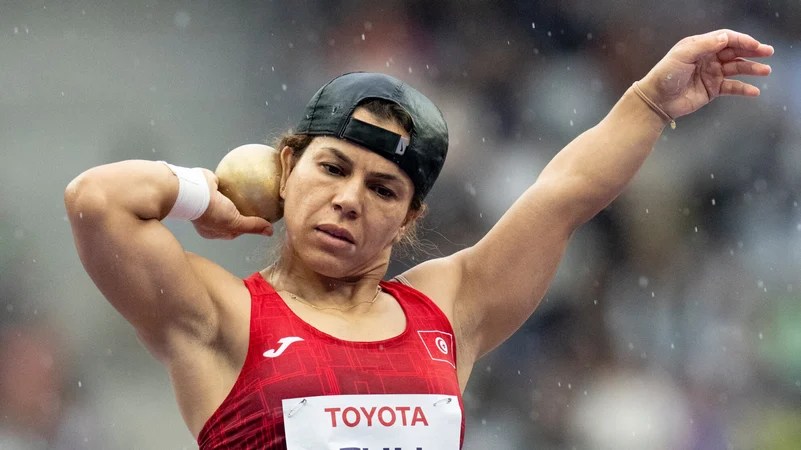
Paris Paralympics 2024 (Source: https://www.paralympic.org/paris-2024)Africa shone at the Paralympics, winning 64 medals, with Morocco getting the most medals with 15 medals, but Algeria topped the continent’s medal table thanks to its 6 gold medals vs. 3 gold for Morocco. Most medals were won in para-athletics and para-powerlifting disciplines. Veteran RaouaTlili of Tunisia cemented her place as a legend in the F41 discus throw and shot put, winning 2 gold medals this year, giving her a total of 8 gold medals for her country, having competed in each Olympics since
Raoua Tlili (Source: Outlook India)
Beijing 2008. Nigeria’s Mariam Eniola Bolaji became the first African to win an Olympic or Paralympic medal in Badminton. Yovanni Philippe gave Mauritius its first medal ever by securing a bronze medal in the men’s T20 400m; while Annaba native, Brahim Guendouz won gold in para-canoeing’s KL3 class over 200m, giving Algeria its first ever medal in a discipline outside of para-athletics, para-judo, and para-powerlifting.
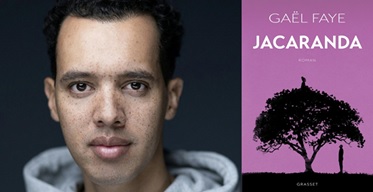
Gael Faye and his book Jacaranda
African authors made great wins and firsts: they won the most important literary awards in French literature: the Goncourt prize, which was awarded to Kamel Daoud for his third novel titled «Houris», and the Renaudot prize awarded to Gaël Faye for «Jacaranda». Daoud’s novel is currently in a controversy. Africans win the Goncourt and Renaudot 2024 Literary Prizes.
AndakiaA Senegalese startup, Andakia, has just introduced the very first African AI: AWA. AWA is a Wolof-speaking artificial intelligence system; it is the brainchild of Alioune Badara Mbengue. In an interview to TRT Afrika, Mbengue said, “AWA is the first AI that understands and speaks perfect Wolof. Our vision is to extend AWA to other African languages, enabling Africa to become a leader in digital innovation and ensure technological sovereignty tailored to its needs.” Users need to simply engage in a spoken exchange with the AI interface in Wolof, seeking general information or asking it to perform tasks such as ordering a taxi, ordering a meal, or carrying out financial and other transactions. This is revolutionary as it addresses the needs of the population. We applaud the amazing work of our brother and his team, and truly the sky is the limit.
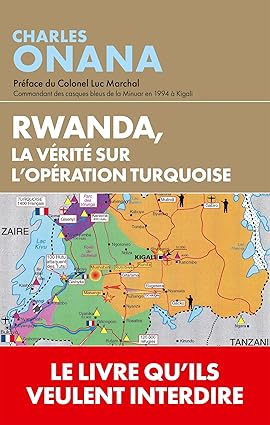
“Rwanda, la Verite sur l’Operation Turquoise” de Charles Onana
On Monday, a French court found the Franco-Cameroonian journalist and author Charles Onana guilty of downplaying the 1994 Rwandan genocide. Onana has been condemned to pay 8400 Euros of penalty. His editor, Damien Serieyx has also been found guilty and condemned to pay 5000 Euros. They also have to further pay 11,000 Euros in compensation to human rights organisations that filed the suit. The book at the center of the controversy is, “Rwanda, la vérité sur l’opération Turquoise: quand les archives parlent.”
The court said that Onana’s book had “trivialised” and “contested” in “an outrageous manner” the genocide that occurred between April and July1994. Onana’s lawyer, Emmanuel Pire, insisted that Onana did not question that genocide took place, or that Tutsis were particularly targeted as per the BBC; but rather that many lost lives in the 1994 horrendous events including Tutsis, Hutus, and Twas. Onana invites all to read his book without pulling passages out of context, but reading the book in its entirety. Both Onana and his publisher have appealed against the verdict.
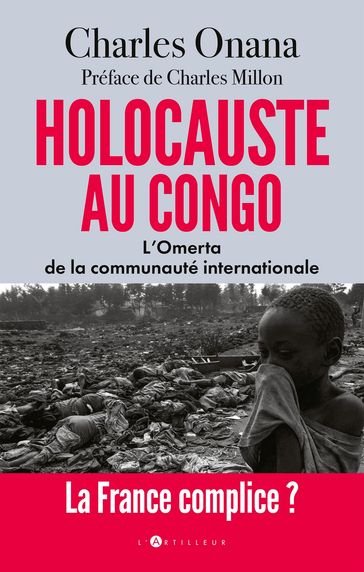
“Holocauste au Congo, L’Omerta de la Communaute Internationale” by Charles Onana
Could this be a vendetta against Onana for shedding light on the horrors happening in the East of the Democractic Republic of Congo (DRC), with his book “Holocaust in Congo: the International Community’s Omerta“? Until his book and a few by others like Patrick Mbeko, Michela Wrong, Pierre Pean, …, the international community had turned a blind eye on the atrocities committed in the DRC. With over 10 million dead, 7 million internally displaced, 500 000 woman raped, the story should have been in the front pages of news outlets around the world, yet it is a total blackout. Why? Because of the Geological Scandal that is the Democratic Republic of Congo (DRC), The New Scramble for Africa with Congo as the centerpiece, and the special first rate place played by that country ‘wrongfully’ dubbed by some as the Switzerland of Africa.
The trial against Charles Onana opened up yesterday, Oct. 7th, in Paris, France, and he is being accused of complicity in contesting the 1994 Rwandan genocide. Under French law, it is an offence to deny or “minimize” the fact of any genocide that is officially recognized by France. Mr Onana’s trial will be “historic, since there is not yet any case law strictly speaking related to Rwanda” on questions of Holocaust denial, as Camille Lesaffre, campaign manager for NGO Survie, one of the organizations which brought the case forward, told AFP.
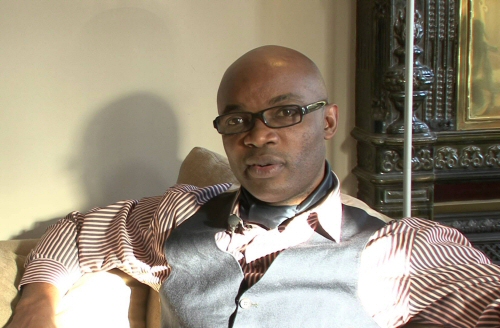
Charles Onana
Friends, please rise in support of the Franco-Cameroonian author and journalist Charles Onana. Onana has been among those who have questioned the narrative of the Rwandan genocide of 1994 (NOT whether it happened or not) and by extension the Congolese genocide which has been ongoing for almost 3 decades and been swept under the rug. Thanks to his constant hammering, and his books, many now know that there is an ongoing genocide in the East of the Democratic Republic of Congo (DRC), and more importantly that, these massacres have been going on for the past 30 years, and above all that Congo’s destabilization is coming from Rwanda, which serves as a pawn for foreign powers who want a part in the enormous resources of the DRC.
“Rwanda, la Verite sur l’Operation Turquoise” de Charles Onana
I have listened to Onana on several occasions and have read several of his books: nowhere does he question the Rwanda genocide or its happening; he is not a negationist. As his lawyer, Emmanuel Pire, told the AFP news agency, his book published 5 years ago, was “the work of a political scientist based on 10 years of research to understand the mechanisms of the genocide before, during and after”. Over the past 25 years, Onana has meticulously documented and questioned first the narrative about the place of France in the Rwandan genocide via its Operation Turquoise (Rwanda, la vérité sur l’opération Turquoise : Quand les archives parlent enfin). On April 6, 1994, the airplane transporting 2 sitting presidents, presidents Juvénal Habyarimana of Rwanda and Cyprien Ntaryamira of Burundi was shot in mid-air; to date, it has not brought an uproar as to how or why the plane of 2 presidents had been shot down. This is what really triggered Onana’s interest in the region: if it were anywhere in the world, this would have produced an uproar and multitudes of investigations, but somehow, in the case of Africa, it has been total silence. In 2006, a French investigation concluded that Paul Kagame, president of Rwanda, was responsible for the killing, to which Kagame responded that the French were only trying to cover up their part in the genocide. We know that since Sarkozy, France has been playing the kissing game with Rwanda.
“Holocauste au Congo, L’Omerta de la Communaute Internationale” by Charles Onana
In his works, Charles Onana simply demonstrates that since 1994, the world has been witnessing the masked invasion of Congo by militias and troops of Paul Kagame, sponsored by the West. His latest book, “Holocaust in Congo, the International Community’s Omerta” is a true gem. Onana has even brought a case, on October 4, against the president of Rwanda, after receiving death threats.
Over the years, Onana has detailed and stood for the Congolese, and now, thanks to his work, and those of others, people now know that there is a silent genocide in the east of Congo which has been going on for almost 3 decades and whose victims approximate over 10 millions deaths, 500,000 raped women, and yet the world has been silent, even though some like Dr. Denis Mukwege, Nobel Peace Laureate, are being recognized for their work helping the victims of those attacks.
The questions should be: why is there a silence on the genocide of the Congolese people? Why is there a silence on the aggression of troops supported by Rwanda on Congo? How can there be a systematic killing of millions of people in a country, and total silence? Who benefits from this? Then people will talk of the international community as a group which represents the world… NO… the international community only serves the interests of the few who benefit from Congo, the geological scandal that it is, being brought to its knees. Let’s all come out in support of Charles Onana.
Africa is a very rich continent, and one of its most important wealth is its youth… Africa is young, and the West, as seen by many of its generals and politicians, trembles. As Africans, it is our duty to free our continent. We can no longer stay behind while others get fat over our resources. As young Africans, it is our destiny to rise and conquer our freedom; we can no longer live it to others, or think future generations will do it for us… the future is now, if we cannot impact today, we will never change tomorrow.
I saw this speech by Nathanael Minoungou, alias Nael Melerd, a Burkinabe who shared a call to action to all Burkinabe and to all Africans. Time is of the essence. Africa, Rise! Enjoy! I have translated a few lines… For the whole speech, watch his video!
Burkina Faso
“…
The biggest scam of time, the biggest scam of the century, is not to rob a country, but to make a young person believe that he has time ahead of him. A young person does not have time, time is for the old … I hear, “Enjoy your youth because we only live once,” lies and scams, we only die once, we live every day.
… Africa is invincible because of its youth, as long as this youth remains awake and takes its responsibilities … if we cannot defeat you, we must by all means make you waste time, time that you do not even have …
How do you manage to have time, while people call your country poor?
How do you manage to have time while your land is exploited, while Africa is assisted at almost all levels?
How do you manage to have time in the midst of reconquering food sovereignty while the fields are idle in the village due to a lack of able-bodied workers?
How do you manage to have time in the midst of the fight against terrorism when even the elderly are enlisting to defend the homeland?
How do you manage to have time when people work during the day, and at night become watchmen that are called wayiha? … how do you manage to have time?
How do you manage to have time in the middle of rebuilding while you have “made in China” on your t-shirt and underwear?
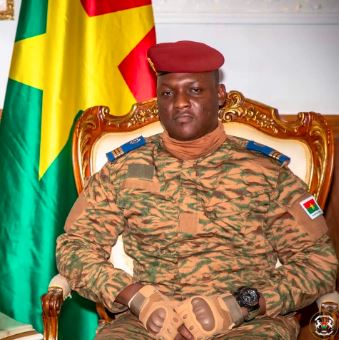
Capitaine President Ibrahim Traore (Source: sig.gov.bf)
… African youth has not suffered from poverty, … illiteracy, … African youth has rather suffered from a lack of reference points and worthy leaders … until today when these youth can finally turn to you, Comrade President Captain Ibrahim Traore … From now on, everything has changed, because everything has become urgent, because everything has happened quickly, and because Africa is proud!
That is why, if you are the Captain, know that from now on, all the young people in this room, in uniform or not, are now soldiers engaged at the front for the sovereignty of Africa! … If you accept the sacrifice, stand on your feet ! ATTENTION!“

















 African Heritage