“Le cancer de la trahison” est le titre du discours prononcé par Amilcar Cabral (père de l’indépendance Cap-Verdienne et Bissau-Guinéenne) après l’annonce du decès de Kwame N’krumah, 1er président du Ghana. Dans ce discours, Cabral dénonce la trahison qui ronge les rangs de tous les mouvements indépendantistes africains. Nombreux de ces mouvements ou révolutions africaines ont été rongés par le cancer de la trahison. Triste de savoir que Amilcar Cabral lui-même a été assassiné par un traître!
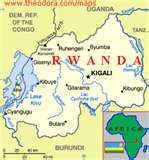
I still remember the day the Rwandan genocide started. I was just in “4eme”, and the images of the genocide on TV made me cry at night! What could I do, me… a simple school child in Cameroon, except watching on television and praying for someone or something to stop this butchery! Well… among all the heroes mentioned in books and documentaries about Rwanda, a fellow African heard my cry, a Senegalese UN soldier who was in Rwanda decided to act… with no guns, no arms, and no authorization from the UN, he decided to take destiny in his hands…. He is almost forgotten when people talk of Rwanda: few ever mention the act of bravery from this African soldier stationed there.
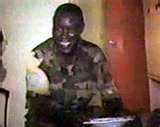
Yes… I am talking about the young Senegalese captain Mbaye Diagne who was working for the UN in Rwanda. From the first hours of the genocide, he decided to take destiny in his hands, ignoring orders from the UN telling him to just be an observer. He probably thought: “how can I just look when human beings are being slaughtered? how can I just look when I am a blue beret, a UN officer supposed to maintain peace in the world?” From the first hours of the genocide, he was able to save the children of the prime minister Agathe Uwilingiyimana who was murdered; he hid them in his house, and was later able to take them to safety at the “Hotel des Mille Collines.” From then on, he saved many lives, some even think that he probably saved at least 600 -1000 people.
Capt Mbaye in Rwanda
During the genocide, he was constantly rushing and never stayed put. He had a gift to make people laugh and always wore a smile on his face. He could be familiar with anyone within minutes! He could joke with the Interahamwe at all checkpoints, share a cigarette with them, talk with them… and in the midst of the genocide, even the interahamwe probably liked to see a smile in the midst of all the killings, a glimpse of light in all the darkness! He had to save hundreds of people by carrying 3-5 at a time in his vehicle, not to raise suspicion, and pass at least 23 checkpoints at which he had to stop each time and explain himself each time. All of this was done unarmed! Imagine, … saving hundreds of people unarmed, 3-5 at a time!
Yes… Capt Mbaye with his toothy smile was a light in Rwanda… an African angel sent to save people, an answer to some of our prayers. While learning about Capt’ Mbaye, I couldn’t help but cry, tears of happiness… happiness because all I ever heard in documentaries or books were these acts of bravoure by Europeans (or Rwandans like Rusesebagina in “Hotel Rwanda”)… but no-one mentioned this African child saving another African child! No one ever mentioned that the only UN officers left with Gen. Dallaire in Rwanda were mostly Ghanaians and other Africans like Senegalese Capt Mbaye!
Capt Mbaye at the "Hotel des Mille Collines"
One thing is sure, Capt Mbaye showed that in the midst of uglyness, we have a choice to be either observers or actors! We have a choice to protect, and help others! From the very first day of the genocide, Capt Mbaye decided to listen to his conscience and save people! He gave his life for others and stood on the side of justice; he extended his arms to fellow humans in distress… he loved! He was not superman, he was just Mr. ‘everyone’ reaching to the human side in every single one of us: he talked, negotiated, and smiled with the Interahamwe so-called monsters.
Please watch parts of this great documentary from PBS Frontline, and raise your hat to a true African hero! We, Africans, are the only ones who can truly praise the acts of bravoure, courage, and love of this forgotten angel of Rwanda! What can I say… words cannot express my profound gratitude to have learned the story of someone ordinary who decided to do extraordinary things, and saved hundreds of lives!
There is a say which often goes as such: “When things are so bad that they are irreparable, men leave the power to women or minorities!” (Just look at the USA!) Well… that’s what they will definitely say about Liberia, a country which had been in war for so many years and decades, that the system was so broken down, the country was a mess, no government, no law, no nothing!
President of Liberia: Mrs. Ellen Johnson Sirleaf
And then was elected Mrs. Ellen Johnson Sirleaf! The first African female head of state! We even beat the USA, we got our woman in power! Yes… here comes the Iron lady of Africa. Few words will express what the inauguration of Mrs Sirleaf meant to me, and thousands of other girls and women across the continent. Truth be told, very few of us ever thought possible the day a woman would be president on our continent. Very few of us thought possible an actual country ruled by a woman, in Africa….! When I was young, I had read about Nzingha the queen of Angola, Hatshepsut the She-pharaoh of Egypt, Beatrice of Congo, Empress Zewditu of Ethiopia… to name just a few; but these emblematic African female leaders seemed so far removed from me, buried in the sands of the past, that as a young African woman my dreams to see a charismatic woman leader in the modern era seemed to be just that… a dream (I still wanted my dream to become a reality)!
Don't mess with my president!
Ellen Johnson Sirleaf is an achieved economist who served as minister of finance of Liberia in the late 70’s. She once supported Charles Taylor against the bloody government of Samuel Doe… but later on criticized him once she realized he was perpetrating bloody crimes in Liberia as well. After Samuel Doe’s coup in 1980, she went into exile in Kenya where she worked for Citibank as director. She returned to Liberia to run against Doe, but was sentenced to 10 years in jail, and was again forced into exile. She later repeated the scenario in 1997 when she ran against Charles Taylor, but lost. She finally won the elections in 2005 to be the first elected female head of state of Liberia, and Africa. Hers is a story of perseverance, endurance, determination, courage, hard work, and above all love for her country. What brought her back so many times to Liberia? Lord only knows! What made her want to challenge Samuel Doe, Charles Taylor, Prince Johnson, etc…? The good Lord only knows! One thing is sure, this is definitely an Iron Lady!
Liberia
The video you will see below is a documentary on her first year in power entitled Madam President! It highlights her struggles and victories. How do you re-build a country where there are no institutions? where there are children soldiers? where there is no law? and where a claim to land means nothing after years of war! How do you do that? Well… watch Madam president! surround yourself with the best minds, and some strong women as well! I tell you… Watch and raise your hat to Mrs. President! Yeah… that’s right! Our very first woman president!
To find out more, check out Ellen Johnson Sirleaf on Wikipedia, read her book “This Child Will Be Great“. Laura Bush wrote a piece on her in Time Magazine after she and Condoleezza Rice attended Sirleaf’s inauguration. Ellen Johnson Sirleaf was awarded the Presidential Medal of Freedom in 2007 by president Bush. Check out Follow the Leader to learn more about the people who made the documentary, and this article by BBC.
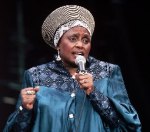
Dear all, today we will be talking about a great true African legend: Miriam Makeba! Well… where should I start? Zenzile Miriam Makeba, affectionately named Mama Africawas a singer who truly showed that music had no boundaries, and that music could be used as a platform to launch a revolution; above all, if you are passionate and excel in something, you can always do great things! Miriam Makeba started as a singer in South Africa, and was even married to the great South African trumpetist Hugh Masekela at one point. This woman sang about her love for her country, her people, and the struggle of her people. Like she said herself: “I was never politically involved. People always think that I’m political or that I sing politics, but I’m not. I just speak the truth. When I say we’re oppressed, I’m not lying. I’m glad I’ve been vindicated, in a way. I could have been in parliament, but I’m not a politician, I’m a singer. I love to sing, that’s what makes me happy” Miriam was a true warrior dedicated to the liberation of African people.
Miriam Makeba on the cover of her album Pata Pata
Miriam Makeba was never allowed the right to return home for 30 years by the apartheid government (from 1960-1990). She was not able to go to her mother’s funeral. Her song Welelais about a child yearning for her mother. In 1961, she sang at President Kennedy’s birthday, as she puts it: “I was the only foreign artist among the big giants of America paying tribute to him.” She spoke at the United Nations in New York, where she said: “I ask all the leaders of the world: would you act differently, would you keep silent and do nothing if you were in our place, would you not resist if you were allowed no right in your own country because the color of your skin was different from the color of the rulers?” Her records were subsequently banned in South Africa. She used her fame to let the world know about the suffering of Black South Africans. Her most popular songs include Pata Pata, the Click Song, and her beautiful rendition of Malaika! She later sang about the Soweto uprising (1976) in her title “SowetoBlues” written for her by Hugh Masekela.
When Miriam married the Black Panther leader Stokely Carmichael, her shows were canceled in the USA, as the FBI was after him. She picked up her bags with her husband and went to Guinea, where president Sekou Toure allowed them in. She even had a Guinean passport and was a United Nations ambassador for Guinea!
True African Beauty
She was finally allowed to return to South Africa after Nelson Mandela got out of jail. He actually asked her to come back… So 30 years later, this great woman of power return to her country after losing her mother, and only daughter Bongi Makeba. I have attached this beautiful documentary. Please watch and celebrate a strong African Woman… a legend, a woman who loved her people so much that she sang about it, and spoke about it at the United Nations. In later years, she has also been an FAO ambassador (to fight hunger), United Nations Goodwill ambassador, and opened a girls’ school in South Africa for orphans, girls who have been raped, etc…
In a way, even though Miriam Makeba lost her only child, she was a mother to all of us, and fought for all South African, and African children. Thank you Beautiful Mama Africa. God loves you! We have to continue your legacy of strong African women, and legends!
“Charité bien ordonnée commence par soi-même!” Il est enfin temps que je parle d’un des pères de la nation camerounaise, d’un unique indépendantiste qui s’est battu pour la libération de son pays, et qui a été lâchement assassiné en Suisse (empoisonné) par les services secrets Français: Felix-Roland Moumié! C’est en 2006, que nous decouvrons pour la première fois, l’histoire ou plutôt un bref sommaire relatant les derniers jours de cet indépendantiste à travers un documentaire intitulé “L’assassinat de Felix Moumié- L’Afrique sous contrôle,” réalisé par Frank Garbely.
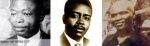
Les leaders de l’UPC: Ruben Um Nyobe, Felix Moumie, et Ernest Ouandie
Felix Moumié, médécin de formation (chirurgien d’ailleurs), deviendra le leader de l’Union des Populations du Cameroun (UPC) après l’assassinat de Ruben Um Nyobé. Il menera bien le parti et sera assassiné à son tour, empoisonné dans un restaurant de Genève en Suisse. Dans le documentaire que vous verrez ci-dessous, faites attention de ne pas etiquetter Moumié. La chose qui me fait vraiment mal quand je vois ce documentaire, c’est sa veuve, Marthe Ekemeyong Moumié qui pleure et réclame que lumière soit faite sur la mort de son mari, et surtout que son corps lui soit remis afin qu’il puisse être enterré dans son pays natal, le Cameroun.
Marthe Ekemeyong Moumie
La chose qui me fait encore plus mal, c’est de savoir que cette dame qui s’est battue pour que la mémoire de son mari soit célébrée fut violée et assassinée au début de l’année (Janvier 2009) à Ebolowa! Pourquoi ce crime ignoble? Qu’est-ce-qu’une pauvre dame inoffensive peut-elle faire à qui que ce soit? Comme quoi il y a encore certaines choses qui méritent d’etre déterrées, et il est important que les Camerounais connaissent leur histoire. Une chose est sûre et certaine, je lève mon chapeau à cette dame qui mérite de faire partie des annales des femmes fortes du continent Africain.
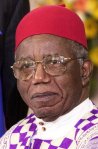
Chinua Achebe, the great Nigerian writer, has always made me so proud of being African. I have his entire collection at home and I believe that he should be nominated for a Nobel Prize! I mean, isn’t the nobel prize supposed to acknowledge those who have affected the way people think? Isn’t it supposed to recognize those who have influenced generations? Well, then, Chinua Achebe created the “Nigerian novel” genre and not only influenced numerous African writers, but opened the world to an African story like none other (Things Fall Apart). His novel “Things Fall Apart” has been translated in over 22 languages and is currently taught in high schools and universities in the US and around the world… If I was on the Nobel prize committee, I will definitely nominate the great Chinua Achebe: he is long overdue!
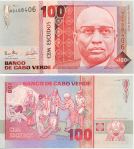
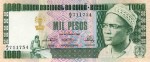
Amilcar Cabral est à mes yeux, tout comme Thomas Sankara, un des rares visionnaires qui ait foulé la terre africaine. Il s’est battu pour l’indépendance et l’union de la Guinée Bissau et du Cap-vert qui, à l’époque, étaient des colonies portugaises. Après des études d’agronomie à Lisbonne au Portugal, Amilcar rentre en Guinée comme fonctionnaire en 1952. Jugé dangereux, il est muté en Angola (il y passera 1 an), et décide à son retour de fonder le “Parti Africain de l’indépendance de la Guinée-Bissau et des îles du Cap-Vert (PAIGC)”. Il oeuvrera si bien que malgré son assassinat le 20 Janvier 1973, la Guinée Bissau obtiendra son indépendance quelques mois plutard. J’ai trouvé une très belle interview qu’ Amilcar avait donné à un journaliste francais où il parle des raisons pour lesquelles la Guinée Bissau et le Cap-vert devraient être indépendants. C’est dommage que son rêve de voir ces 2 pays unis ne se soit pas réalisé, mais la Guinée Bissau et le Cap-Vert lui doivent leur indépendance. (Durant la guerre d’indépendance, il se faisait souvent appellé par son nom de guerre: Abel Djassi). Sa photo est encore aujourd’hui sur les billets de banque du Cap-Vert.
Amilcar Cabral sur un billet de 100 escudosAmilcar Cabral sur un billet de 1000 pesos
Amilcar Cabral, Fundador da nacionalidade Caboverdeana e Guineense. Nasce em Bafatá, Guiné, 12 de Setembro 1924. 1945: Com uma bolsa de estudo, ingressa no I. S. Agronomia, em Lisboa – 1950: Termina o curso e trabalha na Estação Agronómica de Santarém – 1952: Regressa a Bissau, contratado para os S. Agrícolas e Florestais da Guiné – 1955: O governador impõe a sua saída da colónia; vai trabalhar para Angola; liga-se ao MPLA – 1956: Criação em Bissau do PAIGC – 1970, 22 de Novembro: O governador da Guiné-Bissau decide e Alpoim Calvão chefia a operação de “comando” “Mar Verde” destinada a capturar ou a eliminar os dirigentes do PAIGC sediados em Conacri: fracasso! – 1973, 20 de Janeiro: Amílcar Cabral é assassinado em Conacri.
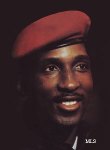
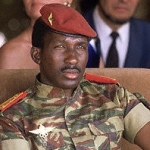
Thomas Isidore Sankara was a great visionary African leader, the kind which comes around once every 50 years or century. He had an unlimited and undying love for his country, his fellow countrymen, and his continent. He had a vision for a true independent African country, and continent. He strongly believed in justice, and worked extremely hard. He was a man of great integrity and discipline. At a time when women were relegated to the kitchen, Thomas spoke out loudly for women’s rights, and admitted women in the military, and in key positions within his government (the minister of Budget was a woman). What kind of man names his country “the land of upright people” (le pays des hommes integres)? What kind of man, by his passion and vision, reorganizes an entire country in just 4 years! no wait… actually just 3 (since the last year, Sankara’s government was crippled by internal division with Compaore’s factions). Well… let me tell you who that is: the great, and only, splendid Thomas Sankara, who made me proud of being an African child, who made me raise my chin up and walk upright!
Thomas Sankara in Ouagadougou
At the time Sankara was assassinated, he was only 38 years old, a year younger than Ernesto Che Guevara… but just like Che, he left an indelible mark in the history of the world! Please join me in celebrating Captain Thomas Sankara!














 African Heritage